

Do proton pump inhibitors alter the response to immune checkpoint inhibitors in cancer patients? A meta-analysis
Open accessThe DOI matches its Crossref record; 86 of the 86 references it cites were found in a registry or an index.
Abstract
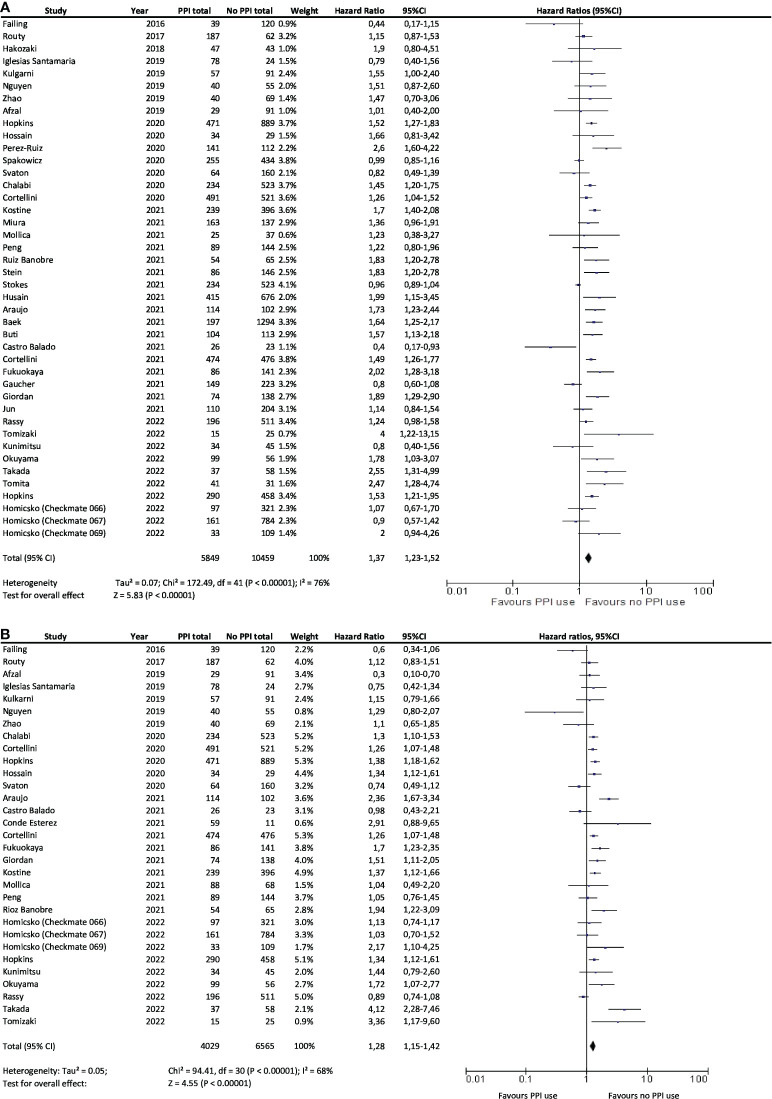
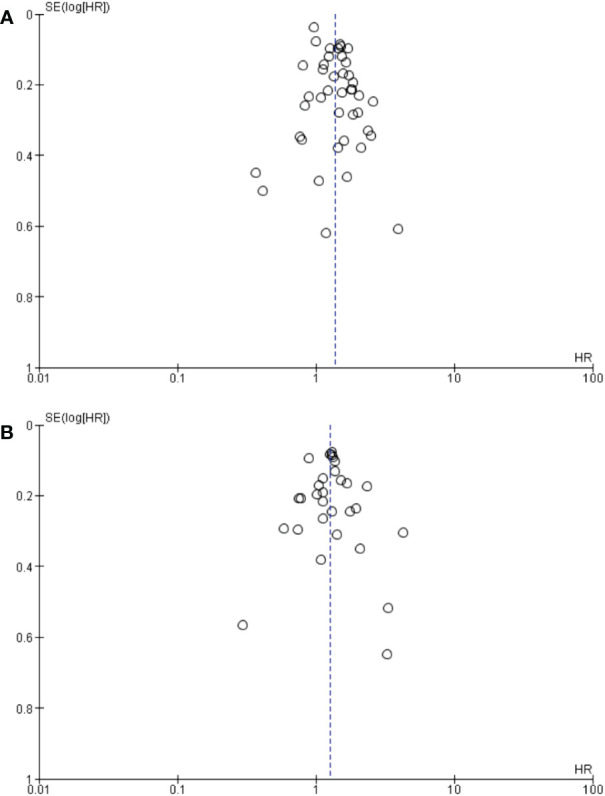
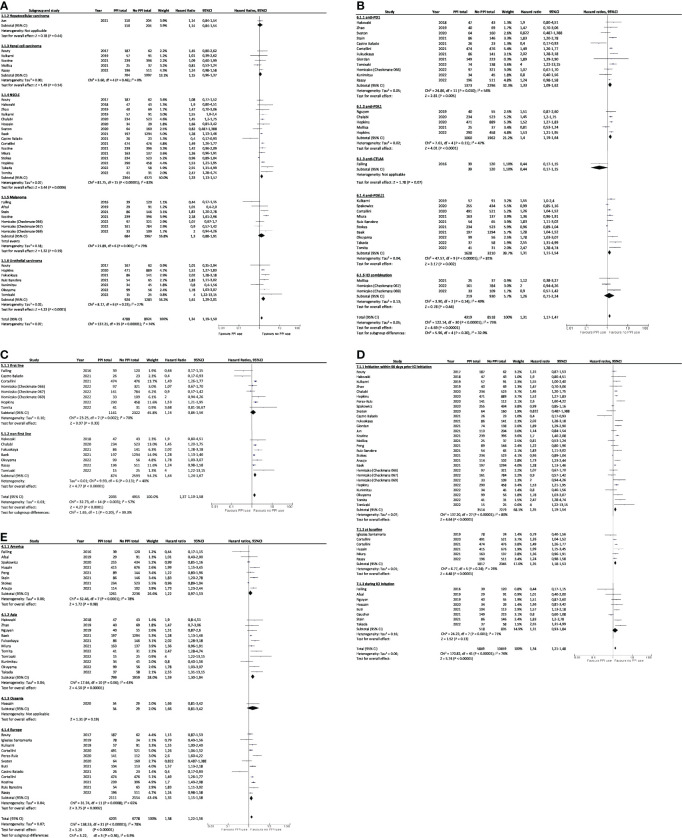
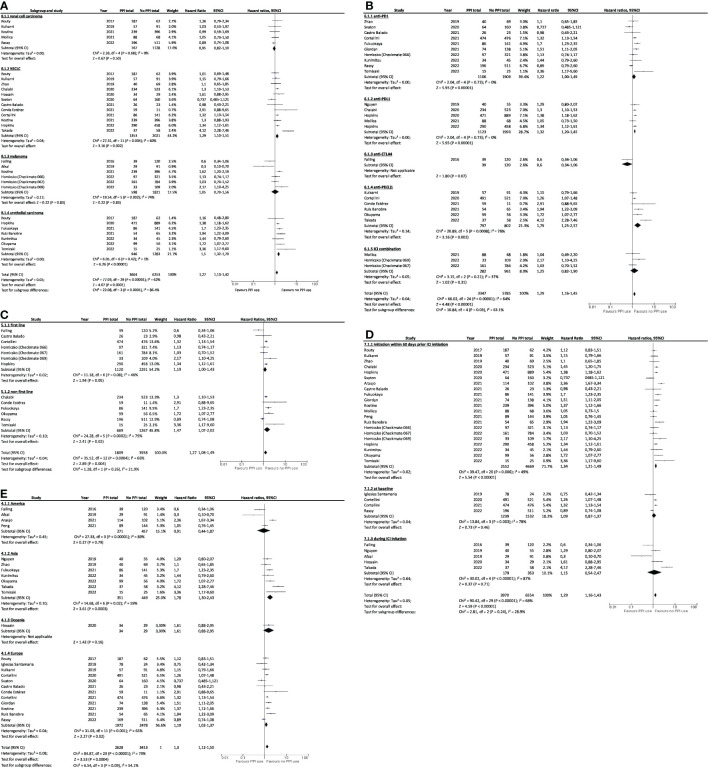
Introduction: Gut microbiota can significantly affect the effectiveness of immune checkpoint inhibitors (ICIs) in cancer patients. Recently, antibiotics were shown to decrease survival rate of patients treated by ICIs. Proton pump inhibitors (PPIs) can indeed modulate microbiota’s diversity, therefore altering ICIs response. A meta-analysis was performed based on published data to verify this hypothesis. Methods: In this study, over 41 publications, exploring the impact of concomitant PPI treatment on outcomes of ICI-treated patients, were analyzed. Evaluated endpoints were overall survival (OS) and progression-free survival (PFS). Pooled hazard ratios (HRs) with a 95% confidence interval (CI) were reported in ICIs in PPI users versus non-PPI users. Subgroup analyses were performed to minimize the impact of study heterogeneity and to investigate the influence of PPI on the different groups of interest. There was no evidence of publication bias for OS and PFS analysis in subgroup analysis. Results: Forty-one studies were included in the meta-analysis, including a total of 20,042 patients. OS of patients receiving ICIs was negatively correlated in patients concomitantly treated with PPI (HR=1.37; 95%CI, 1.23–1.52). PFS of cancer patients receiving ICIs was also negatively correlated with PPI treatment (HR=1.28; 95%CI, 1.15–1.42). PPI and ICI use was associated with worst OS and PFS not only for non-small-cell lung cancer (NSCLC) or urothelial cancer patients but also for patients treated with anti PD-1 (OS) and anti PD-L1 (OS and PFS) immunotherapies when administered in non-first line and when PPI was received as baseline treatment or in 60 days before ICI initiation. PPI and ICI use also showed the worst OS and PFS for patients from Europe and Asia. Conclusion: This meta-analysis suggests that PPI treatment leads to significantly worse outcomes in advanced cancer patients treated by ICIs in terms of PFS and OS.
Overview
The claims and statistics of this paper haven’t been checked yet.
Free: it reads the open-access text and checks the first 5 claims that cite a source we can check. Create a free account to check every claim.
Integrity signals
Registry
Cites
Statistics
Figures
Verification
Claims the paper makes
The claims and statistics of this paper haven’t been checked yet.
Free: it reads the open-access text and checks the first 5 claims that cite a source we can check. Create a free account to check every claim.
Claims other papers make about this one
Each is checked against this paper’s own text: does it say what the citing paper says it does?
The cited source says what the claim attributes to it.
In the citing paper
“Another meta-analysis showed that PPIs—which also affect gut bacterial diversity—can similarly have a negative influence on ICB therapeutic outcomes (Lopes et al., 2023).”
From Microbiota-centered interventions to boost immune checkpoint blockade therapies (2025) · cites this paper as Lopes et al., 2023
The cited source says what the claim attributes to it.
In the citing paper
“Therefore, gut microbial dysbiosis - which can be caused by comedications such as antibiotics (Elkrief et al., 2024b) and proton pump inhibitors (PPIs) (Lopes et al., 2023), the malignancy itself (Yonekura et al., 2022), lifestyle factors (e.g., diet and exercise), and age (Thomas et al., 2023; Zhernakova et al., 2016) - can significantly impair the effectiveness of immunotherapies.”
From Microbiota-centered interventions to boost immune checkpoint blockade therapies (2025) · cites this paper as Lopes et al., 2023
In the citing paper
“Another meta-analysis that examined 41 studies and 20,000 patients similarly demonstrated the negative impact of PPI treatment on patients treated with ICIs.105”
From Gut dysbiosis in oncology: a risk factor for immunoresistance (2026) · doi:10.1038/s41422-025-01212-6 · cites this paper as [105]
Self-check
Percentages, sums and reported differences re-computed from the paper’s own numbers.
The self-check needs the paper’s full text.
Citations
Cites
Gut microbiome influences efficacy of PD-1-based immunotherapy against epithelial tumors
Routy, B., Le Chatelier, E., Derosa, L., Duong, C. P. M., Alou, M. T., Daillère, R., Fluckiger, A., Messaoudene, M., Rauber, C., Roberti, M. P., et al. (2018) · Science · doi:10.1126/science.aan3706 · Cited by 5,671 · cited 5×
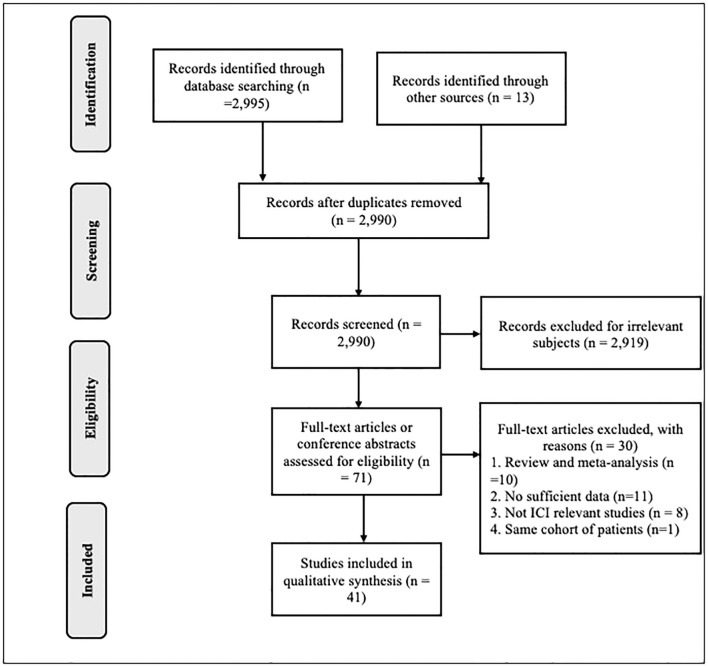
“Finally, 41 publications were eligible and were included in the meta-analysis (17, 18, 19; 20, 21, 10, 22-25, 26; 27-38, 39; 40-43, 44; 45-55, 13).”
BackgroundInfluentialRole of the microbiota in immunity and inflammation.
Belkaid, Y., & Hand, T. W. (2014) · Cell · doi:10.1016/j.cell.2014.03.011 · Cited by 5,385 · cited 1×
“In fact, ICI responses are closely related to the gut microbiome composition (14) because bacteria types or bacteria metabolites modulate the antitumor immunity and inflammation (15).”
BackgroundMetabolites produced by commensal bacteria promote peripheral regulatory T-cell generation
Arpaia, N., Campbell, C., Fan, X., Dikiy, S., van der Veeken, J., deRoos, P., Liu, H., Cross, J. R., Pfeffer, K., Coffer, P. J., et al. (2013) · Nature · doi:10.1038/nature12726 · Cited by 4,838 · cited 6×
“Tomizaki (55) 2022 40 Asia 30 (75) 72 NA Urothelial carcinoma”
BackgroundInfluentialGut microbiome modulates response to anti-PD-1 immunotherapy in melanoma patients
Gopalakrishnan, V., Spencer, C. N., Nezi, L., Reuben, A., Andrews, M. C., Karpinets, T. V., Prieto, P. A., Vicente, D., Hoffman, K., Wei, S. C., et al. (2018) · Science · doi:10.1126/science.aan4236 · Cited by 4,812
Commensal Bifidobacterium promotes antitumor immunity and facilitates anti–PD-L1 efficacy
Sivan, A., Corrales, L., Hubert, N., Williams, J. B., Aquino-Michaels, K., Earley, Z. M., Benyamin, F. W., Man Lei, Y., Jabri, B., Alegre, M.-L., et al. (2015) · Science · doi:10.1126/science.aac4255 · Cited by 3,888 · cited 3×
“In fact, ICI responses are closely related to the gut microbiome composition (14) because bacteria types or bacteria metabolites modulate the antitumor immunity and inflammation (15).”
BackgroundAnticancer immunotherapy by CTLA-4 blockade relies on the gut microbiota
Vétizou, M., Pitt, J. M., Daillère, R., Lepage, P., Waldschmitt, N., Flament, C., Rusakiewicz, S., Routy, B., Roberti, M. P., Duong, C. P. M., et al. (2015) · Science · doi:10.1126/science.aad1329 · Cited by 3,488 · cited 8×
“Median age ECOG PS 0- 1/2 Cancer type ICI treatment Treatment line ICI mon apy or atio Giordan (28) 2021 212 Europe 143 (68) 64 161/50 Multiple Nivolumab, pembrolizumab, ipilimumab First, second, or beyond Monother associatio Hakozaki (29) 2018 90 Asia 57 (63,3) 67 64/26 NSCLC Nivolumab Second or beyond Monother Homic…”
BackgroundInfluentialGut microbiota, metabolites and host immunity
Rooks, M. G., & Garrett, W. S. (2016) · Nature reviews. Immunology · doi:10.1038/nri.2016.42 · Cited by 3,409 · cited 3×
“Routy (47) 2017 249 Europe 177 (71,1) 63 NA Multiple Anti-PD-1, anti-PD-L1, anti-CTLA-4 First, second, or beyond Monothera association”
BackgroundThe commensal microbiome is associated with anti-PD-1 efficacy in metastatic melanoma patients
Matson, V., Fessler, J., Bao, R., Chongsuwat, T., Zha, Y., Alegre, M.-L., Luke, J. J., & Gajewski, T. F. (2018) · Science · doi:10.1126/science.aao3290 · Cited by 3,107 · cited 2×
“Chalabi (10) 2020 757 America/ Europe 471 (62,2) NA 755/NA NSCLC Atezolizumab Second or beyond M”
BackgroundResultThe Intestinal Microbiota Modulates the Anticancer Immune Effects of Cyclophosphamide
Viaud, S., Saccheri, F., Mignot, G., Yamazaki, T., Daillère, R., Hannani, D., Enot, D. P., Pfirschke, C., Engblom, C., Pittet, M. J., et al. (2013) · Science · doi:10.1126/science.1240537 · Cited by 2,050 · cited 3×
“fragilis, which activated Th1 cells and cross-reactivity between bacterial antigens and tumor antigens (68).”
BackgroundProton pump inhibitors affect the gut microbiome
Imhann, F., Bonder, M. J., Vich Vila, A., Fu, J., Mujagic, Z., Vork, L., Tigchelaar, E. F., Jankipersadsing, S. A., Cenit, M. C., Harmsen, H. J. M., et al. (2016) · Gut · doi:10.1136/gutjnl-2015-310376 · Cited by 1,371 · cited 2×
“On the contrary, the population of bacteria associated with resistance to ICIs, such as Bacteroidetes (79) and Escherichia coli (76, 77), increased with PPI treatment.”
Background
Research works printed but not linked: 2
- 16. Wells GA Shea B O’connell D Peterson J Welch V Losos M. The Newcastle-Ottawa scale (NOS) for assessing the quality if nonrandomized studies in meta-analyses. (2009).
- 33. Hossain T Htut S and Pathmanathan S. Immunotherapy efficacy and concomitant proton pump inhibitor use in non-small cell lung cancer. Asia Pac J Clin Oncol (2020) 16: 37.
Cited by
Sawaid, I. O., & Samson, A. O. (2024) · Journal of Clinical Medicine · doi:10.3390/jcm13071970 · Cited by 48
“Conversely, PPI concomitant treatment also leads to significantly worse outcomes in advanced cancer patients [42], increases mortality risk [43], increases risk of disease progression [44] {, and reduces overall survival [45].”
BackgroundPharmacomicrobiomics: The Role of the Gut Microbiome in Immunomodulation and Cancer Therapy
Bolte, L. A., Björk, J. R., Gaćeša, R., & Weersma, R. K. (2025) · Gastroenterology · doi:10.1053/j.gastro.2025.04.025 · Cited by 43
Elkrief, A., Routy, B., Derosa, L., Bolte, L. A., Wargo, J. A., McQuade, J. L., & Zitvogel, L. (2025) · American Society of Clinical Oncology Educational Book · doi:10.1200/edbk-25-472902 · Cited by 43
Lessons learned from a decade of immune checkpoint inhibition: The good, the bad, and the ugly
Adashek, J. J., Moran, J. A., Le, D. T., & Kurzrock, R. (2025) · Cancer and Metastasis Reviews · doi:10.1007/s10555-025-10260-8 · Cited by 38
“It has also been reported that the use of proton pump inhibitors or angiotensin-converting enzyme inhibitors correlates with worse survival in patients receiving ICIs [49, 50].”
Gut–lung axis: role of the gut microbiota in non-small cell lung cancer immunotherapy
Zhang, H., & Xu, Z. (2023) · Frontiers in Oncology · doi:10.3389/fonc.2023.1257515 · Cited by 34
Gamrath, L., Pedersen, T. B., Møller, M. V., Volmer, L. M., Holst-Christensen, L., Vestermark, L. W., & Donskov, F. (2025) · Current Oncology Reports · doi:10.1007/s11912-024-01622-6 · Cited by 30
“They concluded that PPI use negatively affects both OS and PFS in patients receiving immunotherapy [66].”
Lasagna, A., Mascaro, F., Figini, S., Basile, S., Gambini, G., Klersy, C., Lenti, M. V., Sabatino, A. D., Benedetto, A. D., Calvi, M., et al. (2023) · Cancer Medicine · doi:10.1002/cam4.6565 · Cited by 27
“22,23 The dysbiosis caused by PPIs may modulate the antitumor immunity and inflammation, as reported by other authors.”
ResultProton pump inhibitors and cancer treatments: Emerging evidence against coadministration
Raoul, J., & Hansten, P. D. (2024) · Cancer Treatment Reviews · doi:10.1016/j.ctrv.2024.102794 · Cited by 28
Gut dysbiosis in oncology: a risk factor for immunoresistance
(2026) · doi:10.1038/s41422-025-01212-6 · Cited by 24
Pizzutilo, E. G., Romanò, R., Roazzi, L., Agostara, A. G., Oresti, S., Zeppellini, A., Giannetta, L. G., Cerea, G., Signorelli, D., Siena, S., et al. (2023) · Cancer Research · doi:10.1158/0008-5472.can-23-0161 · Cited by 20
Microbiota-centered interventions to boost immune checkpoint blockade therapies
Almonte, A. A., Thomas, S., & Zitvogel, L. (2025) · Journal of Experimental Medicine · doi:10.1084/jem.20250378 · Cited by 19
Drug Repurposing to Circumvent Immune Checkpoint Inhibitor Resistance in Cancer Immunotherapy
To, K. K. W., & Cho, W. C. S. (2023) · Pharmaceutics · doi:10.3390/pharmaceutics15082166 · Cited by 18
Giudice, T. D., Staropoli, N., Tassone, P., Tagliaferri, P., & Barbieri, V. (2024) · Cancers · doi:10.3390/cancers16101806 · Cited by 17
“Recently, another author published a metanalysis regarding PPi exposition and survival in cancer patients treated with immunotherapy that confirmed the negative relationship; also, in this case, the relationship could be modified by the poor quality of life in cancer patients exposed to PPis [51].”
BackgroundNavigating practical challenges in immunotherapy for metastatic triple negative breast cancer
Licata, L., Dieci, M. V., Angelis, C. D., Marchiò, C., Miglietta, F., Cortesi, L., Fabi, A., Schmid, P., Cortés, J., Pusztai, L., et al. (2024) · Cancer Treatment Reviews · doi:10.1016/j.ctrv.2024.102762 · Cited by 17
Ciappina, G., Ottaiano, A., Santorsola, M., Esposito, E., Luca, F. D., Giorgi, C., Zito, C., Capra, A. P., Carroccio, P., Maurea, N., et al. (2025) · Cancers · doi:10.3390/cancers17132228 · Cited by 17
“Previous meta-analyses covered available literature up to November 2022 [16–22].”
Circadian lifestyle determinants of immune checkpoint inhibitor efficacy
Hughes, B. R., Shanaz, S., Ismail-Sutton, S., Wreglesworth, N. I., Subbe, C. P., & Innominato, P. F. (2023) · Frontiers in Oncology · doi:10.3389/fonc.2023.1284089 · Cited by 15
Jaeghere, E. A. D., Hamerlinck, H., Tuyaerts, S., Lippens, L., Nuffel, A. M. T. V., Baiden-Amissah, R. E. M., Vuylsteke, P., Henry, S., Trinh, X. B., van Dam, P. A., et al. (2024) · Gynecologic Oncology · doi:10.1016/j.ygyno.2024.10.020 · Cited by 13
Nutrition and Diet Patterns as Key Modulators of Metabolic Reprogramming in Melanoma Immunotherapy
Grafanaki, K., Maniatis, A., Anastogianni, A., Bania, A., Pasmatzi, E., & Stathopoulos, C. (2025) · Journal of Clinical Medicine · doi:10.3390/jcm14124193 · Cited by 14
“PPIs in metastatic melanoma patients treated with ICI alone or combined ICIs prolonged survival [25–27].”
Clinical Applications of Microbiome in Renal Cell Carcinoma
Elyas, S., Barata, P. C., & Vaishampayan, U. N. (2024) · European Urology Focus · doi:10.1016/j.euf.2024.12.006 · Cited by 9
Shatila, M., Devalaraju, S. S., Takigawa, K., Catinis, C., Lee, I. J.-A., Baerman, E. A., Ngo, S., Mittal, N., Glombicki, S. E., Machado, A. P., et al. (2025) · Journal of the National Comprehensive Cancer Network · doi:10.6004/jnccn.2025.7023 · Cited by 10
The effect of common medications on the efficacy of immune checkpoint inhibitors
Brinzevich, D., Falvello, V. B., Rehmani, S. S., Strohbehn, G. W., Ramnath, N., Dykstra, M. P., Higgins, L. M., Elliott, D., Schipper, M. J., Green, M. D., et al. (2025) · Cancer · doi:10.1002/cncr.70222 · Cited by 10
“In summary, our findings do not support the notion that use of antibiotics, PPIs, H2 antagonists, opioids, or other common supportive medications meaningfully compromises the efficacy of immune checkpoint inhibitors in NSCLC.”
Clinical Applications of the Gut Microbiome in Genitourinary Cancers
Nguyen, C. B., & Vaishampayan, U. N. (2024) · American Society of Clinical Oncology Educational Book · doi:10.1200/edbk_100041 · Cited by 8
Microbiota and immune-related adverse events in cancer immunotherapy
Schneider, S. M., Fan, C., Wang, Y., Jenq, R. R., & Watowich, S. S. (2026) · Nature reviews. Cancer · doi:10.1038/s41568-026-00921-3 · Cited by 8
“Moreover, the use of antibiotics 59,60,151,155,156 or PPIs 154,157,158 during ICI therapy correlates with worsened patient survival outcomes.”
Shibano, M., Takahashi, M., Nakatsukasa, H., Ishigami, Y., Toyokawa, T., Taira, K., Kawaguchi, T., Nakamura, Y., & Kaneda, H. (2025) · Immunotherapy · doi:10.1080/1750743x.2025.2491300 · Cited by 7
Haight, P. J., Kistenfeger, Q., Riedinger, C. J., Khadraoui, W. K., Backes, F. J., Bixel, K. L., Copeland, L. J., Cohn, D. E., Cosgrove, C. M., O’Malley, D. M., et al. (2023) · Gynecologic Oncology · doi:10.1016/j.ygyno.2023.09.005 · Cited by 7
Takahashi, M., Nakatsukasa, H., Shibano, M., Ishigami, Y., Oka, T., Tani, Y., Kawaguchi, T., Nakamura, Y., & Kaneda, H. (2025) · International Journal of Clinical Oncology · doi:10.1007/s10147-025-02805-2 · Cited by 7
Brade, A. M., Bahig, H., Bezjak, A., Juergens, R. A., Lynden, C., Marcoux, N., Melosky, B. L., Schellenberg, D. D., & Snow, S. L. (2024) · Current Oncology · doi:10.3390/curroncol31110483 · Cited by 6
“Although data for ACEIs and AT-1 antagonist appeared promising, the group concluded that more robust evidence is needed for all options to fully understand their clinical benefit.”
Is Immunotherapy With Concomitant Proton Pump Inhibitor Use a Viable Combination?
Stefani, A., & Bria, E. (2023) · JAMA Network Open · doi:10.1001/jamanetworkopen.2023.22922 · Cited by 8
The gut microbiome and dietary metabolites in the treatment of renal cell carcinoma
Zugman, M., Wong, M. H., Jaime‐Casas, S., & Pal, S. K. (2024) · Urologic Oncology Seminars and Original Investigations · doi:10.1016/j.urolonc.2024.07.003 · Cited by 6
Lin, Y., Liao, Y., & Shen, J. (2025) · Frontiers in Immunology · doi:10.3389/fimmu.2025.1682686 · Cited by 5
Wang, N., Xu, Y., Yang, G., Chen, H., Wang, X., Fu, J., Li, L., & Pan, X. (2024) · Journal of Hepatocellular Carcinoma · doi:10.2147/jhc.s464033 · Cited by 5
Takahashi, M., Takahashi, K., Uchida‐Kobayashi, S., Sasa, Y., Yamase, H., Fujiwara, D., Yoshikawa, T., Komatsu, Y., Shibano, M., Arie, H., et al. (2025) · International Journal of Clinical Oncology · doi:10.1007/s10147-025-02922-y · Cited by 4
Han, W., Li, Q., & Yuan, G. (2026) · Frontiers in Immunology · doi:10.3389/fimmu.2026.1802676 · Cited by 4
“(41) possibility that acid suppression perturbs the gut ecosystem in ways that are unfavorable for checkpoint ef fi cacy in some contexts (48).”
Azarkan, S. Y., Arslan, H. S., & Akçay, S. (2026) · Drug Metabolism Reviews · doi:10.1080/03602532.2026.2671428 · Cited by 5
“…pump inhibitors (PPis), which cause marked alterations in gut microbial composition and have been associated with adverse ici treatment outcomes (lopes et al. 2023). these findings collectively highlight the clinical necessity of avoiding unnecessary antibiotic or PPi use in patients receiving…”
Tsuboi, I., Matsukawa, A., Parizi, M. K., Miszczyk, M., Fazekas, T., Schulz, R. J., Laukhtina, E., Kawada, T., Katayama, S., Iwata, T., et al. (2025) · BMC Urology · doi:10.1186/s12894-025-01754-2 · Cited by 4
“Our analysis revealed that concomitant PPIs use was negatively associated with both OS and PFS in metastatic UC patients treated with ICIs, in accordance with the results of previous studies [33, 38, 39].”
Tsuboi, I., Matsukawa, A., Parizi, M. K., Miszczyk, M., Fazekas, T., Schulz, R. J., Mancon, S., Litterio, G., Laukhtina, E., Kawada, T., et al. (2024) · Clinical Genitourinary Cancer · doi:10.1016/j.clgc.2024.102237 · Cited by 4
Valsecchi, A. A., Ferrari, G., Paratore, C., Dionisio, R., Vignani, F., Sperone, P., Vellani, G., Novello, S., & Maïo, M. D. (2024) · Critical Reviews in Oncology/Hematology · doi:10.1016/j.critrevonc.2024.104328 · Cited by 4
Yiu, C. H., Winardi, K., & Lu, C. Y. (2026) · Current Oncology Reports · doi:10.1007/s11912-026-01789-0 · Cited by 6
“Time-series modelling captures dynamic vulnerability windows and critical exposure periods during therapy [26, 27, 39].”
InfluentialSekito, T., Bekku, K., Katayama, S., Watanabe, T., Tsuboi, I., Yoshinaga, K., Maruyama, Y., Yamanoi, T., Kawada, T., Tominaga, Y., et al. (2024) · Clinical Genitourinary Cancer · doi:10.1016/j.clgc.2024.102097 · Cited by 3
Alves, E., Gurupadayya, B., & Prabhakaran, P. (2025) · Clinical Cancer Drugs · doi:10.2174/012212697x375313250623163944 · Cited by 2
Xavier, C. B., Andersen, C. R., Lim, J. T., Slade, J. H., Bean, S. A., Kang, L., Le, H., Tsimberidou, A. M., Naing, A., Hong, D. S., et al. (2025) · Cancer Research Communications · doi:10.1158/2767-9764.crc-25-0033 · Cited by 2
“This is consistent with prior retrospective (12) and metagenomic (13) investigations showcasing that PPIs can modify the composition of the gut microbiome (14), potentially through downstream translocation of oral commensals, thereby altering its immunomodulatory properties and impairing the…”
Gut microbiota and metabolites: emerging prospects in the treatment of non-small cell lung cancer
Jiao, J.-M., Liu, C., Zang, D., & Chen, J. (2025) · Frontiers in Immunology · doi:10.3389/fimmu.2025.1638942 · Cited by 3
The role of microbiome in immunotherapy: Insights and perspectives
Ye, M., Ju, H., Ren, G., & Hu, J. (2025) · Seminars in Cancer Biology · doi:10.1016/j.semcancer.2025.11.001 · Cited by 4
Association of proton pump inhibitor use with outcome of patients with recurrent glioblastoma
Rhun, É. L., Sain, D., van den Bent, M. J., Franceschi, E., Tabatabai, G., Wick, W., Preusser, M., Gorlia, T., & Weller, M. (2026) · European Journal of Cancer · doi:10.1016/j.ejca.2026.116225 · Cited by 2
Japelj, N., Horvat, N., Jazbar, J., Kerec Kos, M., Pelicon, V., & Knez, L. (2026) · Frontiers in Immunology · doi:10.3389/fimmu.2026.1682723 · Cited by 2
“Clinically, exposure to these medicines has been independently linked to reduced mOS in mNSCLC patients receiving ICIs (28 – 32).”
The Complex Interaction between Proton Pump Inhibitors and Cancer Treatment
Chen, H., Kondo, M., Horita, N., Takahashi, K. P., & Kaneko, T. (2023) · Cancers · doi:10.3390/cancers15225346 · Cited by 2
Maffezzoli, M., GIUDICE, G. C., IOVANE, G., Manini, M., Rapacchi, E., CARUSO, G., Simoni, N., Ferretti, S., Puliatti, S., Campobasso, D., et al. (2025) · Oncology Research Featuring Preclinical and Clinical Cancer Therapeutics · doi:10.32604/or.2024.057278 · Cited by 1
“…Actinomyces spp., Rothia mucilaginosa , Rothia dentocariosa ) and Bacteroidetes and Escherichia coli , were increased, due to the reduction of gastric acid secretion that would normally prevent translocation and accumulation of both ingested microbial pathogens and commensal microorganisms [12].”
InfluentialCaramella, I., Abeni, C., Cherri, S., Ogliosi, C., Morena, T., Galvagni, G., Meriggi, F. A., & Zaniboni, A. (2026) · Cancers · doi:10.3390/cancers18030497 · Cited by 1
“Similar detrimental effects have been reported for proton pump inhibitors and corticosteroids, which are known to impair microbiome diversity and immune activation [31,32].”
Luo, Z., Xu, D., Wang, Z., Wu, L., Ou, C., & Ou, Z. (2026) · Genes & Diseases · doi:10.1016/j.gendis.2026.102270 · Cited by 1
“140 144”
Ma, H., Lyu, X., Lu, S., Wang, X., Sun, C., & Shu, Y. (2026) · Journal of Thoracic Disease · doi:10.21037/jtd-2026-1-0341 · Cited by 1
Sagawa, T., Hirakawa, M., Nagashima, H., & Fujikawa, K. (2026) · Medical Oncology · doi:10.1007/s12032-026-03434-z · Cited by 1
“An earlier meta-analysis of 41 studies including 20,042 patients reported shorter OS (HR 1.37, 95% CI 1.23–1.52) and PFS (HR 1.28, 95% CI 1.15–1.42) with PPI exposure [31].”
InfluentialBridoux, M., Aymes, E., Conroy, T., Gourgou, S., Carnot, A., Borg, C., Deley, M. L., & Turpin, A. (2025) · ESMO Gastrointestinal Oncology · doi:10.1016/j.esmogo.2024.100119 · Cited by 1
Fiala, O., Hošek, P., Tkadlecová, M., Melichar, B., Zemánková, A., Kopecký, J., Vočka, M., Matějů, M., Lohynská, R., Šiková, D., et al. (2025) · Clinical & Experimental Metastasis · doi:10.1007/s10585-025-10347-0 · Cited by 1
Strobach, D., Haimerl, L., Mannell, H., Stief, C. G., Karl, A., Grimm, T., & Büchner, A. (2023) · Journal of Clinical Medicine · doi:10.3390/jcm12216749
“Survival data concerning PPI intake in UCB patients focus on special treatments, like the effects of PPI on immune checkpoint inhibitors; a recent review found significantly worse outcomes in advanced-cancer patients regarding PFS and OSS [49].”
BackgroundShen, Y., Chen, J.-Q., Yu, Z., Lin, Z.-L., Cao, L., Li, H., Li, Y., Meng, Y., Li, B., Chen, J., et al. (2025) · Research Square · doi:10.21203/rs.3.rs-6615560/v1
Chalif, J., Morton, M. A., McLaughlin, E. M., Gonzalez, A., Fulton, J., Sciuva, J., Marcu, I., Bixel, K. L., Cohn, D. E., Cosgrove, C. M., et al. (2025) · Gynecologic Oncology Reports · doi:10.1016/j.gore.2025.101782
Park, S. M., Jeong, J., Kim, Y. J., & Lee, J. (2025) · Scientific Reports · doi:10.1038/s41598-025-05899-w
“Moreover, the effects of the concurrent medications were comparable to those reported in other studies 9,26,27 .”
Role of Crosstalk between Microbiota and Immune System in Cancer Immunotherapy
Ciappina, G., Carroccio, P., Bignoli, F., Santarpía, M., Mauro, G. D., & Berretta, M. (2025) · IntechOpen eBooks · doi:10.5772/intechopen.1011506 · Cited by 1
Wishahi, M. (2026) · World Journal of Gastrointestinal Pharmacology and Therapeutics · doi:10.4292/wjgpt.v17.i1.115573
“Microbial modulation has an effect on immune response that has an influence on tumor microenvironments and response to treatment of BCa[28].”
InfluentialLi, H., Zhang, J., Shen, L., & Luo, P. (2026) · International Journal of Clinical Oncology · doi:10.1007/s10147-026-03014-1
Baiden-Amissah, R. E. M., Tuyaerts, S., Annibali, D., Herreros‐Pomares, A., Wispelaere, W. D., Benedetto, R. M., Jaeghere, E. A. D., Nuffel, A. V., Vuylsteke, P., Henry, S., et al. (2026) · Frontiers in Immunology · doi:10.3389/fimmu.2026.1794131
Sun, X., Li, X.-M., Liu, W.-Z., Qu, K.-Q., Li, T.-H., Ding, J.-N., Lu, D.-F., Liu, X.-H., Lin, Y., Liang, X., et al. (2026) · Annals of Surgical Oncology · doi:10.1245/s10434-026-19837-1
“8,9 Retrospective studies in unresectable advanced or recurrent gastric cancer suggest that PPI exposure may attenuate nivolumab efficacy and shorten progression-free survival.”
Diebakate, L., Ben-Romdhane, N.-I., Dartigues, P., Bani, M. A., & Smolenschi, C. (2026) · European Journal of Cancer · doi:10.1016/j.ejca.2026.116931
Mao, G., & Lan, H. (2026) · Journal for ImmunoTherapy of Cancer · doi:10.1136/jitc-2026-015908
Ishigami, Y., Takahashi, M., Nakatsukasa, H., Shibano, M., Kato, M., Takahashi, K., Uchida, J., Nakamura, Y., & Kaneda, H. (2026) · Immunotherapy · doi:10.1080/1750743x.2026.2702265
Kuang, G., Qiu, Z., Li, L., Bai, J., Ji, H., & Liu, Y. (2026) · Frontiers in Cell and Developmental Biology · doi:10.3389/fcell.2026.1893882
“Current evidence more strongly supports the view that antibiotics, proton pump inhibitors, and glucocorticoids can alter the tumor immune background by influencing gut microbiota, systemic immunity, and ICI efficacy (Routy et al., 2018; Lopes et al., 2023; Jessurun et al., 2021).”
Yamaguchi, M., Uozumi, R., Eto, T., Fujimoto, A., Iihara, H., HATAKEYAMA, T., Higuchi, A., Maehara, Y., Fujii, H., Tamaki, S., et al. (2026) · iScience · doi:10.1016/j.isci.2026.117014
“8,9 25 In recent years, accumulating evidence suggests that microbe-immunotherapy interactions could be categorized by the tumor immune microenvironment (TIME) mechanistic framework.”
Kitahara, M., Saito, K., Oki, Y., Kuniyoshi, N., Nomura, S., Fujisawa, M., & Kogure, H. (2026) · Cancers · doi:10.3390/cancers18162555 · Cited by 1
Lu, L.-H., Zeng, Z.-Y., Guan, Z.-Q., 王娈, Qi, X.-Y., & Zhang, S. (2026) · Journal of Clinical Question · doi:10.69854/jcq.2026.0021
Li, J., Li, D.-H., Liu, Y., Zhang, Y.-P., Guo, Q.-Q., Xiao-Jing, Z. H. U., Wang, Y.-R., & Shi, Y.-Q. (2026) · Frontiers in Nutrition · doi:10.3389/fnut.2026.1868431
“Antibiotics, proton pump inhibitors (PPIs), and dietary exposures may influence ICI efficacy and survival through gut microbiota remodeling and changes in microbial metabolic output (4, 5).”
Ma, M., Hu, G., Hao, Y., Yu, H., Mou, R., & Jia, Y. (2026) · Pharmacology & Therapeutics · doi:10.1016/j.pharmthera.2026.109124
Ihara, Y., Okada, N., Mizutani, M., Nakamura, Y., Shimomura, Y., & YAMAMOTO, S. (2026) · Pharmacoepidemiology and Drug Safety · doi:10.1002/pds.70478
Cancer and the microbiome: from association to intervention
Moradi, A., Winayak, R., & Pal, S. K. (2026) · The Lancet Oncology · doi:10.1016/s1470-2045(26)00326-8
Proton Pump Inhibitors and the Gut Microbiota: From Mechanisms to Clinical Implications
Deutschbein, F., Severino, A., Ferrari, M., Capuano, E., Fusco, W. G., Varca, S., Rondinella, D., Galasso, T., Porcari, S., Gasbarrini, A., et al. (2026) · Microorganisms · doi:10.3390/microorganisms14102236
“In particular, increasing evidence indicates that concomitant PPI use is associated with the reduced efficacy of immune checkpoint inhibitors (ICI) [110,111].”
InfluentialVattaire-Hervé, M., Barbe, C., Bouazzi, L., & Parent, D. (2026) · Journal of Oncology Pharmacy Practice · doi:10.1177/10781552261496825
Xu, Z., Wu, X., 林敏美, & 叶林淼 (2026) · Research Square · doi:10.21203/rs.3.rs-10912025/v1
Proton pump inhibitors in prevention of cisplatin-induced nephrotoxicity: a systematic review
Pakkhesal, S., Mohammadi, P., Rezagholizadeh, A., Koochaki, Z., Ramezani, M. A., Azampour, A., Khederbaigi, M., Khiali, S., & Gharekhani, A. (2026) · Supportive Care in Cancer · doi:10.1007/s00520-026-11435-x
Sridharan, K., Roviello, G., Massari, F., Sivaramakrishnan, G., Calandrelli, C., & Santoni, M. (2026) · Expert Opinion on Pharmacotherapy · doi:10.1080/14656566.2026.2749651
Metadata
- Authors
- Lopes, S., Pabst, L., Dory, A., Klotz, M., Gourieux, B., Michel, B., & Mascaux, C.
- Affiliations
- Hôpitaux Universitaires de Strasbourg (FR)
- Inserm (FR)
- Corresponding author
- Mascaux, Céline
- Venue
- Frontiers in Immunology
- Publisher
- Frontiers Media SA
- Published
- 2023-01-26
- Volume
- 14
- Pages
- 1070076-1070076
- ISSN
- 1664-3224 (ISSN-L)
- PMC
- PMC9910608
- OpenAlex
- W4318049653
- Cited by
- 75
- References
- 85
- Citations by year
- 2026: 28 · 2025: 24 · 2024: 14 · 2023: 9
- FWCI
- 2.43
- Type
- journal article
- Language
- en
- Open access
- gold
- doi.org
- Licence
- Locations
- Frontiers in Immunology (publishedVersion, cc-by)
- PubMed Central (publishedVersion, cc-by)
- PubMed (publishedVersion)
- DOAJ (DOAJ: Directory of Open Access Journals) (submittedVersion, cc-by-sa)
- Topics
- Health Sciences › Medicine › Oncology › Cancer Immunotherapy and Biomarkers
- Life Sciences › Biochemistry, Genetics and Molecular Biology › Molecular Biology › Gut microbiota and health
- Life Sciences › Biochemistry, Genetics and Molecular Biology › Cancer Research › Ferroptosis and cancer prognosis
- Keywords
- proton pump inhibitors, immune checkpoint inhibitors, gut microbiota, cancer immunotherapy, overall survival, progression-free survival, non-small cell lung cancer, urothelial carcinoma, anti-PD-1 therapy, PD-L1 blockade, antibiotic use, drug-drug interactions
- MeSH terms
- Immune Checkpoint Inhibitors, Urinary Bladder Neoplasms, Carcinoma, Non-Small-Cell Lung, Humans, Lung Neoplasms, Proton Pump Inhibitors
About these checks
Registry, retraction, Cites and statistics results are computed, not judged, with one exception: a printed reference that no index lists is read once by a model before it counts as a citation error. Claims are extracted by a model and kept only when their quote appears verbatim in the text; each cited source is then checked, with a model’s help, for whether it says what the claim relies on. Those verdicts can be wrong — read the claim’s quote and the cited source before relying on one.
Statistics and arithmetic are recomputed, not judged.
Confidence bands are shown only for fields calibrated on our annotated test set. None is calibrated yet, so no band is shown.
What counts as a claim ›How we measure confidence ›How we check this ›
Are you an author, or do you see a problem with this page? Request a review
Data sources
Bibliographic data: Semantic Scholar, OpenAlex, Crossref.
Contains information from the Semantic Scholar Academic Graph Datasets, made available under the ODC Attribution License (ODC-BY 1.0).
Semantic Scholar’s data is described in: Kinney, R., et al. (2023). The Semantic Scholar Open Data Platform. arXiv:2301.10140.
