

Glucagon-like peptide-1: a multi-faceted anti-inflammatory agent
Open accessThe DOI matches its Crossref record; 208 of the 208 references it cites were found in a registry or an index.
Abstract
Inflammation contributes to many chronic conditions. It is often associated with circulating pro-inflammatory cytokines and immune cells. GLP-1 levels correlate with disease severity. They are often elevated and can serve as markers of inflammation. Previous studies have shown that oxytocin, hCG, ghrelin, alpha-MSH and ACTH have receptor-mediated anti-inflammatory properties that can rescue cells from damage and death. These peptides have been studied well in the past century. In contrast, GLP-1 and its anti-inflammatory properties have been recognized only recently. GLP-1 has been proven to be a useful adjuvant therapy in type-2 diabetes mellitus, metabolic syndrome, and hyperglycemia. It also lowers HbA1C and protects cells of the cardiovascular and nervous systems by reducing inflammation and apoptosis. In this review we have explored the link between GLP-1, inflammation, and sepsis.
Overview
The claims and statistics of this paper haven’t been checked yet.
Free: it reads the open-access text and checks the first 5 claims that cite a source we can check. Create a free account to check every claim.
Integrity signals
Registry
Cites
Statistics
Figures
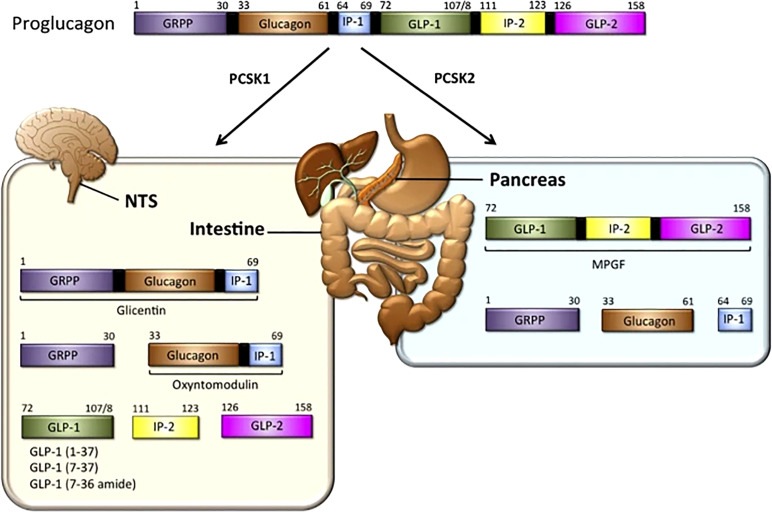
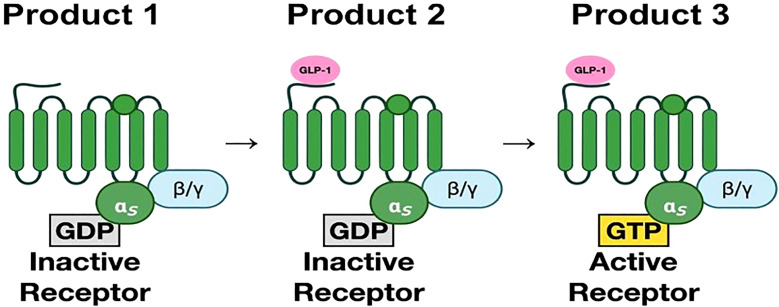
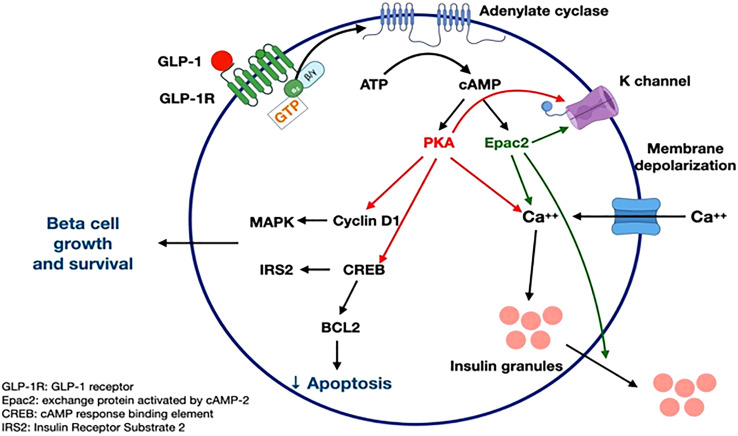
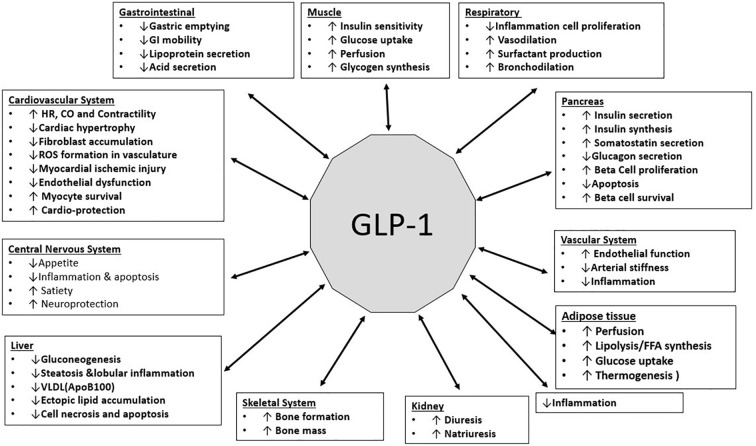
Verification
Claims the paper makes
The claims and statistics of this paper haven’t been checked yet.
Free: it reads the open-access text and checks the first 5 claims that cite a source we can check. Create a free account to check every claim.
Claims other papers make about this one
Each is checked against this paper’s own text: does it say what the citing paper says it does?
The source backs part of the claim, not all of it — or backs it for a different population, condition or comparison.
In the citing paper
“Additionally, GLP-1 mitigates liver inflammation and fibrosis by inhibiting the NF-κB pathway, reducing the release of pro-inflammatory cytokines such as TNF-α and IL-6, and thus suppressing inflammatory pathways.307,413”
From Glucagon-like peptide-1 receptor: mechanisms and advances in therapy (2024) · cites this paper as [413]
Experimental — accuracy not yet measuredThe cited source says what the claim attributes to it.
In the citing paper
“By modulating inflammatory responses, GLP-1RAs can help prevent the degeneration of dopamine-producing cells.413”
From Glucagon-like peptide-1 receptor: mechanisms and advances in therapy (2024) · cites this paper as [413]
The cited source says what the claim attributes to it.
In the citing paper
“Treatment with liraglutide reduced NADPH oxidase activity, increased cAMP-PKA activity, and reduced mesangial expansion in mouse models.69,70”
From Anti-inflammatory role of glucagon-like peptide 1 receptor agonists and its clinical implications (2024) · cites this paper as [69]
Self-check
Percentages, sums and reported differences re-computed from the paper’s own numbers.
The self-check needs the paper’s full text.
Citations
Cites
The third international consensus definitions for sepsis and septic shock (Sepsis-3).
Singer, M., Deutschman, C. S., Seymour, C. W., Shankar-Hari, M., Annane, D., Bauer, M., Bellomo, R., Bernard, G. R., Chiche, J.-D., Coopersmith, C. M., et al. (2016) · JAMA · doi:10.1001/jama.2016.0287 · Cited by 28,250
A synaptic model of memory: long-term potentiation in the hippocampus
Bliss, T. V. P., & Collingridge, G. L. (1993) · Nature · doi:10.1038/361031a0 · Cited by 11,566
Kalia, L. V., & Lang, A. E. (2015) · The Lancet · doi:10.1016/s0140-6736(14)61393-3 · Cited by 6,184
Inflammation, stress, and diabetes
Wellen, K. E., & Hotamisligil, G. S. (2005) · Journal of Clinical Investigation · doi:10.1172/jci25102 · Cited by 4,143
Biology of Incretins: GLP-1 and GIP
Baggio, L. L., & Drucker, D. J. (2007) · Gastroenterology · doi:10.1053/j.gastro.2007.03.054 · Cited by 3,639
The Physiology of Glucagon-like Peptide 1
Holst, J. J. (2007) · Physiological Reviews · doi:10.1152/physrev.00034.2006 · Cited by 3,371 · cited 1×
“GLP-1 is also involved in multiple other physiological processes including appetite, cardiovascular function, and inflammation (1).”
Background(2020) · PubMed · Cited by 2,642
2022 Alzheimer's disease facts and figures
(2022) · Alzheimer's & Dementia · doi:10.1002/alz.12638 · Cited by 2,341
The prevalence of Parkinson's disease: a systematic review and meta-analysis
Pringsheim, T., Jette, N., Frolkis, A., & Steeves, T. D. L. (2014) · Movement Disorders · doi:10.1002/mds.25945 · Cited by 2,188
Tirzepatide versus Semaglutide Once Weekly in Patients with Type 2 Diabetes
Frías, J. P., Davies, M. J., Rosenstock, J., Pérez Manghi, F. C., Fernández Landó, L., Bergman, B. K., Liu, B., Cui, X., & Brown, K. (2021) · New England Journal of Medicine · doi:10.1056/nejmoa2107519 · Cited by 2,096
Research works printed but not linked: 1
- 44. Dungan K, DeSantis A. Glucagon-like peptide 1-based therapies for the treatment of type 2 diabetes mellitus. in: Uptodate. Post DN, (Ed.), UpToDate. Waltham, MA: UpToDateInc. Available at: https://www.uptodate.com/contents/glucagon-like-peptide- 1-based-therapies-for-the-treatment-of-type-2-diabetes-mellitus.
Cited by
Items 301–344 of 344
Jacobsen, L., Viana, D. P. D. C., Folador, G. M., Schor, E., & Invitti, A. L. (2026) · International Journal of Molecular Sciences · doi:10.3390/ijms27135678
“Population studies have reported independent associations between endometriosis and metabolic syndrome, hypercholesterolemia, systemic arterial hypertension, type 2 diabetes mellitus, and coronary artery disease, including in patients without clinically recognized obesity [5,7,8,24].”
InfluentialTentolouris, A., Popovic, D. S., Liarakos, A. L., Briasoulis, Α., Παπάνας, Ν., & Koufakis, T. (2026) · Diabetes Obesity and Metabolism · doi:10.1111/dom.71045
Zhang, N., Han, J., Li, X., Xu, H., Wang, X., & Jiao, B. (2026) · Kidney & Blood Pressure Research · doi:10.1159/000553297
Grech, M., Grech, G., Schembri, J., Fenech, A., & Fava, S. (2026) · 老年心脏病学杂志:英文版 · doi:10.26599/1671-5411.2026.06.007
Webster, S. E., Terry, J., Tsuji, N. L., Heck, D., & Holodick, N. E. (2026) · ImmunoHorizons · doi:10.1093/immhor/vlag038
Kotanidou, S., Dampali, R., Devaja, O., Montalto, S. A., Godfrey, M., Papadopoulos, A., Daniilidis, A., Nikolettos, N., & Nikolettos, K. (2026) · Reproductive Medicine · doi:10.3390/reprodmed7030034
Liu, H., 张庆红, Du, M., Hao, J., 牛玉梅, You, H., Cao, D., Tang, R., 杨艳艳, Wei, X., et al. (2026) · Clinical Nutrition · doi:10.1016/j.clnu.2026.106740
Optimizing GLP-1 Receptor Agonist Use: Mechanisms, Clinical Applications, and Safety Profiles
(2026) · Frontiers research topics · doi:10.3389/978-2-8325-8391-3
Elborei, M., Ashour, A. A., El-Latif, H. A. E.-T. A., & Akool, E. (2026) · International Immunopharmacology · doi:10.1016/j.intimp.2026.117277
Perioperative Optimization Strategies in Major Genitourinary Cancer Surgery
Yellu, A., Weitzner, A. S., Cronin, C., Kim, J. K., & Lokeshwar, S. D. (2026) · Cancers · doi:10.3390/cancers18162588 · Cited by 1
“These medications mimic the incretin hormone, glucagon-like-Peptide-1, that is secreted by intestinal L-cells in response to nutritional intake [50].”
InfluentialObesity-associated unfolded protein response, oxidative stress, and NRF2 signaling
Özgür, Ş., Medoro, A., Davinelli, S., Bender, N., Saso, L., & Telkoparan‐Akillilar, P. (2026) · International Journal of Obesity · doi:10.1038/s41366-026-02188-y
Khalaf, R., Chow, W., Lazarowitz, R., Netchiporouk, E., Rao, J., Tardio, V., & Litvinov, I. V. (2026) · Journal of Cutaneous Medicine and Surgery · doi:10.1177/12034754261467034 · Cited by 1
Insulin resistance and asthma: from pathogenic pathways to therapeutic opportunities
Amin, A. M., & Mostafa, H. M. A. (2026) · Journal of Pharmacy and Pharmacology · doi:10.1093/jpp/rgag085
Zimmerman, E. A., & Shirani, A. (2026) · Springer eBooks · doi:10.1007/978-3-032-13040-2_3
Ono, T. (2026) · Clinical and Investigative Orthodontics · doi:10.1080/27705781.2026.2719107
Wang, Y., Hao, D., Fan, X., Pan, L., Duan, H., Yan, J., Yao, Y., Zha, M., SARUN, P., Du, Y., et al. (2026) · European Journal of Pharmacology · doi:10.1016/j.ejphar.2026.179251
Elmongy, N. F., ABBAS, M. A. M., Elshora, S. Z., Meawad, S. B., Atwa, A., Allam, A., Elshamy, A. I., & El‐Gendy, Z. A. (2026) · Tissue and Cell · doi:10.1016/j.tice.2026.103910
Jovanović, M., Marković, B. S., Gajović, N., Jovanovic, M. M., Jocić, M., Stojanović, B., Corovic, I. F., Todorović, N., Jovanović, I., & Amedei, A. (2026) · World Journal of Gastroenterology · doi:10.3748/wjg.123426
Rethinking acne vulgaris: from pathogenic mechanisms to targeted therapies
Rymanowska, B. A., Rachwal, N., Białowąs, W., & Puchniarz, H. (2026) · Forum Dermatologicum · doi:10.5603/fd.113792
Malluhi, M., Al-Naemi, A., & Akhtar, S. (2026) · Biomolecules and Biomedicine · doi:10.17305/bb.2026.14701
GIORGIO, C. M., Romanò, C., Arisi, M., Rossi, M., Venturini, M., Mezzana, S., Grigolato, L., Gallì, B., Nicoletti, M. M., Tomasi, C., et al. (2026) · Dermatology and Therapy · doi:10.1007/s13555-026-01916-6
“This distinction supports the concept that many dermatologic effects of GLP-1RAs result from systemic immunometabolic reprogramming rather than direct pharmacologic stimulation of skin cells [1, 3, 22, 23].”
Psychiatric Safety of GLP ‐1 and Dual GIP / GLP ‐1 Receptor Agonists in Adolescents With Obesity
Liu, T., Shen, Y., Kuo, T., Wu, J., Lin, C., & Lai, C. (2026) · Diabetes Obesity and Metabolism · doi:10.1111/dom.71353
Domazet, S. L., Sharfo, A., Olesen, T. B., Stidsen, J. V., Nielsen, J. S., Thomsen, R. W., Jessen, N., Vestergaard, P., Andersen, M. K., Hansen, T. F., et al. (2026) · European Journal of Preventive Cardiology · doi:10.1093/eurjpc/zwag495
Tu, C.-Y., Chen, H.-L., Wu, Y.-H., & Wu, M. (2026) · Diabetes Research and Clinical Practice · doi:10.1016/j.diabres.2026.113573
Feješ, A., Szabó, J., Sušienková, P., Bačiak, L., Mihalovičová, L., Šarayová, V., Borbélyová, V., & Šebeková, K. (2026) · Metabolic Brain Disease · doi:10.1007/s11011-026-01989-4
“Likewise, the increase in fasting plasma GLP-1, consistent with previous findings in diet-induced obesity (Pinyo et al. 2021), may represent a compensatory glucose-lowering and anti-inflammatory response (Mehdi et al. 2023 ).”
Pan, J., Guo, C., Huang, Q., Zhang, Y., Shen, Y., & Guo, C. (2026) · British Journal of Hospital Medicine · doi:10.31083/bjhm55884
Popa, E., Popa, A. E., Poroch, V., Schreiner, T. G., Slănină, A. M., Poroch, M., Hatneanu, A. M., Ungureanu, M. I., Petroaie, A. D., Bacușcă, A. I., et al. (2026) · International Journal of Molecular Sciences · doi:10.3390/ijms27198738
“These shared metabolic and inflammatory mechanisms have prompted interest in GLP-1-based therapies as potential interventions for neurological disease, building on their established efficacy in obesity and T2DM [10–14].”
GLP ‐1‐based therapy and early response to advanced treatment in atopic dermatitis with obesity
Paolino, G., Carugno, A., Nicola, M. R. D., Valenti, M., Alessandra, N., Ibba, L., Zerbinati, N., Costanzo, A., & Mercuri, S. R. (2026) · Journal of the European Academy of Dermatology and Venereology · doi:10.1111/jdv.70781
Bigda, P., Rafałowska, Z., Rutz, S., Wojtala, A., Kret, J., Wyrostkiewicz, A., Sadkowski, A., Gdula, J., Zielińska, L., Szpunar, M., et al. (2026) · International Journal of Innovative Technologies in Social Science · doi:10.31435/ijitss.3(51).2026.6153
박수민, Lee, B., Kim, D., Sunirmal, S., Lee, M. G., Lee, H., Ock, S. A., & Yoo, J. G. (2026) · PLoS ONE · doi:10.1371/journal.pone.0359086 · Cited by 1
Mechanism Of Action Of Vildagliptin And Its Role In Type 2 Diabetes Management
Bukhari, Y. A., Almuafi, O. S., AlHarbi, H. M., Bazuhair, R. Y., Almakati, S. A., Alzahrani, W. J., Alomayri, N. S. A., Alosaimi, A. A. M., Homadi, G. Y. A., Almutairi, B. R., et al. (2024) · The Review of Diabetic Studies · doi:10.70082/v43vz566
Integrasi Neurosains dalam Media Puzzle sebagai Model Stimulasi Kognitif Anak Usia Dini
Nursholichah, K. U., & Hibana, H. (2026) · Murhum Jurnal Pendidikan Anak Usia Dini
Tauseef, U., Farook, F., Shetty, V. J., Ramos-Ocola, E., Premkumar, C. R., Haider, M., Gandhi, A., Shingala, T. S., Singh, S., TAHIR, M. M., et al. (2026) · Reproductive Medicine · doi:10.3390/reprodmed7040055
Efsubaglutide Alfa: A Comprehensive Pharmacological Review
Zheng, H., Yan, R., Jiang, F., Li, Y., Prud’homme, G. J., & WANG, Q. (2026) · Clinical Pharmacokinetics · doi:10.1007/s40262-026-01713-6 · Cited by 1
Tian, W., 王文昭, Tang, S., Su, L., Cooney, R., Tian, X., & Meng, Q. (2026) · European Journal of Pharmacology · doi:10.1016/j.ejphar.2026.179426
Nelson, A. E., Callahan, L. F., Schnitzer, T. J., & Batsis, J. A. (2026) · Current Medical Research and Opinion · doi:10.1080/03007995.2026.2741495
Semaglutide in Patients with Obesity and Psoriasis: Insights from an 18-Month Real-World Experience
Proietti, I., & Potenza, C. (2026) · Journal of Clinical Medicine · doi:10.3390/jcm15208015
“…conditions (e.g., non-alcoholic steatohepatitis, atherosclerosis, neurodegenerative disorders, diabetic nephropathy and asthma) [15,16], research on GLP-1RAs is still ongoing in an attempt to establish the efficacy and safety of these molecules in the treatment of inflammatory diseases [11,17,18].”
Rivera, N., Bradley, T., Crowell, K., Goodwin, C. R., & Erickson, M. M. (2026) · The Spine Journal · doi:10.1016/j.spinee.2026.10.020
Current Research on the Relationships Between Oxytocin and the Immune System: An Updated Study
Naeem, M., Arici, E. C. A., Abbas, S., & Selamoglu, Z. (2026) · Archives of Razi Institute · doi:10.66224/ari.81.3.3451 · Cited by 1
“Research has indicated that oxytocin’s anti-inflammatory effects may help alleviate symptoms of RA by reducing the production of pro-inflammatory cytokines and promoting the resolution of inflammation [34].”
Wu, T.-J., Chen, C., Wu, H. C., Wang, Y., Wang, C., & Lai, C. (2026) · International Journal of COPD · doi:10.2147/copd.s602087
Pre-Injury Metabolic Therapy and Clinical Outcomes After Rib Fractures
Henriquez, M. J., Boukind, A., Sanchez, F. C., Eguchi, M., Dehghan, A., Bochicchio, G. V., Rosengart, M. R., Kranker, L. M., & Badran, S. M. (2026) · Surgery · doi:10.1016/j.surg.2026.110813
Inflammasomes in Atherosclerosis and Atherothrombosis
Grigoriou, K., Antoniadis, A. P., Lamprou, V., Ktenopoulos, N., Theofilis, P., Iliakis, P., Vlachakis, P. K., Apostolos, A., Fyntanidou, B., Karagiannidis, E., et al. (2026) · Frontiers in Bioscience-Landmark · doi:10.31083/fbl49612
GLP-1 Receptor Agonists and Gout: A Narrative Review
Flint, C., Merriman, T. R., & Solomon, D. H. (2026) · Gout Urate and Crystal Deposition Disease · doi:10.3390/gucdd4040020
Yue, X., Fu, H., Qian, H., Zhang, B., Xu, H., Li, D., Chen, J., Min, X., Yang, H., Wu, W., et al. (2026) · Molecular Biomedicine · doi:10.1186/s43556-026-00645-8
Self-citation
Metadata
- Authors
- Mehdi, S. F., Pusapati, S., Anwar, M. S., Lohana, D., Kumar, P., Nandula, S. A., Nawaz, F. K., Tracey, K., Yang, H., LeRoith, D., Brownstein, M. J., & Roth, J.
- Affiliations
- Northwell Health (US)
- Icahn School of Medicine at Mount Sinai (US)
- Azevan Pharmaceuticals (United States) (US)
- Corresponding author
- Roth, Jesse
- Venue
- Frontiers in Immunology
- Publisher
- Frontiers Media SA
- Published
- 2023-05-17
- Volume
- 14
- Pages
- 1148209-1148209
- ISSN
- 1664-3224 (ISSN-L)
- PMC
- PMC10230051
- OpenAlex
- W4377041419
- Cited by
- 317
- References
- 208
- Citations by year
- 2026: 107 · 2025: 138 · 2024: 61 · 2023: 10
- FWCI
- 11.40
- Type
- journal article
- Language
- en
- Open access
- gold
- doi.org
- Licence
- Locations
- Frontiers in Immunology (publishedVersion, cc-by)
- PubMed Central (publishedVersion, cc-by)
- PubMed (publishedVersion)
- DOAJ (DOAJ: Directory of Open Access Journals) (submittedVersion, cc-by-sa)
- Funders
- Feinstein Institutes for Medical Research
- Topics
- Health Sciences › Medicine › Endocrinology, Diabetes and Metabolism › Diabetes Treatment and Management
- Life Sciences › Neuroscience › Cellular and Molecular Neuroscience › Neuropeptides and Animal Physiology
- Health Sciences › Medicine › Endocrinology, Diabetes and Metabolism › Adipokines, Inflammation, and Metabolic Diseases
- Keywords
- glucagon-like peptide-1, anti-inflammatory peptides, inflammation, sepsis, inflammatory cytokines, type 2 diabetes, metabolic syndrome, hyperglycemia, HbA1c, apoptosis, cardioprotection, neuroprotection, adjuvant therapy
- MeSH terms
- Anti-Inflammatory Agents, Diabetes Mellitus, Type 2, Humans, Inflammation, Peptides, Glucagon-Like Peptide 1
About these checks
Registry, retraction, Cites and statistics results are computed, not judged, with one exception: a printed reference that no index lists is read once by a model before it counts as a citation error. Claims are extracted by a model and kept only when their quote appears verbatim in the text; each cited source is then checked, with a model’s help, for whether it says what the claim relies on. Those verdicts can be wrong — read the claim’s quote and the cited source before relying on one.
Statistics and arithmetic are recomputed, not judged.
Confidence bands are shown only for fields calibrated on our annotated test set. None is calibrated yet, so no band is shown.
What counts as a claim ›How we measure confidence ›How we check this ›
Are you an author, or do you see a problem with this page? Request a review
Data sources
Bibliographic data: Semantic Scholar, OpenAlex, Crossref.
Contains information from the Semantic Scholar Academic Graph Datasets, made available under the ODC Attribution License (ODC-BY 1.0).
Semantic Scholar’s data is described in: Kinney, R., et al. (2023). The Semantic Scholar Open Data Platform. arXiv:2301.10140.
