

The DOI matches its Crossref record; 10 of the 10 references it cites were found in a registry or an index.
Integrating machine learning to advance epitope mapping
Abstract
Identifying epitopes, or the segments of a protein that bind to antibodies, is critical for the development of a variety of immunotherapeutics and diagnostics. In vaccine design, the intent is to identify the minimal epitope of an antigen that can elicit an immune response and avoid off-target effects. For prognostics and diagnostics, the epitope-antibody interaction is exploited to measure antigens associated with disease outcomes. Experimental methods such as X-ray crystallography, cryo-electron microscopy, and peptide arrays are used widely to map epitopes but vary in accuracy, throughput, cost, and feasibility. By comparing machine learning epitope mapping tools, we discuss the importance of data selection, feature design, and algorithm choice in determining the specificity and prediction accuracy of an algorithm. This review discusses limitations of current methods and the potential for machine learning to deepen interpretation and increase feasibility of these methods. We also propose how machine learning can be employed to refine epitope prediction to address the apparent promiscuity of polyreactive antibodies and the challenge of defining conformational epitopes. We highlight the impact of machine learning on our current understanding of epitopes and its potential to guide the design of therapeutic interventions with more predictable outcomes.
Overview
The claims and statistics of this paper haven’t been checked yet.
Run the check — free, no account needed. It reads the open-access text and checks the sources it cites.
Integrity signals
Registry
Cites
Statistics
Figures
Verification
Claims the paper makes
The claims and statistics of this paper haven’t been checked yet.
Run the check — free, no account needed. It reads the open-access text and checks the sources it cites.
Claims other papers make about this one
Each is checked against this paper’s own text: does it say what the citing paper says it does?
In the citing paper
“In such situations, component-resolved diagnostics, inhibition assays, and epitope-level analyses may help distinguish genuine sensitization from cross-reactive IgE binding”
From Parasites and allergies: a complex bidirectional relationship from evolutionary origins to modern therapeutics (2026) · cites this paper as Grewal et al. 2024
Self-check
Percentages, sums and reported differences re-computed from the paper’s own numbers.
The self-check needs the paper’s full text.
Citations
Cites
Highly accurate protein structure prediction with AlphaFold
Jumper, J., Evans, R., Pritzel, A., Green, T., Figurnov, M., Ronneberger, O., Tunyasuvunakool, K., Bates, R., Žídek, A., Potapenko, A., et al. (2021) · Nature · doi:10.1038/s41586-021-03819-2 · Cited by 43,764
Accurate structure prediction of biomolecular interactions with AlphaFold 3
Abramson, J., Adler, J., Dunger, J., Evans, R., Green, T., Pritzel, A., Ronneberger, O., Willmore, L., Ballard, A. J., Bambrick, J., et al. (2024) · Nature · doi:10.1038/s41586-024-07487-w · Cited by 15,861
ColabFold - Making protein folding accessible to all
Mirdita, M., Schütze, K., Moriwaki, Y., Heo, L., Ovchinnikov, S., & Steinegger, M. (2021) · doi:10.1101/2021.08.15.456425 · Cited by 9,391
Varadi, M., Anyango, S., Deshpande, M., Nair, S., Natassia, C., Yordanova, G., Yuan, D., Stroe, O., Wood, G., Laydon, A., et al. (2022) · Nucleic Acids Research · doi:10.1093/nar/gkab1061 · Cited by 7,850
Machine learning: Algorithms, real-world applications and research directions
Sarker, I. H. (2021) · SN Computer Science · doi:10.1007/s42979-021-00592-x · Cited by 5,583 · cited 2×
“Machine learning can predict labels based on classi fi cation or regression analysis (30); for B-cell epitope prediction, classi fi cation involves classifying a peptide as a B-cell epitope or not, while regression analysis would assign a continuous value to the likelihood of the binding.”
BackgroundTubiana, J., Schneidman-Duhovny, D., & Wolfson, H. J. (2022) · Nature Methods · doi:10.1038/s41592-022-01490-7 · Cited by 274
Review of COVID-19 Variants and COVID-19 Vaccine Efficacy: What the Clinician Should Know?
Vasireddy, D., Vanaparthy, R., Mohan, G., Malayala, S. V., & Atluri, P. (2021) · Journal of Clinical Medicine Research · doi:10.14740/jocmr4518 · Cited by 197
Improving B-cell epitope prediction and its application to global antibody–antigen docking
Krawczyk, K., Liu, X., Baker, T., Shi, J., & Deane, C. M. (2014) · Bioinformatics · doi:10.1093/bioinformatics/btu190 · Cited by 174
Parapred: antibody paratope prediction using convolutional and recurrent neural networks
Liberis, E., Veličković, P., Sormanni, P., Vendruscolo, M., & Liò, P. (2018) · Bioinformatics · doi:10.1093/bioinformatics/bty305 · Cited by 165
Krawczyk, K., Baker, T., Shi, J., & Deane, C. M. (2013) · Protein Engineering Design and Selection · doi:10.1093/protein/gzt043 · Cited by 87
Research works printed but not linked: 142
- Xing, 2021, Efficacy and safety of COVID-19 vaccines: a systematic review, Zhongguo Dang Dai Er Ke Za Zhi, 23, 10.7499/j.issn.1008-8830.2101133 · DOI
- Pollard, 2021, A guide to vaccinology: from basic principles to new developments, Nat Rev Immunol, 21, 83, 10.1038/s41577-020-00479-7 · DOI · Paper page
- Ghotloo, 2022, Epitope mapping of neutralising anti-SARS-CoV-2 monoclonal antibodies: Implications for immunotherapy and vaccine design, Rev Med Virol, 32, 10.1002/rmv.v32.5 · DOI
- Hudson, 2023, Can we predict T cell specificity with digital biology and machine learning, Nat Rev Immunol, 23, 10.1038/s41577-023-00835-3 · DOI
- Becker, 2022, The importance of being presented: target validation by immunopeptidomics for epitope-specific immunotherapies, Front Immunol, 13, 10.3389/fimmu.2022.883989 · DOI
- Sidney, 2020, Epitope prediction and identification- adaptive T cell responses in humans, Semin Immunol, 50, 101418, 10.1016/j.smim.2020.101418 · DOI
- Barlow, 1986, Continuous and discontinuous protein antigenic determinants, Nature, 322, 10.1038/322747a0 · DOI
- Van Regenmortel, 2009, What is a B-cell epitope, Methods Mol Biol, 524, 3, 10.1007/978-1-59745-450-6_1 · DOI
- Kringelum, 2013, Structural analysis of B-cell epitopes in antibody:protein complexes, Mol Immunol, 53, 24, 10.1016/j.molimm.2012.06.001 · DOI · Paper page
- Rahman Kh, 2016, Inadequate reference datasets biased toward short non-epitopes confound B-cell epitope prediction, J Biol Chem, 291, 10.1074/jbc.M116.729020 · DOI
- Potocnakova, 2016, An introduction to B-cell epitope mapping and in silico epitope prediction, J Immunol Res, 2016, 6760830, 10.1155/2016/6760830 · DOI
- Toride King, 2018, Epitope mapping of antibody-antigen interactions with X-ray crystallography, Methods Mol Biol, 1785, 13, 10.1007/978-1-4939-7841-0_2 · DOI
- Krissinel, 2007, Inference of macromolecular assemblies from crystalline state, J Mol Biol, 372, 10.1016/j.jmb.2007.05.022 · DOI
- Smyth, 2000, x ray crystallography, Mol Pathol, 53, 8, 10.1136/mp.53.1.8 · DOI
- Wigge, 2020, The rapidly evolving role of cryo-EM in drug design, Drug Discovery Today Technol, 38, 91, 10.1016/j.ddtec.2020.12.003 · DOI
- Amartely, 2014, Identifying protein-protein interaction sites using peptide arrays, J Vis Exp, 93, 10.3791/52097 · DOI
- Morrison, 2001, Combinatorial alanine-scanning, Curr Opin Chem Biol, 5, 10.1016/S1367-5931(00)00206-4 · DOI
- Szymczak, 2018, Peptide arrays: development and application, Anal Chem, 90, 10.1021/acs.analchem.7b04380 · DOI
- Peng, 2022, Protective antigenic epitopes revealed by immunosignatures after three doses of inactivated SARS-CoV-2 vaccine, Front Immunol, 13, 10.3389/fimmu.2022.938378 · DOI
- Goodfellow, 2016, Deep Learning
- Cukierski, 2012, Titanic - machine learning from disaster
- Kosaloglu-Yalcin, 2023, The cancer epitope database and analysis resource (CEDAR), Nucleic Acids Res, 51, 10.1093/nar/gkac902 · DOI
- Liang, 2020, EPCES and EPSVR: prediction of B-cell antigenic epitopes on protein surfaces with conformational information, Methods Mol Biol, 2131, 10.1007/978-1-0716-0389-5_16 · DOI
- Ponomarenko, 2007, Antibody-protein interactions: benchmark datasets and prediction tools evaluation, BMC Struct Biol, 7, 64, 10.1186/1472-6807-7-64 · DOI
- Mintseris, 2005, Protein-protein docking benchmark 2.0: an update, Proteins, 60, 10.1002/prot.20560 · DOI
- Singh, 2013, Improved method for linear B-cell epitope prediction using antigen's primary sequence, PLoS One, 8, 10.1371/journal.pone.0062216 · DOI
- Saha, 2005, Bcipep: a database of B-cell epitopes, BMC Genomics, 6, 79, 10.1186/1471-2164-6-79 · DOI
- Saha, 2006, Prediction of continuous B-cell epitopes in an antigen using recurrent neural network, Proteins, 65, 10.1002/prot.21078 · DOI
- Kulkarni-Kale, 2005, CEP: a conformational epitope prediction server, Nucleic Acids Res, 33, 10.1093/nar/gki460 · DOI
- Humphrey, 1996, VMD: Visual molecular dynamics, J Mol Graph Model, 14, 10.1016/0263-7855(96)00018-5 · DOI · Paper page
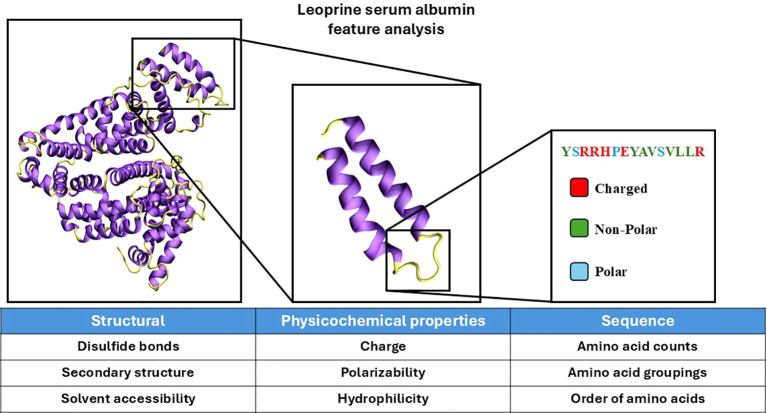
- Bujacz, 2012, Structures of bovine, equine and leporine serum albumin, Acta Crystallogr D Biol Crystallogr, 68, 10.1107/S0907444912027047 · DOI
- Rubinstein, 2009, A machine-learning approach for predicting B-cell epitopes, Mol Immunol, 46, 10.1016/j.molimm.2008.09.009 · DOI
- Ansari, 2010, Identification of conformational B-cell Epitopes in an antigen from its primary sequence, Immunome Res, 6, 6, 10.1186/1745-7580-6-6 · DOI
- Rubinstein, 2009, Epitopia: a web-server for predicting B-cell epitopes, BMC Bioinf, 10, 287, 10.1186/1471-2105-10-287 · DOI
- El-Manzalawy, 2008, Predicting flexible length linear B-cell epitopes, Comput Syst Bioinf Conf, 7, 10.1142/p585 · DOI
- Chinnasamy, 2004, Protein structure and fold prediction using tree-augmented naive Bayesian classifier, Pac Symp Biocomput, 10.1142/9789812704856_0037 · DOI
- Di Rienzo, 2021, Characterizing hydropathy of amino acid side chain in a protein environment by investigating the structural changes of water molecules network, Front Mol Biosci, 8, 10.3389/fmolb.2021.626837 · DOI
- Mant, 2009, Intrinsic amino acid side-chain hydrophilicity/hydrophobicity coefficients determined by reversed-phase high-performance liquid chromatography of model peptides: comparison with other hydrophilicity/hydrophobicity scales, Biopolymers, 92, 10.1002/bip.21316 · DOI
- Zhao, 2019, Peptide-major histocompatibility complex class I binding prediction based on deep learning with novel feature, Front Genet, 10, 10.3389/fgene.2019.01191 · DOI
- Eisenberg, 1984, Three-dimensional structure of membrane and surface proteins, Annu Rev Biochem, 53, 595, 10.1146/annurev.bi.53.070184.003115 · DOI
- Li, 2013, Probabilistic support vector machines for classification of noise affected data, Inform Sci, 221, 60, 10.1016/j.ins.2012.09.041 · DOI
- Cervantes, 2020, A comprehensive survey on support vector machine classification: Applications, challenges and trends, Neurocomputing, 408, 189, 10.1016/j.neucom.2019.10.118 · DOI · Paper page
- Zhang, 2021, A survey on neural network interpretability, IEEE T Em Top Comp I, 5, 10.1109/TETCI.2021.3100641 · DOI · Paper page
- Costa, 2023, Recent advances in decision trees: an updated survey, Artif Intell Rev, 56, 10.1007/s10462-022-10275-5 · DOI
- Ofer, 2021, The language of proteins: NLP, machine learning & protein sequences, Comput Struct Biotec, 19, 10.1016/j.csbj.2021.03.022 · DOI
- Blythe, 2005, Benchmarking B cell epitope prediction: underperformance of existing methods, Protein Sci, 14, 10.1110/ps.041059505 · DOI
- Jespersen, 2017, BepiPred-2.0: improving sequence-based B-cell epitope prediction using conformational epitopes, Nucleic Acids Res, 45, 10.1093/nar/gkx346 · DOI
- Ivanisenko, 2024, SEMA 2.0: web-platform for B-cell conformational epitopes prediction using artificial intelligence, Nucleic Acids Res, 52, 10.1093/nar/gkae386 · DOI
- Clifford, 2022, BepiPred-3.0: Improved B-cell epitope prediction using protein language models, Protein Sci, 31, 10.1002/pro.4497 · DOI · Paper page
- Koren, 2007, Clinical validation of the "in silico" prediction of immunogenicity of a human recombinant therapeutic protein, Clin Immunol, 124, 26, 10.1016/j.clim.2007.03.544 · DOI
- Peters, 2020, T cell epitope predictions, Annu Rev Immunol, 38, 10.1146/annurev-immunol-082119-124838 · DOI
- Hotop, 2022, Peptide microarrays coupled to machine learning reveal individual epitopes from human antibody responses with neutralizing capabilities against SARS-CoV-2, Emerg Microbes Infect, 11, 10.1080/22221751.2022.2057874 · DOI
- Hada-Neeman, 2020, Domain-scan: combinatorial sero-diagnosis of infectious diseases using machine learning, Front Immunol, 11, 10.3389/fimmu.2020.619896 · DOI
- Maguy, 2020, Autoantibody signature in cardiac arrest, Circulation, 141, 10.1161/CIRCULATIONAHA.119.044408 · DOI
- Xue, 2017, Machine learning on signal-to-noise ratios improves peptide array design in SAMDI mass spectrometry, Anal Chem, 89, 10.1021/acs.analchem.7b01728 · DOI
- Weitzner, 2017, Modeling and docking of antibody structures with Rosetta, Nat Protoc, 12, 10.1038/nprot.2016.180 · DOI
- Garzon, 2009, FRODOCK: a new approach for fast rotational protein-protein docking, Bioinformatics, 25, 10.1093/bioinformatics/btp447 · DOI
- Bourquard, 2018, MAbTope: A method for improved epitope mapping, J Immunol, 201, 10.4049/jimmunol.1701722 · DOI
- Yang, 2022, Protein-ligand docking in the machine-learning era, Molecules, 27, 10.3390/molecules27144568 · DOI
- Wang, 2014, PredPPCrys: accurate prediction of sequence cloning, protein production, purification and crystallization propensity from protein sequences using multi-step heterogeneous feature fusion and selection, PLoS One, 9, 10.1371/journal.pone.0105902 · DOI
- Slabinski, 2007, XtalPred: a web server for prediction of protein crystallizability, Bioinformatics, 23, 10.1093/bioinformatics/btm477 · DOI
- Tubiana, 2022, Reduced B cell antigenicity of Omicron lowers host serologic response, Cell Rep, 41, 111512, 10.1016/j.celrep.2022.111512 · DOI
- Jain, 2019, Antibody specificity and promiscuity, Biochem J, 476, 10.1042/BCJ20180670 · DOI
- Gunti, 2015, Polyreactive antibodies: function and quantification, J Infect Dis, 10.1093/infdis/jiu512 · DOI
- Liu, 2023, Enhancing alphafold-multimer-based protein complex structure prediction with MULTICOM in CASP15, Commun Biol, 6, 1140, 10.1038/s42003-023-05525-3 · DOI · Paper page
- Deac, 2019, Attentive cross-modal paratope prediction, J Comput Biol, 26, 10.1089/cmb.2018.0175 · DOI
- Chinery, 2023, Paragraph-antibody paratope prediction using graph neural networks with minimal feature vectors, Bioinformatics, 39, 10.1093/bioinformatics/btac732 · DOI
- Nguyen, 2022, AllerCatPro 2.0: a web server for predicting protein allergenicity potential, Nucleic Acids Res, 50, 10.1093/nar/gkac446 · DOI
- Ferrante, 2021, Artificial intelligence in the diagnosis of pediatric allergic diseases, Pediatr Allergy Immunol, 32, 10.1111/pai.13419 · DOI
- Patterson, 2021, Immune-based prediction of COVID-19 severity and chronicity decoded using machine learning, Front Immunol, 12, 10.3389/fimmu.2021.700782 · DOI
- Stafford, 2020, A systematic review of the applications of artificial intelligence and machine learning in autoimmune diseases, NPJ Digit Med, 3, 30, 10.1038/s41746-020-0229-3 · DOI
- Mendes, 2023, IEDB-3D 2.0: Structural data analysis within the Immune Epitope Database, Protein Sci, 32, 10.1002/pro.4605 · DOI
- Mamrosh E-SD-F, 2023, HIV Molecular Immunology
- Vita, 2015, The immune epitope database (IEDB) 3.0, Nucleic Acids Res, 43, 10.1093/nar/gku938 · DOI
- Olsen, 2017, TANTIGEN: a comprehensive database of tumor T cell antigens, Cancer Immunol Immunother, 66, 10.1007/s00262-017-1978-y · DOI
- Yang, 2011, Protegen: a web-based protective antigen database and analysis system, Nucleic Acids Res, 39, 10.1093/nar/gkq944 · DOI
- Olsen, 2011, FLAVIdB: A data mining system for knowledge discovery in flaviviruses with direct applications in immunology and vaccinology, Immunome Res, 7
- Lata, 2009, MHCBN 4.0: A database of MHC/TAP binding peptides and T-cell epitopes, BMC Res Notes, 2, 61, 10.1186/1756-0500-2-61 · DOI
- Reche, 2005, EPIMHC: a curated database of MHC-binding peptides for customized computational vaccinology, Bioinformatics, 21, 10.1093/bioinformatics/bti269 · DOI
- Schuler, 2007, SYFPEITHI: database for searching and T-cell epitope prediction, Methods Mol Biol, 409, 75, 10.1007/978-1-60327-118-9_5 · DOI
- Negi, 2023, The updated Structural Database of Allergenic Proteins (SDAP 2.0) provides 3D models for allergens and incorporated bioinformatics tools, J Allergy Clin Immunol Glob, 2, 100162, 10.1016/j.jacig.2023.100162 · DOI
- Huang, 2006, CED: a conformational epitope database, BMC Immunol, 7, 7, 10.1186/1471-2172-7-7 · DOI
- Schlessinger, 2006, Epitome: database of structure-inferred antigenic epitopes, Nucleic Acids Res, 34, 10.1093/nar/gkj053 · DOI
- Blythe, 2002, JenPep: a database of quantitative functional peptide data for immunology, Bioinformatics, 18, 10.1093/bioinformatics/18.3.434 · DOI
- Sweredoski, 2009, COBEpro: a novel system for predicting continuous B-cell epitopes, Protein Eng Des Sel, 22, 10.1093/protein/gzn075 · DOI
- Sun, 2009, SEPPA: a computational server for spatial epitope prediction of protein antigens, Nucleic Acids Res, 37, 10.1093/nar/gkp417 · DOI
- Qi, 2014, SEPPA 2.0–more refined server to predict spatial epitope considering species of immune host and subcellular localization of protein antigen, Nucleic Acids Res, 42, 10.1093/nar/gku395 · DOI
- Zhou, 2019, SEPPA 3.0-enhanced spatial epitope prediction enabling glycoprotein antigens, Nucleic Acids Res, 47, 10.1093/nar/gkz413 · DOI
- Hoie, 2024, DiscoTope-3.0: improved B-cell epitope prediction using inverse folding latent representations, Front Immunol, 15, 10.3389/fimmu.2024.1322712 · DOI · Paper page
- da Silva, 2022, epitope3D: a machine learning method for conformational B-cell epitope prediction, Brief Bioinform, 23, bbab423, 10.1093/bib/bbab423 · DOI
- Ponomarenko, 2008, ElliPro: a new structure-based tool for the prediction of antibody epitopes, BMC Bioinf, 9, 514, 10.1186/1471-2105-9-514 · DOI
- Liu, 2024, Prediction of linear B-cell epitopes based on protein sequence features and BERT embeddings, Sci Rep, 14, 2464, 10.1038/s41598-024-53028-w · DOI
- Kumar, 2024, A method for predicting linear and conformational B-cell epitopes in an antigen from its primary sequence, Comput Biol Med, 170, 108083, 10.1016/j.compbiomed.2024.108083 · DOI
- da Silva, 2023, epitope1D: accurate taxonomy-aware B-cell linear epitope prediction, Brief Bioinform, 24, bbad114, 10.1093/bib/bbad114 · DOI
- Ras-Carmona, 2021, BCEPS: A web server to predict linear B cell epitopes with enhanced immunogenicity and cross-reactivity, Cells, 10, 10.3390/cells10102744 · DOI
- Collatz, 2021, EpiDope: a deep neural network for linear B-cell epitope prediction, Bioinformatics, 37, 10.1093/bioinformatics/btaa773 · DOI
- Liu, 2020, Deep learning methods improve linear B-cell epitope prediction, BioData Min, 13, 1, 10.1186/s13040-020-00211-0 · DOI
- Ya.I. Davydov, 2009, Prediction of linear B-cell epitopes, Molekulyarnaya Biologiya, 43, 10.1134/S0026893309010208 · DOI
- Yao, 2012, SVMTriP: a method to predict antigenic epitopes using support vector machine to integrate tri-peptide similarity and propensity, PloS One, 7, 10.1371/journal.pone.0045152 · DOI
- El-Manzalawy, 2008, Predicting linear B-cell epitopes using string kernels, J Mol Recognit, 21, 10.1002/jmr.893 · DOI
- Saha, 2004, BCEPRED: Prediction of continuous B-cell epitopes in antigenic sequences using physico-chemical properties
- Israeli, 2024, Single-residue linear and conformational B cell epitopes prediction using random and ESM-2 based projections, Brief Bioinform, 25, bbae084, 10.1093/bib/bbae084 · DOI
- Chen, 2024, TEPCAM: Prediction of T-cell receptor-epitope binding specificity via interpretable deep learning, Protein Sci, 33, 10.1002/pro.v33.1 · DOI
- Gao, 2023, Pan-Peptide Meta Learning for T-cell receptor-antigen binding recognition, Nat Mach Intell, 5, 10.1038/s42256-023-00619-3 · DOI · Paper page
- Jiang, 2023, TEINet: a deep learning framework for prediction of TCR-epitope binding specificity, Brief Bioinform, 24, bbad086, 10.1093/bib/bbad086 · DOI
- Cai, 2022, ATM-TCR: TCR-epitope binding affinity prediction using a multi-head self-attention model, Front Immunol, 13, 10.3389/fimmu.2022.893247 · DOI
- Weber, 2021, TITAN: T-cell receptor specificity prediction with bimodal attention networks, Bioinformatics, 37, 10.1093/bioinformatics/btab294 · DOI
- Reynisson, 2020, NetMHCpan-4.1 and NetMHCIIpan-4.0: improved predictions of MHC antigen presentation by concurrent motif deconvolution and integration of MS MHC eluted ligand data, Nucleic Acids Res, 48, 10.1093/nar/gkaa379 · DOI · Paper page
- O'Donnell, 2020, MHCflurry 2.0: improved pan-allele prediction of MHC class I-presented peptides by incorporating antigen processing, Cell Syst, 11, 10.1016/j.cels.2020.09.001 · DOI
- Hu, 2019, ACME: pan-specific peptide-MHC class I binding prediction through attention-based deep neural networks, Bioinformatics, 35, 10.1093/bioinformatics/btz427 · DOI
- Molero-Abraham, 2013, Selection of conserved epitopes from hepatitis C virus for pan-populational stimulation of T-cell responses, Clin Dev Immunol, 2013, 601943, 10.1155/2013/601943 · DOI
- Zhang, 2009, The PickPocket method for predicting binding specificities for receptors based on receptor pocket similarities: application to MHC-peptide binding, Bioinformatics, 25, 10.1093/bioinformatics/btp137 · DOI
- Stranzl, 2010, NetCTLpan: pan-specific MHC class I pathway epitope predictions, Immunogenetics, 62, 10.1007/s00251-010-0441-4 · DOI
- Doytchinova, 2006, EpiJen: a server for multistep T cell epitope prediction, BMC Bioinf, 7, 131, 10.1186/1471-2105-7-131 · DOI
- Reche, 2005, PEPVAC: a web server for multi-epitope vaccine development based on the prediction of supertypic MHC ligands, Nucleic Acids Res, 33, 10.1093/nar/gki357 · DOI
- Racle, 2023, Machine learning predictions of MHC-II specificities reveal alternative binding mode of class II epitopes, Immunity, 56, 1359, 10.1016/j.immuni.2023.03.009 · DOI
- Chen, 2019, Predicting HLA class II antigen presentation through integrated deep learning, Nat Biotechnol, 37, 10.1038/s41587-019-0280-2 · DOI
- Abelin, 2019, Defining HLA-II ligand processing and binding rules with mass spectrometry enhances cancer epitope prediction, Immunity, 51, 766, 10.1016/j.immuni.2019.08.012 · DOI
- Nielsen, 2017, NNAlign: a platform to construct and evaluate artificial neural network models of receptor-ligand interactions, Nucleic Acids Res, 45, 10.1093/nar/gkx276 · DOI
- Atanasova, 2013, EpiDOCK: a molecular docking-based tool for MHC class II binding prediction, Protein Eng Des Sel, 26, 10.1093/protein/gzt018 · DOI
- Karnaukhov, 2024, Structure-based prediction of T cell receptor recognition of unseen epitopes using TCRen, Nat Comput Sci, 4, 10.1038/s43588-024-00653-0 · DOI
- Springer, 2021, Contribution of T cell receptor alpha and beta CDR3, MHC typing, V and J genes to peptide binding prediction, Front Immunol, 12, 10.3389/fimmu.2021.664514 · DOI
- Ong, 2021, Vaxign2: the second generation of the first Web-based vaccine design program using reverse vaccinology and machine learning, Nucleic Acids Res, 49, 10.1093/nar/gkab279 · DOI
- Reche, 2004, Enhancement to the RANKPEP resource for the prediction of peptide binding to MHC molecules using profiles, Immunogenetics, 56, 10.1007/s00251-004-0709-7 · DOI
- Taguchi, 2020, Comprehensive prediction of molecular recognition in a combinatorial chemical space using machine learning, ACS Comb Sci, 22, 10.1021/acscombsci.0c00003 · DOI
- Renard, 2011, rapmad: Robust analysis of peptide microarray data, BMC Bioinf, 12, 324, 10.1186/1471-2105-12-324 · DOI
- Ogura, 2001, An automatic particle pickup method using a neural network applicable to low-contrast electron micrographs, J Struct Biol, 136, 10.1006/jsbi.2002.4442 · DOI
- Ogura, 2004, Automatic particle pickup method using a neural network has high accuracy by applying an initial weight derived from eigenimages: a new reference free method for single-particle analysis, J Struct Biol, 145, 63, 10.1016/S1047-8477(03)00139-4 · DOI
- Lei, 2020, CDAE: A cascade of denoising autoencoders for noise reduction in the clustering of single-particle cryo-EM images, Front Genet, 11, 10.3389/fgene.2020.627746 · DOI
- Sanchez-Garcia, 2018, Deep Consensus, a deep learning-based approach for particle pruning in cryo-electron microscopy, IUCrJ, 5, 10.1107/S2052252518014392 · DOI
- Tegunov, 2019, Real-time cryo-electron microscopy data preprocessing with Warp, Nat Methods, 16, 10.1038/s41592-019-0580-y · DOI
- Yokoyama, 2020, Development of a deep learning-based method to identify "good" regions of a cryo-electron microscopy grid, Biophys Rev, 12, 10.1007/s12551-020-00669-6 · DOI
- Avramov, 2019, Deep learning for validating and estimating resolution of cryo-electron microscopy density maps (dagger), Molecules, 24, 10.3390/molecules24061181 · DOI
- Pfab, 2021, DeepTracer for fast de novo cryo-EM protein structure modeling and special studies on CoV-related complexes, Proc Natl Acad Sci U.S.A, 118, 10.1073/pnas.2017525118 · DOI
- Si, 2020, Deep learning to predict protein backbone structure from high-resolution cryo-EM density maps, Sci Rep, 10, 4282, 10.1038/s41598-020-60598-y · DOI
- Hryc, 2022, AlphaFold2 and CryoEM: Revisiting CryoEM modeling in near-atomic resolution density maps, iScience, 25, 104496, 10.1016/j.isci.2022.104496 · DOI
- Zhu, 2021, Accurate multistage prediction of protein crystallization propensity using deep-cascade forest with sequence-based features, Brief Bioinform, 22, bbaa076, 10.1093/bib/bbaa076 · DOI
- Wang, 2023, GCmapCrys: Integrating graph attention network with predicted contact map for multi-stage protein crystallization propensity prediction, Anal Biochem, 663, 115020, 10.1016/j.ab.2022.115020 · DOI
- Bruno, 2018, Classification of crystallization outcomes using deep convolutional neural networks, PLoS One, 13, 10.1371/journal.pone.0198883 · DOI
- Bond, 2020, Predicting protein model correctness in Coot using machine learning, Acta Crystallogr D Struct Biol, 76, 10.1107/S2059798320009080 · DOI
- Khurana, 2018, DeepSol: a deep learning framework for sequence-based protein solubility prediction, Bioinformatics, 34, 10.1093/bioinformatics/bty166 · DOI
- Rahmani, 2023, Data reduction for X-ray serial crystallography using machine learning, J Appl Crystallogr, 56, 10.1107/S1600576722011748 · DOI
Cited by
Sorted by citations
Packi, K., Świerczewski, D., Klimczak, S., Ochab, D., Gałęziewska, J., Gromek, P., Kruczkowska, W., Płuciennik, E., Kałuzińska-Kołat, Ż., & Kołat, D. (2026) · Antonie van Leeuwenhoek · doi:10.1007/s10482-026-02425-4
Metadata
- Authors
- Grewal, S., Hegde, N., & Yanow, S. K.
- Venue
- Frontiers in Immunology
- Publisher
- Frontiers Media SA
- Published
- 2024-09-30
- Volume
- 15
- ISSN
- 1664-3224
- PMC
- PMC11471525
- Cited by
- 35
- References
- 10
- Funders
- Canadian Institutes of Health Research
- National Institute of Allergy and Infectious Diseases (R01AI150944)
About these checks
Registry, retraction, Cites and statistics results are computed, not judged, with one exception: a printed reference that no index lists is read once by a model before it counts as a citation error. Claims are extracted by a model and kept only when their quote appears verbatim in the text; each cited source is then checked, with a model’s help, for whether it says what the claim relies on. Those verdicts can be wrong — read the claim’s quote and the cited source before relying on one.
Statistics and arithmetic are recomputed, not judged.
Confidence bands are shown only for fields calibrated on our annotated test set. None is calibrated yet, so no band is shown.
What counts as a claim ›How we measure confidence ›How we check this ›
Are you an author, or do you see a problem with this page? Request a review
