

The DOI matches its Crossref record; 40 of the 40 references it cites were found in a registry or an index.
Defining medical liability when artificial intelligence is applied on diagnostic algorithms: a systematic review
Open accessAbstract
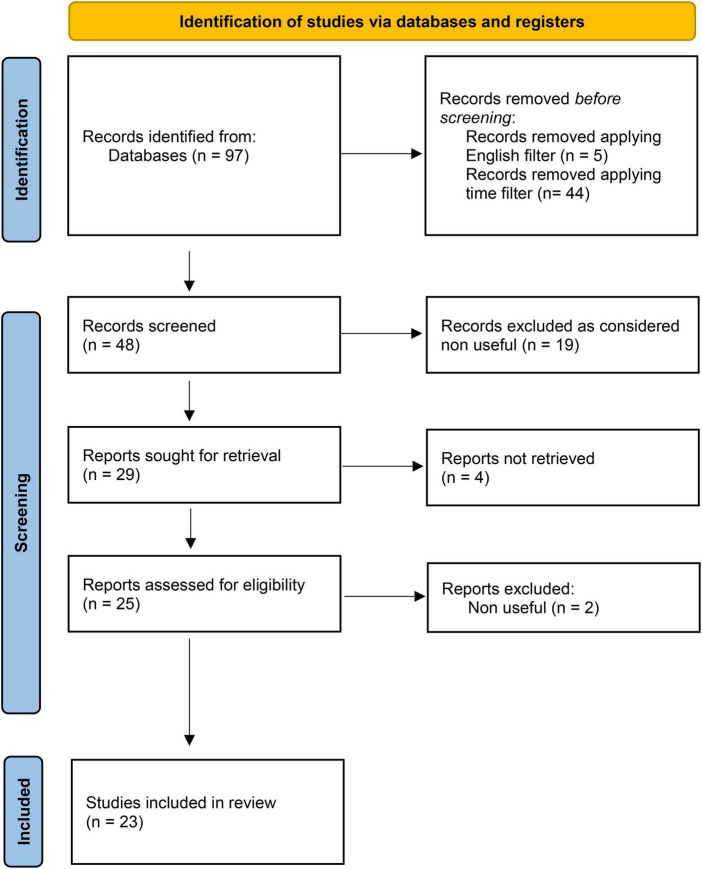
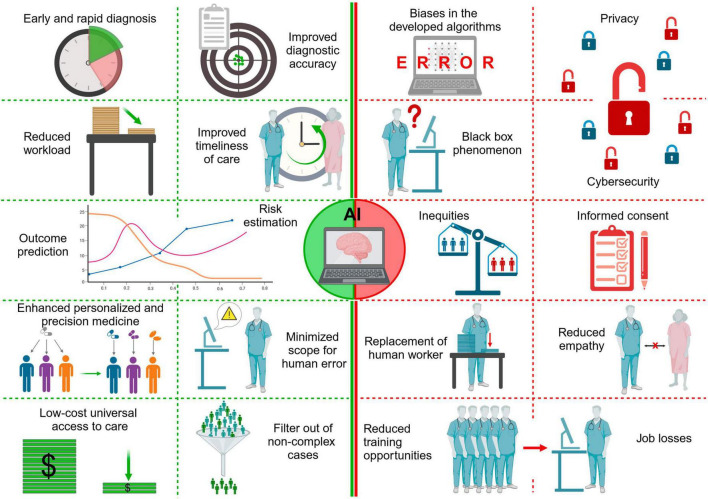
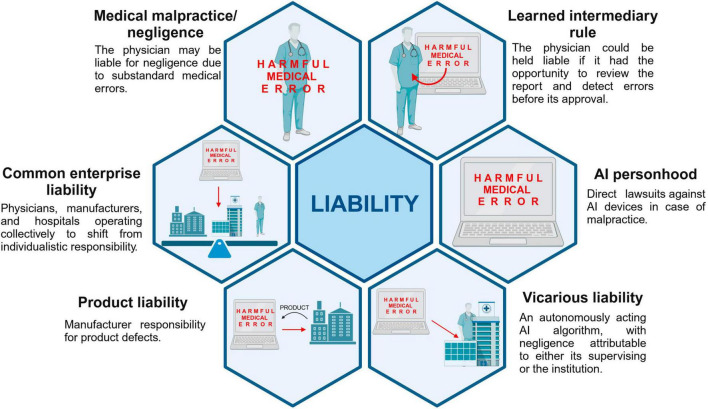
Artificial intelligence (AI) in medicine is an increasingly studied and widespread phenomenon, applied in multiple clinical settings. Alongside its many potential advantages, such as easing clinicians’ workload and improving diagnostic accuracy, the use of AI raises ethical and legal concerns, to which there is still no unanimous response. A systematic literature review on medical professional liability related to the use of AI-based diagnostic algorithms was conducted using the public electronic database PubMed selecting studies published from 2020 to 2023. The systematic review was performed according to 2020 PRISMA guidelines. The literature review highlights how the issue of liability in case of AI-related error and patient’s damage has received growing attention in recent years. The application of AI and diagnostic algorithm moreover raises questions about the risks of using unrepresentative populations during the development and about the completeness of information given to the patient. Concerns about the impact on the fiduciary relationship between physician and patient and on the subject of empathy have also been raised. The use of AI in medical field and the application of diagnostic algorithms introduced a revolution in the doctor–patient relationship resulting in multiple possible medico-legal consequences. The regulatory framework on medical liability when AI is applied is therefore inadequate and requires urgent intervention, as there is no single and specific regulation governing the liability of various parties involved in the AI supply chain, nor on end-users. Greater attention should be paid to inherent risk in AI and the consequent need for regulations regarding product safety as well as the maintenance of minimum safety standards through appropriate updates.
Overview
The claims and statistics of this paper haven’t been checked yet.
Run the check — free, no account needed. It reads the open-access text and checks the sources it cites.
Integrity signals
Registry
Cites
Statistics
Figures
Verification
Claims the paper makes
The claims and statistics of this paper haven’t been checked yet.
Run the check — free, no account needed. It reads the open-access text and checks the sources it cites.
Claims other papers make about this one
Each is checked against this paper’s own text: does it say what the citing paper says it does?
The cited source says what the claim attributes to it.
In the citing paper
“When diagnostic tools powered by AI are used and a diagnostic error occurs, it becomes challenging to allocate responsibility [80].”
From Artificial Intelligence in Dermatopathology: An Update and Review of the Current Literature (2026) · cites this paper as [80]
Self-check
Percentages, sums and reported differences re-computed from the paper’s own numbers.
The self-check needs the paper’s full text.
Citations
Cites
The PRISMA 2020 statement: An updated guideline for reporting systematic reviews
Page, M. J., McKenzie, J. E., Bossuyt, P. M., Boutron, I., Hoffmann, T. C., Mulrow, C. D., Shamseer, L., Tetzlaff, J. M., Akl, E. A., Brennan, S. E., et al. (2021) · BMJ · doi:10.1136/bmj.n71 · Cited by 108,283
Artificial intelligence in radiology
Hosny, A., Parmar, C., Quackenbush, J., Schwartz, L. H., & Aerts, H. J. W. L. (2018) · Nature Reviews Cancer · doi:10.1038/s41568-018-0016-5 · Cited by 3,803
Artificial intelligence in healthcare
Yu, K.-H., Beam, A. L., & Kohane, I. S. (2018) · Nature Biomedical Engineering · doi:10.1038/s41551-018-0305-z · Cited by 2,817
Seyyed-Kalantari, L., Zhang, H., McDermott, M. B. A., Chen, I. Y., & Ghassemi, M. (2021) · Nature Medicine · doi:10.1038/s41591-021-01595-0 · Cited by 928
Multimodal machine learning in precision health: A scoping review
Kline, A., Wang, H., Li, Y., Dennis, S., Hutch, M., Xu, Z., Wang, F., Cheng, F., & Luo, Y. (2022) · npj Digital Medicine · doi:10.1038/s41746-022-00712-8 · Cited by 528 · cited 1×
“AI systems are currently destined to intervene on the treatment process both in the diagnostic and therapeutic phase, allowing the healthcare professional to reach, on the one hand, more certain and precise diagnoses, and on the other, surgical therapies, more effective and less invasive (2).”
BackgroundO'Sullivan, S., Nevejans, N., Allen, C., Blyth, A., Leonard, S., Pagallo, U., Holzinger, K., Holzinger, A., Sajid, M. I., & Ashrafian, H. (2019) · The International Journal of Medical Robotics and Computer Assisted Surgery · doi:10.1002/rcs.1968 · Cited by 437
Artificial intelligence: Who is responsible for the diagnosis?
Neri, E., Coppola, F., Miele, V., Bibbolino, C., & Grassi, R. (2020) · La radiologia medica · doi:10.1007/s11547-020-01135-9 · Cited by 240
An Overview of Artificial Intelligence in Oncology
Farina, E. M. J. D. M., Nabhen, J. J., Dacoregio, M. I., Batalini, F., & de Moraes, F. Y. (2022) · Future Science OA · doi:10.2144/fsoa-2021-0074 · Cited by 145
Abràmoff, M. D., Tobey, D., & Char, D. S. (2020) · American Journal of Ophthalmology · doi:10.1016/j.ajo.2020.02.022 · Cited by 140
Medenica, S., Živanović, D., Batkoska, L., Marinelli, S., Basile, G., Perino, A., Cucinella, G., Gullo, G., & Zaami, S. (2022) · Diagnostics · doi:10.3390/diagnostics12122979 · Cited by 118
The inclusion of augmented intelligence in medicine: A framework for successful implementation
Bazoukis, G., Hall, J. L., Loscalzo, J., Antman, E. M., Fuster, V., & Armoundas, A. A. (2022) · Cell Reports Medicine · doi:10.1016/j.xcrm.2021.100485 · Cited by 111
López, D. M., Rico-Olarte, C., Blobel, B. G. M. E., & Hullin, C. (2022) · Frontiers in Medicine · doi:10.3389/fmed.2022.958097 · Cited by 109
The proposed EU Directives for AI liability leave worrying gaps likely to impact medical AI
Duffourc, M., & Gerke, S. (2023) · npj Digital Medicine · doi:10.1038/s41746-023-00823-w · Cited by 84
Piergentili, R., Basile, G., Nocella, C., Carnevale, R., Marinelli, E., Patrone, R., & Zaami, S. (2022) · International Journal of Molecular Sciences · doi:10.3390/ijms23169353 · Cited by 81
Chung, C. T., Lee, S., King, E., Liu, T., Armoundas, A. A., Bazoukis, G., & Tse, G. (2022) · International Journal of Arrhythmia · doi:10.1186/s42444-022-00075-x · Cited by 79
Mezrich, J. L. (2022) · American Journal of Roentgenology · doi:10.2214/ajr.21.27224 · Cited by 75
Kamran, F., Tang, S., Otles, E., McEvoy, D. S., Saleh, S. N., Gong, J., Li, B. Y., Dutta, S., Liu, X., Medford, R. J., et al. (2022) · BMJ · doi:10.1136/bmj-2021-068576 · Cited by 60
Regulatory Issues and Challenges to Artificial Intelligence Adoption
Harvey, H. B., & Gowda, V. (2021) · Radiologic Clinics of North America · doi:10.1016/j.rcl.2021.07.007 · Cited by 59
Gullo, G., Scaglione, M., Buzzaccarini, G., Laganà, A. S., Basile, G., Chiàntera, V., Cucinella, G., & Zaami, S. (2022) · Journal of Personalized Medicine · doi:10.3390/jpm13010001 · Cited by 59
Artificial intelligence in dermatology and healthcare: An overview
Pai, V. V., & Pai, R. B. (2021) · Indian Journal of Dermatology Venereology and Leprology · doi:10.25259/ijdvl_518_19 · Cited by 57
Digital health technology-specific risks for medical malpractice liability
Rowland, S. P., Fitzgerald, J. E. F., Lungren, M. P., Lee, E. H., Harned, Z., & McGregor, A. H. (2022) · npj Digital Medicine · doi:10.1038/s41746-022-00698-3 · Cited by 54
Musacchio, N., Giancaterini, A., Guaita, G., Ozzello, A., Pellegrini, M. A., Ponzani, P., Russo, G. T., Zilich, R., & Micheli, A. D. (2020) · Journal of Medical Internet Research · doi:10.2196/16922 · Cited by 47
The use and future perspective of Artificial Intelligence—A survey among German surgeons
Pecqueux, M., Riediger, C., Distler, M., Oehme, F., Bork, U., Kolbinger, F. R., Schöffski, O., van Wijngaarden, P., Weitz, J., Schweipert, J., et al. (2022) · Frontiers in Public Health · doi:10.3389/fpubh.2022.982335 · Cited by 41
Artificial Intelligence in Medicine: Text Mining of Health Care Workers’ Opinions
Nitiéma, P. (2022) · Journal of Medical Internet Research · doi:10.2196/41138 · Cited by 40
Patcas, R., Bornstein, M. M., Schätzle, M. A., & Timofte, R. (2022) · Clinical Oral Investigations · doi:10.1007/s00784-022-04724-2 · Cited by 38
Artificial Intelligence in Cardiovascular Imaging: “Unexplainable” Legal and Ethical Challenges?
Lang, M., Bernier, A., & Knoppers, B. M. (2022) · Canadian Journal of Cardiology · doi:10.1016/j.cjca.2021.10.009 · Cited by 37
Promise and Provisos of Artificial Intelligence and Machine Learning in Healthcare
Bhardwaj, A. (2022) · Journal of Healthcare Leadership · doi:10.2147/jhl.s369498 · Cited by 36
Autonomous artificial intelligence in diabetic retinopathy: From algorithm to clinical application
Channa, R., Wolf, R., & Abramoff, M. D. (2021) · Journal of Diabetes Science and Technology · doi:10.1177/1932296820909900 · Cited by 33
Legal and ethical considerations of artificial intelligence in skin cancer diagnosis
Jobson, D., Mar, V., & Freckelton, I. R. (2021) · Australasian Journal of Dermatology · doi:10.1111/ajd.13690 · Cited by 31
Applying a Common Enterprise Theory of Liability to Clinical AI Systems
Chan, B. (2021) · American Journal of Law & Medicine · doi:10.1017/amj.2022.1 · Cited by 30
Artificial intelligence in gastroenterology: where are we heading?
Sung, J. J. �., & Poon, N. C. (2020) · Frontiers of Medicine · doi:10.1007/s11684-020-0742-4 · Cited by 28
Clinical applications of AI in MSK imaging: a liability perspective
Harvey, H. B., & Gowda, V. (2022) · Skeletal Radiology · doi:10.1007/s00256-021-03782-z · Cited by 28
Basile, G., Accetta, R., Marinelli, S., D’Ambrosi, R., Petrucci, Q. A., Giorgetti, A., Nuara, A., Zaami, S., & Fozzato, S. (2022) · Journal of Clinical Medicine · doi:10.3390/jcm11133644 · Cited by 27
Filipow, N., Main, E., Sebire, N. J., Booth, J., Taylor, A. M., Davies, G., & Stanojevic, S. (2022) · BMJ Open Respiratory Research · doi:10.1136/bmjresp-2021-001165 · Cited by 24
Mezrich, J. L. (2021) · PET Clinics · doi:10.1016/j.cpet.2021.08.002 · Cited by 22
Artificial Intelligence in Breast X-Ray Imaging
Vedantham, S., Shazeeb, M. S., Chiang, J. A., & Vijayaraghavan, G. R. (2022) · Seminars in Ultrasound CT and MRI · doi:10.1053/j.sult.2022.12.002 · Cited by 17
Ricci, G., Caraffa, A. M., & Gibelli, F. (2023) · Healthcare · doi:10.3390/healthcare11050734 · Cited by 11
AI and ML in radiology: Making progress
Rockall, A., Shelmerdine, S. C., & Chen, M. (2023) · Clinical Radiology · doi:10.1016/j.crad.2022.10.010 · Cited by 9
National study on use of artificial intelligence in breast disease and cancer
EMIROGLU, M., Huseyin, E. S. I. N., ERDOGAN, M., UGURLU, L., Dursun, A., Mertoğlu, S., KIZILOGLU, I., & KARAALI, C. (2022) · Bratislavské lekárske listy/Bratislava medical journal · doi:10.4149/bll_2022_032 · Cited by 7
Artificial Intelligence Decision Support Systems and Liability for Medical Injuries
Aagaard, L. (2020) · Journal of Research in Pharmacy Practice · doi:10.4103/jrpp.jrpp_20_65 · Cited by 5
Research works printed but not linked: 5
- 2022, I Sistemi di Intelligenza Artificiale per la Diagnosi Medica.
- 2020, Intelligenza Artificiale e Medicina. Aspetti Etici
- 2021, The impact of artificial intelligence on the doctor-patient relationship.
- 2023, EU Legislation in Progress. New Product Liability Directive.
- 2023, EU Legislation in Progress. Artificial Intelligence Liability Directive.
Cited by
Sorted by citations
Marey, A., Arjmand, P., alerab, A. D. S., Eslami, M. J., Saad, A. M., Sanchez, N., & Umair, M. (2024) · The Egyptian Journal of Radiology and Nuclear Medicine · doi:10.1186/s43055-024-01356-2 · Cited by 243
Artificial Intelligence and Forensic Genetics: Current Applications and Future Perspectives
Sessa, F., Esposito, M., Cocimano, G., Sablone, S., Karaboue, M. A. A., Chisari, M. G., Albano, G. D., & Salerno, M. (2024) · Applied Sciences · doi:10.3390/app14052113 · Cited by 61
Mapari, S. A., Shrivastava, D., Dave, A., Bedi, G. N., Gupta, A., Sachani, P., Kasat, P. R., & Pradeep, U. (2024) · Cureus · doi:10.7759/cureus.69555 · Cited by 62
From screens to scenes: A survey of embodied AI in healthcare
Liu, Y., Cao, X., Chen, T., Jiang, Y., You, J., Wu, M., Wang, X., Feng, M., Jin, Y., & Chen, J. (2025) · Information Fusion · doi:10.1016/j.inffus.2025.103033 · Cited by 76
AI‐Driven Personalized Nutrition: Integrating Omics, Ethics, and Digital Health
Mundt, C., Yusufoğlu, B., Kudenko⋆, D., Mertoğlu, K., & Esatbeyoglu, T. (2025) · Molecular Nutrition & Food Research · doi:10.1002/mnfr.70293 · Cited by 62
Metadata
- Authors
- Cestonaro, C., Delicati, A., Marcante, B., Caenazzo, L., & Tozzo, P.
- Affiliations
- University of Padua (IT)
- Corresponding author
- Tozzo, Pamela
- Venue
- Frontiers in Medicine
- Publisher
- Frontiers Media SA
- Published
- 2023-11-27
- Volume
- 10
- Pages
- 1305756-1305756
- ISSN
- 2296-858X (ISSN-L)
- PMC
- PMC10711067
- OpenAlex
- W4389055737
- Cited by
- 231
- References
- 40
- Citations by year
- 2026: 118 · 2025: 81 · 2024: 32
- FWCI
- 2.69
- Type
- journal article
- Language
- en
- Open access
- gold
- doi.org
- Licence
- Locations
- Frontiers in Medicine (publishedVersion, cc-by)
- PubMed Central (publishedVersion, cc-by)
- PubMed (publishedVersion)
- Padua Research Archive (University of Padova) (submittedVersion, cc-by)
- DOAJ (DOAJ: Directory of Open Access Journals) (submittedVersion, cc-by-sa)
- Topics
- Health Sciences › Medicine › Health Informatics › Artificial Intelligence in Healthcare and Education
- Social Sciences › Law › Medical Malpractice and Liability Issues
- Social Sciences › Law › Digitalization, Law, and Regulation
- Keywords
- medical liability, artificial intelligence in healthcare, patient harm, physician-patient relationship, fiduciary relationship, empathy, product safety standards, algorithmic bias, informed consent, AI ethics
About these checks
Registry, retraction, Cites and statistics results are computed, not judged, with one exception: a printed reference that no index lists is read once by a model before it counts as a citation error. Claims are extracted by a model and kept only when their quote appears verbatim in the text; each cited source is then checked, with a model’s help, for whether it says what the claim relies on. Those verdicts can be wrong — read the claim’s quote and the cited source before relying on one.
Statistics and arithmetic are recomputed, not judged.
Confidence bands are shown only for fields calibrated on our annotated test set. None is calibrated yet, so no band is shown.
What counts as a claim ›How we measure confidence ›How we check this ›
Are you an author, or do you see a problem with this page? Request a review
