

The DOI matches its Crossref record; 71 of the 71 references it cites were found in a registry or an index.
The Power of Microbiome Studies: Some Considerations on Which Alpha and Beta Metrics to Use and How to Report Results
Open accessPublished version of a preprint
Abstract
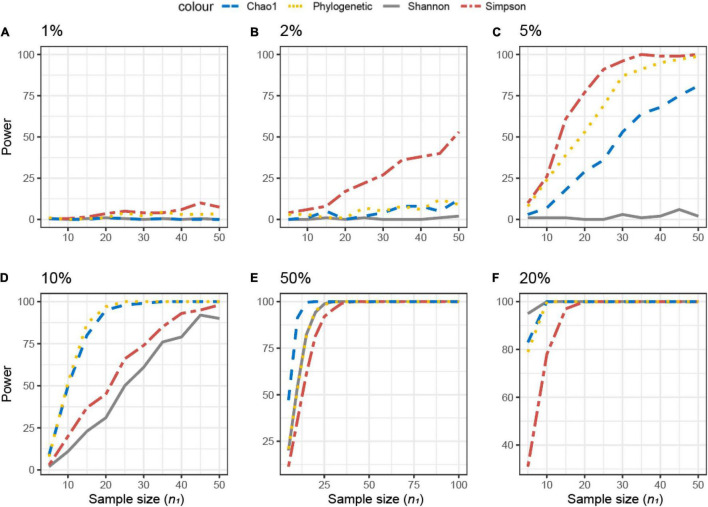
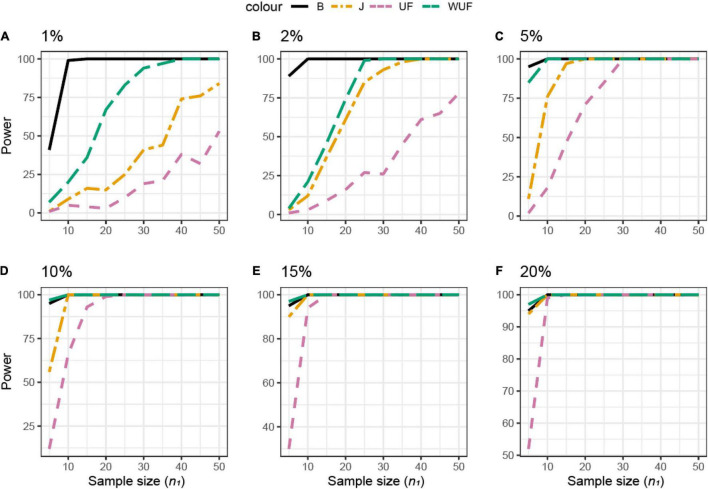
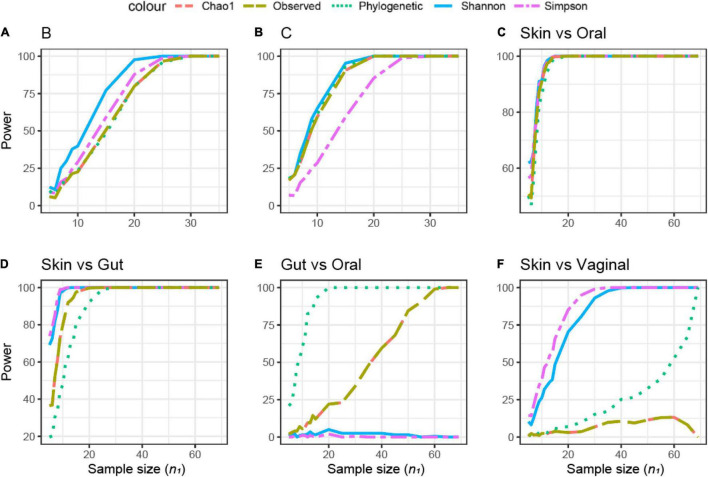
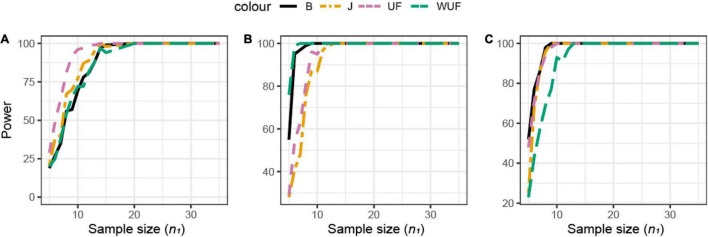
Background: Since sequencing techniques have become less expensive, larger sample sizes are applicable for microbiota studies. The aim of this study is to show how, and to what extent, different diversity metrics and different compositions of the microbiota influence the needed sample size to observe dissimilar groups. Empirical 16S rRNA amplicon sequence data obtained from animal experiments, observational human data, and simulated data were used to perform retrospective power calculations. A wide variation of alpha diversity and beta diversity metrics were used to compare the different microbiota datasets and the effect on the sample size. Results: Our data showed that beta diversity metrics are the most sensitive to observe differences as compared with alpha diversity metrics. The structure of the data influenced which alpha metrics are the most sensitive. Regarding beta diversity, the Bray–Curtis metric is in general the most sensitive to observe differences between groups, resulting in lower sample size and potential publication bias. Conclusion: We recommend performing power calculations and to use multiple diversity metrics as an outcome measure. To improve microbiota studies, awareness needs to be raised on the sensitivity and bias for microbiota research outcomes created by the used metrics rather than biological differences. We have seen that different alpha and beta diversity metrics lead to different study power: because of this, one could be naturally tempted to try all possible metrics until one or more are found that give a statistically significant test result, i.e., p -value < α. This way of proceeding is one of the many forms of the so-called p -value hacking. To this end, in our opinion, the only way to protect ourselves from (the temptation of) p -hacking would be to publish a statistical plan before experiments are initiated, describing the outcomes of interest and the corresponding statistical analyses to be performed.
Overview
The claims and statistics of this paper haven’t been checked yet.
Run the check — free, no account needed. It reads the open-access text and checks the sources it cites.
Integrity signals
Registry
Cites
Statistics
Figures
Verification
Claims the paper makes
The claims and statistics of this paper haven’t been checked yet.
Run the check — free, no account needed. It reads the open-access text and checks the sources it cites.
Claims other papers make about this one
Each is checked against this paper’s own text: does it say what the citing paper says it does?
The source backs part of the claim, not all of it — or backs it for a different population, condition or comparison.
In the citing paper
“Data interpretation must be cautious due to high inter-individual variability, lack of standardization in pipelines, and the absence of a universally defined healthy microbiome [76,77].”
From The Seven Methods for the Evaluation of Nutritional Status—ABCDEFG: Narrative Review (2026) · cites this paper as [76]
Experimental — accuracy not yet measured
Self-check
Percentages, sums and reported differences re-computed from the paper’s own numbers.
The self-check needs the paper’s full text.
Citations
Cites
Faul, F., Erdfelder, E., Lang, A.-G., & Buchner, A. (2007) · Behavior Research Methods · doi:10.3758/bf03193146 · Cited by 65,971
DADA2: High–resolution sample inference from Illumina amplicon data
Callahan, B. J., McMurdie, P. J., Rosen, M. J., Han, A. W., Johnson, A. J. A., & Holmes, S. P. (2016) · Nature Methods · doi:10.1038/nmeth.3869 · Cited by 35,698
The SILVA ribosomal RNA gene database project: improved data processing and web-based tools
Quast, C., Pruesse, E., Yilmaz, P., Gerken, J., Schweer, T., Yarza, P., Peplies, J., & Glöckner, F. O. (2012) · Nucleic Acids Research · doi:10.1093/nar/gks1219 · Cited by 33,055
Statistical Power Analysis for the Behavioral Sciences
Cohen, J. (2013) · doi:10.4324/9780203771587 · Cited by 25,373
phyloseq: An R Package for Reproducible Interactive Analysis and Graphics of Microbiome Census Data
McMurdie, P. J., & Holmes, S. (2013) · PLoS ONE · doi:10.1371/journal.pone.0061217 · Cited by 21,942
Simpson, E. (1949) · Nature · doi:10.1038/163688a0 · Cited by 14,809
Non‐parametric multivariate analyses of changes in community structure
Clarke, K. R. (1993) · Australian Journal of Ecology · doi:10.1111/j.1442-9993.1993.tb00438.x · Cited by 14,449
Use of Ranks in One-Criterion Variance Analysis
Kruskal, W. H., & Wallis, W. A. (1952) · Journal of the American Statistical Association · doi:10.1080/01621459.1952.10483441 · Cited by 13,912
A new method for non-parametric multivariate analysis of variance
Anderson, M. J. (2001) · Austral Ecology · doi:10.1111/j.1442-9993.2001.01070.pp.x · Cited by 13,828
An Ordination of the Upland Forest Communities of Southern Wisconsin
Bray, J. R., & Curtis, J. T. (1957) · Ecological Monographs · doi:10.2307/1942268 · Cited by 11,736
Research works printed but not linked: 6
- 1994, Publication Manual of the American Psychological Association: DAR ALMHRER ELADABE.
- Hoffman, 2015, Baic Biostatistics for Medical and Biomedical Practitioners.
- Kolassa, 2020, MultNonParam-Package R Documentation.
- Lahti, 2017, Tools for Microbiome Analysis in R. Microbiome Package Version 1.15.1.
- 2008, R: A Language and Environment for Statistical Computing.
- Shetty Sudarshan, 2020, Microbial Bioinformatics Introductory Course Material 2018 (Version v3.0).
Cited by
Sorted by citations
Puig‐Castellví, F., Pacheco‐Tapia, R., Deslande, M., Jia, M., Andrikopoulos, P., Chechi, K., Bonnefond, A., Froguel, P., & Dumas, M. (2023) · TrAC Trends in Analytical Chemistry · doi:10.1016/j.trac.2023.117248 · Cited by 85
Thin, Z. S., Chew, J., Ong, T. Y. Y., Ali, R. A. R., & Gew, L. T. (2025) · BMC Gastroenterology · doi:10.1186/s12876-025-04140-2 · Cited by 85
Fulcher, J. A., Li, F., Tobin, N. H., Zabih, S., Elliott, J. E., Clark, J. L., D’Aquila, R. T., Mustanski, B. S., Kipke, M. D., SHOPTAW, S. J., et al. (2022) · EBioMedicine · doi:10.1016/j.ebiom.2022.104286 · Cited by 51
Rajguru, B., Shri, M., & Bhatt, V. D. (2024) · 3 Biotech · doi:10.1007/s13205-024-04065-9 · Cited by 47
Semen microbiota are dramatically altered in men with abnormal sperm parameters
Osadchiy, V., Belarmino, A., Kianian, R., Sigalos, J. T., Ancira, J. S., Kanie, T., Mangum, S. F., Tipton, C. D., Hsieh, T.-C. M., Mills, J. N., et al. (2024) · Scientific Reports · doi:10.1038/s41598-024-51686-4 · Cited by 43
Kaufmann, B. K., Seyfried, N., Hartmann, D., & Hartmann, P. (2023) · American Journal of Physiology-Gastrointestinal and Liver Physiology · doi:10.1152/ajpgi.00017.2023 · Cited by 40
Notarbartolo, V., Carta, M., Accomando, S., & Giuffrè, M. (2023) · Nutrients · doi:10.3390/nu15184014 · Cited by 46
Defining the Microbiome Components (Bacteria, Viruses, Fungi) and Microbiome Geodiversity
Leonard, J. M., & Toro, D. D. (2023) · Surgical Infections · doi:10.1089/sur.2023.014 · Cited by 36
Central Taxa Are Keystone Microbes During Early Succession
Rawstern, A. H., Hernandez, D. J., & Afkhami, M. (2024) · Ecology Letters · doi:10.1111/ele.70031 · Cited by 35
Heat stress and the chicken gastrointestinal microbiota: a systematic review
Ncho, C. M. (2025) · Journal of Animal Science and Biotechnology/Journal of animal science and biotechnology · doi:10.1186/s40104-025-01225-6 · Cited by 42
Shrimp microbiome and immune development in the early life stages
Angthong, P., Chaiyapechara, S., & Rungrassamee, W. (2023) · Developmental & Comparative Immunology · doi:10.1016/j.dci.2023.104765 · Cited by 33
Paediatric Asthma and the Microbiome: A Systematic Review
Aldriwesh, M. G., Al-Mutairi, A. M., Alharbi, A. S., Aljohani, H., Alzahrani, N., Ajina, R., & Alanazi, A. (2023) · Microorganisms · doi:10.3390/microorganisms11040939 · Cited by 32
Ren, J., Ren, X., Deng, Z., Zhang, H., Wang, J., Zhang, C., Lu, F., & Shi, J. (2025) · Bioresource Technology · doi:10.1016/j.biortech.2025.132695 · Cited by 31
Rohrer, S. D., Jiménez-Uzcátegui, G., Parker, P. G., & Chubiz, L. M. (2023) · Scientific Reports · doi:10.1038/s41598-023-31826-y · Cited by 30
Gut microbiota changes in insect-fed monogastric species: state-of-the-art and future perspectives
Biasato, I., Gasco, L., Schiavone, A., Capucchio, M. T., & Ferrocino, I. (2023) · Animal Frontiers · doi:10.1093/af/vfad025 · Cited by 27
Oral microbiota of adolescents with dental caries: A systematic review
Veenman, F., van Dijk, A., Arredondo, A., Medina‐Gómez, C., Wolvius, E. B., Rivadeneira, F., Àlvarez, G., Blanc, V., & Kragt, L. (2024) · Archives of Oral Biology · doi:10.1016/j.archoralbio.2024.105933 · Cited by 27
Impact of the gut microbiome composition on social decision-making
Falkenstein, M., Simon, M., Mantri, A., Weber, B., Koban, L., & Plaßmann, H. (2024) · PNAS Nexus · doi:10.1093/pnasnexus/pgae166 · Cited by 34
Neto, J. P. R. C., Freire, M. O. D. L., Lemos, D. E. D. A., Alves, R. M. F. R., Cardoso, E. F. D. F., Balarini, C. M., Duman, H., Karav, S., de Souza, E. L., & Alves, J. L. D. B. (2024) · Foods · doi:10.3390/foods13182886 · Cited by 26
Wang, J., Choi, Y., Lee, J., Hwang, S., Gu, J., & Son, C. (2024) · European journal of medical research · doi:10.1186/s40001-024-01747-1 · Cited by 23
Watanangura, A., Meller, S., Farhat, N., Suchodolski, J. S., Pilla, R., Khattab, M. R., Lopes, B. C., Bathen‐Nöthen, A., Fischer, A., Busch, K., et al. (2024) · Frontiers in Veterinary Science · doi:10.3389/fvets.2024.1385469 · Cited by 23
Gut microbiota dysbiosis induced by brain tumors modulates the efficacy of immunotherapy
Kim, H. C., Kim, H.-J., La, J., Park, W. H., Park, S. H., Kang, B. H., Kim, Y., & Lee, H. K. (2025) · Cell Reports · doi:10.1016/j.celrep.2025.115825 · Cited by 23
Microbiome based precision medicine through integrated multiomics and machine learning
Kumar, A., Xu, C., & Dakal, T. C. (2025) · Microbiological Research · doi:10.1016/j.micres.2025.128384 · Cited by 24
Bica, I.-C., Pietroșel, V.-A., Salmen, T., Diaconu, C.-T., Fierbinteanu-Braticevici, C. G., Stoica, R. A., Suceveanu, A., & Stoian, A. P. (2023) · International Journal of Molecular Sciences · doi:10.3390/ijms24087184 · Cited by 26
Lyte, J. M., Seyoum, M. M., Ayala, D., Kers, J. G., Caputi, V., Johnson, T. J., Zhang, L., Rehberger, J. M., Zhang, G., Dridi, S., et al. (2025) · Poultry Science · doi:10.1016/j.psj.2025.105242 · Cited by 25
Self-citationUnravelling the gut-brain connection: a systematic review of migraine and the gut microbiome
Mugo, C. W., Church, E., Horniblow, R. D., Mollan, S. P., Botfield, H. F., Hill, L. J., Sinclair, A. J., & Grech, O. (2025) · The Journal of Headache and Pain · doi:10.1186/s10194-025-02039-7 · Cited by 25
Paciência, I., Sharma, N., Hugg, T. T., Rantala, A. K., Heibati, B., Al‐Delaimy, W. K., Jaakkola, M. S., & Jaakkola, J. J. K. (2024) · Environmental Health Perspectives · doi:10.1289/ehp13948 · Cited by 25
DeSana, A. J., Estus, S., Barrett, T. A., & Saatman, K. E. (2024) · Scientific Reports · doi:10.1038/s41598-024-53430-4 · Cited by 21
Roadmap for the integration of environmental microbiomes in risk assessments under EFSA's remit
Debode, F., Caulier, S., Demeter, S., Dubois, B., Gelhay, V., Hulin, J., Muhovski, Y., Ninane, V., Rousseau, G., & Bragard, C. (2024) · EFSA Supporting Publications · doi:10.2903/sp.efsa.2024.en-8602 · Cited by 22
Microbiological profile of peri‐implantitis: Analyses of microbiome within dental implants
Kensara, A. A., Saito, H., Mongodin, E. F., & Masri, R. M. (2023) · Journal of Prosthodontics · doi:10.1111/jopr.13653 · Cited by 22
Gómez-García, M., Moreno‐Jimenez, E., Morgado, N., Garcı́a-Sánchez, A., Gil‐Melcón, M., Pérez‐Pazos, J., Estravís, M., Isidoro‐García, M., Davila, I. J., & Sanz, C. (2024) · International Journal of Molecular Sciences · doi:10.3390/ijms25158223 · Cited by 20
Sułowicz, S., Borymski, S., Dulski, M., Nowak, A., Bondarczuk, K., & Markowicz, A. (2023) · Journal of Hazardous Materials · doi:10.1016/j.jhazmat.2023.131948 · Cited by 19
Mepham, J. R., Nelles‐McGee, T., Andrews, K., & González, A. (2023) · Developmental Psychobiology · doi:10.1002/dev.22424 · Cited by 23
Marnpae, M., Balmori, V., Kamonsuwan, K., Nungarlee, U., Charoensiddhi, S., Thilavech, T., Suantawee, T., Sivapornnukul, P., Chanchaem, P., Payungporn, S., et al. (2024) · Food & Function · doi:10.1039/d3fo04318e · Cited by 22
Alquria, T., Acharya, A., Tordik, P. A., Griffin, I. L., & Martinho, F. C. (2024) · International Endodontic Journal · doi:10.1111/iej.14074 · Cited by 22
Kurokawa, S., 野村, 健., Sanada, K., Miyaho, K., Ishii, C., Fukuda, S., Iwamoto, C., Naraoka, M., Yoneda, S., Imafuku, M., et al. (2024) · Journal of Child Psychology and Psychiatry · doi:10.1111/jcpp.13962 · Cited by 21
The microbiome: a link between obesity and breast cancer risk
Gaber, M. K., Arnone, A. A., Vidi, P., & Cook, K. L. (2024) · Frontiers in Microbiomes · doi:10.3389/frmbi.2024.1394719 · Cited by 21
Masaadeh, A. H., ELETREBI, M. M., Parajuli, B., Jager, N. D., & Bosch, D. E. (2025) · Gut Microbes · doi:10.1080/19490976.2025.2479774 · Cited by 18
Gut microbiota of one-and-a-half-year-old food-allergic and healthy children
Hara, M., Suzuki, H., Hayashi, D., Morii, W., Nakamura, T. K., Kaori, K., Hara, H., Ishii, R., Noguchi, E., & Takada, H. (2024) · Allergology International · doi:10.1016/j.alit.2024.03.004 · Cited by 19
Edinburgh postpartum depression scores are associated with vaginal and gut microbiota in pregnancy
Nel, N. H., Marafie, A., Bassis, C. M., Sugino, K. Y., Nzerem, A. C., Knickmeyer, R. R., McKee, K. S., & Comstock, S. S. (2024) · Journal of Affective Disorders · doi:10.1016/j.jad.2024.10.086 · Cited by 17
Lehr, K., Oosterlinck, B., Then, C. K., Gemmell, M., Gedgaudas, R., Bornschein, J., Kupčinskas, J., Smet, A., Hold, G. L., Link, A., et al. (2025) · mSystems · doi:10.1128/msystems.01358-24 · Cited by 20
Krajewski, A., Perussolo, J., Ercal, P., Gkranias, N., & Donos, N. (2025) · Journal of Periodontal Research · doi:10.1111/jre.13409 · Cited by 17
Liuzijue training improves hypertension and modulates gut microbiota profile
Wu, S., Zheng, C., Liu, N., Deng, T., Wang, J., Qi, L., & Xia, L. (2023) · Frontiers in Cardiovascular Medicine · doi:10.3389/fcvm.2023.1075084 · Cited by 16
Marchi, P. H., Vendramini, T. H. A., Zafalon, R. V. A., Príncipe, L. D. A., Cesar, C. G. L., Perini, M. P., Putarov, T. C., Massoco, C. D. O., Balieiro, J. C. D. C., & Brunetto, M. A. (2024) · Microorganisms · doi:10.3390/microorganisms12010113 · Cited by 16
Bodnar, T. S., Ainsworth-Cruickshank, G., Billy, V., Parfrey, L. W., Weinberg, J., & Raineki, C. (2024) · Scientific Reports · doi:10.1038/s41598-024-64313-z · Cited by 17
Davidson, I. M., Nikbakht, E., Haupt, L. M., Ashton, K. J., & Dunn, P. J. (2024) · Journal of Assisted Reproduction and Genetics · doi:10.1007/s10815-024-03292-6 · Cited by 15
Microbiome and Long COVID-19: Current Evidence and Insights
Căliman-Sturdza, O. A., Hamamah, S., Iatcu, O. C., Lobiuc, A., Bosancu, A., & Covașă, M. (2025) · International Journal of Molecular Sciences · doi:10.3390/ijms262010120 · Cited by 20
Fatty Acids as Prebiotics and Their Role in Antibiofilm Activity
Nazzaro, F., Coppola, F., Fratianni, F., & Coppola, R. (2026) · Antibiotics · doi:10.3390/antibiotics15010057 · Cited by 15
Gut Dysbiosis: A New Avenue for Stroke Prevention and Therapeutics
Park, S. Y., Lee, S. P., Kim, D., & Kim, W. J. (2023) · Biomedicines · doi:10.3390/biomedicines11092352 · Cited by 16
Microbiome diversity is a modifiable virulence factor for cryptosporidiosis
Hurle, G. R., Brainard, J. S., & Tyler, K. M. (2023) · Virulence · doi:10.1080/21505594.2023.2273004 · Cited by 17
Lin, Y., Hung, Y.-C., Chen, L., Lee, K., & Han, Y. (2024) · Fish & Shellfish Immunology · doi:10.1016/j.fsi.2024.109556 · Cited by 15
Heat stress has divergent effects on the milk microbiota of Holstein and Brown Swiss cows
Ceciliani, F., Maggiolino, A., Biscarini, F., Dadi, Y., de Matos, L. G., Cremonesi, P., Landi, V., Palo, P. D., & Lecchi, C. (2024) · Journal of Dairy Science · doi:10.3168/jds.2024-24976 · Cited by 15
Carry-over effects of Bacillus thuringiensis on tolerant Aedes albopictus mosquitoes
Bahrami, R., Quaranta, S., Perdomo, H. D., Bonizzoni, M., & Khorramnejad, A. (2024) · Parasites & Vectors · doi:10.1186/s13071-024-06556-3 · Cited by 14
Harnessing machine learning for metagenomic data analysis: trends and applications
Sharma, S., Narahari, H. P., & Raman, K. (2025) · mSystems · doi:10.1128/msystems.01642-24 · Cited by 14
Delgadinho, M., Ginete, C., Santos, B., Fernandes, C., Silva, C., Miranda, A., de Vasconcelos, J. N., & Brito, M. (2022) · International Journal of Molecular Sciences · doi:10.3390/ijms23169061 · Cited by 14
Ocular surface microbiome: Influences of physiological, environmental, and lifestyle factors
Rizzuto, V., Settino, M., Stroffolini, G., Covello, G., Vanags, J., Naccarato, M., Montanari, R., Rocha‐de‐Lossada, C., Mazzotta, C. G., Forestiero, A., et al. (2025) · Computers in Biology and Medicine · doi:10.1016/j.compbiomed.2025.110046 · Cited by 15
How thoughtful experimental design can empower biologists in the omics era
Wagner, M. R., & Kleiner, M. (2025) · Nature Communications · doi:10.1038/s41467-025-62616-x · Cited by 15
Quijia-Pillajo, J., Chapin, L. J., Quiroz-Moreno, C. D., Altland, J. E., & Jones, M. L. (2024) · BMC Plant Biology · doi:10.1186/s12870-024-04854-7 · Cited by 15
Influence of the gut and airway microbiome on asthma development and disease
Smulders, T., van der Schee, M. P., der Zee, A. H. M., Dikkers, F. G., & van Drunen, C. M. (2024) · Pediatric Allergy and Immunology · doi:10.1111/pai.14095 · Cited by 17
Impacts of nutrition counseling on depression and obesity: A scoping review
Milligan, M. N., Duemling, K., Radovanović, N., Alkozah, M., & Riblet, N. B. V. (2023) · Obesity Reviews · doi:10.1111/obr.13594 · Cited by 12
Zhao, X., Song, L., Han, D., Han, P., & Bai, F. (2024) · Fermentation · doi:10.3390/fermentation10010066 · Cited by 12
Cleaner anaerobic fermentation and greenhouse gas reduction of crop straw
Du, Z., Nakagawa, A., Fang, J., Ridwan, R., Astuti, W. D., Sarwono, K. A., Sofyan, A., Widyastuti, Y., & Cai, Y. (2024) · Microbiology Spectrum · doi:10.1128/spectrum.00520-24 · Cited by 13
Pirker, A.-L., & Vogl, T. J. (2024) · Frontiers in Allergy · doi:10.3389/falgy.2024.1439303 · Cited by 15
The Microbiome–Neurodegeneration Interface: Mechanisms, Evidence, and Future Directions
Böckels, L., Alexa, D., Antal, D. C., Gațcan, C., Alecu, C., Kacani, K., Cretu, R. A., Piseru, E.-A., Bîlcu, R. V., & Cuciureanu, D. I. (2026) · Cells · doi:10.3390/cells15020135 · Cited by 13
Gut Microbiota and Metabolic Health: From Dysbiosis to Therapeutics
Pillai, S. S., & Ashraf, A. P. (2026) · Diabetes Therapy · doi:10.1007/s13300-026-01851-x · Cited by 11
Uddin, M. S., Schwartzkopf-Genswein, K. S., Waldner, M., Meléndez, D. M., Niu, Y. D., & Alexander, T. W. (2023) · Frontiers in Microbiology · doi:10.3389/fmicb.2023.1192763 · Cited by 13
Bongers, K. S., Chanderraj, R., Deng, H., Song, Y., Newstead, M. W., Metcalf, J. D., Falkowski, N. R., Puranik, N., Kurabayashi, K., Dickson, R. P., et al. (2024) · Shock · doi:10.1097/shk.0000000000002402 · Cited by 10
Probiotics and eating disorders: a systematic review of humans and animal model studies
Bahari, H., Akhgarjand, C., Mirmohammadali, S. N., & Malekahmadi, M. (2024) · Journal of Eating Disorders · doi:10.1186/s40337-024-01143-4 · Cited by 11
Zhao, S., Wu, W., Song, W., Zhou, Q., Cheng, H., Deng, S., Zhao, J., Zhang, H., Chen, W., & Wang, H. (2024) · Gut Microbes · doi:10.1080/19490976.2024.2442038 · Cited by 11
Park, G., Johnson, K., Miller, K., Kadyan, S., Singar, S., Patoine, C., Hao, F., Lee, Y., Patterson, A. D., Arjmandi, B. H., et al. (2025) · npj Science of Food · doi:10.1038/s41538-025-00403-0 · Cited by 12
Gut microbiome composition and dysbiosis in immune thrombocytopenia: A review of literature
Saki, N., Hadi, H., Keikhaei, B., Mirzaei, A., & Purrahman, D. (2024) · Blood Reviews · doi:10.1016/j.blre.2024.101219 · Cited by 10
Ng, B. C. K., & Lassere, M. N. (2024) · Seminars in Arthritis and Rheumatism · doi:10.1016/j.semarthrit.2024.152574 · Cited by 11
Roman, L. J., Snijders, A. M., Chang, H., Mao, J., Jones, K. J., & Lawson, G. W. (2023) · Journal of the American Association for Laboratory Animal Science · doi:10.30802/aalas-jaalas-22-000068 · Cited by 12
Effects of Postbiotic Administration on Canine Health: A Systematic Review and Meta-Analysis
Bonel-Ayuso, D. P., Pineda‐Pampliega, J., García, P. M., Fernández-Muela, M., la Fuente, J. D., Fernandez, P. M. G., & Redondo, B. I. (2025) · Microorganisms · doi:10.3390/microorganisms13071572 · Cited by 11
Lee, K. J., Kim, H., & Wang, J. (2025) · Bone · doi:10.1016/j.bone.2025.117644 · Cited by 9
The gut microbial composition is different in chronic fatigue syndrome than in healthy controls
Prylińska, M., Tabisz, H., Kujawski, S., Godlewska, B. R., Słomko, J., Januszko‐Giergielewicz, B., Murovska, M., Morten, K., Sokołowski, Ł., & Zalewski, P. (2025) · Scientific Reports · doi:10.1038/s41598-025-16438-y · Cited by 9
Gawalko, M. M., Kociemba, W., Sanders, P., & Linz, D. (2025) · Gut Microbes · doi:10.1080/19490976.2025.2570423 · Cited by 10
Zhang, Y., & Wang, D. D. (2026) · Gut Microbes · doi:10.1080/19490976.2026.2644682 · Cited by 13
The impact of estrogen status on the gut microbiome: a systematic review and meta-analysis
Saravinovska, K., Santi, D., Costantino, F., Prete, A., Šojat, A. S., Spaggiari, G., Ivović, M., Lambrinoudaki, I. V., Armeni, E., Jurisic, A., et al. (2026) · Frontiers in Endocrinology · doi:10.3389/fendo.2026.1780806 · Cited by 10
Walker, M. B., Holton, M. P., Callaway, T. R., Lourenco, J. M., & Fontes, P. L. P. (2023) · Microorganisms · doi:10.3390/microorganisms11082117 · Cited by 9
Heras-Molina, A., Estellé, J., Vázquez-Gómez, M., López-García, A., Pacheco, J. L. P., Astiz, S., García-Contreras, C., Escudero, R., Isabel, B., Gonzalez‐Bulnes, A., et al. (2024) · PLoS ONE · doi:10.1371/journal.pone.0315199 · Cited by 9
He, Z., Naganuma, T., Nakai, R., Imura, S., Tsujimoto, M., & Convey, P. (2022) · Journal of Fungi · doi:10.3390/jof8080817 · Cited by 9
Maurer, J. A., Xia, R., Kim, A. M., Oblie, N., Hefferan, S., Xie, H., Slitt, A. L., Jenkins, B. D., & Bertin, M. J. (2024) · ACS ES&T Water · doi:10.1021/acsestwater.4c00266 · Cited by 8
Machado, J. L. P., Schaan, A. P., Mamede, I., & Fernandes, G. D. R. (2025) · Frontiers in Microbiomes · doi:10.3389/frmbi.2025.1506387 · Cited by 12
Daunizeau, C., Franck, M., Boutin, A., Ruel, M., Poliakova, N., Ayotte, P., & Bélanger, R. E. (2025) · Frontiers in Nutrition · doi:10.3389/fnut.2025.1652598 · Cited by 13
Machine Learning Approaches to Assess Soil Microbiome Dynamics and Bio‐Sustainability
Pace, R., Monti, M. M., Cuomo, S., Affinito, A., & Ruocco, M. (2026) · Physiologia Plantarum · doi:10.1111/ppl.70719 · Cited by 8
Zhou, Y., Sidhu, G. S., Whitlock, J. A., Abdelmalik, B. M., Mayer, Z., Li, Y., Wang, G. P., & Steigleman, W. A. (2023) · Translational Vision Science & Technology · doi:10.1167/tvst.12.8.5 · Cited by 8
Güley, Z., Fallico, V., Cabrera‐Rubio, R., O’Sullivan, D., Marotta, M., Pennone, V., SMITH, S. A., & Beresford, T. P. J. (2023) · Foods · doi:10.3390/foods12183482 · Cited by 9
Wang, W., Portal-González, N., Wang, X., Li, J., Li, H., Portieles, R., Borrás‐Hidalgo, O., He, W., & Santos, R. (2024) · The Science of The Total Environment · doi:10.1016/j.scitotenv.2024.174395 · Cited by 8
Association Between Healthy Eating Index-2020 and Oral Microbiome Among Postmenopausal Women
Yue, Y., Hovey, K. M., Wactawski‐Wende, J., LaMonte, M. J., Andrews, C., Diaz, P. I., McSkimming, D. I., Buck, M. J., Sun, Y., & Millen, A. E. (2024) · Journal of Nutrition · doi:10.1016/j.tjnut.2024.08.023 · Cited by 10
Prevalence and underlying mechanisms of phylosymbiosis in land plants
Lin, L., Tembrock, L. R., & Wang, L. (2024) · Journal of Plant Ecology · doi:10.1093/jpe/rtae051 · Cited by 7
Pérez-Bustamante, I. S., Cruz‐Flores, R., López‐Carvallo, J. A., & Sánchez-Serrano, S. (2024) · Microorganisms · doi:10.3390/microorganisms12112119 · Cited by 7
Winder, C., Lodhia, A., Basso, M., & Kadosh, K. C. (2025) · Frontiers in Neuroscience · doi:10.3389/fnins.2025.1540180 · Cited by 7
Basgaran, A., Lymberopoulos, E., Burchill, E., Reis-Dehabadi, M., & Sharma, N. (2025) · Brain Communications · doi:10.1093/braincomms/fcaf059 · Cited by 8
Tampanna, N., Lim, S. J., Rahman, H. A., Sofian‐Seng, N., Razali, N. S. M., Mustapha, W. A. W., & Wichienchot, S. (2025) · International Journal of Biological Macromolecules · doi:10.1016/j.ijbiomac.2025.148327 · Cited by 10
Quan, L., Rong, H., Yue, J., Xu, J., Zheng, Y., & Yuan, P. (2025) · Journal of Translational Medicine · doi:10.1186/s12967-025-07355-9 · Cited by 8
Exercise and the gut microbiome: implications for supportive care in cancer
Hart, N. H., Wallen, M. P., Farley, M. J., Haywood, D., Boytar, A. N., Secombe, K. R., Joseph, R., Chan, R. J., Kenkhuis, M., Buffart, L. M., et al. (2023) · Supportive Care in Cancer · doi:10.1007/s00520-023-08183-7 · Cited by 9
Chieu, R. V., Hamilton, K., Ryan, P. M., Copeland, J. K., Wang, P. W., Retnakaran, R. R., Guttman, D. S., Parkinson, J., & Hamilton, J. K. (2024) · Gut Microbes · doi:10.1080/19490976.2024.2356277 · Cited by 7
Effects of humic acid application on bacterial diversity under maize cultivation
Pramesti, S. M., Somboon, S., Thip‐Amat, S., Sukitprapanon, T., & Lawongsa, P. (2024) · Agrosystems Geosciences & Environment · doi:10.1002/agg2.20547 · Cited by 7
Dual stressors of infection and warming can destabilize host microbiomes
Li, J., Gao, Y. Y., Stevens, E. J., & King, K. C. (2024) · Philosophical Transactions of the Royal Society B Biological Sciences · doi:10.1098/rstb.2023.0069 · Cited by 6
Edirisinghe, N., Flavel, M., Pouniotis, D. S., Zakaria, R., Lim, K. F., & Dias, D. A. (2024) · Frontiers in Animal Science · doi:10.3389/fanim.2024.1352961 · Cited by 6
Metadata
- Authors
- Kers, J. G., & Saccenti, E.
- Affiliations
- Wageningen University & Research (NL)
- Corresponding author
- Saccenti, Edoardo
- Venue
- Frontiers in Microbiology
- Publisher
- Frontiers Media SA
- Published
- 2022-03-03
- Volume
- 12
- Pages
- 796025-796025
- ISSN
- 1664-302X (ISSN-L)
- PMC
- PMC8928147
- OpenAlex
- W4214875183
- Cited by
- 359
- References
- 70
- Citations by year
- 2026: 121 · 2025: 121 · 2024: 81 · 2023: 31 · 2022: 5
- FWCI
- 19.51
- Type
- journal article
- Language
- en
- Open access
- gold
- doi.org
- Licence
- Locations
- Frontiers in Microbiology (publishedVersion, cc-by)
- Research Square (acceptedVersion, cc-by)
- PubMed Central (publishedVersion, cc-by)
- PubMed (publishedVersion)
- Socio-Environmental Systems Modeling (acceptedVersion, cc-by)
- DOAJ (DOAJ: Directory of Open Access Journals) (submittedVersion, cc-by-sa)
- Data Archiving and Networked Services (DANS) (submittedVersion, cc-by)
- Funders
- Nederlandse Organisatie voor Wetenschappelijk Onderzoek
- European Commission
- Topics
- Life Sciences › Biochemistry, Genetics and Molecular Biology › Molecular Biology › Gut microbiota and health
- Physical Sciences › Environmental Science › Ecology › Microbial Community Ecology and Physiology
- Health Sciences › Dentistry › Periodontics › Oral microbiology and periodontitis research
- Keywords
- microbiome, sample size determination, statistical power, 16S rRNA amplicon sequencing, Bray-Curtis distance, p-hacking, publication bias, statistical reporting, pre-analysis plan
About these checks
Registry, retraction, Cites and statistics results are computed, not judged, with one exception: a printed reference that no index lists is read once by a model before it counts as a citation error. Claims are extracted by a model and kept only when their quote appears verbatim in the text; each cited source is then checked, with a model’s help, for whether it says what the claim relies on. Those verdicts can be wrong — read the claim’s quote and the cited source before relying on one.
Statistics and arithmetic are recomputed, not judged.
Confidence bands are shown only for fields calibrated on our annotated test set. None is calibrated yet, so no band is shown.
What counts as a claim ›How we measure confidence ›How we check this ›
Are you an author, or do you see a problem with this page? Request a review
