

The DOI matches its Crossref record; 7 of the 7 references it cites were found in a registry or an index.
Failure of senolytic treatment to prevent cognitive decline in a female rodent model of aging
Abstract
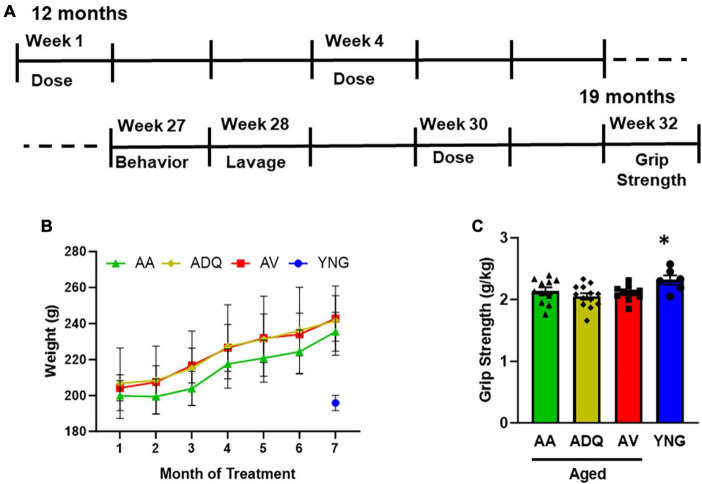
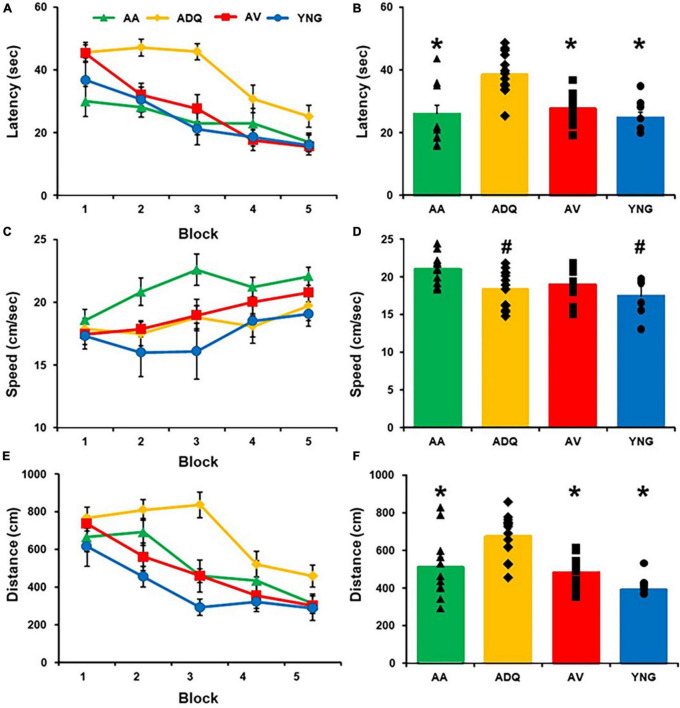
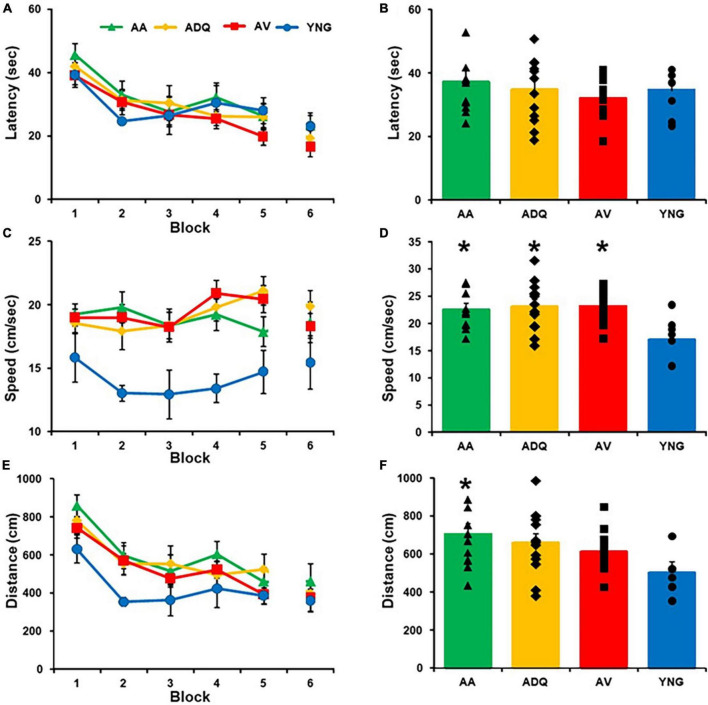
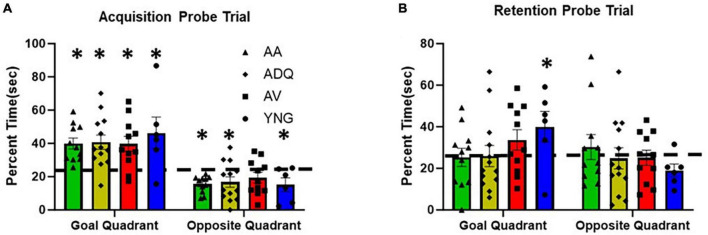
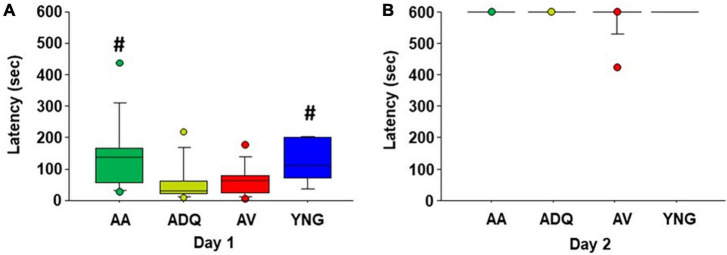
There are sex differences in vulnerability and resilience to the stressors of aging and subsequent age-related cognitive decline. Cellular senescence occurs as a response to damaging or stress-inducing stimuli. The response includes a state of irreversible growth arrest, the development of a senescence-associated secretory phenotype, and the release of pro-inflammatory cytokines associated with aging and age-related diseases. Senolytics are compounds designed to eliminate senescent cells. Our recent work indicates that senolytic treatment preserves cognitive function in aging male F344 rats. The current study examined the effect of senolytic treatment on cognitive function in aging female rats. Female F344 rats (12 months) were treated with dasatinib (1.2 mg/kg) + quercetin (12 mg/kg) or ABT-263 (12 mg/kg) or vehicle for 7 months. Examination of the estrus cycle indicated that females had undergone estropause during treatment. Senolytic treatment may have increased sex differences in behavioral stress responsivity, particularly for the initial training on the cued version of the watermaze. However, pre-training on the cue task reduced stress responsivity for subsequent spatial training and all groups learned the spatial discrimination. In contrast to preserved memory observed in senolytic-treated males, all older females exhibited impaired episodic memory relative to young (6-month) females. We suggest that the senolytic treatment may not have been able to compensate for the loss of estradiol, which can act on aging mechanisms for anxiety and memory independent of cellular senescence.
Overview
The claims and statistics of this paper haven’t been checked yet.
Run the check — free, no account needed. It reads the open-access text and checks the sources it cites.
Integrity signals
Registry
Cites
Statistics
Figures
Verification
Claims the paper makes
The claims and statistics of this paper haven’t been checked yet.
Run the check — free, no account needed. It reads the open-access text and checks the sources it cites.
Claims other papers make about this one
Each is checked against this paper’s own text: does it say what the citing paper says it does?
The cited source says what the claim attributes to it.
In the citing paper
“For instance, preclinical studies demonstrated that D + Q treatment preserved cognitive function in aging male rats but not in females that had undergone estropause, indicating that hormonal status may modulate senolytic efficacy121.”
From Emerging strategies in senotherapeutics: from broad-spectrum senolysis to precision reprogramming (2026) · cites this paper as [121]
In the citing paper
“indicating that hormonal status may modulate senolytic efficacy121.”
From Emerging strategies in senotherapeutics: from broad-spectrum senolysis to precision reprogramming (2026) · cites this paper as [121]
Self-check
Percentages, sums and reported differences re-computed from the paper’s own numbers.
The self-check needs the paper’s full text.
Citations
Cites
Clearance of p16Ink4a-positive senescent cells delays ageing-associated disorders
Baker, D. J., Wijshake, T., Tchkonia, T., LeBrasseur, N. K., Childs, B. G., van de Sluis, B., Kirkland, J. L., & van Deursen, J. M. (2011) · Nature · doi:10.1038/nature10600 · Cited by 3,670
Senolytic drugs: from discovery to translation
Kirkland, J. L., & Tchkonia, T. (2020) · Journal of Internal Medicine · doi:10.1111/joim.13141 · Cited by 1,227
Sex differences and stress across the lifespan
Bale, T. L., & Epperson, C. N. (2015) · Nature Neuroscience · doi:10.1038/nn.4112 · Cited by 751
Sex differences in cognitive trajectories in clinically normal older adults.
McCarrey, A. C., An, Y., Kitner-Triolo, M. H., Ferrucci, L., & Resnick, S. M. (2016) · Psychology and Aging · doi:10.1037/pag0000070 · Cited by 452
Effects of Sex, Strain, and Energy Intake on Hallmarks of Aging in Mice
Mitchell, S. J., Madrigal-Matute, J., Scheibye-Knudsen, M., Fang, E., Aon, M., González-Reyes, J. A., Cortassa, S., Kaushik, S., Gonzalez-Freire, M., Patel, B., et al. (2016) · Cell Metabolism · doi:10.1016/j.cmet.2016.05.027 · Cited by 451
Speisman, R. B., Kumar, A., Rani, A., Foster, T. C., & Ormerod, B. K. (2013) · Brain Behavior and Immunity · doi:10.1016/j.bbi.2012.09.013 · Cited by 187
Self-citationGuidi, M., Kumar, A., & Foster, T. C. (2015) · The Journal of Neuroscience · doi:10.1523/jneurosci.3523-14.2015 · Cited by 63
Self-citation
Research works printed but not linked: 73
- Barter, 2021, Adulthood systemic inflammation accelerates the trajectory of age-related cognitive decline., Aging, 13, 22092, 10.18632/aging.203588 · DOI
- Barter, 2020, Differential effect of repeated lipopolysaccharide treatment and aging on hippocampal function and biomarkers of hippocampal senescence., Mol. Neurobiol., 57, 4045, 10.1007/s12035-020-02008-y · DOI
- Bean, 2014, Estrogen receptors, the hippocampus, and memory., Neuroscientist, 20, 534, 10.1177/1073858413519865 · DOI
- Bean, 2015, Re-Opening the critical window for estrogen therapy., J. Neurosci., 35, 16077, 10.1523/JNEUROSCI.1890-15.2015 · DOI
- Beiko, 2004, Contribution of sex differences in the acute stress response to sex differences in water maze performance in the rat., Behav. Brain Res., 151, 239, 10.1016/j.bbr.2003.08.019 · DOI
- Bell, 2009, Environmental enrichment influences survival rate and enhances exploration and learning but produces variable responses to the radial maze in old rats., Dev. Psychobiol., 51, 564, 10.1002/dev.20394 · DOI
- Belviranli, 2012, Age and sex affect spatial and emotional behaviors in rats: The role of repeated elevated plus maze test., Neuroscience, 227, 1, 10.1016/j.neuroscience.2012.09.036 · DOI
- Bohacek, 2015, Hippocampal gene expression induced by cold swim stress depends on sex and handling., Psychoneuroendocrinology, 52, 1, 10.1016/j.psyneuen.2014.10.026 · DOI
- Budamagunta, 2023, Effect of peripheral cellular senescence on brain aging and cognitive decline., Aging Cell, 22, 10.1111/acel.13817 · DOI
- Budamagunta, 2024, Senolytic treatment alleviates doxorubicin-induced chemobrain., Aging Cell, 23, 10.1111/acel.14037 · DOI
- Camell, 2021, Senolytics reduce coronavirus-related mortality in old mice., Science, 373, 10.1126/science.abe4832 · DOI · Paper page
- Carter, 2009, Influence of calorie restriction on measures of age-related cognitive decline: role of increased physical activity., J. Gerontol. A Biol. Sci. Med. Sci., 64, 850, 10.1093/gerona/glp060 · DOI
- Casaletto, 2019, Cognitive aging is not created equally: Differentiating unique cognitive phenotypes in “normal” adults., Neurobiol. Aging, 77, 13, 10.1016/j.neurobiolaging.2019.01.007 · DOI
- Casaletto, 2020, Sexual dimorphism of physical activity on cognitive aging: Role of immune functioning., Brain Behav. Immun., 88, 699, 10.1016/j.bbi.2020.05.014 · DOI
- Chan, 2012, Targeted inhibition of Src kinase with dasatinib blocks thyroid cancer growth and metastasis., Clin. Cancer Res., 18, 3580, 10.1158/1078-0432.CCR-11-3359 · DOI
- Chaouloff, 1997, Anxiety- and activity-related effects of diazepam and chlordiazepoxide in the rat light/dark and dark/light tests., Behav. Brain Res., 85, 27, 10.1016/s0166-4328(96)00160-x · DOI
- Colettis, 2022, Differences in learning and memory between middle-aged female and male rats., Learn. Mem., 29, 120, 10.1101/lm.053578.122 · DOI
- Cui, 2009, Comparison of lifelong and late life exercise on oxidative stress in the cerebellum., Neurobiol. Aging, 30, 903, 10.1016/j.neurobiolaging.2007.09.005 · DOI
- Domonkos, 2017, Sex differences and sex hormones in anxiety-like behavior of aging rats., Horm. Behav., 93, 159, 10.1016/j.yhbeh.2017.05.019 · DOI
- Eliot, 2023, Why and how to account for sex and gender in brain and behavioral research., J. Neurosci., 43, 6344, 10.1523/JNEUROSCI.0020-23.2023 · DOI
- Elmarzouki, 2014, Effects of cold exposure on behavioral and electrophysiological parameters related with hippocampal function in rats., Front. Cell. Neurosci., 8, 10.3389/fncel.2014.00253 · DOI
- Faubion, 2020, Effect of menopausal hormone therapy on proteins associated with senescence and inflammation., Physiol. Rep., 8, 10.14814/phy2.14535 · DOI
- Febo, 2020, Longitudinal characterization and biomarkers of age and sex differences in the decline of spatial memory., Front. Aging Neurosci., 12, 10.3389/fnagi.2020.00034 · DOI
- Foster, 1999, Involvement of hippocampal synaptic plasticity in age-related memory decline., Brain Res. Brain Res. Rev., 30, 236, 10.1016/S0165-0173(99)00017-X · DOI
- Foster, 2005, Interaction of rapid signal transduction cascades and gene expression in mediating estrogen effects on memory over the life span., Front. Neuroendocrinol., 26, 51, 10.1016/j.yfrne.2005.04.004 · DOI
- Foster, 2012, Dissecting the age-related decline on spatial learning and memory tasks in rodent models: N-methyl-D-aspartate receptors and voltage-dependent Ca2+ channels in senescent synaptic plasticity., Prog. Neurobiol., 96, 283, 10.1016/j.pneurobio.2012.01.007 · DOI
- Foster, 2007, Susceptibility to induction of long-term depression is associated with impaired memory in aged Fischer 344 rats., Neurobiol. Learn. Mem., 87, 522, 10.1016/j.nlm.2006.12.009 · DOI
- Foster, 2003, Interaction of age and chronic estradiol replacement on memory and markers of brain aging., Neurobiol. Aging, 24, 839, 10.1016/s0197-4580(03)00014-9 · DOI
- Fridgeirsdottir, 2014, Escalated handling of young C57BL/6 mice results in altered Morris water maze performance., Ups J. Med. Sci., 119, 1, 10.3109/03009734.2013.847511 · DOI
- Gameiro, 2010, Changes in the immune system during menopause and aging., Front. Biosci., 2, 1299, 10.2741/e190 · DOI
- Garbarino, 2020, A head-to-head comparison between senolytic therapies, dasatinib plus quercetin and fisetin, indicates sex- and genotype-specific differences in translationally relevant outcomes., Alzheimers Dement., 16, 10.1002/alz.047607 · DOI
- Guidi, 2012, Behavioral model for assessing cognitive decline., Methods Mol. Biol., 829, 145, 10.1007/978-1-61779-458-2_8 · DOI
- Guidi, 2014, Assessing the emergence and reliability of cognitive decline over the life span in Fisher 344 rats using the spatial water maze., Front. Aging Neurosci., 6, 10.3389/fnagi.2014.00002 · DOI
- Ishisaka, 2014, Specific localization of quercetin-3-O-glucuronide in human brain., Arch. Biochem. Biophys., 557, 11, 10.1016/j.abb.2014.05.025 · DOI
- Jefferson, 2007, Inflammatory biomarkers are associated with total brain volume: The Framingham Heart Study., Neurology, 68, 1032, 10.1212/01.wnl.0000257815.20548.df · DOI
- Khaleghi, 2021, Estrogen attenuates physical and psychological stress-induced cognitive impairments in ovariectomized rats., Brain Behav., 11, 10.1002/brb3.2139 · DOI
- Knufinke, 2023, Sex differences in pharmacological interventions and their effects on lifespan and healthspan outcomes: A systematic review., Front. Aging, 4, 10.3389/fragi.2023.1172789 · DOI
- Kumar, 2009, Susceptibility to calcium dysregulation during brain aging., Front. Aging Neurosci., 1, 10.3389/neuro.24.002.2009 · DOI
- Kumar, 2007, Neurophysiology of old neurons and synapses, Brain Aging: Models, Methods, and Mechanisms
- Kumar, 2013, Linking redox regulation of NMDAR synaptic function to cognitive decline during aging., J. Neurosci., 33, 15710, 10.1523/JNEUROSCI.2176-13.2013 · DOI
- Kumar, 2018, Nonsteroidal anti-inflammatory drug, indomethacin improves spatial memory and NMDA receptor function in aged animals., Neurobiol. Aging, 70, 184, 10.1016/j.neurobiolaging.2018.06.026 · DOI
- Kumar, 2012, Influence of late-life exposure to environmental enrichment or exercise on hippocampal function and CA1 senescent physiology., Neurobiol. Aging, 33, 10.1016/j.neurobiolaging.2011.06.023 · DOI
- Leite-Almeida, 2009, The impact of age on emotional and cognitive behaviours triggered by experimental neuropathy in rats., Pain, 144, 57, 10.1016/j.pain.2009.02.024 · DOI
- Liu, 2016, Estrogen receptor alpha inhibits senescence-like phenotype and facilitates transformation induced by oncogenic ras in human mammary epithelial cells., Oncotarget, 7, 39097, 10.18632/oncotarget.9772 · DOI
- Lundervold, 2014, Age and sex related changes in episodic memory function in middle aged and older adults., Scand. J. Psychol., 55, 225, 10.1111/sjop.12114 · DOI
- Mabry, 1996, Age and stress history effects on spatial performance in a swim task in Fischer-344 rats., Neurobiol. Learn. Mem., 66, 1, 10.1006/nlme.1996.0038 · DOI
- Marcondes, 2002, Determination of the estrous cycle phases of rats: Some helpful considerations., Braz. J. Biol., 62, 609, 10.1590/s1519-69842002000400008 · DOI
- McQuail, 2020, Cognitive reserve in model systems for mechanistic discovery: The importance of longitudinal studies., Front. Aging Neurosci., 12, 10.3389/fnagi.2020.607685 · DOI
- Mehdipour, 2021, Plasma dilution improves cognition and attenuates neuroinflammation in old mice., Geroscience, 43, 1, 10.1007/s11357-020-00297-8 · DOI · Paper page
- Monleon, 2002, Chronic administration of fluoxetine impairs inhibitory avoidance in male but not female mice., Behav. Brain Res., 136, 483, 10.1016/S0166-4328(02)00194-8 · DOI
- Muralidharan, 2022, Long-term male-specific chronic pain via telomere- and p53-mediated spinal cord cellular senescence., J. Clin. Investig., 132, 10.1172/JCI151817 · DOI
- Ng, 2022, Evidence of sex differences in cellular senescence., Neurobiol. Aging, 120, 88, 10.1016/j.neurobiolaging.2022.08.014 · DOI
- Novais, 2021, Long-term treatment with senolytic drugs Dasatinib and Quercetin ameliorates age-dependent intervertebral disc degeneration in mice., Nat. Commun., 12, 10.1038/s41467-021-25453-2 · DOI · Paper page
- Nyberg, 2019, Successful memory aging., Annu. Rev. Psychol., 70, 219, 10.1146/annurev-psych-010418-103052 · DOI
- Olaya, 2017, Trajectories of verbal episodic memory in middle-aged and older adults: Evidence from the English Longitudinal Study of Ageing., J. Am. Geriatr. Soc., 65, 1274, 10.1111/jgs.14789 · DOI
- Perrot-Sinal, 1996, Sex differences in performance in the Morris water maze and the effects of initial nonstationary hidden platform training., Behav. Neurosci., 110, 1309, 10.1037//0735-7044.110.6.1309 · DOI
- Polcz, 2023, Sex, sepsis and the brain: Defining the role of sexual dimorphism on neurocognitive outcomes after infection., Clin. Sci., 137, 963, 10.1042/CS20220555 · DOI
- Porkka, 2008, Dasatinib crosses the blood-brain barrier and is an efficient therapy for central nervous system Philadelphia chromosome-positive leukemia., Blood, 112, 1005, 10.1182/blood-2008-02-140665 · DOI · Paper page
- Rajab, 2014, Sex differences in learning and memory following short-term dietary restriction in the rat., Int. J. Dev. Neurosci., 36, 74, 10.1016/j.ijdevneu.2014.05.011 · DOI
- Rentz, 2017, Sex differences in episodic memory in early midlife: Impact of reproductive aging., Menopause, 24, 400, 10.1097/GME.0000000000000771 · DOI
- Scheinert, 2015, Some hormone, cytokine and chemokine levels that change across lifespan vary by cognitive status in male Fischer 344 rats., Brain Behav. Immun., 49, 216, 10.1016/j.bbi.2015.06.005 · DOI
- Schmidt, 2016, Associations between serum inflammatory markers and hippocampal volume in a community sample., J. Am. Geriatr. Soc., 64, 1823, 10.1111/jgs.14283 · DOI
- Schwab, 2022, Neurons and glial cells acquire a senescent signature after repeated mild traumatic brain injury in a sex-dependent manner., Front. Neurosci., 16, 10.3389/fnins.2022.1027116 · DOI
- Sensini, 2020, The impact of handling technique and handling frequency on laboratory mouse welfare is sex-specific., Sci. Rep., 10, 10.1038/s41598-020-74279-3 · DOI
- Smith, 2020, Hippocampal subregion transcriptomic profiles reflect strategy selection during cognitive aging., J. Neurosci., 40, 4888, 10.1523/JNEUROSCI.2944-19.2020 · DOI
- Turturro, 1999, Growth curves and survival characteristics of the animals used in the Biomarkers of Aging Program., J. Gerontol. A Biol. Sci. Med. Sci., 54, B492, 10.1093/gerona/54.11.b492 · DOI
- Walker, 2019, Systemic inflammation during midlife and cognitive change over 20 years: The ARIC Study., Neurology, 92, e1256, 10.1212/WNL.0000000000007094 · DOI · Paper page
- Warren, 2000, Sex differences and estropausal phase effects on water maze performance in aged rats., Neurobiol. Learn. Mem., 74, 229, 10.1006/nlme.1999.3948 · DOI
- Yamaguchi, 2012, Finding a Panacea among combination cancer therapies., Cancer Res., 72, 18, 10.1158/0008-5472.CAN-11-3091 · DOI
- Yousefzadeh, 2020, Tissue specificity of senescent cell accumulation during physiologic and accelerated aging of mice., Aging Cell, 19, 10.1111/acel.13094 · DOI · Paper page
- Zhou, 2011, Altered behavior in experimental cortical dysplasia., Epilepsia, 52, 2293, 10.1111/j.1528-1167.2011.03267.x · DOI
- Zhu, 2016, Identification of a novel senolytic agent, navitoclax, targeting the Bcl-2 family of anti-apoptotic factors., Aging Cell, 15, 428, 10.1111/acel.12445 · DOI · Paper page
- Zorzo, 2023, Are there sex differences in spatial reference memory in the Morris water maze? A large-sample experimental study., Learn. Behav., 10.3758/s13420-023-00598-w · DOI
Cited by
Sorted by citations
Emerging strategies in senotherapeutics: from broad-spectrum senolysis to precision reprogramming
Zhang, W., Song, S., Zhang, Y., Pan, Y., Hu, D., & Wang, Y. (2026) · npj Aging · doi:10.1038/s41514-026-00355-z · Cited by 6
Metadata
- Authors
- Rani, A., Bean, L., Budamagunta, V., Kumar, A., & Foster, T. C.
- Venue
- Frontiers in Aging Neuroscience
- Publisher
- Frontiers Media SA
- Published
- 2024-05-15
- Volume
- 16
- ISSN
- 1663-4365
- PMC
- PMC11133672
- Cited by
- 16
- References
- 7
About these checks
Registry, retraction, Cites and statistics results are computed, not judged, with one exception: a printed reference that no index lists is read once by a model before it counts as a citation error. Claims are extracted by a model and kept only when their quote appears verbatim in the text; each cited source is then checked, with a model’s help, for whether it says what the claim relies on. Those verdicts can be wrong — read the claim’s quote and the cited source before relying on one.
Statistics and arithmetic are recomputed, not judged.
Confidence bands are shown only for fields calibrated on our annotated test set. None is calibrated yet, so no band is shown.
What counts as a claim ›How we measure confidence ›How we check this ›
Are you an author, or do you see a problem with this page? Request a review
