

The DOI matches its Crossref record; 140 of the 142 references it cites were found in a registry or an index.
Understanding health behavior change by motivation and reward mechanisms: a review of the literature
Open accessAbstract
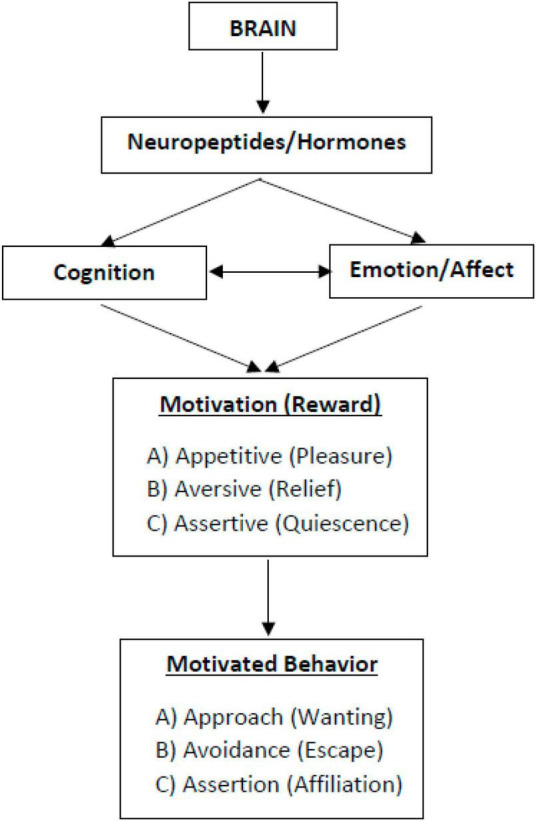
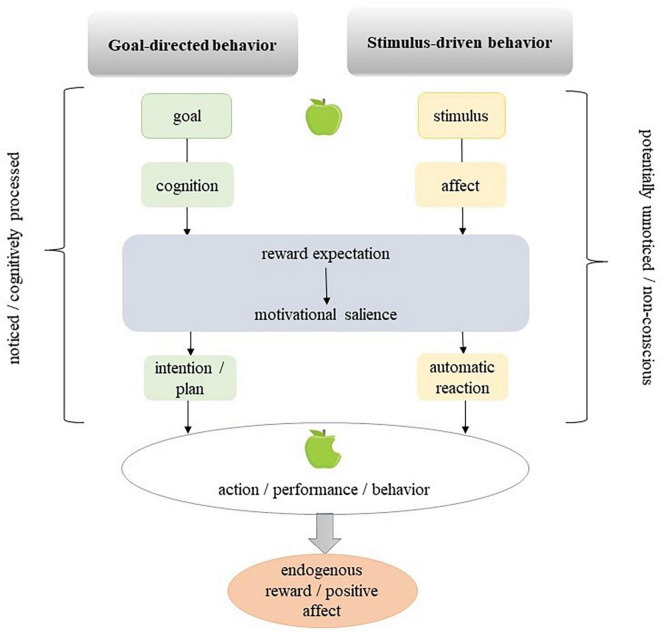
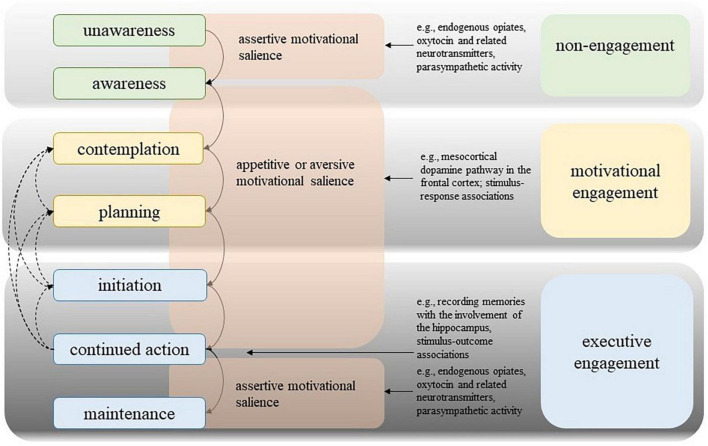
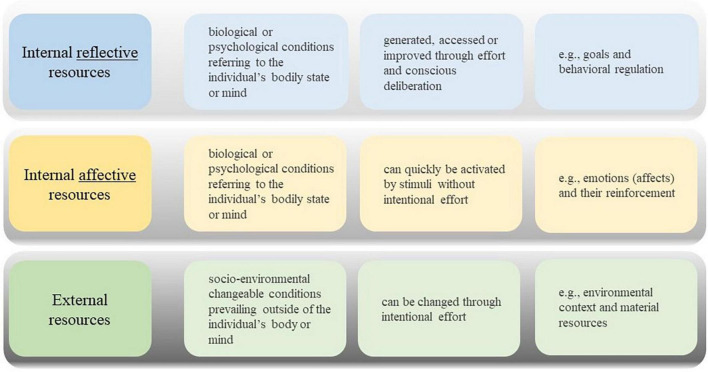
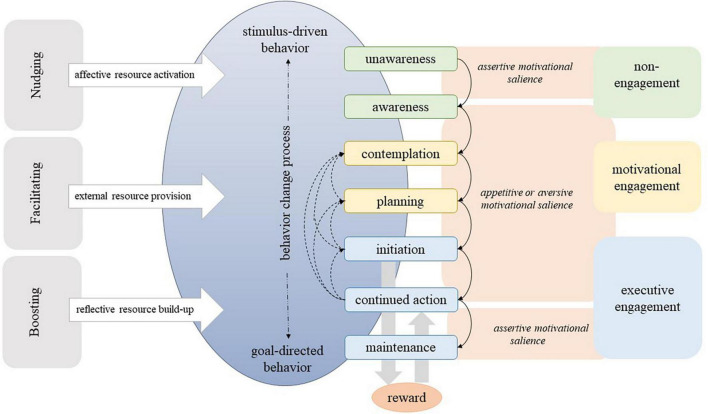
The global rise of lifestyle-related chronic diseases has engendered growing interest among various stakeholders including policymakers, scientists, healthcare professionals, and patients, regarding the effective management of health behavior change and the development of interventions that facilitate lifestyle modification. Consequently, a plethora of health behavior change theories has been developed with the intention of elucidating the mechanisms underlying health behavior change and identifying key domains that enhance the likelihood of successful outcomes. Until now, only few studies have taken into account neurobiological correlates underlying health behavior change processes. Recent progress in the neuroscience of motivation and reward systems has provided further insights into the relevance of such domains. The aim of this contribution is to review the latest explanations of health behavior change initiation and maintenance based on novel insights into motivation and reward mechanisms. Based on a systematic literature search in PubMed, PsycInfo, and Google Scholar, four articles were reviewed. As a result, a description of motivation and reward systems (approach/wanting = pleasure; aversion/avoiding = relief; assertion/non-wanting = quiescence) and their role in health behavior change processes is presented. Three central findings are discussed: (1) motivation and reward processes allow to distinguish between goal-oriented and stimulus-driven behavior, (2) approach motivation is the key driver of the individual process of behavior change until a new behavior is maintained and assertion motivation takes over, (3) behavior change techniques can be clustered based on motivation and reward processes according to their functional mechanisms into facilitating (= providing external resources), boosting (= strengthening internal reflective resources) and nudging (= activating internal affective resources). The strengths and limitations of these advances for intervention planning are highlighted and an agenda for testing the models as well as future research is proposed.
Overview
The claims and statistics of this paper haven’t been checked yet.
Run the check — free, no account needed. It reads the open-access text and checks the sources it cites.
Integrity signals
Registry
Cites
Statistics
Figures
Verification
Claims the paper makes
The claims and statistics of this paper haven’t been checked yet.
Run the check — free, no account needed. It reads the open-access text and checks the sources it cites.
Claims other papers make about this one
Each is checked against this paper’s own text: does it say what the citing paper says it does?
The check wasn’t confident either way, so it gives no verdict — never disputed.
In the citing paper
“Research suggests that many adults experience optimal sleep at bedroom temperatures between 15-20 °C, a range that facilitates the body's natural cooling signals and promotes faster sleep onset [62].”
From Pre-Sleep Anxiety: Mechanisms and Therapeutic Approaches in Clinical Practice. (2026) · cites this paper as [62]
Experimental — accuracy not yet measured
Self-check
Percentages, sums and reported differences re-computed from the paper’s own numbers.
The self-check needs the paper’s full text.
Citations
Cites
Ryan, R. M., & Deci, E. L. (2000) · American Psychologist · doi:10.1037//0003-066x.55.1.68 · Cited by 54,599
Generalized expectancies for internal versus external control of reinforcement.
Rotter, J. B. (1966) · Psychological Monographs: General and Applied · doi:10.1037/h0092976 · Cited by 21,937
Reduction in the incidence of type 2 diabetes with lifestyle intervention or metformin
(2002) · New England Journal of Medicine · doi:10.1056/nejmoa012512 · Cited by 19,011 · cited 1×
“…the positive impact of increased exercise, healthier nutrition, reduced alcohol intake, smoking cessation, and relaxation techniques on a range of chronic conditions (Ornish et al., 1990; Knowler et al., 2002; Savoye et al., 2007; Alert et al., 2013; Cramer et al., 2014; Morris et al., 2019).”
BackgroundMichie, S., van Stralen, M. M., & West, R. (2011) · Implementation Science · doi:10.1186/1748-5908-6-42 · Cited by 13,697
Nudge: improving decisions about health, wealth, and happiness
(2008) · Choice Reviews Online · doi:10.5860/choice.46-0977 · Cited by 11,624
Michie, S., Richardson, M., Johnston, M., Abraham, C., Francis, J., Hardeman, W., Eccles, M. P., Cane, J., & Wood, C. E. (2013) · Annals of Behavioral Medicine · doi:10.1007/s12160-013-9486-6 · Cited by 7,629
Carver, C. S., & White, T. L. (1994) · Journal of Personality and Social Psychology · doi:10.1037/0022-3514.67.2.319 · Cited by 7,306
Self-determination theory: A macrotheory of human motivation, development, and health
Deci, E. L., & Ryan, R. M. (2008) · Canadian Psychology / Psychologie canadienne · doi:10.1037/a0012801 · Cited by 6,664
Chaiken, S. (1980) · Journal of Personality and Social Psychology · doi:10.1037//0022-3514.39.5.752 · Cited by 5,516
Implementation intentions: Strong effects of simple plans.
Gollwitzer, P. M. (1999) · American Psychologist · doi:10.1037/0003-066x.54.7.493 · Cited by 5,478
Research works printed but not linked: 10
- Esch, 2018, OpenNotes, patient narratives, and their transformative effects on patient-centered care. NEJM (Catalyst).
- Evans, 2018, Dual process theory: Perspectives and problems, Dual process theory 2.0, 137
- 2013, IDF diabetes
- 2021, IDF diabetes
- Nestler, 2001, Molecular basis of neuropharmacology.
- Prochaska, 2008, The transtheoretical model and stages of change, Health behavior and health education: Theory, research, and practice, 97
- 2022, Data - Life expectancy at birth.
- Weinstein, 2002, The precaution adoption process model and its application, Emerging Theories in Health Promotion Practice and Research, 16
- Fact sheets - noncommunicable diseases.
- Fact sheets - aging and health.
Cited by
Sorted by citations
From Reward to Anhedonia-Dopamine Function in the Global Mental Health Context
Dresp, B. (2023) · Biomedicines · doi:10.3390/biomedicines11092469 · Cited by 86
“This connectivity may explain why addicts relapse without any conscious decision to use again, as the addictive behavior is triggered more or less automatically by certain stimuli beyond individual conscious awareness [25–27].”
BackgroundA Behavioral Perspective for Improving Exercise Adherence
André, N., Grousset, M., & Audiffren, M. F. (2024) · Sports Medicine - Open · doi:10.1186/s40798-024-00714-8 · Cited by 41
“In a similar vein, a recent systematic review on behavioral change domains carried out by Michaelsen and Esch [31] led them to develop a resource model of behavioral change based on the functional mechanisms of BCTs, which include facilitating, boosting and nudging mechanisms.”
BackgroundWang, X., Wuji, S., Liu, Y., Luo, R., & Qiu, C. (2024) · Information Processing & Management · doi:10.1016/j.ipm.2024.103674 · Cited by 38
Fritz, M. K., Grimm, M., Hạnh, H. T. M., Koot, J. A. R., Nguyen, G. H., Nguyen, T.-P.-L., Probandari, A. N., Widyaningsih, V., & Lensink, R. (2024) · BMJ Global Health · doi:10.1136/bmjgh-2024-015053 · Cited by 19
Lǚ, Z., Yu, L., Fan, K., Hu, T., Liu, L., Li, S., & Zhou, Y. (2024) · BMC Public Health · doi:10.1186/s12889-024-20070-2 · Cited by 18
“2 Mediation analysis of self-efficacy and peer relationships in the relationship between social support and proactive health behaviours Note: * P 0.05 ** P 0.01 *** P 0.001 and has sufficient motivation to continue, it is possible to implement and sustain the behaviour [50].”
BackgroundInfluential
Metadata
- Authors
- Michaelsen, M. M., & Esch, T.
- Affiliations
- Witten/Herdecke University (DE)
- Corresponding author
- Michaelsen, Maren M.
- Venue
- Frontiers in Behavioral Neuroscience
- Publisher
- Frontiers Media SA
- Published
- 2023-06-19
- Volume
- 17
- Pages
- 1151918-1151918
- ISSN
- 1662-5153 (ISSN-L)
- PMC
- PMC10317209
- OpenAlex
- W4381166137
- Cited by
- 114
- References
- 142
- Citations by year
- 2026: 49 · 2025: 41 · 2024: 20 · 2023: 4
- FWCI
- 3.84
- Type
- journal article
- Language
- en
- Open access
- gold
- doi.org
- Licence
- Locations
- Frontiers in Behavioral Neuroscience (publishedVersion, cc-by)
- PubMed Central (publishedVersion, cc-by)
- PubMed (publishedVersion)
- DOAJ (DOAJ: Directory of Open Access Journals) (submittedVersion, cc-by-sa)
- Topics
- Social Sciences › Psychology › Applied Psychology › Behavioral Health and Interventions
- Social Sciences › Psychology › Developmental and Educational Psychology › Behavioral and Psychological Studies
- Life Sciences › Neuroscience › Cellular and Molecular Neuroscience › Neurotransmitter Receptor Influence on Behavior
- Keywords
- health behavior change, motivation, reward systems, approach motivation, quiescence, behavior maintenance, behaviour change techniques, lifestyle modification, chronic disease prevention, nudging, intervention planning
About these checks
Registry, retraction, Cites and statistics results are computed, not judged, with one exception: a printed reference that no index lists is read once by a model before it counts as a citation error. Claims are extracted by a model and kept only when their quote appears verbatim in the text; each cited source is then checked, with a model’s help, for whether it says what the claim relies on. Those verdicts can be wrong — read the claim’s quote and the cited source before relying on one.
Statistics and arithmetic are recomputed, not judged.
Confidence bands are shown only for fields calibrated on our annotated test set. None is calibrated yet, so no band is shown.
What counts as a claim ›How we measure confidence ›How we check this ›
Are you an author, or do you see a problem with this page? Request a review
