

The DOI matches its Crossref record; 69 of the 71 references it cites were found in a registry or an index.
Deep Learning with Convolutional Neural Networks Applied to Electromyography Data: A Resource for the Classification of Movements for Prosthetic Hands
Open accessAbstract
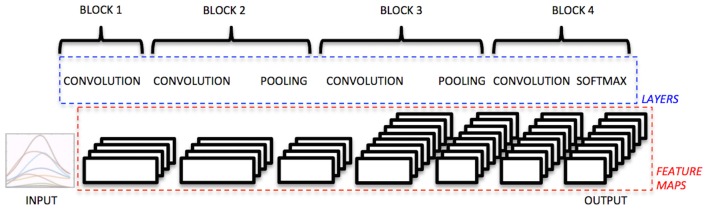
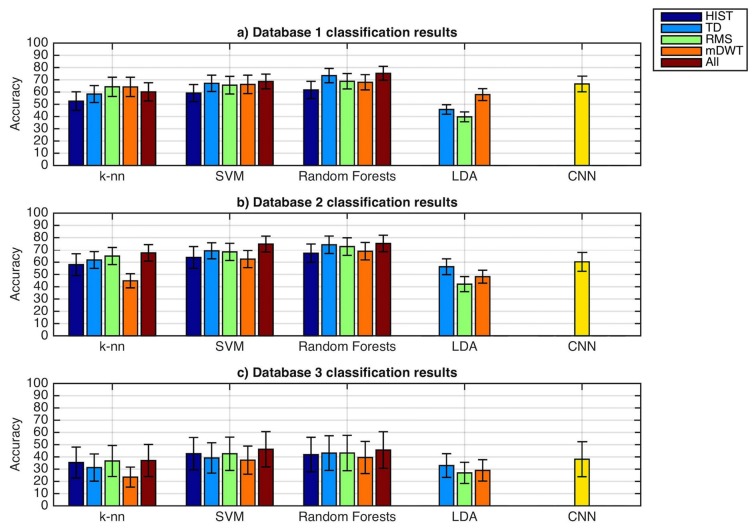
Natural control methods based on surface electromyography (sEMG) and pattern recognition are promising for hand prosthetics. However, the control robustness offered by scientific research is still not sufficient for many real life applications, and commercial prostheses are capable of offering natural control for only a few movements. In recent years deep learning revolutionized several fields of machine learning, including computer vision and speech recognition. Our objective is to test its methods for natural control of robotic hands via sEMG using a large number of intact subjects and amputees. We tested convolutional networks for the classification of an average of 50 hand movements in 67 intact subjects and 11 transradial amputees. The simple architecture of the neural network allowed to make several tests in order to evaluate the effect of pre-processing, layer architecture, data augmentation and optimization. The classification results are compared with a set of classical classification methods applied on the same datasets. The classification accuracy obtained with convolutional neural networks using the proposed architecture is higher than the average results obtained with the classical classification methods, but lower than the results obtained with the best reference methods in our tests. The results show that convolutional neural networks with a very simple architecture can produce accurate results comparable to the average classical classification methods. They show that several factors (including pre-processing, the architecture of the net and the optimization parameters) can be fundamental for the analysis of sEMG data. Larger networks can achieve higher accuracy on computer vision and object recognition tasks. This fact suggests that it may be interesting to evaluate if larger networks can increase sEMG classification accuracy too.
Overview
The claims and statistics of this paper haven’t been checked yet.
Run the check — free, no account needed. It reads the open-access text and checks the sources it cites.
Integrity signals
Registry
Cites
Statistics
Figures
Verification
Claims the paper makes
The claims and statistics of this paper haven’t been checked yet.
Run the check — free, no account needed. It reads the open-access text and checks the sources it cites.
Claims other papers make about this one
Each is checked against this paper’s own text: does it say what the citing paper says it does?
The source backs part of the claim, not all of it — or backs it for a different population, condition or comparison.
In the citing paper
“Pattern recognition control of myoelectric prostheses is also getting popularity due to its better classification of EMG signals (user intentions) using various methods, i.e., linear discriminant analysis classifier, tacit learning system, deep learning with convolutional neural network (Adewuyi et al., 2016; Atzori et al., 2016; Fani et al., 2016; Oyama et al., 2016), etc.”
From Selectivity and Longevity of Peripheral-Nerve and Machine Interfaces: A Review. (2017) · cites this paper as Atzori et al., 2016
Experimental — accuracy not yet measured
Self-check
Percentages, sums and reported differences re-computed from the paper’s own numbers.
The self-check needs the paper’s full text.
Citations
Cites
Breiman, L. (2001) · Machine Learning · doi:10.1023/a:1010933404324 · Cited by 133,538 · cited 1×
“They include: random Forests (Breiman, 2001), SVM (Cristianini and Shawe-Taylor, 2000) and k-Nearest Neighbors (Duda et al., 2001).”
MethodImageNet classification with deep convolutional neural networks
Krizhevsky, A., Sutskever, I., & Hinton, G. E. (2017) · Communications of the ACM · doi:10.1145/3065386 · Cited by 112,155 · cited 1×
“However, in the field of computer vision in 2012, deep learning approaches won one of the largest object recognition challenges (the ILSVRC) decreasing the previous top-5 error rate by more than 10% (Krizhevsky and Hinton, 2010; Goodfellow et al., 2016).”
BackgroundHuman-level control through deep reinforcement learning
Mnih, V., Kavukcuoglu, K., Silver, D., Rusu, A. A., Veness, J., Bellemare, M. G., Graves, A., Riedmiller, M., Fidjeland, A. K., Ostrovski, G., et al. (2015) · Nature · doi:10.1038/nature14236 · Cited by 30,357 · cited 1×
“Moreover, they have also improved the performance of reinforcement learning, where a machine or software agent is able to maximize its performance by itself performing trials and errors (Mnih et al., 2015; Goodfellow et al., 2016).”
BackgroundDelving Deep into Rectifiers: Surpassing Human-Level Performance on ImageNet Classification
He, K., Zhang, X., Ren, S., & Sun, J. (2015) · 2015 IEEE International Conference on Computer Vision (ICCV) · doi:10.1109/iccv.2015.123 · Cited by 19,741 · cited 1×
“Since then, only techniques based on convolutional neural networks have won this competition, leading to top-5 error rates lower than 5% (He et al., 2015; Goodfellow et al., 2016).”
BackgroundThe pascal visual object classes (VOC) challenge
Everingham, M., Van Gool, L., Williams, C. K. I., Winn, J., & Zisserman, A. (2010) · International Journal of Computer Vision · doi:10.1007/s11263-009-0275-4 · Cited by 19,599 · cited 1×
“The usefulness of benchmark databases has been demonstrated repeatedly in other fields, e.g., in the machine vision and image analysis communities (Müller et al., 2009; Everingham et al., 2010).”
BackgroundSeel, N. M. (2012) · Springer eBooks · doi:10.1007/978-1-4419-1428-6_5195 · Cited by 19,482
An Introduction to Support Vector Machines and Other Kernel-based Learning Methods
Cristianini, N., & Shawe-Taylor, J. (2000) · doi:10.1017/cbo9780511801389 · Cited by 13,855
(2016) · Cited by 11,679
Hinton, G., Deng, L., Yu, D., Dahl, G., Mohamed, A.-R., Jaitly, N., Senior, A., Vanhoucke, V., Nguyen, P., Sainath, T., et al. (2012) · IEEE Signal Processing Magazine · doi:10.1109/msp.2012.2205597 · Cited by 10,260 · cited 1×
“Since 2010, the application of deep learning techniques to speech recognition has allowed a quick and impressive reduction of error rate (Dahl et al., 2010; Deng et al., 2010b, 2013; Hinton et al., 2012; Goodfellow et al., 2016).”
BackgroundRussell, E. L., Chiang, L. H., & Braatz, R. D. (2000) · Advances in industrial control · doi:10.1007/978-1-4471-0409-4_3 · Cited by 7,938
Research works printed but not linked: 2
- Feix, 2009, A comprehensive grasp taxonomy, 2
- Goodfellow, 2016, Deep Learning (Book in preparation).
Cited by
Sorted by citations
Items 601–681 of 681
Accelerating Development of Medical Devices Using Human‐Machine Interface
Karati, D., Mukherjee, S., Roy, S., & Prajapati, B. G. (2023) · Wiley eBooks · doi:10.1002/9781394200344.ch6
Gandhi, N., & Mishra, S. (2023) · Smart innovation, systems and technologies · doi:10.1007/978-981-99-6706-3_14
Assessing the Influence of Lstm and Post-Processing in Cnn Based Hand Gesture Recognition Using EmgPreprint
Barona, L., Ferri, F. M., Zea, J. A., Valdivieso, Á., & Benalcázar, M. E. (2023) · SSRN Electronic Journal · doi:10.2139/ssrn.4670147
Research on signal processing of upper limbs of three gestures
Yang, R., Jiang, J., Jiang, Z., & Zhu, J. (2023) · Journal of Physics Conference Series · doi:10.1088/1742-6596/2646/1/012017
“Atzori et al. and Wei et al. propose to apply CNN models on sEMG-based gesture recognition [8,9].”
Asai, K. (2024) · International Conference on Image, Video and Signal Processing (IVSP) · doi:10.1145/3655755.3655776
sEMG-Based Multi-view Feature-Constrained Representation Learning
Yan, S., Dai, H., Wang, R., Zhang, L., & Wang, G. (2024) · Lecture notes in computer science · doi:10.1007/978-981-97-5492-2_25
Beckerle, P., Willwacher, S., Liarokapis, M. V., Bowers, M. P., & Popović, M. B. (2024) · Elsevier eBooks · doi:10.1016/b978-0-443-13862-1.00004-7
Santos, M. J., Petrella, L., Perdigão, F., & Santos, J. B. (2024) · Electronics · doi:10.3390/electronics13214144
Escobedo-Gordillo, A., Brieva, J., Moya-Albor, E., Ponce-Espinosa, H., Franco-Gaona, E., & Cruz-Aceves, I. (2024) · International Symposium on Medical Information Processing and Analysis (SIPAIM) · doi:10.1109/sipaim62974.2024.10783516
“Atzori et al. [9] reported accuracy of (82.77± 9.27)%, while Sandoval-Espino et al. [7] reported an almost perfect accuracy with (97.61 ± 1.55)%; both across the three Exercises contained in NinaPro DB2 and using two thirds of the DB for training.”
InfluentialLe, H., Panhuis, M. I. H., & Alıcı, G. (2024) · SSRN Electronic Journal · doi:10.2139/ssrn.5073758
SMPL Variable Model for 3D Reconstruction and Image Fusion in Animation Media Applications
Xie, T., & Zhao, K. (2025) · IEEE Access · doi:10.1109/access.2025.3549466
“These models are built on statistical shape modeling, where a large set of human scans is used to learn a linear deformation space that can represent various human shapes and poses [20].”
Cheng, S., Hu, C., Liu, F., Hao, Y., & Zhang, C. (2025) · IEEE Sensors Journal · doi:10.1109/jsen.2025.3562961
“Atzori et al. [7] proposed a classification method for surface EMG signal recognition based on convolutional neural networks.”
Hoshino, T., Kanoga, S., Takase, T., & Aoyama, A. (2025) · SSRN Electronic Journal · doi:10.2139/ssrn.5247869
Exoskeleton Upper Limb Robot: Classification, Key Technology and Research Direction
Ruan, Y. (2025) · International Conference on Robotics, Control and Automation (ICRCA) · doi:10.1109/icrca64997.2025.11011183
FE-ResNet50: Frequency Enhanced Attention Network for sEMG Gesture Recognition
Wang, H., Jiang, D., Yun, J., Liu, Y., & Li, B. (2025) · Communications in computer and information science · doi:10.1007/978-981-96-7438-1_8
Large Language Models are Great sEMG-Based Hand Gesture Recognizers
He, R., Wang, L., Peng, D., Deng, J., Fu, Y., & Ye, S. (2025) · Communications in computer and information science · doi:10.1007/978-981-95-0880-8_30
Comparative Machine Learning Models for Sign Language Detection
Dwivedi, A., Nithya, P., & Goenka, A. (2025) · Lecture notes in networks and systems · doi:10.1007/978-981-96-6906-6_14 · Cited by 1
Approaches for retraining sEMG classifiers for upper-limb prostheses
Donnelly, T., Seminati, E., & Metcalfe, B. (2025) · Frontiers in Neurorobotics · doi:10.3389/fnbot.2025.1627872
Hannius, A., Laezza, R., & Zbinden, J. (2025) · IEEE Access · doi:10.1109/access.2025.3620243 · Cited by 1
“Indeed, many promising techniques have been validated on offline datasets [1], [2] alone.”
Bei, T. (2025) · Frontiers in Psychology · doi:10.3389/fpsyg.2025.1547947
Akbari, S., Horemans, H. L. D., Bussmann, J. B. J., & Zgonnikov, A. (2025) · Computers in Biology and Medicine · doi:10.1016/j.compbiomed.2025.111167 · Cited by 3
Rectus Femoris and Gastrocnemius EMG Driven Cheonjiin Speller for Korean Text Input
Ahn, J. W., Yu, G. Y., Kim, S., Seok, Y.-S., & Choi, S. H. (2025) · Sensors · doi:10.3390/s25237243
“While these approaches offer high classification accuracy, they have the limitation of consuming significant computational resources [24].”
Yu, H., Zhang, J., Gao, Y., Wu, H., & Ning, X. (2025) · Knowledge-Based Systems · doi:10.1016/j.knosys.2025.115128
Exploring Heterogeneous Federated Learning for Improved Hand Gesture Recognition
Shahjahan, S., Paragliola, G., Research, M. N., & Syed, M. H. (2024) · International Conference on Innovative Computing (ICIC) · doi:10.1109/icic63915.2024.11116571
Research on sEMG Gesture Recognition Based on Convolutional Neural Network and Attention Mechanism
Zhao, Y., Lu, X., Cao, Q., Zhao, X., Sun, M., & Zhang, J. (2025) · International Conference on New Trends in Computational Intelligence (NTCI) · doi:10.1109/ntci67886.2025.11308177
Sign Language Classification using Wearable Sensor Array
Ajith, N., Pradipthi, J., Jijo, K. J., Viswanath, S., & Rajan, L. (2025) · IEEE Recent Advances in Intelligent Computational Systems · doi:10.1109/raics66191.2025.11332596
“Atzori et al. [11] also demonstrated that a simple CNN model achieved higher accuracy than traditional classifiers on the same dataset.”
احمد, ف., Abdullah, A., Arham, A., Moetesum, M., & Perwaiz, N. (2025) · International Conference on Frontiers of Information Technology (FIT) · doi:10.1109/fit67061.2025.11333628
“Recent advances include convolutional neural networks for electromyography signal processing, with Atzori et al. (2016) developing deep learning approaches for prosthetic hand movement classification [8].”
Khuwaja, S. H., Dhillon, B., Mughal, M. M., Hussain, S., & Shaheed, M. H. (2025) · IEEE International Conference on Metrology for eXtended Reality, Artificial Intelligence and Neural Engineering (MetroXRAINE) · doi:10.1109/metroxraine66377.2025.11340137
“This transfer learning scheme improves convergence and generalisation [13].”
A practical muscle-signal–driven control mechanism for an affordable robotic prosthetic hand
Ganokratanaa, T., Ketcham, M., & Pramkeaw, P. (2026) · Engineering Applications of Artificial Intelligence · doi:10.1016/j.engappai.2026.113833
Dipanshu, Kumar, A., Jain, M. K., Suraj, Pratap, P., & Kumar, R. (2026) · Communications in computer and information science · doi:10.1007/978-3-032-10250-8_5
Ge, C., Li, J., Hu, T., & Huang, H. (2026) · Lecture notes in computer science · doi:10.1007/978-981-95-6123-0_56
Rapeti, S., & Nandakumar, A. (2025) · International Conference on Artificial Intelligence, Metaverse and Cybersecurity (ICAMAC) · doi:10.1109/icamac67779.2025.11398422
“To give an example, [14] showcased the impact of CNNs in acquiring locational and temporal dependencies within sEMG inputs.”
Efficient sEMG decoding with hybrid, multi-timescale neural networks
Ortone, A., Fabre, M., Massa, R., Mazzoni, A., Desoli, G., Oddo, C. M., & Neftci, E. O. (2026) · Biomedical Signal Processing and Control · doi:10.1016/j.bspc.2026.111215
Hand movement recognition process based on CEEMDAN decomposition
Oral, C., & Bergil, E. (2026) · Biomedical Signal Processing and Control · doi:10.1016/j.bspc.2026.110066
Le, H., Panhuis, M. I. H., & Alıcı, G. (2026) · Biomimetic Intelligence and Robotics · doi:10.1016/j.birob.2026.100291
Classification Of Finger Movements Using Deep Learning
Koçyiğit, Y., & Ali, Y. (2026) · DÜMF Mühendislik Dergisi · doi:10.24012/dumf.1782057
EMG Signal Feature Extraction Using Data Mining Techniques
Zhang, M., Zhou, X., Deng, J., Wan, Y., & Lei, J. (2025) · International Conference on Big Data and Data Mining (BDDM) · doi:10.1109/bddm68348.2025.11442110
“Noteworthy contributions in this domain include AtzoriNet [15], a LeNet-derived convolutional network developed by Atzori et al. for sEMG-based gesture classification.”
Kirchhofer, S. (2020) · theses.fr (ABES) · doi:10.70675/87fb9952z3560z4740z8eb6zb31e72f0a6f3
Said, S. (2020) · theses.fr (ABES) · doi:10.70675/dd9c45ddza2aaz46bfzaff8z04f45452183d · Cited by 1
Remote photoplethysmography measurement and filtering using deep learning based methods
Botina-Monsalve, D. (2022) · theses.fr (ABES) · doi:10.70675/c0d1594az55a6z46ebzb3f5zc824513fd847 · Cited by 1
Sheng, B., Li, S., Chen, X., Xie, S. Q., Liu, A., Wang, C., & Xie, Q. (2026) · Applied Soft Computing · doi:10.1016/j.asoc.2026.115199 · Cited by 1
Zhang, T., Yi, C., Song, Y., Wei, B., & Chen, Z. (2026) · IEEE Sensors Journal · doi:10.1109/jsen.2026.3680607
“We retain the minimum number of principal components that explain at least 95% of the cumulative variance [43], [44].”
Hand Gesture Classification from Surface Electromyogram Using Multi-Domain Features
Ruxkwamsook, P., Noonpakdee, W., Sri-iesaranusorn, P., & Surangsrirat, D. (2025) · International Convention on Rehabilitation Engineering & Assistive Technology · doi:10.1109/i-create67590.2025.11478111
Development of a Bionic Hand with a Machine Learning based Control System
Günaydın, Y. B., & Konukseven, E. İ. (2026) · International Conference on Automation, Robotics and Applications · doi:10.1109/icara69401.2026.11480418
“These arrays reduce the dependence on precise electrode placement by collecting muscle signals from a wider area [6], [7].”
Chen, X., Xia, L., Li, J., Li, Z., Liu, L., Bai, Z., Ji, H., & Jin, L. (2026) · Journal of Neural Engineering · doi:10.1088/1741-2552/ae697a
Myoelectric Gesture Recognition Based on Multiple Mapping and Deep Neural Network
Yin, S., Huang, W., Xie, H., & Li, Y. (2026) · Biomimetics · doi:10.3390/biomimetics11050344
“…deep neural networks to interpret sEMG patterns generated by gesture movements, such as convolutional neural networks (CNNs) [5], the LeNet model [6], long short-term memory (LSTM) [7], and the Resnet50 model [8], which have achieved good performance in electromyography in gesture recognition.”
Zhang, W., Gao, T., Wang, J., Deng, B., & Gao, T. (2026) · Journal of Neural Engineering · doi:10.1088/1741-2552/ae6ff2
“Handcrafted feature pipelines [9] discard informative structure and reduce performance [10], whereas end-to-end deep networks (e.g. CNN-based models) often learn latent representations that are difficult to interpret and behave as ‘black boxes’ [11–13].”
Yoo, I., Yoo, J., Kim, D., Youn, I., Kim, H., Youn, M. S., Won, J. H., Cho, W., Myong, Y., Kim, S., et al. (2026) · PLoS ONE · doi:10.1371/journal.pone.0339691
Shi, X., 何祖祥, Zheng, L., Chen, Y., Bai, W., Xu, M., & Zhu, R. (2026) · Symmetry · doi:10.3390/sym18050869
“Convolutional neural network (CNN) dominates sEMG DL research due to its automated feature extraction capabilities [7].”
A Standalone EMG-Based Upper-Arm Assistive Device
Capi, G., & Progri, G. (2026) · International Conference on Mechatronics, Control and Robotics (ICMCR) · doi:10.1109/icmcr69541.2026.11533972
“In recent years, deep learning methods — particularly convolutional neural networks (CNNs) — have demonstrated superior performance in automatically extracting discriminative features from raw or minimally processed EMG signals [7], [8].”
Lee, S.-B., Kim, Y., Hur, K.-S., 오창목, 엄수영, & Lee, D.-W. (2026) · Research Square · doi:10.21203/rs.3.rs-9796753/v1
A Systematic Analysis on Recent Trends of Surface Electromyography for Hand Recognition
Sharma, T., Sharma, K. P., & Veer, K. (2026) · Proceedings of the National Academy of Sciences India Section A Physical Sciences · doi:10.1007/s40010-026-01091-5
Li, X. X., Liu, H., Shangguan, A., & Zhang, H. (2026) · Journal of NeuroEngineering and Rehabilitation · doi:10.1186/s12984-026-02039-x
“To mitigate low spatial resolution, studies like Côté-Allard et al. [46] and Atzori et al. [52] have successfully utilized Deep Learning architectures (e.g., Transfer Learning, ConvNets) to enhance performance.”
Li, S., Tao, Q., Yang, Y., & Fan, S. (2026) · International Symposium on Computer Technology and Information Science (ISCTIS) · doi:10.1109/isctis70043.2026.11572178
“…due to complex muscle coordination patterns, significant noise interference, and variations in electrode placement across individuals, sEMG-based gesture recognition still faces several challenges, including limited generalization, boundary gesture confusion, and low model interpretability [6,7] .”
Geometry-Engineered Hydrogel Electrodes for Stable, Low-Impedance, and Force-Invariant sEMG Sensing
Wang, X., Wang, S., Wang, Z., Tang, Y., Zhu, Y., Jiang, H., & Aw, K. C. (2026) · IEEE Sensors Journal · doi:10.1109/jsen.2026.3706075
“Learning-based decoders are often used in sEMG interfaces, but many reported gains are sensitive to amplitude variations and interface instability [16], [17], [18] rather than invariant neuromuscular features [19].”
Development of an EMG-Based Movement Intention Recognition Platform for Lower-Limb Exoskeletons
Sava, L., Dunai, L., Tîrșu, V., Dorogan, A., Țurcanu, D., Manin, N. E., & Ilev, A. (2026) · Prosthesis · doi:10.3390/prosthesis8070074
A Deep Learning Framework for User Identification Using 8-Channel sEMG Biometrics
Said, S., Youssef, K., Eleyan, A., Kork, S. A., & Naït-Ali, A. (2026) · International Conference on Bio-engineering for Smart Technologies (BioSMART) · doi:10.1109/biosmart71257.2026.11598073
“For instance, CNNs have been trained directly on raw sEMG signals [22], while other approaches transform signals into time–frequency representations such as Short-Time Fourier Transform (STFT) spectrograms [23] or Continuous Wavelet Transform (CWT) scalograms to better capture both temporal and…”
Dual-Stream SPP-CNN for High-Precision sEMG Gesture Recognition in Human–Machine Interfaces
Li, Z., Zhang, G., Gao, L., Wang, W., Lu, W., Liu, G., & Zhang, J. (2026) · Biomimetics · doi:10.3390/biomimetics11070508
“This multi-scale transformation helps reduce feature space distortions caused by minor electrode displacement around the circumferential forearm layout [11,12] and by variation in localized muscle synergy recruitment patterns [8,9].”
Sensor Topology-Aware Three-Branch Fusion for sEMG Gesture Recognition
Cui, L., Liu, Y., Abdar, H. F., Gao, X., Yang, M., & Qazani, M. R. C. (2026) · Sensors · doi:10.3390/s26154733
Odeyemi, J., & Zhang, W. (2026) · SSRN Electronic Journal · doi:10.2139/ssrn.7309904
Suvitti, S., Sridharan, K. S., & Raghavan, M. (2026) · International Conference on Signal Processing and Communications (SPCOM) · doi:10.1109/spcom71105.2026.11622909
Prakash, P., Juneja, M., Archita, Kaur, H., Gopinathan, N. R., & Jindal, P. (2026) · Archives of Computational Methods in Engineering · doi:10.1007/s11831-026-10756-8
“…learn hierarchical feature representations directly from minimally processed or raw biosignals, thus enabling the automatic discovery of discriminative spatial and temporal patterns that are often difficult to capture through manual feature engineering, ultimately improving performance [101].”
Luo, X., Luo, Q., & Zhang, Y. (2026) · Applied Sciences · doi:10.3390/app16157862
Nsugbe, E., & Samuel, O. W. (2026) · Bioengineering · doi:10.3390/bioengineering13080900
“The RT-TCNN utilizes temporal convolutional feature learning directly from EMG signals and provides a contemporary reference against which the proposed handcrafted fusion framework can be assessed [3,7].”
InfluentialSung, J., Roh, H., & Kang, H. (2026) · IEEE International Conference on Flexible and Printable Sensors and Systems (FLEPS) · doi:10.1109/fleps69128.2026.11645074
“First, most gesture decoding approaches rely on supervised learning and require substantial subject-specific labeled calibration, limiting scalability and user convenience in real-world applications [8-10].”
Zheng, H., Wu, Y., & Zhang, A. (2026) · IEEE International Conference on Mechatronics and Automation (ICMA) · doi:10.1109/icma69663.2026.11647663
“These methods can automatically learn discriminative features from raw signals, thereby significantly improving gesture recognition performance [6], [8].”
Comparative Evaluation of Myography Techniques for Prosthetic Hand Control
Yusuf, D. K., Okeke, N. H., Purity, G. T. Y., Uzorchukwu, M. U., Patel, Y. K., Nwobodo, C. J., Ogbonna, E. T., Umbugadu, G., Otumala, E. I., Amodu, I., et al. (2026) · Cureus · doi:10.7759/cureus.114966
“To overcome this, deep learning approaches, especially convolutional neural networks, have been explored; these can learn discriminative features directly from the raw or lightly processed signal and can improve classification accuracy, particularly across subjects and sessions [44].”
Serrezuela, R. R., Zamora, R. S., Hermosilla, D. M., Gómez, A. E. R., & Reyes, E. J. M. (2026) · Applied Sciences · doi:10.3390/app16178369
Li, Q., He, Y., & Zhang, A. (2026) · Sensors · doi:10.3390/s26175476
“Prior studies have shown that appropriate training-time augmentation can expand the coverage of the sample distribution and reduce overfitting to specific acquisition conditions [17,19].”
Anđelić, N., Šegota, S. B., & Mrzljak, V. (2026) · Knowledge-Based Systems · doi:10.1016/j.knosys.2026.116925
Electromyography applications in machine learning
Rakhmatulin, I., & Naik, G. R. (2026) · Elsevier eBooks · doi:10.1016/b978-0-443-49276-1.00014-1
Comparative Analysis of Random Forest and SVM for EMG-Based Gesture Recognition
Krishak, S., & Rajagopal, S. (2025) · Springer proceedings in mathematics & statistics · doi:10.1007/978-981-95-4813-2_6
Seddek, H., Tafreshi, R., Luthfullah, J. I., Wahir, M., & Wahid, M. F. (2026) · IEEE Conference on Control Technology and Applications (CCTA) · doi:10.1109/ccta62090.2026.11684338
“Atzori et al. [10] evaluated convolutional neural networks (CNN) for EMG-based classification of more than 50 hand movements, achieving average accuracies between 66% and 75% depending on dataset and configuration.”
Huang, S., & Bai, D. (2026) · International Conference on Biomedicine and Bioinformatics Engineering (ICBBE) · doi:10.1145/3822183.3822228
“These features characterize muscle activation patterns, signal amplitude, and temporal variation features, both muscle activation information and motion dynamics can be captured, providing complementary information for gesture recognition under varying wearing positions [7].”
Source-Validated Personalized Fusion for Calibration-Efficient Static Wrist sEMG Gesture Recognition
Sadık, E. Ş. (2026) · IEEE Access · doi:10.1109/access.2026.3737231
“Representative approaches include convolutional models based on EMG-image representations [11], [12], temporal convolutional architectures [13], attention-based convolutional neural network–recurrent neural network (CNN–RNN) models [14], and transformer-based biosignal encoders [15].”
Li, Y., Kim, J., & Choi, S.-I. (2026) · Research Square · doi:10.21203/rs.3.rs-10837198/v1
Cross-Subject Aligned Contrastive Learning for sEMG Gesture Recognition
Akbari, A., Shahrbabak, Z. M., Haftador, M. A., & Jahed, M. (2026) · doi:10.1109/icee70628.2026.11710652
“Since Convolutional Neural Networks (CNNs) can automatically train relevant multi-scale temporal kernels and inter-channel spatial filters from raw or minimally filtered sEMG waveforms, human feature engineering is no longer necessary [27, 28].”
Zhang, A., Zheng, H., & Wu, Y. (2026) · Sensors · doi:10.3390/s26206394
“Convolutional models have been used for prosthetic hand-movement classification [7], supported by the NinaPro datasets [8,9].”
AI-Powered VR Rehabilitation Using EMG Signals: A Systematic Review
Alotaibi, N., Al-Nafjan, A., & Alhakbani, N. (2026) · Applied Sciences · doi:10.3390/app162110576
Elveren, Z., Kaymakçı, Y. K., Bahat, Z., & Dikmen, I. C. (2026) · International Artificial Intelligence and Data Processing Symposium (IDAP) · doi:10.1109/idap71869.2026.11727936
Aydoğan, Y., & Cantürk, İ. (2026) · Medical & Biological Engineering & Computing · doi:10.1007/s11517-026-03704-y
Metadata
- Authors
- Atzori, M., Cognolato, M., & Müller, H.
- Affiliations
- HES-SO University of Applied Sciences and Arts Western Switzerland (CH)
- Corresponding author
- Atzori, Manfredo
- Venue
- Frontiers in Neurorobotics
- Publisher
- Frontiers Media SA
- Published
- 2016-09-07
- Volume
- 10
- Pages
- 9-9
- ISSN
- 1662-5218 (ISSN-L)
- PMC
- PMC5013051
- OpenAlex
- W2516710120
- Cited by
- 684
- References
- 71
- Citations by year
- 2026: 53 · 2025: 70 · 2024: 72 · 2023: 92 · 2022: 93 · 2021: 96 · 2020: 77 · 2019: 74 · 2018: 42 · 2017: 15
- FWCI
- 20.96
- Type
- journal article
- Language
- en
- Open access
- gold
- doi.org
- Licence
- cc-by
- Locations
- Frontiers in Neurorobotics (publishedVersion, cc-by)
- Europe PMC (PubMed Central) (publishedVersion, cc-by)
- PubMed Central (publishedVersion, cc-by)
- PubMed (publishedVersion)
- DOAJ (DOAJ: Directory of Open Access Journals) (submittedVersion, cc-by-sa)
- ArODES (HES-SO (https://www.hes-so.ch/)) (submittedVersion, cc-by)
- Padua Research Archive (University of Padova) (submittedVersion, cc-by)
- Funders
- Schweizerischer Nationalfonds zur Förderung der Wissenschaftlichen Forschung (#132700, #160837)
- Topics
- Physical Sciences › Engineering › Biomedical Engineering › Muscle activation and electromyography studies
- Life Sciences › Neuroscience › Cognitive Neuroscience › EEG and Brain-Computer Interfaces
- Life Sciences › Neuroscience › Cellular and Molecular Neuroscience › Neuroscience and Neural Engineering
- Keywords
- surface electromyography, hand movement classification, prosthetic hand control, convolutional neural networks, transradial amputees, data augmentation, neural network architecture, classification accuracy
About these checks
Registry, retraction, Cites and statistics results are computed, not judged, with one exception: a printed reference that no index lists is read once by a model before it counts as a citation error. Claims are extracted by a model and kept only when their quote appears verbatim in the text; each cited source is then checked, with a model’s help, for whether it says what the claim relies on. Those verdicts can be wrong — read the claim’s quote and the cited source before relying on one.
Statistics and arithmetic are recomputed, not judged.
Confidence bands are shown only for fields calibrated on our annotated test set. None is calibrated yet, so no band is shown.
What counts as a claim ›How we measure confidence ›How we check this ›
Are you an author, or do you see a problem with this page? Request a review
