

The DOI matches its Crossref record; 170 of the 171 references it cites were found in a registry or an index.
The Importance of Tau Phosphorylation for Neurodegenerative Diseases
Open accessAbstract
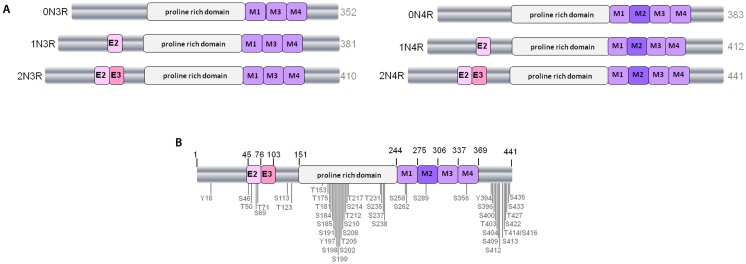
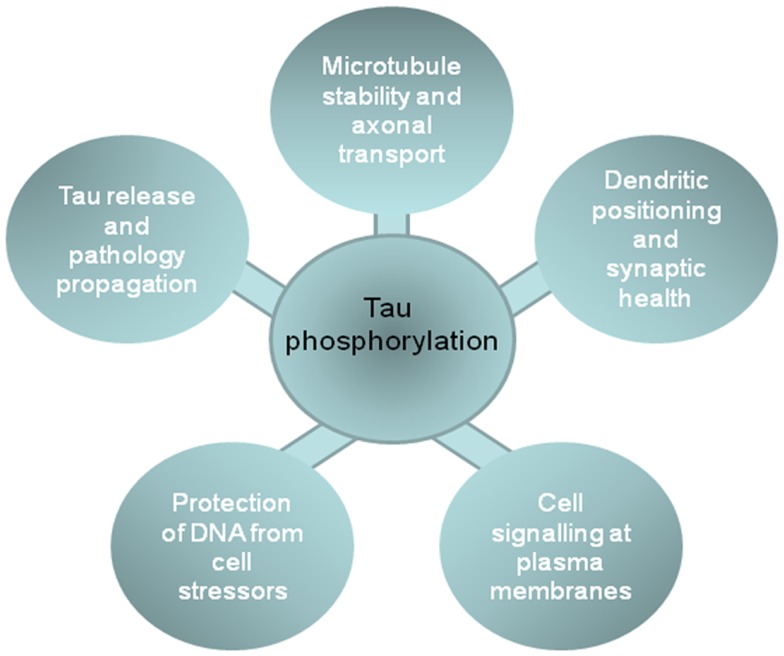
Fibrillar deposits of highly phosphorylated tau are a key pathological feature of several neurodegenerative tauopathies including Alzheimer's disease (AD) and some frontotemporal dementias. Increasing evidence suggests that the presence of these end-stage neurofibrillary lesions do not cause neuronal loss, but rather that alterations to soluble tau proteins induce neurodegeneration. In particular, aberrant tau phosphorylation is acknowledged to be a key disease process, influencing tau structure, distribution, and function in neurons. Although typically described as a cytosolic protein that associates with microtubules and regulates axonal transport, several additional functions of tau have recently been demonstrated, including roles in DNA stabilization, and synaptic function. Most recently, studies examining the trans-synaptic spread of tau pathology in disease models have suggested a potential role for extracellular tau in cell signaling pathways intrinsic to neurodegeneration. Here we review the evidence showing that tau phosphorylation plays a key role in neurodegenerative tauopathies. We also comment on the tractability of altering phosphorylation-dependent tau functions for therapeutic intervention in AD and related disorders.
Overview
The claims and statistics of this paper haven’t been checked yet.
Run the check — free, no account needed. It reads the open-access text and checks the sources it cites.
Integrity signals
Registry
Cites
Statistics
Figures
Verification
Claims the paper makes
The claims and statistics of this paper haven’t been checked yet.
Run the check — free, no account needed. It reads the open-access text and checks the sources it cites.
Claims other papers make about this one
Each is checked against this paper’s own text: does it say what the citing paper says it does?
The cited source says what the claim attributes to it.
In the citing paper
“Tau has been shown to be associated with synaptic dysfunction, and while tau is normally associated with and stabilizes microtubules, tau phosphorylation results in dissociation from microtubules, tau redistribution to somatodendritic compartments and synaptic dysfunction (Hoover, Reed et al. 2010, Noble, Hanger et al. 2013, Spires-Jones and Hyman 2014).”
From SORLA up-regulation suppresses pathological effects in aged tauopathy mouse brain (2026) · cites this paper as Noble, Hanger et al. 2013
In the citing paper
“Because tau phosphorylation is likely to promote axonal degeneration and eventual neuronal death, we analyzed cell death within the brains of our 5xFAD models.”
From LC3-Associated Endocytosis Facilitates β-Amyloid Clearance and Mitigates Neurodegeneration in Murine Alzheimer’s Disease (2019) · cites this paper as Noble et al., 2013
In the citing paper
“A marker of progressive AD in both humans and mice is the hyperphosphorylation of the microtubule-stabilizing protein tau. The incidence of tau phosphorylation increases as disease progresses and leads to microtubule de-stabilization and failure of the microtubule architecture, especially within neuronal axons (Frost et al., 2015; Gong and Iqbal, 2008; Noble et al., 2013).”
From LC3-Associated Endocytosis Facilitates β-Amyloid Clearance and Mitigates Neurodegeneration in Murine Alzheimer’s Disease (2019) · cites this paper as Noble et al., 2013
Self-check
Percentages, sums and reported differences re-computed from the paper’s own numbers.
The self-check needs the paper’s full text.
Citations
Cites
Chapter 12: What does the Anthropocene hold for citizenship?
(2019) · edoc (University of Basel) · doi:10.1007/978-3 · Cited by 11,533
Stages of the Pathologic Process in Alzheimer Disease: Age Categories From 1 to 100 Years
Braak, H., Thal, D. R., Ghebremedhin, E., & Del Tredici, K. (2011) · Journal of Neuropathology & Experimental Neurology · doi:10.1097/nen.0b013e318232a379 · Cited by 2,194
Tau Suppression in a Neurodegenerative Mouse Model Improves Memory Function
SantaCruz, K., Lewis, J., Spires, T., Paulson, J., Kotilinek, L., Ingelsson, M., Guimaraes, A., DeTure, M., Ramsden, M., McGowan, E., et al. (2005) · Science · doi:10.1126/science.1113694 · Cited by 2,014
Dendritic Function of Tau Mediates Amyloid-β Toxicity in Alzheimer's Disease Mouse Models
Ittner, L. M., Ke, Y. D., Delerue, F., Bi, M., Gladbach, A., van Eersel, J., Wölfing, H., Chieng, B. C., Christie, M. J., Napier, I. A., et al. (2010) · Cell · doi:10.1016/j.cell.2010.06.036 · Cited by 1,821
Transmission and spreading of tauopathy in transgenic mouse brain
Clavaguera, F., Bolmont, T., Crowther, R. A., Abramowski, D., Frank, S., Probst, A., Fraser, G., Stalder, A. K., Beibel, M., Staufenbiel, M., et al. (2009) · Nature Cell Biology · doi:10.1038/ncb1901 · Cited by 1,803
Formation of Neurofibrillary Tangles in P301L Tau Transgenic Mice Induced by Aβ42 Fibrils
Götz, J., Chen, F., van Dorpe, J., & Nitsch, R. M. (2001) · Science · doi:10.1126/science.1062097 · Cited by 1,526
Propagation of Tau Pathology in a Model of Early Alzheimer's Disease
de Calignon, A., Polydoro, M., Suárez-Calvet, M., William, C., Adamowicz, D. H., Kopeikina, K. J., Pitstick, R., Sahara, N., Ashe, K. H., Carlson, G. A., et al. (2012) · Neuron · doi:10.1016/j.neuron.2011.11.033 · Cited by 1,427
Propagation of Tau Misfolding from the Outside to the Inside of a Cell
Frost, B., Jacks, R. L., & Diamond, M. I. (2009) · Journal of Biological Chemistry · doi:10.1074/jbc.m808759200 · Cited by 1,252
Hoover, B. R., Reed, M. N., Su, J., Penrod, R. D., Kotilinek, L. A., Grant, M. K., Pitstick, R., Carlson, G. A., Lanier, L. M., Yuan, L.-L., et al. (2010) · Neuron · doi:10.1016/j.neuron.2010.11.030 · Cited by 1,118
Differential Regulation of Dynein and Kinesin Motor Proteins by Tau
Dixit, R., Ross, J. L., Goldman, Y. E., & Holzbaur, E. L. F. (2008) · Science · doi:10.1126/science.1152993 · Cited by 1,012
Cited by
Sorted by citations
Items 101–200 of 477
Insights on the Use of Transgenic Mice Models in Alzheimer’s Disease Research
Pádua, M. S., Guil-Guerrero, J. L., Prates, J. A. M., & Lopes, P. A. (2024) · International Journal of Molecular Sciences · doi:10.3390/ijms25052805 · Cited by 46
Aβ and Tau Regulate Microglia Metabolism via Exosomes in Alzheimer’s Disease
Zhao, Y., Liu, B., Wang, J., Xu, L., Yu, S., Fu, J., Yan, X., & Su, J. (2022) · Biomedicines · doi:10.3390/biomedicines10081800 · Cited by 48
Phosphorylation of serine 305 in tau inhibits aggregation
Strang, K. H., Sorrentino, Z. A., Riffe, C. J., Gorion, K.-M. M., Vijayaraghavan, N., Golde, T. E., & Giasson, B. I. (2018) · Neuroscience Letters · doi:10.1016/j.neulet.2018.11.011 · Cited by 46
A Quantitative Analysis of Brain Soluble Tau and the Tau Secretion Factor
Han, P., Serrano, G. E., Beach, T. G., Caselli, R. J., Yin, J., Zhuang, N., & Shi, J. (2017) · Journal of Neuropathology & Experimental Neurology · doi:10.1093/jnen/nlw105 · Cited by 44
Méphon-Gaspard, A., Boca, M., Pioche‐Durieu, C., Desforges, B., Burgo, A., Hamon, L., Piétrement, O., & Pastré, D. (2016) · Cellular and Molecular Life Sciences · doi:10.1007/s00018-016-2216-z · Cited by 42
Lionnet, A., Wade, M. A., Corbillé, A.-G., Prigent, A., Paillusson, S., Tasselli, M., Gonzales, J. A., Durieu, E., Rolli‐Derkinderen, M., Coron, E., et al. (2018) · Acta Neuropathologica Communications · doi:10.1186/s40478-018-0568-3 · Cited by 45
Self-citationXu, W., Li, K., Fan, Q., Zong, B., & Han, L. (2020) · Bioscience Reports · doi:10.1042/bsr20194295 · Cited by 43
Zafar, S., Fatima, S. I., Schmitz, M., & Zerr, I. (2024) · Biomolecules · doi:10.3390/biom14010118 · Cited by 43
Hypothermia mediates age-dependent increase of tau phosphorylation in db/db mice
Khoury, N. B. E., Gratuze, M., Petry, F. R., Papon, M.-A., Julien, C., Marcouiller, F., Morin, F., Nicholls, S. B., Calon, F., Hébert, S. S., et al. (2016) · Neurobiology of Disease · doi:10.1016/j.nbd.2016.01.005 · Cited by 42
Khalil, H. M. A., Salama, H. H., Al‐Mokaddem, A. K., Aljuaydi, S. H., & Edris, A. E. (2020) · Journal of Functional Foods · doi:10.1016/j.jff.2020.104296 · Cited by 42
Further understanding of tau phosphorylation: implications for therapy
Medina, M., & Avila, J. (2015) · Expert Review of Neurotherapeutics · doi:10.1586/14737175.2015.1000864 · Cited by 41
Congdon, E. E., Jiang, Y., & Sigurdsson, E. M. (2021) · Seminars in Cell and Developmental Biology · doi:10.1016/j.semcdb.2021.12.002 · Cited by 38
Recent Aspects of Periodontitis and Alzheimer’s Disease—A Narrative Review
Cichońska, D., Mazuś, M., & Kusiak, A. (2024) · International Journal of Molecular Sciences · doi:10.3390/ijms25052612 · Cited by 47
Retrograde transport of Akt by a neuronal Rab5-APPL1 endosome
Goto‐Silva, L., McShane, M. P., Salinas, S., Kalaidzidis, Y. L., Schiavo, G., & Zerial, M. (2019) · Scientific Reports · doi:10.1038/s41598-019-38637-0 · Cited by 40
Icariin ameliorate Alzheimer’s disease by influencing SIRT1 and inhibiting Aβ cascade pathogenesis
Chuang, Y. C., Van, I., Zhao, Y., & Xu, Y. (2021) · Journal of Chemical Neuroanatomy · doi:10.1016/j.jchemneu.2021.102014 · Cited by 41
Arias, J. F., Brum, W. S., Salvadó, G., Therriault, J., Servaes, S., Wang, Y., Aumont, É., Rahmouni, N., Macedo, A. C., Quispialaya, K. M., et al. (2025) · Brain · doi:10.1093/brain/awaf033 · Cited by 41
Caenorhabditis elegans models of tauopathy
Pir, G. J., Choudhary, B. C., & Mandelkow�, E. (2017) · The FASEB Journal · doi:10.1096/fj.201701007 · Cited by 39
Wilke, C., Deuschle, C., Rattay, T. W., Maetzler, W., & Synofzik, M. (2014) · Neurobiology of Aging · doi:10.1016/j.neurobiolaging.2014.10.019 · Cited by 39
Synapses, Microglia, and Lipids in Alzheimer’s Disease
Paasila, P. J., Aramideh, J. A., Sutherland, G. T., & Graeber, M. B. (2022) · Frontiers in Neuroscience · doi:10.3389/fnins.2021.778822 · Cited by 40
Li, L., Jadoon, S. S., Liu, S.-Z., Zhang, R., Li, F., Zhang, M.-Y., Ai-Hua, T., You, Q., & Wang, P. (2019) · Journal of Geriatric Psychiatry and Neurology · doi:10.1177/0891988719837373 · Cited by 38
The Role of Neuroglial Metabotropic Glutamate Receptors in Alzheimer’s Disease
Abd‐Elrahman, K. S., Sarasija, S., & Ferguson, S. S. G. (2021) · Current Neuropharmacology · doi:10.2174/1570159x19666210916102638 · Cited by 39
Conformational fingerprinting of tau variants and strains by Raman spectroscopy
Devitt, G., Crisford, A., Rice, W., Weismiller, H. A., Fan, Z., Commins, C., Hyman, B. T., Margittai, M., Mahajan, S., & Mudher, A. K. (2021) · RSC Advances · doi:10.1039/d1ra00870f · Cited by 34
Amro, Z., Yool, A. J., & Collins‐Praino, L. E. (2021) · Brain Behavior & Immunity - Health · doi:10.1016/j.bbih.2021.100242 · Cited by 39
Tau‐targeting nanoparticles for treatment of Alzheimer's disease
Pawar, S., Rauf, M. A., Abdelhady, H. G., & Iyer, A. K. (2024) · Exploration · doi:10.1002/exp.20230137 · Cited by 42
Donison, N. S., Palik, J., Volkening, K., & Strong, M. J. (2025) · Molecular Neurodegeneration · doi:10.1186/s13024-025-00842-z · Cited by 42
Eteläinen, T. S., Silva, M. C., Uhari-Väänänen, J. K., Lorenzo, F. D., Jäntti, M. H., Cui, H., Chavero‐Pieres, M., Kilpeläinen, T. P., Mechtler, C., Svarcbahs, R., et al. (2023) · Science Translational Medicine · doi:10.1126/scitranslmed.abq2915 · Cited by 36
Du, X., West, M., Cheng, W., Ewert, D. L., Li, W., Saunders, D., Towner, R. A., Floyd, R. A., & Kopke, R. D. (2015) · Oxidative Medicine and Cellular Longevity · doi:10.1155/2016/4159357 · Cited by 36
Du, X., West, M., Cai, Q., Cheng, W., Ewert, D. L., Li, W., Floyd, R. A., & Kopke, R. D. (2017) · Free Radical Biology and Medicine · doi:10.1016/j.freeradbiomed.2017.04.343 · Cited by 36
Tau, tau kinases, and tauopathies: An updated overview
Montalto, G., & Ricciarelli, R. (2023) · BioFactors · doi:10.1002/biof.1930 · Cited by 39
Islamie, R., Myint, S. L. L., Rojanaratha, T., Ritthidej, G. C., Wanakhachornkrai, O., Wattanathamsan, O., & Rodsiri, R. (2023) · BMC Complementary Medicine and Therapies · doi:10.1186/s12906-023-04125-2 · Cited by 35
Kleandrova, V. V., & Speck‐Planche, A. (2020) · Current Topics in Medicinal Chemistry · doi:10.2174/1568026620666200607190951 · Cited by 35
Acosta, D. M., Mancinelli, C. D., Bracken, C., & Eliezer, D. (2021) · Journal of Biological Chemistry · doi:10.1016/j.jbc.2021.101442 · Cited by 36
Peng, X., Chen, L., Wang, Z., He, Y., Ruganzu, J. B., Guo, H., Zhang, X., Ji, S., Zheng, L., & Yang, W. (2022) · European Journal of Pharmacology · doi:10.1016/j.ejphar.2022.174772 · Cited by 34
Chemerovski‐Glikman, M., Frenkel‐Pinter, M., Mdah, R., Abu‐Mokh, A., Gazit, E., & Segal, D. (2017) · Chemistry - A European Journal · doi:10.1002/chem.201701218 · Cited by 35
Giarratana, A. O., Zheng, C., Reddi, S., Teng, S. L., Berger, D. S., Adler, D., Sullivan, P. M., Thakker‐Varia, S., & Alder, J. (2020) · Scientific Reports · doi:10.1038/s41598-020-76849-x · Cited by 39
Mullane, K., & Williams, M. (2018) · Biochemical Pharmacology · doi:10.1016/j.bcp.2018.09.027 · Cited by 32
Kaur, K., Kulkarni, Y. A., & Wairkar, S. (2024) · Brain Research · doi:10.1016/j.brainres.2024.148905 · Cited by 35
Bac, B., Hicheri, C., Weiss, C., Buell, A., Vilcek, N., Späni, C. B., Geula, C., Savas, J. N., & Disterhoft, J. F. (2022) · Neurobiology of Aging · doi:10.1016/j.neurobiolaging.2022.12.015 · Cited by 31
An Overview of Astrocyte Responses in Genetically Induced Alzheimer’s Disease Mouse Models
Spanos, F., & Liddelow, S. A. (2020) · Cells · doi:10.3390/cells9112415 · Cited by 32
Kinase Signaling in Dendritic Development and Disease
Nourbakhsh, K., & Yadav, S. (2021) · Frontiers in Cellular Neuroscience · doi:10.3389/fncel.2021.624648 · Cited by 31
Docrat, T. F., Nagiah, S., & Chuturgoon, A. A. (2021) · European Journal of Pharmacology · doi:10.1016/j.ejphar.2021.174146 · Cited by 31
New insights into the role of fibroblast growth factors in Alzheimer’s disease
Alam, R., Mrad, Y., Hammoud, H., Saker, Z., Fares, Y., Estephan, E., Bahmad, H. F., Harati, H., & Nabha, S. M. (2021) · Molecular Biology Reports · doi:10.1007/s11033-021-06890-0 · Cited by 32
Gardner, L. E., White, J. D., Eimerbrink, M. J., Boehm, G. W., & Chumley, M. J. (2016) · Neuroscience · doi:10.1016/j.neuroscience.2016.06.007 · Cited by 29
Post-Translational Modifications in Tau and Their Roles in Alzheimer's Pathology
Kalyaanamoorthy, S., Opare, S. K. A., Xu, X., Ganesan, A., & Rao, P. P. N. (2024) · Current Alzheimer Research · doi:10.2174/0115672050301407240408033046 · Cited by 32
SIRT1 regulates O-GlcNAcylation of tau through OGT
Lu, S., Yin, X., Wang, J., Gu, Q., Huang, Q., Jin, N., Chu, D., Xu, Z., Liu, F., & Qian, W. (2020) · Aging · doi:10.18632/aging.103062 · Cited by 31
Functional significance of O-GlcNAc modification in regulating neuronal properties
Hwang, H., & Rhim, H. (2017) · Pharmacological Research · doi:10.1016/j.phrs.2017.12.006 · Cited by 32
Kong, Y., Huang, L., Li, W., Liu, X., Zhou, Y., Liu, C., Zhang, S., Xie, F., Zhang, Z., Jiang, D., et al. (2021) · Frontiers in Cell and Developmental Biology · doi:10.3389/fcell.2021.609908 · Cited by 29
The HSP40 family chaperone isoform DNAJB6b prevents neuronal cells from tau aggregation
Chang, Y.-L., Yang, C.-C., Huang, Y.-Y., Chen, Y., Yang, C., Liao, C.-Y., Li, H., Wu, C.-S. P., Lin, C., & Teng, S. (2023) · BMC Biology · doi:10.1186/s12915-023-01798-6 · Cited by 28
Duquette, A., Pernègre, C., Carpentier, A. V., & Leclerc, N. M. (2021) · Frontiers in Neurology · doi:10.3389/fneur.2020.607680 · Cited by 38
Burstein, E. S. (2021) · CNS Drugs · doi:10.1007/s40263-021-00836-7 · Cited by 31
Busceti, C. L., Pietro, P. D., Riozzi, B., Traficante, A., Biagioni, F., Nisticò, R., Fornai, F., Battaglia, G., Nicoletti, F., & Bruno, V. (2015) · Pharmacological Research · doi:10.1016/j.phrs.2015.06.017 · Cited by 29
Wilke, C., Gillardon, F., Deuschle, C., Hobert, M. A., Jansen, I. E., Metzger, F. G., Heutink, P., Gasser, T., Maetzler, W., Blauwendraat, C., et al. (2016) · Neurodegenerative Diseases · doi:10.1159/000448896 · Cited by 29
Milenković, I., Jarc, J., Dassler, E., Aronica, E., Iyer, A. M., Adle‐Biassette, H., Scharrer, A., Reischer, T., Hainfellner, J. A., & Kovács, G. G. (2017) · Neuropathology and Applied Neurobiology · doi:10.1111/nan.12406 · Cited by 29
Giarratana, A. O., Teng, S. L., Reddi, S., Zheng, C., Adler, D., Thakker‐Varia, S., & Alder, J. (2019) · Frontiers in Neurology · doi:10.3389/fneur.2019.01175 · Cited by 29
Tau liquid–liquid phase separation: At the crossroads of tau physiology and tauopathy
Islam, M., Shen, F., Regmi, D., Petersen, K., Karim, M. R. U., & Du, D. (2024) · Journal of Cellular Physiology · doi:10.1002/jcp.30853 · Cited by 28
Neuropathology, Neuroimaging, and Fluid Biomarkers in Alzheimer’s Disease
Colvee-Martin, H., Parra, J. R., Gonzalez, G. A., Barker, W., & Duara, R. (2024) · Diagnostics · doi:10.3390/diagnostics14070704 · Cited by 32
Zhuang, X., Jie, L., Song, Y., Ban, R., Zhao, X., Xia, Z., Wang, Z., & Zhang, G. (2024) · NeuroMolecular Medicine · doi:10.1007/s12017-024-08815-z · Cited by 33
Bazrgar, M., Khodabakhsh, P., Mohagheghi, F., Prudencio, M., & Ahmadiani, A. (2020) · Pharmacological Research · doi:10.1016/j.phrs.2020.104729 · Cited by 29
Asama, T., Hiraoka, T., Ohkuma, A., Okumura, N., Yamaki, A., & Urakami, K. (2021) · Evidence-based Complementary and Alternative Medicine · doi:10.1155/2021/6664217 · Cited by 28
Initiation and modulation of Tau protein phase separation by the drug suramin
Prince, P. R., Hochmair, J., Brognaro, H., Gevorgyan, S., Franck, M., Schubert, R., Lorenzen, K., Yazici, S., Mandelkow�, E., Wegmann, S., et al. (2023) · Scientific Reports · doi:10.1038/s41598-023-29846-9 · Cited by 28
Friend or foe: role of pathological tau in neuronal death
Wu, M., Chen, Z., Jiang, M. H., Bao, B., Li, D., Yin, X., Wang, X., Liu, D., & Zhu, L. (2023) · Molecular Psychiatry · doi:10.1038/s41380-023-02024-z · Cited by 28
Interrogating Parkinson's disease associated redox targets: Potential application of CRISPR editing
Artyukhova, M. A., Tyurina, Y. Y., Chu, C. T., Zharikova, T. M., Bayır, H., Kagan, V. E., & Timashev, P. S. (2019) · Free Radical Biology and Medicine · doi:10.1016/j.freeradbiomed.2019.06.007 · Cited by 26
Cellular Biology of Tau Diversity and Pathogenic Conformers
Kang, S., Eskandari‐Sedighi, G., Hromádková, L., Safar, J., & Westaway, D. A. (2020) · Frontiers in Neurology · doi:10.3389/fneur.2020.590199 · Cited by 29
Holzer, M., Schade, N., Opitz, A., Hilbrich, I., Stieler, J., Vogel, T., Neukel, V., Oberstadt, M., Totzke, F., Schächtele, C., et al. (2018) · Molecules · doi:10.3390/molecules23092335 · Cited by 28
Studying tau protein propagation and pathology in the mouse brain using adeno-associated viruses
Wegmann, S., Bennett, R. E., Amaral, A. C. S., & Hyman, B. T. (2017) · Methods in cell biology · doi:10.1016/bs.mcb.2017.06.014 · Cited by 29
Evidence for sortilin modulating regional accumulation of human tau prions in transgenic mice
Johnson, N. R., Condello, C., Guan, S., Oehler, A., Becker, J., Gavidia, M., Carlson, G. A., Giles, K., & Prusiner, S. B. (2017) · Proceedings of the National Academy of Sciences · doi:10.1073/pnas.1717193114 · Cited by 25
Foster, J. B., Lashley, R., Zhao, F., Wang, X., Kung, N., Askwith, C. C., Lin, L., Shultis, M. W., Hodgetts, K. J., & Lin, C. G. (2019) · Alzheimer s Research & Therapy · doi:10.1186/s13195-019-0530-z · Cited by 26
Kritikos, M., Clouston, S., Diminich, E. D., Deri, Y., Yang, X., Carr, M. A., Gandy, S., Sano, M. C., Bromet, E. J., & Luft, B. J. (2020) · Neurology and Therapy · doi:10.1007/s40120-020-00189-1 · Cited by 25
Liu, Y., Yan, D., Wang, Y., Zhang, X., Wang, N., Jiao, Y., & Yan, H. (2021) · Toxicology Letters · doi:10.1016/j.toxlet.2021.01.009 · Cited by 26
A common theme for axonopathies? The dependency cycle of local axon homeostasis
Prokop, A. (2021) · Cytoskeleton · doi:10.1002/cm.21657 · Cited by 24
Mislocalization of neuronal tau in the absence of tangle pathology in phosphomutant tau knockin mice
Gilley, J., Ando, K., Seereeram, A., Rodríguez-Martín, T., Pooler, A. M., Sturdee, L., Anderton, B. H., Brion, J., Hanger, D. P., & Coleman, M. P. (2015) · Neurobiology of Aging · doi:10.1016/j.neurobiolaging.2015.11.028 · Cited by 26
Self-citationMultifunctional compounds for the treatment of Alzheimer’s disease
Storr, T. (2020) · Canadian Journal of Chemistry · doi:10.1139/cjc-2020-0279 · Cited by 25
The Interplay between GSK3β and Tau Ser262 Phosphorylation during the Progression of Tau Pathology
Song, L., Oseid, D. E., Wells, E. A., & Robinson, A. S. (2022) · International Journal of Molecular Sciences · doi:10.3390/ijms231911610 · Cited by 25
Modeling Alzheimer’s Disease Using Human Brain Organoids
Karmirian, K., Holubiec, M. I., Goto‐Silva, L., Bessone, I. F., Vitória, G., Mello, B., Alloatti, M., Vanderborght, B., Falzone, T. L., & Rehen, S. K. (2022) · Methods in molecular biology · doi:10.1007/978-1-0716-2655-9_7 · Cited by 25
Nanotechnology for tau pathology in Alzheimer's disease
Ma, R., Mu, Q., Xi, Y., Liu, G., & Liu, C. (2024) · Materials Today Bio · doi:10.1016/j.mtbio.2024.101145 · Cited by 23
Hochmair, J., van den Oetelaar, M. C. M., Ravatt, L. M., Diez, L., Lemmens, L. J. M., Ponce-Lina, R., Sankar, R., Franck, M., Nolte, G., Semenova, E., et al. (2025) · Communications Biology · doi:10.1038/s42003-025-08548-0 · Cited by 26
Neurodegenerative lesions: Seeding and spreading
Duyckaerts, C. J. (2013) · Revue Neurologique · doi:10.1016/j.neurol.2013.07.018 · Cited by 24
White matter tauopathy: Transient functional loss and novel myelin remodeling
Jackson, J., Bianco, G., Rosa, A. O., Cowan, K., Bond, P., Anichtchik, O. V., & Fern, R. F. (2018) · Glia · doi:10.1002/glia.23286 · Cited by 24
Samarasimhareddy, M., Mayer, G., Hurevich, M., & Friedler, A. (2020) · Organic and biomolecular chemistry · doi:10.1039/d0ob00499e · Cited by 10
Hu, W., Lin, X., & CHEN, K. (2015) · Molecular Medicine Reports · doi:10.3892/mmr.2015.4271 · Cited by 22
Cornel Iridoid Glycoside Attenuates Tau Hyperphosphorylation by Inhibition of PP2A Demethylation
Yang, C., Kuai, X.-X., Li, Y., Zhang, L., Yu, J., Li, L., & Zhang, L. (2013) · Evidence-based Complementary and Alternative Medicine · doi:10.1155/2013/108486 · Cited by 23
Panizza, E., Branca, R. M., Oliviusson, P., Orre, L. M., & Lehtiö, J. (2017) · Scientific Reports · doi:10.1038/s41598-017-04798-z · Cited by 23
GRK5 influences the phosphorylation of tau via GSK3β and contributes to Alzheimer's disease
Zhao, J., Li, X., Chen, X., Cai, Y., Wang, Y., Sun, W., Mai, H., Yang, J., Fan, W., Tang, P., et al. (2018) · Journal of Cellular Physiology · doi:10.1002/jcp.27709 · Cited by 22
Physiologically relevant factors influence tau phosphorylation by leucine‐rich repeat kinase 2
Hamm, M. J., Bailey, R. M., Shaw, G., Yen, S.-H. C., Lewis, J. M., & Giasson, B. I. (2015) · Journal of Neuroscience Research · doi:10.1002/jnr.23614 · Cited by 23
Landes, J., Pavard, S., Henry, P., & Terrien, J. (2020) · Frontiers in Physiology · doi:10.3389/fphys.2020.00985 · Cited by 24
Targeting Tau to Treat Clinical Features of Huntington's Disease
Masnata, M., Salem, S., Jacquet, A. D. R., Anwer, M., & Cicchetti, F. (2020) · Frontiers in Neurology · doi:10.3389/fneur.2020.580732 · Cited by 25
Tsolaki, E., Csincsik, L., Xue, J., Lengyel, I., & Bertazzo, S. (2022) · Acta Biomaterialia · doi:10.1016/j.actbio.2022.03.003 · Cited by 22
Boyko, S., & Surewicz, W. K. (2023) · Journal of Biological Chemistry · doi:10.1016/j.jbc.2023.104722 · Cited by 21
Chemical Synthesis of Microtubule-Associated Protein Tau
Powell, W. C., Jing, R., & Walczak, M. A. A. (2023) · Journal of the American Chemical Society · doi:10.1021/jacs.3c07338 · Cited by 24
Shoeibi, A., Olfati, N., & Litvan, I. (2018) · Expert Opinion on Investigational Drugs · doi:10.1080/13543784.2018.1460356 · Cited by 23
Raj, A. (2021) · Brain Connectivity · doi:10.1089/brain.2020.0905 · Cited by 21
Tahir, M., Kang, M. H., Park, T. J., Ali, J., Choe, K., Park, J. S., & Kim, M. O. (2024) · Frontiers in Cellular Neuroscience · doi:10.3389/fncel.2024.1453038 · Cited by 23
Bhatia, V., Sharma, V. V., Chandel, A., & Rattan, A. (2025) · Inflammopharmacology · doi:10.1007/s10787-025-01715-z · Cited by 26
Mees, I., Tran, H., Roberts, A. M., Lago, L., Li, S., Roberts, B. R., Hannan, A. J., & Renoir, T. (2022) · Molecular Neurobiology · doi:10.1007/s12035-021-02698-y · Cited by 20
Comprehensive Characterization of CK1δ-Mediated Tau Phosphorylation in Alzheimer’s Disease
Roth, A., Sander, A., Oswald, M. S., Gärtner, F., Knippschild, U., & Bischof, J. (2022) · Frontiers in Molecular Biosciences · doi:10.3389/fmolb.2022.872171 · Cited by 21
Insights into the Structural Conformations of the Tau Protein in Different Aggregation Status
Pinzi, L., Bisi, N., Sorbi, C., Franchini, S., Tonali, N., & Rastelli, G. (2023) · Molecules · doi:10.3390/molecules28114544 · Cited by 20
A systematic review of salivary biomarkers in Parkinson’s disease
Bartolo, M. I. D., Belvisi, D., Mancinelli, R., Costanzo, M., Caturano, C., Leodori, G., Berardelli, A., Fabbrini, G., & Vivacqua, G. (2024) · Neural Regeneration Research · doi:10.4103/nrr.nrr-d-23-01677 · Cited by 21
Research Progress on the Pathogenesis, Diagnosis, and Drug Therapy of Alzheimer’s Disease
Yang, Y., & Qiu, L. (2024) · Brain Sciences · doi:10.3390/brainsci14060590 · Cited by 22
Croft, C. L., Kurbatskaya, K., Hanger, D. P., & Noble, W. J. (2017) · Scientific Reports · doi:10.1038/s41598-017-07906-1 · Cited by 23
Self-citation
Metadata
- Authors
- Noble, W., Hanger, D. P., Miller, C. C. J., & Lovestone, S.
- Affiliations
- King's College London (GB)
- Corresponding author
- Noble, Wendy
- Lovestone, Simon
- Venue
- Frontiers in Neurology
- Publisher
- Frontiers Media SA
- Published
- 2013
- Volume
- 4
- Pages
- 83-83
- ISSN
- 1664-2295 (ISSN-L)
- PMC
- PMC3696910
- OpenAlex
- W2011634611
- Cited by
- 475
- References
- 169
- Citations by year
- 2026: 27 · 2025: 51 · 2024: 56 · 2023: 58 · 2022: 56 · 2021: 56 · 2020: 35 · 2019: 24 · 2018: 28 · 2017: 26 · 2016: 17 · 2015: 19 · 2014: 17 · 2013: 4
- FWCI
- 13.23
- Type
- journal article
- Language
- en
- Open access
- gold
- doi.org
- Licence
- cc-by
- Locations
- Frontiers in Neurology (publishedVersion, cc-by)
- Europe PMC (PubMed Central) (publishedVersion, cc-by)
- PubMed Central (publishedVersion, cc-by)
- PubMed (publishedVersion)
- DOAJ (DOAJ: Directory of Open Access Journals) (submittedVersion, cc-by-sa)
- Research Portal (King's College London) (submittedVersion)
- Funders
- Wellcome Trust
- National Institute for Health and Care Research (NF-SI-0512-10053)
- National Centre for the Replacement, Refinement and Reduction of Animals in Research (NC/K500343/1)
- Directorate for Biological Sciences
- Medical Research Council
- Topics
- Life Sciences › Neuroscience › Cellular and Molecular Neuroscience › Alzheimer's disease research and treatments
- Health Sciences › Medicine › Psychiatry and Mental health › Dementia and Cognitive Impairment Research
- Life Sciences › Neuroscience › Neurology › Neuroinflammation and Neurodegeneration Mechanisms
- Keywords
- tau phosphorylation, tauopathy, Alzheimer's disease, frontotemporal dementia, neurofibrillary tangles, soluble tau, trans-synaptic spread, extracellular tau, synaptic function, DNA stabilization, axonal transport, neurodegeneration, therapeutic target
About these checks
Registry, retraction, Cites and statistics results are computed, not judged, with one exception: a printed reference that no index lists is read once by a model before it counts as a citation error. Claims are extracted by a model and kept only when their quote appears verbatim in the text; each cited source is then checked, with a model’s help, for whether it says what the claim relies on. Those verdicts can be wrong — read the claim’s quote and the cited source before relying on one.
Statistics and arithmetic are recomputed, not judged.
Confidence bands are shown only for fields calibrated on our annotated test set. None is calibrated yet, so no band is shown.
What counts as a claim ›How we measure confidence ›How we check this ›
Are you an author, or do you see a problem with this page? Request a review
