

The DOI matches its Crossref record; 122 of the 122 references it cites were found in a registry or an index.
A Multidimensional Approach to Post-concussion Symptoms in Mild Traumatic Brain Injury
Open accessAbstract
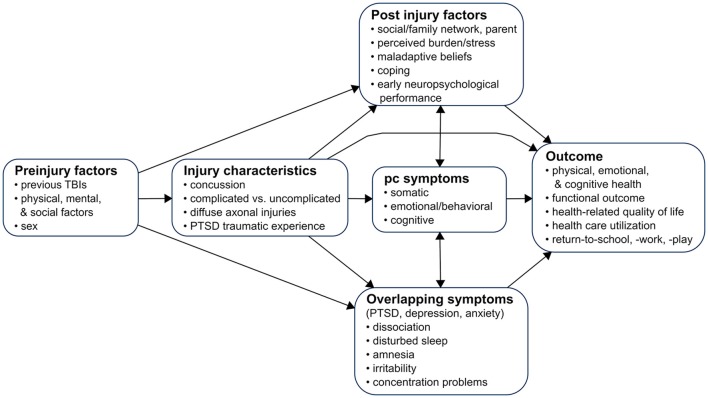
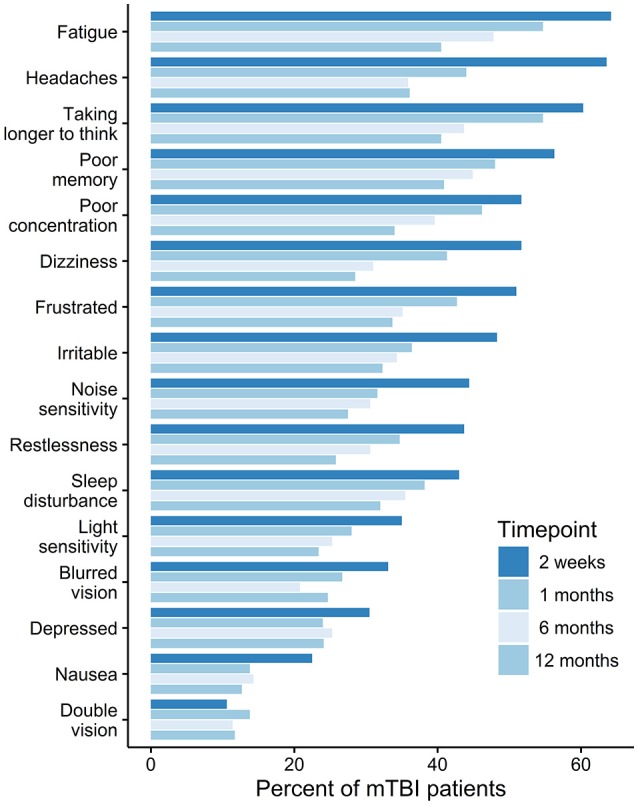
Mild traumatic brain injury (mTBI) presents a substantial burden to patients, families, and health care systems. Whereas, recovery can be expected in the majority of patients, a subset continues to report persisting somatic, cognitive, emotional, and/or behavioral problems, generally referred to as post-concussion syndrome (PCS). However, this term has been the subject of debate since the mechanisms underlying post-concussion symptoms and the role of pre- and post-injury-related factors are still poorly understood. We review current evidence and controversies concerning the use of the terms post-concussion symptoms vs. syndrome, its diagnosis, etiology, prevalence, assessment, and treatment in both adults and children. Prevalence rates of post-concussion symptoms vary between 11 and 82%, depending on diagnostic criteria, population and timing of assessment. Post-concussion symptoms are dependent on complex interactions between somatic, psychological, and social factors. Progress in understanding has been hampered by inconsistent classification and variable assessment procedures. There are substantial limitations in research to date, resulting in gaps in our understanding, leading to uncertainty regarding epidemiology, etiology, prognosis, and treatment. Future directions including the identification of potential mechanisms, new imaging techniques, comprehensive, multidisciplinary assessment and treatment options are discussed. Treatment of post-concussion symptoms is highly variable, and primarily directed at symptom relief, rather than at modifying the underlying pathology. Longitudinal studies applying standardized assessment strategies, diagnoses, and evidence-based interventions are required in adult and pediatric mTBI populations to optimize recovery and reduce the substantial socio-economic burden of post-concussion symptoms.
Overview
The claims and statistics of this paper haven’t been checked yet.
Run the check — free, no account needed. It reads the open-access text and checks the sources it cites.
Integrity signals
Registry
Cites
Statistics
Figures
Verification
Claims the paper makes
The claims and statistics of this paper haven’t been checked yet.
Run the check — free, no account needed. It reads the open-access text and checks the sources it cites.
Claims other papers make about this one
Each is checked against this paper’s own text: does it say what the citing paper says it does?
The cited source says what the claim attributes to it.
In the citing paper
“it has been argued that PPCS have a biopsychosocial conceptualisation.”
From Acceptance and commitment therapy for mild traumatic brain injury (ACTion-mTBI): a quasiexperimental feasibility study (2025) · cites this paper as [15]
In the citing paper
“mTBI, especially when experienced repetitively [52], is linked to several symptoms which are broad in nature, involving mood, behavior, and cognitive changes [126, 140].”
From DNA repair deficiency and senescence in concussed professional athletes involved in contact sports (2019) · cites this paper as [126]
Self-check
Percentages, sums and reported differences re-computed from the paper’s own numbers.
The self-check needs the paper’s full text.
Citations
Cites
Information Theory and an Extension of the Maximum Likelihood Principle
Akaike, H. (1998) · Springer series in statistics · doi:10.1007/978-1-4612-1694-0_15 · Cited by 18,636
Clinical Prediction Models: A Practical Approach to Development, Validation, and Updating
Steyerberg, E. W. (2019) · Statistics for Biology and Health · doi:10.1007/978-3-030-16399-0 · Cited by 3,281
Traumatic brain injury: integrated approaches to improve prevention, clinical care, and research
Maas, A. I. R., Menon, D. K., Adelson, P. D., Andelic, N., Bell, M. J., Belli, A., Bragge, P., Brazinova, A., Büki, A., Chesnut, R. M., et al. (2017) · The Lancet Neurology · doi:10.1016/s1474-4422(17)30371-x · Cited by 2,609
Self-citationKuppermann, N., Holmes, J. F., Dayan, P. S., Hoyle, J. D., Atabaki, S. M., Holubkov, R., Nadel, F. M., Monroe, D. J., Stanley, R. M., Borgialli, D. A., et al. (2009) · The Lancet · doi:10.1016/s0140-6736(09)61558-0 · Cited by 1,636
Steyerberg, E. W. (2009) · Statistics for Biology and Health · doi:10.1007/978-0-387-77244-8 · Cited by 1,491
Shenton, M. E., Hamoda, H. M., Schneiderman, J. S., Sylvain Bouix, A., Pasternak, O., Yogesh Rathi, A., Vu, M.-A. T., Purohit, M. P., Helmer, K. G., Koerte, I. K., et al. (2012) · Brain Imaging and Behavior · doi:10.1007/s11682-012-9156-5 · Cited by 994
Zemek, R., Barrowman, N., Freedman, S. B., Gravel, J., Gagnon, I., McGahern, C., Aglipay, M., Sangha, G., Boutis, K., Beer, D., et al. (2016) · JAMA · doi:10.1001/jama.2016.1203 · Cited by 900
The Psychiatric Sequelae of Traumatic Injury
Bryant, R. A., O'Donnell, M. L., Creamer, M., McFarlane, A. C., Clark, C. R., & Silove, D. (2010) · American Journal of Psychiatry · doi:10.1176/appi.ajp.2009.09050617 · Cited by 843
A systematic review of potential long-term effects of sport-related concussion.
Manley, G., Gardner, A. J., Schneider, K. J., Guskiewicz, K. M., Bailes, J., Cantu, R. C., Castellani, R. J., Turner, M., Jordan, B. D., Randolph, C., et al. (2017) · British Journal of Sports Medicine · doi:10.1136/bjsports-2017-097791 · Cited by 663
Lumba‐Brown, A., Yeates, K. O., Sarmiento, K., Breiding, M. J., Haegerich, T. M., Gioia, G. A., Turner, M., Benzel, E. C., Suskauer, S. J., Giza, C. C., et al. (2018) · Archives of Pediatrics and Adolescent Medicine · doi:10.1001/jamapediatrics.2018.2853 · Cited by 603
Research works printed but not linked: 6
- National Hospital Discharge Survey
- 1993, J Head Trauma Rehabil, 86
- 1993, The ICD-10 Classification of Mental and Behavioural Disorders: Diagnostic Criteria for Research
- 1994, Diagnostic and Statistical Manual of Mental Disorders
- 2013, Diagnostic and Statistical Manual of Mental Disorders, 5th Edn (DSM-5)
- 2013, Guidelines for Concussion/Mild Traumatic Brain Injury and Persistent Symptoms
Cited by
Sorted by citations
Items 101–200 of 376
Kemp, A. M., O’Brien, K. H., & Wallace, T. D. (2022) · American Journal of Speech-Language Pathology · doi:10.1044/2022_ajslp-22-00076 · Cited by 13
Fong, A. K., Allen, M. D., Waltzman, D., Sarmiento, K., Yeates, K. O., Suskauer, S. J., Wintermark, M., Lindberg, D. M., Tate, D. F., Wilde, E. A., et al. (2020) · Journal of Neurotrauma · doi:10.1089/neu.2020.7100 · Cited by 15
Martinez, K. A., Ryu, E., Patrick, C. J., Temkin, N. R., Stein, M. B., Magnus, B. E., McCrea, M., Manley, G. T., Nelson, L. D., & the TRACK-TBI Investigators (2024) · Psychological Medicine · doi:10.1017/s0033291724001211 · Cited by 12
Traumatic brain injury and forensic evaluations: Three case studies of U.S. asylum-seekers
Saadi, A., Anand, P., & Kimball, S. (2021) · Journal of Forensic and Legal Medicine · doi:10.1016/j.jflm.2021.102139 · Cited by 13
Validating the modified Rivermead Post-concussion Symptoms Questionnaire (mRPQ)
Brooks, K. J. L., & Sullivan, K. A. (2021) · The Clinical Neuropsychologist · doi:10.1080/13854046.2021.1942555 · Cited by 13
de Launay, K. Q., Cheung, S. T., Riggs, L., Reed, N. P., & Beal, D. S. (2022) · Brain Injury · doi:10.1080/02699052.2022.2034179 · Cited by 12
Miller, C. P., Prener, M., Dissing, S., & Paulson, O. B. (2020) · Acta Neurologica Scandinavica · doi:10.1111/ane.13300 · Cited by 12
Persisting symptoms after concussion: Considerations for active treatment
Mucha, A., Pardini, J., Herring, S. A., Murphy, J., Elbin, R. J., Bauer, R. M., Schmidt, J. D., Resch, J. E., & Broshek, D. K. (2022) · PM&R · doi:10.1002/pmrj.12931 · Cited by 12
Khan, D. Z., Placek, M. M., Smielewski, P. S., Budohoski, K. P., Anwar, F., Hutchinson, P. J., Bance, M., Czosnyka, M., & Helmy, A. E. (2020) · Neurotrauma Reports · doi:10.1089/neur.2020.0021 · Cited by 11
Joseph, C. R., Lim, J. K., Grohol, B., Zivcevska, M., Lencke, J., Rich, E. D., Arrasmith, C. J., Dorman, I. S., Clark, B. W., Love, K., et al. (2024) · Scientific Reports · doi:10.1038/s41598-024-56236-6 · Cited by 11
Walker, G. A., Wilson, J. C., Seehusen, C. N., Provance, A. J., & Howell, D. R. (2021) · Vision Research · doi:10.1016/j.visres.2021.03.007 · Cited by 11
Coyle, H. L., Bailey, N. W., Ponsford, J., & Hoy, K. E. (2023) · Behavioural Brain Research · doi:10.1016/j.bbr.2023.114308 · Cited by 10
Accommodative and Vergence Responses to a Moving Stimulus in Concussion
Haensel, J. X., Marusic, S., Slinger, K. E., Wu, C. H., Vyas, N., Baah, C. A. A., Hu, A., Leonen, J., Lew, C. Y., Srinivasan, G., et al. (2024) · Investigative Ophthalmology & Visual Science · doi:10.1167/iovs.65.12.45 · Cited by 10
Bockhop, F., Zeldovich, M., Greving, S., Krenz, U., Cunitz, K., Timmermann, D., Bonke, E. M., Bonfert, M., Koerte, I. K., Kieslich, M., et al. (2022) · Journal of Clinical Medicine · doi:10.3390/jcm12010319 · Cited by 11
von Steinbüchel, N., Rauen, K., Čović, A., Krenz, U., Bockhop, F., Mueller, I., Cunitz, K., Polinder, S., Steyerberg, E. W., Vester, J., et al. (2023) · PLoS ONE · doi:10.1371/journal.pone.0280796 · Cited by 12
Self-citationvan Ierssel, J. J., O’Neil, J., Sveistrup, H., Marshall, S., & Graham, I. D. (2020) · Disability and Rehabilitation · doi:10.1080/09638288.2020.1743772 · Cited by 10
Follow-up visits after a concussion in the pediatric population: An integrative review
Ramsay, S., Dahinten, V. S., Ranger, M., & Babul, S. (2023) · Neurorehabilitation · doi:10.3233/nre-220216 · Cited by 10
Lariviere, K., Bureau, S. C., Marshall, C. M., & Holahan, M. R. (2019) · Journal of Sports Medicine · doi:10.1155/2019/9207903 · Cited by 10
Mehrolhassani, N., Movahedi, M., Nazemi‐Rafi, M., & Mirafzal, A. (2020) · Brain Injury · doi:10.1080/02699052.2020.1802659 · Cited by 10
Theadom, A., Meehan, L., McCallum, S., & Pacheco, G. A. (2023) · Frontiers in Psychiatry · doi:10.3389/fpsyt.2023.1154707 · Cited by 9
Bigler, E. D. (2024) · Brain Injury · doi:10.1080/02699052.2024.2321931 · Cited by 9
Seizure-Related Head Injuries: A Narrative Review
Piwowarczyk, S., Obłój, P., Janicki, Ł., Kowalik, K., Łukaszuk, A., & Siemiński, M. (2024) · Brain Sciences · doi:10.3390/brainsci14050473 · Cited by 9
Beard, K., Gauff, A. K., Pennington, A. M., Marion, D. W., Smith, J. M., & Sloley, S. S. (2024) · Journal of Neurotrauma · doi:10.1089/neu.2024.0136 · Cited by 10
Joseph, C. R. (2024) · International Journal of Molecular Sciences · doi:10.3390/ijms252111522 · Cited by 11
Visual Dysfunctions in Mild Traumatic Brain Injury: A Focus on Accommodative System Impairments
Almutairi, N. M. (2025) · Life · doi:10.3390/life15050744 · Cited by 9
Neuropsychiatric Treatment for Mild Traumatic Brain Injury: Nonpharmacological Approaches
Mollica, A., Dey, A., Cairncross, M., Silverberg, N. D., & Burke, M. J. (2022) · Seminars in Neurology · doi:10.1055/s-0041-1742143 · Cited by 11
Nguyen, J. V. K., McKay, A., Ponsford, J., Davies, K., Makdissi, M., Drummond, S. P. A., Reyes, J., & Willmott, C. (2022) · Pilot and Feasibility Studies · doi:10.1186/s40814-022-01153-6 · Cited by 10
Schmitz, B., Smulligan, K. L., Wingerson, M. J., Walker, G. A., Wilson, J. C., & Howell, D. R. (2022) · Clinical Journal of Sport Medicine · doi:10.1097/jsm.0000000000001106 · Cited by 9
Zeldovich, M., Krol, L., Timmermann, D., Krenz, U., Arango‐Lasprilla, J. C., Gioia, G. A., Brockmann, K., Koerte, I. K., Buchheim, A., Roediger, M., et al. (2023) · Frontiers in Neurology · doi:10.3389/fneur.2023.1266828 · Cited by 9
Nature-Based Therapy for People Suffering from Post-Concussion Syndrome—A Pilot Study
Corazon, S. S., Olsen, L. J., Olsen, A.-M., & Sidenius, U. (2019) · Health · doi:10.4236/health.2019.1111113 · Cited by 9
Jaganathan, K. S., & Sullivan, K. A. (2020) · EClinicalMedicine · doi:10.1016/j.eclinm.2019.11.023 · Cited by 9
Wright, B., Wilmoth, K., Juengst, S. B., Didehbani, N., Maize, R., & Cullum, C. M. (2020) · Developmental Neurorehabilitation · doi:10.1080/17518423.2020.1858456 · Cited by 9
Anderson, V. A., Rausa, V. C., Anderson, N., Parkin, G. M., Clarke, C., Davies, K., McKinlay, A., Crichton, A. J., Davis, G. A., Dalziel, K., et al. (2021) · BMJ Open · doi:10.1136/bmjopen-2020-041458 · Cited by 11
King-Devick Test Performance and Cognitive Dysfunction after Concussion: A Pilot Eye Movement Study
Gold, D. M., Rizzo, J., Lee, Y. S. C., Childs, A., Hudson, T. E., Martone, J., Matsuzawa, Y. K., Fraser, F., Ricker, J. H., Dai, W., et al. (2021) · Brain Sciences · doi:10.3390/brainsci11121571 · Cited by 9
Faulkner, J. W., Snell, D. L., & Theadom, A. (2022) · Brain Injury · doi:10.1080/02699052.2022.2109747 · Cited by 13
Mortazavi, M., Lucini, F. A., Joffe, D., & Oakley, D. S. (2023) · Journal of Pediatric Rehabilitation Medicine · doi:10.3233/prm-210114 · Cited by 9
Diagnostic Competence of Creatine Kinase BB, in Mild Traumatic Brain Injury and Its Prognostic Value
Forouzan, A., Fahimi, M. A., Bastan, A. S. I., & Delirrooyfard, A. (2023) · Advanced Biomedical Research · doi:10.4103/abr.abr_122_21 · Cited by 9
Madsen, B. Å., Fure, S. C. R., Anđelić, N., Løke, D., Løvstad, M., Røe, C., & Howe, E. I. (2023) · Journal of Clinical Medicine · doi:10.3390/jcm12144654 · Cited by 9
Babb, J. A., Zuberer, A., Heinrichs, S. C., Rumbika, K. K., Alfiler, L., Lakis, G. A., Leite‐Morris, K. A., & Kaplan, G. B. (2023) · Brain Research Bulletin · doi:10.1016/j.brainresbull.2023.04.001 · Cited by 8
Levy, A. M., Saling, M. M., & Anderson, J. F. I. (2023) · Neuropsychological Rehabilitation · doi:10.1080/09602011.2023.2236348 · Cited by 8
Esterov, D., Lennon, R. J., Bergquist, T. F., & Brown, A. W. (2020) · Neurorehabilitation · doi:10.3233/nre-203082 · Cited by 8
A Multi-Modal Assessment of Clinical Predictors for Traumatic Brain Injury End-Points
Zou, L. F., Pierce, B. G., & Nielson, J. L. (2020) · Journal of Neurotrauma · doi:10.1089/neu.2020.7222 · Cited by 8
Faulkner, J. W., Snell, D. L., Theadom, A., Mahon, S., & Barker-Collo, S. L. (2022) · Disability and Rehabilitation · doi:10.1080/09638288.2022.2055167 · Cited by 9
Jobin, K., Wang, M., du Plessis, S., Silverberg, N. D., & Debert, C. T. (2023) · Neurorehabilitation · doi:10.3233/nre-237002 · Cited by 8
Legarda, S. B., Lahti, C. E., McDermott, D., & Michas-Martin, A. (2022) · Frontiers in Human Neuroscience · doi:10.3389/fnhum.2022.894758 · Cited by 8
Faulkner, J., Prouty, D., Devlin, L., Appleton, D., Roche, M., Below, K., Moffat, J., Snell, D., Williams, M. N., Barker-Collo, S., et al. (2025) · BMJ Open · doi:10.1136/bmjopen-2024-089727 · Cited by 7
O'Kane, K. M. K., Otamendi, T., Silverberg, N. D., Choi, E., Sicard, V., Zemek, R., Healey, K., Brown, O., Butterfield, L., Smith, A., et al. (2024) · JMIR Formative Research · doi:10.2196/49133 · Cited by 7
Moore, S., Musgrave, C., Sandler, J., Bradley, B., & Jones, J. R. A. (2023) · Physical Therapy in Sport · doi:10.1016/j.ptsp.2023.11.005 · Cited by 7
Anti-miR oligo-mediated detection of human salivary microRNAs for mild traumatic brain injury
Saha, P., van der Vlies, A. J., Aditya, T., Dighe, K., Hicks, S. D., & Pan, D. (2025) · Biosensors and Bioelectronics · doi:10.1016/j.bios.2025.117333 · Cited by 7
Improving Outcomes for Work-Related Concussions
LeGoff, D. B., Wright, R., Lazarovic, J., Kofeldt, M., & Peters, A. (2021) · Journal of Occupational and Environmental Medicine · doi:10.1097/jom.0000000000002350 · Cited by 7
Churchill, N. W., Battista, A. P. D., Rhind, S. G., Richards, D. W., Schweizer, T. A., & Hutchison, M. G. (2021) · PLoS ONE · doi:10.1371/journal.pone.0253134 · Cited by 7
Wilder, J. H., Gupta, S. S., Kelly, G. C., Logarbo, J. N., Sanchez, S. L., Williams, G. H., & Sherman, W. F. (2022) · American Journal of Physical Medicine & Rehabilitation · doi:10.1097/phm.0000000000001985 · Cited by 7
Mollayeva, T., Tran, A. H., Chan, V., Colantonio, A., Sutton, M., & Escobar, M. D. (2022) · Scientific Reports · doi:10.1038/s41598-022-08782-0 · Cited by 7
Taylor, A. A., McCauley, S. R., & Strutt, A. M. (2022) · Neurologic Clinics · doi:10.1016/j.ncl.2022.08.003 · Cited by 7
Perfusion Imaging of Traumatic Brain Injury
Churchill, N. W., Graham, S. J., & Schweizer, T. A. (2023) · Neuroimaging Clinics of North America · doi:10.1016/j.nic.2023.01.006 · Cited by 7
The pathological potential of ependymal cells in mild traumatic brain injury
Nelles, D. G., & Hazrati, L. (2023) · Frontiers in Cellular Neuroscience · doi:10.3389/fncel.2023.1216420 · Cited by 8
Whitehouse, D. P., Kelleher-Unger, I., & Newcombe, V. (2020) · Translational Sports Medicine · doi:10.1002/tsm2.222 · Cited by 7
Martini, D. N., Wilhelm, J. L., Lee, L., Brumbach, B. H., Chesnutt, J. C., Skorseth, P., & King, L. A. (2022) · Archives of Rehabilitation Research and Clinical Translation · doi:10.1016/j.arrct.2022.100183 · Cited by 7
Leung, O., Chiu, N. K. H., Wong, S. Y., Cuijpers, P., Alonso, J., Chan, P. K., Lui, G., Wong, E. L. Y., Bruffaerts, R., Yip, B., et al. (2023) · Scientific Reports · doi:10.1038/s41598-023-39209-z · Cited by 6
Traumatic brain injury in criminal justice systems: a systematic literature review
Bickle, A., Shammaa, T. A., Musa, E., Arya, P., & Khalifa, N. R. (2024) · Journal of Forensic Psychiatry and Psychology · doi:10.1080/14789949.2024.2313451 · Cited by 6
Regional and Global Changes in Brain Structure 1‐Year Post Pediatric “Mild” Traumatic Brain Injury
Nathaniel, U., Wick, T. V., Ling, J. M., McQuaid, J. R., Kumar, D. S., Miller, S. D., Wu, J., Zotev, V. S., Meier, T. B., van der Horn, H. J., et al. (2025) · Annals of Neurology · doi:10.1002/ana.27259 · Cited by 6
BIGLER, E., Allder, S. J., Dunkley, B. T., & Victoroff, J. (2025) · Brain Injury · doi:10.1080/02699052.2025.2551162 · Cited by 7
Manzhurtsev, A. V., Yakovlev, A., Bulanov, P., Menshchikov, P. E., Ublinskiy, M. V., Melnikov, I. A., Akhadov, T., & Семенова, Н. А. (2022) · Journal of Magnetic Resonance Imaging · doi:10.1002/jmri.28410 · Cited by 6
Sheldrake, E., Lam, B., Al-Hakeem, H., Wheeler, A. L., Goldstein, B. I., Dunkley, B. T., Ameis, S. H., Reed, N. P., & Scratch, S. E. (2022) · Journal of Child Neurology · doi:10.1177/08830738221120741 · Cited by 6
A technique for in situ intracranial strain measurement within a helmeted deformable headform
Rovt, J., Xu, S., Dutrisac, S., Ouellet, S., & Petel, O. E. (2023) · Journal of the mechanical behavior of biomedical materials/Journal of mechanical behavior of biomedical materials · doi:10.1016/j.jmbbm.2023.106140 · Cited by 6
Wallace, T. D., Knollman-Porter, K., Brown, J. A., Schwartz, A., Hodge, A. T., Brown, G., Beardslee, J., & Gore, R. K. (2024) · Brain Injury · doi:10.1080/02699052.2024.2309245 · Cited by 6
Surveying the Landscape of Persistent Concussive Symptoms in Adults Through an Occupational Lens
Boone, A. E., Henderson, W. L., & Zenoozi, S. (2024) · American Journal of Occupational Therapy · doi:10.5014/ajot.2024.050405 · Cited by 6
Bigler, E. D., Allder, S. J., Dunkley, B. T., & Victoroff, J. (2025) · Brain Injury · doi:10.1080/02699052.2025.2486462 · Cited by 7
Hadanny, A., & Efrati, S. (2025) · Expert Review of Neurotherapeutics · doi:10.1080/14737175.2025.2515061 · Cited by 8
Distriquin, Y., Vital, J.-M., & Ella, B. (2020) · European Radiology Experimental · doi:10.1186/s41747-020-00194-x · Cited by 6
Aviv, I., Shorer, M., Fennig, S., Aviezer, H., Singer‐Harel, D., Apter, A. S., & Peleg, T. P. (2022) · The Clinical Neuropsychologist · doi:10.1080/13854046.2022.2145578 · Cited by 7
Rasmussen, M. S., Howe, E. I., Anđelić, N., & Søberg, H. L. (2023) · Neurorehabilitation · doi:10.3233/nre-220131 · Cited by 6
Gamgee, J., Runacres, J., Norman, A., & Pradhan, P. (2023) · The Family Journal · doi:10.1177/10664807231164421 · Cited by 6
Karvandi, E., Helmy, A. E., Kolias, A. G., Belli, A., Ganau, M., Gomes, C., Grey, M. J., Griffiths, M. J., Griffiths, T. D., Griffiths, P., et al. (2023) · BMJ Open · doi:10.1136/bmjopen-2023-077022 · Cited by 6
Digital health interventions for remote follow-up after mild traumatic brain injury
Karvandi, E., Barrett, L., Newcombe, V., Hutchinson, P. J., & Helmy, A. E. (2024) · British Journal of Neurosurgery · doi:10.1080/02688697.2024.2346564 · Cited by 7
Vanier, C. H., Santhanam, P., Rochester, N., Carter, L. B., Lim, M., Kilani, A., Venkatesh, S., Azad, S., Knoblauch, T., Surti, T., et al. (2024) · Journal of Clinical Medicine · doi:10.3390/jcm13175154 · Cited by 6
García‐Rudolph, A., García‐Molina, A., Opisso, E., Tormos, J. M., Madai, V. I., Frey, D., & Bernabeu, M. (2021) · Frontiers in Neurology · doi:10.3389/fneur.2021.701946 · Cited by 6
Attachment and symptom reporting in adolescents and young adults after a concussion
Tuborgh, A. H., Svendsen, S. W., Elklit, A., Hunter, J., Jensen, J. S., Schröder, A., Nielsen, J. F., Thastum, M. M., Næss‐Schmidt, E. T., & Rask, C. U. (2021) · Journal of Psychosomatic Research · doi:10.1016/j.jpsychores.2021.110603 · Cited by 6
Chung, J.-W., Liu, D., Li, W., Wen, Y.-T., Lin, H.-Y., Chen, H.-C., & Chiu, H. (2021) · Journal of Head Trauma Rehabilitation · doi:10.1097/htr.0000000000000733 · Cited by 7
Aviv, I., Shorer, M., Fennig, S., Aviezer, H., Singer‐Harel, D., Apter, A. S., & Peleg, T. P. (2022) · Child Neuropsychology · doi:10.1080/09297049.2022.2072823 · Cited by 6
The Postconcussion Syndrome and Posttraumatic Headaches in Civilians, Soldiers, and Athletes
Evans, R. W. (2024) · Neurologic Clinics · doi:10.1016/j.ncl.2023.12.001 · Cited by 5
NHE1 Protein in Repetitive Mild TBI-Mediated Neuroinflammation and Neurological Function Impairment
Bielanin, J. P., Metwally, S. A. H., Oft, H., Paruchuri, S. S., Lin, L., Capuk, O., Pennock, N., Song, S., & Sun, D. (2024) · Antioxidants · doi:10.3390/antiox13070836 · Cited by 5
Self-managing symptoms of Long COVID: an education and strategies research protocol
Green, R., Rybkina, J., Jacob, N., Colella, B., Gold, D., Stewart, D., Ruttan, L., Meusel, L.-A., Pat, M. M., & Abbey, S. (2024) · Frontiers in Public Health · doi:10.3389/fpubh.2024.1106578 · Cited by 6
Banderwal, R., Kadian, M., Garg, S., & Kumar, A. (2024) · Inflammopharmacology · doi:10.1007/s10787-024-01524-w · Cited by 5
Davis, G. A., Rausa, V. C., Babl, F. E., Davies, K., Takagi, M., Crichton, A. J., McKinlay, A., Anderson, N., Hearps, S. J. C., Clarke, C., et al. (2022) · Concussion · doi:10.2217/cnc-2021-0007 · Cited by 5
Tchantchou, F., Hsia, R., Puché, A. C., & Fiskum, G. M. (2023) · Journal of Central Nervous System Disease · doi:10.1177/11795735231160025 · Cited by 6
O’Brien, K. H., Pei, Y., Kemp, A. M., Gartell, R., Gore, R. K., & Wallace, T. D. (2023) · International Journal of Environmental Research and Public Health · doi:10.3390/ijerph20085438 · Cited by 5
McKee, C. S., Matthews, M., Kontos, A. P., Rankin, A. T., & Bleakley, C. (2024) · Irish Journal of Medical Science (1971 -) · doi:10.1007/s11845-024-03677-7 · Cited by 5
Causal interactions with an insular-cortical network in mild traumatic brain injury
Li, F., Liu, Y., Lu, L., Li, H., Xing, C., Chen, H., Yuan, F., Yin, X., & Chen, Y. (2022) · European Journal of Radiology · doi:10.1016/j.ejrad.2022.110594 · Cited by 5
Neurophysiological Markers to Guide Return to Sport After Sport-Related Concussion
Coenen, J., & Reinsberger, C. (2023) · Journal of Clinical Neurophysiology · doi:10.1097/wnp.0000000000000996 · Cited by 5
von Steinbüchel, N., Krenz, U., Bockhop, F., Koerte, I. K., Timmermann, D., Cunitz, K., Zeldovich, M., Anđelić, N., Rojczyk, P., Bonfert, M. V., et al. (2023) · Journal of Clinical Medicine · doi:10.3390/jcm12123895 · Cited by 5
Aderman, M. J., Brett, B. L., Ross, J. D., Malvasi, S. R., McGinty, G. T., Jackson, J. C., Estevez, C. A., Brodeur, R. M., Svoboda, S. J., McCrea, M., et al. (2023) · The American Journal of Sports Medicine · doi:10.1177/03635465231189211 · Cited by 5
Hannah, T. C., Spiera, Z., Li, A. Y., Durbin, J. R., Dreher, N., Ali, M. A., Marayati, N. F., Gometz, A., Lovell, M. R., & Choudhri, T. F. (2021) · Journal of Head Trauma Rehabilitation · doi:10.1097/htr.0000000000000676 · Cited by 5
D’Alonzo, B. A., Wiebe, D. J., Master, C. L., Castellana, M. C., Willer, B. S., & Leddy, J. J. (2023) · Neurorehabilitation · doi:10.3233/nre-220221 · Cited by 4
Self-citationJoghataie, G., Hundal, S., Mushtaque, A., Tator, C. H., & Tartaglia, M. C. (2024) · GeroScience · doi:10.1007/s11357-024-01312-y · Cited by 4
Faulkner, J. W., Chua, J., Voice-Powell, A., Snell, D., Roche, M., Moffat, J., Barker-Collo, S., & Theadom, A. (2025) · PLoS ONE · doi:10.1371/journal.pone.0312940 · Cited by 6
How Are TBI Symptoms Interconnected? A Network Analysis Approach
Bindels, H., Sommer, S., Ohmann, T., Seddigh, S., & Schüler, M. (2025) · Brain and Behavior · doi:10.1002/brb3.70316 · Cited by 4
Madsen, B. Å., Fure, S. C. R., Røe, C., Løke, D., Løvstad, M., Anđelić, N., & Howe, E. I. (2025) · BMC Neurology · doi:10.1186/s12883-025-04153-0 · Cited by 5
Kobeissy, F. H., Ahmad, F. A., Shaito, A. A., Hasan, H. A., Hady, S. A., Nasrallah, L., Shaito, N., Hassan, H. H., Zibara, K., Yadikar, H., et al. (2020) · Elsevier eBooks · doi:10.1016/b978-0-12-816346-7.00029-4 · Cited by 4
Fotuhi, M., Khorrami, N. D., & Raji, C. A. (2023) · Journal of Alzheimer s Disease Reports · doi:10.3233/adr-220091 · Cited by 4
Metadata
- Authors
- Polinder, S., Cnossen, M. C., Real, R. G. L., Covic, A., Gorbunova, A., Voormolen, D. C., Master, C. L., Haagsma, J. A., Diaz-Arrastia, R., & von Steinbuechel, N.
- Affiliations
- Erasmus MC (NL)
- University of Göttingen (DE)
- University of Pennsylvania (US)
- Corresponding author
- Polinder, Suzanne
- ORCID
- Venue
- Frontiers in Neurology
- Publisher
- Frontiers Media SA
- Published
- 2018-12-19
- Volume
- 9
- Pages
- 1113-1113
- ISSN
- 1664-2295 (ISSN-L)
- PMC
- PMC6306025
- OpenAlex
- W2905320148
- Cited by
- 376
- References
- 122
- Citations by year
- 2026: 32 · 2025: 46 · 2024: 49 · 2023: 65 · 2022: 66 · 2021: 46 · 2020: 52 · 2019: 19
- FWCI
- 4.18
- Type
- journal article
- Language
- en
- Open access
- gold
- doi.org
- Licence
- Locations
- Frontiers in Neurology (publishedVersion, cc-by)
- Europe PMC (PubMed Central) (publishedVersion, cc-by)
- PubMed Central (publishedVersion, cc-by)
- PubMed (publishedVersion)
- EUR Research Repository (Erasmus University Rotterdam) (publishedVersion, other-oa)
- EUR Research Repository (Erasmus University Rotterdam) (submittedVersion, other-oa)
- RePub (Erasmus University Rotterdam) (submittedVersion, other-oa)
- DOAJ (DOAJ: Directory of Open Access Journals) (submittedVersion, cc-by-sa)
- GoeScholar The Publication Server of the Georg-August-Universität Göttingen (Georg-August-Universität Göttingen) (submittedVersion, cc-by)
- Funders
- European Commission (602150, 2007–2013, FP7 2007-2013, FP7/2007)
- National Institute of Neurological Disorders and Stroke (U01NS086090)
- Topics
- Health Sciences › Medicine › Clinical Neurology › Traumatic Brain Injury Research
- Health Sciences › Medicine › Clinical Neurology › Traumatic Brain Injury and Neurovascular Disturbances
- Health Sciences › Medicine › Clinical Neurology › Long-Term Effects of COVID-19
- Keywords
- post-concussion syndrome, mild traumatic brain injury, post-concussion symptoms, prevalence, etiology, diagnosis, symptom assessment, treatment, pediatric concussion, somatic symptoms, prognosis, multidisciplinary assessment
About these checks
Registry, retraction, Cites and statistics results are computed, not judged, with one exception: a printed reference that no index lists is read once by a model before it counts as a citation error. Claims are extracted by a model and kept only when their quote appears verbatim in the text; each cited source is then checked, with a model’s help, for whether it says what the claim relies on. Those verdicts can be wrong — read the claim’s quote and the cited source before relying on one.
Statistics and arithmetic are recomputed, not judged.
Confidence bands are shown only for fields calibrated on our annotated test set. None is calibrated yet, so no band is shown.
What counts as a claim ›How we measure confidence ›How we check this ›
Are you an author, or do you see a problem with this page? Request a review
