

The DOI matches its Crossref record; 122 of the 122 references it cites were found in a registry or an index.
A Multidimensional Approach to Post-concussion Symptoms in Mild Traumatic Brain Injury
Open accessAbstract
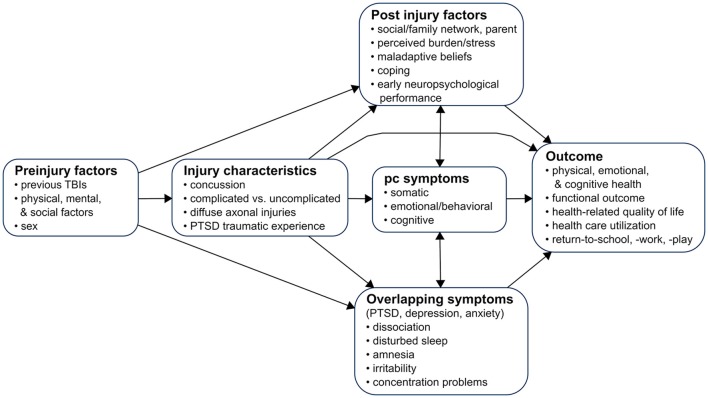
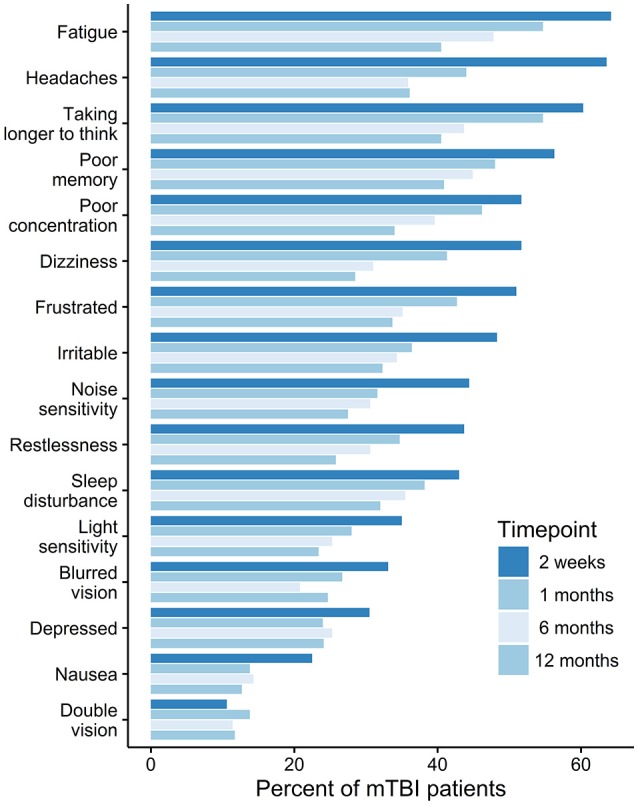
Mild traumatic brain injury (mTBI) presents a substantial burden to patients, families, and health care systems. Whereas, recovery can be expected in the majority of patients, a subset continues to report persisting somatic, cognitive, emotional, and/or behavioral problems, generally referred to as post-concussion syndrome (PCS). However, this term has been the subject of debate since the mechanisms underlying post-concussion symptoms and the role of pre- and post-injury-related factors are still poorly understood. We review current evidence and controversies concerning the use of the terms post-concussion symptoms vs. syndrome, its diagnosis, etiology, prevalence, assessment, and treatment in both adults and children. Prevalence rates of post-concussion symptoms vary between 11 and 82%, depending on diagnostic criteria, population and timing of assessment. Post-concussion symptoms are dependent on complex interactions between somatic, psychological, and social factors. Progress in understanding has been hampered by inconsistent classification and variable assessment procedures. There are substantial limitations in research to date, resulting in gaps in our understanding, leading to uncertainty regarding epidemiology, etiology, prognosis, and treatment. Future directions including the identification of potential mechanisms, new imaging techniques, comprehensive, multidisciplinary assessment and treatment options are discussed. Treatment of post-concussion symptoms is highly variable, and primarily directed at symptom relief, rather than at modifying the underlying pathology. Longitudinal studies applying standardized assessment strategies, diagnoses, and evidence-based interventions are required in adult and pediatric mTBI populations to optimize recovery and reduce the substantial socio-economic burden of post-concussion symptoms.
Overview
The claims and statistics of this paper haven’t been checked yet.
Run the check — free, no account needed. It reads the open-access text and checks the sources it cites.
Integrity signals
Registry
Cites
Statistics
Figures
Verification
Claims the paper makes
The claims and statistics of this paper haven’t been checked yet.
Run the check — free, no account needed. It reads the open-access text and checks the sources it cites.
Claims other papers make about this one
Each is checked against this paper’s own text: does it say what the citing paper says it does?
The cited source says what the claim attributes to it.
In the citing paper
“it has been argued that PPCS have a biopsychosocial conceptualisation.”
From Acceptance and commitment therapy for mild traumatic brain injury (ACTion-mTBI): a quasiexperimental feasibility study (2025) · cites this paper as [15]
In the citing paper
“mTBI, especially when experienced repetitively [52], is linked to several symptoms which are broad in nature, involving mood, behavior, and cognitive changes [126, 140].”
From DNA repair deficiency and senescence in concussed professional athletes involved in contact sports (2019) · cites this paper as [126]
Self-check
Percentages, sums and reported differences re-computed from the paper’s own numbers.
The self-check needs the paper’s full text.
Citations
Cites
Information Theory and an Extension of the Maximum Likelihood Principle
Akaike, H. (1998) · Springer series in statistics · doi:10.1007/978-1-4612-1694-0_15 · Cited by 18,636
Clinical Prediction Models: A Practical Approach to Development, Validation, and Updating
Steyerberg, E. W. (2019) · Statistics for Biology and Health · doi:10.1007/978-3-030-16399-0 · Cited by 3,281
Traumatic brain injury: integrated approaches to improve prevention, clinical care, and research
Maas, A. I. R., Menon, D. K., Adelson, P. D., Andelic, N., Bell, M. J., Belli, A., Bragge, P., Brazinova, A., Büki, A., Chesnut, R. M., et al. (2017) · The Lancet Neurology · doi:10.1016/s1474-4422(17)30371-x · Cited by 2,609
Self-citationKuppermann, N., Holmes, J. F., Dayan, P. S., Hoyle, J. D., Atabaki, S. M., Holubkov, R., Nadel, F. M., Monroe, D. J., Stanley, R. M., Borgialli, D. A., et al. (2009) · The Lancet · doi:10.1016/s0140-6736(09)61558-0 · Cited by 1,636
Steyerberg, E. W. (2009) · Statistics for Biology and Health · doi:10.1007/978-0-387-77244-8 · Cited by 1,491
Shenton, M. E., Hamoda, H. M., Schneiderman, J. S., Sylvain Bouix, A., Pasternak, O., Yogesh Rathi, A., Vu, M.-A. T., Purohit, M. P., Helmer, K. G., Koerte, I. K., et al. (2012) · Brain Imaging and Behavior · doi:10.1007/s11682-012-9156-5 · Cited by 994
Zemek, R., Barrowman, N., Freedman, S. B., Gravel, J., Gagnon, I., McGahern, C., Aglipay, M., Sangha, G., Boutis, K., Beer, D., et al. (2016) · JAMA · doi:10.1001/jama.2016.1203 · Cited by 900
The Psychiatric Sequelae of Traumatic Injury
Bryant, R. A., O'Donnell, M. L., Creamer, M., McFarlane, A. C., Clark, C. R., & Silove, D. (2010) · American Journal of Psychiatry · doi:10.1176/appi.ajp.2009.09050617 · Cited by 843
A systematic review of potential long-term effects of sport-related concussion.
Manley, G., Gardner, A. J., Schneider, K. J., Guskiewicz, K. M., Bailes, J., Cantu, R. C., Castellani, R. J., Turner, M., Jordan, B. D., Randolph, C., et al. (2017) · British Journal of Sports Medicine · doi:10.1136/bjsports-2017-097791 · Cited by 663
Lumba‐Brown, A., Yeates, K. O., Sarmiento, K., Breiding, M. J., Haegerich, T. M., Gioia, G. A., Turner, M., Benzel, E. C., Suskauer, S. J., Giza, C. C., et al. (2018) · Archives of Pediatrics and Adolescent Medicine · doi:10.1001/jamapediatrics.2018.2853 · Cited by 603
Factors influencing outcome following mild traumatic brain injury in adults
Ponsford, J. L., Willmott, C., Rothwell, A., Cameron, P. A., Kelly, A., Nelms, R., Curran, C., & Ng, K. T. (2000) · Journal of the International Neuropsychological Society · doi:10.1017/s1355617700655066 · Cited by 583
Epidemiology of Traumatic Brain Injury in Europe: A Living Systematic Review
Bražinová, A., Rehorčíková, V., Taylor, M., Buckova, V., Majdán, M., Psota, M., Peeters, W. H., Feigin, V. L., Theadom, A., Holkovic, L., et al. (2015) · Journal of Neurotrauma · doi:10.1089/neu.2015.4126 · Cited by 563
Benefits of Strict Rest After Acute Concussion: A Randomized Controlled Trial
Thomas, D. G., Apps, J. N., Hoffmann, R. G., McCrea, M., & Hammeke, T. A. (2015) · PEDIATRICS · doi:10.1542/peds.2014-0966 · Cited by 558
Role of subconcussion in repetitive mild traumatic brain injury
Bailes, J. E., Petraglia, A. L., Omalu, B. I., Nauman, E. A., & Talavage, T. M. (2013) · Journal of neurosurgery · doi:10.3171/2013.7.jns121822 · Cited by 549
Diagnosis, prognosis, and clinical management of mild traumatic brain injury
Levin, H. S., & Diaz-Arrastia, R. R. (2015) · The Lancet Neurology · doi:10.1016/s1474-4422(15)00002-2 · Cited by 535
Self-citationBabcock, L., Byczkowski, T. L., Wade, S. L., Ho, M. L., Mookerjee, S., & Bazarian, J. J. (2012) · Archives of Pediatrics and Adolescent Medicine · doi:10.1001/jamapediatrics.2013.434 · Cited by 455
Examination of "Postconcussion-Like" Symptoms in a Healthy Sample
Iverson, G. L., & Lange, R. T. (2003) · Applied Neuropsychology · doi:10.1207/s15324826an1003_02 · Cited by 433
Predictors of postconcussive symptoms 3 months after mild traumatic brain injury.
Ponsford, J. L., Cameron, P. A., Fitzgerald, M., Grant, M., Mikocka‐Walus, A. A., & Schönberger, M. (2012) · Neuropsychology · doi:10.1037/a0027888 · Cited by 417
Magnetic resonance imaging improves 3‐month outcome prediction in mild traumatic brain injury
Yuh, E. L., Mukherjee, P., Lingsma, H. F., Yue, J. K., Ferguson, A. R., Gordon, W. A., Valadka, A. B., Schnyer, D. M., Okonkwo, D. O., Maas, A. I. R., et al. (2012) · Annals of Neurology · doi:10.1002/ana.23783 · Cited by 415
Hou, R. H., Moss-Morris, R. E., Peveler, R., Mogg, K., Bradley, B. P., & Belli, A. (2011) · Journal of Neurology Neurosurgery & Psychiatry · doi:10.1136/jnnp-2011-300767 · Cited by 410
Systematic Review of Multivariable Prognostic Models for Mild Traumatic Brain Injury
Silverberg, N. D., Gardner, A. J., Brubacher, J. R., Panenka, W. J., Li, J. J., & Iverson, G. L. (2015) · Journal of Neurotrauma · doi:10.1089/neu.2014.3600 · Cited by 393 · cited 8×
“The subjective nature of post-concussion symptoms, their low specificity, and the significant overlap with other physical, neurological, and psychiatric conditions add additional challenges to these discussions (10, 12, 19, 39, 44, 45, 56, 59, 82).”
BackgroundInfluentialRates of symptom reporting following traumatic brain injury
DIKMEN, S. S., Machamer, J., Fann, J. R., & Temkin, N. R. (2010) · Journal of the International Neuropsychological Society · doi:10.1017/s1355617710000196 · Cited by 381
Cassidy, J. D., Cancelliere, C., Carroll, L., Côté, P., Hincapié, C. A., Holm, L. W., Hartvigsen, J., Donovan, J., Boussard, C. N.-D., Kristman, V. L., et al. (2014) · Archives of Physical Medicine and Rehabilitation · doi:10.1016/j.apmr.2013.08.299 · Cited by 380
Cervicovestibular rehabilitation in sport-related concussion: a randomised controlled trial
Schneider, K., Meeuwisse, W. H., Nettel‐Aguirre, A., Barlow, K. M., Boyd, L. A., Kang, J., & Emery, C. A. (2014) · British Journal of Sports Medicine · doi:10.1136/bjsports-2013-093267 · Cited by 373
Time Interval Between Concussions and Symptom Duration
Eisenberg, M. A., Andrea, J., Meehan, W. P., III, & Mannix, R. (2013) · PEDIATRICS · doi:10.1542/peds.2013-0432 · Cited by 357
Carroll, L., Cassidy, J., Cancelliere, C., Côté, P., Hincapié, C., Kristman, V., Holm, L., Borg, J., Boussard, C. N.-D., & Hartvigsen, J. (2014) · Archives of Physical Medicine and Rehabilitation · doi:10.1016/j.apmr.2013.08.300 · Cited by 356
Grool, A. M., Aglipay, M., Momoli, F., Meehan, W. P., Freedman, S. B., Yeates, K. O., Gravel, J., Gagnon, I., Boutis, K., Meeuwisse, W., et al. (2016) · JAMA · doi:10.1001/jama.2016.17396 · Cited by 346
The prospective course of postconcussion syndrome: The role of mild traumatic brain injury.
Meares, S., Shores, E. A., Taylor, A., Batchelor, J., Bryant, R. A., Baguley, I. J., Chapman, J., Gurka, J. A., & Marosszeky, J. E. (2011) · Neuropsychology · doi:10.1037/a0022580 · Cited by 315
Post-concussive symptoms in children with mild traumatic brain injury.
Taylor, H. G., Dietrich, A. M., Nuss, K. E., Wright, M., Rusin, J. A., Bangert, B. A., Minich, N. M., & Yeates, K. O. (2010) · Neuropsychology · doi:10.1037/a0018112 · Cited by 311
Rest and treatment/rehabilitation following sport-related concussion: a systematic review
Schneider, K., Leddy, J. J., Guskiewicz, K. M., Seifert, T., McCrea, M., Silverberg, N. D., Feddermann‐Demont, N., Iverson, G. L., Hayden, A., & Makdissi, M. (2017) · British Journal of Sports Medicine · doi:10.1136/bjsports-2016-097475 · Cited by 309
Theadom, A., Parag, V., Dowell, T., McPherson, K. M., Starkey, N. J., Barker-Collo, S. L., Jones, K., Ameratunga, S. N., & Feigin, V. L. (2015) · British Journal of General Practice · doi:10.3399/bjgp16x683161 · Cited by 298
Longitudinal Study of Postconcussion Syndrome: Not Everyone Recovers
Hiploylee, C., Dufort, P. A., Davis, H. S., Wennberg, R. A., Tartaglia, M. C., Mikulis, D., Hazrati, L.-N., & Tator, C. H. (2017) · Journal of Neurotrauma · doi:10.1089/neu.2016.4677 · Cited by 293
Belanger, H. G., Spiegel, E. P., & Vanderploeg, R. D. (2009) · Journal of the International Neuropsychological Society · doi:10.1017/s1355617709991287 · Cited by 291
Point of Health Care Entry for Youth With Concussion Within a Large Pediatric Care Network
Arbogast, K. B., Curry, A. E., Pfeiffer, M. R., Zonfrillo, M. R., Haarbauer-Krupa, J. K., Breiding, M. J., Coronado, V. G., & Master, C. L. (2016) · Archives of Pediatrics and Adolescent Medicine · doi:10.1001/jamapediatrics.2016.0294 · Cited by 283
Self-citationBabl, F. E., Borland, M. L., Phillips, N. T., Kochar, A., Dalton, S. E., McCaskill, M. E., Cheek, J. A., Gilhotra, Y., Furyk, J. S., Neutze, J. M., et al. (2017) · The Lancet · doi:10.1016/s0140-6736(17)30555-x · Cited by 278
Grinnon, S., Miller, K., Marler, J. R., Lu, Y., Stout, A., Odenkirchen, J. C., & Kunitz, S. C. (2012) · Clinical Trials · doi:10.1177/1740774512438980 · Cited by 277
Scholten, A. C., Haagsma, J. A., Cnossen, M. C., Olff, M., van Beeck, E. F., & Polinder, S. (2016) · Journal of Neurotrauma · doi:10.1089/neu.2015.4252 · Cited by 276 · cited 2×
“4%) (61) and appears to follow TBI more frequently than any other traumatic injuries not involving the brain (47, 62).”
BackgroundSelf-citationPonsford, J. L., Cameron, P. A., Fitzgerald, M., Grant, M., & Mikocka‐Walus, A. A. (2011) · Journal of Neurotrauma · doi:10.1089/neu.2010.1516 · Cited by 275
The spectrum of mild traumatic brain injury
Mayer, A. R., Quinn, D. K., & Master, C. L. (2017) · Neurology · doi:10.1212/wnl.0000000000004214 · Cited by 273
Self-citationPost-traumatic stress disorder vs traumatic brain injury
Bryant, R. (2011) · Dialogues in Clinical Neuroscience · doi:10.31887/dcns.2011.13.2/rbryant · Cited by 268
Silverberg, N., & Iverson, G. (2013) · The journal of head trauma rehabilitation · doi:10.1097/htr.0b013e31825ad658 · Cited by 261
Board of Directors (2007) · The Clinical Neuropsychologist · doi:10.1080/13825580601025932 · Cited by 261
Mild traumatic brain injury: a neuropsychiatric approach to diagnosis, evaluation, and treatment
Arciniegas, D. B., Anderson, C. A., Topkoff, J. L., & McAllister, T. W. (2005) · Neuropsychiatric Disease and Treatment · doi:10.2147/ndt.a799 · Cited by 257
Prognosticators of Persistent Symptoms Following Pediatric Concussion
Zemek, R. L., Farion, K. J., Sampson, M., & McGahern, C. (2013) · Archives of Pediatrics and Adolescent Medicine · doi:10.1001/2013.jamapediatrics.216 · Cited by 253
Wäljas, M., Iverson, G. L., Lange, R. T., Hakulinen, U., Dastidar, P., Huhtala, H., Liimatainen, S., Hartikainen, K., & Öhman, J. (2015) · Journal of Neurotrauma · doi:10.1089/neu.2014.3339 · Cited by 247
Kristman, V. L., Borg, J., Godbolt, A. K., Salmi, L., Cancelliere, C., Carroll, L., Holm, L. W., Boussard, C. N.-D., Hartvigsen, J., Abara, U., et al. (2014) · Archives of Physical Medicine and Rehabilitation · doi:10.1016/j.apmr.2013.04.026 · Cited by 243
Etiology of the post-concussion syndrome: Physiogenesis and psychogenesis revisited
Silverberg, N. D., & Iverson, G. L. (2011) · Neurorehabilitation · doi:10.3233/nre-2011-0708 · Cited by 232
Cicerone, K. D., Mott, T., Azulay, J., Sharlow-Galella, M. A., Ellmo, W., Paradise, S., & Friel, J. C. (2008) · Archives of Physical Medicine and Rehabilitation · doi:10.1016/j.apmr.2008.06.017 · Cited by 231
Association of Persistent Postconcussion Symptoms With Pediatric Quality of Life
Novak, Z., Aglipay, M., Barrowman, N., Yeates, K. O., Beauchamp, M. H., Gravel, J., Freedman, S. B., Gagnon, I. J., Gioia, G. A., Boutis, K., et al. (2016) · Archives of Pediatrics and Adolescent Medicine · doi:10.1001/jamapediatrics.2016.2900 · Cited by 225
Diagnostic Criteria for Postconcussional Syndrome After Mild to Moderate Traumatic Brain Injury
Boake, C., McCauley, S. R., Levin, H. S., Pedroza, C., Contant, C. F., Song, J., Brown, S. A., Goodman, H. S., Brundage, S. I., & Diaz-Marchan, P. J. (2005) · Journal of Neuropsychiatry · doi:10.1176/jnp.17.3.350 · Cited by 223
Dischinger, P. C., Ryb, G. E., Kufera, J. A., & Auman, K. M. (2009) · The Journal of Trauma: Injury, Infection, and Critical Care · doi:10.1097/ta.0b013e3181961da2 · Cited by 210
Psychological approaches to treatment of postconcussion syndrome: a systematic review
Sayegh, A. A., Sandford, D. M., & Carson, A. J. (2010) · Journal of Neurology Neurosurgery & Psychiatry · doi:10.1136/jnnp.2008.170092 · Cited by 206
Benson, B. W., Meeuwisse, W. H., Rizos, J., Kang, J., & Burke, C. J. (2011) · Canadian Medical Association Journal · doi:10.1503/cmaj.092190 · Cited by 204
Stålnacke, B. (2007) · Brain Injury · doi:10.1080/02699050701553189 · Cited by 185
Bell, K. R., Hoffman, J. M., Temkin, N. R., Powell, J. M., Fraser, R., Esselman, P. C., Barber, J. K., & Dikmen, S. (2008) · Journal of Neurology Neurosurgery & Psychiatry · doi:10.1136/jnnp.2007.141762 · Cited by 184
Hicks, R., Giacino, J., Harrison-Felix, C., Manley, G., Valadka, A., & Wilde, E. A. (2013) · Journal of Neurotrauma · doi:10.1089/neu.2013.2938 · Cited by 183
Katz, D. I., Cohen, S. I., & ALEXANDER, M. P. (2015) · Handbook of clinical neurology · doi:10.1016/b978-0-444-52892-6.00009-x · Cited by 182
Mild traumatic brain injury and postconcussive symptoms in children and adolescents
YEATES, K. O. (2010) · Journal of the International Neuropsychological Society · doi:10.1017/s1355617710000986 · Cited by 180
Mushkudiani, N. A., Hukkelhoven, C. W. P. M., Hernández, A. V., Murray, G. D., Choi, S. C., Maas, A. I. R., & Steyerberg, E. W. (2008) · Journal of Clinical Epidemiology · doi:10.1016/j.jclinepi.2007.06.011 · Cited by 177
Barlow, K. M. (2014) · Journal of Child Neurology · doi:10.1177/0883073814543305 · Cited by 176
Emanuelson, I. M., Holmkvist, E., Björklund, R., & Stålhammar, D. (2003) · Acta Neurologica Scandinavica · doi:10.1034/j.1600-0404.2003.00155.x · Cited by 169
Exercise Treatment for Postconcussion Syndrome
Leddy, J. J., Cox, J. L., Baker, J. G., Wack, D. S., Pendergast, D. R., Zivadinov, R., & Willer, B. S. (2013) · Journal of Head Trauma Rehabilitation · doi:10.1097/htr.0b013e31826da964 · Cited by 168
Wang, Y., Chan, R. C. K., & DENG, Y. (2006) · Archives of Clinical Neuropsychology · doi:10.1016/j.acn.2006.03.006 · Cited by 150
Theadom, A., Starkey, N. J., Barker-Collo, S. L., Jones, K., Ameratunga, S. N., & Feigin, V. L. (2018) · PLoS ONE · doi:10.1371/journal.pone.0191655 · Cited by 145
Lagarde, E., Salmi, L., Holm, L. W., Contrand, B., Masson, F., Ribereau‐Gayon, R., Laborey, M., & Cassidy, J. D. (2014) · JAMA Psychiatry · doi:10.1001/jamapsychiatry.2014.666 · Cited by 144
Nelson, L. D., LaRoche, A., Pfaller, A. Y., Lerner, E. B., Hammeke, T. A., RANDOLPH, C. C., Barr, W., Guskiewicz, K. M., & McCrea, M. (2015) · Journal of the International Neuropsychological Society · doi:10.1017/s1355617715001101 · Cited by 137
Voormolen, D. C., Cnossen, M. C., Polinder, S., von Steinbüchel, N., Vos, P. E., & Haagsma, J. A. (2018) · Journal of Neurotrauma · doi:10.1089/neu.2017.5257 · Cited by 137
Self-citationEvaluation and treatment of postconcussive symptoms
McAllister, T. W., & Arciniegas, D. B. (2002) · Neurorehabilitation · doi:10.3233/nre-2002-17402 · Cited by 132
de Kruijk, J. R. (2002) · Journal of Neurology Neurosurgery & Psychiatry · doi:10.1136/jnnp.73.2.167 · Cited by 129
Zuckerman, S. L., Lee, Y. M., Odom, M. J., Solomon, G. S., & Sills, A. K. (2013) · Journal of Neurosurgery Pediatrics · doi:10.3171/2013.5.peds12524 · Cited by 127
Vision Therapy for Post‐Concussion Vision Disorders
Gallaway, M., Scheiman, M. M., & Mitchell, G. L. (2016) · Optometry and Vision Science · doi:10.1097/opx.0000000000000935 · Cited by 125
Medical Therapies for Concussion
Meehan, W. P., III (2010) · Clinics in Sports Medicine · doi:10.1016/j.csm.2010.08.003 · Cited by 124
Post-concussion Symptom Reporting and the "Good-Old-Days" Bias Following Mild Traumatic Brain Injury
Lange, R. T., Iverson, G. L., & Rose, A. K. (2010) · Archives of Clinical Neuropsychology · doi:10.1093/arclin/acq031 · Cited by 120
Cnossen, M. C., Winkler, E. A., Yue, J. K., Okonkwo, D. O., Valadka, A. B., Steyerberg, E. W., Lingsma, H. F., Manley, G. T., & the TRACK-TBI Investigators (2017) · Journal of Neurotrauma · doi:10.1089/neu.2016.4819 · Cited by 120
Self-citationMild traumatic brain injury and neural recovery: Rethinking the debate
Ruff, R. M. (2011) · Neurorehabilitation · doi:10.3233/nre-2011-0646 · Cited by 117
Interview Versus Questionnaire Symptom Reporting in People With the Postconcussion Syndrome
Iverson, G. L., Brooks, B. L., Ashton, V. L., & Lange, R. T. (2009) · Journal of Head Trauma Rehabilitation · doi:10.1097/htr.0b013e3181b4b6ab · Cited by 113
The role of the cervical spine in post-concussion syndrome
Marshall, C. M., Vernon, H. T., Leddy, J. J., & Baldwin, B. A. (2015) · The Physician and Sportsmedicine · doi:10.1080/00913847.2015.1064301 · Cited by 112
Baseline Neurocognitive Testing in Sports-Related Concussions
McClure, D. J., Zuckerman, S. L., Kutscher, S. J., Gregory, A. J. M., & Solomon, G. S. (2013) · The American Journal of Sports Medicine · doi:10.1177/0363546513510389 · Cited by 111
Yang, C.-C., Tu, Y., Hua, M., & Huang, S. (2007) · The Journal of Trauma: Injury, Infection, and Critical Care · doi:10.1097/01.ta.0000203577.68764.b8 · Cited by 110
Khong, E., Odenwald, N., Hashim, E., & Cusimano, M. D. (2016) · Frontiers in Neurology · doi:10.3389/fneur.2016.00156 · Cited by 107
The addition of S100B to guidelines for management of mild head injury is potentially cost saving
Calcagnile, O., Anell, A., & Undén, J. (2016) · BMC Neurology · doi:10.1186/s12883-016-0723-z · Cited by 106
Cerebral Perfusion Changes in Post-Concussion Syndrome: A Prospective Controlled Cohort Study
Barlow, K. M., Marcil, L. D., Dewey, D., Carlson, H. L., MacMaster, F. P., Brooks, B. L., & Lebel, R. M. (2016) · Journal of Neurotrauma · doi:10.1089/neu.2016.4634 · Cited by 105
Murray, D. A., Meldrum, D., & Lennon, O. C. (2016) · British Journal of Sports Medicine · doi:10.1136/bjsports-2016-096081 · Cited by 101
Systematic Review of Interventions for Post‐traumatic Headache
Watanabe, T. K., Bell, K. R., Walker, W. C., & Schomer, K. G. (2012) · PM&R · doi:10.1016/j.pmrj.2011.06.003 · Cited by 94
Evans, R. W. (2010) · Headache The Journal of Head and Face Pain · doi:10.1111/j.1526-4610.2010.01645.x · Cited by 93
Nolin, P., & Heroux, L. (2006) · Journal of Head Trauma Rehabilitation · doi:10.1097/00001199-200611000-00006 · Cited by 89
Effort, exaggeration and malingering after concussion: Figure 1
Silver, J. (2012) · Journal of Neurology Neurosurgery & Psychiatry · doi:10.1136/jnnp-2011-302078 · Cited by 89
Wong, D. K., Sinclair, K., Seabrook, E., McKay, A., & Ponsford, J. L. (2016) · Disability and Rehabilitation · doi:10.1080/09638288.2016.1226434 · Cited by 85
Hadanny, A., & Efrati, S. (2016) · Expert Review of Neurotherapeutics · doi:10.1080/14737175.2016.1205487 · Cited by 82
Post-concussive symptoms after a mild traumatic brain injury during childhood and adolescence
Starkey, N. J., Jones, K., Case, R. J. L., Theadom, A., Barker-Collo, S. L., & Feigin, V. L. (2018) · Brain Injury · doi:10.1080/02699052.2018.1439533 · Cited by 78
Potter, S., Brown, R. G., & Fleminger, S. (2016) · Journal of Neurology Neurosurgery & Psychiatry · doi:10.1136/jnnp-2015-312838 · Cited by 76
Outcome after Complicated Minor Head Injury
Smits, M., Hunink, M. G. M., van Rijssel, D. A., Dekker, H. M., Vos, P. E., Kool, D. R., Nederkoorn, P. J., Hofman, P. A. M., Twijnstra, A., Tanghe, H. L. J., et al. (2007) · American Journal of Neuroradiology · doi:10.3174/ajnr.a0852 · Cited by 73
Scheenen, M. E., Spikman, J. M., de Koning, M. E., van der Horn, H. J., Roks, G., Hageman, G., & van der Naalt, J. (2016) · Journal of Neurotrauma · doi:10.1089/neu.2015.4381 · Cited by 73
Sheedy, J., Harvey, E. E., Faux, S. G., Geffen, G. M., & Shores, E. A. (2009) · Journal of Head Trauma Rehabilitation · doi:10.1097/htr.0b013e3181aea51f · Cited by 71
Faux, S. G., Sheedy, J., Delaney, R., & Riopelle, R. J. (2010) · Brain Injury · doi:10.3109/02699052.2010.531686 · Cited by 70
Sertraline for Preventing Mood Disorders Following Traumatic Brain Injury
Jorge, R. E., Ación, L., Burín, D. I., & Robinson, R. G. (2016) · JAMA Psychiatry · doi:10.1001/jamapsychiatry.2016.2189 · Cited by 69
Near Point of Convergence after Concussion in Children
Storey, E. P., Master, S. R., Lockyer, J. E., Podolak, O. E., Grady, M. F., & Master, C. L. (2016) · Optometry and Vision Science · doi:10.1097/opx.0000000000000910 · Cited by 66
Self-citationResilience and Other Possible Outcomes After Mild Traumatic Brain Injury: a Systematic Review
Sullivan, K. A., Kempe, C. B., Edmed, S. L., & Bonanno, G. A. (2016) · Neuropsychology Review · doi:10.1007/s11065-016-9317-1 · Cited by 65
Hajek, C. A., Yeates, K. O., Taylor, H. G., Bangert, B. A., Dietrich, A. M., Nuss, K. E., Rusin, J. A., & Wright, M. (2010) · Brain Injury · doi:10.3109/02699050903508226 · Cited by 60
Wood, R. L., O'Hagan, G., Williams, C., McCabe, M., & Chadwick, N. (2013) · Journal of Head Trauma Rehabilitation · doi:10.1097/htr.0b013e31827eabba · Cited by 59
von Steinbüchel, N., Čović, A., Polinder, S., Kohlmann, T., Cepulyte, U., Poinstingl, H., Backhaus, J., Bakx, W. G. M., Bullinger, M., Christensen, A., et al. (2016) · Behavioural Neurology · doi:10.1155/2016/7928014 · Cited by 59
Self-citationBell, K. R., Brockway, J. A., Hart, T., Whyte, J., Sherer, M., Fraser, R. T., Temkin, N. R., & Dikmen, S. S. (2011) · Archives of Physical Medicine and Rehabilitation · doi:10.1016/j.apmr.2011.05.018 · Cited by 57 · cited 1×
“This finding could not be replicated in a multi-center study; however the investigated patients showed mixed severity of TBI (105).”
ResultVestibular Rehabilitation Is Associated With Visuovestibular Improvement in Pediatric Concussion
Storey, E. P., Wiebe, D. J., D’Alonzo, B. A., Nixon‐Cave, K., Jackson-Coty, J., Goodman, A. M., Grady, M. F., & Master, C. L. (2018) · Neurology Report · doi:10.1097/npt.0000000000000228 · Cited by 55
Self-citationIn search of evidence-based treatment for concussion: characteristics of current clinical trials
Burke, M. J., Fralick, M., Nejatbakhsh, N., Tartaglia, M. C., & Tator, C. H. (2014) · Brain Injury · doi:10.3109/02699052.2014.974673 · Cited by 53
The DSM-5 approach to the evaluation of traumatic brain injury and its neuropsychiatric sequelae
Wortzel, H. S., & Arciniegas, D. B. (2014) · Neurorehabilitation · doi:10.3233/nre-141086 · Cited by 50
Treatment for depression following mild traumatic brain injury in adults: A meta-analysis
Barker-Collo, S. L., Starkey, N. J., & Theadom, A. (2013) · Brain Injury · doi:10.3109/02699052.2013.801513 · Cited by 50
Frequency and Impact of Recurrent Traumatic Brain Injury in a Population-Based Sample
Theadom, A., Parmar, P. G. K., Jones, K., Barker-Collo, S. L., Starkey, N. J., McPherson, K. M., Ameratunga, S. N., & Feigin, V. L. (2014) · Journal of Neurotrauma · doi:10.1089/neu.2014.3579 · Cited by 49
Snell, D. L., Surgenor, L. J., Hay‐Smith, J., Williman, J. A., & Siegert, R. J. (2014) · Brain Injury · doi:10.3109/02699052.2014.976594 · Cited by 48
Thompson, H. J., Vavilala, M. S., & Rivara, F. P. (2015) · Annual Review of Nursing Research · doi:10.1891/0739-6686.33.1 · Cited by 46
Chu, S.-Y., Tsai, Y., Xiao, S.-H., Huang, S., & Yang, C.-C. (2017) · Brain Injury · doi:10.1080/02699052.2017.1332783 · Cited by 45
Reuben, A., Sampson, P., Harris, A., Williams, W. H., & Yates, P. (2013) · Emergency Medicine Journal · doi:10.1136/emermed-2012-201667 · Cited by 43
Hellstrøm, T., Kaufmann, T., Anđelić, N., Søberg, H. L., Sigurðardóttir, S., Helseth, E., Andreassen, O. A., & Westlye, L. T. (2017) · Frontiers in Neurology · doi:10.3389/fneur.2017.00125 · Cited by 41
Chronic Effects of Mild Neurotrauma: Putting the Cart Before the Horse?
Castellani, R. J., Perry, G., & Iverson, G. L. (2015) · Journal of Neuropathology & Experimental Neurology · doi:10.1097/nen.0000000000000193 · Cited by 40
Neurocognitive and Psychiatric Symptoms following Mild Traumatic Brain Injury
Laskowitz, D., & Grant, G. (2016) · CRC Press eBooks · doi:10.1201/b18959-24 · Cited by 39
Wiebe, D. J., Nance, M. L., Houseknecht, E., Grady, M. F., Otto, N., Sandsmark, D. K., & Master, C. L. (2016) · Archives of Pediatrics and Adolescent Medicine · doi:10.1001/jamapediatrics.2016.1979 · Cited by 38
Self-citationCaplain, S., Blancho, S., Marque, S., Montreuil, M., & Aghakhani, N. (2017) · Frontiers in Neurology · doi:10.3389/fneur.2017.00666 · Cited by 38
Eliyahu, L., Kirkland, S. W., Campbell, S., & Rowe, B. H. (2016) · Academic Emergency Medicine · doi:10.1111/acem.12924 · Cited by 33
Winkler, R., & Taylor, N. F. (2015) · Journal of Head Trauma Rehabilitation · doi:10.1097/htr.0000000000000114 · Cited by 23
Widiger, T. A., Crego, C., Rojas, S. L., & Oltmanns, J. R. (2017) · Current Opinion in Psychology · doi:10.1016/j.copsyc.2017.09.007 · Cited by 19
The Nature of Permanent Post-concussion Symptoms after Mild Traumatic Brain Injury
King, N. S., & Kirwilliam, S. (2013) · Brain Impairment · doi:10.1017/brimp.2013.17 · Cited by 16
fNIRS differentiates cognitive workload between concussed adolescents and healthy controls
Ayaz, H., Arbogast, K. B., Mohammed, F., Kessler, R. S., Wang, L., Storey, E. P., Podolak, O. E., Grady, M. F., Mayer, A. R., McDonald, C., et al. (2018) · Frontiers in Human Neuroscience · doi:10.3389/conf.fnhum.2018.227.00068 · Cited by 2
Self-citationThe Natural History of Mild Traumatic Brain Injury
Iverson Grant, L., Silverberg Noah, D., & Lange, R. T. (2016) · Springer Publishing Company eBooks · doi:10.1891/9781617052699.0008 · Cited by 1
Research works printed but not linked: 6
- National Hospital Discharge Survey
- 1993, J Head Trauma Rehabil, 86
- 1993, The ICD-10 Classification of Mental and Behavioural Disorders: Diagnostic Criteria for Research
- 1994, Diagnostic and Statistical Manual of Mental Disorders
- 2013, Diagnostic and Statistical Manual of Mental Disorders, 5th Edn (DSM-5)
- 2013, Guidelines for Concussion/Mild Traumatic Brain Injury and Persistent Symptoms
Cited by
Sorted by citations
Mental Health Consequences of Traumatic Brain Injury
Howlett, J. R., Nelson, L. D., & Stein, M. B. (2022) · Biological Psychiatry · doi:10.1016/j.biopsych.2021.09.024 · Cited by 389
Physical Therapy Evaluation and Treatment After Concussion/Mild Traumatic Brain Injury
Quatman‐Yates, C. C., Hunter-Giordano, A. O., Shimamura, K. K., Landel, R., Alsalaheen, B. A., Hanke, T. A., McCulloch, K. L., Altman, R. D., Beattie, P., Berz, K. E., et al. (2020) · Journal of Orthopaedic and Sports Physical Therapy · doi:10.2519/jospt.2020.0301 · Cited by 173
Differences between Men and Women in Treatment and Outcome after Traumatic Brain Injury
Mikolić, A., Klaveren, D. V., Groeniger, J. O., Wiegers, E., Lingsma, H. F., Zeldovich, M., von Steinbüchel, N., Maas, A. I. R., van Lennep, J. E. R., Polinder, S., et al. (2020) · Journal of Neurotrauma · doi:10.1089/neu.2020.7228 · Cited by 158
Self-citationSymptom Frequency and Persistence in the First Year after Traumatic Brain Injury: A TRACK-TBI Study
Machamer, J., Temkin, N. R., DIKMEN, S. S., Nelson, L. D., Barber, J. K., Hwang, P. H., Boase, K., Stein, M. B., Sun, X., Giacino, J. T., et al. (2022) · Journal of Neurotrauma · doi:10.1089/neu.2021.0348 · Cited by 135
Self-citationNetwork Analysis and Precision Rehabilitation for the Post-concussion Syndrome
Iverson, G. L. (2019) · Frontiers in Neurology · doi:10.3389/fneur.2019.00489 · Cited by 121
Metadata
- Authors
- Polinder, S., Cnossen, M. C., Real, R. G. L., Covic, A., Gorbunova, A., Voormolen, D. C., Master, C. L., Haagsma, J. A., Diaz-Arrastia, R., & von Steinbuechel, N.
- Affiliations
- Erasmus MC (NL)
- University of Göttingen (DE)
- University of Pennsylvania (US)
- Corresponding author
- Polinder, Suzanne
- ORCID
- Venue
- Frontiers in Neurology
- Publisher
- Frontiers Media SA
- Published
- 2018-12-19
- Volume
- 9
- Pages
- 1113-1113
- ISSN
- 1664-2295 (ISSN-L)
- PMC
- PMC6306025
- OpenAlex
- W2905320148
- Cited by
- 376
- References
- 122
- Citations by year
- 2026: 32 · 2025: 46 · 2024: 49 · 2023: 65 · 2022: 66 · 2021: 46 · 2020: 52 · 2019: 19
- FWCI
- 4.18
- Type
- journal article
- Language
- en
- Open access
- gold
- doi.org
- Licence
- Locations
- Frontiers in Neurology (publishedVersion, cc-by)
- Europe PMC (PubMed Central) (publishedVersion, cc-by)
- PubMed Central (publishedVersion, cc-by)
- PubMed (publishedVersion)
- EUR Research Repository (Erasmus University Rotterdam) (publishedVersion, other-oa)
- EUR Research Repository (Erasmus University Rotterdam) (submittedVersion, other-oa)
- RePub (Erasmus University Rotterdam) (submittedVersion, other-oa)
- DOAJ (DOAJ: Directory of Open Access Journals) (submittedVersion, cc-by-sa)
- GoeScholar The Publication Server of the Georg-August-Universität Göttingen (Georg-August-Universität Göttingen) (submittedVersion, cc-by)
- Funders
- European Commission (602150, 2007–2013, FP7 2007-2013, FP7/2007)
- National Institute of Neurological Disorders and Stroke (U01NS086090)
- Topics
- Health Sciences › Medicine › Clinical Neurology › Traumatic Brain Injury Research
- Health Sciences › Medicine › Clinical Neurology › Traumatic Brain Injury and Neurovascular Disturbances
- Health Sciences › Medicine › Clinical Neurology › Long-Term Effects of COVID-19
- Keywords
- post-concussion syndrome, mild traumatic brain injury, post-concussion symptoms, prevalence, etiology, diagnosis, symptom assessment, treatment, pediatric concussion, somatic symptoms, prognosis, multidisciplinary assessment
About these checks
Registry, retraction, Cites and statistics results are computed, not judged, with one exception: a printed reference that no index lists is read once by a model before it counts as a citation error. Claims are extracted by a model and kept only when their quote appears verbatim in the text; each cited source is then checked, with a model’s help, for whether it says what the claim relies on. Those verdicts can be wrong — read the claim’s quote and the cited source before relying on one.
Statistics and arithmetic are recomputed, not judged.
Confidence bands are shown only for fields calibrated on our annotated test set. None is calibrated yet, so no band is shown.
What counts as a claim ›How we measure confidence ›How we check this ›
Are you an author, or do you see a problem with this page? Request a review
