

Kinetics and durability of transgene expression after intrastriatal injection of AAV9 vectors
Open accessThe DOI matches its Crossref record; 27 of the 27 references it cites were found in a registry or an index.
Abstract
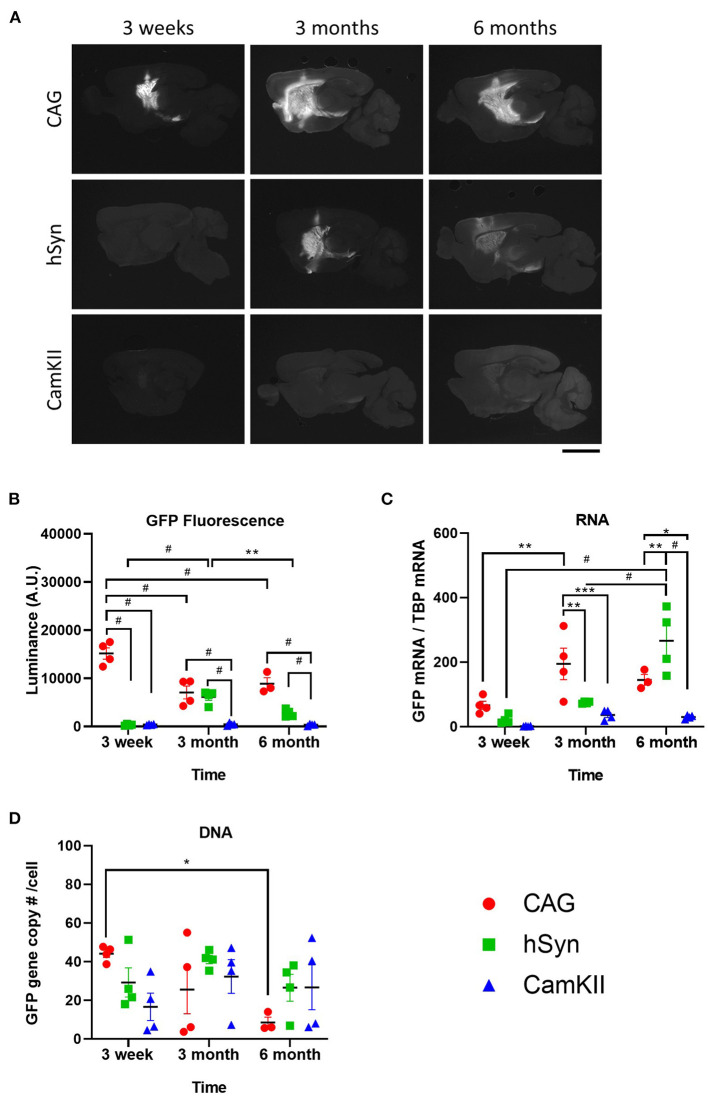
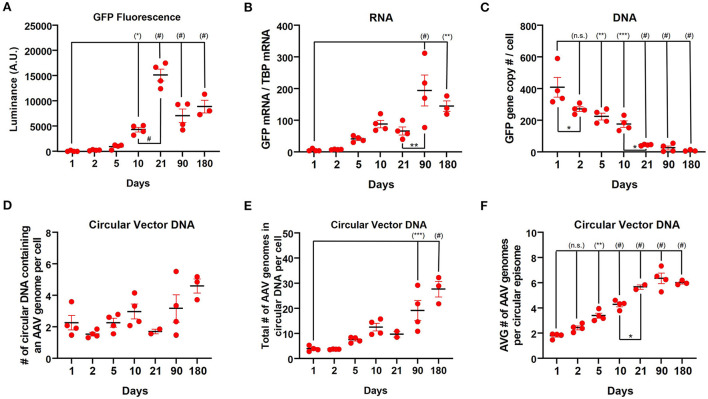
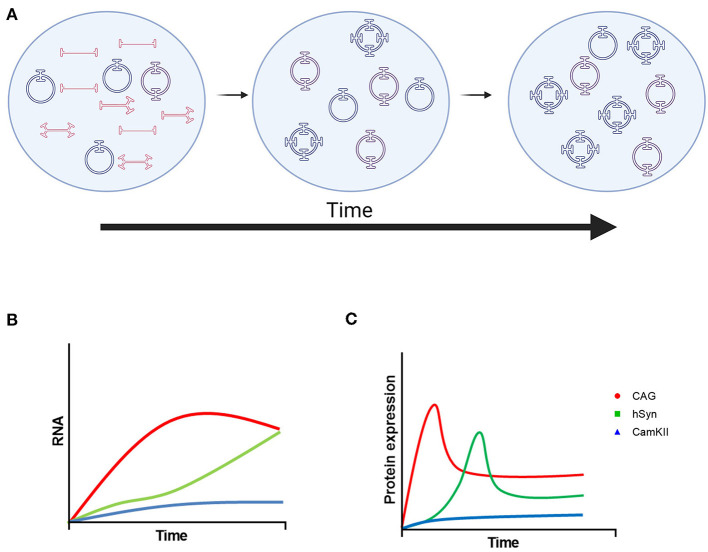
Understanding the kinetics and durability of AAV-mediated transgene expression in the brain is essential for conducting basic neuroscience studies as well as for developing gene therapy approaches for CNS diseases. Here, we characterize and compare the temporal profile of transgene expression after bilateral injections into the mouse striatum of rAAV9 encoding GFP under the control of either a ubiquitous promoter (CAG), or the neuron-specific human synapsin (hSyn) and CamKII promoters. GFP protein expression with the CAG promoter was highest at 3 weeks, and then decreased to stable levels at 3 and 6 months. Surprisingly, GFP mRNA levels continued to increase from 3 weeks to 3 months, despite GFP protein expression decreasing during this time. GFP protein expression with hSyn increased more slowly, reaching a maximum at 3 months, which was equivalent to protein expression levels from CAG at that time point. Importantly, transgene expression driven by the hSyn promoter at 6 months was not silenced as previously reported, and GFP mRNA was continuing to rise even at the final 6-month time point. Thus, hSyn as a promoter for transgene expression demonstrates long-term durability but may require more time after vector administration to achieve steady-state levels. Because CAG had the highest GFP protein expression in our comparison, which was at 3 weeks post administration, the early kinetics of transgene expression from CAG was examined (1, 2, 5, and 10 days after injection). This analysis showed that GFP protein expression and GFP mRNA increased during the first 3 weeks after administration. Interestingly, vector DNA rapidly decreased 10-fold over the first 3 weeks following injection as it assembled into stable circular episomes and concatemers. Surprisingly, the processing of vector genomes into circular episomes and concatemers was continually dynamic up to 3 months after injection. These results provide novel insight into the dynamic processing of vector genomes and promoter-specific temporal patterns of transgene expression in the brain.
Overview
The claims and statistics of this paper haven’t been checked yet.
Free: it reads the open-access text and checks the first 5 claims that cite a source we can check. Create a free account to check every claim.
Integrity signals
Registry
Cites
Statistics
Figures
Verification
Claims the paper makes
The claims and statistics of this paper haven’t been checked yet.
Free: it reads the open-access text and checks the first 5 claims that cite a source we can check. Create a free account to check every claim.
Claims other papers make about this one
Each is checked against this paper’s own text: does it say what the citing paper says it does?
In the citing paper
“This vector dose was chosen as a standard dose used for pre-clinical testing in several settings, independently of toxicity, and because it has been shown to induce glial cell activation and brain infiltration in previous mouse studies using the same route of administration 36,37,100 .”
From AAV vectors trigger DNA damage response-dependent pro-inflammatory signalling in human iPSC-derived CNS models and mouse brain (2025) · cites this paper as [36]
Self-check
Percentages, sums and reported differences re-computed from the paper’s own numbers.
The self-check needs the paper’s full text.
Citations
Cites
Adeno-associated virus vector as a platform for gene therapy delivery
Wang, D., Tai, P. W. L., & Gao, G. (2019) · Nature Reviews Drug Discovery · doi:10.1038/s41573-019-0012-9 · Cited by 2,444
Chan, K. Y., Jang, M. J., Yoo, B. B., Greenbaum, A., Ravi, N., Wu, W.-L., Sánchez-Guardado, L., Lois, C., Mazmanian, S. K., Deverman, B. E., et al. (2017) · Nature Neuroscience · doi:10.1038/nn.4593 · Cited by 1,578 · cited 12×
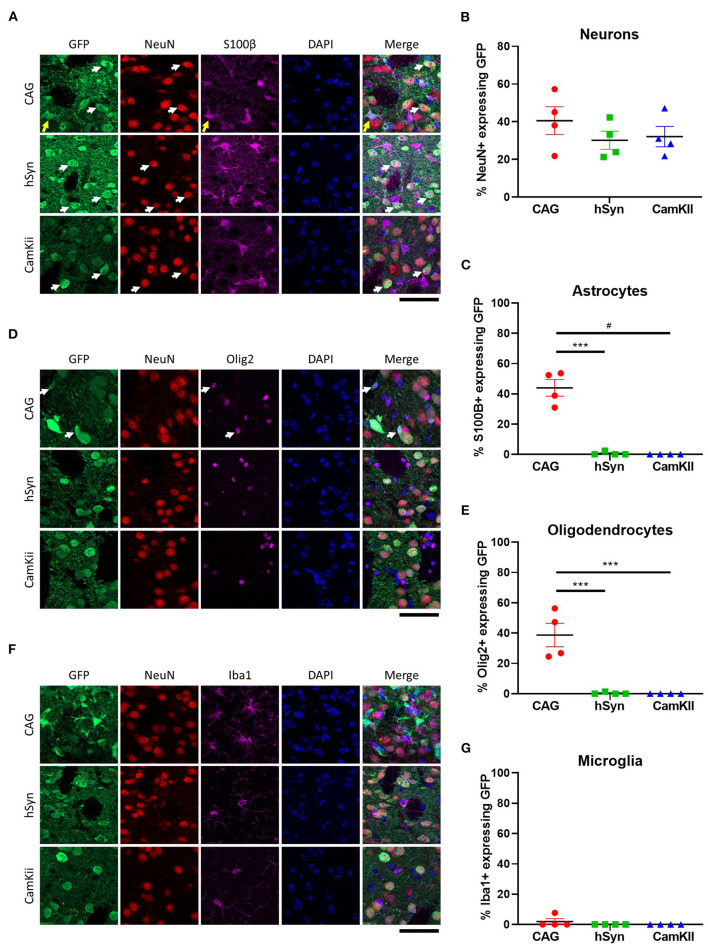
“In the CNS, the neuron-specific promoters, hSyn and CamKII, have been shown to drive reliable and robust expression that restricts primarily to neurons (18– 20).”
BackgroundInfluentialEngineering adeno-associated virus vectors for gene therapy
Li, C., & Samulski, R. J. (2020) · Nature Reviews Genetics · doi:10.1038/s41576-019-0205-4 · Cited by 1,175 · cited 2×
“Once the single-stranded, linear vector DNA is transported to the nucleus, second strand synthesis occurs resulting in double-stranded, linear genomes (1).”
BackgroundHinderer, C., Katz, N., Buza, E. L., Dyer, C., Goode, T., Bell, P., Richman, L. K., & Wilson, J. M. (2018) · Human Gene Therapy · doi:10.1089/hum.2018.015 · Cited by 814 · cited 1×
“Such large doses increase immune responses to the vector and can lead to hepatotoxicity as well as complement activation (7, 8).”
BackgroundDuan, D., Sharma, P., Yang, J., Yue, Y., Dudus, L., Zhang, Y., Fisher, K. J., & Engelhardt, J. F. (1998) · Journal of Virology · doi:10.1128/jvi.72.11.8568-8577.1998 · Cited by 522
Gray, S. J., Matagne, V., Bachaboina, L., Yadav, S., Ojeda, S. R., & Samulski, R. J. (2011) · Molecular Therapy · doi:10.1038/mt.2011.72 · Cited by 501
Nakai, H., Yant, S. R., Storm, T. A., Fuess, S., Meuse, L., & Kay, M. A. (2001) · Journal of Virology · doi:10.1128/jvi.75.15.6969-6976.2001 · Cited by 478
Goertsen, D., Flytzanis, N. C., Goeden, N., Chuapoco, M. R., Cummins, A., Chen, Y., Fan, Y., Zhang, Q., Sharma, J., Duan, Y., et al. (2022) · Nature Neuroscience · doi:10.1038/s41593-021-00969-4 · Cited by 420 · cited 3×
“GFP mRNA expression was also found to significantly change over the course of time depending on the promoter [Figure 2C; two-way ANOVA, F(4,26) (time × promoter) = 25.”
BackgroundMethodPre-existing Anti–Adeno-Associated Virus Antibodies as a Challenge in AAV Gene Therapy
Louis Jeune, V., Joergensen, J. A., Hajjar, R. J., & Weber, T. (2013) · Human Gene Therapy Methods · doi:10.1089/hgtb.2012.243 · Cited by 358
Comparative Analysis of Adeno-Associated Viral Vector Serotypes 1, 2, 5, 7, And 8 in Mouse Brain
Taymans, J.-M., Vandenberghe, L. H., Haute, C. V. D., Thiry, I., Deroose, C. M., Mortelmans, L., Wilson, J. M., Debyser, Z., & Baekelandt, V. (2007) · Human Gene Therapy · doi:10.1089/hum.2006.178 · Cited by 305
Research works printed but not linked: 1
- Batty P Fong S Franco M Gil-Farina I Mo AM Harpell L. Frequency, location and nature of AAV vector insertions after long-term follow up of FVIII transgene delivery in a hemophilia A dog model [abstract]. Res. Pract. Thromb. Haemost. (2020) 4: 550.32548553
Cited by
Zwang, T. J., Sastre, E. D., Wolf, N., Ruiz-Uribe, N., Woost, B., Hoglund, Z., Fan, Z., Bailey, J., Nfor, L., Buée, L., et al. (2024) · Cell Reports · doi:10.1016/j.celrep.2024.114574 · Cited by 48
“Prior studies have evaluated the tropism of these capsids for neurons and report that this is an effective system for delivering genes broadly to excitatory neurons 27–29 ; however, this method may not have captured the full spectrum of disease-susceptible neurons.”
BackgroundCosta-Verdera, H., Meneghini, V., Fitzpatrick, Z., Abou Alezz, M., Fabyanic, E., Huang, X., Dzhashiashvili, Y., Ahiya, A., Mangiameli, E., Valeri, E., et al. (2025) · Nature Communications · doi:10.1038/s41467-025-58778-3 · Cited by 32
“…with AAV9-CAG-GFP or vehicle ( n = 2 mice/group respectively) andweresacri fi ced28 dayspost-injection, atime-point at which robust transgene expression can be expected 35,36 and CNS toxicities havebeenreported 11,15,37 ,whichintheDRGcontexthavebeenshownto be transgene expression-dependent 38 .”
AAV vectors trigger DNA damage responses and STING-dependent inflammation in human CNS cells
Costa-Verdera, H., Meneghini, V., Fitzpatrick, Z., Alezz, M. A., Fabyanic, E., Huang, X., Dzhashiashvili, Y., Ahiya, A., Mangiameli, E., Valeri, E., et al. (2024) · doi:10.21203/rs.3.rs-4171795/v1 · Cited by 32
Feng, X., Jiang, B., Zhai, S.-N., Liu, C., Wu, H., Zhu, B.-Q., Wei, M.-Y., Wei, J., Yang, L. C., & Chen, L. (2025) · Nature Biotechnology · doi:10.1038/s41587-025-02624-w · Cited by 48
“3c), consistent with the previous report 40 .”
Mora, J. R., Palmer, R., Wagner, L., Wu, B., Partridge, M. A. K., Meena, Sonderegger, I., Smeraglia, J., Bivi, N., Dakappagari, N. K., et al. (2024) · Bioanalysis · doi:10.4155/bio-2024-0024 · Cited by 24
Tsitsos, F. N., Batts, A. J., Jimenez, D. A., Macsemchuk, C. A., Li, C., Ji, R., Bae, S., Ciaccio, G. L., Theodorou, A., Ramirez, R. K., et al. (2025) · Journal of Controlled Release · doi:10.1016/j.jconrel.2025.113986 · Cited by 15
New insights for the development of efficient DNA vaccines
Berger, S., Zeyn, Y., Wagner, E., & Bros, M. (2024) · Microbial Biotechnology · doi:10.1111/1751-7915.70053 · Cited by 17
Rohner, V., Lamothe‐Molina, P. J., & Patriarchi, T. (2024) · Journal of Neurochemistry · doi:10.1111/jnc.16045 · Cited by 12
“The performance of such indicators depends on the adequate expression of these genetic sequences (Hollidge et al., 2022 ).”
BackgroundIn vivo base editing rescues ADPKD in a humanized mouse model
Cheng, A. S., Li, L. X., Zhou, J. X., Harris, P. C., Calvet, J. P., & Li, X. (2025) · Nature Communications · doi:10.1038/s41467-025-65997-1 · Cited by 11
Intranasal delivery of shRNA to knockdown the 5HT-2A receptor enhances memory and alleviates anxiety
Rohn, T. T., Radin, D. I., Brandmeyer, T., Seidler, P. G., Linder, B. J., Lytle, T., Mee, J. L., & Macciardi, F. M. (2024) · Translational Psychiatry · doi:10.1038/s41398-024-02879-y · Cited by 9
“Indeed, a recent study in mice indicates that vector DNA rapidly decreases 10-fold within neurons over the fi rst 3 weeks following stereotaxic injections of AAV9 vectors into the striatum [33].”
BackgroundBatts, A. J., Tsitsos, F. N., Ingabire, J., Duret, G., Gorman, S. L., Tsakri, D., Noel, R. L., Ji, R., Kwon, N., Pham, Q.-K., et al. (2025) · Brain stimulation · doi:10.1016/j.brs.2025.10.006 · Cited by 9
Zhao, Q. P., Li, C., Xu, Y., Zhong, J., Liu, H., Yin, Y., Liu, Y., Yang, C., Yu, L., Liu, L., et al. (2024) · Experimental Neurology · doi:10.1016/j.expneurol.2024.115096 · Cited by 8
Self-citationTreatment of Huntington’s disease with a pan-HTT-targeting CRISPR nuclease
Tan, K., Siller, D. D. B., Xiong, A. Y., Wang, A. X. A., McCallister, T. X., Mummadi, S., John, L. A. S., Lee, T. K., Carrillo, A., Renshaw, D. G., et al. (2026) · Molecular Therapy · doi:10.1016/j.ymthe.2026.04.038 · Cited by 8
Lunev, E. A., Klementieva, N. V., Vassilieva, S. G., Volovikov, E. A., Jappy, D., Savchenko, I. M., Svetlova, E. A., Polikarpova, A. V., Shubina, M. Y., Spirin, D., et al. (2025) · Gene Therapy · doi:10.1038/s41434-025-00532-x · Cited by 6
“Although AAV-RNAi therapies have not yet received FDA approval, the ongoing technological progress provides hope that personalized treatments will soon be accessible for patients with autosomal dominant disorders.”
Reever, C. M., Boscia, A. R., Deutsch, T. C. J., Patel, M. P., Miralles, R. M., Kittur, S., Fleischel, E. J., Buo, A. M., Yorek, M. S., Meisler, M. H., et al. (2026) · Journal of Clinical Investigation · doi:10.1172/jci196402 · Cited by 8
“Peak expression of AAVs, and therefore editing activity, occurs around 3 weeks (34, 35, 39).”
Gallo, N. B., Annand, J. W., Clarner, P., Harvey, B., Morozova, E., Ehrenfels, C., Jiang, T., Yuan, L., Kashyap, S., Lü, X., et al. (2026) · Molecular Therapy · doi:10.1016/j.ymthe.2026.03.027 · Cited by 5
Self-citationMaturana, C. J. (2023) · Gene Therapy · doi:10.1038/s41434-023-00430-0 · Cited by 7
“…calcium/calmodulin-dependent protein kinase II alpha (CaMKIIa; 1,300 bp) [10], CMV enhancer fused to the chicken beta-actin promoter (CAG; 912 bp) [11, 12] and neuron-speci fi c enolase (NSE; 1800 bp) [13], have demonstrated remarkable potency in selectively driving transgene expression in neurons.”
BackgroundLeone, M. J., van de Weerd, R., Brown, A. R., Noh, M., Phan, B. N., Wang, A. Z., Corrigan, K. A., Yeramosu, D., Sestili, H. H., Arokiaraj, C. M., et al. (2025) · bioRxiv (Cold Spring Harbor Laboratory) · doi:10.1101/2025.06.20.660790 · Cited by 4
A spinal USP7-Bach1 positive feedback loop drives NOX4-mediated ferroptosis in neuropathic pain
Jiao, B., Liu, S., Zhang, K., Zhang, W., Cao, X., Zhang, X., Sun, J., & Xu, H. (2026) · Redox Biology · doi:10.1016/j.redox.2026.104153 · Cited by 3
“…was maintained following AAV injection to ensure stable and maximal transgene expression within the spinal cord dorsal horn prior to the initiation of inhibitor or siRNA treatment, as previous studies indicate that AAV-mediated protein expression typically peaks around 3 weeks post-infection [35].”
Gumusgoz, E., Kasiri, S., Verma, M., Wu, J., Acha, D. V., Marriam, U., Fyffe-Maricich, S. L., Lin, A., Chen, X., Gray, S. J., et al. (2023) · Gene Therapy · doi:10.1038/s41434-023-00433-x · Cited by 3
“After rotarod testing, the mice were sacri fi ced to evaluate vector biodistribution, and treatment effects on late neuroin fl ammatory markers and neurodegeneration.”
Wang, X.-S., Yang, Z., Pla, A., Ng, M., Zhuang, B., Ahuja, S., Tjoanda, C., Purde, V., Wenzel, S., Marshall, B., et al. (2025) · Molecular Therapy — Methods & Clinical Development · doi:10.1016/j.omtm.2025.101579 · Cited by 3
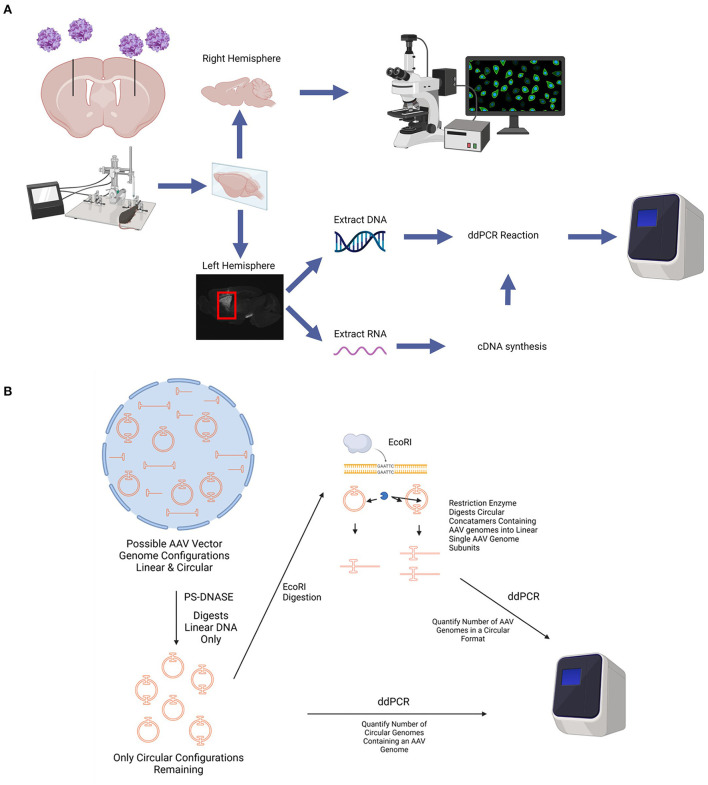
“This figure illustrates that upon lysis of the viruses, single-stranded DNA is released, and when these strands are annealed, different double-stranded variants may be created.”
In silico prediction and in vivo testing of promoters targeting GABAergic inhibitory neurons
Niibori, Y., Duba-Kiss, R., Bruder, J. T., Smith, J. B., & Hampson, D. R. (2023) · Molecular Therapy — Methods & Clinical Development · doi:10.1016/j.omtm.2023.01.007 · Cited by 7
Self-citationCharacterization and quantitation of baculoviral DNA in rAAV vectors produced in Sf9 cells
Wang, X.-S., Pla, A., Purde, V., Wenzel, S., Raut, P., Pessôa, D. D. O., Haller, J. F., Nelson, S., Heinz, B. A., & Richer, S. M. (2025) · Molecular Therapy — Methods & Clinical Development · doi:10.1016/j.omtm.2025.101569 · Cited by 2
“32,33 Genomes without two ITRs could be rapidly degraded.”
Fouka, M., Tsakogias, I., Gialinaki, E. G., Stavropoulos, A., Volbracht, C., Muynck, L. D., Moechars, D., Melki, R., Tofaris, G. K., Stefanis, L., et al. (2025) · Acta Neuropathologica Communications · doi:10.1186/s40478-025-02121-w · Cited by 3
“The GFP and shRNA or microRNA aSyn-targeting sequences lie downstream of a constitutive CAG or CBA promoter, respectively, which has been proposed to ensure sustained, long-term expression across a spectrum of cell types [32] [33].”
Regulatory Elements for Gene Therapy of Epilepsy
Chesnokova, E., Bal, N. V., Alhalabi, G., & Balaban, P. M. (2025) · Cells · doi:10.3390/cells14030236 · Cited by 2
Minassian, B. A., Gumusgoz, E., Kasiri, S., Verma, M., Wu, J., Acha, D. V., Marriam, U., Fyffe-Maricich, S. L., Lin, A., Chen, X., et al. (2023) · Research Square · doi:10.21203/rs.3.rs-3112340/v1 · Cited by 2
Batts, A. J., Ji, R., Bae, S., Tsitsos, F. N., Jiménez-Gambín, S., Kwon, N., Gorman, S. L., Tsakri, D., Noel, R. L., Bendig, J., et al. (2025) · bioRxiv (Cold Spring Harbor Laboratory) · doi:10.1101/2025.03.02.639893 · Cited by 3
Self-citationRyabova, E. I., Derkaev, A. A., Esmagambetov, I. B., Dovgiy, M. A., Blinov, A. A., Hossain, R. M., Dmitriev, O. E., Polyansky, D. S., Noskov, A. N., Shcheblyakov, D. V., et al. (2026) · Fine Chemical Technologies · doi:10.32362/2410-6593-2025-20-6-582-593 · Cited by 1
Long-term restoration of auditory function in a DFNA2 mouse model by adenine base editing
Kong, Y., Zhang, Y. L., Xie, E., Li, X., Peng, Z., Zhang, J., Zhao, Y., & Yuan, H. (2026) · EMBO Molecular Medicine · doi:10.1038/s44321-026-00433-5 · Cited by 2
“…potency, while acknowledging residual off-target and chronic stress liabilities (Davis et al, 2022); and (ii) adopting transient “ hit-and-run ” delivery modalities such as mRNA-LNP, RNP, or VLPs to minimize prolonged off-target exposure and immunogenicity (Hollidge et al, 2022; Pardi et al, 2015).”
Zerbes, T., Verkuyl, C. E., Zhang, C., Grunnesjoe, S., Eid, S., Arshad, H., Zhao, W., Nasser, Z., O’Shea, T., Bel, A., et al. (2026) · PLoS Pathogens · doi:10.1371/journal.ppat.1014124 · Cited by 3
“It has repeatedly been described that it takes approximately three weeks for transduced rAAV vectors to unleash the full expression of their payload [59].”
Mole, A. J., Sander, C. F., Parmar, A., Williams, A. J., Azzouz, M., Hautbergue, G. M., Shaw, P. J., Ferraiuolo, L., & Mead, R. J. (2025) · bioRxiv (Cold Spring Harbor Laboratory) · doi:10.1101/2025.07.01.662642 · Cited by 1
Deep-brain thermo-endomicroscopyPreprint
Imamura, R., Nakane, Y., Kataoka, N., Abe, H., Ohshima, T., Sotoma, S., & Sugi, T. (2025) · bioRxiv (Cold Spring Harbor Laboratory) · doi:10.1101/2025.11.25.690615
“A second advantage is that FNDs are exogenous probes and therefore require no protein expression or maturation period, unlike fluorescent-protein reporters that often need a few weeks for in vivo expression 40 .”
An AAV-Based Therapy Approach for Neurological Phenotypes of X-Linked Adrenoleukodystrophy
Gornostal, E. A., Alsalloum, A., Degtyarev, E., Kuznetsova, E., Levashova, A., Mishina, D., Mingaleva, N., Mazloum, A., Bogdanov, V. P., Krupinova, J. A., et al. (2025) · International Journal of Molecular Sciences · doi:10.3390/ijms262311645
“They ensure the expression of the transgene in the widest possible range of cells with evidence of transduction of glial cells [84].”
Long-Term Expression and Safety of AAV1-Mediated PI3Kδ Overexpression in the Adult Rat CortexPreprint
Knight, L. W., Zuzana, P., Mareková, D., Urdzíková, L. M., Jirák, D., Ziółkowska, N., Makovicky, P., de Winter, F., Kwok, J. C. F., Jendelová, P., et al. (2026) · bioRxiv (Cold Spring Harbor Laboratory) · doi:10.64898/2026.01.22.700520
“It is also important to note that many biodistribution and expression studies often rely on fluorescent reporters, such as GFP (Hutson et al, 2011, Yáñez-Muñoz, 2006, Hollidge et al, 2022).”
A Rationally Designed AAV9-DM Capsid with Minimal Liver Tropism
Nabakowski, Z. C., Jaramillo, I. C., Tanachaiwiwat, P., & Keeler, G. D. (2026) · Cells · doi:10.3390/cells15040334
“While we found significant differences in transgene expression levels as compared to week three, it https://doi.org/10.3390/cells15040334 is important to note that, after AAV administration, early peaks in transgene expression followed by stabilization are not uncommon [30–34].”
InfluentialAdeno-associated virus-induced neurotoxicity is prevented by CpG depletion
Dunn, C. E., Carvajal, B. V., Ma, J., Castaneda-Hernandez, G., Nguyen, A. V., Jung, C., Suriano, C. M., & Boulanger, L. M. (2026) · Molecular Therapy Advances · doi:10.1016/j.omta.2026.201703 · Cited by 1
Saidi, L., Rioux, V., Wallman, M., Rajan, S. S., Metzakopian, E., Lévesque, M., Proulx, C. D., & Parent, M. (2026) · bioRxiv (Cold Spring Harbor Laboratory) · doi:10.64898/2026.02.23.707446
Mole, A. J., Sander, C., Parmar, A., Williams, A. J., Azzouz, M., Hautbergue, G. M., Shaw, P. J., Ferraiuolo, L., & Mead, R. J. (2026) · Scientific Reports · doi:10.1038/s41598-026-38039-z · Cited by 2
“At 4 weeks post-injection, we anticipated strong expression of the transgene 14 .”
ADME investigations of novel therapeutic modalities: challenges and opportunities 2025
Yu, H., Dambra, R., Chan, G., Ishida, E., Khalilimeybodi, A., Krebs, N., Pilvankar, M., & Seeland, S. (2026) · Expert Opinion on Drug Metabolism & Toxicology · doi:10.1080/17425255.2026.2650189
“…of BD at steady state predominantly reflects the vector DNA residing in the nucleus as an episomal form, which is responsible for the expression of downstream transgene mRNA and protein, rather than initial distribution of AAV to the extravascular matrix or cytosolic compartments [123,124].”
Bellia, F., Ruggieri, A. G., Amodei, L., Potenza, F., Dufrusine, B., Panella, V., Pizzo, F., Lamolinara, A., Iezzi, M., Federici, L., et al. (2026) · Biochemical Pharmacology · doi:10.1016/j.bcp.2026.118014 · Cited by 1
Oloruntimehin, E. S., & Malogolovkin, A. S. (2026) · International Journal of Molecular Sciences · doi:10.3390/ijms27135668
“NSE (neuron-specific enolase) is another commonly used promoter for CNS delivery [66,67].”
Yang, Y., Li, Q., Luo, S., Sun, J., & Ouyang, Y. (2026) · Biology · doi:10.3390/biology15131071
“AAV9 was selected because of its broad use in nervous system gene delivery, efficient neuronal transduction, and relatively stable long-term expression after stereotaxic administration [13,15].”
Deciphering nervous systems wiring: Tract-tracing and complementary methods
Schmitt, O., Eipert, P., Maestro, R. T., Bellmann, M., Haase, S., Morawska, P., & Prathapan, V. (2026) · Neuroscience & Biobehavioral Reviews · doi:10.1016/j.neubiorev.2026.106943
Chan, K. Y., Lin, C.-Y., Huang, Q., Pacouret, S., Zheng, Q., Harvey, J. W., Brauer, P. P., Johnston, J., Serack, F. E., Davis, J. R., et al. (2026) · bioRxiv (Cold Spring Harbor Laboratory) · doi:10.64898/2026.09.23.753669
“…viral (AAV) vectors remain the leading vehicles for gene supplementation, knockdown, and editing: they are small enough to spread through the CNS interstitium 1 , efficiently transduce neurons and glia 2–4 , and persist as episomes 5,6 , providing durable expression in long-lived cells.”
Khlystova, M. A., Karkhov, A. M., Katrukha, V. A., Solotenkov, M. A., Mitkevich, V. A., Makarov, A. А., Belousov, V. V., Fedotov, A. B., Fedotov, I. V., & Bilan, D. S. (2026) · Methods and Protocols · doi:10.3390/mps9050144
“In order to achieve stable and spatially extensive biosensor expression, we used AAV9 vectors for intraparenchymal delivery [33,34].”
Gupta, S., & Gupta, R. (2026) · Frontiers in Aging Neuroscience · doi:10.3389/fnagi.2026.1866161
Metadata
- Authors
- Hollidge, B. S., Carroll, H. B., Qian, R., Fuller, M. L., Giles, A. R., Mercer, A. C., Danos, O., Liu, Y., Bruder, J. T., & Smith, J. B.
- Affiliations
- Regenxbio (United States) (US)
- Corresponding author
- Smith, Jared B.
- Venue
- Frontiers in Neurology
- Publisher
- Frontiers Media SA
- Published
- 2022-11-14
- Volume
- 13
- Pages
- 1051559-1051559
- ISSN
- 1664-2295 (ISSN-L)
- PMC
- PMC9702554
- OpenAlex
- W4309012465
- Cited by
- 45
- References
- 27
- Citations by year
- 2026: 20 · 2025: 15 · 2024: 6 · 2023: 4
- FWCI
- 3.77
- Type
- journal article
- Language
- en
- Open access
- gold
- doi.org
- Licence
- Locations
- Frontiers in Neurology (publishedVersion, cc-by)
- PubMed Central (publishedVersion, cc-by)
- PubMed (publishedVersion)
- DOAJ (DOAJ: Directory of Open Access Journals) (submittedVersion, cc-by-sa)
- Funders
- REGENXBIO
- Topics
- Life Sciences › Biochemistry, Genetics and Molecular Biology › Genetics › Virus-based gene therapy research
- Life Sciences › Biochemistry, Genetics and Molecular Biology › Molecular Biology › RNA Interference and Gene Delivery
- Life Sciences › Neuroscience › Neurology › Barrier Structure and Function Studies
- Keywords
- AAV9, adeno-associated virus vectors, intrastriatal injection, transgene expression kinetics, striatum, synapsin promoter, CAG promoter, green fluorescent protein, episomes, concatemers
About these checks
Registry, retraction, Cites and statistics results are computed, not judged, with one exception: a printed reference that no index lists is read once by a model before it counts as a citation error. Claims are extracted by a model and kept only when their quote appears verbatim in the text; each cited source is then checked, with a model’s help, for whether it says what the claim relies on. Those verdicts can be wrong — read the claim’s quote and the cited source before relying on one.
Statistics and arithmetic are recomputed, not judged.
Confidence bands are shown only for fields calibrated on our annotated test set. None is calibrated yet, so no band is shown.
What counts as a claim ›How we measure confidence ›How we check this ›
Are you an author, or do you see a problem with this page? Request a review
Data sources
Bibliographic data: Semantic Scholar, OpenAlex, Crossref.
Contains information from the Semantic Scholar Academic Graph Datasets, made available under the ODC Attribution License (ODC-BY 1.0).
Semantic Scholar’s data is described in: Kinney, R., et al. (2023). The Semantic Scholar Open Data Platform. arXiv:2301.10140.
