

The DOI matches its Crossref record; 243 of the 255 references it cites were found in a registry or an index.
The entropic brain: a theory of conscious states informed by neuroimaging research with psychedelic drugs.
Open accessAbstract
Entropy is a dimensionless quantity that is used for measuring uncertainty about the state of a system but it can also imply physical qualities, where high entropy is synonymous with high disorder. Entropy is applied here in the context of states of consciousness and their associated neurodynamics, with a particular focus on the psychedelic state. The psychedelic state is considered an exemplar of a primitive or primary state of consciousness that preceded the development of modern, adult, human, normal waking consciousness. Based on neuroimaging data with psilocybin, a classic psychedelic drug, it is argued that the defining feature of "primary states" is elevated entropy in certain aspects of brain function, such as the repertoire of functional connectivity motifs that form and fragment across time. Indeed, since there is a greater repertoire of connectivity motifs in the psychedelic state than in normal waking consciousness, this implies that primary states may exhibit "criticality," i.e., the property of being poised at a "critical" point in a transition zone between order and disorder where certain phenomena such as power-law scaling appear. Moreover, if primary states are critical, then this suggests that entropy is suppressed in normal waking consciousness, meaning that the brain operates just below criticality. It is argued that this entropy suppression furnishes normal waking consciousness with a constrained quality and associated metacognitive functions, including reality-testing and self-awareness. It is also proposed that entry into primary states depends on a collapse of the normally highly organized activity within the default-mode network (DMN) and a decoupling between the DMN and the medial temporal lobes (which are normally significantly coupled). These hypotheses can be tested by examining brain activity and associated cognition in other candidate primary states such as rapid eye movement (REM) sleep and early psychosis and comparing these with non-primary states such as normal waking consciousness and the anaesthetized state.
Overview
The claims and statistics of this paper haven’t been checked yet.
Run the check — free, no account needed. It reads the open-access text and checks the sources it cites.
Integrity signals
Registry
Cites
Statistics
Figures
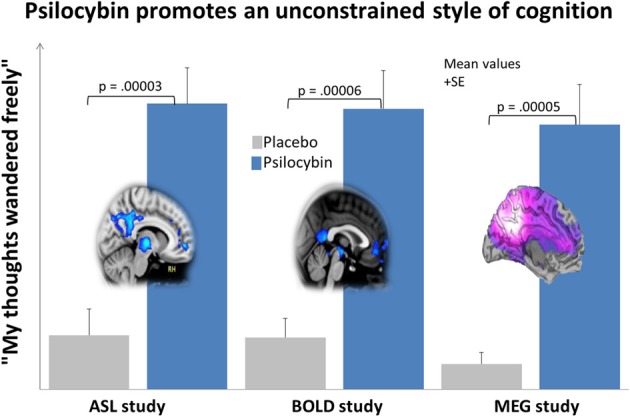
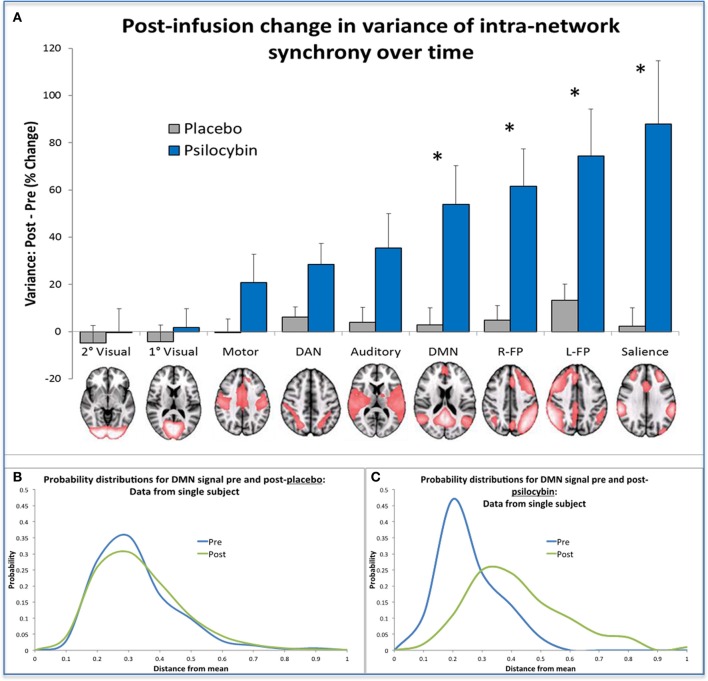
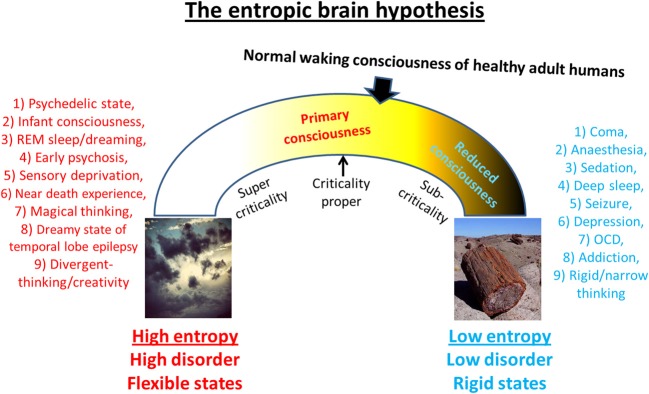
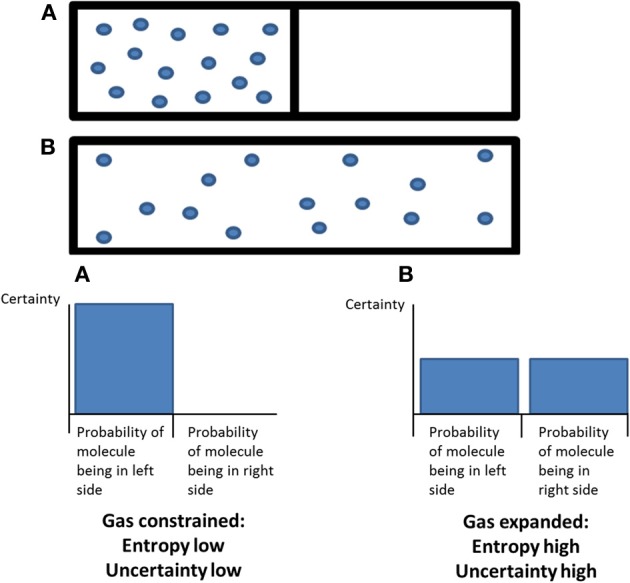
Verification
Claims the paper makes
The claims and statistics of this paper haven’t been checked yet.
Run the check — free, no account needed. It reads the open-access text and checks the sources it cites.
Claims other papers make about this one
Each is checked against this paper’s own text: does it say what the citing paper says it does?
The source backs part of the claim, not all of it — or backs it for a different population, condition or comparison.
In the citing paper
“Other approaches study only conscious (and not unconscious) states and their changes, such as how consciousness changes under the in fl uence of LSD, other psychotropic substances or meditation (Carhart-Harris et al., 2014; Lutz et al., 2007), or track changes in body ownership and map them to brain states (Faivre et al., 2015).”
From Hard criteria for empirical theories of consciousness (2021) · cites this paper as Carhart-Harris et al., 2014
Experimental — accuracy not yet measuredThe source backs part of the claim, not all of it — or backs it for a different population, condition or comparison.
In the citing paper
“Indeed, psychedelic consciousness, in which the mechanisms of self-binding are compromised, is usually described as a state of increased or intensified consciousness, leading Carhart-Harris et al. (2014) to suggest that self-referential processes constrain consciousness rather than enabling it.”
From Self unbound: ego dissolution in psychedelic experience (2017) · cites this paper as Carhart-Harris et al. (2014)
Experimental — accuracy not yet measuredThe source backs part of the claim, not all of it — or backs it for a different population, condition or comparison.
In the citing paper
“It has been demonstrated with functional magnetic resonance imaging (fMRI) that during psychedelic experience, the DMN is modulated, which sharply reduces blood flow and connection within its nodes [46], leading to decreased functional connectivity within the DMN and increased between-network connectivity [47, 48].”
From Mindfulness meditation and psychedelics: potential synergies and commonalities (2023) · cites this paper as [46]
Experimental — accuracy not yet measuredIn the citing paper
“This Default Mode Network is usually active in meta-cognition, day-dreaming, reflecting on memories, but is apparently disabled by psychedelics (Carhart-Harris et al., 2014).”
From The therapeutic potentials of Ayahuasca: possible effects against various diseases of civilization (2016) · cites this paper as Carhart-Harris et al., 2014
In the citing paper
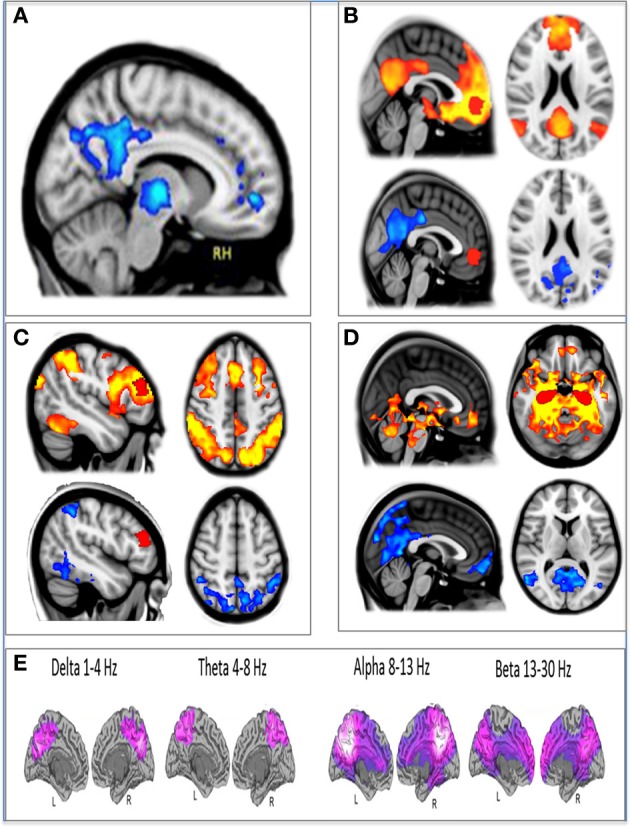
“Psychedelics alter this relaxed brain function by reducing cerebral blood flow and the oscillatory power in brain areas of the Default Mode Network that are typically synchronized and functionally connected.”
From The therapeutic potentials of Ayahuasca: possible effects against various diseases of civilization (2016) · cites this paper as Carhart-Harris et al., 2014
Self-check
Percentages, sums and reported differences re-computed from the paper’s own numbers.
The self-check needs the paper’s full text.
Citations
Cites
The Standard Edition of the Complete Psychological Works of Sigmund Freud
Freud, S. (1953) · Cited by 17,730
A default mode of brain function
Raichle, M. E., MacLeod, A. M., Snyder, A. Z., Powers, W. J., Gusnard, D. A., & Shulman, G. L. (2001) · Proceedings of the National Academy of Sciences · doi:10.1073/pnas.98.2.676 · Cited by 12,190
The human brain is intrinsically organized into dynamic, anticorrelated functional networks
Fox, M. D., Snyder, A. Z., Vincent, J. L., Corbetta, M., Van Essen, D. C., & Raichle, M. E. (2005) · Proceedings of the National Academy of Sciences · doi:10.1073/pnas.0504136102 · Cited by 8,553
The free-energy principle: a unified brain theory?
Friston, K. (2010) · Nature Reviews Neuroscience · doi:10.1038/nrn2787 · Cited by 8,120 · cited 19×
“A key hypothesis of this article is that it is through the development of self-organized activity in the DMN [and concomitant entropy/uncertainty/disorder minimization (Friston, 2010)] that a coherent sense of self or “ego” emerges (Carhart-Harris and Friston, 2010).”
BackgroundMethodResultInfluentialSelf-organized criticality: An explanation of the 1/ f noise
Bak, P., Tang, C., & Wiesenfeld, K. A. (1987) · Physical Review Letters · doi:10.1103/physrevlett.59.381 · Cited by 7,644
2. The Interpretation of Dreams
Freud, S., Crick, J., & Robertson, R. (1913) · Oxford University Press eBooks · doi:10.1037/10561-000 · Cited by 6,979
Neuronal Oscillations in Cortical Networks
Buzsáki, G., & Draguhn, A. (2004) · Science · doi:10.1126/science.1099745 · Cited by 6,576
Functional connectivity in the resting brain: a network analysis of the default mode hypothesis
Greicius, M. D., Krasnow, B., Reiss, A. L., & Menon, V. (2003) · Proceedings of the National Academy of Sciences · doi:10.1073/pnas.0135058100 · Cited by 6,358
(2023) · doi:10.1126/science · Cited by 6,063
The varieties of religious experience: A study in human nature.
James, W. (1902) · doi:10.1037/10004-000 · Cited by 5,204
Research works printed but not linked: 4
- Freud S. (1949). An Outline of Psycho-Analysis. Hogarth Press, [S.l.].
- Hutson M. (2012). The 7 Laws of Magical Thinking: How Irrational Beliefs Keep Us Happy, Healthy, and Sane. New York, NY: Hudson Street Press
- Jung C. G. (1982a). Dreams. London: Routledge and Kegan Paul
- Monroe R. R. Heath R. G. (1961). Effects of lysergic acid and various derivatives on depth and cortical electrograms. J. Neuropsychiatr. 3, 75– 82 14475431
Cited by
Sorted by citations
Griffiths, R. R., Johnson, M. W., Carducci, M. A., Umbricht, A., Richards, W. A., Richards, B. D., Cosimano, M. P., & Klinedinst, M. A. (2016) · Journal of Psychopharmacology · doi:10.1177/0269881116675513 · Cited by 2,201
“As a 5-HT2A agonist, the psilocybin metabolite psilocin directly and indirectly affects various brain cortical and subcortical areas and alters brain network dynamics (Carhart-Harris et al., 2012, 2014; Vollenweider and Kometer, 2010).”
BackgroundNichols, D. E. (2016) · Pharmacological Reviews · doi:10.1124/pr.115.011478 · Cited by 1,762
Ross, S., Bossis, A., Guss, J., Agin-Liebes, G., Malone, T., Cohen, B., Mennenga, S. E., Belser, A., Kalliontzi, K., Babb, J., et al. (2016) · Journal of Psychopharmacology · doi:10.1177/0269881116675512 · Cited by 1,698
REBUS and the anarchic brain: Toward a unified model of the brain action of psychedelics
Carhart-Harris, R. L., & Friston, K. J. (2019) · Pharmacological Reviews · doi:10.1124/pr.118.017160 · Cited by 1,180
Pilot study of the 5-HT 2A R agonist psilocybin in the treatment of tobacco addiction
Johnson, M. W., Garcia-Romeu, A., Cosimano, M. P., & Griffiths, R. R. (2014) · Journal of Psychopharmacology · doi:10.1177/0269881114548296 · Cited by 914
“Several plausible mechanisms of hallucinogen-facilitated treatments have been proposed (Bogenschutz and Pommy, 2012; Carhart-Harris et al., 2012, 2014; Ross, 2012; Vollenweider and Kometer, 2010).”
Background
Metadata
- Authors
- Carhart-Harris, R. L., Leech, R., Hellyer, P. J., Shanahan, M., Feilding, A., Tagliazucchi, E., Chialvo, D. R., & Nutt, D.
- Affiliations
- Imperial College London (GB)
- Beckley Foundation (GB)
- Goethe University Frankfurt (DE)
- Consejo Nacional de Investigaciones Científicas y Técnicas (AR)
- Corresponding author
- Carhart-Harris, Robin L.
- ORCID
- Venue
- Frontiers in Human Neuroscience
- Publisher
- Frontiers Media SA
- Published
- 2014
- Volume
- 8
- Pages
- 20-20
- ISSN
- 1662-5161 (ISSN-L)
- PMC
- PMC3909994
- OpenAlex
- W2109543774
- Cited by
- 1,252
- References
- 255
- Citations by year
- 2026: 145 · 2025: 169 · 2024: 169 · 2023: 157 · 2022: 152 · 2021: 112 · 2020: 85 · 2019: 71 · 2018: 59 · 2017: 54 · 2016: 42 · 2015: 17 · 2014: 13
- FWCI
- 49.32
- Type
- journal article
- Language
- en
- Open access
- gold
- doi.org
- Licence
- cc-by
- Locations
- Frontiers in Human Neuroscience (publishedVersion, cc-by)
- Europe PMC (PubMed Central) (publishedVersion, cc-by)
- PubMed Central (publishedVersion, cc-by)
- PubMed (publishedVersion)
- Research Portal (King's College London) (publishedVersion, other-oa)
- LA Referencia (Red Federada de Repositorios Institucionales de Publicaciones Científicas) (publishedVersion, other-oa)
- Americanae (AECID Library) (submittedVersion, cc-by-nc-sa)
- DOAJ (DOAJ: Directory of Open Access Journals) (submittedVersion, cc-by-sa)
- eScholarship (California Digital Library) (submittedVersion, cc-by)
- Greater South Information System
- Funders
- Medical Research Council (MR/J00460X/1)
- Topics
- Social Sciences › Psychology › Clinical Psychology › Psychedelics and Drug Studies
- Social Sciences › Psychology › Social Psychology › Paranormal Experiences and Beliefs
- Social Sciences › Arts and Humanities › Philosophy › Philosophy and Theoretical Science
- Keywords
- entropy (information theory), states of consciousness, psychedelic states, psilocybin, criticality, power-law scaling, default mode network, medial temporal lobe, self-awareness, reality testing, metacognition, REM sleep, early psychosis, anesthesia
About these checks
Registry, retraction, Cites and statistics results are computed, not judged, with one exception: a printed reference that no index lists is read once by a model before it counts as a citation error. Claims are extracted by a model and kept only when their quote appears verbatim in the text; each cited source is then checked, with a model’s help, for whether it says what the claim relies on. Those verdicts can be wrong — read the claim’s quote and the cited source before relying on one.
Statistics and arithmetic are recomputed, not judged.
Confidence bands are shown only for fields calibrated on our annotated test set. None is calibrated yet, so no band is shown.
What counts as a claim ›How we measure confidence ›How we check this ›
Are you an author, or do you see a problem with this page? Request a review
