

Selectivity of timing: A meta-analysis of temporal processing in neuroimaging studies using activation likelihood estimation and reverse inference
Open accessThe DOI matches its Crossref record; 40 of the 40 references it cites were found in a registry or an index.
Abstract
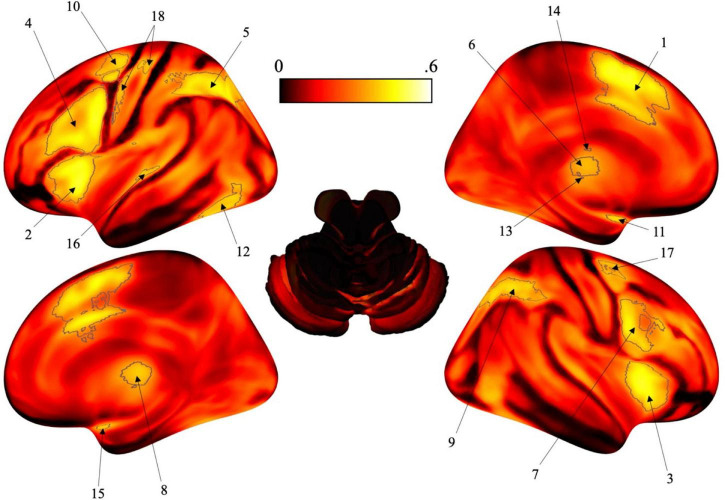
Over the last few decades, many researchers have investigated time perception and how it is processed in the brain. Past studies have identified cortical and subcortical regions that play an important role in implicit and/or explicit timing tasks. In regard to timing, different regions appear to have roles of varying importance depending on the duration (sub-second vs. supra-second), type of task (such as involving motor responses or passively observing stimuli), and modality (such as auditory, visual, and sensorimotor) resulting in the literature reporting divergent results that are contingent on the specifics of the task. This meta-analysis aims at identifying regions that show activation only for explicit timing tasks through reverse inference. As such, two datasets (the first including studies that involved explicit timing tasks while the second did not) were compared using the activation likelihood estimation (ALE) algorithm. Reverse inference was implemented through Bayes factor modeling, which allowed for the comparison of the activated regions between the two ALE-maps. Results showed a constellation of regions that exhibited selective activation likelihood in explicit timing tasks with the largest posterior probability of activation resulting in the left supplementary motor area (SMA) and the bilateral insula. Some areas that have been dubbed critical for time perception in past studies (i.e., the cerebellum) did not exhibit prevalent activation after analyses.
Overview
The claims and statistics of this paper haven’t been checked yet.
Free: it reads the open-access text and checks the first 5 claims that cite a source we can check. Create a free account to check every claim.
Integrity signals
Registry
Cites
Statistics
Figures
Verification
Claims the paper makes
The claims and statistics of this paper haven’t been checked yet.
Free: it reads the open-access text and checks the first 5 claims that cite a source we can check. Create a free account to check every claim.
Claims other papers make about this one
Each is checked against this paper’s own text: does it say what the citing paper says it does?
The source backs part of the claim, not all of it — or backs it for a different population, condition or comparison.
In the citing paper
“A recent meta-analysis of a wide range of neuroimaging experiments has identified the insula as one of the only two brain regions robustly involved in time perception [83,84].”
From The Insular Cortex: An Interface Between Sensation, Emotion and Cognition (2024) · cites this paper as [83]
Experimental — accuracy not yet measured
Self-check
Percentages, sums and reported differences re-computed from the paper’s own numbers.
The self-check needs the paper’s full text.
Citations
Cites
Can cognitive processes be inferred from neuroimaging data?
POLDRACK, R. (2006) · Trends in Cognitive Sciences · doi:10.1016/j.tics.2005.12.004 · Cited by 2,249
Functional role of the supplementary and pre-supplementary motor areas
Nachev, P., Kennard, C., & Husain, M. (2008) · Nature Reviews Neuroscience · doi:10.1038/nrn2478 · Cited by 1,928 · cited 5×
“The SMA is located in the dorsomedial frontal cortex and is comprized of the pre-SMA and SMA-proper (Nachev et al., 2008).”
BackgroundInfluentialTurkeltaub, P. E., Eickhoff, S. B., Laird, A. R., Fox, M., Wiener, M., & Fox, P. (2012) · Human Brain Mapping · doi:10.1002/hbm.21186 · Cited by 1,119 · cited 1×
“ALE works by modeling activation foci described in each study into three-dimensional Gaussian probability distributions per voxel (Turkeltaub et al., 2011).”
MethodSelf-citationGrondin, S. (2010) · Attention, Perception, & Psychophysics · doi:10.3758/app.72.3.561 · Cited by 1,000 · cited 3×
“, 2013) have shown less activation as well as altered perceptions of duration length (Grondin, 2010).”
BackgroundBroad domain generality in focal regions of frontal and parietal cortex
Fedorenko, E., Duncan, J., & Kanwisher, N. (2013) · Proceedings of the National Academy of Sciences · doi:10.1073/pnas.1315235110 · Cited by 952
Neural Basis of the Perception and Estimation of Time
Merchant, H., Harrington, D. L., & Meck, W. H. (2013) · Annual Review of Neuroscience · doi:10.1146/annurev-neuro-062012-170349 · Cited by 712 · cited 3×
“Further, it is suggested that the brain utilizes a core system of structures and may recruit secondary areas that are dependent on the present condition and are altered based on time-dependent changes (Grondin, 2010; Merchant et al., 2013; Merchant and Yarrow, 2016).”
BackgroundRole for supplementary motor area cells in planning several movements ahead
Tanji, J., & Shima, K. (1994) · Nature · doi:10.1038/371413a0 · Cited by 689 · cited 1×
“In this way, the SMA may be involved in numerous cognitive domains in an energy efficient manner through sequence processing as the common operation for each of these domains (Tanji and Shima, 1994; Gerloff et al., 1997; Menon et al., 2000).”
BackgroundThe image of time: A voxel-wise meta-analysis
Wiener, M., Turkeltaub, P., & Coslett, H. B. (2010) · NeuroImage · doi:10.1016/j.neuroimage.2009.09.064 · Cited by 594 · cited 4×
“These results demonstrate how regions previously shown to be involved in timing may be more involved in non-timing tasks, suggesting the presence of a domain-general system (Wiener et al., 2010; Cona and Semenza, 2017).”
BackgroundMethodResultSelf-citationDissociating explicit timing from temporal expectation with fMRI
Coull, J., & Nobre, A. (2008) · Current Opinion in Neurobiology · doi:10.1016/j.conb.2008.07.011 · Cited by 558
The Neural Basis of Timing: Distributed Mechanisms for Diverse Functions
Paton, J. J., & Buonomano, D. V. (2018) · Neuron · doi:10.1016/j.neuron.2018.03.045 · Cited by 442 · cited 10×
“The basal ganglia have been attributed with creating an internal sense of time through the use of predictions (Grahn and Rowe, 2012; Paton and Buonomano, 2018).”
BackgroundInfluential
Cited by
The Insular Cortex: An Interface Between Sensation, Emotion and Cognition
Zhang, R., Deng, H., & Xiao, X. (2024) · Neuroscience Bulletin · doi:10.1007/s12264-024-01211-4 · Cited by 158
“A recent meta-analysis of a wide range of neuroimaging experiments has identified the insula as one of the only two brain regions robustly involved in time perception [83, 84].”
Time processing in neurological and psychiatric conditions
Hinault, T., D’Argembeau, A., Bowler, D., Piolino, P., Desaunay, P., Provasi, J., Platel, H., The, J. T., Charretier, L., Giersch, A., et al. (2023) · Neuroscience & Biobehavioral Reviews · doi:10.1016/j.neubiorev.2023.105430 · Cited by 36
“…the dopaminergic system have been associated with altered timing performance and modifications of an individual ’ s feeling of the passage of time (Mitchell, 2018), while cholinergic-related drugs have been associated with modulations of temporal order in memory (Teixeira et al., 2013;…”
BackgroundTime, space, memory and brain–body rhythms
Buzsáki, G. (2025) · Nature reviews. Neuroscience · doi:10.1038/s41583-025-00987-2 · Cited by 43
“Sensory timing and duration detection at a longer timescale activate neurons in the insular cortex, parietal cortex and hippocampus 76,103 .”
When the Heart Meets the Mind: Exploring the Brain–Heart Interaction during Time Perception
Khoshnoud, S., Leitritz, D., Bozdağ, M. Ç., Igarzábal, F. A., Noreika, V., & Wittmann, M. (2024) · Journal of Neuroscience · doi:10.1523/jneurosci.2039-23.2024 · Cited by 25
How the body and brain process time
Teghil, A., & Wittmann, M. (2025) · Neuroscience & Biobehavioral Reviews · doi:10.1016/j.neubiorev.2025.106416 · Cited by 18
Aperiodic activity differences in individuals with high and low temporal processing efficiency
Krystecka, K., Stanczyk, M., Magnuski, M., Szela̧g, E., & Szymaszek, A. (2024) · Brain Research Bulletin · doi:10.1016/j.brainresbull.2024.111010 · Cited by 16
Effort and boredom shape our experience of time
Wolff, W., Özay-Otgonbayar, S., Danckert, J. A., Bieleke, M., & Martarelli, C. (2025) · Neuroscience & Biobehavioral Reviews · doi:10.1016/j.neubiorev.2025.106375 · Cited by 12
Coordinate-Based Meta-Analyses of the Time Perception Network
Wiener, M. (2024) · Advances in experimental medicine and biology · doi:10.1007/978-3-031-60183-5_12 · Cited by 8
Self-citationNeural Representation of Episodic Time
Kwok, S. C., Lapate, R. C., Sakon, J. J., van Wassenhove, V., Xue, G., & Zheng, J. (2025) · Journal of Neuroscience · doi:10.1523/jneurosci.1397-25.2025 · Cited by 14
Remembering future intentions: Recent advancements in event- and time-based prospective memory
Zuber, S., Scarampi, C., Laera, G., & Kliegel, M. (2024) · Elsevier eBooks · doi:10.1016/b978-0-443-15754-7.00023-7 · Cited by 8
Wittmann, M., & Droit‐Volet, S. (2024) · Current topics in behavioral neurosciences · doi:10.1007/7854_2024_520 · Cited by 19
Lane, J. M., Merced‐Nieves, F. M., Midya, V., Liu, S. H., Martínez-Medina, S., Wright, R. J., Téllez‐Rojo, M. M., & Wright, R. O. (2024) · The Science of The Total Environment · doi:10.1016/j.scitotenv.2024.170576 · Cited by 7
The feeling of the passage of time linked to individual interoceptive awareness abilities
Droit‐Volet, S., Monier, F., Larderet, M., Gil, S., & Martinelli, N. N. (2025) · Consciousness and Cognition · doi:10.1016/j.concog.2025.103868 · Cited by 10
Neural dynamics of delayed feedback in robot teleoperation: insights from fNIRS analysis
Zhou, T., Ye, Y., Zhu, Q., Vann, W., & Du, J. (2024) · Frontiers in Human Neuroscience · doi:10.3389/fnhum.2024.1338453 · Cited by 6
Interoceptive and Bodily Processing in Prospective and Retrospective Timing
Teghil, A. (2024) · Current topics in behavioral neurosciences · doi:10.1007/7854_2024_516 · Cited by 11
Garcés, M. S., Goena, J., Alústiza, I., Molero, P., Alegre, M., & Ortuño, F. (2025) · Schizophrenia · doi:10.1038/s41537-025-00580-7 · Cited by 4
Centanino, V., Fortunato, G., & Bueti, D. (2026) · PLoS Biology · doi:10.1371/journal.pbio.3003704 · Cited by 4
“For example, unimodal tuning has never been documented in the anterior insula, which is consistently activated by timing tasks [1–3] and considered central to the embodied account of time [1,3,16–18].”
InfluentialThe Self-Simulational Theory of temporal extension
Bellingrath, J. E. (2023) · Neuroscience of Consciousness · doi:10.1093/nc/niad015 · Cited by 7
Cortical neurite microstructural correlates of time perception in healthy older adults
Kim, T., Jounghani, A. R., Gozdas, E., & Hosseini, S. M. H. (2024) · Heliyon · doi:10.1016/j.heliyon.2024.e32534 · Cited by 4
Stanczyk, M., Szela̧g, E., Krystecka, K., & Szymaszek, A. (2023) · Scientific Reports · doi:10.1038/s41598-023-48238-7 · Cited by 6
“The essential network of basic structures combines subcortical areas, such as the basal ganglia and thalamus, as well as cortical areas such as the supplementary motor area 32,33 .”
BackgroundWöllner, C. (2024) · Current topics in behavioral neurosciences · doi:10.1007/7854_2024_517 · Cited by 5
Mioni, G., Wolbers, T., & Riemer, M. (2024) · Aging Brain · doi:10.1016/j.nbas.2024.100120 · Cited by 8
“Moreover, the processing of different interval lengths has been associated with different brain regions [14,16].”
BackgroundZhou, H., Li, Q., Tang, Y., & Tian, Y. (2025) · i-Perception · doi:10.1177/20416695251391634 · Cited by 2
“…neuroimaging evidence highlighting distinct neural substrates: subcortical regions dominate subsecond processing, whereas suprasecond intervals engage cortical networks (supplementary motor area [SMA], parietal/prefrontal cortex [PFC]; Mioni et al., 2020; Mondok & Wiener, 2023; Nani et al., 2019).”
Subjective time perception in dementia: a behavioural and neuroanatomical analysis
Requena‐Komuro, M., Jiang, J., Benhamou, E., Sivasathiaseelan, H., Johnson, J. C. S., Chokesuwattanaskul, A., Nelson, A., Hardy, C. J. D., & Warren, J. D. (2025) · Brain Communications · doi:10.1093/braincomms/fcaf496 · Cited by 2
“59-62 The neuroanatomy of temporal processing is complex 61-67 : metanalyses have de-lineated separable substrates for processing sub-second intervals (particularly subcortical circuitry, including basal ganglia and cerebellum) and supra-second intervals (a cortical network encompassing lateral…”
Jia, L., Zhang, Z., Wang, C., Liu, Y., Yu, F., Zhang, D., & Pan, Y. (2026) · NeuroImage · doi:10.1016/j.neuroimage.2026.121800 · Cited by 3
Uncovering the latent structure of human time perception
Sadibolova, R., Widmer, C. K., Fletcher, Z., Weill, S., & Terhune, D. B. (2025) · Cognition · doi:10.1016/j.cognition.2025.106078 · Cited by 3
“Consistent with this evidence, functional neuroimaging findings have further implicated different brain regions for brief intervals in the milliseconds range and for longer, cognitively-mediated intervals (Mondok and Wiener, 2023; Rammsayer and Pichelmann, 2018).”
Dreams, Jokes, and Songs: How Brains Build Consciousness
Thagard, P. R. (2025) · doi:10.1093/9780198962373.001.0001 · Cited by 2
Cauda, F., Manuello, J., Crocetta, A., Duca, S., Costa, T., & Liloia, D. (2024) · Brain Structure and Function · doi:10.1007/s00429-024-02867-4 · Cited by 2
“…structural, cognitive, and clinical contexts (Cauda et al. 2021; Cauda et al. 2020a, b; Cauda et al. 2020a, b; Costa et al. 2023a, b; Han 2022; Han & Park 2019; Kang et al. 2011; Liloia et al. 2021b, 2023; Mancuso et al. 2019, 2020; Manuello et al. 2018; Mondok & Wiener 2023; Yue et al. 2012).”
Neural representations of visual statistical learning based on temporal duration
Otsuka, S., & Saiki, J. (2025) · Imaging Neuroscience · doi:10.1162/imag.a.135 · Cited by 1
“Moreover, Mondok and Wiener (2023) showed, by reverse inference using Bayes factor modelling, that explicit time perception was associated with the highest activations of posterior probability in the left SMA.”
Accogli, G., Nicolardi, V., Leucci, M., Macchitella, L., Pirani, G., Oliva, M. C., & Trabacca, A. (2025) · Children · doi:10.3390/children12101283 · Cited by 3
“…prior timing literature, we distinguished cognitive time perception (perceptual timing tasks with minimal motor output) from motor timing (sensorimotor synchronization/anticipation tasks requiring overt movement) and labeled tasks as low vs. high motor demand (see Figure 3; e.g., [32,38,40,68]).”
Corte, B. J. D., Heslin, K. A., Cremers, N. S., Freeman, J. H., & Parker, K. L. (2026) · Neurobiology of Learning and Memory · doi:10.1016/j.nlm.2026.108142 · Cited by 6
Distributional context reweights duration-related activity across timing-related regionsPreprint
Baykan, C., Cheng, S., & Shi, Z. (2026) · bioRxiv (Cold Spring Harbor Laboratory) · doi:10.64898/2026.05.12.724553 · Cited by 1
“The cerebellum is consistently implicated in sub-second timing, whereas IFG and parietal regions contribute to temporal attention and decision demands (for reviews, see Mondok and Wiener 2022; Nani et al. 2019).”
When the heart meets the mind Exploring the brain-heart interaction during time perceptionPreprint
Khoshnoud, S., Leitritz, D., Bozdağ, M. Ç., Igarzábal, F. A., Noreika, V., & Wittmann, M. (2023) · bioRxiv (Cold Spring Harbor Laboratory) · doi:10.1101/2023.09.20.558404
The cerebellum as a time keeper
Eggermont, J. J. (2025) · Elsevier eBooks · doi:10.1016/b978-0-443-29847-9.00003-6
Strigo, I. A., Simmons, A. N., & Wittmann, M. (2025) · Current topics in behavioral neurosciences · doi:10.1007/7854_2025_583 · Cited by 1
Thagard, P. R. (2025) · Oxford University Press eBooks · doi:10.1093/9780198962373.003.0002
Religion, Sports, and Other Domains of Consciousness
Thagard, P. R. (2025) · Oxford University Press eBooks · doi:10.1093/9780198962373.003.0006
Thagard, P. R. (2025) · Oxford University Press eBooks · doi:10.1093/9780198962373.002.0005
Thagard, P. R. (2025) · Oxford University Press eBooks · doi:10.1093/9780198962373.003.0003
Thagard, P. R. (2025) · Oxford University Press eBooks · doi:10.1093/9780198962373.003.0011
Thagard, P. R. (2025) · Oxford University Press eBooks · doi:10.1093/9780198962373.003.0008
Thagard, P. R. (2025) · Oxford University Press eBooks · doi:10.1093/9780198962373.002.0008
Thagard, P. R. (2025) · Oxford University Press eBooks · doi:10.1093/9780198962373.003.0009
Thagard, P. R. (2025) · Oxford University Press eBooks · doi:10.1093/9780198962373.002.0006
Thagard, P. R. (2025) · Oxford University Press eBooks · doi:10.1093/9780198962373.003.0007
Alternative Theories of Consciousness
Thagard, P. R. (2025) · Oxford University Press eBooks · doi:10.1093/9780198962373.003.0010
Thagard, P. R. (2025) · Oxford University Press eBooks · doi:10.1093/9780198962373.003.0012
Thagard, P. R. (2025) · Oxford University Press eBooks · doi:10.1093/9780198962373.003.0004
Thagard, P. R. (2025) · Oxford University Press eBooks · doi:10.1093/9780198962373.003.0005
Thagard, P. R. (2025) · Oxford University Press eBooks · doi:10.1093/9780198962373.002.0007
Rungs on the Ladder to Consciousness
Thagard, P. R. (2025) · Oxford University Press eBooks · doi:10.1093/9780198962373.003.0001
Thagard, P. R. (2025) · Oxford University Press eBooks · doi:10.1093/9780198962373.002.0002
Sahaf, S. M. S., Fardi, A. H., Moharreri, F., Noori, H., & Vafaee, F. (2025) · Applied Neuropsychology Child · doi:10.1080/21622965.2025.2541182 · Cited by 1
Centanino, V., & Fortunato, G. (2025) · doi:10.17605/osf.io/2tequ
Anxiety makes time pass quicker: neural correlates
Sarigiannidis, I., Kieslich, K., Grillon, C., Ernst, M., Roiser, J. P., & Robinson, O. J. (2026) · Social Cognitive and Affective Neuroscience · doi:10.1093/scan/nsag006 · Cited by 3
Ünver, R. (2026) · Neuroscience & Biobehavioral Reviews · doi:10.1016/j.neubiorev.2026.106781
Arslanova, I., Jaglinska, M., & Tsakiris, M. (2026) · Neuropsychologia · doi:10.1016/j.neuropsychologia.2026.109550
The sleep-wake circuit plays a role in temporal distortions
Reggia, J. A., & Teymourlouei, A. (2026) · Consciousness and Cognition · doi:10.1016/j.concog.2026.104145
Metadata
- Authors
- Mondok, C., & Wiener, M.
- Affiliations
- George Mason University (US)
- Corresponding author
- Wiener, Martin
- Venue
- Frontiers in Human Neuroscience
- Publisher
- Frontiers Media SA
- Published
- 2023-01-05
- Volume
- 16
- Pages
- 1000995-1000995
- ISSN
- 1662-5161 (ISSN-L)
- PMC
- PMC9851378
- OpenAlex
- W4313572056
- Cited by
- 58
- References
- 40
- Citations by year
- 2026: 8 · 2025: 33 · 2024: 13 · 2023: 4
- FWCI
- 2.18
- Type
- journal article
- Language
- en
- Open access
- gold
- doi.org
- Licence
- Locations
- Frontiers in Human Neuroscience (publishedVersion, cc-by)
- PubMed Central (publishedVersion, cc-by)
- PubMed (publishedVersion)
- DOAJ (DOAJ: Directory of Open Access Journals) (submittedVersion, cc-by-sa)
- Topics
- Life Sciences › Neuroscience › Cognitive Neuroscience › Neuroscience and Music Perception
- Life Sciences › Neuroscience › Cognitive Neuroscience › Neural and Behavioral Psychology Studies
- Social Sciences › Psychology › Experimental and Cognitive Psychology › Multisensory perception and integration
- Keywords
- time perception, temporal processing, supplementary motor area, insula, cerebellum, activation likelihood estimation
About these checks
Registry, retraction, Cites and statistics results are computed, not judged, with one exception: a printed reference that no index lists is read once by a model before it counts as a citation error. Claims are extracted by a model and kept only when their quote appears verbatim in the text; each cited source is then checked, with a model’s help, for whether it says what the claim relies on. Those verdicts can be wrong — read the claim’s quote and the cited source before relying on one.
Statistics and arithmetic are recomputed, not judged.
Confidence bands are shown only for fields calibrated on our annotated test set. None is calibrated yet, so no band is shown.
What counts as a claim ›How we measure confidence ›How we check this ›
Are you an author, or do you see a problem with this page? Request a review
Data sources
Bibliographic data: Semantic Scholar, OpenAlex, Crossref.
Contains information from the Semantic Scholar Academic Graph Datasets, made available under the ODC Attribution License (ODC-BY 1.0).
Semantic Scholar’s data is described in: Kinney, R., et al. (2023). The Semantic Scholar Open Data Platform. arXiv:2301.10140.
