

The DOI matches its Crossref record; 234 of the 237 references it cites were found in a registry or an index, and 1 are not checked yet.
Brain temperature and its fundamental properties: a review for clinical neuroscientists
Open accessAbstract
Brain temperature, as an independent therapeutic target variable, has received increasingly intense clinical attention. To date, brain hypothermia represents the most potent neuroprotectant in laboratory studies. Although the impact of brain temperature is prevalent in a number of common human diseases including: head trauma, stroke, multiple sclerosis, epilepsy, mood disorders, headaches, and neurodegenerative disorders, it is evident and well recognized that the therapeutic application of induced hypothermia is limited to a few highly selected clinical conditions such as cardiac arrest and hypoxic ischemic neonatal encephalopathy. Efforts to understand the fundamental aspects of brain temperature regulation are therefore critical for the development of safe, effective, and pragmatic clinical treatments for patients with brain injuries. Although centrally-mediated mechanisms to maintain a stable body temperature are relatively well established, very little is clinically known about brain temperature's spatial and temporal distribution, its physiological and pathological fluctuations, and the mechanism underlying brain thermal homeostasis. The human brain, a metabolically "expensive" organ with intense heat production, is sensitive to fluctuations in temperature with regards to its functional activity and energy efficiency. In this review, we discuss several critical aspects concerning the fundamental properties of brain temperature from a clinical perspective.
Overview
The claims and statistics of this paper haven’t been checked yet.
Run the check — free, no account needed. It reads the open-access text and checks the sources it cites.
Integrity signals
Registry
Cites
Statistics
Figures
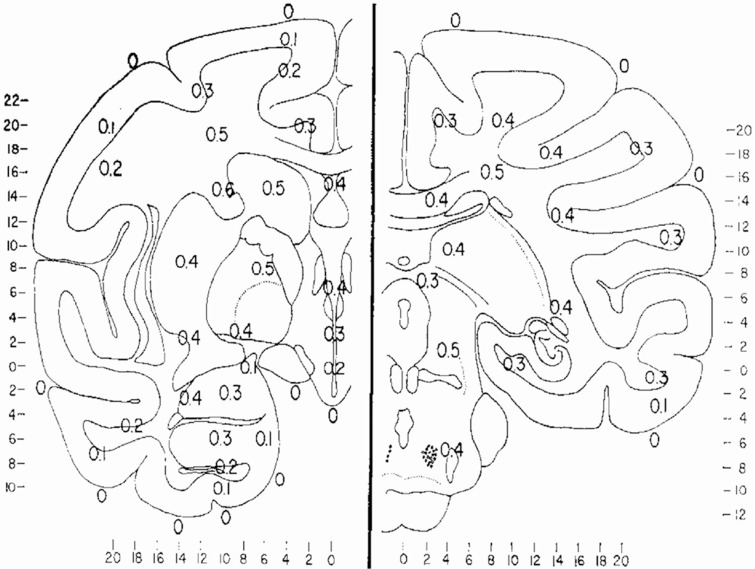
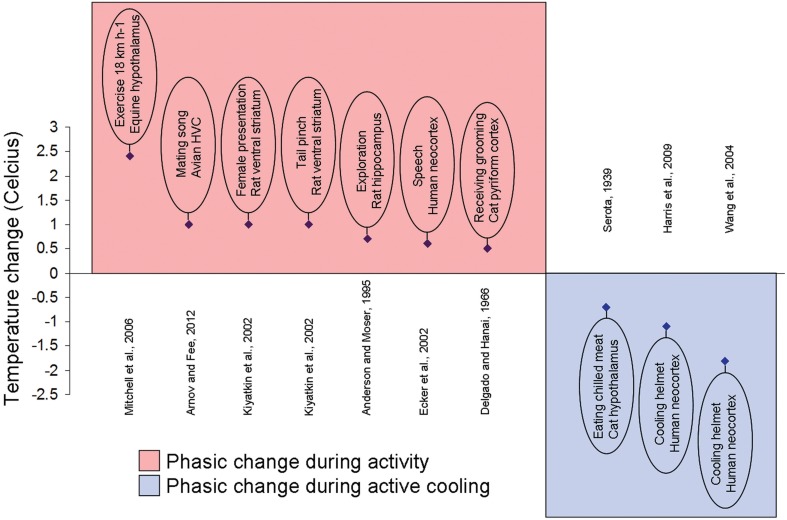
Verification
Claims the paper makes
The claims and statistics of this paper haven’t been checked yet.
Run the check — free, no account needed. It reads the open-access text and checks the sources it cites.
Claims other papers make about this one
Each is checked against this paper’s own text: does it say what the citing paper says it does?
The source backs part of the claim, not all of it — or backs it for a different population, condition or comparison.
In the citing paper
“The brain’s core temperature can be up to 2°C higher than body temperature, and variances of 0.5–1°C exist between the brain’s center and surface (Wang et al., 2014; Gowda et al., 2018).”
From Comparative analysis of energy transfer mechanisms for neural implants (2024) · cites this paper as Wang et al., 2014
Experimental — accuracy not yet measuredThe source backs part of the claim, not all of it — or backs it for a different population, condition or comparison.
In the citing paper
“This is especially crucial given the brain’s intrinsic thermoregulatory mechanisms, including the cerebrospinal fluid, intracranial blood flow, and capillary networks that act as thermal buffers (Wang et al., 2014).”
From Comparative analysis of energy transfer mechanisms for neural implants (2024) · cites this paper as Wang et al., 2014
Experimental — accuracy not yet measuredThe source backs part of the claim, not all of it — or backs it for a different population, condition or comparison.
In the citing paper
“The brain’s core temperature can be up to 2°C higher than body temperature, and variances of 0.5–1°C exist between the brain’s center and surface (Wang et al., 2014; Gowda et al., 2018).”
From Comparative analysis of energy transfer mechanisms for neural implants (2024) · cites this paper as Wang et al., 2014
Experimental — accuracy not yet measuredThe cited source says what the claim attributes to it.
In the citing paper
“As a review by Wang et al. (2014) summarizes, most of the processes within the brain show sensitivity to temperature changes.”
From Comparative analysis of energy transfer mechanisms for neural implants (2024) · cites this paper as Wang et al., 2014
Self-check
Percentages, sums and reported differences re-computed from the paper’s own numbers.
The self-check needs the paper’s full text.
Citations
Cites
Textbook of Medical Physiology
Guyton, A. C., & Hall, J. E. (1966) · Annals of Internal Medicine · doi:10.7326/0003-4819-64-6-1363_2 · Cited by 9,760
Mild therapeutic hypothermia to improve the neurologic outcome after cardiac arrest.
Nozari, A. (2002) · New England Journal of Medicine · doi:10.1056/nejmoa012689 · Cited by 8,538
Treatment of Comatose Survivors of Out-of-Hospital Cardiac Arrest with Induced Hypothermia
Bernard, S. A., Gray, T. W., Buist, M., Jones, B. M., Silvester, W., Gutteridge, G. A., & Smith, K. L. (2002) · New England Journal of Medicine · doi:10.1056/nejmoa003289 · Cited by 5,388
Whole-body hypothermia for neonates with hypoxic-ischemic encephalopathy
Shankaran, S., Laptook, A. R., Ehrenkranz, R. A., Tyson, J. E., McDonald, S. A., Donovan, E. F., Fanaroff, A. A., Poole, W. K., Wright, L. L., Higgins, R. D., et al. (2005) · New England Journal of Medicine · doi:10.1056/nejmcps050929 · Cited by 2,862
Targeted Temperature Management at 33°C versus 36°C after Cardiac Arrest
Nielsen, N., Wetterslev, J., Cronberg, T., Erlinge, D., Gasche, Y. G., Hassager, C., Horn, J., Hovdenes, J., Kjærgaard, J., Kuiper, M. A., et al. (2013) · New England Journal of Medicine · doi:10.1056/nejmoa1310519 · Cited by 2,764
Glial and neuronal control of brain blood flow
Attwell, D., Buchan, A. M., Charpak, S., Lauritzen, M., MacVicar, B. A., & Newman, E. A. (2010) · Nature · doi:10.1038/nature09613 · Cited by 2,511
Gluckman, P. D., Wyatt, J. S., Azzopardi, D., Ballard, R., Edwards, A. D., Ferriero, D. M., Polin, R. A., Robertson, C. M., Thoresen, M., Whitelaw, A., et al. (2005) · The Lancet · doi:10.1016/s0140-6736(05)17946-x · Cited by 2,270
Oxygenation‐sensitive contrast in magnetic resonance image of rodent brain at high magnetic fields
Ogawa, S., Lee, T., Nayak, A. S., & Glynn, P. (1990) · Magnetic Resonance in Medicine · doi:10.1002/mrm.1910140108 · Cited by 2,269
Ogawa, S., Menon, R. S., Tank, D. W., Kim, S. G., Merkle, H., Ellermann, J. M., & Ugurbil, K. (1993) · Biophysical Journal · doi:10.1016/s0006-3495(93)81441-3 · Cited by 1,772
Stroke-Associated Pneumonia: Major Advances and Obstacles
Hannawi, Y., Hannawi, B., Rao, C. P. V., Suárez, J. I., & Bershad, E. M. (2013) · Cerebrovascular Diseases · doi:10.1159/000350199 · Cited by 1,664
Research works printed but not linked: 9
- Brooks, 1983, Study of Brain Function by Local, Reversible Cooling Reviews of Physiology, Biochemistry and Pharmacology, 1
- Delgado, 1966b, Intracerebral temperatures in free-moving cats, Am. J. Physiol, 211, 755, 10.1152/ajplegacy.1966.211.3.755 · DOI
- Feng, 1936, The heat production of nerve Ergebn, Rev. Physiol. Biochem. Pharmacol, 38, 73
- Hayward, 1968b, Role of cerebral arterial blood in the regulation of brain temperature in the monkey, Am. J. Physiol, 215, 389, 10.1152/ajplegacy.1968.215.2.389 · DOI
- Helmholtz, 1848, Über die Wärmeentwicklung der Muskelaction, Arch. f. Anat. Physiol, 15, 144
- Kawamura, 1965b, Elevation in brain temperature during paradoxical sleep, Science, 150, 912, 10.1126/science.150.3698.912 · DOI
- Mcelligott, 1967b, Localized thermal changes evoked in the brain by visual and auditory stimulation, Exp. Neurol, 17, 293, 10.1016/0014-4886(67)90108-2 · DOI
- Serota, 1939b, Temperature changes in the cortex and hypothalamus during sleep, J. Neurophysiol, 2, 42, 10.1152/jn.1939.2.1.42 · DOI
- Serota, 1938, Localized temperature changes in the cat brain, J. Neurophysiol, 1, 115, 10.1152/jn.1938.1.2.115 · DOI
Cited by
Sorted by citations
Non-invasive transcranial ultrasound stimulation for neuromodulation
Darmani, G., Bergmann, T. O., Pauly, K. B., Caskey, C. F., de Lecea, L., Fomenko, A., Fouragnan, E. F., Legon, W., Murphy, K. R., Nandi, T., et al. (2021) · Clinical Neurophysiology · doi:10.1016/j.clinph.2021.12.010 · Cited by 335
Flexible, sticky, and biodegradable wireless device for drug delivery to brain tumors
Lee, J., Cho, H. R., Cha, G. D., Seo, H., Lee, S., Park, C., Kim, J. W., Qiao, S., Wang, L., Kang, D., et al. (2019) · Nature Communications · doi:10.1038/s41467-019-13198-y · Cited by 253
Fundamental bounds on the fidelity of sensory cortical coding
Rumyantsev, O. I., Lecoq, J. A., Hernandez, O., Zhang, Y., Savall, J., Chrapkiewicz, R., Li, J., Zeng, H., Ganguli, S., & Schnitzer, M. J. (2020) · Nature · doi:10.1038/s41586-020-2130-2 · Cited by 226
Energy Metabolism Decline in the Aging Brain—Pathogenesis of Neurodegenerative Disorders
Błaszczyk, J. W. (2020) · Metabolites · doi:10.3390/metabo10110450 · Cited by 166
Wen, X., Wang, B., Huang, S., Liu, T. “., Lee, M., Chung, P., Chow, Y. T., Huang, I.-W., Monbouquette, H. G., Maidment, N. T., et al. (2019) · Biosensors and Bioelectronics · doi:10.1016/j.bios.2019.01.060 · Cited by 162
Self-citation
Metadata
- Authors
- Wang, H., Wang, B., Normoyle, K. P., Jackson, K., Spitler, K., Sharrock, M. F., Miller, C. M., Best, C., Llano, D., & Du, R.
- Affiliations
- Carle Foundation Hospital (US)
- University of Illinois Urbana-Champaign (US)
- Brigham and Women's Hospital (US)
- Corresponding author
- Wang, Huan
- ORCID
- Venue
- Frontiers in Neuroscience
- Publisher
- Frontiers Media SA
- Published
- 2014-10-08
- Volume
- 8
- Pages
- 307-307
- ISSN
- 1662-453X (ISSN-L)
- PMC
- PMC4189373
- OpenAlex
- W2166795165
- Cited by
- 356
- References
- 237
- Citations by year
- 2026: 29 · 2025: 33 · 2024: 38 · 2023: 37 · 2022: 42 · 2021: 40 · 2020: 40 · 2019: 32 · 2018: 25 · 2017: 22 · 2016: 11 · 2015: 7
- FWCI
- 2.09
- Type
- journal article
- Language
- en
- Open access
- gold
- doi.org
- Licence
- cc-by
- Locations
- Frontiers in Neuroscience (publishedVersion, cc-by)
- PubMed Central (publishedVersion, cc-by)
- PubMed (publishedVersion)
- Digital Access to Scholarship at Harvard (DASH) (Harvard University) (submittedVersion, cc-by)
- DOAJ (DOAJ: Directory of Open Access Journals) (submittedVersion)
- Topics
- Health Sciences › Medicine › Critical Care and Intensive Care Medicine › Thermal Regulation in Medicine
- Health Sciences › Medicine › Physiology (medical) › Thermoregulation and physiological responses
- Health Sciences › Medicine › Clinical Neurology › Traumatic Brain Injury and Neurovascular Disturbances
- Keywords
- brain temperature, therapeutic hypothermia, neuroprotection, brain temperature regulation, brain injury, cardiac arrest, hypoxic-ischemic encephalopathy, head trauma, stroke, multiple sclerosis, epilepsy, neurodegenerative diseases, brain energy metabolism
About these checks
Registry, retraction, Cites and statistics results are computed, not judged, with one exception: a printed reference that no index lists is read once by a model before it counts as a citation error. Claims are extracted by a model and kept only when their quote appears verbatim in the text; each cited source is then checked, with a model’s help, for whether it says what the claim relies on. Those verdicts can be wrong — read the claim’s quote and the cited source before relying on one.
Statistics and arithmetic are recomputed, not judged.
Confidence bands are shown only for fields calibrated on our annotated test set. None is calibrated yet, so no band is shown.
What counts as a claim ›How we measure confidence ›How we check this ›
Are you an author, or do you see a problem with this page? Request a review
