

The DOI matches its Crossref record; 99 of the 99 references it cites were found in a registry or an index.
Cognitive, behavioral, and autonomic correlates of mind wandering and perseverative cognition in major depression
Open accessAbstract
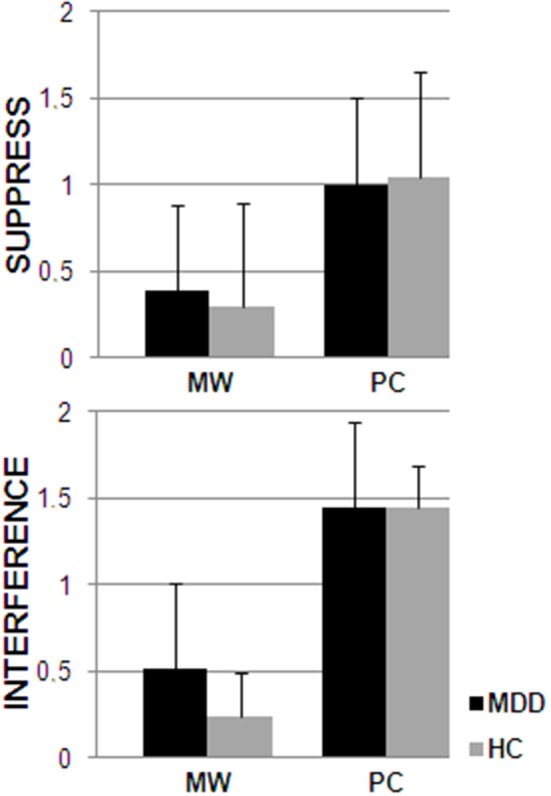
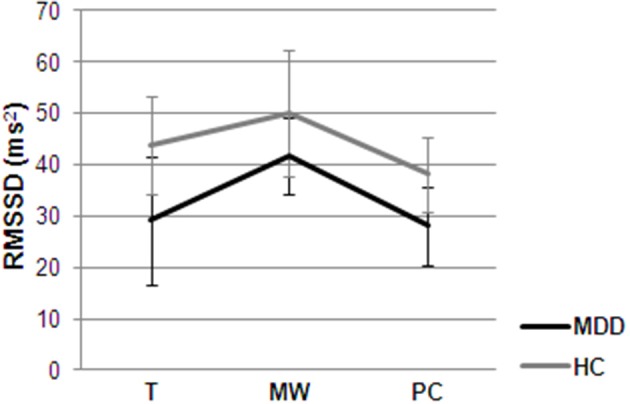
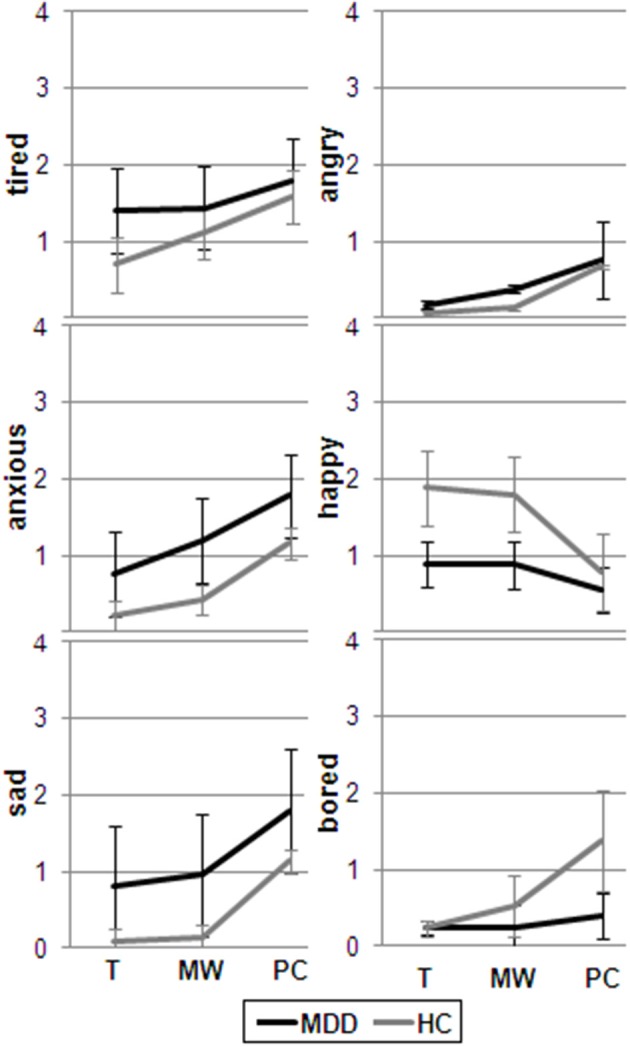
Autonomic dysregulation has been hypothesized to play a role in the relationships between psychopathology and cardiovascular risk. An important transdiagnostic factor that has been associated with autonomic dysfunction is perseverative cognition (PC), mainly present in Major Depressive Disorder (MDD) in the form of rumination. As the ability to adaptively let our mind wander without ruminating is critical to mental health, this study aimed to examine the autonomic concomitants of functional vs. dysfunctional intrusive thoughts in MDD. Ambulatory heart rate (HR) and variability (HRV) of 18 MDD subjects and 18 healthy controls were recorded for 24 h. Approximately every 30 min during waking hours subjects reported their ongoing thoughts and moods using electronic diaries. Random regression models were performed. Compared to controls, MDD subjects were more often caught during episodes of PC. In both groups, PC required more effort to be inhibited and interfered more with ongoing activities compared to mind wandering (MW) (ps < 0.0001). This cognitive rigidity was mirrored by autonomic inflexibility, as PC was characterized by lower HRV (p < 0.0001) compared to MW. A worse mood was reported by MDD patients compared to controls, independently of their ongoing cognitive process. Controls, however, showed the highest mood worsening during PC compared to being on task and MW. HRV during rumination correlated with self-reported somatic symptoms on the same day and several dispositional traits. MDD subjects showed lower HRV during sleep, which correlated with hopelessness rumination. Results show that PC is associated with autonomic dysfunctions in both healthy and MDD subjects. Understanding when spontaneous thought is adaptive and when it is not may clarify its role in the etiology of mood disorders, shedding light on the still unexplained association between psychopathology, chronic stress, and risk for health.
Overview
The claims and statistics of this paper haven’t been checked yet.
Run the check — free, no account needed. It reads the open-access text and checks the sources it cites.
Integrity signals
Registry
Cites
Statistics
Figures
Verification
Claims the paper makes
The claims and statistics of this paper haven’t been checked yet.
Run the check — free, no account needed. It reads the open-access text and checks the sources it cites.
Claims other papers make about this one
Each is checked against this paper’s own text: does it say what the citing paper says it does?
In the citing paper
“A few studies did not report this information [35,40,41,42,51,57,60].”
From Current state and future directions of technology-based ecological momentary assessment and intervention for major depressive disorder: a systematic review (2019) · cites this paper as [35]
In the citing paper
“Confirming the hypothesis that mind wandering is not a maladaptive behaviour per se”
From Current state and future directions of technology-based ecological momentary assessment and intervention for major depressive disorder: a systematic review (2019) · cites this paper as [35]
In the citing paper
“only perseverative cognition was associated with health risk factors, such as lower HRV, worse mood, and higher”
From Current state and future directions of technology-based ecological momentary assessment and intervention for major depressive disorder: a systematic review (2019) · cites this paper as [35]
Self-check
Percentages, sums and reported differences re-computed from the paper’s own numbers.
The self-check needs the paper’s full text.
Citations
Cites
The PHQ-9: Validity of a brief depression severity measure
Kroenke, K., Spitzer, R. L., & Williams, J. B. W. (2001) · Journal of General Internal Medicine · doi:10.1046/j.1525-1497.2001.016009606.x · Cited by 44,910
Heart Rate Variability: Standards of Measurement, Physiological Interpretation, and Clinical Use
Electrophysiology, T. F. O. T. E. S. O. C. T. N. A. (1996) · Circulation · doi:10.1161/01.cir.93.5.1043 · Cited by 17,159
Heart rate variability: Standards of measurement, physiological interpretation, and clinical use
Malik, M., Bigger, J. T., Camm, A. J., Kleiger, R. E., Malliani, A., Moss, A. J., & Schwartz, P. J. (1996) · European Heart Journal · doi:10.1093/oxfordjournals.eurheartj.a014868 · Cited by 15,289
Nolen-Hoeksema, S., Wisco, B. E., & Lyubomirsky, S. (2008) · Perspectives on Psychological Science · doi:10.1111/j.1745-6924.2008.00088.x · Cited by 5,172
Development and validation of the Penn State Worry Questionnaire
Meyer, T. J., Miller, M. L., Metzger, R. L., & Borkovec, T. D. (1990) · Behaviour Research and Therapy · doi:10.1016/0005-7967(90)90135-6 · Cited by 5,099 · cited 1×
“…on the possible consequences and causes of one’s mood (e.g., I think “I won’t be able to do my job if I don’t snap out of this”); (2) worry (PSWQ; Meyer et al., 1990), that is mainly focused on future outcomes (e.g., “As soon as I finish one task, I start to worry about everything else I…”
BackgroundA Short Scale for Measuring Loneliness in Large Surveys: Results From Two Population-Based Studies
Hughes, M. E., Waite, L. J., Hawkley, L. C., & Cacioppo, J. T. (2004) · Research on Aging · doi:10.1177/0164027504268574 · Cited by 4,781
The PHQ-15: Validity of a New Measure for Evaluating the Severity of Somatic Symptoms
Kroenke, K., Spitzer, R. L., & Williams, J. B. W. (2002) · Psychosomatic Medicine · doi:10.1097/00006842-200203000-00008 · Cited by 3,415
Nolen-Hoeksema, S., & Morrow, J. (1991) · Journal of Personality and Social Psychology · doi:10.1037/0022-3514.61.1.115 · Cited by 3,276
Thayer, J. F., Åhs, F., Fredrikson, M., Sollers, J. J., & Wager, T. D. (2012) · Neuroscience & Biobehavioral Reviews · doi:10.1016/j.neubiorev.2011.11.009 · Cited by 3,224
Research works printed but not linked: 3
- Beck, 1996, Manual for the Beck Depression Inventory-II
- Hall, 1997, Intrusive thoughts and avoidance behaviors are associated with sleep disturbances in bereavement-related depression, Depress. Anxiety, 6, 106, 10.1002/(SICI)1520-6394(1997)6:3106::AID-DA33.0.CO;2-B · DOI
- Spielberger, 1970, STAI Manual
Cited by
Sorted by citations
Reflecting on rumination: Consequences, causes, mechanisms and treatment of rumination
Watkins, E. R., & Roberts, H. (2020) · Behaviour Research and Therapy · doi:10.1016/j.brat.2020.103573 · Cited by 862
Mind-wandering, how do I measure thee with probes? Let me count the ways
Weinstein, Y. (2018) · Behavior Research Methods · doi:10.3758/s13428-017-0891-9 · Cited by 250
Brosschot, J., Verkuil, B., & Thayer, J. (2018) · International Journal of Environmental Research and Public Health · doi:10.3390/ijerph15030464 · Cited by 244
Colombo, D., Fernández-Álvarez, J., Patané, A., Semonella, M., Kwiatkowska, M., García-Palacios, A., Cipresso, P., Riva, G., & Botella, C. (2019) · Journal of Clinical Medicine · doi:10.3390/jcm8040465 · Cited by 194
Frontal EEG theta/beta ratio during mind wandering episodes
Son, D. V., Blasio, F. M. D., Fogarty, J. S., Angelidis, A., Barry, R. J., & Putman, P. (2018) · Biological Psychology · doi:10.1016/j.biopsycho.2018.11.003 · Cited by 172
Colombo, D., Fernández‐Álvarez, J., Suso‐Ribera, C., Cipresso, P., Valev, H., Leufkens, T., Sas, C., García‐Palacios, A., Riva, G., & Botella, C. (2020) · Emotion · doi:10.1037/emo0000671 · Cited by 178
Brain-heart interaction in perseverative cognition
Ottaviani, C. (2018) · Psychophysiology · doi:10.1111/psyp.13082 · Cited by 129
Self-citationHoffmann, F., Banzhaf, C., Kanske, P., Bermpohl, F., & Singer, T. (2016) · Journal of Affective Disorders · doi:10.1016/j.jad.2016.03.005 · Cited by 144
Carnevali, L., Thayer, J. F., BROSSCHOT, J. F., & Ottaviani, C. (2017) · International Journal of Psychophysiology · doi:10.1016/j.ijpsycho.2017.11.002 · Cited by 126
Self-citationUmair, M., Chalabianloo, N., Sas, C., & Ersoy, C. (2021) · IEEE Access · doi:10.1109/access.2021.3052131 · Cited by 124
Kirk, U., & Axelsen, J. L. (2020) · PLOS ONE · doi:10.1371/journal.pone.0243488 · Cited by 108
Son, D. V., de Rover, M., Blasio, F. M. D., van der Does, W. A. J., Barry, R. J., & Putman, P. (2019) · Annals of the New York Academy of Sciences · doi:10.1111/nyas.14180 · Cited by 107
Mind-wandering while driving: The impact of fatigue, task length, and sustained attention abilities
Walker, H. E. K., & Trick, L. M. (2018) · Transportation Research Part F Traffic Psychology and Behaviour · doi:10.1016/j.trf.2018.08.009 · Cited by 108
Ottaviani, C., Watson, D. R., Meeten, F., Makovac, E., Garfinkel, S. N., & Critchley, H. (2016) · Biological Psychology · doi:10.1016/j.biopsycho.2016.06.009 · Cited by 87
Self-citationParola, N., Zendjidjian, X. Y., Alessandrini, M., Baumstarck, K., Loundou, A., Fond, G. B., Berna, F. S., Lançon, C., Auquier, P., & Boyer, L. (2017) · Patient Preference and Adherence · doi:10.2147/ppa.s125730 · Cited by 84
Weinstein, Y., Lima, H. J. D., & van der Zee, T. (2017) · Psychonomic Bulletin & Review · doi:10.3758/s13423-017-1322-8 · Cited by 81
Yang, J., Thapa, N., Park, H.-J., Bae, S., Park, K. W., Park, K. W., & Park, J. (2022) · International Journal of Environmental Research and Public Health · doi:10.3390/ijerph192013300 · Cited by 85
Bertz, J. W., Epstein, D. H., & Preston, K. L. (2017) · Addictive Behaviors · doi:10.1016/j.addbeh.2017.11.027 · Cited by 76
Neurostructural abnormalities associated with axes of emotion dysregulation in generalized anxiety
Makovac, E., Meeten, F., Watson, D. R., Garfinkel, S. N., Critchley, H., & Ottaviani, C. (2015) · NeuroImage Clinical · doi:10.1016/j.nicl.2015.11.022 · Cited by 80
Self-citationExploring patterns of ongoing thought under naturalistic and conventional task-based conditions
Konu, D., Mckeown, B., Turnbull, A. G., Ho, N. S. P., Karapanagiotidis, T., Vanderwal, T., McCall, C., Tipper, S. P., Jefferies, E., & Smallwood, J. (2021) · Consciousness and Cognition · doi:10.1016/j.concog.2021.103139 · Cited by 67
Makovac, E., Watson, D. R., Meeten, F., Garfinkel, S. N., Cercignani, M., Critchley, H., & Ottaviani, C. (2016) · Social Cognitive and Affective Neuroscience · doi:10.1093/scan/nsw091 · Cited by 70
Self-citationOken, B., Wahbeh, H., Goodrich, E., Klee, D., Memmott, T., Miller, M., & Fu, R. (2016) · Mindfulness · doi:10.1007/s12671-016-0640-7 · Cited by 64
Happy Thoughts: Mind Wandering Affects Mood in Daily Life
Welz, A., Reinhard, I., Alpers, G. W., & Kuehner, C. (2017) · Mindfulness · doi:10.1007/s12671-017-0778-y · Cited by 63
Mind wandering in creative problem-solving: Relationships with divergent thinking and mental health
Yamaoka, A., & Yukawa, S. (2020) · PLoS ONE · doi:10.1371/journal.pone.0231946 · Cited by 67
Mind wandering and depression: A status report
Chaieb, L., Hoppe, C., & Fell, J. (2021) · Neuroscience & Biobehavioral Reviews · doi:10.1016/j.neubiorev.2021.12.028 · Cited by 63
Raugh, I. M., Chapman, H. C., Bartolomeo, L. A., Gonzalez, C., & Strauss, G. P. (2019) · Psychological Assessment · doi:10.1037/pas0000651 · Cited by 53
Correia, A. T. L., Lipinska, G., Rauch, L., Forshaw, P. E., Roden, L. C., & Rae, D. E. (2022) · Sleep Medicine · doi:10.1016/j.sleep.2022.10.018 · Cited by 56
Berntson, J., Patel, J. S., & Stewart, J. C. (2017) · Journal of Psychosomatic Research · doi:10.1016/j.jpsychores.2017.06.008 · Cited by 51
Hoffmann, F., Viding, E. M., Puetz, V. B., Gerin, M. I., Sethi, A., Rankin, G., & McCrory, E. J. P. (2018) · Journal of the American Academy of Child & Adolescent Psychiatry · doi:10.1016/j.jaac.2018.05.020 · Cited by 44
Bored, distracted, and forgetful: The impact of mind wandering and boredom on memory encoding
Blondé, P., Sperduti, M., Makowski, D., & Piolino, P. (2021) · Quarterly Journal of Experimental Psychology · doi:10.1177/17470218211026301 · Cited by 55
Slow and Powerless Thought Dynamic Relates to Brooding in Unipolar and Bipolar Depression
Rostami, S., Borjali, A., Eskandari, H., Rostami, R., Scalabrini, A., & Northoff, G. (2022) · Psychopathology · doi:10.1159/000523944 · Cited by 41
A Review of Methods and Applications for a Heart Rate Variability Analysis
Nayak, S. K., Pradhan, B. K., Mohanty, B., Sivaraman, J., Ray, S. S., Wawrzyniak, J., Jarzębski, M., & Pal, K. (2023) · Algorithms · doi:10.3390/a16090433 · Cited by 45
Mind‐wandering: A philosophical guide
Irving, Z. C., & Glasser, A. (2019) · Philosophy Compass · doi:10.1111/phc3.12644 · Cited by 39
Text‐to‐speech applications to reduce mind wandering in students with dyslexia
Bonifacci, P., Colombini, E., Marzocchi, M., Tobia, V., & Desideri, L. (2022) · Journal of Computer Assisted Learning · doi:10.1111/jcal.12624 · Cited by 47
Gil‐Jardine, C., Née, M., Lagarde, E., Schooler, J. W., Contrand, B., Orriols, L., & Galéra, C. (2017) · PLoS ONE · doi:10.1371/journal.pone.0181327 · Cited by 38
Kaushik, P., Yang, H., Roy, P. P., & van Vugt, M. K. (2023) · Scientific Reports · doi:10.1038/s41598-023-34298-2 · Cited by 43
EEG Frequency Changes Prior to Making Errors in an Easy Stroop Task
Atchley, R., Klee, D., & Oken, B. (2017) · Frontiers in Human Neuroscience · doi:10.3389/fnhum.2017.00521 · Cited by 34
Greenberg, J., Datta, T., Shapero, B. G., Sevinc, G., Mischoulon, D., & Lazar, S. W. (2018) · Spirituality in Clinical Practice · doi:10.1037/scp0000168 · Cited by 38
Nagai, Y., Aram, J. A., Koepp, M. J., Lemieux, L., Mula, M., Critchley, H., Sisodiya, S. M., & Cercignani, M. (2017) · EBioMedicine · doi:10.1016/j.ebiom.2017.12.012 · Cited by 35
Does Mind Wandering During the Thought Incubation Period Improve Creativity and Worsen Mood?
Yamaoka, A., & Yukawa, S. (2019) · Psychological Reports · doi:10.1177/0033294119896039 · Cited by 41
Boayue, N. M., Csifcsák, G., Kreis, I. V., Schmidt, C., Finn, I. C., Vollsund, A. E., & Mittner, M. (2020) · European Journal of Neuroscience · doi:10.1111/ejn.15049 · Cited by 34
Early indicators of vulnerability to depression: The role of rumination and heart rate variability
Moretta, T., & Benvenuti, S. M. (2022) · Journal of Affective Disorders · doi:10.1016/j.jad.2022.06.049 · Cited by 37
Longis, E. D., Alessandri, G., & Ottaviani, C. (2020) · International Journal of Psychophysiology · doi:10.1016/j.ijpsycho.2020.06.007 · Cited by 34
Self-citationChalabianloo, N., Can, Y. S., Umair, M., Sas, C., & Ersoy, C. (2022) · Pervasive and Mobile Computing · doi:10.1016/j.pmcj.2022.101703 · Cited by 38
Ever at the ready for events that never happen
BROSSCHOT, J. F. (2017) · European Journal of Psychotraumatology · doi:10.1080/20008198.2017.1309934 · Cited by 38
Mindfulness Effects on Mind Wandering and Autonomic Balance
Bortolla, R., Galli, M., Spada, G. E., & Maffei, C. (2022) · Applied Psychophysiology and Biofeedback · doi:10.1007/s10484-021-09527-x · Cited by 28
Hemodynamic profiles of functional and dysfunctional forms of repetitive thinking
Ottaviani, C., Brosschot, J. F., Lonigro, A., Medea, B., Van Diest, I., & Thayer, J. F. (2017) · Annals of Behavioral Medicine · doi:10.1007/s12160-016-9851-3 · Cited by 29
Self-citationBailey, T., Shahabi, L., Tarvainen, M., Shapiro, D., & Ottaviani, C. (2019) · Anxiety, Stress, & Coping · doi:10.1080/10615806.2019.1570821 · Cited by 29
Self-citationA Computational Model of Focused Attention Meditation and Its Transfer to a Sustained Attention Task
Moye, A., & van Vugt, M. K. (2019) · IEEE Transactions on Affective Computing · doi:10.1109/taffc.2019.2908172 · Cited by 29
Song, S., Seo, Y., Hwang, S., Kim, H., & Kim, J. (2024) · JMIR mhealth and uhealth · doi:10.2196/55842 · Cited by 33
Effects of Three Genres of Focus Music on Heart Rate Variability and Sustained Attention
Kirk, U., Ngnoumen, C. T., Clausel, A., & Purvis, C. K. (2021) · Journal of Cognitive Enhancement · doi:10.1007/s41465-021-00226-3 · Cited by 35
Cárdenas-Egúsquiza, A. L., & Berntsen, D. (2022) · Consciousness and Cognition · doi:10.1016/j.concog.2022.103333 · Cited by 28
Kanske, P., Schulze, L., Dziobek, I., Scheibner, H. J., Roepke, S., & Singer, T. (2016) · Psychiatry Research · doi:10.1016/j.psychres.2016.05.060 · Cited by 28
Perseverative cognition, distracted communication, and well‐being in everyday social interaction
Merolla, A. J., Hall, J. A., & Bernhold, Q. S. (2019) · Personal Relationships · doi:10.1111/pere.12286 · Cited by 27
Niedźwieńska, A., & Kvavilashvili, L. (2018) · Neuropsychology · doi:10.1037/neu0000457 · Cited by 29
Negative mood mind wandering and unsafe driving in young male drivers
Albert, D. A., Ouimet, M. C., & Brown, T. G. (2022) · Accident Analysis & Prevention · doi:10.1016/j.aap.2022.106867 · Cited by 25
Girolamo, G., Barattieri di San Pietro, C., Bulgari, V., Dagani, J., Ferrari, C., Hotopf, M., Iannone, G., Macis, A., Matcham, F., Myin‐Germeys, I., et al. (2020) · Depression and Anxiety · doi:10.1002/da.23023 · Cited by 24
Zhou, H., Dai, Z., Hua, L., Jiang, H., Tian, S., Han, Y., Lin, P., Wang, H., Lü, Q., & Yao, Z. (2020) · Frontiers in Psychiatry · doi:10.3389/fpsyt.2019.00989 · Cited by 25
Wießner, I., Falchi, M., Palhano-Fontes, F., Maia, L. O., Feilding, A., Ribeiro, S., Mota, N. B., Araujo, D., & Tófoli, L. F. (2021) · Psychopharmacology · doi:10.1007/s00213-021-06006-3 · Cited by 22
Kocsel, N., Köteles, F. G., Galambos, A., & Kökönyei, G. (2021) · Journal of Psychosomatic Research · doi:10.1016/j.jpsychores.2021.110676 · Cited by 27
Kirk, U., Staiano, W., Hu, E., Ngnoumen, C., Kunkle, S., Shih, E., Clausel, A., Purvis, C., & Lee, L. (2023) · JMIR mHealth and uHealth · doi:10.2196/47371 · Cited by 22
Arch, J. J., Wilcox, R. R., Ives, L. T., Sroloff, A., & Andrews-Hanna, J. (2020) · Cognition & Emotion · doi:10.1080/02699931.2020.1830751 · Cited by 21
Spangler, D. P., Williams, D. P., Speller, L. F., Brooks, J., & Thayer, J. F. (2018) · International Journal of Psychophysiology · doi:10.1016/j.ijpsycho.2018.01.009 · Cited by 20
New perspectives for the modulation of mind-wandering using transcranial electric brain stimulation
Chaieb, L., Antal, A., Derner, M., Leszczyński, M., & Fell, J. (2019) · Neuroscience · doi:10.1016/j.neuroscience.2019.04.032 · Cited by 20
Lab meets real life: A laboratory assessment of spontaneous thought and its ecological validity
Kuehner, C., Welz, A., Reinhard, I., & Alpers, G. W. (2017) · PLoS ONE · doi:10.1371/journal.pone.0184488 · Cited by 26
Autonomic complexity dynamically indexes affect regulation in everyday life.
Stange, J. P., Li, J., Xu, E. P., Ye, Z., Zapetis, S. L., Phanord, C. S., Wu, J., Sellery, P., Keefe, K., Forbes, E. E., et al. (2023) · Journal of Psychopathology and Clinical Science · doi:10.1037/abn0000849 · Cited by 18
Spangler, D. P., Alam, S., Rahman, S., Crone, J. C., Robucci, R., Banerjee, N., Kerick, S. E., & Brooks, J. (2020) · IEEE Transactions on Affective Computing · doi:10.1109/taffc.2020.2995769 · Cited by 20
Modulation of autonomic activity in neurological conditions: Epilepsy and Tourette Syndrome
Nagai, Y. (2015) · Frontiers in Neuroscience · doi:10.3389/fnins.2015.00278 · Cited by 18
Macatee, R. J., Albanese, B. J., Schmidt, N. B., & Cougle, J. R. (2016) · Biological Psychology · doi:10.1016/j.biopsycho.2016.11.013 · Cited by 21
Schumann, A., Helbing, N., Rieger, K., Suttkus, S., & Bär, K. (2022) · Frontiers in Psychiatry · doi:10.3389/fpsyt.2022.961294 · Cited by 19
Citrenbaum, C., Corlier, J., Ngo, D., Vince-Cruz, N., Wilson, A. C., Wilke, S. A., Krantz, D. E., Tadayonnejad, R., Ginder, N. D., Levitt, J. G., et al. (2023) · Journal of Affective Disorders · doi:10.1016/j.jad.2023.07.008 · Cited by 15
White, R., Haddock, G., Haarmans, M., & Varese, F. (2023) · Frontiers in Psychiatry · doi:10.3389/fpsyt.2023.1232973 · Cited by 20
Yang, H., Paller, K. A., & van Vugt, M. K. (2022) · Frontiers in Human Neuroscience · doi:10.3389/fnhum.2022.892863 · Cited by 15
Mind wandering and sleep in daily life: A combined actigraphy and experience sampling study
Marcusson‐Clavertz, D., Persson, S. D., Davidson, P., Kim, J., Cardeña, E., & Kuehner, C. (2022) · Consciousness and Cognition · doi:10.1016/j.concog.2022.103447 · Cited by 16
Mind-wandering in daily life in depressed individuals: An experience sampling study
Welhaf, M. S., Mata, J., Jaeggi, S. M., Buschkuehl, M., Jonides, J. J., Gotlib, I. H., & Thompson, R. J. (2024) · Journal of Affective Disorders · doi:10.1016/j.jad.2024.08.111 · Cited by 14
Bylsma, L. M., DeMarree, K. G., McMahon, T. P., Park, J., Biehler, K. M., & Naragon‐Gainey, K. (2024) · Psychophysiology · doi:10.1111/psyp.14668 · Cited by 14
McAlpine, T., Mullan, B. A., & Clarke, P. (2023) · International Journal of Behavioral Medicine · doi:10.1007/s12529-023-10212-y · Cited by 19
Pépin, G., Malin, S., Jallais, C., Moreau, F., Fort, A., Navarro, J., Ndiaye, D., & Gabaude, C. (2018) · Consciousness and Cognition · doi:10.1016/j.concog.2018.04.006 · Cited by 13
The autonomic correlates of dysphoric rumination and post-rumination savoring
Stone, L. B., Lewis, G., & Bylsma, L. M. (2020) · Physiology and Behavior · doi:10.1016/j.physbeh.2020.113027 · Cited by 11
Kirk, U., Ngnoumen, C. T., Clausel, A., & Purvis, C. K. (2021) · Journal of Cognitive Enhancement · doi:10.1007/s41465-021-00233-4 · Cited by 11
Chaieb, L., Krakau, S., Reber, T. P., & Fell, J. (2022) · Frontiers in Psychology · doi:10.3389/fpsyg.2022.815442 · Cited by 11
Gontier, C. (2017) · Acta Astronautica · doi:10.1016/j.actaastro.2017.08.008 · Cited by 10
The impact of mood-induction on maladaptive thinking in the vulnerability for depression
Besten, M. E., van Tol, M., van Rij, J., & van Vugt, M. K. (2023) · Journal of Behavior Therapy and Experimental Psychiatry · doi:10.1016/j.jbtep.2023.101888 · Cited by 10
Technology-Based Ecological Momentary Assessment in Clinical Psychology
Colombo, D., Suso‐Ribera, C., Fernández‐Álvarez, J., Cipresso, P., García‐Palacios, A., Riva, G., & Botella, C. (2020) · Elsevier eBooks · doi:10.1016/b978-0-12-818697-8.00003-0 · Cited by 9
Diamond, A. E., & Fisher, A. J. (2017) · Frontiers in Human Neuroscience · doi:10.3389/fnhum.2016.00677 · Cited by 10
The Potential of Wearable Sensors for Detecting Cognitive Rumination: A Scoping Review
Arnold, V. X., & Young, S. D. (2025) · Sensors · doi:10.3390/s25030654 · Cited by 11
When your heart isn’t in it anymore: cardiac correlates of task disengagement
Corcoran, A. W., Coz, A. L., Hohwy, J., & Andrillon, T. (2025) · Communications Biology · doi:10.1038/s42003-025-09026-3 · Cited by 10
Reflecting rehabilitation nursing care: Theory of Recognition crossed by the Principle of Hope
Zuchetto, M. A., Schoeller, S. D., Vargas, C. P., Antunes, L., & Vargas, M. A. D. O. (2021) · Revista gaúcha de enfermagem · doi:10.1590/1983-1447.2021.20200093 · Cited by 8
Dimensions of inattention: Cognitive, behavioral, and affective consequences
Yip, J. M., Jodoin, N. M., & Handy, T. C. (2023) · Frontiers in Psychology · doi:10.3389/fpsyg.2023.1075953 · Cited by 13
Zhao, G., Li, S., Zhang, Q., Guo, X., Xie, F., Yan, S., Liu, H., Yuan, C., Ding, Y., & Li, X. (2023) · Frontiers in Psychiatry · doi:10.3389/fpsyt.2022.994082 · Cited by 9
Guan, S., Takahashi, T., Tomita, N., & Kumano, H. (2025) · Scientific Reports · doi:10.1038/s41598-025-99249-5 · Cited by 6
Schettino, M., Ghezzi, V., Ang, Y., Duda, J. M., Fagioli, S., Mennin, D. S., Pizzagalli, D. A., & Ottaviani, C. (2021) · Brain Sciences · doi:10.3390/brainsci11050585 · Cited by 8
Self-citationAutomated Detection of Mind Wandering: A Mobile Application
Cheetham, M., Cepeda, C., & Gamboa, H. F. S. (2016) · International Joint Conference on Biomedical Engineering Systems and Technologies (BIOSTEC) · doi:10.5220/0005702401980205 · Cited by 8
Weinstein, Y., Lima, H. J. D., & van der Zee, T. (2017) · doi:10.31234/osf.io/wdrmy · Cited by 5
Sakuragi, M., Shinagawa, K., Terasawa, Y., & Umeda, S. (2024) · Consciousness and Cognition · doi:10.1016/j.concog.2024.103770 · Cited by 6
Condominas, E., Niubo, A. S., Domènech‐Abella, J., Haro, J. M., Bailón, R., Giné-Vázquez, I., Alacid, G. R., Matcham, F., Lamers, F., Kontaxis, S., et al. (2025) · Journal of Affective Disorders · doi:10.1016/j.jad.2025.02.010 · Cited by 7
Uncovering the embodied dimension of the wandering mind
Banellis, L., Nikolova, N. E., Brandholdt, M., Vejlø, M., Rebollo, I., Legrand, N., Fardo, F., Smallwood, J., & Allen, M. (2026) · Proceedings of the National Academy of Sciences · doi:10.1073/pnas.2520822123 · Cited by 7
Marca, R. L., Pallich, G., Holtforth, M. G., & Hochstrasser, B. (2022) · Journal of Psychophysiology · doi:10.1027/0269-8803/a000299 · Cited by 5
Walker, H. E. K., & Trick, L. M. (2025) · Transportation Research Part F Traffic Psychology and Behaviour · doi:10.1016/j.trf.2025.103341 · Cited by 3
Sakuragi, M., & Umeda, S. (2025) · Acta Psychologica · doi:10.1016/j.actpsy.2025.105931 · Cited by 5
Metadata
- Authors
- Ottaviani, C., Shahabi, L., Tarvainen, M., Cook, I., Abrams, M., & Shapiro, D.
- Affiliations
- Fondazione Santa Lucia (IT)
- University of California, Los Angeles (US)
- University of Eastern Finland (FI)
- Corresponding author
- Ottaviani, Cristina
- Venue
- Frontiers in Neuroscience
- Publisher
- Frontiers Media SA
- Published
- 2015-01-05
- Volume
- 8
- Pages
- 433-433
- ISSN
- 1662-453X (ISSN-L)
- PMC
- PMC4283544
- OpenAlex
- W1993785993
- Cited by
- 140
- References
- 99
- Citations by year
- 2026: 9 · 2025: 13 · 2024: 9 · 2023: 14 · 2022: 15 · 2021: 14 · 2020: 16 · 2019: 12 · 2018: 12 · 2017: 16 · 2016: 8 · 2015: 2
- FWCI
- 9.21
- Type
- journal article
- Language
- en
- Open access
- gold
- doi.org
- Licence
- cc-by
- Locations
- Frontiers in Neuroscience (publishedVersion, cc-by)
- Europe PMC (PubMed Central) (publishedVersion, cc-by)
- PubMed Central (publishedVersion, cc-by)
- PubMed (publishedVersion)
- IRIS Research product catalog (Sapienza University of Rome) (submittedVersion, cc-by-nc-nd)
- DOAJ (DOAJ: Directory of Open Access Journals) (submittedVersion, cc-by-sa)
- eScholarship (California Digital Library) (submittedVersion)
- eScholarship (California Digital Library) (submittedVersion, cc-by)
- Funders
- Ministero della Salute (GR2010-2312442, GR-2010)
- Topics
- Health Sciences › Medicine › Cardiology and Cardiovascular Medicine › Heart Rate Variability and Autonomic Control
- Social Sciences › Psychology › Experimental and Cognitive Psychology › Anxiety, Depression, Psychometrics, Treatment, Cognitive Processes
- Life Sciences › Neuroscience › Cognitive Neuroscience › Mind wandering and attention
- Keywords
- major depressive disorder, mind wandering, perseverative cognition, rumination, autonomic dysfunction, heart rate variability, heart rate, intrusive thoughts, cognitive effort, mood, somatic symptoms, hopelessness, sleep, chronic stress, cardiovascular risk
About these checks
Registry, retraction, Cites and statistics results are computed, not judged, with one exception: a printed reference that no index lists is read once by a model before it counts as a citation error. Claims are extracted by a model and kept only when their quote appears verbatim in the text; each cited source is then checked, with a model’s help, for whether it says what the claim relies on. Those verdicts can be wrong — read the claim’s quote and the cited source before relying on one.
Statistics and arithmetic are recomputed, not judged.
Confidence bands are shown only for fields calibrated on our annotated test set. None is calibrated yet, so no band is shown.
What counts as a claim ›How we measure confidence ›How we check this ›
Are you an author, or do you see a problem with this page? Request a review
