

The DOI matches its Crossref record; 240 of the 240 references it cites were found in a registry or an index.
Tissue response to neural implants: the use of model systems toward new design solutions of implantable microelectrodes.
Open accessAbstract
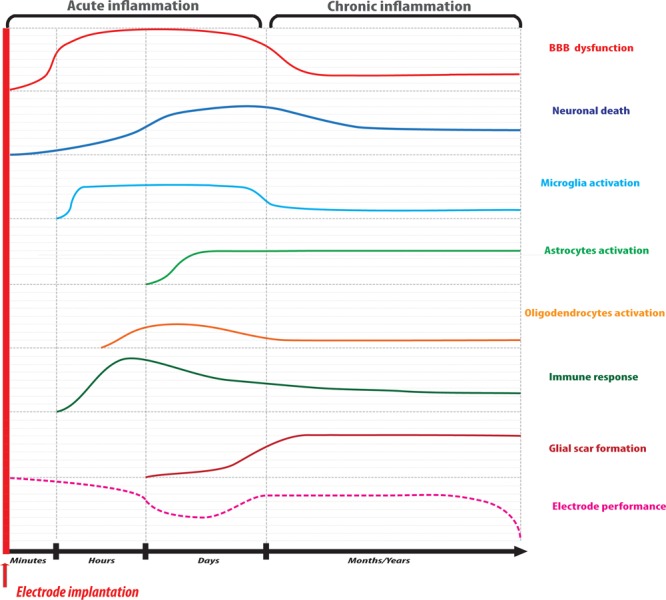
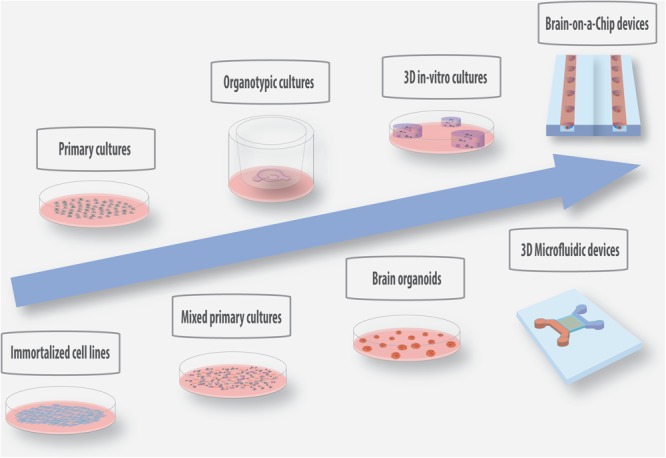
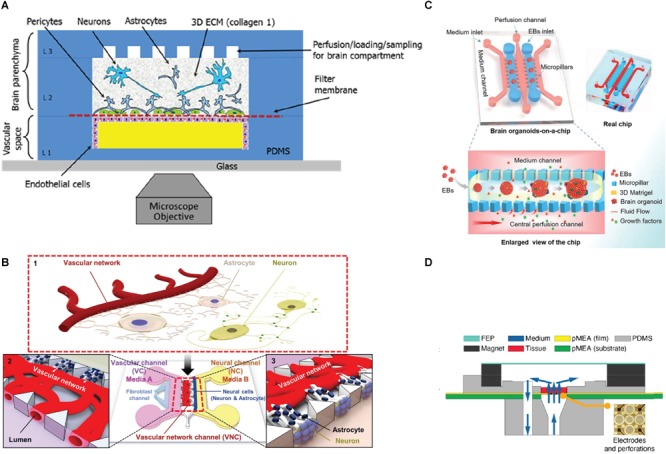
The development of implantable neuroelectrodes is advancing rapidly as these tools are becoming increasingly ubiquitous in clinical practice, especially for the treatment of traumatic and neurodegenerative disorders. Electrodes have been exploited in a wide number of neural interface devices, such as deep brain stimulation, which is one of the most successful therapies with proven efficacy in the treatment of diseases like Parkinson or epilepsy. However, one of the main caveats related to the clinical application of electrodes is the nervous tissue response at the injury site, characterized by a cascade of inflammatory events, which culminate in chronic inflammation, and, in turn, result in the failure of the implant over extended periods of time. To overcome current limitations of the most widespread macroelectrode based systems, new design strategies and the development of innovative materials with superior biocompatibility characteristics are currently being investigated. This review describes the current state of the art of in vitro, ex vivo and in vivo models available for the study of neural tissue response to implantable microelectrodes. We particularly highlight new models with increased complexity that closely mimic in vivo scenarios and that can serve as promising alternatives to animal studies for investigation of microelectrodes in neural tissues. Additionally, we also express our view on the impact of the progress in the field of neural tissue engineering on neural implant research.
Overview
The claims and statistics of this paper haven’t been checked yet.
Run the check — free, no account needed. It reads the open-access text and checks the sources it cites.
Integrity signals
Registry
Cites
Statistics
Figures
Verification
Claims the paper makes
The claims and statistics of this paper haven’t been checked yet.
Run the check — free, no account needed. It reads the open-access text and checks the sources it cites.
Claims other papers make about this one
Each is checked against this paper’s own text: does it say what the citing paper says it does?
In the citing paper
“Another relatively simple way to control the biological responses and improve the long-term biotolerability of neural electrodes is the modification of the chemical composition of the surface of the electrodes by using different polymers and nanomaterials (Hara et al., 2016; Fernandez and Botella, 2017; Gulino et al., 2019).”
From Toward Long-Term Communication With the Brain in the Blind by Intracortical Stimulation: Challenges and Future Prospects (2020) · cites this paper as Gulino et al., 2019
Self-check
Percentages, sums and reported differences re-computed from the paper’s own numbers.
The self-check needs the paper’s full text.
Citations
Cites
Neurotoxic reactive astrocytes are induced by activated microglia
Liddelow, S. A., Guttenplan, K. A., Clarke, L. E., Bennett, F. C., Bohlen, C. J., Schirmer, L., Bennett, M. L., Münch, A. E., Chung, W.-S., Peterson, T. C., et al. (2017) · Nature · doi:10.1038/nature21029 · Cited by 7,971
Cellular uptake of nanoparticles: Journey inside the cell
Behzadi, S., Serpooshan, V., Tao, W., Hamaly, M. A., Alkawareek, M. Y., Dreaden, E. C., Brown, D., Alkilany, A. M., Farokhzad, O. C., & Mahmoudi, M. (2017) · Chemical Society Reviews · doi:10.1039/c6cs00636a · Cited by 2,859
On the mechanisms of biocompatibility
Williams, D. F. (2008) · Biomaterials · doi:10.1016/j.biomaterials.2008.04.023 · Cited by 2,772
Neural Stimulation and Recording Electrodes
Cogan, S. F. (2008) · Annual Review of Biomedical Engineering · doi:10.1146/annurev.bioeng.10.061807.160518 · Cited by 2,243
Response of brain tissue to chronically implanted neural electrodes
Polikov, V. S., Tresco, P. A., & Reichert, W. M. (2005) · Journal of Neuroscience Methods · doi:10.1016/j.jneumeth.2005.08.015 · Cited by 1,896
Generation of cerebral organoids from human pluripotent stem cells
Lancaster, M. A., & Knoblich, J. A. (2014) · Nature Protocols · doi:10.1038/nprot.2014.158 · Cited by 1,823
Dissolvable films of silk fibroin for ultrathin conformal bio-integrated electronics
Kim, D.-H., Viventi, J., Amsden, J. J., Xiao, J., Vigeland, L., Kim, Y.-S., Blanco, J. A., Panilaitis, B., Frechette, E. S., Contreras, D., et al. (2010) · Nature Materials · doi:10.1038/nmat2745 · Cited by 1,721
Near-infrared deep brain stimulation via upconversion nanoparticle–mediated optogenetics
Chen, S., Weitemier, A. Z., Zeng, X., He, L., Wang, X., Tao, Y., Huang, A. J. Y., Hashimotodani, Y., Kano, M., Iwasaki, H., et al. (2018) · Science · doi:10.1126/science.aaq1144 · Cited by 1,145
The SH-SY5Y cell line in Parkinson’s disease research: a systematic review
Xicoy, H., Wieringa, B., & Martens, G. J. M. (2017) · Molecular Neurodegeneration · doi:10.1186/s13024-017-0149-0 · Cited by 1,036
Williams, D. F. (2009) · Biomaterials · doi:10.1016/j.biomaterials.2009.07.027 · Cited by 971
Cited by
Sorted by citations
Soft Bioelectronics Based on Nanomaterials
Cho, K. W., Sunwoo, S., Hong, Y. J., Koo, J. H., Kim, J. H., Baik, S., Hyeon, T., & Kim, D. (2021) · Chemical Reviews · doi:10.1021/acs.chemrev.1c00531 · Cited by 254
Goshi, N., Morgan, R. K., Lein, P. J., & Şeker, E. (2020) · Journal of Neuroinflammation · doi:10.1186/s12974-020-01819-z · Cited by 248
Recommendations for Responsible Development and Application of Neurotechnologies
Goering, S., Klein, E., Specker-Sullivan, L., Wexler, A., Arcas, B. A. Y., Bi, G.-Q., Carmena, J., Fins, J., Friesen, P., Gallant, J., et al. (2021) · Neuroethics · doi:10.1007/s12152-021-09468-6 · Cited by 175
The current state of electrocorticography-based brain–computer interfaces
Miller, K. J., Hermes, D., & Staff, N. P. (2020) · Neurosurgical FOCUS · doi:10.3171/2020.4.focus20185 · Cited by 127
Yang, M., Chen, P., Qu, X., Zhang, F., Ning, S., Ma, L., YANG, K. Y., Su, Y., Zang, J., Jiang, W., et al. (2023) · ACS Nano · doi:10.1021/acsnano.2c04606 · Cited by 104
Metadata
- Authors
- Gulino, M., Kim, D., Pané, S., Santos, S. D., & Pêgo, A. P.
- Affiliations
- Universidade do Porto (PT)
- ETH Zurich (CH)
- Corresponding author
- Pêgo, Ana Paula
- Venue
- Frontiers in Neuroscience
- Publisher
- Frontiers Media SA
- Published
- 2019-07-05
- Volume
- 13
- Pages
- 689-689
- ISSN
- 1662-453X (ISSN-L)
- PMC
- PMC6624471
- OpenAlex
- W2949950011
- Cited by
- 159
- References
- 240
- Citations by year
- 2026: 18 · 2025: 25 · 2024: 23 · 2023: 31 · 2022: 22 · 2021: 29 · 2020: 10
- FWCI
- 2.00
- Type
- journal article
- Language
- en
- Open access
- gold
- doi.org
- Licence
- Locations
- Frontiers in Neuroscience (publishedVersion, cc-by)
- Europe PMC (PubMed Central) (publishedVersion, cc-by)
- PubMed Central (publishedVersion, cc-by)
- PubMed (publishedVersion)
- Portuguese National Funding Agency for Science, Research and Technology (RCAAP Project by FCT) (submittedVersion, cc-by)
- DOAJ (DOAJ: Directory of Open Access Journals) (submittedVersion, cc-by-sa)
- Repository for Publications and Research Data (ETH Zurich) (submittedVersion, cc-by)
- ETH Zürich Research Collection (cc-by)
- Funders
- Fundação para a Ciência e a Tecnologia
- European Research Council
- Horizon 2020
- Topics
- Life Sciences › Neuroscience › Cellular and Molecular Neuroscience › Neuroscience and Neural Engineering
- Health Sciences › Medicine › Surgery › Tissue Engineering and Regenerative Medicine
- Social Sciences › Education › Undergraduate Neuroscience Education and Research
- Keywords
- neural implants, implantable microelectrodes, chronic inflammation, biocompatibility, in vitro model, ex vivo model, in vivo models, neural tissue engineering, deep brain stimulation, electrode design, traumatic brain injury, neurodegenerative diseases
About these checks
Registry, retraction, Cites and statistics results are computed, not judged, with one exception: a printed reference that no index lists is read once by a model before it counts as a citation error. Claims are extracted by a model and kept only when their quote appears verbatim in the text; each cited source is then checked, with a model’s help, for whether it says what the claim relies on. Those verdicts can be wrong — read the claim’s quote and the cited source before relying on one.
Statistics and arithmetic are recomputed, not judged.
Confidence bands are shown only for fields calibrated on our annotated test set. None is calibrated yet, so no band is shown.
What counts as a claim ›How we measure confidence ›How we check this ›
Are you an author, or do you see a problem with this page? Request a review
