

The autonomic nervous system: A potential link to the efficacy of acupuncture
Open accessThe DOI matches its Crossref record; 94 of the 96 references it cites were found in a registry or an index.
Abstract
The autonomic nervous system (ANS) is a diffuse network that regulates physiological systems to maintain body homeostasis by integrating inputs from the internal and external environment, including the sympathetic, parasympathetic, and enteric nervous systems (ENS). Recent evidence suggests that ANS is one of the key neural pathways for acupuncture signal transduction, which has attracted worldwide attention in the acupuncture field. Here, we reviewed the basic and clinical research published in PubMed over the past 20 years on the effects of acupuncture on ANS regulation and homeostasis maintenance. It was found that acupuncture effectively alleviates ANS dysfunction-associated symptoms in its indications, such as migraine, depression, insomnia, functional dyspepsia, functional constipation. Acupuncture stimulation on some specific acupoints activates sensory nerve fibers, the spinal cord, and the brain. Using information integration and efferents from a complex network of autonomic nuclei of the brain, such as the insular cortex (IC), prefrontal cortex, anterior cingulate cortex (ACC), amygdala (AMG), hypothalamus, periaqueductal gray (PAG), nucleus tractus solitarius (NTS), ventrolateral medulla (VLM), nucleus ambiguus (AMB), acupuncture alleviates visceral dysfunction, inflammation via efferent autonomic nerves, and relieves pain and pain affect. The modulating pattern of sympathetic and parasympathetic nerves is associated with acupuncture stimulation on specific acupoints, intervention parameters, and disease models, and the relationships among them require further exploration. In conclusion, ANS is one of the therapeutic targets for acupuncture and mediates acupuncture’s actions, which restores homeostasis. A systemic study is needed to determine the rules and mechanisms underlying the effects of acupoint stimulation on corresponding organs mediated by specific central nervous networks and the efferent ANS.
Overview
The claims and statistics of this paper haven’t been checked yet.
Free: it reads the open-access text and checks the first 5 claims that cite a source we can check. Create a free account to check every claim.
Integrity signals
Registry
Cites
Statistics
Figures
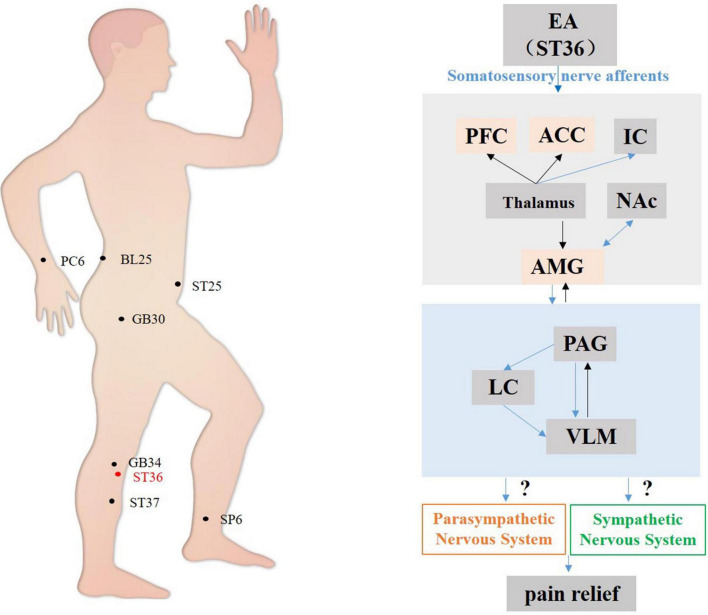
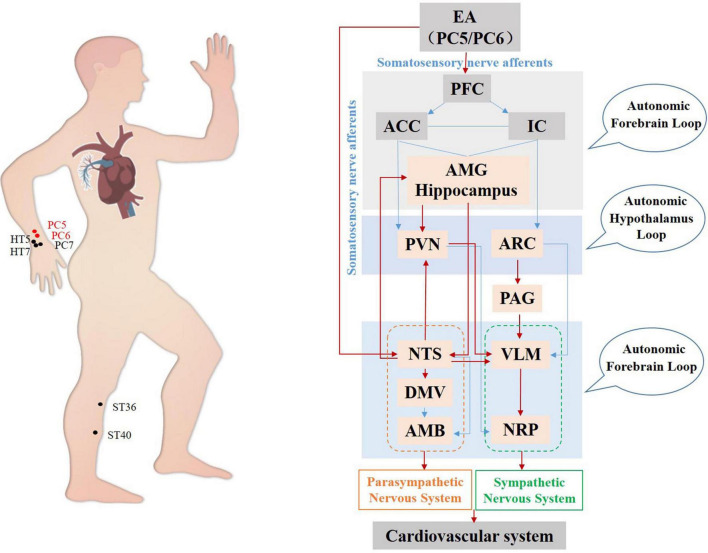
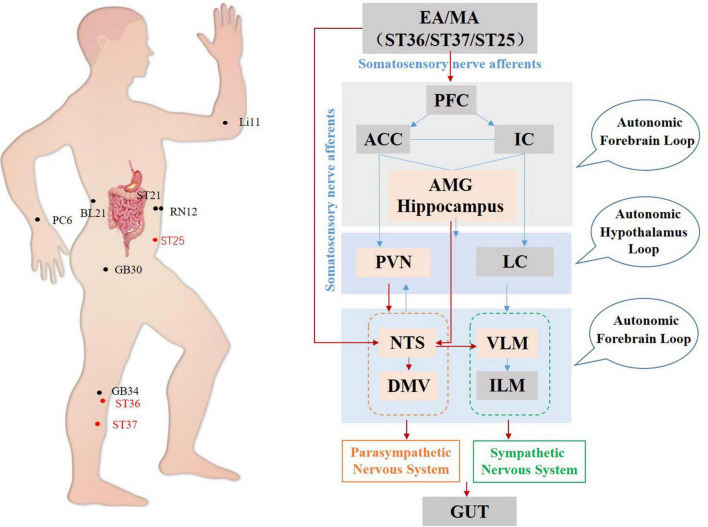
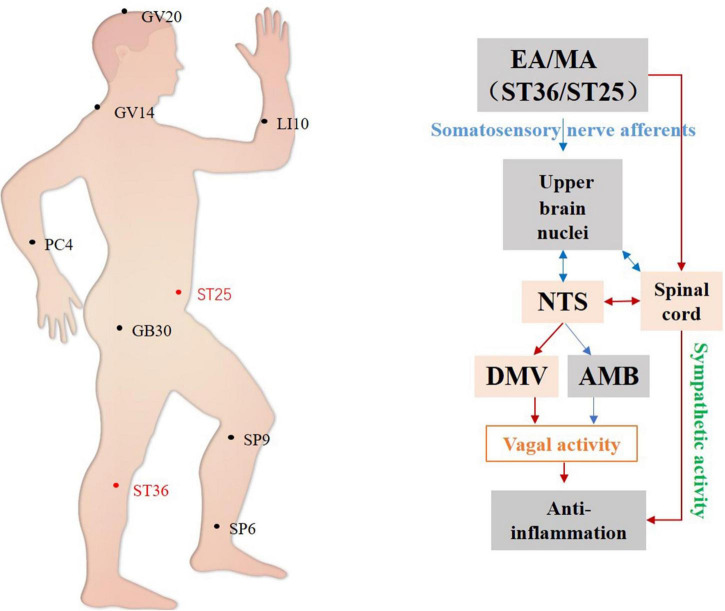
Verification
Claims the paper makes
The claims and statistics of this paper haven’t been checked yet.
Free: it reads the open-access text and checks the first 5 claims that cite a source we can check. Create a free account to check every claim.
Claims other papers make about this one
Each is checked against this paper’s own text: does it say what the citing paper says it does?
The source backs part of the claim, not all of it — or backs it for a different population, condition or comparison.
In the citing paper
“we injected cholera toxin subunit B (CTB) into the liver and traced it back to the brain a week later, observing a fluorescent signal in the cholinergic neuron‐rich DMV area,[ 12 ] we observed colocalization of fluorescent signals with an anti‐choline acetyltransferase (ChAT) antibody (Figure 2A–C).”
From Electroacupuncture Promotes Liver Regeneration by Activating DMV Acetylcholinergic Neurons-Vagus-Macrophage Axis in 70% Partial Hepatectomy of Mice (2024) · cites this paper as [12]
Experimental — accuracy not yet measured
Self-check
Percentages, sums and reported differences re-computed from the paper’s own numbers.
The self-check needs the paper’s full text.
Citations
Cites
Vagus nerve stimulation attenuates the systemic inflammatory response to endotoxin
Borovikova, L. V., Ivanova, S., Zhang, M., Yang, H., Botchkina, G. I., Watkins, L. R., Wang, H., Abumrad, N., Eaton, J. W., & Tracey, K. J. (2000) · Nature · doi:10.1038/35013070 · Cited by 4,211 · cited 1×
“Typically, in acute inflammatory states, the HPA axis and SNS act synergistically or are coupled to each other, leading to enhanced release of cortisol and SNS neurotransmitters, which contribute to the regulation of immune cell activity (Borovikova et al., 2000; Straub, 2004).”
BackgroundKemp, A. H., Quintana, D. S., Gray, M. A., Felmingham, K. L., Brown, K., & Gatt, J. M. (2010) · Biological Psychiatry · doi:10.1016/j.biopsych.2009.12.012 · Cited by 1,286 · cited 7×
“A meta-analysis of 18 studies, including 673 depressed and 407 healthy people, found a negative correlation between depression severity and HRV (Kemp et al., 2010).”
MethodInfluentialMechanisms of Acupuncture–Electroacupuncture on Persistent Pain
Zhang, R., Lao, L., Ren, K., & Berman, B. M. (2014) · Anesthesiology · doi:10.1097/aln.0000000000000101 · Cited by 919 · cited 1×
“the ascending activating system and descending inhibition system (Zhang et al., 2014).”
BackgroundAutonomic innervation and regulation of the immune system (1987–2007)
Nance, D. M., & Sanders, V. M. (2007) · Brain, Behavior, and Immunity · doi:10.1016/j.bbi.2007.03.008 · Cited by 855 · cited 1×
“For instance, the ANS regulates the immune system by innervating immune organs such as the spleen, thymus, and lymph nodes and regulates the gastrointestinal tract, bladder, heart, and other organs by releasing neurotransmitters such as acetylcholine and norepinephrine that contribute to the maintenance of homeostasis…”
A neuroanatomical basis for electroacupuncture to drive the vagal–adrenal axis
Liu, S., Wang, Z., Su, Y., Qi, L., Yang, W., Fu, M., Jing, X., Wang, Y., & Ma, Q. (2021) · Nature · doi:10.1038/s41586-021-04001-4 · Cited by 823
Dopamine mediates vagal modulation of the immune system by electroacupuncture
Torres-Rosas, R., Yehia, G., Peña, G., Mishra, P., del Rocio Thompson-Bonilla, M., Moreno-Eutimio, M. A., Arriaga-Pizano, L. A., Isibasi, A., & Ulloa, L. (2014) · Nature Medicine · doi:10.1038/nm.3479 · Cited by 630 · cited 3×
“The target organs may be modified due to activating efferent nerves or neuro-endocrine pathways (Torres-Rosas et al., 2014; Liu S. et al., 2020, Liu et al., 2021; Ulloa, 2021, 2022).”
BackgroundSelf-citationThe vagus nerve and the nicotinic anti-inflammatory pathway
Ulloa, L. (2005) · Nature Reviews Drug Discovery · doi:10.1038/nrd1797 · Cited by 468 · cited 1×
“The ANS can regulate acute and chronic inflammatory responses at local and systemic levels (Ulloa, 2005).”
BackgroundSelf-citationYang, S., & Chang, M. C. (2019) · International Journal of Molecular Sciences · doi:10.3390/ijms20133130 · Cited by 408 · cited 1×
“Based on the underlying functional pathways and physiological roles of the ANS, we speculate that the ANS plays a significant role in the central nervous circuit activated by acupuncture, leading to the modulation of cardiovascular and gastrointestinal functions, as well as anti-inflammatory and analgesic functions (S…”
BackgroundLiu, S., Wang, Z.-F., Su, Y.-S., Ray, R. S., Jing, X.-H., Wang, Y.-Q., & Ma, Q. (2020) · Neuron · doi:10.1016/j.neuron.2020.07.015 · Cited by 385
Cardiac vagal control in depression: A critical analysis
Rottenberg, J. (2007) · Biological Psychology · doi:10.1016/j.biopsycho.2005.08.010 · Cited by 376 · cited 2×
“For instance, a meta-analysis of 13 rigorous cross-sectional studies, including 312 depressed and 374 non-depressed patients, showed an association between a diagnosis of depression and mild-to-moderate changes in cardiac vagal control, with resting vagal control being significantly reduced in depressed patients compa…”
BackgroundResult
Cited by
The immunomodulatory mechanisms for acupuncture practice
Wang, M., Liu, W., Ge, J., & Liu, S. (2023) · Frontiers in Immunology · doi:10.3389/fimmu.2023.1147718 · Cited by 172
“Frontiers in Immunology 06 inflammation, analgesic anesthesia,and more (84).”
BackgroundEffects of TCM on polycystic ovary syndrome and its cellular endocrine mechanism
Chen, H., Deng, C., Meng, Z., & Meng, S. (2023) · Frontiers in Endocrinology · doi:10.3389/fendo.2023.956772 · Cited by 61
“Acupuncture can control the function of the autonomic nervous system (ANS); it can balance the sympathetic and parasympathetic nerve activity, regulate the adaptive neurotransmitters in related brain regions, and reduce the autonomic response, which has been proved to have a certain curative effect on PCOS patients (1…”
BackgroundObjectivization study of acupuncture Deqi and brain modulation mechanisms: a review
Zhong, Z., Yao, L., Liu, Y., Wang, Y., He, M., Sun, M., Huang, H., Ma, S., Zheng, H., Li, M., et al. (2024) · Frontiers in Neuroscience · doi:10.3389/fnins.2024.1386108 · Cited by 46
Jiang, T., Chen, Z., Liu, J., Yin, X.-J., Tan, Z., Wang, G. G., Ли, Б., & Guo, J. (2024) · BMC Complementary Medicine and Therapies · doi:10.1186/s12906-024-04612-0 · Cited by 38
“The ACC, amygdala, and thalamus all belong to the autonomic nuclei of the brain and are affected by inputs from the internal and external environments [89].”
BackgroundGuo, J., Guo, J., Rao, X., Zhang, R., Li, Q., Zhang, K., Ma, S., Zhao, J., & Ji, C. (2024) · Frontiers in Microbiology · doi:10.3389/fmicb.2024.1456848 · Cited by 32
Yang, L., Zhou, Y., Huang, Z., Li, W., Lin, J., Huang, W., Sang, Y., Wang, F., Sun, X., Song, J., et al. (2024) · Advanced Science · doi:10.1002/advs.202402856 · Cited by 23
Self-citationSeok, J., Kim, G., & Kim, J. U. (2024) · Scientific Reports · doi:10.1038/s41598-024-58232-2 · Cited by 30
Acupuncture in Traditional Chinese Medicine: A Complementary Approach for Cardiovascular Health
Wang, S., Fang, R., Huang, L., Zhou, L., Liu, H., Cai, M., Sha’aban, A., Yu, C., & Akkaif, M. A. (2024) · Journal of Multidisciplinary Healthcare · doi:10.2147/jmdh.s476319 · Cited by 30
“79 Research indicates that acupuncture can regulate the ANS, thereby enhancing cardiovascular function 80 (Figure 2).”
Self-citationChen, Y., Li, M., & Guo, K. (2024) · SLAS TECHNOLOGY · doi:10.1016/j.slast.2024.100208 · Cited by 21
Cao, J., Qu, Y., Chen, L., Liu, T., Guo, J., Gong, Y., Tian, Z., Xiong, J., Lin, Z., Yang, X., et al. (2023) · Frontiers in Human Neuroscience · doi:10.3389/fnhum.2023.1159378 · Cited by 18
“A review demonstrated that the regulation on ANS by acupuncture is one of the most crucial mechanisms for acupuncture’s efficacy (Li et al., 2022) and the changes within ANS could be characterized by hemodynamic responses in brain regions (Hori et al.”
BackgroundSelf-citationZhou, X., Zhou, J., Zhang, F., Shu, Q., Wu, Y., Chang, H.-M., Zhang, B., Cai, R.-L., & Yu, Q. (2024) · Heliyon · doi:10.1016/j.heliyon.2024.e38197 · Cited by 22
“In recent years, the regulation of the ANS by the hypothalamus is considered an important target for acupuncture treatment of cardiovascular diseases [35].”
BackgroundAberrant parasympathetic responses in acupuncture therapy for restoring immune homeostasis
Liu, J., Dong, S., & Liu, S. (2023) · Acupuncture and Herbal Medicine · doi:10.1097/hm9.0000000000000060 · Cited by 16
Advances in acupuncture treatment for tinnitus
Yu, S., Wu, J., Sun, Y., & Lyu, J. (2024) · American Journal of Otolaryngology · doi:10.1016/j.amjoto.2024.104215 · Cited by 19
The role of acupuncture on the autonomic nervous system in irritable bowel syndrome
Sun, L., Yao, J., Luo, F., Chen, D., Qin, D., Hou, Y., Wang, L., & Li, Y. (2023) · Acupuncture and Herbal Medicine · doi:10.1097/hm9.0000000000000063 · Cited by 13
Self-citationWu, C., Deng, Z., Zhu, Y.-B., Li, Y., Chen, Y., Wang, L., Li, J., Huang, L., & Tu, Q. (2025) · International Journal of Surgery · doi:10.1097/js9.0000000000002946 · Cited by 14
“This potential mechanism may owe to TEAS modulates the autonomic nervous system by balancing sympathetic and parasympathetic activity, thereby promoting gastrointestinal motility and reducing postoperative ileus [ 45 ] .”
Self-citationAcupuncture for neuropathic pain: focusing on the sympathetic nerve system
Ma, X., Chen, W., Fu, Y., Li, H., & Liu, C. (2023) · Acupuncture and Herbal Medicine · doi:10.1097/hm9.0000000000000069 · Cited by 12
“ture analgesia and alleviate pain-related emotions[104].”
Zhang, Z., Zhang, D., Lin, Q., & Cui, X. (2024) · Journal of Inflammation Research · doi:10.2147/jir.s477181 · Cited by 14
“101 Current interests mainly focus on sympathetic-derived NE and its role in enhancing inflammation following activation.”
BackgroundKiani, F. A., Li, H., Nan, S., Li, Q., Lei, Q., Yin, R., Cao, S., Ding, M., & Ding, Y. (2024) · International Journal of Molecular Sciences · doi:10.3390/ijms251910242 · Cited by 12
“The therapeutic effects of acupuncture, including EA, have long been associated with regulating the nervous system at multiple levels, including the peripheral, spinal, and supraspinal domains [27,28].”
BackgroundYan-qiu, L., Jun-peng, Y., Xiang-yun, Y., Wang, W. J., Zhang, Y., Lü, Y., Yu-jun, H., & Li, Y. (2023) · Complementary Therapies in Medicine · doi:10.1016/j.ctim.2023.103009 · Cited by 16
Self-citationLiu, Z., Huang, J., Yan, D., Liang, S., Zhao, S., Zhang, M., Li, Z., Jiang, C., Yin, X., Zhang, Y., et al. (2024) · Frontiers in Neuroscience · doi:10.3389/fnins.2024.1349059 · Cited by 8
“Similar autonomic modulatory effects have been observed in clinical trials of acupuncture for migraine and lower back pain (Li Y. W. et al., 2022) and are consistent with the results of a recent meta-analysis (Hamvas et al., 2023).”
ResultAdvancements in the physiopathological study of acupuncture treatment for insomnia: A review
Zhao, H., Liu, C., Ye, H., Shi, K., Yao, Y., & Wang, M. (2024) · Medicine · doi:10.1097/md.0000000000038476 · Cited by 10
Yang, X., Li, B., Wu, L., & Cui, Y. J. (2025) · Frontiers in Aging Neuroscience · doi:10.3389/fnagi.2025.1515327 · Cited by 8
“It is established that acupuncture significantly influences the central autonomic regulatory center, a controller of the autonomic nervous system, as demonstrated by a wealth of animal studies (Li et al., 2022; Ohsawa et al., 1995; Uchida et al., 2010; Sato et al., 1993).”
Chen, J., Ju, P., Luo, C., Tu, S., Sun, Y., Shi, S., Sun, G., Huang, L., Wang, Z., Xu, Y., et al. (2025) · The FASEB Journal · doi:10.1096/fj.202402319r · Cited by 7
“10 This activation is crucial for modulating the autonomic nervous system, leading to subsequent neuroimmunologic and hormonal regulation, thus achieving efficient central– peripheral coordination.”
Tan, S., Peng, C., Lin, X., Peng, C., Yang, Y., Liu, S., Huang, L., Bian, Y., Li, Y., & Chen, X. (2025) · Frontiers in Cellular and Infection Microbiology · doi:10.3389/fcimb.2025.1565801 · Cited by 13
Self-citationAutonomic Nervous System and Disorders of Gut–Brain Interaction
Essner, B. S., Osgood, P. T., Pérez, M. E., & Fortunato, J. E. (2025) · Gastroenterology Clinics of North America · doi:10.1016/j.gtc.2025.05.002 · Cited by 7
Yu, C.-C., Li, M., Shen, F., Gao, S., Wang, J., He, C., Wang, L., Wu, Y., & Du, Y. (2025) · Chinese Medicine · doi:10.1186/s13020-025-01230-x · Cited by 9
“The brainstem NTS can respond to peripheral acupuncture stimulation and relay acupuncture signals to other brain regions [40, 41].”
Niu, H., Zhou, M., Zhou, L., Wu, H., Wu, F., Zhu, S.-X., Chen, R., Liang, F.-X., & Zhang, H. (2025) · Frontiers in Immunology · doi:10.3389/fimmu.2025.1682521 · Cited by 7
Relationship between acupuncture and the autonomic nervous system
Liu, C. (2023) · Acupuncture and Herbal Medicine · doi:10.1097/hm9.0000000000000067 · Cited by 10
An evolutionary perspective for integrating mechanisms of acupuncture therapy
Joung, J., Lee, Y., & Son, C.-G. (2024) · EXPLORE · doi:10.1016/j.explore.2024.103060 · Cited by 7
Shen, D., Yang, B., Li, J., & Gao, S. (2024) · Biomedical Signal Processing and Control · doi:10.1016/j.bspc.2024.106915 · Cited by 7
Liu, C., Liu, S., Wang, Y., Xia, X., Zhang, Y. L., Jiang, H., Bao, T., & Ma, X. (2024) · Complementary Therapies in Medicine · doi:10.1016/j.ctim.2024.103110 · Cited by 7
Zhou, Z., Yang, X., Shi, M., Huang, L., Wu, D., Yang, H., & Zhang, X. (2025) · Therapeutics and Clinical Risk Management · doi:10.2147/tcrm.s507856 · Cited by 6
Wang, Z., Li, X., Li, Y., Sun, X., Wang, Y., Lu, T., Zhao, D., Ma, X., & Sun, H. (2025) · Neurobiology of Stress · doi:10.1016/j.ynstr.2025.100723 · Cited by 5
“The IC, as an important part of autonomic nervous system, involved in the high-level processing of visceral sensory information and initiating autonomic responses (Yanwei et al., 2022).”
Self-citationLv, S., Ma, C., Fu, W., Hu, C., Han, X., Chen, J., Tan, X., Liu, T., & Li, W. (2025) · International Immunopharmacology · doi:10.1016/j.intimp.2025.115484 · Cited by 5
Self-citationMeng, W., Mingqiang, W., Junyang, Z., Bin, P., Wu, Q., & Chao, W. (2025) · Frontiers in Neurology · doi:10.3389/fneur.2025.1663585 · Cited by 8
Jiao, J., Dong, B.-Q., Han, Y., Zheng, Q., & Lin, X. (2025) · Journal of Pain Research · doi:10.2147/jpr.s546687 · Cited by 5
Yu, C.-C., Wang, X.-F., Wang, J., Li, C., Xiao, J., Wang, X., Han, R., Wang, S., Lin, Y.-F., Kong, L.-H., et al. (2024) · Current Medical Science · doi:10.1007/s11596-024-2908-9 · Cited by 6
Self-citationIwe, C., Schiele, A. R., Passenegg, V., Corona, D., Bettschart‐Wolfensberger, R., & Heitzmann, V. (2025) · Frontiers in Veterinary Science · doi:10.3389/fvets.2024.1513853 · Cited by 5
Wang, Y., Yu, H., Chen, Y., Hu, Y., Zhou, H., & Zhao, J. (2025) · International Journal of General Medicine · doi:10.2147/ijgm.s535590 · Cited by 6
Association between vitamin B12 status and heart rate variability in patients with ischemic stroke
Park, E. J. (2023) · Medicine · doi:10.1097/md.0000000000033428 · Cited by 4
“[25] Alterations in the central autonomic network or destruction of autonomic system pathways from the hypothalamus to the brain stem may lead to ANS dysfunction.[26] The 1-carbon metabolism pathway is responsible for integrating nutritional inputs with biosynthesis and for maintaining redox homeostasis.”
BackgroundShi, J.-H., Yang, H., Wang, S.-T., Wang, W., Shi, Y., Huang, S.-S., & Jiang, S. (2025) · World Journal of Gastrointestinal Surgery · doi:10.4240/wjgs.v17.i3.99626 · Cited by 3
Self-citationWang, Z., Wu, J., Deng, C., Hu, Y., Shi, S., Liu, S., Huang, X., & Chen, J. (2025) · Frontiers in Neurology · doi:10.3389/fneur.2025.1579484 · Cited by 3
“Acupuncture could alleviate pain affect by using information integration from the autonomic brain regions including the cingulate and frontal cortex, key parts of the cortical representation of pain (65).”
Zhang, F., Wang, Q.-Y., Wei, N.-X., Zhu, X., Wu, L.-B., Shu, Q., Chang, H.-M., Wu, Y., Zheng-jie, L. U. O., Shao, W., et al. (2025) · Cell Reports · doi:10.1016/j.celrep.2025.116734 · Cited by 3
Yao, Y., Gu, X.-X.-Y., Xie, X.-B., Wang, Y., & Wang, Q.-L. (2026) · Journal of Chinese Integrative Medicine · doi:10.1016/j.joim.2026.01.009 · Cited by 4
Jiang, M.-J., Peng, R., Lu, X., Yan, Y.-H., Qian, D.-Y., Zou, L.-Y., Liu, X.-E., Chen, L.-Y., Bai, H., Zhuang, Y., et al. (2026) · Journal of Chinese Integrative Medicine · doi:10.1016/j.joim.2026.01.011 · Cited by 3
Li, Z., Gao, H.-W., Shen, F., Lu, Y., & Chen, W. (2026) · Blood Pressure · doi:10.1080/08037051.2026.2654103 · Cited by 6
Regional heterogeneity of acupoints stimulation in the modulation of autonomic nerve system
Jiang, J. (2024) · 世界针灸杂志:英文版 · doi:10.1016/j.wjam.2024.04.002 · Cited by 6
Animal Models in Translational Pain Research
Wang, Z., Xiang, L., Wang, X., Tan, X., & Xiang, A. (2024) · IntechOpen eBooks · doi:10.5772/intechopen.1007514 · Cited by 5
Chen, C.-Y., & Zhang, Y. (2025) · Journal of Psychiatric Research · doi:10.1016/j.jpsychires.2025.07.036 · Cited by 2
Kwok, Y. L., Wang, R., Tang, H. T., Chen, S., Yeung, A., Bian, Z., & Yu, D. J. (2025) · Integrative Medicine Research · doi:10.1016/j.imr.2025.101208 · Cited by 2
Clinical Efficacy and Plasma Metabolomics Analysis of Acupuncture for Migraine Treatment
Gao, L., Chen, Y., Xie, C.-R., Zhang, Z.-Y., Yan, Q., Fu, Q. X., Sun, M., & Zhao, L. (2025) · Journal of Pain Research · doi:10.2147/jpr.s546838 · Cited by 2
“18,19 These results align with the holistic treatment philosophy of TCM, which, through acupoint stimulation, exerts a dual therapeutic effect of pain alleviation and emotional regulation.”
Acupuncture as an adjunctive therapy for sepsis: Advantages, limitations, and strategies
Xin-yang, L. I., Li, C., Jing-wen, W. A. N. G., Jia-ni, M. A., KUANG, X.-B., Zhang, J., Li-yuan, F. U., Lin, X., Ning-cen, L. I., Guo, Y., et al. (2025) · 世界针灸杂志:英文版 · doi:10.1016/j.wjam.2025.10.001 · Cited by 2
Self-citationYuan, Y., Zhou, R., Wang, J., Ma, H., Wang, H., Zhang, M., Huang, S., Shen, G.-M., & Wang, X. (2025) · Acupuncture and Herbal Medicine · doi:10.1097/hm9.0000000000000173 · Cited by 2
Wei, X., Lu, Y., Guo, Z., Zhu, Z., Xia, C., Xu, M., Du, L.-X., Yang, Y., Shu, S., Wang, Z., et al. (2025) · Brain Research Bulletin · doi:10.1016/j.brainresbull.2025.111666 · Cited by 2
Hu, H., Huang, X., Wang, Y., Li, Y., Fang, L., Zhou, J., & Gao, H. (2025) · Frontiers in Psychiatry · doi:10.3389/fpsyt.2025.1688016 · Cited by 2
Self-citationXu, J., Li, J., Deng, D., Wu, J., Zheng, B., & Li, J. (2026) · Frontiers in Medicine · doi:10.3389/fmed.2026.1680999 · Cited by 2
“ST36 and ST25 are the two most commonly used and highly effective acupoints for gastrointestinal function modulation in acupuncture practice (49).”
Jiang, M., Li, J., Zhu, Y., Peng, R., Chen, L., Liu, X., Guo, Y., Zou, L., Bai, H., Lu, X., et al. (2026) · International Immunopharmacology · doi:10.1016/j.intimp.2026.116619 · Cited by 2
Self-citationInsomnia Pathogenesis and Multidimensional Mechanisms of Acupuncture: A Narrative Review
Xue, L., Jiang, H., Zhou, M., Zhu, M., Wang, W., & Wei, S. (2026) · International Journal of General Medicine · doi:10.2147/ijgm.s591463 · Cited by 3
Evaluating Dielectric Properties for Assessing Water Content at Acupuncture Points: New Methodology
Pitta, M. G., Zhang, K., Rosa, G. H. D. M., Rangon, F. B., Guirro, E. C. D. O., da Silva, M. L., & de Araújo, J. E. (2024) · Journal of Acupuncture and Meridian Studies · doi:10.51507/j.jams.2024.17.3.86 · Cited by 2
Acupuncture for allergic rhinitis: protocol for a systematic review and network meta-analysis
Chen, Y., Song, C., Wang, J., & Han, X.-M. (2024) · Frontiers in Allergy · doi:10.3389/falgy.2024.1499406 · Cited by 2
Kubasch, J., Ortiz, M., Binting, S., Roll, S., Icke, K., Dietzel, J., Nögel, R., Hummelsberger, J., Willich, S. N., Brinkhaus, B., et al. (2025) · Frontiers in Medicine · doi:10.3389/fmed.2025.1571045 · Cited by 3
Yang, G., Zhang, R., Xu, B., Yang, Y., Wang, Y., Xu, W., Li, P., Yu, A., Ning, S., Fu, Q., et al. (2025) · PLoS ONE · doi:10.1371/journal.pone.0331568 · Cited by 2
“…is facilitated by both local and systemic anti-inflammatory responses, including the induction of macrophage M2 polarization, which results in an increase in CD206 + cells to suppress synovitis [105,106], and the upregulation of splenic Treg populations to establish immune homeostasis [107,108].”
Gong, C.-M., Huang, H., Liu, J.-H., Yu, S., & Chen, Y. (2024) · Biological Research For Nursing · doi:10.1177/10998004241236947 · Cited by 5
Ferreira, P. M., de Oliveira, F., Souza-Gomes, A. F., Inui, D. Y., Lima, A. C., Neto, V. G. C., & Simão, A. P. (2024) · Journal of Bodywork and Movement Therapies · doi:10.1016/j.jbmt.2024.04.019 · Cited by 1
Sun, R., Jiang, Z., & Sun, Y. (2024) · Journal of Craniofacial Surgery · doi:10.1097/scs.0000000000010623 · Cited by 1
Shieu, B. M., Cho, Y.-M., Wang, M., Reid, M. C., Epps, F. R., Li, Y., & Song, L. (2025) · Advances in Integrative Medicine · doi:10.1016/j.aimed.2025.100494 · Cited by 1
Self-citationAuricular neuromodulation may act through interoception modulation
Canini, F., Claverie, D., Weill, F., Pailler, C., Paquier, B., Michel-Cherqui, M., Pellissier, S., Trousselard, M., & Sagui, E. (2025) · Brain Research · doi:10.1016/j.brainres.2025.149736 · Cited by 1
Magomedov, A. R., Rykova, P. V., Anokhin, B. A., Melikian, A. K., Agaronyan, M. A., Sarkisyan, A. G., Shimko, E. S., Yusupova, A. Y., Irgalieva, E. R., Bokova, E. M., et al. (2025) · Journal of clinical practice · doi:10.17816/clinpract678330 · Cited by 2
Research Progress of Acupuncture in Disease Management through Autonomic Nerve System Modulation
Liu, J., Lin, Q., Bai, Z.-Y., Zhang, C., Rao, Y.-Q., Yu, L., Jing, X., Li, M., & Zhang, H. (2025) · Chinese Journal of Integrative Medicine · doi:10.1007/s11655-025-4139-8 · Cited by 3
Midwifery Management of Hiesho in Pregnant Women: A Nationwide Survey in Japan
Kondo, M., & Asaka, Y. (2025) · Cureus · doi:10.7759/cureus.89852 · Cited by 1
“In TCM, the locations of acupuncture points are indicated, and the acupuncture points on the neck, wrists, and ankles are the points to influence the autonomic nervous system [15].”
Yang, B. Y., Jiang, S., Teng, Y., Wang, Y., Zhang, J., Gao, C., & Song, C. (2025) · Frontiers in Neurology · doi:10.3389/fneur.2025.1633794 · Cited by 1
Acupoint electrical stimulation at neiguan and zusanli points on serum cytokines
Li, Y., Xia, L., Qi, B., Yang, J., & Lei, Z. (2025) · Medicine · doi:10.1097/md.0000000000044667 · Cited by 1
Self-citationAutonomic effects of electroacupuncture in opioid‐induced constipation in male rats
Okada, M., Itoh, K., Kitakoji, H., & Imai, K. (2025) · Physiological Reports · doi:10.14814/phy2.70391 · Cited by 1
“EA has been shown to be effective for gastrointestinal symptoms caused by autonomic nervous system abnormalities (Iwa, Nakade, et al., 2006; Jin et al., 2017; Li et al., 2022; Okada et al., 2019; Song et al., 2013).”
Chien, T.-J., Chang, Y., Liao, L.-L., Hsu, Y.-N., & Huang, C.-W. (2025) · Pain Research and Management · doi:10.1155/prm/3494216 · Cited by 1
Gu, Y., Liang, Y., Han, H., Yin, H., & Zheng, Z. (2025) · Frontiers in Neurology · doi:10.3389/fneur.2025.1697481 · Cited by 1
Neurocardiology - from basics to clinic
Fan, Z.-X., Liang, N., Lü, J., & Liu, G.-Z. (2025) · World Journal of Cardiology · doi:10.4330/wjc.v17.i11.109941 · Cited by 1
Cheng, X., Gao, Y., Li, J., Zhou, G., & Wang, X. (2025) · Medicine · doi:10.1097/md.0000000000046194 · Cited by 1
“[27] Additionally, acupuncture significantly improves levels of inflammatory mediators in the nasal mucosa, suggesting it possesses direct anti-inflammatory effects.”
Jeong, Y. K., & Lee, S. H. (2026) · Frontiers in Psychiatry · doi:10.3389/fpsyt.2025.1670438 · Cited by 1
Li, H.-F., & Shen, Q.-H. (2026) · International Journal of Surgery · doi:10.1097/js9.0000000000004901 · Cited by 1
Oncology acupuncture: Integrative strategies for symptom management across the cancer care continuum
Lu, W., & Maimon, Y. (2026) · Elsevier eBooks · doi:10.1016/b978-0-443-30194-0.00003-5 · Cited by 1
Acupuncture for glucose metabolism: An updated meta-analysis of randomized controlled trials
Jiang, X., Dong, H., Yu, L., Yang, X., & Tang, Y. (2026) · Complementary Therapies in Medicine · doi:10.1016/j.ctim.2026.103335 · Cited by 1
Li, H., Komiya, A., Sugata, K., Tanno, O., & Ogawa‐Ochiai, K. (2026) · Artificial Life and Robotics · doi:10.1007/s10015-026-01121-w · Cited by 1
Tanihiro, R., Hosaka, R., Sawada, D., & Hirota, T. (2026) · Frontiers in Nutrition · doi:10.3389/fnut.2026.1796729 · Cited by 2
Wang, L., Hu, X., & Yan, D. (2026) · Frontiers in Integrative Neuroscience · doi:10.3389/fnint.2026.1775007 · Cited by 1
Viability of Superbrain Yoga Practise in Academic Setting: A Systematic Review
Vinu, V., Jois, S. N., Prasad, K. N., & Dsouza, L. (2023) · Current Traditional Medicine · doi:10.2174/2215083810666230830125242 · Cited by 2
Hwang, Y.-C., Lee, J., Kang, D., Lee, H., Kwon, S., Cho, S., Park, S.-U., Jung, W., Moon, S., Park, J., et al. (2025) · Integrative Medicine Research · doi:10.1016/j.imr.2025.101146 · Cited by 1
Li, D.-H., Yuan, J., Qiao, C., Tian, X.-T., & Yang, Q. (2026) · World Journal of Gastrointestinal Surgery · doi:10.4240/wjgs.v18.i2.114417 · Cited by 1
“…immune cells ( e.g. , macrophages), promoting the release of pro-inflammatory cytokines ( e.g. , TNF-α , IL-6) while potentially suppressing the production of anti-inflammatory factors, thereby disrupting immune homeostasis and exacer-bating local and even systemic inflammatory responses[10].”
Research Progress on the Mechanism of Action of Acupuncture in the Treatment of Polyneuropathy
王, 森. (2024) · Advances in Clinical Medicine · doi:10.12677/acm.2024.141297
Nonpharmacological Pain Treatment
Marchand, S. (2024) · Springer eBooks · doi:10.1007/978-3-031-56541-0_7 · Cited by 5
Gao, Y., Yang, G.-M., & An, C. (2024) · Journal of Traditional Chinese Medical Sciences · doi:10.1016/j.jtcms.2024.08.001
Cai, R.-L., Zhang, F., Qian-yi, W. A. N. G., Zhu, X., Wu, L.-B., Shu, Q., CHANG, H.-M., Wu, Y., Shao, W.-J., Xia, W. E. I., et al. (2024) · Research Square · doi:10.21203/rs.3.rs-4473024/v1
Acupuncture for Panic Disorder with Agoraphobia: a Case Report
MATSUURA, Y. (2024) · Journal of Acupuncture and Meridian Studies · doi:10.51507/j.jams.2024.17.5.172 · Cited by 1
“Through these pathways, acupuncture modulates the autonomic nervous system, potentially alleviating PD-associated dysfunction [20].”
Exploring heart-brain axis alterations in Parkinson’s disease
Razouqi, Y., Fatimi, H. E., Mergaoui, M., & Khalki, L. (2025) · Progress in brain research · doi:10.1016/bs.pbr.2025.04.009 · Cited by 3
Fang, K., Jiang, D., Zhao, M., Hu, H., Li, Y., Gao, H., & Zhou, J. (2025) · Frontiers in Neuroscience · doi:10.3389/fnins.2025.1593659
“For example, studies have shown that acupuncture can regulate brain neural networks to enhance the processing of auditory information, thus improving the accuracy of speech comprehension (Yang et al., 2023; Li Y. W. et al., 2022).”
Self-citationYang, J., Ming, S., Chen, H., & Chen, Y. (2025) · Frontiers in Allergy · doi:10.3389/falgy.2025.1600032 · Cited by 1
A Case Report of Dysautonomia Improved by Acupotomy and Integrative Korean Medicine Treatment
Moon, H., Kim, H., Kim, K.-H., & Song, J. (2025) · Journal of Korean Medical Society of Acupotomology · doi:10.54461/jacupotomy.2025.9.1.41
Jun, H., Jin, H., Kim, H., & Leem, J. (2025) · Frontiers in Cardiovascular Medicine · doi:10.3389/fcvm.2025.1461302 · Cited by 1
Zhang, W. (2025) · International Journal of Frontiers in Medicine · doi:10.25236/ijfm.2025.070306
Acupuncture sets of trial reported core outcomes (ASTRO) for women’s health across the lifespanPreprint
Levett, K. M., Buay, V., Citkovitz, C., Lumiere, K., Schnyer, R. N., Graca, S., Betts, D., Tu, W., Anderson, B., Conboy, L. A., et al. (2025) · medRxiv · doi:10.1101/2025.09.07.25335251
Metadata
- Authors
- Li, Y.-W., Li, W., Wang, S.-T., Gong, Y.-N., Dou, B.-M., Lyu, Z.-X., Ulloa, L., Wang, S.-J., Xu, Z.-F., & Guo, Y.
- Affiliations
- Tianjin University of Traditional Chinese Medicine (CN)
- Duke University (US)
- Corresponding author
- Wang, Shen-Jun
- Guo, Yi
- Venue
- Frontiers in Neuroscience
- Publisher
- Frontiers Media SA
- Published
- 2022-12-08
- Volume
- 16
- Pages
- 1038945-1038945
- ISSN
- 1662-453X (ISSN-L)
- PMC
- PMC9772996
- OpenAlex
- W4311858759
- Cited by
- 141
- References
- 96
- Citations by year
- 2026: 48 · 2025: 53 · 2024: 29 · 2023: 11
- FWCI
- 5.39
- Type
- journal article
- Language
- en
- Open access
- gold
- doi.org
- Licence
- Locations
- Frontiers in Neuroscience (publishedVersion, cc-by)
- PubMed Central (publishedVersion, cc-by)
- PubMed (publishedVersion)
- DOAJ (DOAJ: Directory of Open Access Journals) (submittedVersion, cc-by-sa)
- Funders
- National Natural Science Foundation of China (82030125, 81873369)
- Topics
- Health Sciences › Medicine › Complementary and alternative medicine › Acupuncture Treatment Research Studies
- Life Sciences › Neuroscience › Neurology › Vagus Nerve Stimulation Research
- Health Sciences › Medicine › Complementary and alternative medicine › Traditional Chinese Medicine Studies
- Keywords
- acupuncture, autonomic nervous system, homeostasis, sympathetic nervous system, parasympathetic nervous system, enteric nervous system, acupoint stimulation, migraine, depression, insomnia, functional dyspepsia, functional constipation, visceral dysfunction, inflammation, pain, insula, anterior cingulate cortex, amygdala, nucleus tractus solitarius, nucleus ambiguus, periaqueductal gray, ventrolateral medulla
About these checks
Registry, retraction, Cites and statistics results are computed, not judged, with one exception: a printed reference that no index lists is read once by a model before it counts as a citation error. Claims are extracted by a model and kept only when their quote appears verbatim in the text; each cited source is then checked, with a model’s help, for whether it says what the claim relies on. Those verdicts can be wrong — read the claim’s quote and the cited source before relying on one.
Statistics and arithmetic are recomputed, not judged.
Confidence bands are shown only for fields calibrated on our annotated test set. None is calibrated yet, so no band is shown.
What counts as a claim ›How we measure confidence ›How we check this ›
Are you an author, or do you see a problem with this page? Request a review
Data sources
Bibliographic data: Semantic Scholar, OpenAlex, Crossref.
Contains information from the Semantic Scholar Academic Graph Datasets, made available under the ODC Attribution License (ODC-BY 1.0).
Semantic Scholar’s data is described in: Kinney, R., et al. (2023). The Semantic Scholar Open Data Platform. arXiv:2301.10140.
