

The autonomic nervous system: A potential link to the efficacy of acupuncture
Open accessThe DOI matches its Crossref record; 94 of the 96 references it cites were found in a registry or an index.
Abstract
The autonomic nervous system (ANS) is a diffuse network that regulates physiological systems to maintain body homeostasis by integrating inputs from the internal and external environment, including the sympathetic, parasympathetic, and enteric nervous systems (ENS). Recent evidence suggests that ANS is one of the key neural pathways for acupuncture signal transduction, which has attracted worldwide attention in the acupuncture field. Here, we reviewed the basic and clinical research published in PubMed over the past 20 years on the effects of acupuncture on ANS regulation and homeostasis maintenance. It was found that acupuncture effectively alleviates ANS dysfunction-associated symptoms in its indications, such as migraine, depression, insomnia, functional dyspepsia, functional constipation. Acupuncture stimulation on some specific acupoints activates sensory nerve fibers, the spinal cord, and the brain. Using information integration and efferents from a complex network of autonomic nuclei of the brain, such as the insular cortex (IC), prefrontal cortex, anterior cingulate cortex (ACC), amygdala (AMG), hypothalamus, periaqueductal gray (PAG), nucleus tractus solitarius (NTS), ventrolateral medulla (VLM), nucleus ambiguus (AMB), acupuncture alleviates visceral dysfunction, inflammation via efferent autonomic nerves, and relieves pain and pain affect. The modulating pattern of sympathetic and parasympathetic nerves is associated with acupuncture stimulation on specific acupoints, intervention parameters, and disease models, and the relationships among them require further exploration. In conclusion, ANS is one of the therapeutic targets for acupuncture and mediates acupuncture’s actions, which restores homeostasis. A systemic study is needed to determine the rules and mechanisms underlying the effects of acupoint stimulation on corresponding organs mediated by specific central nervous networks and the efferent ANS.
Overview
The claims and statistics of this paper haven’t been checked yet.
Free: it reads the open-access text and checks the first 5 claims that cite a source we can check. Create a free account to check every claim.
Integrity signals
Registry
Cites
Statistics
Figures
Verification
Claims the paper makes
The claims and statistics of this paper haven’t been checked yet.
Free: it reads the open-access text and checks the first 5 claims that cite a source we can check. Create a free account to check every claim.
Claims other papers make about this one
Each is checked against this paper’s own text: does it say what the citing paper says it does?
The source backs part of the claim, not all of it — or backs it for a different population, condition or comparison.
In the citing paper
“we injected cholera toxin subunit B (CTB) into the liver and traced it back to the brain a week later, observing a fluorescent signal in the cholinergic neuron‐rich DMV area,[ 12 ] we observed colocalization of fluorescent signals with an anti‐choline acetyltransferase (ChAT) antibody (Figure 2A–C).”
From Electroacupuncture Promotes Liver Regeneration by Activating DMV Acetylcholinergic Neurons-Vagus-Macrophage Axis in 70% Partial Hepatectomy of Mice (2024) · cites this paper as [12]
Experimental — accuracy not yet measured
Self-check
Percentages, sums and reported differences re-computed from the paper’s own numbers.
The self-check needs the paper’s full text.
Citations
Cites
Vagus nerve stimulation attenuates the systemic inflammatory response to endotoxin
Borovikova, L. V., Ivanova, S., Zhang, M., Yang, H., Botchkina, G. I., Watkins, L. R., Wang, H., Abumrad, N., Eaton, J. W., & Tracey, K. J. (2000) · Nature · doi:10.1038/35013070 · Cited by 4,211 · cited 1×
“Typically, in acute inflammatory states, the HPA axis and SNS act synergistically or are coupled to each other, leading to enhanced release of cortisol and SNS neurotransmitters, which contribute to the regulation of immune cell activity (Borovikova et al., 2000; Straub, 2004).”
BackgroundKemp, A. H., Quintana, D. S., Gray, M. A., Felmingham, K. L., Brown, K., & Gatt, J. M. (2010) · Biological Psychiatry · doi:10.1016/j.biopsych.2009.12.012 · Cited by 1,286 · cited 7×
“A meta-analysis of 18 studies, including 673 depressed and 407 healthy people, found a negative correlation between depression severity and HRV (Kemp et al., 2010).”
MethodInfluentialMechanisms of Acupuncture–Electroacupuncture on Persistent Pain
Zhang, R., Lao, L., Ren, K., & Berman, B. M. (2014) · Anesthesiology · doi:10.1097/aln.0000000000000101 · Cited by 919 · cited 1×
“the ascending activating system and descending inhibition system (Zhang et al., 2014).”
BackgroundAutonomic innervation and regulation of the immune system (1987–2007)
Nance, D. M., & Sanders, V. M. (2007) · Brain, Behavior, and Immunity · doi:10.1016/j.bbi.2007.03.008 · Cited by 855 · cited 1×
“For instance, the ANS regulates the immune system by innervating immune organs such as the spleen, thymus, and lymph nodes and regulates the gastrointestinal tract, bladder, heart, and other organs by releasing neurotransmitters such as acetylcholine and norepinephrine that contribute to the maintenance of homeostasis…”
A neuroanatomical basis for electroacupuncture to drive the vagal–adrenal axis
Liu, S., Wang, Z., Su, Y., Qi, L., Yang, W., Fu, M., Jing, X., Wang, Y., & Ma, Q. (2021) · Nature · doi:10.1038/s41586-021-04001-4 · Cited by 823
Dopamine mediates vagal modulation of the immune system by electroacupuncture
Torres-Rosas, R., Yehia, G., Peña, G., Mishra, P., del Rocio Thompson-Bonilla, M., Moreno-Eutimio, M. A., Arriaga-Pizano, L. A., Isibasi, A., & Ulloa, L. (2014) · Nature Medicine · doi:10.1038/nm.3479 · Cited by 630 · cited 3×
“The target organs may be modified due to activating efferent nerves or neuro-endocrine pathways (Torres-Rosas et al., 2014; Liu S. et al., 2020, Liu et al., 2021; Ulloa, 2021, 2022).”
BackgroundSelf-citationThe vagus nerve and the nicotinic anti-inflammatory pathway
Ulloa, L. (2005) · Nature Reviews Drug Discovery · doi:10.1038/nrd1797 · Cited by 468 · cited 1×
“The ANS can regulate acute and chronic inflammatory responses at local and systemic levels (Ulloa, 2005).”
BackgroundSelf-citationYang, S., & Chang, M. C. (2019) · International Journal of Molecular Sciences · doi:10.3390/ijms20133130 · Cited by 408 · cited 1×
“Based on the underlying functional pathways and physiological roles of the ANS, we speculate that the ANS plays a significant role in the central nervous circuit activated by acupuncture, leading to the modulation of cardiovascular and gastrointestinal functions, as well as anti-inflammatory and analgesic functions (S…”
BackgroundLiu, S., Wang, Z.-F., Su, Y.-S., Ray, R. S., Jing, X.-H., Wang, Y.-Q., & Ma, Q. (2020) · Neuron · doi:10.1016/j.neuron.2020.07.015 · Cited by 385
Cardiac vagal control in depression: A critical analysis
Rottenberg, J. (2007) · Biological Psychology · doi:10.1016/j.biopsycho.2005.08.010 · Cited by 376 · cited 2×
“For instance, a meta-analysis of 13 rigorous cross-sectional studies, including 312 depressed and 374 non-depressed patients, showed an association between a diagnosis of depression and mild-to-moderate changes in cardiac vagal control, with resting vagal control being significantly reduced in depressed patients compa…”
BackgroundResultThe Long-term Effect of Acupuncture for Migraine Prophylaxis: A Randomized Clinical Trial
Zhao, L., Chen, J., Li, Y., Sun, X., Chang, X., Zheng, H., Gong, B., Huang, Y., Yang, M., Wu, X., et al. (2017) · JAMA Internal Medicine · doi:10.1001/jamainternmed.2016.9378 · Cited by 370 · cited 1×
“For example, several randomized controlled trials (RCTs) have demonstrated the long-term efficacy of acupuncture in preventing migraine, and the low-frequency HRVs in migraine patients were significantly reduced during electroacupuncture at Fengchi (GB20), Shuaigu (GB8) and other acupoints treatment, suggesting that a…”
BackgroundSelf-citationAcupuncture modulates resting state connectivity in default and sensorimotor brain networks
Dhond, R. P., Yeh, C., Park, K., Kettner, N., & Napadow, V. (2008) · Pain · doi:10.1016/j.pain.2008.01.011 · Cited by 296 · cited 1×
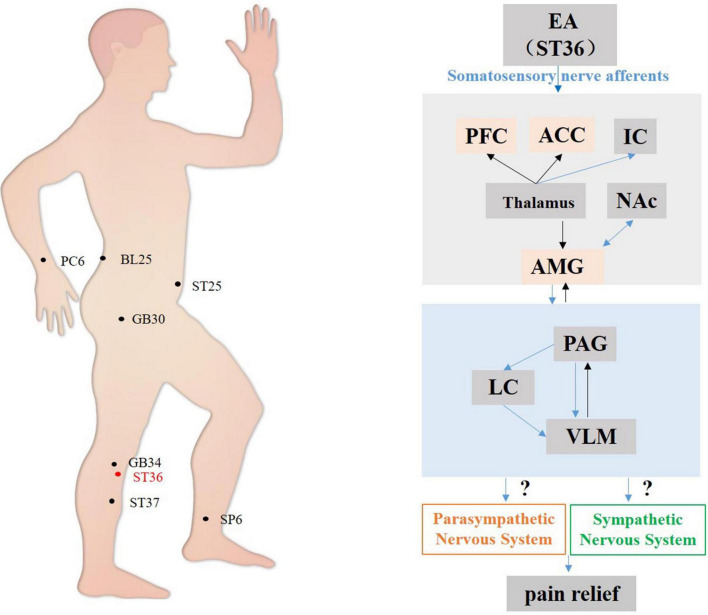
“Strengthening the connection between the AMG and the related nuclei in the PFC, hypothalamus, PAG, and VLM has been proposed to be the potential mechanism underlying the relief of pain-associated emotion by acupuncture, together with other therapeutic effects (Dhond et al., 2008; Liu J. et al., 2016).”
BackgroundAcupuncture for Chronic Severe Functional Constipation: A Randomized Trial
Liu, Z., Yan, S., Wu, J., He, L., Li, N., Dong, G., Fang, J., Fu, W., Fu, L., Sun, J., et al. (2016) · Annals of Internal Medicine · doi:10.7326/m15-3118 · Cited by 241
Self-citationLiu, C.-H., Yang, M.-H., Zhang, G.-Z., Wang, X.-X., Li, B., Li, M., Woelfer, M., Walter, M., & Wang, L. (2020) · Journal of Neuroinflammation · doi:10.1186/s12974-020-01732-5 · Cited by 210
Yang, N.-N., Yang, J.-W., Ye, Y., Huang, J., Wang, L., Wang, Y., Su, X.-T., Lin, Y., Yu, F.-T., Ma, S.-M., et al. (2021) · Theranostics · doi:10.7150/thno.52574 · Cited by 204
Defining Meridians: A Modern Basis of Understanding
Longhurst, J. C. (2010) · Journal of Acupuncture and Meridian Studies · doi:10.1016/s2005-2901(10)60014-3 · Cited by 177 · cited 2×
“Neural pathways are crucial to "transmission," which is the transfer of acupuncture signals from acupoints to their intended target organs (Longhurst, 2010).”
BackgroundEvidence on acupuncture therapies is underused in clinical practice and health policy
Lu, L., Zhang, Y., Tang, X., Ge, S., Wen, H., Zeng, J., Wang, L., Zeng, Z., Rada, G., Ávila, C., et al. (2022) · BMJ · doi:10.1136/bmj-2021-067475 · Cited by 170 · cited 1×
“According to the World Health Organization (WHO) Traditional Medicine Strategy: 2014–2023, acupuncture is widely used in 183 countries and regions, and many high-quality clinical studies have verified its efficacy in different applications (Lu et al., 2022).”
BackgroundNerve Stimulation: Immunomodulation and Control of Inflammation
Ulloa, L., Quiroz-Gonzalez, S., & Torres-Rosas, R. (2017) · Trends in Molecular Medicine · doi:10.1016/j.molmed.2017.10.006 · Cited by 168 · cited 1×
“The SNS runs through the spinal cord and innervates most internal organs, and preganglionic sympathetic nerves can activate photochromogenic cells in the adrenal gland to release catecholamines into the blood (Han et al., 2003; Ulloa et al., 2017).”
BackgroundSelf-citationLiu, J., Fang, J., Wang, Z., Rong, P., Hong, Y., Fan, Y., Wang, X., Park, J., Jin, Y., Liu, C., et al. (2016) · Journal of Affective Disorders · doi:10.1016/j.jad.2016.08.003 · Cited by 159
Therapeutic Potential of Vagus Nerve Stimulation for Inflammatory Bowel Diseases
Bonaz, B., Sinniger, V., & Pellissier, S. (2021) · Frontiers in Neuroscience · doi:10.3389/fnins.2021.650971 · Cited by 158 · cited 1×
“Based on the underlying functional pathways and physiological roles of the ANS, we speculate that the ANS plays a significant role in the central nervous circuit activated by acupuncture, leading to the modulation of cardiovascular and gastrointestinal functions, as well as anti-inflammatory and analgesic functions (S…”
BackgroundComplexity of the bi-directional neuroimmune junction in the spleen
Straub, R. H. (2004) · Trends in Pharmacological Sciences · doi:10.1016/j.tips.2004.10.007 · Cited by 141 · cited 4×
“Typically, in acute inflammatory states, the HPA axis and SNS act synergistically or are coupled to each other, leading to enhanced release of cortisol and SNS neurotransmitters, which contribute to the regulation of immune cell activity (Borovikova et al., 2000; Straub, 2004).”
BackgroundInfluentialAcupuncture Effect and Central Autonomic Regulation
Li, Q.-Q., Shi, G.-X., Xu, Q., Wang, J., Liu, C.-Z., & Wang, L.-P. (2013) · Evidence-Based Complementary and Alternative Medicine · doi:10.1155/2013/267959 · Cited by 138 · cited 1×
“Several retrospective studies have shown that the ANS is one of the key neural pathways responsible for the regulating effects of acupuncture at specific acupoints (Li et al., 2013).”
BackgroundAnti-Inflammatory Effects of Acupuncture Stimulation via the Vagus Nerve
Lim, H.-D., Kim, M.-H., Lee, C.-Y., & Namgung, U. (2016) · PLOS ONE · doi:10.1371/journal.pone.0151882 · Cited by 129 · cited 2×
“For example, studies have found that manual acupuncture at ST36 activates neurons and glial cells expressing glutamate and purinergic receptors in the DVC, enhances vagal activity activating splanchnic nerves by increasing synaptic transmission in the DVC circuit, induces an anti-inflammatory response in splenic macro…”
BackgroundLi, P., Tjen‐A‐Looi, S. C., & Longhurst, J. C. (2001) · Autonomic Neuroscience · doi:10.1016/s1566-0702(01)00247-8 · Cited by 122 · cited 1×
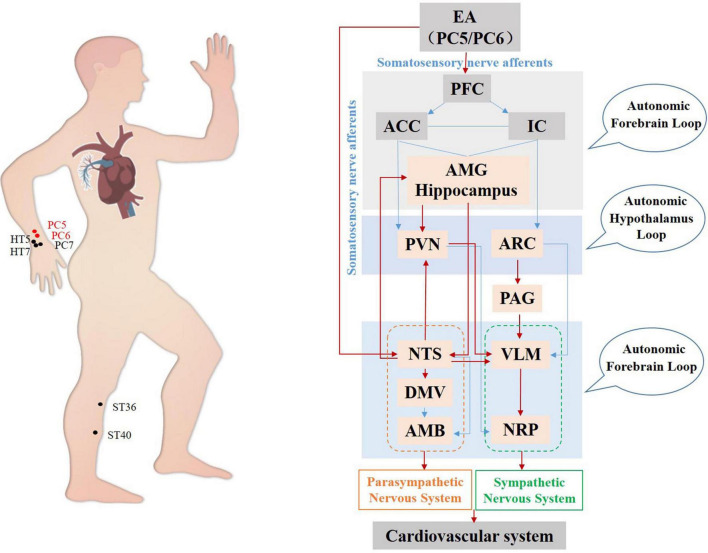
“Acupuncture at the PC5– PC6 acupoints attenuate the visceral sympathetic excitatory response by affecting μ and δ opioid receptors in the VLM (Li et al., 2001; Tjen-A-Looi et al., 2003).”
BackgroundElectroacupuncture activates neurons to switch off inflammation
Ulloa, L. (2021) · Nature · doi:10.1038/d41586-021-02714-0 · Cited by 116 · cited 1×
“The target organs may be modified due to activating efferent nerves or neuro-endocrine pathways (Torres-Rosas et al., 2014; Liu S. et al., 2020, Liu et al., 2021; Ulloa, 2021, 2022).”
BackgroundSelf-citationDual effects of acupuncture on gastric motility in conscious rats
Tatewaki, M., Harris, M., Uemura, K., Ueno, T., Hoshino, E., Shiotani, A., Pappas, T. N., & Takahashi, T. (2003) · American Journal of Physiology-Regulatory, Integrative and Comparative Physiology · doi:10.1152/ajpregu.00715.2002 · Cited by 114 · cited 1×
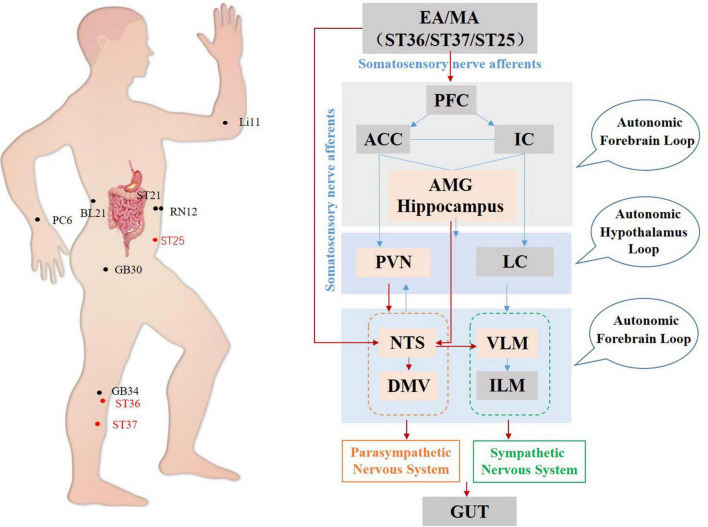
“Acupuncture stimulation to the acupoints on lowerchest Qihai (CV6), middle-dorsum BL21, and whole abdomen Liangmen (ST21), which are homo-segmental to the region of gastric innervation, induces an inhibitory response of gastric motility with increased activities of sympathetic nerves and/or a slight inhibition in the…”
BackgroundOverview of the anatomy, physiology, and pharmacology of the autonomic nervous system
Wehrwein, E. A., Orer, H. S., & Barman, S. M. (2016) · Comprehensive Physiology · doi:10.1002/j.2040-4603.2016.tb00714.x · Cited by 114 · cited 12×
“Using information integration and efferents from a complex network of autonomic nuclei of the brain, such as the insular cortex (IC), prefrontal cortex, anterior cingulate cortex (ACC), amygdala (AMG), hypothalamus, periaqueductal gray (PAG), nucleus tractus solitarius (NTS), ventrolateral medulla (VLM), nucleus ambig…”
BackgroundInfluentialNeural mechanism of acupuncture-modulated gastric motility
Li, Y.-Q. (2007) · World Journal of Gastroenterology · doi:10.3748/wjg.v13.i5.709 · Cited by 113 · cited 1×
“Acupuncture stimulation to the acupoints on lowerchest Qihai (CV6), middle-dorsum BL21, and whole abdomen Liangmen (ST21), which are homo-segmental to the region of gastric innervation, induces an inhibitory response of gastric motility with increased activities of sympathetic nerves and/or a slight inhibition in the…”
BackgroundSelf-citationSchmidt, P., Holsboer, F., & Spengler, D. (2001) · Molecular Endocrinology · doi:10.1210/mend.15.4.0613 · Cited by 106
The Most Commonly Treated Acupuncture Indications in the United States: A Cross-Sectional Study
Wang, H., Yang, G., Wang, S., Zheng, X. X., Zhang, W., & Li, Y. (2018) · The American Journal of Chinese Medicine · doi:10.1142/s0192415x18500738 · Cited by 105 · cited 1×
“Further indications include mental health management of mood disorders, immune system dysfunction, and gastrointestinal, gynecological, and neurological diseases (Wang et al., 2018).”
BackgroundSelf-citationEmotional sweating response in a patient with bilateral amygdala damage
Asahina, M., Suzuki, A., Mori, M., Kanesaka, T., & Hattori, T. (2003) · International Journal of Psychophysiology · doi:10.1016/s0167-8760(02)00123-x · Cited by 91 · cited 1×
“In turn, pain-related regions, including the IC, ACC, and AMG, through their connections to the hypothalamus and brainstem, finally generate autonomous responses through preganglionic and parasympathetic neurons (Asahina et al., 2003).”
BackgroundMidbrain vlPAG inhibits rVLM cardiovascular sympathoexcitatory responses during electroacupuncture
Tjen‐A‐Looi, S. C., Li, P., & Longhurst, J. C. (2006) · American Journal of Physiology-Heart and Circulatory Physiology · doi:10.1152/ajpheart.01329.2005 · Cited by 91 · cited 1×
“It was also found that electroacupuncture at PC5–PC6 activates projections from the vlPAG to the VLM and inhibits the sympathetic excitatory cardiovascular response modulated by the premotor neurons of the VLM (Tjen-A-Looi et al., 2006).”
BackgroundTjen‐A‐Looi, S. C., Li, P., & Longhurst, J. C. (2003) · Autonomic Neuroscience · doi:10.1016/s1566-0702(03)00076-6 · Cited by 88 · cited 2×
“Acupuncture cannot control the activity of other organs, such as the heart, lungs, and so forth, without the involvement of autonomic nerves (Tjen-A-Looi et al., 2003; Zhang X. F. et al., 2018); nevertheless, the functions of particular neurotransmitters in these processes need to be clarified.”
BackgroundKoenig, J., Loerbroks, A., Jarczok, M. N., Fischer, J. E., & Thayer, J. F. (2016) · The Clinical Journal of Pain · doi:10.1097/ajp.0000000000000242 · Cited by 83 · cited 2×
“Using a non-invasive cardiovascular autonomic function test, it was found that electroacupuncture at ashi points in the lower back resulted in analgesia, restored reduced vagal tone, and increased sympathetic activity in patients with CLBP (Shankar et al., 2011).”
BackgroundManabe, N., Tanaka, T., Hata, J., Kusunoki, H., & Haruma, K. (2009) · Journal of Smooth Muscle Research · doi:10.1540/jsmr.45.15 · Cited by 82 · cited 1×
“Increased SNS activity and decreased PNS activity are the most frequently noted differences when IBS patients are compared with healthy controls (Manabe et al., 2009; De Winter et al., 2016).”
BackgroundElectroacupuncture at ST36 modulates gastric motility via vagovagal and sympathetic reflexes in rats
Lu, M., Yu, Z. H., He, Y., Yin, Y., & Xu, B. (2019) · World Journal of Gastroenterology · doi:10.3748/wjg.v25.i19.2315 · Cited by 81
Weng, Z., Wu, L. Y., Zhou, C., Dou, C.-Z., Shi, Y., Liu, H. R., & Wu, H. (2015) · Purinergic Signalling · doi:10.1007/s11302-015-9447-6 · Cited by 78 · cited 1×
“P2 × 3 receptors play an essential role in visceral pain in IBS and electroacupuncture at ST37, and ST25 has been shown to reduce sensitivity to visceral pain by downregulating P2 × 3 receptor expression in the PFC and ACC of rats (Weng et al., 2015).”
BackgroundGlucocorticoid regulation of beta-adrenergic receptors in 3T3-L1 preadipocytes.
Nakada, M. T., Stadel, J. M., Poksay, K. S., & Crooke, S. T. (1987) · Molecular Pharmacology · doi:10.1016/s0026-895x(25)10446-x · Cited by 78 · cited 1×
“Autonomic nerves can also influence the number of β-adrenergic receptors expressed on immune cells through activation of the HPA axis and the subsequent release of cortisol (Nakada et al., 1987).”
BackgroundKim, H., Uh, D.-K., Yoon, S. Y., Roh, D., Kwon, Y., Han, H. J., Lee, H., Beitz, A. J., & Lee, J. (2008) · Brain Research Bulletin · doi:10.1016/j.brainresbull.2007.11.015 · Cited by 76
Kim, H., Roh, D., Yoon, S. Y., Kang, S.-Y., Kwon, Y., Han, H. J., Lee, H., Choi, S.-M., Ryu, Y.-H., Beitz, A. J., et al. (2006) · The Journal of Alternative and Complementary Medicine · doi:10.1089/acm.2006.12.39 · Cited by 74 · cited 1×
“In contrast, low-frequency electroacupuncture stimulation at ST36 reduced inflammation in a mouse air pouch inflammation model, surgical trauma, sepsis, and arthritis through local sympathetic post-ganglion nerves (Wang et al., 2005; Kim et al., 2006; Santos-Almeida et al., 2017).”
BackgroundChi, L., Du, K., Liu, D., Bo, Y., & Li, W. (2017) · Journal of Cerebral Blood Flow & Metabolism · doi:10.1177/0271678x17697988 · Cited by 74 · cited 1×
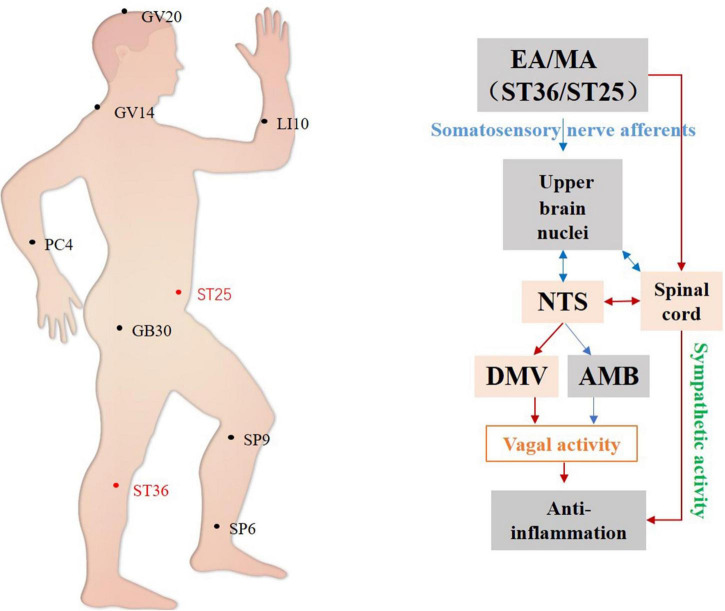
“Electroacupuncture at Baihui (GV20) and Dazhui (GV14) has been found to improve cerebral blood perfusion in mouse models of ischemic stroke, reducing brain injury, apoptosis, oxidative stress, and inflammation through vagal stimulation (Chi et al., 2018).”
BackgroundSelf-citationZhou, H. F., Liang, H., Li, Z., Xiang, H., Liu, W., & Li, J.-G. (2013) · Shock · doi:10.1097/shk.0b013e318299e9c0 · Cited by 72
Electroacupuncture therapy in inflammation regulation: current perspectives
Park, J.-Y., & Namgung, U. (2018) · Journal of Inflammation Research · doi:10.2147/jir.s141198 · Cited by 71 · cited 1×
“Based on the underlying functional pathways and physiological roles of the ANS, we speculate that the ANS plays a significant role in the central nervous circuit activated by acupuncture, leading to the modulation of cardiovascular and gastrointestinal functions, as well as anti-inflammatory and analgesic functions (S…”
BackgroundMoazzami, A. R., Tjen‐A‐Looi, S. C., Guo, Z., & Longhurst, J. C. (2010) · Journal of Applied Physiology · doi:10.1152/japplphysiol.00477.2009 · Cited by 70 · cited 1×
“It was found that electroacupuncture at PC5–PC6 activated serotonin (5-hydroxytryptamine, 5-HT)-containing neurons in the NRP and suppressed the cardiovascular sympathetic excitatory reflex by activating 5-HT1a receptors in the VLM (Moazzami et al., 2010).”
BackgroundDu, M., Hongmin, L., Hu, S., Lv, Y., Lin, Z., & Ma, L. (2013) · World Journal of Gastroenterology · doi:10.3748/wjg.v19.i36.5988 · Cited by 70
Salman, I. M. (2016) · Current Hypertension Reports · doi:10.1007/s11906-016-0625-x · Cited by 66 · cited 2×
“…ANS plays a significant role in the central nervous circuit activated by acupuncture, leading to the modulation of cardiovascular and gastrointestinal functions, as well as anti-inflammatory and analgesic functions (Salman, 2016; Park and Namgung, 2018; Yang and Chang, 2019; Bonaz et al., 2021).”
BackgroundLi, A., Lao, L., Wang, Y., Xin, J., Ren, K., Berman, B. M., Tan, M., & Zhang, R. (2008) · BMC Complementary and Alternative Medicine · doi:10.1186/1472-6882-8-20 · Cited by 65
Hallman, D., Lindberg, L.-G., Arnetz, B. B., & Lyskov, E. (2011) · European Journal of Applied Physiology · doi:10.1007/s00421-010-1813-z · Cited by 64 · cited 1×
“Increased sympathetic activity has been found to exacerbate myofascial trigger points for spontaneous local pain in patients with chronic neck and shoulder pain (Hallman et al., 2011).”
BackgroundZhang, X., Xiang, S.-Y., Geng, W., Cong, W.-J., Lu, J., Jiang, C., Wang, K., & Liu, Z.-B. (2018) · Journal of Chinese Integrative Medicine · doi:10.1016/j.joim.2018.10.003 · Cited by 62
Wu, J. C., Ziea, E. T.-C., Lao, L., Lam, E. F. C., Chan, C. S., Liang, A. Y., Chu, S. L., Yew, D. T.-W., Berman, B., & Sung, J. J. �. (2010) · Journal of Neurogastroenterology and Motility · doi:10.5056/jnm.2010.16.3.306 · Cited by 58 · cited 1×
“by downregulating 5-HT neuronal activity in the brainstem and spinal cord (Wu et al., 2010).”
BackgroundCentral Neurocircuits Regulating Food Intake in Response to Gut Inputs—Preclinical Evidence
Browning, K. N., & Carson, K. E. (2021) · Nutrients · doi:10.3390/nu13030908 · Cited by 57 · cited 1×
“For example, studies have found that NMDA receptordependent synaptic activity in the DMV of the vagus nerve mediates electroacupuncture stimulation at ST36 to enhance gastric motility (Gao et al., 2012; Browning and Carson, 2021); It has also been demonstrated that electroacupuncture at ST36 and ST37 can activate neur…”
BackgroundZhou, W., Fu, L., Guo, Z., & Longhurst, J. C. (2006) · American Journal of Physiology-Heart and Circulatory Physiology · doi:10.1152/ajpheart.00875.2006 · Cited by 52 · cited 2×
“Electroacupuncture at PC5–PC6 can also inhibit the action of glutamate in the VLM through opioid receptors, thereby attenuating the bradykinin (BK)-induced visceral sympathetic excitatory reflex in cats (Zhou et al., 2007).”
BackgroundLi, P., Tjen-A-Looi, S. C., Guo, Z.-L., & Longhurst, J. C. (2010) · Autonomic Neuroscience · doi:10.1016/j.autneu.2010.05.006 · Cited by 49 · cited 4×
“It has been found that press needle stimulation at Ximen (PC4), Shousanli (LI10), Yinlingquan (SP9), and Sanyingjiao (SP6) could improve Beck’s Depression Inventory scores, systolic/diastolic blood pressure, and the coefficient of variation between the R-R intervals of depressed patients,…”
BackgroundInfluentialZhang, X., Feng, C., Pei, L., Zhang, Y.-N., Chen, L., Wei, X., Zhou, J. J., Yong, Y., & Wang, K. (2021) · Frontiers in Neuroscience · doi:10.3389/fnins.2021.657507 · Cited by 49
Zhang, C.-R., Xia, C., Jiang, M., Zhu, M., Zhu, J., Du, D., Liu, M., Wang, J., & Zhu, D. (2013) · Brain Research Bulletin · doi:10.1016/j.brainresbull.2013.05.013 · Cited by 45 · cited 1×
“Repeated electroacupuncture stimulation at ST36 can reduce the expression of both apelin and its receptor in the VLM of hypertensive rats (Zhang et al., 2013).”
BackgroundShankar, N., Thakur, M., Tandon, O. P., Saxena, A. K., Arora, S. S., & Bhattacharya, N. (2011) · PubMed · Cited by 44
Sympathetic Dysfunction in Patients With Chronic Low Back Pain and Failed Back Surgery Syndrome
El-Badawy, M. A., & Mikkawy, D. M. E. E. (2015) · Clinical Journal of Pain · doi:10.1097/ajp.0000000000000250 · Cited by 44
Ho, R. S. T., Chung, V. C., Wong, C. H. L., Wu, J. C. Y., Wong, S. Y. S., & Wu, X. (2017) · Scientific Reports · doi:10.1038/s41598-017-09856-0 · Cited by 44 · cited 1×
“According to multiple meta-analyses, acupuncture is a valuable option for individuals who are unsuitable for prokinetic therapy and experience fewer side effects than gastrointestinal motility drugs used to treat functional dyspepsia (Ho et al., 2017).”
BackgroundTominaga, K., Fujikawa, Y., Tsumoto, C., Kadouchi, K., Tanaka, F., Kamata, N., Yamagami, H., Tanigawa, T., Watanabe, T., Fujiwara, Y., et al. (2016) · Journal of Clinical Biochemistry and Nutrition · doi:10.3164/jcbn.15-140 · Cited by 43
Paraventricular Nucleus Modulates Excitatory Cardiovascular Reflexes during Electroacupuncture
Tjen‐A‐Looi, S. C., Guo, Z., Fu, L., & Longhurst, J. C. (2016) · Scientific Reports · doi:10.1038/srep25910 · Cited by 41 · cited 1×
“of elevated blood pressure through a PVN-opioid mechanism (Tjen-A-Looi et al., 2016).”
BackgroundSantos‐Almeida, F. M., Domingos-Souza, G., Meschiari, C. A., Fávaro, L. C., Becari, C., Castania, J. A., Lopes, A. H., Cunha, T. M., Moraes, D. J. A., Cunha, F. Q., et al. (2017) · Scientific Reports · doi:10.1038/s41598-017-06703-0 · Cited by 40 · cited 1×
“In contrast, low-frequency electroacupuncture stimulation at ST36 reduced inflammation in a mouse air pouch inflammation model, surgical trauma, sepsis, and arthritis through local sympathetic post-ganglion nerves (Wang et al., 2005; Kim et al., 2006; Santos-Almeida et al., 2017).”
BackgroundSelf-citationWang, H., Liu, W.-J., Shen, G.-M., Zhang, M.-T., Huang, S., & He, Y. (2015) · World Journal of Gastroenterology · doi:10.3748/wjg.v21.i48.13480 · Cited by 38 · cited 1×
“and DVC neurons and vagal efferents (Wang et al., 2015).”
Li, Y., Zhang, H., Yang, J., Zhan, M., Hu, X., Liu, Y., Yu, L., Yan, X., Liang, S., Zhang, R., et al. (2021) · Chinese Medicine · doi:10.1186/s13020-021-00553-9 · Cited by 38
Self-citationEA at PC6 Promotes Gastric Motility: Role of Brainstem Vagovagal Neurocircuits
Lu, M., Chen, C., Li, W., Yu, Z. H., & Xu, B. (2019) · Evidence-based Complementary and Alternative Medicine · doi:10.1155/2019/7457485 · Cited by 37
Self-citationNoda, Y., Izuno, T., Tsuchiya, Y., Hayasaka, S., Matsumoto, K., Murakami, H., Ito, A., Shinse, Y., Suzuki, A., & Nakamura, M. (2015) · Complementary Therapies in Clinical Practice · doi:10.1016/j.ctcp.2015.07.002 · Cited by 35 · cited 1×
“It has been found that press needle stimulation at Ximen (PC4), Shousanli (LI10), Yinlingquan (SP9), and Sanyingjiao (SP6) could improve Beck’s Depression Inventory scores, systolic/diastolic blood pressure, and the coefficient of variation between the R-R intervals of depressed patients, suggesting that acupuncture t…”
BackgroundNovel nervous system mechanisms in visceral pain
Winter, B. Y. D., Deiteren, A., & Man, J. G. D. (2016) · Neurogastroenterology & Motility · doi:10.1111/nmo.12785 · Cited by 33
Liu, Z., Ge, Y., Xu, F., Xu, Y., Liu, Y., Xia, F., Lin, L., & Chen, J. D. Z. (2018) · American Journal of Physiology-Gastrointestinal and Liver Physiology · doi:10.1152/ajpgi.00049.2018 · Cited by 32 · cited 1×
“Percutaneous electrical stimulation at ST36 reduces the cumulative incidence of constipation after apoplexy, increases the number of weekly and spontaneous defecations, reduces defecation strain, improves stool consistency, increases vagal nerve activity, and reduces sympathetic nerve activity (Liu et al., 2018).”
BackgroundZhang, S., Li, S., Liu, Y., Ye, F., Yin, J., Foreman, R. D., Wang, D., & Chen, J. D. Z. (2018) · Neurogastroenterology & Motility · doi:10.1111/nmo.13381 · Cited by 32
Guo, Z., & Longhurst, J. C. (2010) · Brain Research · doi:10.1016/j.brainres.2010.08.102 · Cited by 31 · cited 1×
“It was reported that after PC5–PC6 electroacupuncture stimulation, some neurons in the arcuate nucleus (ARC) and vlPAG of mice injected with tracer were reactive for c-Fos, retrograde tracer, and vesicular glutamate transporter 3 (VGLUT3), suggesting that electroacupuncture at PC5–PC6 attenuates sympathetic excitatory…”
BackgroundNucleus ambiguus cholinergic neurons activated by acupuncture: Relation to enkephalin
Guo, Z., Li, M., & Longhurst, J. C. (2012) · Brain Research · doi:10.1016/j.brainres.2012.01.006 · Cited by 31 · cited 1×
“It has been shown that electroacupuncture at the PC5–PC6 activates preganglionic parasympathetic neurons in the AMB and attenuates excitatory cardiovascular reflexes through the enkephalinergic mechanism (Guo et al., 2012).”
BackgroundTjen‐A‐Looi, S. C., Guo, Z., Li, M., & Longhurst, J. C. (2013) · American Journal of Physiology-Regulatory, Integrative and Comparative Physiology · doi:10.1152/ajpregu.00451.2012 · Cited by 30 · cited 2×
“Electroacupuncture at PC5– PC6 can inhibit sympathetic efferents by activating GABA or opioid peptide neurons in the VLM, which, in turn, modulate visceral function (Tjen-A-Looi et al., 2013; Guo and Malik, 2019).”
BackgroundElectroacupuncture suppresses surgical trauma stress-induced lymphocyte apoptosis in rats
Wang, J., Wang, Y., Yu, J. M., Cao, X.-D., & Wu, G.-C. (2005) · Neuroscience Letters · doi:10.1016/j.neulet.2005.03.068 · Cited by 29 · cited 1×
“In contrast, low-frequency electroacupuncture stimulation at ST36 reduced inflammation in a mouse air pouch inflammation model, surgical trauma, sepsis, and arthritis through local sympathetic post-ganglion nerves (Wang et al., 2005; Kim et al., 2006; Santos-Almeida et al., 2017).”
BackgroundDeng, D., Pang, Y., Duan, G., Liu, H., Liao, H., Liu, P., Liu, Y., Li, S., Chen, W., Wen, D., et al. (2017) · European Radiology · doi:10.1007/s00330-017-5206-0 · Cited by 29 · cited 1×
“It was found that the pathogenesis of the premenstrual syndrome is closely related to the abnormal functional network of the AMG (Deng et al., 2018).”
BackgroundBioelectronic neuro-immunology: Neuronal networks for sympathetic-splenic and vagal-adrenal control
Ulloa, L. (2022) · Neuron · doi:10.1016/j.neuron.2022.09.015 · Cited by 28 · cited 1×
“The target organs may be modified due to activating efferent nerves or neuro-endocrine pathways (Torres-Rosas et al., 2014; Liu S. et al., 2020, Liu et al., 2021; Ulloa, 2021, 2022).”
BackgroundSelf-citationGao, X., Qiao, Y., Jia, B., Jing, X., Cheng, B., Wen, L., Tan, Q., Zhou, Y., Zhu, B., & Qiao, H. (2012) · Evidence-based Complementary and Alternative Medicine · doi:10.1155/2012/438460 · Cited by 25
Houten, J. M. V., Wessells, R. J., Lujan, H. L., & DiCarlo, S. E. (2015) · Medical Hypotheses · doi:10.1016/j.mehy.2015.09.018 · Cited by 24
Zhou, M., Cui, S., Wang, K., Wu, S.-B., Zhu, G., Cao, J., & Zhou, Y. (2018) · Neural Regeneration Research · doi:10.4103/1673-5374.237124 · Cited by 23 · cited 2×
“By stimulating the hippocampus-NTS-vagus nerve pathway, electroacupuncture at HT7-HT5 can decrease HR, increase mean arterial pressure (MAP), and increase the HR-blood pressure product (RPP) in myocardial ischemiasusceptible rats (Cui et al., 2018b).”
BackgroundHsu, H., Hsieh, C., Lee, K.-T., & Lin, Y. (2020) · Acupuncture in Medicine · doi:10.1136/acupmed-2017-011395 · Cited by 23 · cited 1×
“Electroacupuncture at ST36 has also been shown to reduce neuroinflammation by downregulating the TRPV1-PERK signaling pathway in the mouse AMG, somatosensory cortex, and thalamus to attenuate acid saline injection-induced nociceptive hyperalgesia, suggesting that pain-related signaling pathways in the AMG are involved…”
BackgroundZhang, Q., Tan, Y., Liu, X., Yao, F., & Cao, D. (2018) · Neural Plasticity · doi:10.1155/2018/8919347 · Cited by 22
Wang, J., Ming, Q., Liu, X., Huang, Y., Chen, L.-W., Qiu, J., Duan, L. N., Cao, R. Y., & Rao, Z. (2007) · The American Journal of Chinese Medicine · doi:10.1142/s0192415x07004977 · Cited by 21 · cited 3×
“For example, electroacupuncture at ST36 and PC6 can improve gastrointestinal motility in rats with gastric dilatation by stimulating vagus nerves (Wang et al., 2007; Lu M. et al., 2019); and electroacupuncture at PC5 and PC6 can reduce cardiovascular excitatory response and regulate blood pressure by the stimulating t…”
BackgroundInfluentialZhao, M., Wang, Z., Weng, Z., Zhang, F., Li, G., Ma, Z., Wu, H., Xin, Y., Liu, H., & Zhao, J. (2020) · Evidence-based Complementary and Alternative Medicine · doi:10.1155/2020/2562979 · Cited by 21 · cited 17×
“Using information integration and efferents from a complex network of autonomic nuclei of the brain, such as the insular cortex (IC), prefrontal cortex, anterior cingulate cortex (ACC), amygdala (AMG), hypothalamus, periaqueductal gray (PAG), nucleus tractus solitarius (NTS), ventrolateral medulla (VLM), nucleus ambig…”
BackgroundInfluentialSong, X., Wu, X., Li, J., Le, L.-L., Liang, H., Yang, X., Zhang, Z., & Wang, Y. (2015) · Burns · doi:10.1016/j.burns.2015.03.004 · Cited by 20 · cited 1×
“Electroacupuncture at ST36 has also been found to prevent inflammation and lung tissue damage caused by burns through regulating the activity of the vagus nerve (Song et al., 2015).”
BackgroundGao, X., Zhao, Y.-X., Su, Y., Liu, K., Yu, X.-C., Changxiang, C., Yang, Z.-K., Shi, H., Jing, X., & Zhu, B. (2016) · PLoS ONE · doi:10.1371/journal.pone.0168200 · Cited by 20
Wang, H., Shen, G.-M., Liu, W.-J., Huang, S., & Zhang, M. (2013) · Evidence-based Complementary and Alternative Medicine · doi:10.1155/2013/291764 · Cited by 18 · cited 1×
“It has been found that signals generated by electroacupuncture stimulation at BL21 and RN12 acupoints in rats were concentrated in the hypothalamic PVN and DVC and were involved in regulating gastric motility through the upregulation of gastrointestinal hormones in the gastric lumen (Wang et al., 2013).”
BackgroundGuo, Z., & Malik, S. (2018) · Brain Research · doi:10.1016/j.brainres.2018.12.009 · Cited by 18 · cited 1×
“Electroacupuncture at PC5– PC6 can inhibit sympathetic efferents by activating GABA or opioid peptide neurons in the VLM, which, in turn, modulate visceral function (Tjen-A-Looi et al., 2013; Guo and Malik, 2019).”
BackgroundCui, S., Zhou, Y., Wu, S.-B., Cao, J., Zhu, G., & Zhou, M. (2018) · Evidence-based Complementary and Alternative Medicine · doi:10.1155/2018/2870676 · Cited by 17
Zhang, Q., Tan, Y., Wen, X., & Li, F. (2022) · International Journal of Hypertension · doi:10.1155/2022/9990854 · Cited by 15 · cited 1×
“Electroacupuncture at ST36 and ST40 has been found to reduce chronic stress-induced sympathetic activity enhancement, and can upregulate the expression of neuropeptide-y (NPY) in hypothalamic PVN and plasma, and exerts a hypotensive effect in hypertensive rats, which was counteracted by PVN microinjection with NPY rec…”
BackgroundZhang, M., Sun, J., Wang, Y., & Tian, Z. (2021) · Neural Plasticity · doi:10.1155/2021/8881136 · Cited by 13
Electroacupuncture Protects against CCK-Induced Acute Pancreatitis in Rats
An, H., Lee, J., Lee, H., Yang, W. M., Park, S.-K., Hong, S.-H., Kim, H., & Um, J. (2007) · NeuroImmunoModulation · doi:10.1159/000107793 · Cited by 11 · cited 1×
“pro-inflammatory cytokine production, reducing inflammation and having a protective effect on the pancreas (An et al., 2007).”
BackgroundHe, F., Wang, M., Geng, X., & Hong-bin, A. (2018) · Acupuncture in Medicine · doi:10.1136/acupmed-2017-011450 · Cited by 11
The role of the sympathetic nervous system in moxibustion-induced immunomodulation in rats
Han, J. B., Oh, S.-D., Lee, K.-S., Choi, K.-S., Cho, Y., Ahn, H.-J., Bae, H., & Min, B.-I. (2003) · Journal of Neuroimmunology · doi:10.1016/s0165-5728(03)00211-x · Cited by 10 · cited 1×
“The SNS runs through the spinal cord and innervates most internal organs, and preganglionic sympathetic nerves can activate photochromogenic cells in the adrenal gland to release catecholamines into the blood (Han et al., 2003; Ulloa et al., 2017).”
BackgroundPang, Y., Liao, H., Duan, G., Feng, Z., Liu, H., Zou, Z., Tao, J., Li, J., He, H., Gao, C., et al. (2020) · Gynecological Endocrinology · doi:10.1080/09513590.2020.1855633 · Cited by 10
Tian, D., Mo, F., Cai, X., Miao, Z., Xiao, F., Chang, Y.-F., Wu, L., Tang, Y., Wang, X., Ye, C., et al. (2018) · Acupuncture in Medicine · doi:10.1136/acupmed-2016-011202 · Cited by 9
Chen, W., Chen, S., Li, C., Wang, J., Duanmu, C.-L., Chang, X.-R., & Liu, J. (2016) · PubMed · Cited by 2
Cited by
The immunomodulatory mechanisms for acupuncture practice
Wang, M., Liu, W., Ge, J., & Liu, S. (2023) · Frontiers in Immunology · doi:10.3389/fimmu.2023.1147718 · Cited by 172
“Frontiers in Immunology 06 inflammation, analgesic anesthesia,and more (84).”
BackgroundEffects of TCM on polycystic ovary syndrome and its cellular endocrine mechanism
Chen, H., Deng, C., Meng, Z., & Meng, S. (2023) · Frontiers in Endocrinology · doi:10.3389/fendo.2023.956772 · Cited by 61
“Acupuncture can control the function of the autonomic nervous system (ANS); it can balance the sympathetic and parasympathetic nerve activity, regulate the adaptive neurotransmitters in related brain regions, and reduce the autonomic response, which has been proved to have a certain curative effect on PCOS patients (1…”
BackgroundObjectivization study of acupuncture Deqi and brain modulation mechanisms: a review
Zhong, Z., Yao, L., Liu, Y., Wang, Y., He, M., Sun, M., Huang, H., Ma, S., Zheng, H., Li, M., et al. (2024) · Frontiers in Neuroscience · doi:10.3389/fnins.2024.1386108 · Cited by 46
Jiang, T., Chen, Z., Liu, J., Yin, X.-J., Tan, Z., Wang, G. G., Ли, Б., & Guo, J. (2024) · BMC Complementary Medicine and Therapies · doi:10.1186/s12906-024-04612-0 · Cited by 38
“The ACC, amygdala, and thalamus all belong to the autonomic nuclei of the brain and are affected by inputs from the internal and external environments [89].”
BackgroundGuo, J., Guo, J., Rao, X., Zhang, R., Li, Q., Zhang, K., Ma, S., Zhao, J., & Ji, C. (2024) · Frontiers in Microbiology · doi:10.3389/fmicb.2024.1456848 · Cited by 32
Metadata
- Authors
- Li, Y.-W., Li, W., Wang, S.-T., Gong, Y.-N., Dou, B.-M., Lyu, Z.-X., Ulloa, L., Wang, S.-J., Xu, Z.-F., & Guo, Y.
- Affiliations
- Tianjin University of Traditional Chinese Medicine (CN)
- Duke University (US)
- Corresponding author
- Wang, Shen-Jun
- Guo, Yi
- Venue
- Frontiers in Neuroscience
- Publisher
- Frontiers Media SA
- Published
- 2022-12-08
- Volume
- 16
- Pages
- 1038945-1038945
- ISSN
- 1662-453X (ISSN-L)
- PMC
- PMC9772996
- OpenAlex
- W4311858759
- Cited by
- 141
- References
- 96
- Citations by year
- 2026: 48 · 2025: 53 · 2024: 29 · 2023: 11
- FWCI
- 5.39
- Type
- journal article
- Language
- en
- Open access
- gold
- doi.org
- Licence
- Locations
- Frontiers in Neuroscience (publishedVersion, cc-by)
- PubMed Central (publishedVersion, cc-by)
- PubMed (publishedVersion)
- DOAJ (DOAJ: Directory of Open Access Journals) (submittedVersion, cc-by-sa)
- Funders
- National Natural Science Foundation of China (82030125, 81873369)
- Topics
- Health Sciences › Medicine › Complementary and alternative medicine › Acupuncture Treatment Research Studies
- Life Sciences › Neuroscience › Neurology › Vagus Nerve Stimulation Research
- Health Sciences › Medicine › Complementary and alternative medicine › Traditional Chinese Medicine Studies
- Keywords
- acupuncture, autonomic nervous system, homeostasis, sympathetic nervous system, parasympathetic nervous system, enteric nervous system, acupoint stimulation, migraine, depression, insomnia, functional dyspepsia, functional constipation, visceral dysfunction, inflammation, pain, insula, anterior cingulate cortex, amygdala, nucleus tractus solitarius, nucleus ambiguus, periaqueductal gray, ventrolateral medulla
About these checks
Registry, retraction, Cites and statistics results are computed, not judged, with one exception: a printed reference that no index lists is read once by a model before it counts as a citation error. Claims are extracted by a model and kept only when their quote appears verbatim in the text; each cited source is then checked, with a model’s help, for whether it says what the claim relies on. Those verdicts can be wrong — read the claim’s quote and the cited source before relying on one.
Statistics and arithmetic are recomputed, not judged.
Confidence bands are shown only for fields calibrated on our annotated test set. None is calibrated yet, so no band is shown.
What counts as a claim ›How we measure confidence ›How we check this ›
Are you an author, or do you see a problem with this page? Request a review
Data sources
Bibliographic data: Semantic Scholar, OpenAlex, Crossref.
Contains information from the Semantic Scholar Academic Graph Datasets, made available under the ODC Attribution License (ODC-BY 1.0).
Semantic Scholar’s data is described in: Kinney, R., et al. (2023). The Semantic Scholar Open Data Platform. arXiv:2301.10140.
