

The DOI matches its Crossref record; 261 of the 262 references it cites were found in a registry or an index.
Endothelial dysfunction, platelet hyperactivity, hypertension, and the metabolic syndrome: molecular insights and combating strategies
Open accessAbstract
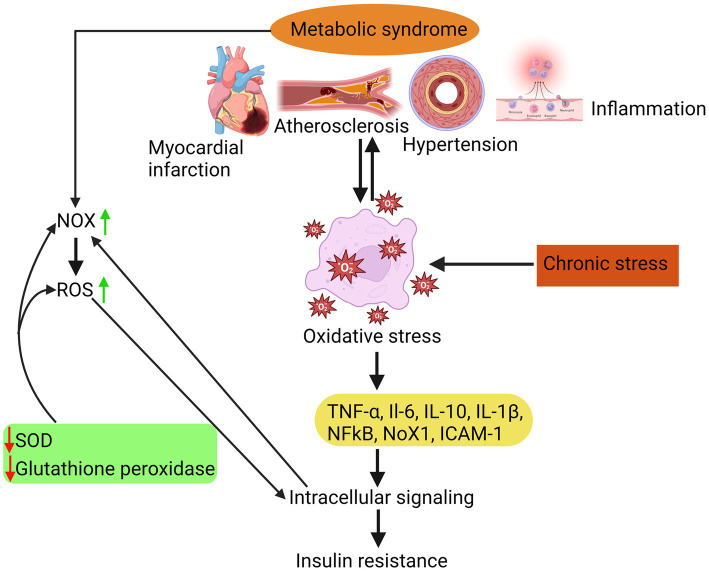
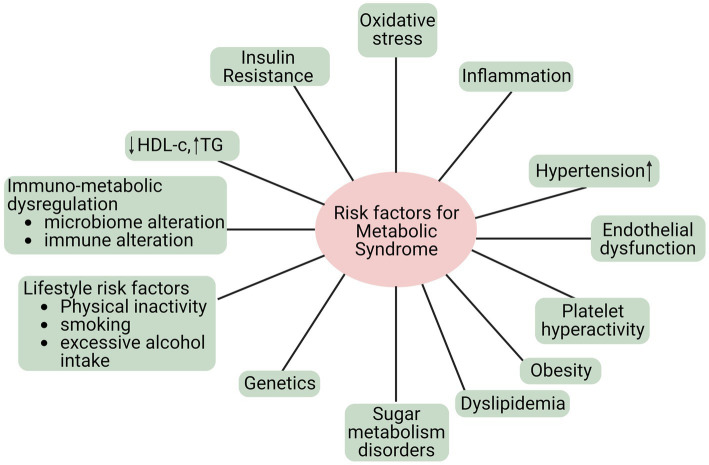
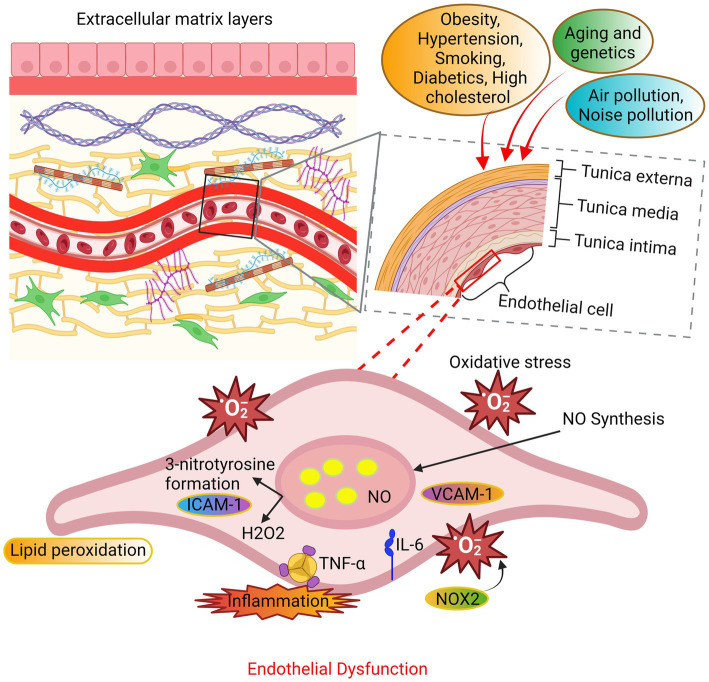
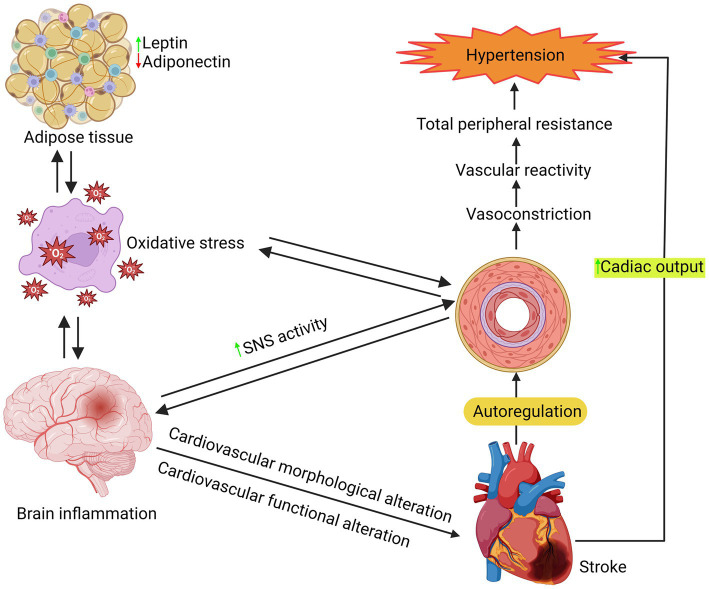
Metabolic syndrome (MetS) is a multifaceted condition that increases the possibility of developing atherosclerotic cardiovascular disease. MetS includes obesity, hypertension, dyslipidemia, hyperglycemia, endothelial dysfunction, and platelet hyperactivity. There is a concerning rise in the occurrence and frequency of MetS globally. The rising incidence and severity of MetS need a proactive, multipronged strategy for identifying and treating those affected. For many MetS patients, achieving recommended goals for healthy fat intake, blood pressure control, and blood glucose management may require a combination of medicine therapy, lifestyles, nutraceuticals, and others. However, it is essential to note that lifestyle modification should be the first-line therapy for MetS. In addition, MetS requires pharmacological, nutraceutical, or other interventions. This review aimed to bring together the etiology, molecular mechanisms, and dietary strategies to combat hypertension, endothelial dysfunction, and platelet dysfunction in individuals with MetS.
Overview
The claims and statistics of this paper haven’t been checked yet.
Run the check — free, no account needed. It reads the open-access text and checks the sources it cites.
Integrity signals
Registry
Cites
Statistics
Figures
Verification
Claims the paper makes
The claims and statistics of this paper haven’t been checked yet.
Run the check — free, no account needed. It reads the open-access text and checks the sources it cites.
Claims other papers make about this one
Each is checked against this paper’s own text: does it say what the citing paper says it does?
The source backs part of the claim, not all of it — or backs it for a different population, condition or comparison.
In the citing paper
“Hyperglycaemia, insulin resistance and chronic inflammation promote the formation of ROS, which scavenge NO and impair eNOS activity.”
From Dietary Nitrate-Rich Vegetables as Natural Modulators of Health: Mechanisms and Benefits in Ageing Populations (2026) · cites this paper as [205]
Experimental — accuracy not yet measuredThe cited source says what the claim attributes to it.
In the citing paper
“This accelerates vascular damage and atherogenesis [205,206].”
From Dietary Nitrate-Rich Vegetables as Natural Modulators of Health: Mechanisms and Benefits in Ageing Populations (2026) · cites this paper as [205]
Self-check
Percentages, sums and reported differences re-computed from the paper’s own numbers.
The self-check needs the paper’s full text.
Citations
Cites
Role of Insulin Resistance in Human Disease
Reaven, G. M. (1988) · Diabetes · doi:10.2337/diab.37.12.1595 · Cited by 12,154
Obesity: global epidemiology and pathogenesis
Blüher, M. (2019) · Nature Reviews Endocrinology · doi:10.1038/s41574-019-0176-8 · Cited by 5,126
MicroRNA therapeutics: towards a new era for the management of cancer and other diseases
Rupaimoole, R., & Slack, F. J. (2017) · Nature Reviews Drug Discovery · doi:10.1038/nrd.2016.246 · Cited by 4,741 · cited 1×
“Both of these systems play a role in the regulation of translation (204).”
BackgroundOxidative stress, aging, and diseases
Liguori, I., Russo, G., Curcio, F., Bulli, G., Aran, L., Della-Morte, D., Gargiulo, G., Testa, G., Cacciatore, F., Bonaduce, D., et al. (2018) · Clinical Interventions in Aging · doi:10.2147/cia.s158513 · Cited by 3,979
Exercise as medicine - evidence for prescribing exercise as therapy in 26 different chronic diseases
Pedersen, B. K., & Saltin, B. (2015) · Scandinavian Journal of Medicine & Science in Sports · doi:10.1111/sms.12581 · Cited by 3,514
DNA methylation: roles in mammalian development
Smith, Z. D., & Meissner, A. (2013) · Nature Reviews Genetics · doi:10.1038/nrg3354 · Cited by 3,045
Endothelial Function and Dysfunction: Testing and Clinical Relevance
Deanfield, J. E., Halcox, J. P., & Rabelink, T. J. (2007) · Circulation · doi:10.1161/circulationaha.106.652859 · Cited by 2,710
A comprehensive definition for metabolic syndrome
Huang, P. L. (2009) · Disease Models & Mechanisms · doi:10.1242/dmm.001180 · Cited by 2,223
Mozaffarian, D. (2016) · Circulation · doi:10.1161/circulationaha.115.018585 · Cited by 2,216
Health effects of quercetin: From antioxidant to nutraceutical
Boots, A. W., Haenen, G. R. M. M., & Bast, A. (2008) · European Journal of Pharmacology · doi:10.1016/j.ejphar.2008.03.008 · Cited by 2,121
Research works printed but not linked: 1
- Siracusa, Neuroinflammation and oxidative stress in the traumatic brain injury and in the pathogenesis of neurodegenerative diseases: modulation by nutritional Supplementation
Cited by
Sorted by citations
Penna, C. R. R., & Pagliaro, P. (2025) · Antioxidants · doi:10.3390/antiox14030256 · Cited by 142
Oxidative Stress and Erectile Dysfunction: Pathophysiology, Impacts, and Potential Treatments
Kaltsas, A., Zikopoulos, A., Dimitriadis, F., Sheshi, D., Politis, M., Moustakli, E., Symeonidis, E. N., Chrisofos, M., Sofikitis, N., & Zachariou, A. (2024) · Current Issues in Molecular Biology · doi:10.3390/cimb46080521 · Cited by 95
Endothelial Cell Dysfunction: Onset, Progression, and Consequences
Naderi‐Meshkin, H., & Setyaningsih, W. A. W. (2024) · Frontiers in Bioscience-Landmark · doi:10.31083/j.fbl2906223 · Cited by 78
Dhondge, R. H., Agrawal, S., Patil, R., Kadu, A., & Kothari, M. (2024) · Cureus · doi:10.7759/cureus.67428 · Cited by 60
Exploring the link: Hemogram-derived markers in type 2 diabetes mellitus and its complications
Aktaş, G. (2025) · World Journal of Diabetes · doi:10.4239/wjd.v16.i7.105233 · Cited by 41
Metabolic Syndrome, Thyroid Dysfunction, and Cardiovascular Risk: The Triptych of Evil
Pingitore, A., Gaggini, M., Mastorci, F., Sabatino, L., Cordiviola, L., & Vassalle, C. (2024) · International Journal of Molecular Sciences · doi:10.3390/ijms251910628 · Cited by 39
Effect of anthocyanins on metabolic syndrome through interacting with gut microbiota
Du, L., Ding, X., Tian, Y., Chen, J., & Li, W. (2024) · Pharmacological Research · doi:10.1016/j.phrs.2024.107511 · Cited by 33
Dhurandhar, Y., Tomar, S., Das, A., Prajapati, J. L., Singh, A. K., Bodakhe, S. H., & Namdeo, K. P. (2025) · Molecular Biology Reports · doi:10.1007/s11033-025-10509-z · Cited by 27
Das, D., Jothimani, G., Banerjee, A., Dey, A. K., Duttaroy, A. K., & Pathak, S. (2024) · The International Journal of Biochemistry & Cell Biology · doi:10.1016/j.biocel.2024.106616 · Cited by 25
Self-citationVitamin D as a modulator of molecular pathways involved in CVDs: Evidence from preclinical studies
Sudharma, A. A., Dutta, S., Aboo, S., & Ismail, A. (2024) · Life Sciences · doi:10.1016/j.lfs.2024.123062 · Cited by 28
Yao, H., Yang, J., Li, S., Cui, S. W., Tan, H., & Nie, S. (2024) · International Journal of Biological Macromolecules · doi:10.1016/j.ijbiomac.2024.132744 · Cited by 21
Obesity drives depot-specific vascular remodeling in male white adipose tissue
Hasan, S. S., John, D., Rudnicki, M., AlZaim, I., Eberhard, D., Moll, I., Taylor, J., Klein, C., von Heesen, M., Conradi, L., et al. (2025) · Nature Communications · doi:10.1038/s41467-025-60910-2 · Cited by 20
Balaraman, A. K., Altamimi, A. S. A., Babu, M. A., Goyal, K., Padmapriya, G., Bansal, P., Rajotiya, S., Kumar, M., Rajput, P., Imran, M., et al. (2025) · Biogerontology · doi:10.1007/s10522-025-10190-6 · Cited by 16
Kaimala, S., Yassin, L. K., Hamad, M. I. K., Allouh, M. Z., Sampath, P., Alkaabi, J., Leow, M. K., Shehab, S. A. S., Ansari, S. A., & Emerald, B. S. (2025) · Cardiovascular Diabetology · doi:10.1186/s12933-025-02800-x · Cited by 14
Singh, A., Ashraf, S., Irfan, H., Venjhraj, F., Verma, A., Shaukat, A. F., Tariq, M. D., & Hamza, H. M. (2024) · Annals of Medicine and Surgery · doi:10.1097/ms9.0000000000002971 · Cited by 16
MicroRNA-Mediated Regulation of Vascular Endothelium: From Pro-Inflammation to Atherosclerosis
Silva, V. R., Azar, A., Gonçalves, E. R., Nascimento, T. C. D. M., Buchaim, R. L., Buchaim, D. V., Oliveira, F. A., Nassar, C. C., Camargo, T. M., Caboclo, R. F., et al. (2025) · International Journal of Molecular Sciences · doi:10.3390/ijms26135919 · Cited by 13
Siddiqui, H., Imran, Z., Ali, D., Sajid, M., Khan, T. M., Salim, H., Uddin, M. S., Qureshi, S., Farhan, M., & Waqas, S. A. (2025) · Clinical Cardiology · doi:10.1002/clc.70167 · Cited by 13
Ma, Z., Wang, S., Liu, S., Yang, W., Hu, J., Lv, L., Qian, Y., & Lu, Y. (2025) · Frontiers in Immunology · doi:10.3389/fimmu.2025.1653442 · Cited by 17
Duttaroy, A. K. (2024) · Nutrients · doi:10.3390/nu16213717 · Cited by 14
Self-citationAssociations between metabolic syndrome and erectile dysfunction: evidence from the NHANES 2001–2004
Wang, W., Zhao, S., Zhou, R., Yu, P.-Z., Pan, S.-Y., Huan, P.-F., Shi, Z., Liu, Y., Hu, X., Lu, J., et al. (2025) · Frontiers in Public Health · doi:10.3389/fpubh.2025.1543668 · Cited by 11
Sirivarasai, J., Shantavasinkul, P. C., Thitiwiwatkul, M., Monsuwan, W., Panpunuan, P., & Sritara, P. (2025) · Journal of Clinical Medicine · doi:10.3390/jcm14092998 · Cited by 10
Association between eGDR and accelerated aging: the mediating role of ePWV
Lu, S., Xiong, Y., Meng, X., Shao, D.-M., & Lv, T. (2025) · Diabetology & Metabolic Syndrome · doi:10.1186/s13098-025-01734-4 · Cited by 9
Yuen, C., Devlin, A. M., & Bernatchez, P. N. (2025) · American Journal of Physiology-Heart and Circulatory Physiology · doi:10.1152/ajpheart.00638.2025 · Cited by 9
Mohammadian, K., Basirian, N., Fakhar, F., Keramat, S., & Stanek, A. (2026) · Nutrients · doi:10.3390/nu18050763 · Cited by 8
Jeong, S., & Choi, Y. J. (2024) · Nutrients · doi:10.3390/nu16050724 · Cited by 11
Zamanian, M. Y., Maleki, S., Oghenemaro, E. F., Singh, M., Mohammadi, M., Alkhayyat, A., Sapaev, I. B., Kaur, P., Shirsalimi, N., & Nagarwal, A. (2025) · Naunyn-Schmiedeberg s Archives of Pharmacology · doi:10.1007/s00210-025-04008-y · Cited by 7
Sgromo, C., Cucci, A., Venturin, G., Follenzi, A., & Olgasi, C. (2024) · International Journal of Molecular Sciences · doi:10.3390/ijms252413275 · Cited by 6
The role of the EASIX score in patients with hypertension: a cross-sectional study
Murat, E., Karpat, M. S., Öztürk, Y., Taşkan, H., Köksal, O., Yaşar, A. S., Öcal, A., Asıl, S., Yaşar, S., Çelik, M., et al. (2025) · The Egyptian Heart Journal · doi:10.1186/s43044-025-00710-7 · Cited by 7
Kynurenine pathway in Parkinson’s disease: pathophysiological roles and therapeutic interventions
Chakraborty, A., Chaudhary, P., Das, J., Bhui, U., Aran, K. R., Hussain, M. S., Ashique, S., & Debnath, B. (2025) · Inflammopharmacology · doi:10.1007/s10787-025-02052-x · Cited by 5
Exploring the Link Between Metabolic Syndrome and Cellulite
Adamidis, N., Papalexis, P., & Adamidis, S. (2024) · Cureus · doi:10.7759/cureus.63464 · Cited by 5
Das, D., Jothimani, G., Banerjee, A., Duttaroy, A. K., & Pathak, S. (2024) · Biomedicine & Pharmacotherapy · doi:10.1016/j.biopha.2024.117607 · Cited by 5
Self-citationYu, X., Li, Q., Zhang, D., Guo, K., Sun, W., Huang, W., Gao, L., Yan, R., Li, Y., Wan, J., et al. (2025) · European Journal of Pharmacology · doi:10.1016/j.ejphar.2025.178171 · Cited by 4
Molecular mechanism of phytochemical compounds in mitigating hypertension
Situmorang, P. C., Wibowo, S., Tanjung, M., Susilo, R. J. K., Ananda, Mukra, R., Nugraha, A. P., & Akasah, W. (2025) · Phytomedicine Plus · doi:10.1016/j.phyplu.2025.100812 · Cited by 4
Vatansever, M., Yaman, S., Cimbek, A., Sezgin, Y., & Yaman, S. Ö. (2025) · Metabolites · doi:10.3390/metabo15080521 · Cited by 4
Li, Y., Li, J., Chen, W., Ni, X.-F., Zhang, W., & Zhang, S. (2025) · Scientific Reports · doi:10.1038/s41598-025-08140-w · Cited by 3
Salamanna, F., Giavaresi, G., Martino, A. C. D., Gaudio, A., Nucera, F., Faldini, C., & Fini, M. (2025) · Frontiers in Medicine · doi:10.3389/fmed.2025.1720672 · Cited by 3
Tănăsescu, M., Rosu, A.-M., Mincă, A., Rosu, A.-L., Grigorie, M.-M., Timofte, D., & Ionescu, D. (2026) · Life · doi:10.3390/life16010172 · Cited by 6
Tariq, J., Humaira, M., Ahmed, A. A., Memon, A., Memon, N., & Shah, M. (2024) · Pakistan Journal of Health Sciences · doi:10.54393/pjhs.v5i11.2549 · Cited by 3
Kazemi, A., Deylami, N., Shojaei‐Zarghani, S., & Hashempur, M. H. (2025) · Journal of Dietary Supplements · doi:10.1080/19390211.2025.2490659 · Cited by 4
Saeed, D., Fuenmayor, D., Medina, J. A. N., Saleh, I., Torres, J. D. C., Horn, W. L., Quintanilla, M. H. S., Leiva, K. E., Dannuncio, V., Viteri, M. I., et al. (2024) · Cureus · doi:10.7759/cureus.57544 · Cited by 3
Olopade, E. O., Morakinyo, A. E., Alao, J. O., & Oyedepo, T. A. (2024) · Cell Biochemistry and Function · doi:10.1002/cbf.4095 · Cited by 3
Antioxidants in Cardiovascular Disease
Firdous, S. M., & Pal, S. (2024) · Antioxidants · doi:10.1002/9781394270576.ch4 · Cited by 3
Kurhaluk, N., Kołodziejska, R., Buyun, L., Kamiński, P., & Tkaczenko, H. (2026) · International Journal of Molecular Sciences · doi:10.3390/ijms27083461 · Cited by 3
“This accelerates vascular damage and atherogenesis [205,206].”
Wang, J., Liu, C., Ye, Z., Lin, H., & Chen, L. (2025) · Medicine · doi:10.1097/md.0000000000043006 · Cited by 2
Li, X., Lv, Z.-T., Yu, X., Zhang, Y., Luo, G.-Q., Long, Y., & Yang, W.-D. (2025) · Computers in Biology and Medicine · doi:10.1016/j.compbiomed.2025.111160 · Cited by 2
Tracing the Path from Obesity to Diabetes: How S-Allyl Cysteine Shapes Metabolic Health
Geddo, F., Antoniotti, S., Querio, G., & Gallo, M. P. (2025) · Nutrients · doi:10.3390/nu17213394 · Cited by 2
Tecce, N., Menafra, D., Proganò, M., Tecce, M. F., Pivonello, R., & Colao, A. (2024) · Healthcare · doi:10.3390/healthcare12181823 · Cited by 2
Lee, J., Kwak, J., Jung, J.-H., Kang, D. W., Kim, M. K., Lim, D., Kwon, H., Lee, J. M., Chang, S., Han, K., et al. (2025) · Hypertension Research · doi:10.1038/s41440-025-02244-6 · Cited by 2
Baranauskas, M., Kupčiūnaitė, I., Lieponienė, J., & Stukas, R. (2025) · Nutrients · doi:10.3390/nu17213418 · Cited by 1
Zhou, L., Wu, H., Wu, T., Wang, X., Song, E., Su, F., Adaeze, E. C., Wu, Y., Ma, X., Wang, T., et al. (2026) · Diabetes Metabolic Syndrome and Obesity · doi:10.2147/dmso.s575645 · Cited by 1
Pfützner, A., & Jantz, J. (2026) · Journal of Personalized Medicine · doi:10.3390/jpm16040226 · Cited by 1
Pathophysiology and pharmacotherapy of cardiovascular complications in metabolic syndrome
Dhalla, N. S., Patel, C. A., Beladiya, J., Mehta, A. A., & Gandhi, T. R. (2026) · Journal of Molecular and Cellular Cardiology · doi:10.1016/j.yjmcc.2026.04.007 · Cited by 1
Deng, K., Yao, Y., 成碧萍, & Wang, X. (2026) · Frontiers in Nutrition · doi:10.3389/fnut.2026.1818651 · Cited by 1
Wang, M., Liu, Z., Chen, Y., Wang, S., Ma, Y., Wang, J., Zheng, K., Li, M., Wu, M., Fan, Z., et al. (2026) · European Heart Journal · doi:10.1093/eurheartj/ehag632 · Cited by 1
Jalisi, A., Jahić, R., Kurtović, A., Đešević, M., Husić-Selimović, A., Hodžić, E., Salčin, E. L., Lepara, O., & Fajkić, A. (2024) · Cureus · doi:10.7759/cureus.63389 · Cited by 1
Anti-inflammatory effects of Calebin A on metabolic syndrome via NF-κB signaling pathway modulation
Alanazi, M. A. (2025) · Inflammopharmacology · doi:10.1007/s10787-025-01978-6 · Cited by 1
Possible approaches to reproduction of endothelial dysfunction. searching for the optimal model
Цорин, И. Б., Кожевникова, Л. М., Simonenko, S. A., Суханова, И. Ф., Вититнова, М. Б., & Крыжановский, С. А. (2024) · Pharmacokinetics and Pharmacodynamics · doi:10.37489/2587-7836-2024-2-12-19
Hung, C., Lee, H.-M., & Chiu, C. (2025) · Annals of Medicine and Surgery · doi:10.1097/ms9.0000000000003014
The role of the EASIX score in patients with hypertensionPreprint
Murat, E., Karpat, M. S., Öztürk, Y., Taşkan, H., Köksal, O., Yaşar, A. S., Çeli̇k, M., Yüksel, U. Ç., & Barçın, C. (2025) · Research Square · doi:10.21203/rs.3.rs-6238790/v1
Utkina, A. S., Kovianova, T., Panteleeva, D., & Карагодин, В. П. (2025) · Food Industry · doi:10.29141/2500-1922-2025-10-1-7
Lobov, G. I., & Анатольевна, Ц. И. (2025) · Bulletin of Experimental Biology and Medicine · doi:10.1007/s10517-025-06345-7
Dingal, N. S. (2025) · Annals of Medical Science and Research · doi:10.4103/amsr.amsr_67_24
New Insights in Microcirculation Research in Sepsis
Gorecki, G. P., Pleș, L., Sima, R., Coman, I. S., Grigorean, V. T., Novac, M. B., Pantiș, C., Costache, D. O., & Tomescu, D. R. (2025) · Romanian Journal of Military Medicine · doi:10.55453/rjmm.2025.128.5.4
Arterial stiffness, cardiovascular disease and the risk of type 2 diabetes mellitus
Serhiyenko, A. A., Hotsko, M. E., Sulyma, V. V., & Serhiyenko, V. A. (2025) · INTERNATIONAL JOURNAL OF ENDOCRINOLOGY (Ukraine) · doi:10.22141/2224-0721.21.5.2025.1606
Sulaiman, D. Y., & Mohammad, T. A. M. (2025) · Journal of Interferon & Cytokine Research · doi:10.1177/10799907251394220
Bochar, O. M., Bochar, V. T., BARDYSH, О. М., BARDYSH, М. М., & Sklyarov, E. (2025) · Experimental and Clinical Physiology and Biochemistry · doi:10.25040/ecpb2025.03.005
Triglyceride-Glucose Index and Arterial Stiffness: A Cross-Sectional Study in a Chinese Population
Wang, X., Lv, J., Xiang, Y., Wang, X., & Li, L. (2025) · World Journal of Cardiovascular Diseases · doi:10.4236/wjcd.2025.1512054
Hematological Impact of Cardiovascular–Kidney–Metabolic Syndrome
Tărniceriu, C. C., Hurjui, L. L., & Șerban, L. (2025) · Springer eBooks · doi:10.1007/978-3-032-11445-7_16
Bioactive phytochemicals modulating skin depigmentation, inflammation and cardiovascular pathways
Satapathy, T., & Minj, A. (2026) · Pharmacological Research - Modern Chinese Medicine · doi:10.1016/j.prmcm.2026.100783
Li, Z., Zou, T., & Li, Y. (2026) · Clinical Rheumatology · doi:10.1007/s10067-026-08107-w
Prognostic and diagnostic applications of extracellular vesicles in cardiovascular diseases
Singh, R. P., Acharya, R., & Jain, S. (2026) · Elsevier eBooks · doi:10.1016/b978-0-443-36641-3.00018-8
Zhong, X., Chen, Z., Cao, T., Fan, C., Fu, W., Jiang, Y., & Wu, Y. (2026) · Neurological Sciences · doi:10.1007/s10072-026-09160-8
Agbokoni, H. M., Attakpa, E., Ahui, M. L. B., Aikpe, F. J. A., Bouko, B. O. M. B., Guinnin, F. F. D., Sina, H., & Moussa, F. B. (2026) · Pharmacology & Pharmacy · doi:10.4236/pp.2026.176011
Mao, L., Pan, Z., Hu, W., Dai, H., & Chen, X. (2026) · Medicine · doi:10.1097/md.0000000000049234
Bidkhori, M., Jandaghian-Bidgoli, M., Pourhoseingholi, A., Karimi, P., Shirinbayan, P., & Hooshmand, E. (2026) · Journal of Health Population and Nutrition · doi:10.1186/s41043-026-01348-0
Chae, S. H., Moon, I. Y., & Yi, C. (2026) · medRxiv · doi:10.64898/2026.06.27.26356735
Very late thrombosis of Amplatzer septal occluder device: a case report
Tan, D. J. H., Zulkarnaen, Y., & Tong, J. (2026) · European Heart Journal - Case Reports · doi:10.1093/ehjcr/ytag521
Amalia, A. W., Zhongyong, L., Huang, L., Alrayan, R., Vikasari, S. N., Santini, A., & Nurkolis, F. (2026) · Molecular Biology Reports · doi:10.1007/s11033-026-12366-w
Zokirova, M. S., Samanian, N., Davlatoevich, M. A., Tagayalieva, N., Hesarinejad, M. A., Khamdamovna, N. G., & Saribaeva, D. (2026) · Applied Food Research · doi:10.1016/j.afres.2026.102428
Lule, K. O., YILDIRIM, O., Özsoy, Ö., & Yildiz, H. (2026) · BMC Cardiovascular Disorders · doi:10.1186/s12872-026-06381-9
Ortega-Hombrados, L., Aurioles, E. M., Sánchez‐Tévar, A. M., Vázquez-Pérez, A., Arrebola, M. M., Rodríguez-Pérez, M. D., Cruz, J. P. D. L., & Correa, J. A. G. (2026) · Biomedicine & Pharmacotherapy · doi:10.1016/j.biopha.2026.119815
Alreshidi, N. F., Al-Qahtani, S. A., Almasoudi, K. S., Mirza, I. M., Abdulhag, M. M., Alsaidan, A. A., & Jumah, J. A. B. (2026) · Neuroscience · doi:10.1016/j.neuroscience.2026.09.005
Zhang, L., Hu, Q., Chen, Y., & Yuan, H. (2026) · Journal of Clinical Laboratory Analysis · doi:10.1002/jcla.70315
Cocchi, C., Bisaccia, G., Rizzuto, M. L., Moscucci, F., Coppi, F., Sciomer, S., Gallina, S., Renda, G., & Mattioli, A. V. (2026) · Current Problems in Cardiology · doi:10.1016/j.cpcardiol.2026.103451
Cardiovascular frailty – an emerging frailty phenotype
Mensah, E., Masoli, J. A. H., Sacre, S. M., Okorie, M., & Rajkumar, C. (2026) · Journal of Human Hypertension · doi:10.1038/s41371-026-01214-w
The Role of Platelets in the Pathogenesis of Diabetes Mellitus and Comorbid Conditions
Кириенкова, Е. В., Гончаров, А. Г., Shupletsova, V. V., Komar, A., Tursunov, R. M., & Litvinova, L. S. (2026) · Cell and Tissue Biology · doi:10.1134/s1990519x26600432
Rostevanov, I. S., Damri, O., Azab, A. N., & Agam, G. (2026) · Pharmaceuticals · doi:10.3390/ph19091483
Chen, Z., He, Z., Zhou, S., Chen, G., Zheng, H., Wang, Y., Wu, W., Wu, S., & Chen, Y. (2026) · Journal of Global Health · doi:10.7189/jogh.16.04334
Ademosun, A. O., Olusola-Ajamu, A., Oboh, G., & Adebayo, A. (2026) · Nutrition and Health · doi:10.1177/02601060261492018
Vatansever, M., Özderya, A., Tulumcu, F. Y., Sezgin, Y., & Yaman, S. Ö. (2026) · Frontiers in Cardiovascular Medicine · doi:10.3389/fcvm.2026.1907964
Metadata
- Authors
- Das, D., Shruthi, N. R., Banerjee, A., Jothimani, G., Duttaroy, A. K., & Pathak, S.
- Affiliations
- Chettinad Academy of Research and Education (IN)
- University of Oslo (NO)
- Corresponding author
- Duttaroy, Asim K.
- Pathak, Surajit
- Venue
- Frontiers in Nutrition
- Publisher
- Frontiers Media SA
- Published
- 2023-08-08
- Volume
- 10
- Pages
- 1221438-1221438
- ISSN
- 2296-861X (ISSN-L)
- PMC
- PMC10442661
- OpenAlex
- W4385663817
- Cited by
- 90
- References
- 262
- Citations by year
- 2026: 30 · 2025: 39 · 2024: 21
- FWCI
- 3.21
- Type
- journal article
- Language
- en
- Open access
- gold
- doi.org
- Licence
- Locations
- Frontiers in Nutrition (publishedVersion, cc-by)
- PubMed Central (publishedVersion, cc-by)
- PubMed (publishedVersion)
- DOAJ (DOAJ: Directory of Open Access Journals) (submittedVersion, cc-by-sa)
- NORA - Norwegian Open Research Archives (submittedVersion, cc-by)
- Funders
- Universitetet i Oslo
- Chettinad Academy of Research and Education
- Medisinske fakultet, Universitetet i Oslo
- Topics
- Health Sciences › Medicine › Physiology (medical) › Nitric Oxide and Endothelin Effects
- Health Sciences › Medicine › Endocrinology, Diabetes and Metabolism › Diabetes, Cardiovascular Risks, and Lipoproteins
- Health Sciences › Medicine › Endocrinology, Diabetes and Metabolism › Diet, Metabolism, and Disease
- Keywords
- metabolic syndrome, endothelial dysfunction, platelet hyperreactivity, hypertension, obesity, dyslipidemia, hyperglycemia, atherosclerotic cardiovascular disease, molecular mechanisms, lifestyle modification, nutraceuticals, nutritional strategies, blood pressure control, glucose management
About these checks
Registry, retraction, Cites and statistics results are computed, not judged, with one exception: a printed reference that no index lists is read once by a model before it counts as a citation error. Claims are extracted by a model and kept only when their quote appears verbatim in the text; each cited source is then checked, with a model’s help, for whether it says what the claim relies on. Those verdicts can be wrong — read the claim’s quote and the cited source before relying on one.
Statistics and arithmetic are recomputed, not judged.
Confidence bands are shown only for fields calibrated on our annotated test set. None is calibrated yet, so no band is shown.
What counts as a claim ›How we measure confidence ›How we check this ›
Are you an author, or do you see a problem with this page? Request a review
