

Pycnogenol® French maritime pine bark extract in randomized, double-blind, placebo-controlled human clinical studies
Open accessThe DOI matches its Crossref record; 77 of the 77 references it cites were found in a registry or an index.
Abstract
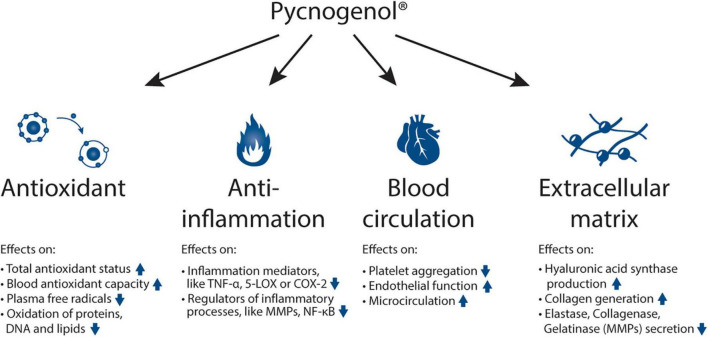
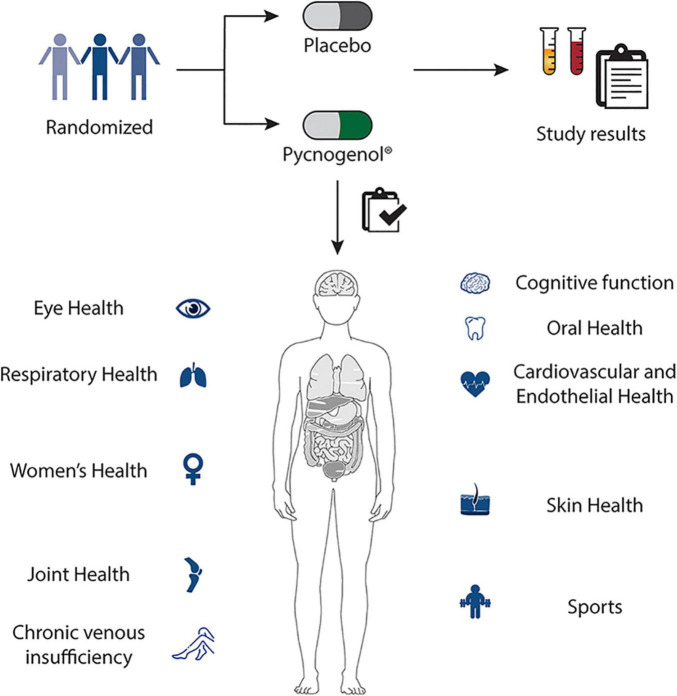
Pycnogenol® French maritime pine bark extract is a well-known and thoroughly studied patented extract from the bark of Pinus pinaster Ait. ssp. Atlantica. In 39 randomized double-blind, placebo-controlled (RDP) human clinical trials including 2,009 subjects, Pycnogenol® French maritime pine bark extract supplementation for two weeks to six months has been shown to beneficially affect cardiovascular health, chronic venous insufficiency, cognition, joint health, skin health, eye health, women’s health, respiratory health and allergies, oral health and sports performance. The mechanisms of action that can explain the respective effects on different conditions in the human body are discussed as well. As investigated in several in vitro, in vivo and in clinical studies, Pycnogenol® French maritime pine bark extract showed antioxidative effects, anti-inflammatory abilities, beneficial effects on endothelial function and reinforcing effects on the extracellular matrix. The present review aims to give a comprehensive overview of currently available “gold standard” RDP trials of Pycnogenol®’s benefits across various health domains compared to placebo. In addition, some of the processes on which the presented effects of Pycnogenol® French maritime pine bark extract are based will be elucidated and discussed. This broad overview of RDP studies on Pycnogenol® in different health domains can be used as a basis for further research on applications and mechanisms of this unique French maritime pine bark extract.
Overview
The claims and statistics of this paper haven’t been checked yet.
Free: it reads the open-access text and checks the first 5 claims that cite a source we can check. Create a free account to check every claim.
Integrity signals
Registry
Cites
Statistics
Figures
Verification
Claims the paper makes
The claims and statistics of this paper haven’t been checked yet.
Free: it reads the open-access text and checks the first 5 claims that cite a source we can check. Create a free account to check every claim.
Claims other papers make about this one
Each is checked against this paper’s own text: does it say what the citing paper says it does?
The check wasn’t confident either way, so it gives no verdict — never disputed.
In the citing paper
“In summary, citrus flavonoids may improve glycemic control, increase GLP-1 secretion, lower inflammation, and support weight management, making them potential adjunctive candidates to GLP-1RAs [117,118,347], though no clinical studies have directly evaluated their combined use.”
From Nutritional Approaches to Enhance GLP-1 Analogue Therapy in Obesity: A Narrative Review (2025) · cites this paper as [347]
Experimental — accuracy not yet measuredIn the citing paper
“Animal studies also show citrus flavonoids reduce weight gain and adiposity by activating AMPK and upregulating adipocyte thermogenesis [346,347], suggesting weightmodulating effects.”
From Nutritional Approaches to Enhance GLP-1 Analogue Therapy in Obesity: A Narrative Review (2025) · cites this paper as [347]
In the citing paper
“In summary, citrus flavonoids may improve glycemic control, increase GLP-1 secretion, lower inflammation, and support weight management, making them potential adjunctive candidates to GLP-1RAs [117,118,347], though no clinical studies have directly evaluated their combined use.”
From Nutritional Approaches to Enhance GLP-1 Analogue Therapy in Obesity: A Narrative Review (2025) · cites this paper as [347]
Self-check
Percentages, sums and reported differences re-computed from the paper’s own numbers.
The self-check needs the paper’s full text.
Citations
Cites
Cheung, N., Mitchell, P., & Wong, T. Y. (2010) · The Lancet · doi:10.1016/s0140-6736(09)62124-3 · Cited by 3,288
Understanding Asthma Phenotypes, Endotypes, and Mechanisms of Disease
Kuruvilla, M. E., Lee, F. E.-H., & Lee, G. B. (2019) · Clinical Reviews in Allergy & Immunology · doi:10.1007/s12016-018-8712-1 · Cited by 1,228
Epidemiology of Asthma in Children and Adults
Dharmage, S. C., Perret, J. L., & Custovic, A. (2019) · Frontiers in Pediatrics · doi:10.3389/fped.2019.00246 · Cited by 1,200 · cited 1×
“With almost 300 million people affected, asthma is one of the most common respiratory diseases worldwide (77).”
BackgroundOxidative stress in brain agingImplications for therapeutics of neurodegenerative diseases
FLOYD, R., & HENSLEY, K. (2002) · Neurobiology of Aging · doi:10.1016/s0197-4580(02)00019-2 · Cited by 830 · cited 1×
“Impairment in memory skills has 10.3389/fnut.2024.1389374 been found to be associated with increased age and oxidative stress (68), explaining Pycnogenol R (cid:13) ’s effects on cognitive function.”
BackgroundInfluentialEndothelial Dysfunction and Hypertension
Konukoglu, D., & Uzun, H. (2016) · Advances in Experimental Medicine and Biology · doi:10.1007/5584_2016_90 · Cited by 594
Rohdewald, P. (2002) · Int. Journal of Clinical Pharmacology and Therapeutics · doi:10.5414/cpp40158 · Cited by 481
Self-citationKawamura, T., & Muraoka, I. (2018) · Antioxidants · doi:10.3390/antiox7090119 · Cited by 307
Inflammatory Markers in Dysmenorrhea and Therapeutic Options
Barcikowska, Z., Rajkowska-Labon, E., Grzybowska, M. E., Hansdorfer-Korzon, R., & Zorena, K. (2020) · International Journal of Environmental Research and Public Health · doi:10.3390/ijerph17041191 · Cited by 269
Endothelium and Its Alterations in Cardiovascular Diseases: Life Style Intervention
Favero, G., Paganelli, C., Buffoli, B., Rodella, L. F., & Rezzani, R. (2014) · BioMed Research International · doi:10.1155/2014/801896 · Cited by 252 · cited 1×
“…human clinical RDP studies (9, 11, 12, 20–22 As the endothelium—the inner lining of blood vessels—is actively involved in many physiological functions, like controlling blood pressure, blood clotting and signaling during inflammation, endothelial function is crucial for cardiovascular health (62).”
BackgroundDiagnosis and management of ADHD in children.
Felt, B. T., Biermann, B., Christner, J. G., Kochhar, P., & Harrison, R. V. (2014) · PubMed · Cited by 222
Grimm, T., Schäfer, A., & Högger, P. (2004) · Free Radical Biology and Medicine · doi:10.1016/j.freeradbiomed.2003.12.017 · Cited by 197
Devaraj, S., Vega‐López, S., Kaul, N., Schönlau, F., Rohdewald, P., & Jialal, I. (2002) · Lipids · doi:10.1007/s11745-006-0982-3 · Cited by 195
Self-citationThe Role of Endothelial Dysfunction and Inflammation in Chronic Venous Disease
Castro-Ferreira, R., Cardoso, R., Leite-Moreira, A., & Mansilha, A. (2018) · Annals of Vascular Surgery · doi:10.1016/j.avsg.2017.06.131 · Cited by 192
Recent Advances in Severe Asthma
Schoettler, N., & Strek, M. E. (2020) · Chest · doi:10.1016/j.chest.2019.10.009 · Cited by 185 · cited 1×
“Recurrent episodes of coughing, shortness of breath, wheezing and chest tightness are typical symptoms for asthma (79).”
BackgroundGrimm, T., Chovanová, Z., Muchová, J., Sumegová, K., Liptáková, A., Ďuračková, Z., & Högger, P. (2006) · Journal of Inflammation · doi:10.1186/1476-9255-3-1 · Cited by 166
Endothelium-Dependent Vascular Effects of Pycnogenol
Fitzpatrick, D. F., Bing, B., & Rohdewald, P. (1998) · Journal of Cardiovascular Pharmacology · doi:10.1097/00005344-199810000-00001 · Cited by 151
Self-citationTreatment of ADHD with French maritime pine bark extract, Pycnogenol®
Trebatická, J., Kopasová, S., Hradečná, Z., Činovský, K., Škodáček, I., Šuba, J., Muchová, J., Žitňanová, I., Waczulíková, I., Rohdewald, P. J., et al. (2006) · European Child & Adolescent Psychiatry · doi:10.1007/s00787-006-0538-3 · Cited by 146 · cited 2×
“Another RDP clinical study could show that Pycnogenol R (cid:13) intake relieved hyperactivity and improved attention of children with ADHD significantly compared to placebo and to baseline (34).”
BackgroundSelf-citationSchäfer, A., & Högger, P. (2007) · Diabetes Research and Clinical Practice · doi:10.1016/j.diabres.2006.10.011 · Cited by 136
Rashid, S., Ahmad, M., Zafar, M. N., Sultana, S., Ayub, M., Khan, M. A., & Yaseen, G. (2015) · Journal of Ethnopharmacology · doi:10.1016/j.jep.2015.03.042 · Cited by 135
Zibadi, S., Rohdewald, P. J., Park, D., & WATSON, R. R. (2008) · Nutrition Research · doi:10.1016/j.nutres.2008.03.003 · Cited by 130 · cited 2×
“…(27), Pycnogenol R (cid:13) supplementation has been shown in RDP human clinical trials to beneficially affect cardiovascular health (9, 11, 12, 20–22, The medicinal use of pine bark from different pine species can be traced back to Hippocrates, 400 B.C. and was applied in many parts of the world…”
BackgroundSelf-citationLiu, X., Wei, J., Tan, F., Zhou, S., Würthwein, G., & Rohdewald, P. (2004) · Life Sciences · doi:10.1016/j.lfs.2003.10.043 · Cited by 124
Self-citationRyan, J., Croft, K., Mori, T., Wesnes, K., Spong, J., Downey, L., Kure, C., Lloyd, J., & Stough, C. (2008) · Journal of Psychopharmacology · doi:10.1177/0269881108091584 · Cited by 117
Schäfer, A., Chovanová, Z., Muchová, J., Sumegová, K., Liptáková, A., Ďuračková, Z., & Högger, P. (2005) · Biomedicine & Pharmacotherapy · doi:10.1016/j.biopha.2005.08.006 · Cited by 112
Chovanová, Z., Muchová, J., Sivoňová, M., Dvořáková, M., Žitňanová, I., Waczulíková, I., Trebatická, J., Škodáček, I., & Ďuračková, Z. (2006) · Free Radical Research · doi:10.1080/10715760600824902 · Cited by 100
Liu, X., Wei, J., Tan, F., Zhou, S., Würthwein, G., & Rohdewald, P. J. (2003) · Life Sciences · doi:10.1016/j.lfs.2003.07.037 · Cited by 99 · cited 3×
“…(27), Pycnogenol R (cid:13) supplementation has been shown in RDP human clinical trials to beneficially affect cardiovascular health (9, 11, 12, 20–22, The medicinal use of pine bark from different pine species can be traced back to Hippocrates, 400 B.C. and was applied in many parts of the…”
BackgroundInfluentialSelf-citationEnseleit, F., Sudano, I., Periat, D., Winnik, S., Wolfrum, M., Flammer, A. J., Frohlich, G. M., Kaiser, P., Hirt, A., Haile, S. R., et al. (2012) · European Heart Journal · doi:10.1093/eurheartj/ehr482 · Cited by 99
Farid, R., Rezaieyazdi, Z., Mirfeizi, Z., Hatef, M. R., Mirheidari, M., Mansouri, H., Esmaelli, H., Bentley, G., Lu, Y., Foo, Y., et al. (2010) · Nutrition Research · doi:10.1016/j.nutres.2010.08.010 · Cited by 94
Uhlenhut, K., & Högger, P. (2012) · Free Radical Biology and Medicine · doi:10.1016/j.freeradbiomed.2012.04.013 · Cited by 89
Grimm, T., Skrabala, R., Chovanová, Z., Muchová, J., Sumegová, K., Liptáková, A., Ďuračková, Z., & Högger, P. (2006) · BMC Clinical Pharmacology · doi:10.1186/1472-6904-6-4 · Cited by 87
Pycnogenol® as an Adjunct in the Management of Childhood Asthma
Lau, B. H. S., Riesen, S., Truong, K. P., Lau, E., Rohdewald, P. J., & Barreta, R. A. (2004) · Journal of Asthma · doi:10.1081/jas-200038433 · Cited by 86 · cited 1×
“An RDP study investigated the effects of Pycnogenol R (cid:13) on 60 children aged six to eighteen years with mild to moderate asthma (50).”
BackgroundSelf-citationPycnogenol, French maritime pine bark extract, augments endothelium-dependent vasodilation in humans
NISHIOKA, K., HIDAKA, T., NAKAMURA, S., UMEMURA, T., JITSUIKI, D., SOGA, J., GOTO, C., CHAYAMA, K., YOSHIZUMI, M., & HIGASHI, Y. (2007) · Hypertension Research · doi:10.1291/hypres.30.775 · Cited by 85
Classics in Chemical Neuroscience: Methylphenidate
Wenthur, C. J. (2016) · ACS Chemical Neuroscience · doi:10.1021/acschemneuro.6b00199 · Cited by 85 · cited 1×
“A common medication for this condition is methylphenidate hydrochloride (MPH), which is associated with various adverse effects (67).”
BackgroundDvořáková, M., Sivoňová, M., Trebatická, J., Škodáček, I., Waczuliková, I., Muchová, J., & Ďuračková, Z. (2006) · Redox Report · doi:10.1179/135100006x116664 · Cited by 84
Effect of pine bark extract (Pycnogenol®) on symptoms of knee osteoarthritis
Cisár, P., Jany, R., Waczulı́ková, I., Sumegová, K., Muchová, J., Vojtaššák, J., Ďuračková, Z., Lisý, M., & Rohdewald, P. J. (2008) · Phytotherapy Research · doi:10.1002/ptr.2461 · Cited by 80
Self-citationHosseini, S., Lee, J., Sepúlveda, R. T., Rohdewald, P. J., & WATSON, R. R. (2001) · Nutrition Research · doi:10.1016/s0271-5317(01)00342-6 · Cited by 79
Self-citationDvořáková, M., Ježová, D., Blažíček, P., Trebatická, J., Škodáček, I., Šuba, J., Waczulíková, I., Rohdewald, P., & Ďuračková, Z. (2007) · Nutritional Neuroscience · doi:10.1080/09513590701565443 · Cited by 74
Self-citationTreatment of vascular retinopathies with Pycnogenol®
Spadea, L., & Balestrazzi, E. (2001) · Phytotherapy Research · doi:10.1002/ptr.853 · Cited by 72
Belcaro, G. V., Cesarone, M. R., Errichi, S., Zulli, C., Errichi, B. M., Vinciguerra, G., Ledda, A., Renzo, A. D., Stuard, S., Dugall, M., et al. (2008) · Phytotherapy Research · doi:10.1002/ptr.2376 · Cited by 70
Self-citationPine Bark Extracts: Nutraceutical, Pharmacological, and Toxicological Evaluation
Li, Y., Feng, J., Zhang, X.-L., & Cui, Y. (2015) · Journal of Pharmacology and Experimental Therapeutics · doi:10.1124/jpet.114.220277 · Cited by 70
Grether‐Beck, S., Marini, A., Jaenicke, T., & Krutmann, J. (2015) · Skin Pharmacology and Physiology · doi:10.1159/000441039 · Cited by 69
Pycnogenol ® in the Management of Asthma
Hosseini, S., Pishnamazi, S., Sadrzadeh, S. M. H., Farid, F., Farid, R., & WATSON, R. R. (2001) · Journal of Medicinal Food · doi:10.1089/10966200152744472 · Cited by 66
PYCNOGENOL® in chronic venous insufficiency
Petrassi, C., Mastromarino, A., & Spartera, C. (2000) · Phytomedicine · doi:10.1016/s0944-7113(00)80059-8 · Cited by 66
Antimicrobial activity of Pycnogenol®
Torras, M. D. L. Á. C., Adelantado, C., Schönlau, F., & Rohdewald, P. J. (2005) · Phytotherapy Research · doi:10.1002/ptr.1662 · Cited by 65
Self-citationMarini, A., Grether-Beck, S., Jaenicke, T., Weber, M., Burki, C., Formann, P., Brenden, H., Schönlau, F., & Krutmann, J. (2012) · Skin Pharmacology and Physiology · doi:10.1159/000335261 · Cited by 62
Pycnogenol® in chronic venous insufficiency
Arcangeli, P. (2000) · Fitoterapia · doi:10.1016/s0367-326x(99)00164-1 · Cited by 61
Ďuračková, Z., Trebatický, B., Novotný, V., Žitňanová, I., & Breza, J., Jr. (2003) · Nutrition Research · doi:10.1016/s0271-5317(03)00126-x · Cited by 61
Canali, R., Comitato, R., Schönlau, F., & Virgili, F. (2009) · International Immunopharmacology · doi:10.1016/j.intimp.2009.06.001 · Cited by 60
Farid, R., Mirfeizi, Z., Mirheidari, M., Rezaieyazdi, Z., Mansouri, H., Esmaelli, H., Zibadi, S., Rohdewald, P. J., & WATSON, R. R. (2007) · Nutrition Research · doi:10.1016/j.nutres.2007.09.007 · Cited by 58
Self-citationNattagh‐Eshtivani, E., Gheflati, A., Barghchi, H., Rahbarinejad, P., Hachem, K., Shalaby, M. N., Abdelbasset, W. K., Ranjbar, G., Bokov, D. O., Rahimi, P., et al. (2022) · Phytotherapy Research · doi:10.1002/ptr.7454 · Cited by 58
Steigerwalt, R., Belcaro, G., Cesarone, M. R., Di Renzo, A., Grossi, M. G., Ricci, A., Dugall, M., Cacchio, M., & Schönlau, F. (2009) · Journal of Ocular Pharmacology and Therapeutics · doi:10.1089/jop.2009.0023 · Cited by 56
YANG, H., Liao, M.-F., ZHU, S., Liao, M.-N., & Rohdewald, P. J. (2007) · Acta Obstetricia Et Gynecologica Scandinavica · doi:10.1080/00016340701446108 · Cited by 55
Self-citationGould, G. S., Hurst, J. R., Trofor, A. C., Alison, J. A., Fox, G. J., Kulkarni, M. M., Wheelock, C. E., Clarke, M., & Kumar, R. (2023) · Respiratory Research · doi:10.1186/s12931-022-02297-y · Cited by 52
Wilson, D., Evans, M., Guthrie, N., Sharma, P., Baisley, J. E., Schönlau, F., & Bürki, C. (2010) · Phytotherapy Research · doi:10.1002/ptr.3232 · Cited by 45
Ethnopharmacological study of medicinal plants in Kastamonu province (Türkiye)
Şen, G., Akbulut, S., & Karaköse, M. (2022) · Open Chemistry · doi:10.1515/chem-2022-0204 · Cited by 44
Mülek, M., Seefried, L., Genest, F., & Högger, P. (2017) · Nutrients · doi:10.3390/nu9050443 · Cited by 43
Simpson, T. N., Kure, C., & Stough, C. K. K. (2019) · Frontiers in Pharmacology · doi:10.3389/fphar.2019.00694 · Cited by 41
Jessberger, S., Högger, P., Genest, F., Salter, D. M., & Seefried, L. (2017) · BMC Complementary and Alternative Medicine · doi:10.1186/s12906-017-2044-1 · Cited by 40
The Effect of Antioxidant Supplementation on Fatigue during Exercise: Potential Role for NAD+(H)
Mach, J., Midgley, A. W., Dank, S., Grant, R., & Bentley, D. J. (2010) · Nutrients · doi:10.3390/nu2030319 · Cited by 38
Kohama, T., & Negami, M. (2013) · PubMed · Cited by 35
Acute Antioxidant Supplementation Improves Endurance Performance in Trained Athletes
Bentley, D. J., Dank, S., Coupland, R., Midgley, A. W., & Spence, I. (2012) · Research in Sports Medicine · doi:10.1080/15438627.2011.608050 · Cited by 35 · cited 2×
“The training setup was comparable to the cycling training in the study of Bentley et al. (54).”
Kurlbaum, M., Mülek, M., & Högger, P. (2013) · PLoS ONE · doi:10.1371/journal.pone.0063197 · Cited by 34
The Importance of Pine Species in the Ethnomedicine of Transylvania (Romania)
Papp, N., Purger, D., Czigle, S., Czégényi, D., Stranczinger, S., Tóth, M., Dénes, T., Kocsis, M., Takácsi‐Nagy, A., & Filep, R. (2022) · Plants · doi:10.3390/plants11182331 · Cited by 26
Zhao, H., Wu, J., Wang, N., Grether‐Beck, S., Krutmann, J., & Liu, W. (2021) · Skin Pharmacology and Physiology · doi:10.1159/000514323 · Cited by 25
Karaçelik, A. A., Şeker, M. E., & Karaköse, M. (2021) · Kahramanmaraş Sütçü İmam Üniversitesi Tarım ve Doğa Dergisi · doi:10.18016/ksutarimdoga.vi.875313 · Cited by 24
Suzuki, N., UEBABA, K., Kohama, T., Moniwa, N., Kanayama, N., & Koike, K. (2008) · PubMed · Cited by 23
From Ancient Pine Bark Uses to Pycnogenol
Drehsen, G. (1999) · Elsevier eBooks · doi:10.1016/b978-012543590-1/50021-4 · Cited by 20 · cited 2×
“Traditionally, pine bark has been used for their anti-inflammatory and wound healing effects (57, 61).”
BackgroundDonovan, E. K., Kekes-Szabo, S., Lin, J. C., Massey, R. L., Cobb, J. D., Hodgin, K. S., Ness, T. J., Hangee-Bauer, C., & Younger, J. (2021) · International Journal of Environmental Research and Public Health · doi:10.3390/ijerph18052468 · Cited by 19
Ayres, E. L., Silva, J. D. S., Eberlin, S., Facchini, G., Vasconcellos, C., & COSTA, A. V. (2021) · Journal of Cosmetic Dermatology · doi:10.1111/jocd.14202 · Cited by 18
Dysregulation of cellular energetics in Gulf War Illness
Raju, R. P., & Terry, A. V. (2021) · Toxicology · doi:10.1016/j.tox.2021.152894 · Cited by 17 · cited 1×
“Gulf war illness is a chronic and multi-symptomatic disorder affecting military gulf war veterans, with symptoms like fatigue, muscle discomfort, cognitive problems, insomnia, rashes and diarrhea (69).”
BackgroundTrebatický, B., Muchová, J., Žiaran, S., Bujdák, P., Breza, J., Jr., & Ďuračková, Z. (2019) · Bratislavské lekárske listy/Bratislava medical journal · doi:10.4149/bll_2019_158 · Cited by 15
Effects of French Pine Bark Extract Chewing Gum on Oral Malodor and Salivary Bacteria
Watanabe, K., Hiramine, H., Toyama, T., & Hamada, N. (2018) · Journal of Nutritional Science and Vitaminology · doi:10.3177/jnsv.64.185 · Cited by 14
Pine Bark Phenolic Extracts, Current Uses, and Potential Food Applications: A Review
Dridi, W., & Bordenave, N. (2020) · Current Pharmaceutical Design · doi:10.2174/1381612826666200212113903 · Cited by 14
Ackerman, J., Clifford, T., McNaughton, L. R., & Bentley, D. J. (2014) · Journal of the International Society of Sports Nutrition · doi:10.1186/1550-2783-11-10 · Cited by 13
Weyns, A.-S., Verlaet, A. A. J., Breynaert, A., Naessens, T., Fransén, E., Verhelst, H., West, D. V., Ingelghem, I. V., Jonckheere, A. I., Beysen, D., et al. (2022) · Journal of Functional Foods · doi:10.1016/j.jff.2022.105246 · Cited by 11
Weyns, A.-S., Verlaet, A. A. J., Herreweghe, M. V., Breynaert, A., Fransén, E., Meester, I. D., Logie, E., Berghe, W. V., Verhelst, H., West, D. V., et al. (2022) · Journal of Functional Foods · doi:10.1016/j.jff.2022.105247 · Cited by 11
Cai, C., Zeng, B., Lin, L. W., Zheng, M., Bürki, C., Grether‐Beck, S., & Krutmann, J. (2023) · Health Science Reports · doi:10.1002/hsr2.1045 · Cited by 9
Lee, E. L., & Barnes, J. (2023) · Journal of Primary Health Care · doi:10.1071/hc23064 · Cited by 4
Research works printed but not linked: 6
- 5. Oliff H. Scientific and clinical monograph for Pycnogenol. Austin, TX: American Botanical Council; (2019). p. 1–46.
- 7. The United States Pharmacopeia. USP monograph. Maritime pine extract. (Vol. 39). North Bethesda, MD: The United States Pharmacopeia; (2016). p. 6748–9.
- 31. Wang S, Tan D, Zhao Y, Gao G, Gao X, Hu L. The effect of Pycnogenol® on the microcirculation, platelet function and ischaemic myocardium in patients with coronary artery diseases. Eur Bull Drug Res. (1999) 7:19–25.
- 47. Kohama T, Negami M. Effect of low-dose French maritime pine bark extract on climacteric syndrome in 170 perimenopausal women. J Reprod Med. (2013) 58:39–46.
- 53. Pavlovic P. Improved Endurance By Use Of Antioxidants. Eur Bull Drug Res. (1999) 7:26–9.
- 70. World Health Organization. Osteoarthritis. Geneva: World Health Organization; (2023).
Cited by
Tienaho, J., Liimatainen, J., Myllymäki, L., Kaipanen, K., Tagliavento, L., Ruuttunen, K., Rudolfsson, M., Karonen, M., Marjomäki, V., Hagerman, A. E., et al. (2024) · Separation and Purification Technology · doi:10.1016/j.seppur.2024.130925 · Cited by 23
Supriyadi, D., Damayanti, D., Veigel, S., Hansmann, C., & Gindl‐Altmutter, W. (2025) · Materials Today Sustainability · doi:10.1016/j.mtsust.2025.101074 · Cited by 33
Chen, L., Li, Z., & Fan, Y. (2025) · Frontiers in Cellular and Infection Microbiology · doi:10.3389/fcimb.2025.1601888 · Cited by 16
Nutritional Approaches to Enhance GLP-1 Analogue Therapy in Obesity: A Narrative Review
Dias, D. D., Vasconcelos, A. R., Souza, A. C. R., Menezes, C. D., Silva, I. S. T. E., & Name, J. J. (2025) · Obesities · doi:10.3390/obesities5040088 · Cited by 8
“French maritime pine bark extract, derived from Pinus pinaster and rich in procyanidin, is a well-researched botanical with multiple clinically demonstrated benefits, including for metabolic, cardiovascular, and cognitive health [344].”
Dunlop, K., Dillon, G., Crowley, R. K., Phillips, C., Twomey, P. J., & McAuliffe, F. M. (2025) · Nutrition & Metabolism · doi:10.1186/s12986-025-00908-1 · Cited by 10
“Due to the age of the participants, the small sample size, and the fact use of the supplement was completely voluntary, results were considered equivocal [49].”
Metadata
- Authors
- Weichmann, F., & Rohdewald, P.
- Affiliations
- Horphag Research (Switzerland) (CH)
- University of Münster (DE)
- Corresponding author
- Weichmann, Franziska
- ORCID
- Weichmann, Franziska
- Venue
- Frontiers in Nutrition
- Publisher
- Frontiers Media SA
- Published
- 2024-05-02
- Volume
- 11
- Pages
- 1389374-1389374
- ISSN
- 2296-861X (ISSN-L)
- PMC
- PMC11096518
- OpenAlex
- W4396590316
- Cited by
- 38
- References
- 77
- Citations by year
- 2026: 17 · 2025: 19 · 2024: 2
- FWCI
- 1.45
- Type
- journal article
- Language
- en
- Open access
- gold
- doi.org
- Licence
- Locations
- Frontiers in Nutrition (publishedVersion, cc-by)
- PubMed Central (publishedVersion, cc-by)
- PubMed (publishedVersion)
- DOAJ (DOAJ: Directory of Open Access Journals) (submittedVersion, cc-by-sa)
- Topics
- Health Sciences › Medicine › Biochemistry (medical) › Phytochemicals and Antioxidant Activities
- Health Sciences › Medicine › Complementary and alternative medicine › Ginkgo biloba and Cashew Applications
- Life Sciences › Agricultural and Biological Sciences › Plant Science › Natural Compound Pharmacology Studies
- Keywords
- Pycnogenol, Pinus pinaster, dietary supplementation, cardiovascular health, chronic venous insufficiency, cognition, joint health, skin health, eye health, women's health, respiratory health, allergy, oral health, athletic performance, antioxidant activity, anti-inflammatory activity, endothelial function, extracellular matrix
About these checks
Registry, retraction, Cites and statistics results are computed, not judged, with one exception: a printed reference that no index lists is read once by a model before it counts as a citation error. Claims are extracted by a model and kept only when their quote appears verbatim in the text; each cited source is then checked, with a model’s help, for whether it says what the claim relies on. Those verdicts can be wrong — read the claim’s quote and the cited source before relying on one.
Statistics and arithmetic are recomputed, not judged.
Confidence bands are shown only for fields calibrated on our annotated test set. None is calibrated yet, so no band is shown.
What counts as a claim ›How we measure confidence ›How we check this ›
Are you an author, or do you see a problem with this page? Request a review
Data sources
Bibliographic data: Semantic Scholar, OpenAlex, Crossref.
Contains information from the Semantic Scholar Academic Graph Datasets, made available under the ODC Attribution License (ODC-BY 1.0).
Semantic Scholar’s data is described in: Kinney, R., et al. (2023). The Semantic Scholar Open Data Platform. arXiv:2301.10140.
