

CAR-Treg cell therapies and their future potential in treating ocular autoimmune conditions
Open accessThe DOI matches its Crossref record; 80 of the 80 references it cites were found in a registry or an index.
Abstract
Ophthalmic autoimmune and autoinflammatory conditions cause significant visual morbidity and require complex medical treatment complicated by significant side effects and lack of specificity. Regulatory T cells (Tregs) have key roles in immune homeostasis and in the resolution of immune responses. Polyclonal Treg therapy has shown efficacy in treating autoimmune disease. Genetic engineering approaches to produce antigen-specific Treg therapy has the potential for enhanced treatment responses and fewer systemic side effects. Cell therapy using chimeric antigen receptor modified T cell (CAR-T) therapy, has had significant success in treating haematological malignancies. By modifying Tregs specifically, a CAR-Treg approach has been efficacious in preclinical models of autoimmune conditions leading to current phase 1-2 clinical trials. This review summarises CAR structure and design, Treg cellular biology, developments in CAR-Treg therapies, and discusses future strategies to apply CAR-Treg therapy in the treatment of ophthalmic conditions.
Overview
The claims and statistics of this paper haven’t been checked yet.
Free: it reads the open-access text and checks the first 5 claims that cite a source we can check. Create a free account to check every claim.
Integrity signals
Registry
Cites
Statistics
Figures
Verification
Claims the paper makes
The claims and statistics of this paper haven’t been checked yet.
Free: it reads the open-access text and checks the first 5 claims that cite a source we can check. Create a free account to check every claim.
Claims other papers make about this one
Each is checked against this paper’s own text: does it say what the citing paper says it does?
The cited source says what the claim attributes to it.
In the citing paper
“Alternatively, Tregs can be genetically engineered and expanded ex vivo to be applied as a cell-based therapy, a burgeoning but still experimental treatment modality (Abraham et al., 2023).”
From Gene Therapy-Associated Uveitis (GTAU): Understanding and mitigating the adverse immune response in retinal gene therapy (2025) · cites this paper as Abraham et al., 2023
Self-check
Percentages, sums and reported differences re-computed from the paper’s own numbers.
The self-check needs the paper’s full text.
Citations
Cites
Axicabtagene Ciloleucel CAR T-Cell Therapy in Refractory Large B-Cell Lymphoma
Neelapu, S. S., Locke, F. L., Bartlett, N. L., Lekakis, L. J., Miklos, D. B., Jacobson, C. A., Braunschweig, I., Oluwole, O. O., Siddiqi, T., Lin, Y., et al. (2017) · New England Journal of Medicine · doi:10.1056/nejmoa1707447 · Cited by 6,030 · cited 1×
“The first CAR-T cell therapy received US FDA approval in 2017 and since then the field has expanded substantially with hundreds of ongoing clinical trials (2, 3).”
BackgroundZFN, TALEN, and CRISPR/Cas-based methods for genome engineering
Gaj, T., Gersbach, C. A., & Barbas, C. F. (2013) · Trends in Biotechnology · doi:10.1016/j.tibtech.2013.04.004 · Cited by 3,820 · cited 1×
“Alternative approaches leveraging guided transgene delivery may increase the safety profile of CAR-Treg therapies (75).”
BackgroundCAR-T cell therapy: current limitations and potential strategies
Sterner, R. C., & Sterner, R. M. (2021) · Blood Cancer Journal · doi:10.1038/s41408-021-00459-7 · Cited by 2,926
Development of therapeutic antibodies for the treatment of diseases
Lu, R.-M., Hwang, Y.-C., Liu, I.-J., Lee, C.-C., Tsai, H.-Z., Li, H.-J., & Wu, H.-C. (2020) · Journal of Biomedical Science · doi:10.1186/s12929-019-0592-z · Cited by 2,085 · cited 1×
“At present there are limited published sequences of eye specific autoantibodies to guide CAR design, hence other techniques to initially characterise antigen binding domains such as the use of hybridoma or phage display might be considered (73).”
BackgroundRussell, S., Bennett, J., Wellman, J. A., Chung, D. C., Yu, Z.-F., Tillman, A., Wittes, J., Pappas, J., Elci, O., McCague, S., et al. (2017) · The Lancet · doi:10.1016/s0140-6736(17)31868-8 · Cited by 1,952
Targeting a CAR to the TRAC locus with CRISPR/Cas9 enhances tumour rejection
Eyquem, J., Mansilla-Soto, J., Giavridis, T., van der Stegen, S. J. C., Hamieh, M., Cunanan, K. M., Odak, A., Gönen, M., & Sadelain, M. (2017) · Nature · doi:10.1038/nature21405 · Cited by 1,831 · cited 1×
“linking the transgene to the TCR promotor region when combined with TCR knockout (76).”
BackgroundEngineering strategies to overcome the current roadblocks in CAR T cell therapy
Rafiq, S., Hackett, C. S., & Brentjens, R. J. (2020) · Nature Reviews Clinical Oncology · doi:10.1038/s41571-019-0297-y · Cited by 1,472 · cited 3×
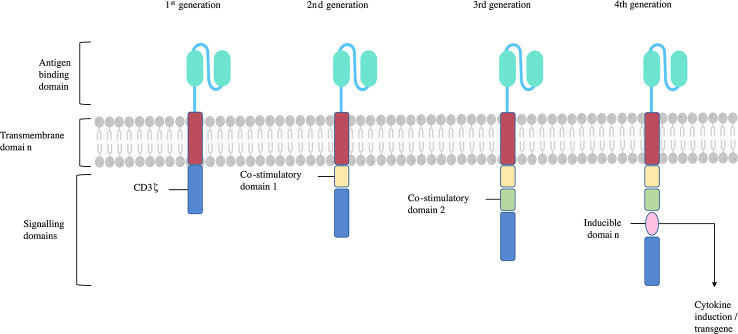
“When activated by target recognition by the antigen binding domain, this domain initiates TCR like signalling (28).”
BackgroundInfluentialRegulatory T Cells and Human Disease
Sakaguchi, S., Mikami, N., Wing, J. B., Tanaka, A., Ichiyama, K., & Ohkura, N. (2020) · Annual Review of Immunology · doi:10.1146/annurev-immunol-042718-041717 · Cited by 1,120 · cited 6×
“pTreg promote immune homeostasis, often at barrier sites, with their dysregulation being associated with the development IMIDs, including rheumatoid arthri t i s (RA), systemic lupus erythematosus (SLE), multiple sclerosis (MS), and inflammatory bowel disease (IBD) (6).”
BackgroundInfluentialAnti-CD19 CAR T cell therapy for refractory systemic lupus erythematosus
Mackensen, A., Müller, F., Mougiakakos, D., Böltz, S., Wilhelm, A., Aigner, M., Völkl, S., Simon, D., Kleyer, A., Munoz, L., et al. (2022) · Nature Medicine · doi:10.1038/s41591-022-02017-5 · Cited by 1,092 · cited 3×
“For conditions with disease pathology related to antibody production such as SLE or GvHD there may also be a role for use of CARTregs in directly suppressing B-cell driven antibody production, as seen with a CD-19 targeting CAR-Treg in pre-clinical models of GvHD (46, 47).”
BackgroundType 1 diabetes immunotherapy using polyclonal regulatory T cells
Bluestone, J. A., Buckner, J. H., Fitch, M., Gitelman, S. E., Gupta, S., Hellerstein, M. K., Herold, K. C., Lares, A., Lee, M. R., Li, K., et al. (2015) · Science Translational Medicine · doi:10.1126/scitranslmed.aad4134 · Cited by 1,033 · cited 2×
“This approach has been trialled in patients with IMIDs including Type I Diabetes (16, 17), and ulcerative colitis (18), and as an adjuvant to immune suppression in the context of solid organ transplantation (19, 20).”
Method
Cited by
Knoedler, L., Dean, J., Diatta, F. H., Thompson, N. T., Knoedler, S. A., Rhys, R., Sherwani, K., Ettl, T., Mayer, S. A., Falkner, F., et al. (2024) · Frontiers in Immunology · doi:10.3389/fimmu.2024.1372862 · Cited by 37
“However, the application of CAR-T regs is not without risks as complex genetic modi fi cations have been implicated with neurologic and hematologic side effects (111, 112).”
BackgroundT-regulatory cells for the treatment of autoimmune diseases
Fisher, M. S., & Sennikov, S. V. (2025) · Frontiers in Immunology · doi:10.3389/fimmu.2025.1511671 · Cited by 43
Purdy, R., John, M., Bray, A., Clare, A. J., Copland, D. A., Chan, Y. K., Henderson, R. H., Nerinckx, F., Leroy, B. P., Yang, P., et al. (2025) · Progress in Retinal and Eye Research · doi:10.1016/j.preteyeres.2025.101354 · Cited by 24
“Alternatively, Tregs can be genetically engineered and expanded ex vivo to be applied as a cell-based therapy, a burgeoning but still experimental treatment modality (Abraham et al., 2023).”
Self-citationChimeric antigen receptor T-cell therapy in autoimmune diseases
Liu, J., Yan, Z., & Hai, Z. (2024) · Frontiers in Immunology · doi:10.3389/fimmu.2024.1492552 · Cited by 28
Regulatory T Cell-Based Adoptive Cell Therapy in Autoimmunity
Gozálvez, E., Lario, A., Muñoz‐Sánchez, G., & Lozano, F. (2025) · International Journal of Molecular Sciences · doi:10.3390/ijms262110340 · Cited by 18
“Therefore, if these antigens are expressed not only in the site of an autoimmune reaction but also in other healthy tissues, the immune response may be less effective and lead to systemic hyperactivation of CAR-Treg that, in turn, can cause a nonspecific immunosuppressive reaction [185].”
Srivastava, S., Tyagi, A., Pawar, V. A., Khan, N. H., Arora, K., Verma, C., & Kumar, V. (2024) · ImmunoTargets and Therapy · doi:10.2147/itt.s474659 · Cited by 15
“72,180,181 Its efficacy in solid tumors is restricted by the lack of reliable tumor-specific antigens, poor T-cell infiltration, and immunosuppressive tumor microenvironments.”
BackgroundA multi-omics analysis of effector and resting treg cells in pan-cancer
Chalepaki, A.-M., Gkoris, M., Chondrou, I., Kourti, M., Georgakopoulos‐Soares, I., & Zaravinos, A. (2025) · Computers in Biology and Medicine · doi:10.1016/j.compbiomed.2025.110021 · Cited by 13
CAR-T therapy: pioneering a new era in the treatment of autoimmune diseases
Wu, Y., Han, L., Wang, Y., Gu, M., Wang, Y., Gao, J., Huang, H., & Li, C. (2025) · Frontiers in Immunology · doi:10.3389/fimmu.2025.1625166 · Cited by 12
CAR T cells beyond cancer: Emerging applications in autoimmunity and infectious diseases
Mathew, A. A., Raheja, R., & Raj, A. S. (2025) · The Nucleus · doi:10.1007/s13237-025-00618-2 · Cited by 6
Clinical grade multiparametric cell sorting and gene-marking of regulatory T cells
Ekwe, A. P., Au, R., Zhang, P., McEnroe, B. A., Tan, M. L., Saldan, A., Henden, A. S., Hutchins, C. J., Henderson, A., Mudie, K., et al. (2024) · Cytotherapy · doi:10.1016/j.jcyt.2024.02.023 · Cited by 4
CD19 Chimeric Antigen Receptor (CAR) T-Cell Therapy for Systemic Autoimmune Diseases
Cingireddy, A. R., Flores, B., Wuthrich, J., & Cingireddy, A. R. (2024) · Cureus · doi:10.7759/cureus.60924 · Cited by 4
“It should be noted that there are two further subtypes of CAR: chimeric autoantibody receptor T cell and CAR regulatory T cell (CAR treg) [8].”
BackgroundEffectors of the Future: Universal Chimeric Antigen Receptor
Schlegel, L. S., & Schlegel, P. (2024) · Transfusion Medicine and Hemotherapy · doi:10.1159/000539609 · Cited by 4
“This immune modulatory function may be proin-fl ammatory activating, or altered to mediate target-antigen dependent immunosuppression [87].”
Godfrey, W. H., Lee, J. J., Shanmukha, S., Cho, K., Deng, X., Ambati, C. R., Putluri, V., Kamal, A. H. M., Kim, P. M., Putluri, N., et al. (2025) · eLife · doi:10.7554/elife.104423.3 · Cited by 3
Cellular Immunotherapies for Multiple Sclerosis: Mechanistic Insights and Clinical Advances
Васильевич, К. В., Fisher, M. S., Облеухова, И. А., & Sennikov, S. V. (2026) · International Journal of Molecular Sciences · doi:10.3390/ijms27020585 · Cited by 3
“Their key features are antigen specificity (targeting autoreactive T cells in the CNS) [105,106], enhanced suppressive activity (preservation of FoxP3-dependent immune response suppression), and tissue tropism (ability to migrate to inflammation sites) [107].”
Godfrey, W. H., Lee, J. J., Shanmukha, S., Cho, K., Deng, X., Ambati, C. R., Putluri, V., Kamal, A. H. M., Kim, P. M., Putluri, N., et al. (2025) · eLife · doi:10.7554/elife.104423 · Cited by 1
“Conversely, CAR-Tregs are currently in clinical trials for a variety of autoimmune disorders ( Zhang et al., 2018 ; Abraham et al., 2023 ), and there is widespread interest in treatments that improve the suppressive activity of Tregs.”
Godfrey, W. H., Cho, K., Deng, X., Ambati, C. R., Putluri, V., Kamal, A. H. M., Putluri, N., & Kornberg, M. D. (2025) · eLife · doi:10.7554/elife.104423.1
Godfrey, W. H., Lee, J. J., Shanmukha, S., Cho, K., Deng, X., Ambati, C. R., Putluri, V., Kamal, A. H. M., Kim, P. M., Putluri, N., et al. (2025) · eLife · doi:10.7554/elife.104423.2 · Cited by 1
If Tregs were people: regulation as the quiet architecture of immunity and society
Andrade, B. B., & Araújo‐Pereira, M. (2025) · Frontiers in Immunology · doi:10.3389/fimmu.2025.1720091
Liu, X., Gao, H., & Yu, J. (2026) · Precision Clinical Medicine · doi:10.1093/pcmedi/pbag007 · Cited by 1
“On the other hand, it is critical during manufacturing to preserve Treg lineage identity and maintain stable FOXP3 expression, as Tregs are prone to losing FOXP3 expression, and acquiring pro-inflammatory effector features under inflammatory or suboptimal culture conditions [ 179 ].”
Li, J., Pang, J., Wu, P., Wang, E., Zheng, S. J., 阮庆国, & Liu, R. (2026) · Frontiers in Immunology · doi:10.3389/fimmu.2026.1881360
“…mainly aim to expand the number of Tregs (including polyclonal and antigen-speci fi c Tregs), enhance their migratory capacity to in fl ammatory sites and immunosuppressive function, thereby restoring immune homeostasis and restraining excessive in fl ammatory responses (64, 73, 75, 80, 99, 137).”
Metadata
- Authors
- Abraham, A. R., Maghsoudlou, P., Copland, D. A., Nicholson, L. B., & Dick, A. D.
- Affiliations
- University of Bristol (GB)
- Corresponding author
- Abraham, Alan R.
- Dick, Andrew D.
- Venue
- Frontiers in Ophthalmology
- Publisher
- Frontiers Media SA
- Published
- 2023-04-18
- Volume
- 3
- Pages
- 1184937-1184937
- ISSN
- 2674-0826 (ISSN-L)
- PMC
- PMC11182176
- OpenAlex
- W4366291973
- Cited by
- 20
- References
- 80
- Citations by year
- 2026: 3 · 2025: 11 · 2024: 6
- FWCI
- 0.56
- Type
- journal article
- Language
- en
- Open access
- gold
- doi.org
- Licence
- Locations
- Frontiers in Ophthalmology (publishedVersion, cc-by)
- PubMed Central (publishedVersion, cc-by)
- PubMed (publishedVersion)
- DOAJ (DOAJ: Directory of Open Access Journals) (submittedVersion, cc-by-sa)
- Bristol Research (University of Bristol) (submittedVersion, cc-by)
- Explore Bristol Research (submittedVersion, cc-by)
- Funders
- Moorfields Eye Charity
- Topics
- Life Sciences › Immunology and Microbiology › Immunology › T-cell and B-cell Immunology
- Health Sciences › Medicine › Oncology › CAR-T cell therapy research
- Health Sciences › Medicine › Ophthalmology › Ocular Diseases and Behçet’s Syndrome
- Keywords
- regulatory T cells, immune tolerance
About these checks
Registry, retraction, Cites and statistics results are computed, not judged, with one exception: a printed reference that no index lists is read once by a model before it counts as a citation error. Claims are extracted by a model and kept only when their quote appears verbatim in the text; each cited source is then checked, with a model’s help, for whether it says what the claim relies on. Those verdicts can be wrong — read the claim’s quote and the cited source before relying on one.
Statistics and arithmetic are recomputed, not judged.
Confidence bands are shown only for fields calibrated on our annotated test set. None is calibrated yet, so no band is shown.
What counts as a claim ›How we measure confidence ›How we check this ›
Are you an author, or do you see a problem with this page? Request a review
Data sources
Bibliographic data: Semantic Scholar, OpenAlex, Crossref.
Contains information from the Semantic Scholar Academic Graph Datasets, made available under the ODC Attribution License (ODC-BY 1.0).
Semantic Scholar’s data is described in: Kinney, R., et al. (2023). The Semantic Scholar Open Data Platform. arXiv:2301.10140.
