

The DOI matches its Crossref record; 64 of the 66 references it cites were found in a registry or an index.
Root Damage under Alkaline Stress Is Associated with Reactive Oxygen Species Accumulation in Rice (Oryza sativa L.)
Open accessAbstract
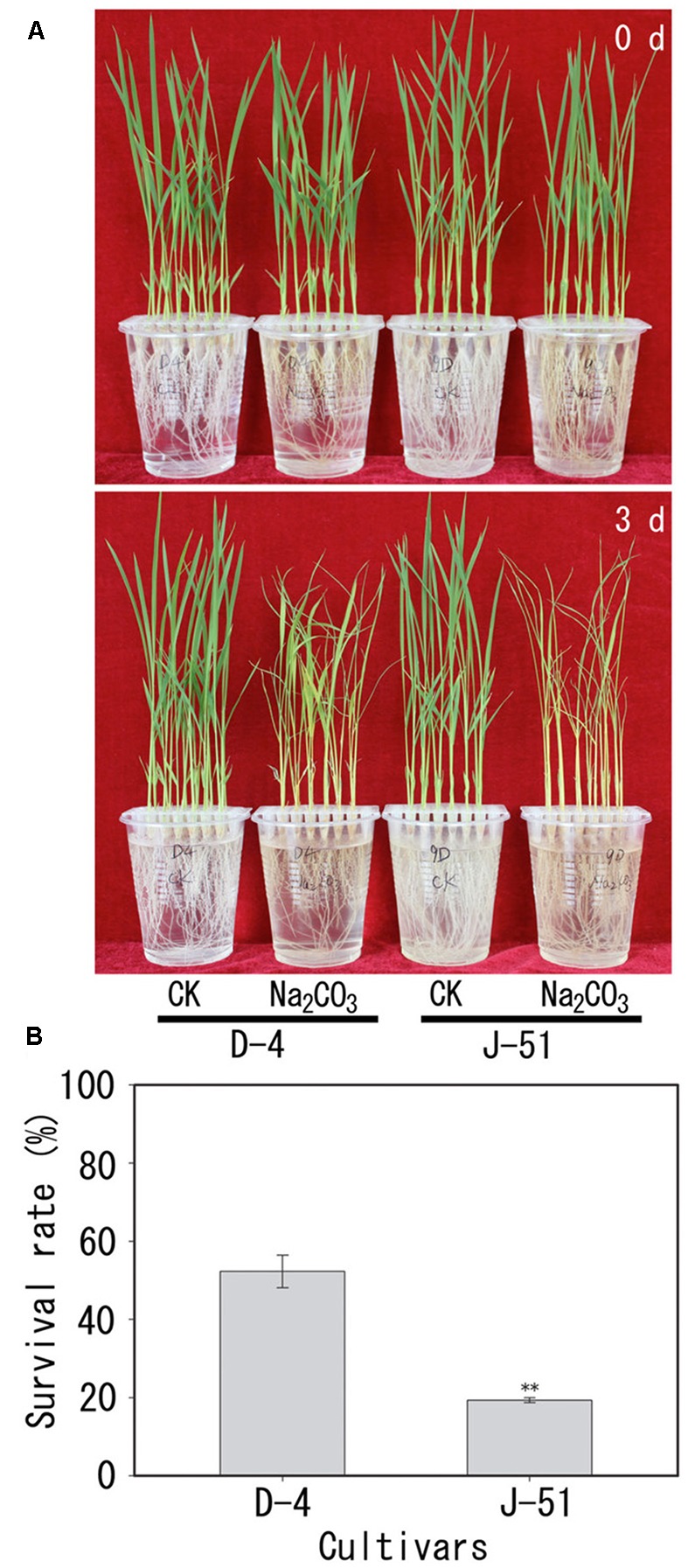
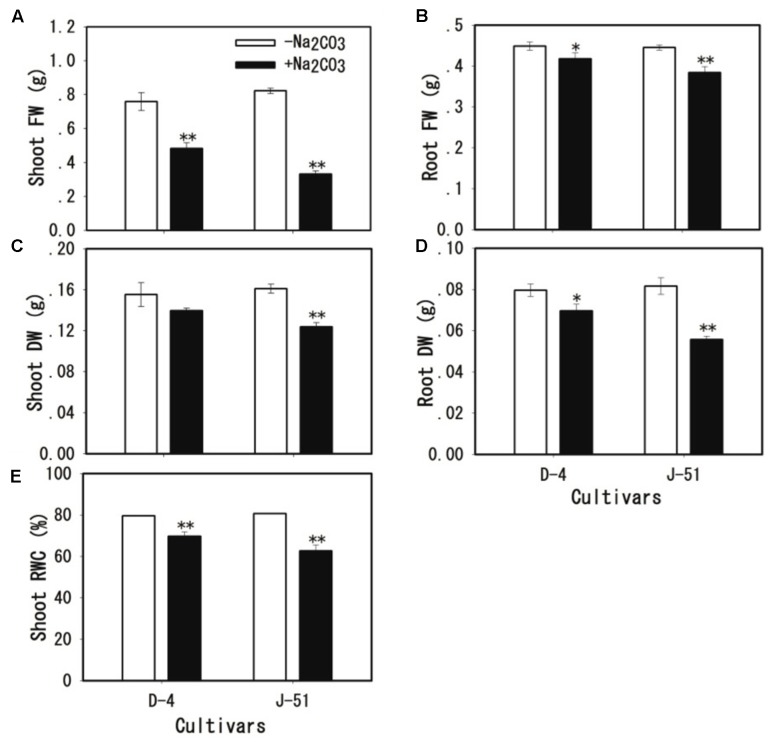
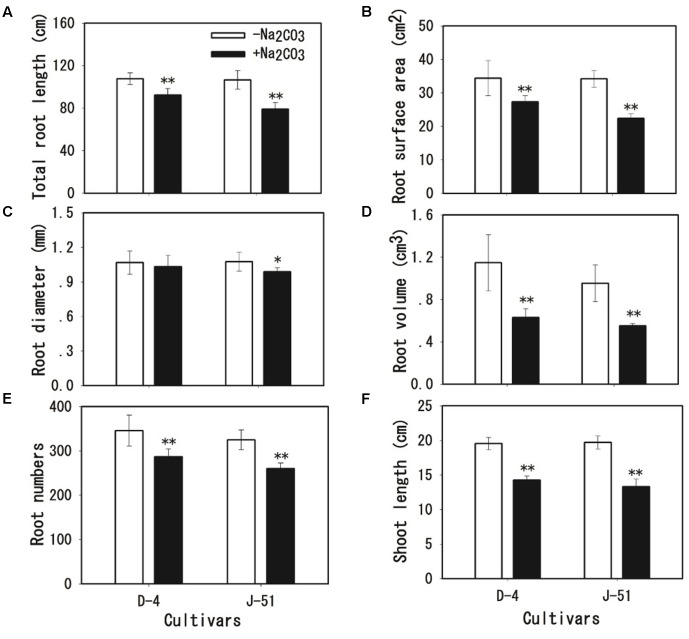
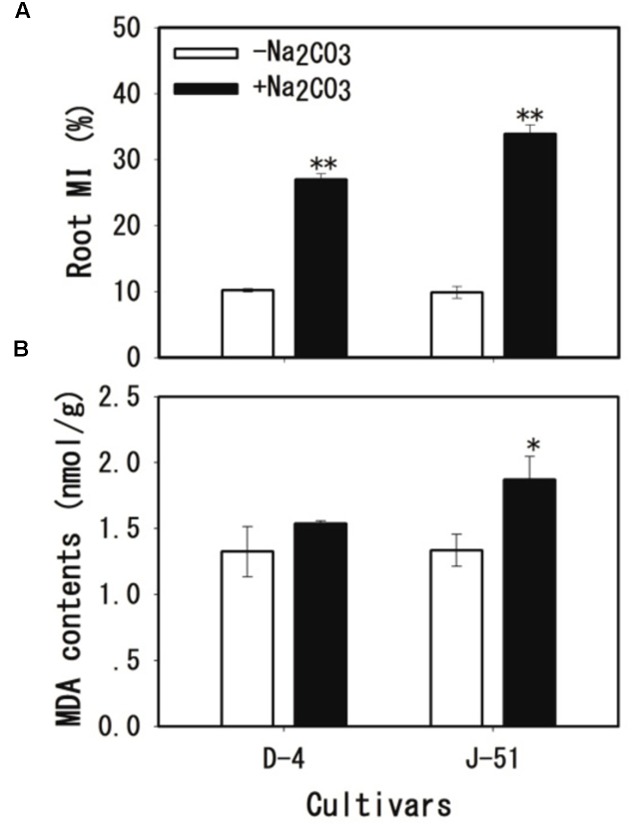
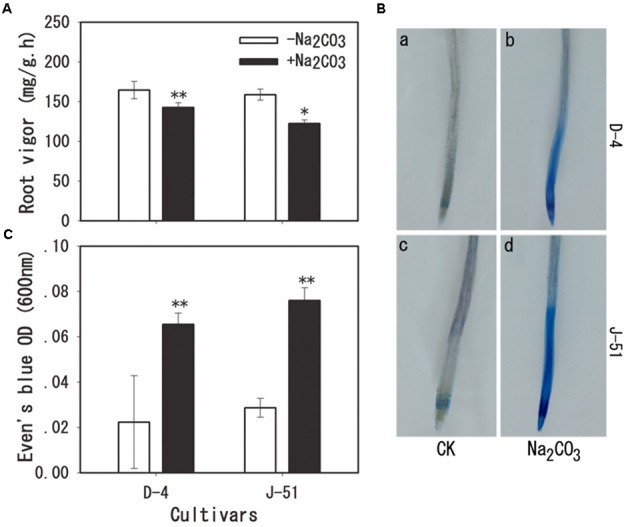
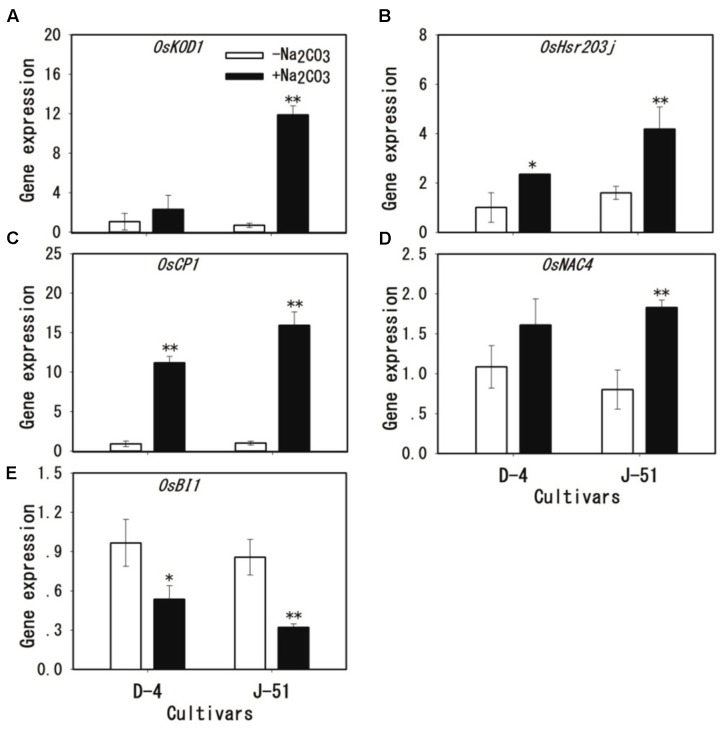
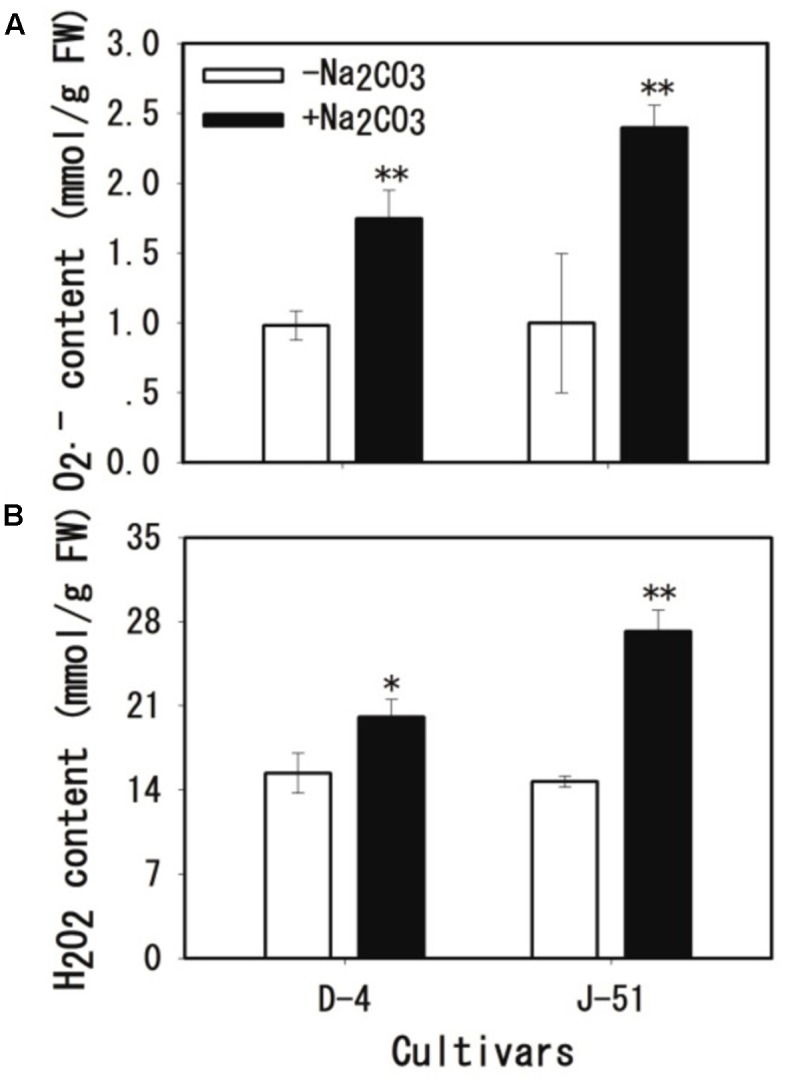
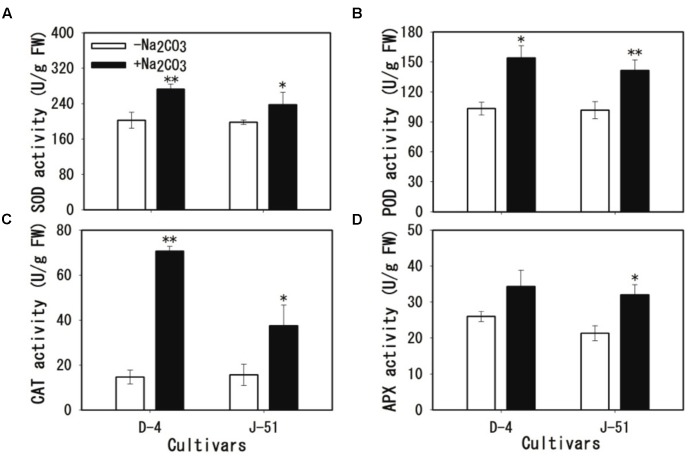
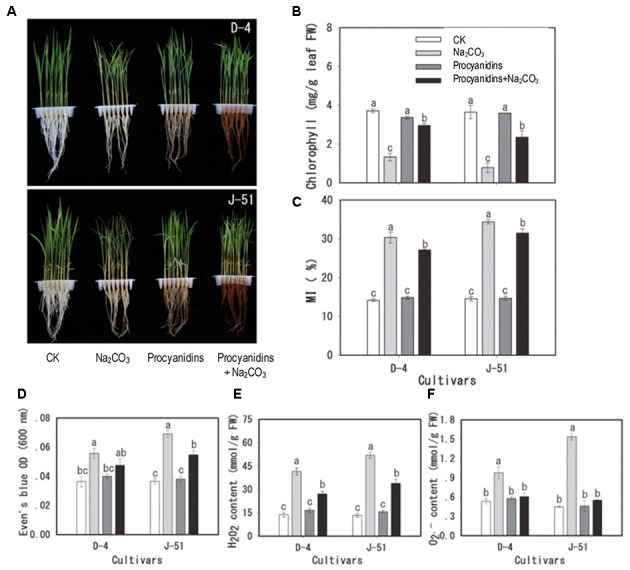
Alkaline stress (high pH) severely damages root cells, and consequently, inhibits rice (Oryza sativa L.) seedling growth. In this study, we demonstrate the accumulation of reactive oxygen species (ROS) in root cells under alkaline stress. Seedlings of two rice cultivars with different alkaline tolerances, ‘Dongdao-4’ (moderately alkaline-tolerant) and ‘Jiudao-51’ (alkaline-sensitive), were subjected to alkaline stress simulated by 15 mM sodium carbonate (Na2CO3). Alkaline stress greatly reduced seedling survival rate, shoot and root growth, and root vigor. Moreover, severe root cell damage was observed under alkaline stress, as shown by increased membrane injury, malondialdehyde accumulation, and Evan’s Blue staining. The expression of the cell death-related genes OsKOD1, OsHsr203j, OsCP1, and OsNAC4 was consistently upregulated, while that of a cell death-suppressor gene, OsBI1, was downregulated. Analysis of the ROS contents revealed that alkaline stress induced a marked accumulation of superoxide anions (O2-) and hydrogen peroxide (H2O2) in rice roots. The application of procyanidins (a potent antioxidant) to rice seedlings 24 h prior to alkaline treatment significantly alleviated alkalinity-induced root damage and promoted seedling growth inhibition, which were concomitant with reduced ROS accumulation. These results suggest that root cell damage, and consequently growth inhibition, of rice seedlings under alkaline stress is closely associated with ROS accumulation. The antioxidant activity of superoxide dismutase, catalase, peroxidase, and ascorbate peroxidase increased under alkaline stress in the roots, probably in response to the cellular damage induced by oxidative stress. However, this response mechanism may be overwhelmed by the excess ROS accumulation observed under stress, resulting in oxidative damage to root cells. Our findings provide physiological insights into the molecular mechanisms of alkalinity-induced damage to root cells, and will contribute to the improvement of alkaline stress tolerance in rice plants.
Overview
The claims and statistics of this paper haven’t been checked yet.
Run the check — free, no account needed. It reads the open-access text and checks the sources it cites.
Integrity signals
Registry
Cites
Statistics
Figures
Verification
Claims the paper makes
The claims and statistics of this paper haven’t been checked yet.
Run the check — free, no account needed. It reads the open-access text and checks the sources it cites.
Claims other papers make about this one
Each is checked against this paper’s own text: does it say what the citing paper says it does?
The source backs part of the claim, not all of it — or backs it for a different population, condition or comparison.
In the citing paper
“higher pH (8.5-11), disrupts cellular stability and destroys the membrane stability and root activity of plants [64].”
From Soy Molasses as Culture Medium for Bacillus Species Aiming at Plant Growth Promotion (2024) · cites this paper as [64]
Experimental — accuracy not yet measured
Self-check
Percentages, sums and reported differences re-computed from the paper’s own numbers.
The self-check needs the paper’s full text.
Citations
Cites
Analysis of Relative Gene Expression Data Using Real-Time Quantitative PCR and the 2−ΔΔCT Method
Livak, K. J., & Schmittgen, T. D. (2001) · Methods · doi:10.1006/meth.2001.1262 · Cited by 180,860
Aebi, H. (1984) · Methods in Enzymology · doi:10.1016/s0076-6879(84)05016-3 · Cited by 25,696
Photoperoxidation in isolated chloroplasts
Heath, R. L., & Packer, L. (1968) · Archives of Biochemistry and Biophysics · doi:10.1016/0003-9861(68)90654-1 · Cited by 11,413
Giannopolitis, C. N., & Ries, S. K. (1977) · PLANT PHYSIOLOGY · doi:10.1104/pp.59.2.309 · Cited by 6,510
Mutation of the mouse klotho gene leads to a syndrome resembling ageing
Kuro-o, M., Matsumura, Y., Aizawa, H., Kawaguchi, H., Suga, T., Utsugi, T., Ohyama, Y., Kurabayashi, M., Kaname, T., Kume, E., et al. (1997) · Nature · doi:10.1038/36285 · Cited by 3,837
Mittler, R. (2017) · Trends in Plant Science · doi:10.1016/j.tplants.2016.08.002 · Cited by 3,499
Reactive oxygen species, abiotic stress and stress combination
Choudhury, F. K., Rivero, R. M., Blumwald, E., & Mittler, R. (2016) · The Plant Journal · doi:10.1111/tpj.13299 · Cited by 2,647
Cadmium‐induced subcellular accumulation of O2·− and H2O2 in pea leaves
Romero‐Puertas, M. C., Rodríguez‐Serrano, M., Corpas, F. J., GÓMEZ, M., del Río, L. A., & Sandalio, L. M. (2004) · Plant Cell & Environment · doi:10.1111/j.1365-3040.2004.01217.x · Cited by 756
New Insights on Plant Salt Tolerance Mechanisms and Their Potential Use for Breeding
Hanin, M., Ebel, C., Ngom, M., Laplaze, L., & Masmoudi, K. (2016) · Frontiers in Plant Science · doi:10.3389/fpls.2016.01787 · Cited by 727
Moradi, F., & Ismail, A. M. (2007) · Annals of Botany · doi:10.1093/aob/mcm052 · Cited by 713
Research works printed but not linked: 5
- Amini, 2016, Salt-affected soils, reclamation, carbon dynamics, and biochar: a review., J. Soils Sediments, 16, 939, 10.1007/s11368-015-1293-1 · DOI
- Chen, 2012, Comparative effects of neutral salt and alkaline salt stress on seed germination, early seedling growth and physiological response of a halophyte species Chenopodium glaucum., Afr. J. Biotechnol., 11, 9572
- Feng, 2016, Comprehensive evaluation of rice (Oryza sativa japonica) germplasm for alkaline and saline tolerance at germination stage from Jilin province, China., Soils Crops, 5, 120, 10.11689/j.issn.2095-2961.02.009 · DOI
- Islam, 2011, Comparative studies on growth and physiological responses to saline and alkaline stresses of Foxtail millet (Setaria italica L.) and Proso millet (Panicum miliaceum L.)., Aust. J. Crop Sci., 5, 1269
- Yang, 2011, Breeding and cultivation techniques of new rice variety of Dongdao 4., Crops, 2, 10.16035/j.issn.1001-7283.2011.02.027 · DOI
Cited by
Sorted by citations
Response Mechanisms of Plants Under Saline-Alkali Stress
Fang, S., Hou, X., & Liang, X. (2021) · Frontiers in Plant Science · doi:10.3389/fpls.2021.667458 · Cited by 525
A Gγ protein regulates alkaline sensitivity in crops
Zhang, H., Yu, F., Xie, P., Sun, S., Qiao, X., Tang, S., Chen, C., Yang, S., Mei, C., Yang, D., et al. (2023) · Science · doi:10.1126/science.ade8416 · Cited by 360
Self-citationMechanisms of plant saline-alkaline tolerance
Rao, Y., Peng, T., & Xue, S. (2023) · Journal of Plant Physiology · doi:10.1016/j.jplph.2023.153916 · Cited by 150
Physiological mechanisms of ABA-induced salinity tolerance in leaves and roots of rice
Chen, G., Zheng, D., Feng, N., Zhou, H., Mu, D., Zhao, L., Shen, X., Rao, G., Meng, F., & Huang, A. (2022) · Scientific Reports · doi:10.1038/s41598-022-11408-0 · Cited by 131
Rezakhani, L., Motesharezadeh, B., Tehrani, M. M., Etesami, H., & Hosseini, H. M. (2019) · Ecotoxicology and Environmental Safety · doi:10.1016/j.ecoenv.2019.02.060 · Cited by 116
Wassie, M., Zhang, W., Zhang, Q., Ji, K., & Chen, L. (2019) · Agronomy · doi:10.3390/agronomy9100597 · Cited by 118
Liu, X., Zhang, H., Jin, Y., Wang, M., Yang, H., Ma, H., Jiang, C., & Liang, Z. (2019) · Plant and Soil · doi:10.1007/s11104-019-03992-4 · Cited by 101
Self-citationSilicon and salicylic acid confer high-pH stress tolerance in tomato seedlings
Khan, A., Kamran, M., Imran, M., Al‐Harrasi, A., Al-Rawahi, A. N., Al-Amri, I. S., Lee, I., & Khan, A. L. (2019) · Scientific Reports · doi:10.1038/s41598-019-55651-4 · Cited by 101
Wang, H., Takano, T., & Liu, S. (2018) · Agronomy · doi:10.3390/agronomy8100205 · Cited by 92
Ganapati, R. K., Naveed, S. A., Zafar, S., Wang, W., & Xu, J. (2022) · Rice Science · doi:10.1016/j.rsci.2022.05.002 · Cited by 92
The Contrivance of Plant Growth Promoting Microbes to Mitigate Climate Change Impact in Agriculture
Fiodor, A., Singh, S., & Pranaw, K. (2021) · Microorganisms · doi:10.3390/microorganisms9091841 · Cited by 90
The Impact of Alkaline Stress on Plant Growth and Its Alkaline Resistance Mechanisms
Yang, S., Xu, Y., Tang, Z., Jin, S., & Yang, S. P. (2024) · International Journal of Molecular Sciences · doi:10.3390/ijms252413719 · Cited by 93
Hu, D., Li, R., Dong, S., Zhang, J., Zhao, B., Ren, B., Ren, H., Yao, H., Wang, Z., & Liu, P. (2022) · BMC Plant Biology · doi:10.1186/s12870-022-03972-4 · Cited by 94
Zhang, H., Li, X., Guan, Y., Ma-bo, L., Yue, W., Meijun, A., yuehui, Z., Guanjun, L., Xu, N., & Guangyu, S. (2020) · Ecotoxicology and Environmental Safety · doi:10.1016/j.ecoenv.2020.110259 · Cited by 80
Self-citationResponse of antioxidative system in rice (Oryza sativa) leaves to simulated acid rain stress
Ren, X., Zhu, J., Liu, H., Xu, X., & Liang, C. (2017) · Ecotoxicology and Environmental Safety · doi:10.1016/j.ecoenv.2017.11.046 · Cited by 79
Liu, Y., Chen, X., Xue, S., Quan, T., Cui, D., Han, L., Cong, W., Li, M., Yun, D., Liu, B., et al. (2021) · Plant Biotechnology Journal · doi:10.1111/pbi.13683 · Cited by 77
Liu, X., Ji, P., Liao, J., Duan, X., Luo, Z., Yu, X., Jiang, C., Chen, X., Yang, H., Peng, B., et al. (2024) · Plant Biotechnology Journal · doi:10.1111/pbi.14500 · Cited by 76
Self-citationManagement of phosphorus nutrient amid climate change for sustainable agriculture
Maharajan, T., Ceasar, S. A., Krishna, T. P. A., & Savarimuthu Ignacimuthu, S. J. (2021) · Journal of Environmental Quality · doi:10.1002/jeq2.20292 · Cited by 80
Meng, Y., Yin, Q., Yan, Z., Wang, Y., Niu, J., Zhang, J., & Fan, K. (2020) · Frontiers in Plant Science · doi:10.3389/fpls.2020.01183 · Cited by 71
Membrane-Bound Class III Peroxidases: Unexpected Enzymes with Exciting Functions
Lüthje, S., & Martínez-Cortés, T. (2018) · International Journal of Molecular Sciences · doi:10.3390/ijms19102876 · Cited by 65
Coatsworth, P., Çotur, Y., Naik, A., Asfour, T., Collins, A., Olenik, S., Zhou, Z., Gonzalez‐Macia, L., Chao, D., Bozkurt, T. O., et al. (2024) · Science Advances · doi:10.1126/sciadv.adj6315 · Cited by 62
Epigenetic Mechanisms of Abiotic Stress Response and Memory in Plants
Mozgová, I., Mikulski, P., Pečinka, A., & Farrona, S. (2019) · Springer eBooks · doi:10.1007/978-3-030-14760-0_1 · Cited by 63
Liu, D., Liu, M., Liu, X., Cheng, X.-G., & Liang, Z. (2018) · Frontiers in Plant Science · doi:10.3389/fpls.2018.00716 · Cited by 57
Self-citationDawood, M. F. A., Sohag, A. A. M., Tahjib‐Ul‐Arif, M., & Latef, A. A. H. A. (2021) · Plant Physiology and Biochemistry · doi:10.1016/j.plaphy.2020.12.034 · Cited by 54
Zhang, P., Duo, T., Wang, F., Zhang, X., Yang, Z., & Hu, G. (2021) · BMC Genomics · doi:10.1186/s12864-021-07368-w · Cited by 48
Flavonol synthase gene MsFLS13 regulates saline-alkali stress tolerance in alfalfa
Zhang, L., Sun, Y., Ji, J., Zhao, W., Guo, W., Li, J., Bai, Y., Wang, D., Yan, Z., & Guo, C. (2023) · The Crop Journal · doi:10.1016/j.cj.2023.05.003 · Cited by 51
Liu, X., Zhong, X., Liao, J., Ji, P., Yang, J., Cao, Z., Duan, X., Xiong, J., Wāng, Y., Chen, X., et al. (2023) · BMC Plant Biology · doi:10.1186/s12870-023-04638-5 · Cited by 49
Self-citationQian, G., Wang, M., Wang, X., Liu, K., Li, Y., Bu, Y., & Li, L. (2023) · International Journal of Molecular Sciences · doi:10.3390/ijms24044062 · Cited by 48
Self-citationLi, Q., Yang, A., & Zhang, W. (2019) · Environmental and Experimental Botany · doi:10.1016/j.envexpbot.2019.03.015 · Cited by 46
Liu, X., Xie, X., Zheng, C., Wei, L., Li, X., Jin, Y., Zhang, G., Jiang, C., & Liang, Z. (2021) · The Crop Journal · doi:10.1016/j.cj.2021.06.011 · Cited by 46
Self-citationMitochondrial Respiration and Energy Production Under Some Abiotic Stresses
Rad, S. A., Dehghanian, Z., Lajayer, B. A., Nobaharan, K., & Astatkie, T. (2021) · Journal of Plant Growth Regulation · doi:10.1007/s00344-021-10512-1 · Cited by 44
Zhou, B., Jia, R., Chen, X., Yang, L., Duan, M., Fan, X., Liang, C., Zhou, D., Li, W., & Liu, C. (2023) · Agricultural Water Management · doi:10.1016/j.agwat.2023.108221 · Cited by 41
Role of TaALMT1 malate‐GABA transporter in alkaline pH tolerance of wheat
Kamran, M., Ramesh, S. A., Gilliham, M., Tyerman, S. D., & Bose, J. (2020) · Plant Cell & Environment · doi:10.1111/pce.13845 · Cited by 40
Rasheed, R., Ashraf, M. A., Ahmad, S. J. N., Parveen, N., Hussain, I., & Bashir, R. (2022) · South African Journal of Botany · doi:10.1016/j.sajb.2022.05.023 · Cited by 42
Liu, X., Ji, P., Yang, H., Jiang, C., Liang, Z., Chen, Q., Lu, F., Chen, X., Yang, Y., & Zhang, X. (2022) · Plant Growth Regulation · doi:10.1007/s10725-022-00828-7 · Cited by 39
Self-citationStraw and nitrogen amendments improve soil, rice yield, and roots in a saline sodic soil
Ran, C., Gao, D., Liu, W., Guo, L., Bai, T., Shao, X., & Geng, Y. (2022) · Rhizosphere · doi:10.1016/j.rhisph.2022.100606 · Cited by 39
Tu, M., Du, C., Yu, B., Wang, G., Deng, Y., Wang, Y., Chen, M., Chang, J., Yang, G., He, G., et al. (2023) · Frontiers in Plant Science · doi:10.3389/fpls.2023.1147328 · Cited by 39
Ramadan, K. M. A., Alharbi, M. M., Alenzi, A. M., EL-BELTAGI, H. S., Darwish, D. B. E., Al-Daej, M. I., Shalaby, T., Mansour, A. T., El–Gabry, Y. A., & Ibrahim, M. F. M. (2022) · Plants · doi:10.3390/plants11060787 · Cited by 42
Zhang, C., Meng, W., Wang, Y., Zhou, Y., Wang, S., Qi, F., Wang, N., & Ma, J. (2022) · International Journal of Molecular Sciences · doi:10.3390/ijms232416146 · Cited by 37
Liu, Y., Li, M., Yu, J., Ma, A., Wang, J., Yun, D., & Xu, Z. (2022) · Journal of Integrative Plant Biology · doi:10.1111/jipb.13403 · Cited by 36
Liu, X., Gong, X., Zhou, D., Jiang, Q., Liang, Y., Ye, R., Zhang, S., Wang, Y., Tang, X., Li, F., et al. (2023) · Journal of Agricultural and Food Chemistry · doi:10.1021/acs.jafc.3c01032 · Cited by 36
Self-citationCao, J., Zheng, X., Xie, D., Zhou, H., Shao, S., & Zhou, J. (2022) · Horticulture Research · doi:10.1093/hr/uhac068 · Cited by 35
Ma, S., Lv, L., Meng, C., Zhou, C., Fu, J., Shen, X., Zhang, C., & Li, Y. (2019) · Biomolecules · doi:10.3390/biom9120823 · Cited by 35
Zhao, C., Pan, X., Yu, Y., Zhu, Y., Kong, F., Sun, X., & Wang, F. (2020) · Molecular Breeding · doi:10.1007/s11032-020-01113-z · Cited by 35
Shahzad, R., Harlina, P. W., Ewas, M., Zhenyuan, P., Nie, X., Gallego, P. P. F., Khan, S. U., Nishawy, E., Khan, A. H., & Jia, H. (2021) · Journal of Plant Interactions · doi:10.1080/17429145.2021.2002444 · Cited by 35
Khoso, M. A., Wang, M., Zhou, Z., Huang, Y., Li, S., Zhang, Y., Qian, G., Ko, S. N., Pang, Q., Liu, C., et al. (2024) · International Journal of Molecular Sciences · doi:10.3390/ijms25115785 · Cited by 34
Self-citationRezakhani, L., Motesharezadeh, B., Tehrani, M. M., Etesami, H., & Hosseini, H. M. (2019) · Journal of Plant Growth Regulation · doi:10.1007/s00344-019-09978-x · Cited by 34
Pérez‐Martín, L., Busoms, S., Tolrà, R. P., & Poschenrieder, C. (2021) · International Journal of Molecular Sciences · doi:10.3390/ijms22031226 · Cited by 34
Alghamdi, S. A., Alharby, H. F., Abdelfattah, M. A., Mohamed, I. A. A., Hakeem, K. R., Rady, M. M., & Shaaban, A. (2023) · Journal of soil science and plant nutrition · doi:10.1007/s42729-023-01174-x · Cited by 32
Mei, S., Zhang, G., Jiang, J., Lu, J., & Zhang, F. (2022) · Frontiers in Plant Science · doi:10.3389/fpls.2022.887239 · Cited by 31
Luo, H., Wang, X., You, C., Wu, X., Pan, D., Lv, Z., Li, T., Zhang, D., Shen, Z., Zhang, X., et al. (2023) · Science China Life Sciences · doi:10.1007/s11427-023-2463-y · Cited by 30
Priming for Saline-Alkaline Tolerance in Rice: Current Knowledge and Future Challenges
Changjie, J., Zhengwei, L., & Xianzhi, X. (2023) · Rice Science · doi:10.1016/j.rsci.2023.05.003 · Cited by 30
Sagervanshi, A., Naeem, A., Kaiser, H., Pitann, B., & Mühling, K. H. (2021) · Environmental and Experimental Botany · doi:10.1016/j.envexpbot.2021.104636 · Cited by 29
Effect of salt-alkali stress on seed germination of the halophyte Halostachys caspica
Zhang, R., Zhang, H., Wang, L., & Zeng, Y. (2024) · Scientific Reports · doi:10.1038/s41598-024-61737-5 · Cited by 26
Self-citationMa, C., Li, Q., Song, Z., Su, L., Tao, W., Zhou, B., & Wang, Q. (2022) · International Journal of Molecular Sciences · doi:10.3390/ijms231710048 · Cited by 26
Wang, X., Wang, M., Huang, Y., Zhu, P., Qian, G., Zhang, Y., Liu, Y., Zhou, J., & Li, L. (2023) · International Journal of Molecular Sciences · doi:10.3390/ijms24086950 · Cited by 26
Self-citationKumar, K., Jaiswal, A., Koppolu, U. M. K., & Kumar, K. R. R. (2024) · Frontiers in Agronomy · doi:10.3389/fagro.2024.1497054 · Cited by 25
Pagnotta, M. A. (2025) · International Journal of Molecular Sciences · doi:10.3390/ijms26189164 · Cited by 30
Feng, Z., Xu, Y., Xie, Z., Yang, Y., Lu, G., Jin, Y., Wang, M., Liu, M., Yang, H., Li, W., et al. (2024) · Plants · doi:10.3390/plants13121713 · Cited by 24
Self-citationDu, N., Xue, L., Xue, D., Dong, X., Yang, Q., Jahan, M. S., Guo, H., Fu, R., Wang, Y., & Piao, F. (2022) · Gene · doi:10.1016/j.gene.2022.146906 · Cited by 24
Flax (Linum usitatissimum L.) response to non-optimal soil acidity and zinc deficiency
Dmitriev, A. A., Krasnov, G. S., Rozhmina, T. A., Zyablitsin, A. V., Snezhkina, A. V., Fedorova, M., Pushkova, E. N., Kezimana, P., Novakovskiy, R. O., Povkhova, L. V., et al. (2019) · BMC Plant Biology · doi:10.1186/s12870-019-1641-1 · Cited by 24
Cheng, R., Zhu, H., Cheng, X., Shutes, B., & Yan, B. (2020) · Sustainability · doi:10.3390/su12051913 · Cited by 23
Fiallos-Salguero, M. S., Li, J., Li, Y., Xu, J., Fang, P., Wang, Y., Zhang, L., & Tao, A. (2023) · Plants · doi:10.3390/plants12051161 · Cited by 23
Abiotic Stress Sensitivity and Adaptation in Field Crops
Sarkar, S., Saha, S., Ghosh, S., Paul, S. K., Dey, S., Moulick, D., Santra, S. C., & Brahmachari, K. (2023) · Springer eBooks · doi:10.1007/978-3-031-37428-9_15 · Cited by 23
Yu, L., Tang, S., Guo, C., Korpelainen, H., & Li, C. (2023) · Plant Physiology and Biochemistry · doi:10.1016/j.plaphy.2023.107707 · Cited by 22
Wan, S., Zhang, Y., Liu, L., Xiao, Y., He, J., Zhang, Y., Wang, W., & Yu, Y. (2024) · Plant Growth Regulation · doi:10.1007/s10725-023-01115-9 · Cited by 21
Wen, D., Bao, L., Huang, X., Qian, X., Chen, E., & Bo, S. (2022) · International Journal of Molecular Sciences · doi:10.3390/ijms231810656 · Cited by 21
Zhu, S., Shi, F., Li, H., Ding, Y., Chang, W., Ping, Y., & Song, F. (2024) · Frontiers in Plant Science · doi:10.3389/fpls.2024.1406542 · Cited by 20
Riaz, S., Hussain, I., Ibrahim, M., Rasheed, R., & Ashraf, M. A. (2021) · Dose-Response · doi:10.1177/15593258211055026 · Cited by 19
Dong, Q., Xiao, C., Cheng, W., Yu, H., Liu, J., Liu, G., Liu, Y., Guo, Y., Liang, Y., Shi, J., et al. (2024) · ACS Environmental Au · doi:10.1021/acsenvironau.3c00067 · Cited by 19
Razi, K., & Muneer, S. (2023) · Frontiers in Plant Science · doi:10.3389/fpls.2023.1178935 · Cited by 18
Singh, D., Singh, C. K., Taunk, J., Gaikwad, K., Singh, V., Sanwal, S. K., Karwa, S., Singh, D., Sharma, P. C., Yadav, R. K., et al. (2022) · BMC Plant Biology · doi:10.1186/s12870-022-03489-w · Cited by 18
Xu, N., Chen, B., Cheng, Y., Su, Y., Song, M., Guo, R., Wang, M., Deng, K., Lan, T., Bao, S., et al. (2023) · Genes · doi:10.3390/genes14061294 · Cited by 17
Self-citationFeng, Z., Lu, G., Sun, M., Jin, Y., Xu, Y., Liu, X., Wang, M., Liu, M., Yang, H., Guan, Y., et al. (2023) · Agronomy · doi:10.3390/agronomy13112698 · Cited by 17
Self-citationLi, H., Abbas, T., Cai, M., Zhang, Q., Wang, J., Li, Y., Di, H., & Tahir, M. A. (2021) · Environmental Pollution · doi:10.1016/j.envpol.2021.116542 · Cited by 17
Pérez‐Martín, L., Busoms, S., Almira-Casellas, M., Azagury, N., Terés, J., Tolrà, R. P., Poschenrieder, C., & Barceló, J. A. (2022) · Plant and Soil · doi:10.1007/s11104-022-05439-9 · Cited by 17
Responses of diversity, productivity, and stability to the nitrogen input in a tropical grassland
Verma, P., & Sagar, R. (2019) · Ecological Applications · doi:10.1002/eap.2037 · Cited by 16
Wei, T.-J., Li, G., Wang, M., Jin, Y., Zhang, G., Liu, M., Yang, H., Jiang, C., & Liang, Z. (2021) · Ecotoxicology and Environmental Safety · doi:10.1016/j.ecoenv.2021.113017 · Cited by 16
Self-citationAbscisic Acid Priming Creates Alkaline Tolerance in Alfalfa Seedlings (Medicago sativa L.)
Wei, T.-J., Wang, M., Jin, Y., Zhang, G., Liu, M., Yang, H., Jiang, C., & Liang, Z. (2021) · Agriculture · doi:10.3390/agriculture11070608 · Cited by 16
Self-citationSingh, L., Coronejo, S., Pruthi, R., Chapagain, S., & Subudhi, P. K. (2022) · International Journal of Molecular Sciences · doi:10.3390/ijms231911791 · Cited by 16
Kruthika, N., & Jithesh, M. N. (2023) · Journal of Plant Research · doi:10.1007/s10265-023-01491-3 · Cited by 16
Nie, W., He, Q., Ma, J., Guo, H., & Shi, Q. (2024) · Plants · doi:10.3390/plants14010054 · Cited by 16
Long, R., Sun, H., Cao, C., Zhang, T., Kang, J., Wang, Z., Li, M., Gao, Y., Li, X., & Yang, Q. (2018) · Environmental and Experimental Botany · doi:10.1016/j.envexpbot.2018.09.021 · Cited by 16
Zhang, G., Bi, Z., Jiang, J., Lu, J., Li, K., Bai, D., Wang, X., Zhao, X., Li, M., Zhao, X., et al. (2023) · Frontiers in Plant Science · doi:10.3389/fpls.2023.1170641 · Cited by 15
Effects of NaHCO3 Acclimation on Rye (Secale Cereale) Growth Under Sodic-Alkaline Stress
Liu, L., & Saneoka, H. (2019) · Plants · doi:10.3390/plants8090314 · Cited by 15
Transcriptome Study of Rice Roots Status under High Alkaline Stress at Seedling Stage
Lin, Y., Ma, J., Wu, N., Qi, F., Peng, Z., Nie, D., Yao, R., Qi, X., Slaski, J. J., Fu, Y., et al. (2022) · Agronomy · doi:10.3390/agronomy12040925 · Cited by 15
Brassinolide improves the tolerance of Malus hupehensis to alkaline stress
Sun, Z., Zou, Y., Xie, C., Han, L., Zheng, X., Tian, Y., Ma, C., Liu, X., & Wang, C. (2022) · Frontiers in Plant Science · doi:10.3389/fpls.2022.1032646 · Cited by 14
Self-citationIron transporter1 OsIRT1 positively regulates saline–alkaline stress tolerance in Oryza sativa
Duan, X., Xu, Y., Liu, Y., Xu, X., Wen, L., Fang, J., & Yu, Y. (2024) · Journal of Plant Physiology · doi:10.1016/j.jplph.2024.154272 · Cited by 14
GHCYP706A7 governs anthocyanin biosynthesis to mitigate ROS under alkali stress in cotton
Sun, Y., Wang, N., Chen, X., Peng, F., Zhang, J., Song, H., Meng, Y., Liu, M., Huang, H., Fan, Y., et al. (2025) · Plant Cell Reports · doi:10.1007/s00299-025-03453-6 · Cited by 14
KHAN, I., ZAFAR, H., CHATTHA, M. U., MAHMOOD, A., MAQBOOL, R., ATHAR, F., ALAHDAL, M. A., BIBI, F., MAHMOOD, F., HASSAN, M. U., et al. (2022) · Notulae Botanicae Horti Agrobotanici Cluj-Napoca · doi:10.15835/nbha50112615 · Cited by 13
Chen, G., Wu, C., He, L., Qiu, Z., Zhang, S., Zhang, Y., Guo, L., Zeng, D., Hu, J., Ren, D., et al. (2018) · International Journal of Molecular Sciences · doi:10.3390/ijms19102853 · Cited by 13
Masoumi, Z., Khosravi, S., Haghighi, M., & Mozafarian, M. (2024) · Plant Stress · doi:10.1016/j.stress.2024.100695 · Cited by 12
Shaban, A. S., Safhi, F. A., Fakhr, M. A., Pruthi, R., Abozahra, M. S., El-Tahan, A. M., & Subudhi, P. K. (2023) · Plants · doi:10.3390/plants13010060 · Cited by 11
Hosamani, R., Swamy, B. K., Sathasivam, M., Dsouza, A., & Mahamed Ashiq, I. (2024) · Acta Astronautica · doi:10.1016/j.actaastro.2024.05.001 · Cited by 11
Moukhtari, A. E., Lamsaadi, N., & Farissi, M. (2024) · Biologia · doi:10.1007/s11756-024-01704-7 · Cited by 11
Wang, A., Wang, R., & Miao, X. (2025) · International Journal of Molecular Sciences · doi:10.3390/ijms26020769 · Cited by 12
Verma, P., & Sagar, R. (2020) · Ecological Indicators · doi:10.1016/j.ecolind.2020.106987 · Cited by 11
Ren, X., Shan, Y., LI, X., WANG, L. L., LI, Y. Y., MA, L. J., & Li, X. (2021) · Applied Ecology and Environmental Research · doi:10.15666/aeer/1903_18951907 · Cited by 11
Combined genomics to discover genes associated with tolerance to soil carbonate
Busoms, S., Pérez‐Martín, L., Terés, J., Huang, X., Yant, L. J., Tolrà, R. P., Salt, D. E., & Poschenrieder, C. (2023) · Plant Cell & Environment · doi:10.1111/pce.14691 · Cited by 10
Sharma, M., Gupta, I., Tisarum, R., Batish, D. R., Cha–um, S., & Singh, H. P. (2023) · Journal of soil science and plant nutrition · doi:10.1007/s42729-023-01497-9 · Cited by 10
Metadata
- Authors
- Zhang, H., Liu, X.-L., Zhang, R.-X., Yuan, H.-Y., Wang, M.-M., Yang, H.-Y., Ma, H.-Y., Liu, D., Jiang, C.-J., & Liang, Z.-W.
- Affiliations
- Chinese Academy of Sciences (CN)
- National Agriculture and Food Research Organization (JP)
- Corresponding author
- Jiang, Chang-Jie
- Venue
- Frontiers in Plant Science
- Publisher
- Frontiers Media SA
- Published
- 2017-09-08
- Volume
- 8
- Pages
- 1580-1580
- ISSN
- 1664-462X (ISSN-L)
- PMC
- PMC5596797
- OpenAlex
- W2751550853
- Cited by
- 218
- References
- 66
- Citations by year
- 2026: 29 · 2025: 37 · 2024: 36 · 2023: 39 · 2022: 33 · 2021: 19 · 2020: 7 · 2019: 12 · 2018: 5 · 2017: 1
- FWCI
- 6.73
- Type
- journal article
- Language
- en
- Open access
- gold
- doi.org
- Licence
- cc-by
- Locations
- Frontiers in Plant Science (publishedVersion, cc-by)
- PubMed Central (publishedVersion, cc-by)
- PubMed (publishedVersion)
- DOAJ (DOAJ: Directory of Open Access Journals) (submittedVersion, cc-by-sa)
- Topics
- Life Sciences › Agricultural and Biological Sciences › Plant Science › Plant Stress Responses and Tolerance
- Life Sciences › Agricultural and Biological Sciences › Plant Science › Aluminum toxicity and tolerance in plants and animals
- Life Sciences › Agricultural and Biological Sciences › Plant Science › Rice Cultivation and Yield Improvement
- Keywords
- alkaline stress, rice, reactive oxygen species, seedling growth inhibition, superoxide, hydrogen peroxide, oxidative stress, cell death genes, procyanidins, antioxidant enzymes, alkaline tolerance, sodium carbonate, malondialdehyde, membrane damage
About these checks
Registry, retraction, Cites and statistics results are computed, not judged, with one exception: a printed reference that no index lists is read once by a model before it counts as a citation error. Claims are extracted by a model and kept only when their quote appears verbatim in the text; each cited source is then checked, with a model’s help, for whether it says what the claim relies on. Those verdicts can be wrong — read the claim’s quote and the cited source before relying on one.
Statistics and arithmetic are recomputed, not judged.
Confidence bands are shown only for fields calibrated on our annotated test set. None is calibrated yet, so no band is shown.
What counts as a claim ›How we measure confidence ›How we check this ›
Are you an author, or do you see a problem with this page? Request a review
