

The DOI matches its Crossref record; 6 of the 6 references it cites were found in a registry or an index.
AgriPest-YOLO: A rapid light-trap agricultural pest detection method based on deep learning
Open accessAbstract
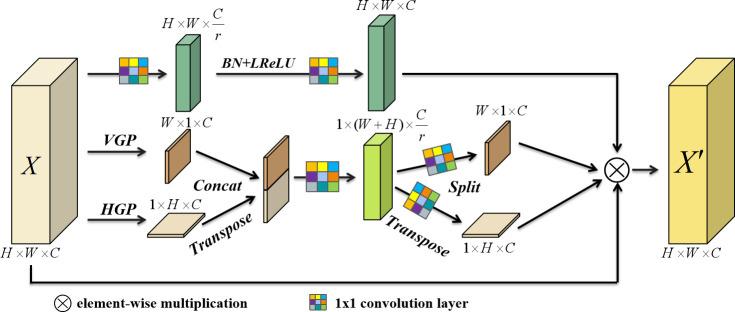
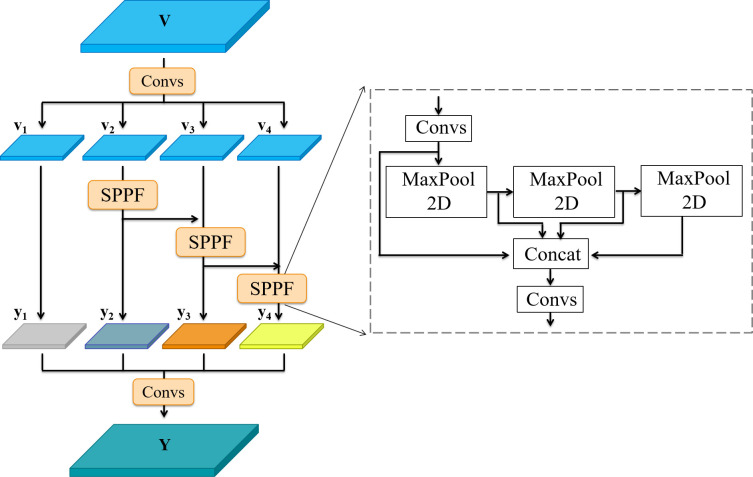
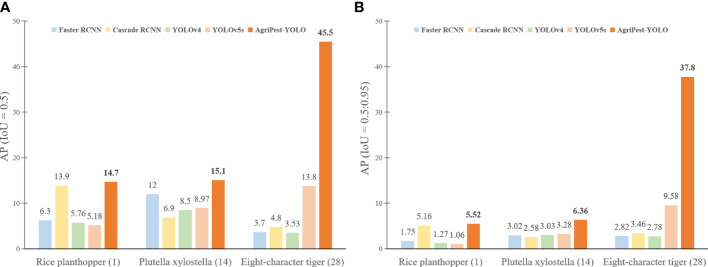
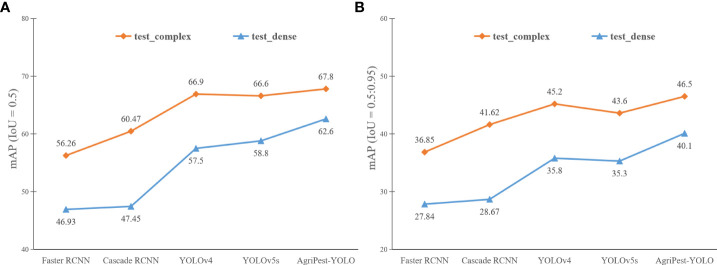
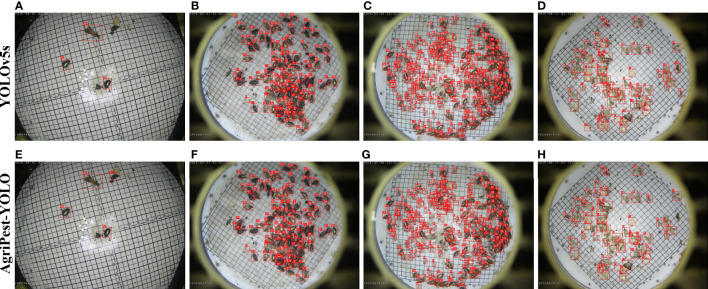
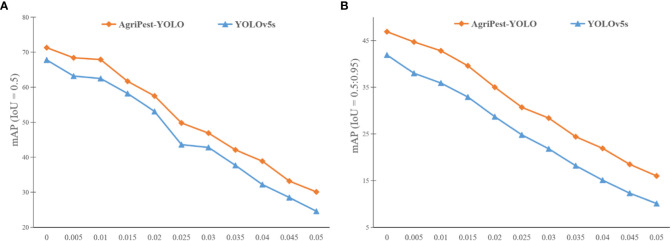
Light traps have been widely used for automatic monitoring of pests in the field as an alternative to time-consuming and labor-intensive manual investigations. However, the scale variation, complex background and dense distribution of pests in light-trap images bring challenges to the rapid and accurate detection when utilizing vision technology. To overcome these challenges, in this paper, we put forward a lightweight pest detection model, AgriPest-YOLO, for achieving a well-balanced between efficiency, accuracy and model size for pest detection. Firstly, we propose a coordination and local attention (CLA) mechanism for obtaining richer and smoother pest features as well as reducing the interference of noise, especially for pests with complex backgrounds. Secondly, a novel grouping spatial pyramid pooling fast (GSPPF) is designed, which enriches the multi-scale representation of pest features via fusing multiple receptive fields of different scale features. Finally, soft-NMS is introduced in the prediction layer to optimize the final prediction results of overlapping pests. We evaluated the performance of our method on a large scale multi pest image dataset containing 24 classes and 25k images. Experimental results show that AgriPest-YOLO achieves end-to-end real-time pest detection with high accuracy, obtaining 71.3% mAP on the test dataset, outperforming the classical detection models (Faster RCNN, Cascade RCNN, Dynamic RCNN,YOLOX and YOLOv4) and lightweight detection models (Mobilenetv3-YOLOv4, YOLOv5 and YOLOv4-tiny), meanwhile our method demonstrates better balanced performance in terms of model size, detection speed and accuracy. The method has good accuracy and efficiency in detecting multi-class pests from light-trap images which is a key component of pest forecasting and intelligent pest monitoring technology.
Overview
The claims and statistics of this paper haven’t been checked yet.
Run the check — free, no account needed. It reads the open-access text and checks the sources it cites.
Integrity signals
Registry
Cites
Statistics
Figures
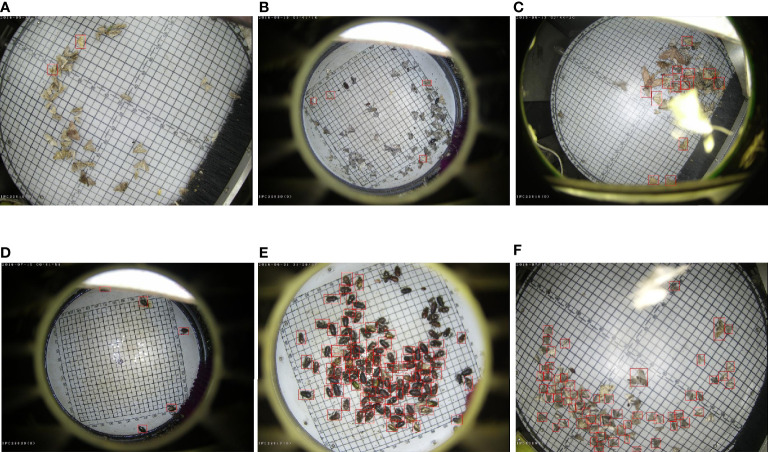
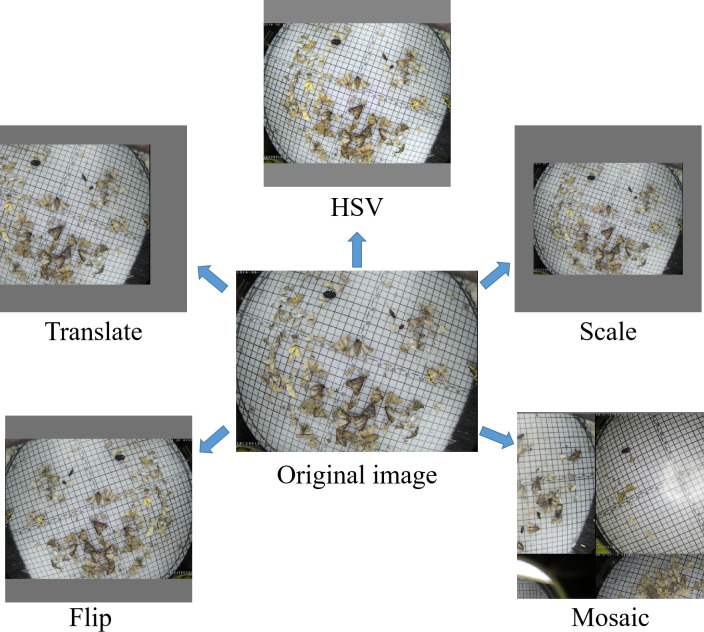
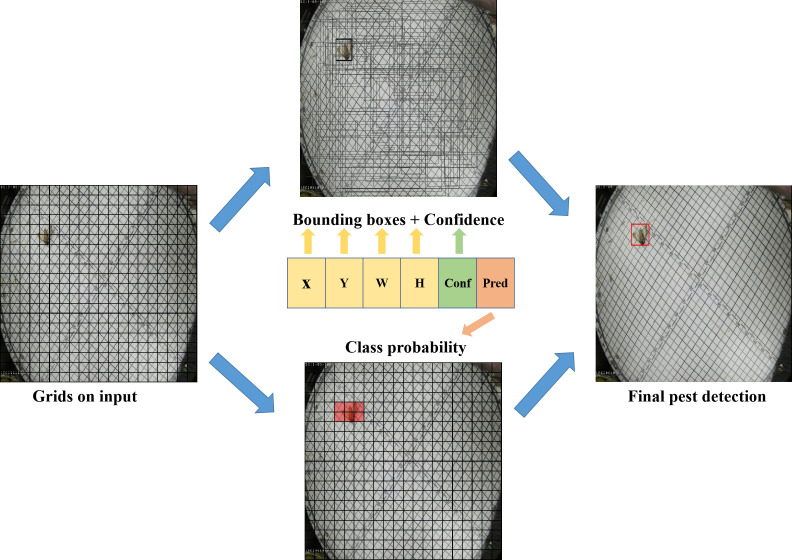
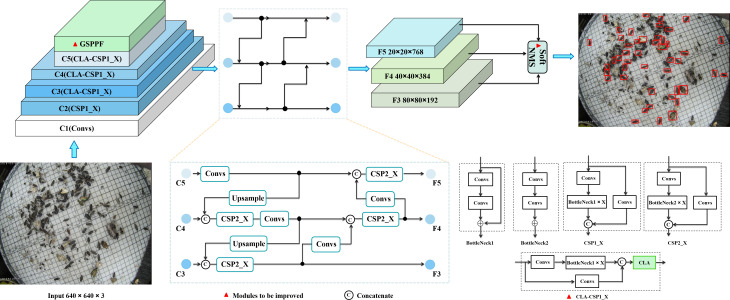
Verification
Claims the paper makes
The claims and statistics of this paper haven’t been checked yet.
Run the check — free, no account needed. It reads the open-access text and checks the sources it cites.
Claims other papers make about this one
Each is checked against this paper’s own text: does it say what the citing paper says it does?
The source backs part of the claim, not all of it — or backs it for a different population, condition or comparison.
In the citing paper
“One of the most critical applications of YOLO in agriculture is the continuous monitoring of crop health [102].”
From The YOLO Framework: A Comprehensive Review of Evolution, Applications, and Benchmarks in Object Detection (2024) · cites this paper as [102]
Experimental — accuracy not yet measured
Self-check
Percentages, sums and reported differences re-computed from the paper’s own numbers.
The self-check needs the paper’s full text.
Citations
Cites
Deep Residual Learning for Image Recognition
He, K., Zhang, X., Ren, S., & Sun, J. (2016) · 2016 IEEE Conference on Computer Vision and Pattern Recognition (CVPR) · doi:10.1109/cvpr.2016.90 · Cited by 235,474
Faster R-CNN: Towards Real-Time Object Detection with Region Proposal Networks
Ren, S., He, K., Girshick, R., & Sun, J. (2017) · IEEE Transactions on Pattern Analysis and Machine Intelligence · doi:10.1109/tpami.2016.2577031 · Cited by 73,472
YOLOv4: Optimal Speed and Accuracy of Object Detection
Bochkovskiy, A., Wang, C.-Y., & Liao, H.-Y. M. (2020) · arXiv · doi:10.48550/arxiv.2004.10934 · Cited by 10,307
Coordinate Attention for Efficient Mobile Network Design
Hou, Q., Zhou, D., & Feng, J. (2021) · 2021 IEEE/CVF Conference on Computer Vision and Pattern Recognition (CVPR) · doi:10.1109/cvpr46437.2021.01350 · Cited by 6,961
CSPNet: A New Backbone that can Enhance Learning Capability of CNN
Wang, C.-Y., Mark Liao, H.-Y., Wu, Y.-H., Chen, P.-Y., Hsieh, J.-W., & Yeh, I.-H. (2020) · 2020 IEEE/CVF Conference on Computer Vision and Pattern Recognition Workshops (CVPRW) · doi:10.1109/cvprw50498.2020.00203 · Cited by 5,265
Soft-NMS — Improving Object Detection with One Line of Code
Bodla, N., Singh, B., Chellappa, R., & Davis, L. S. (2017) · 2017 IEEE International Conference on Computer Vision (ICCV) · doi:10.1109/iccv.2017.593 · Cited by 2,274 · cited 5×
“4.6 Ablation study 4.6.1 Impact of the proposed module on detection performance Our proposed pest detector based on YOLOv5s model contributes four elements, including the attention and GSPPF modules developed, the introduction of Soft-NMS as a post-processing method, and online data augmentation methods to enrich the…”
MethodInfluential
Research works printed but not linked: 23
- Cai, 2021, Cascade r-CNN: High quality object detection and instance segmentation, IEEE Trans. Pattern Anal. Mach. Intell., 43, 1483, 10.1109/TPAMI.2019.2956516 · DOI
- Gao, 2021, Res2Net: A new multi-scale backbone architecture, IEEE Trans. Pattern Anal. Mach. Intell., 43, 652, 10.1109/TPAMI.2019.2938758 · DOI
- Ge, 2021, YOLOX: Exceeding YOLO series in 2021, 10.48550/arXiv.2107.08430 · DOI · Paper page
- Glenn, 2020, yolov5
- Jiao, 2020, AF-RCNN: An anchor-free convolutional neural network for multi-categories agricultural pest detection, Comput. Electron. Agric., 174, 10.1016/j.compag.2020.105522 · DOI
- Jiao, 2022, Global context-Aware-Based deformable residual network module for precise pest recognition and detection, Front. Plant Sci., 13, 10.3389/fpls.2022.895944 · DOI
- Jiao, 2022, Adaptive feature fusion pyramid network for multi-classes agricultural pest detection, Comput. Electron. Agric., 195, 10.1016/j.compag.2022.106827 · DOI
- Li, 2021, A real-time table grape detection method based on improved YOLOv4-tiny network in complex background, Biosyst. Eng., 212, 347, 10.1016/j.biosystemseng.2021.11.011 · DOI
- Li, 2021, Fast and accurate green pepper detection in complex backgrounds via an improved Yolov4-tiny model, Comput. Electron. Agric., 191, 10.1016/j.compag.2021.106503 · DOI
- Liu, 2015, ParseNet: Looking wider to see better, 10.48550/arXiv.1506.04579 · DOI
- Liu, 2022, A global activated feature pyramid network for tiny pest detection in the wild, Mach. Vision Appl., 33, 76, 10.1007/s00138-022-01310-0 · DOI
- Li, 2021, Field detection of tiny pests from sticky trap images using deep learning in agricultural greenhouse, Comput. Electron. Agric., 183, 10.1016/j.compag.2021.106048 · DOI
- Li, 2022, A multi-branch convolutional neural network with density map for aphid counting, Biosyst. Eng., 213, 148, 10.1016/j.biosystemseng.2021.11.020 · DOI
- Redmon, 2018, YOLOv3: An incremental improvement, 10.48550/arXiv.1804.02767 · DOI · Paper page
- Wang, 2022, An efficient attention module for instance segmentation network in pest monitoring, Comput. Electron. Agric., 195, 10.1016/j.compag.2022.106853 · DOI
- Wang, 2020, Pest24: A large-scale very small object data set of agricultural pests for multi-target detection, Comput. Electron. Agric., 175, 10.1016/j.compag.2020.105585 · DOI
- Wen, 2009, Local feature-based identification and classification for orchard insects, Biosyst. Eng., 104, 299, 10.1016/j.biosystemseng.2009.07.002 · DOI
- Xie, 2021, A CNN-based lightweight ensemble model for detecting defective carrots, Biosyst. Eng., 208, 287, 10.1016/j.biosystemseng.2021.06.008 · DOI
- Xie, 2015, Automatic classification for field crop insects via multiple-task sparse representation and multiple-kernel learning, Comput. Electron. Agric., 119, 123, 10.1016/j.compag.2015.10.015 · DOI
- Yao, 2012, An insect imaging system to automate rice light-trap pest identification, J. Integr. Agric., 11, 978, 10.1016/S2095-3119(12)60089-6 · DOI
- Zhang, 2020, Dynamic r-CNN: Towards high quality object detection via dynamic training, 260, 10.1007/978-3-030-58555-6_16 · DOI
- Zhang, 2022, Pest region detection in complex backgrounds via contextual information and multi-scale mixed attention mechanism, Agriculture, 12, 10.3390/agriculture12081104 · DOI
- Zhao, 2022, Multiple disease detection method for greenhouse-cultivated strawberry based on multiscale feature fusion faster R_CNN, Comput. Electron. Agric., 199, 10.1016/j.compag.2022.107176 · DOI
Cited by
Sorted by citations
Ali, M. L., & Zhang, Z. (2024) · Computers · doi:10.3390/computers13120336 · Cited by 383
Metadata
- Authors
- Zhang, W., Huang, H., Sun, Y., & Wu, X.
- Affiliations
- Anhui University (CN)
- Chinese Academy of Sciences (CN)
- Corresponding author
- Huang, He
- Sun, Youqiang
- Venue
- Frontiers in Plant Science
- Publisher
- Frontiers Media SA
- Published
- 2022-12-16
- Volume
- 13
- Pages
- 1079384-1079384
- ISSN
- 1664-462X (ISSN-L)
- PMC
- PMC9800973
- OpenAlex
- W4313275642
- Cited by
- 90
- References
- 6
- Citations by year
- 2026: 28 · 2025: 39 · 2024: 14 · 2023: 9
- FWCI
- 8.54
- Type
- journal article
- Language
- en
- Open access
- gold
- doi.org
- Licence
- Locations
- Frontiers in Plant Science (publishedVersion, cc-by)
- PubMed Central (publishedVersion, cc-by)
- PubMed (publishedVersion)
- DOAJ (DOAJ: Directory of Open Access Journals) (submittedVersion, cc-by-sa)
- Funders
- Chinese Academy of Sciences (XDA28120400)
- Topics
- Life Sciences › Agricultural and Biological Sciences › Plant Science › Smart Agriculture and AI
- Physical Sciences › Computer Science › Computer Vision and Pattern Recognition › Advanced Neural Network Applications
- Physical Sciences › Engineering › Industrial and Manufacturing Engineering › Industrial Vision Systems and Defect Detection
- Keywords
- agricultural pest detection, YOLO, lightweight object detection, spatial pyramid pooling, Soft-NMS, multi-scale feature fusion, real-time detection, pest monitoring
About these checks
Registry, retraction, Cites and statistics results are computed, not judged, with one exception: a printed reference that no index lists is read once by a model before it counts as a citation error. Claims are extracted by a model and kept only when their quote appears verbatim in the text; each cited source is then checked, with a model’s help, for whether it says what the claim relies on. Those verdicts can be wrong — read the claim’s quote and the cited source before relying on one.
Statistics and arithmetic are recomputed, not judged.
Confidence bands are shown only for fields calibrated on our annotated test set. None is calibrated yet, so no band is shown.
What counts as a claim ›How we measure confidence ›How we check this ›
Are you an author, or do you see a problem with this page? Request a review
