

The DOI matches its Crossref record; 1 of the 1 references it cites were found in a registry or an index.
Precision agriculture with YOLO-Leaf: advanced methods for detecting apple leaf diseases
Open accessAbstract
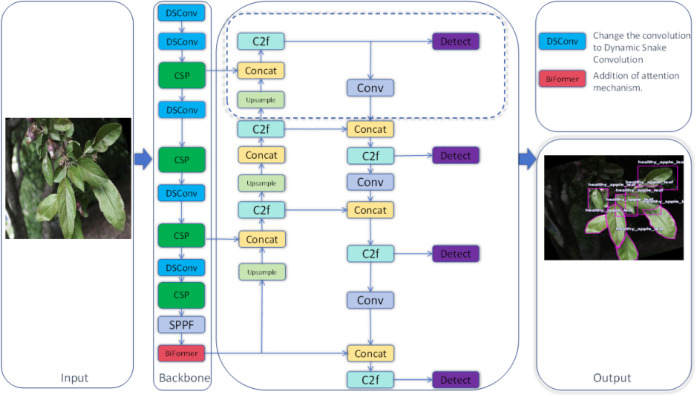
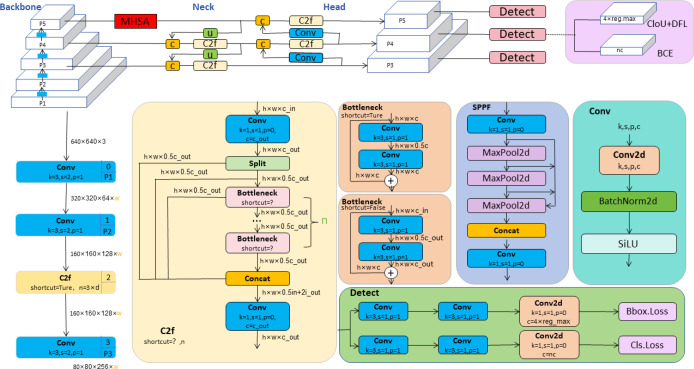
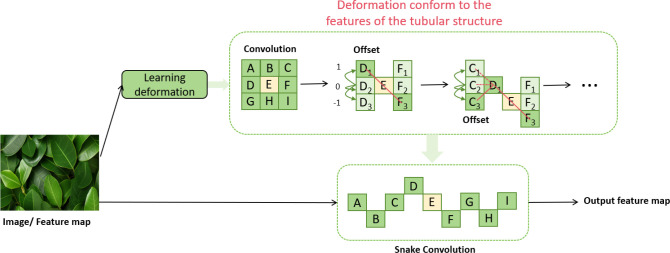
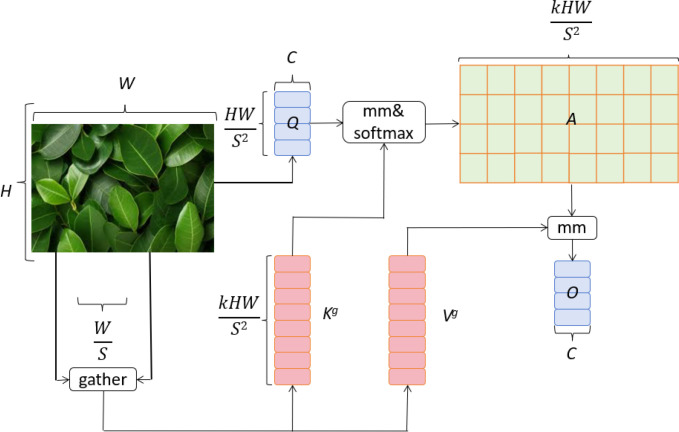
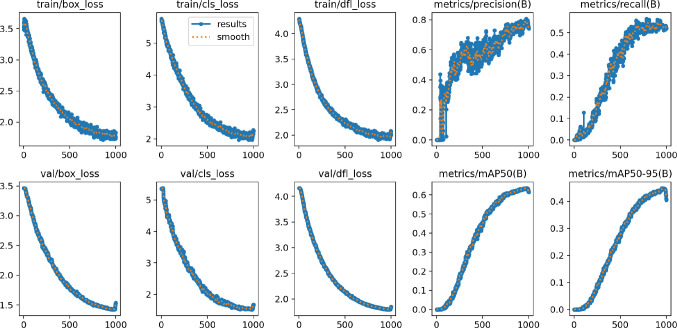
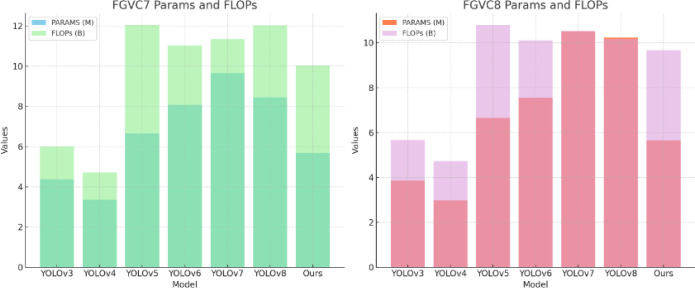
The detection of apple leaf diseases plays a crucial role in ensuring crop health and yield. However, due to variations in lighting and shadow, as well as the complex relationships between perceptual fields and target scales, current detection methods face significant challenges. To address these issues, we propose a new model called YOLO-Leaf. Specifically, YOLO-Leaf utilizes Dynamic Snake Convolution (DSConv) for robust feature extraction, employs BiFormer to enhance the attention mechanism, and introduces IF-CIoU to improve bounding box regression for increased detection accuracy and generalization ability. Experimental results on the FGVC7 and FGVC8 datasets show that YOLO-Leaf significantly outperforms existing models in terms of detection accuracy, achieving mAP50 scores of 93.88% and 95.69%, respectively. This advancement not only validates the effectiveness of our approach but also highlights its practical application potential in agricultural disease detection.
Overview
The claims and statistics of this paper haven’t been checked yet.
Run the check — free, no account needed. It reads the open-access text and checks the sources it cites.
Integrity signals
Registry
Cites
Statistics
Figures
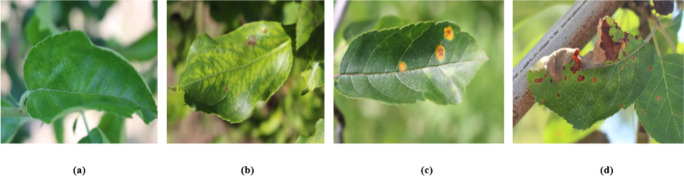
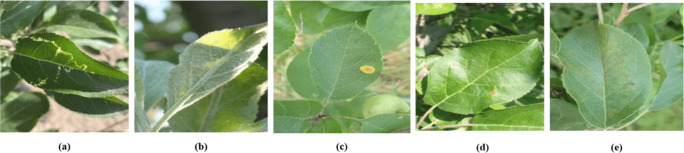
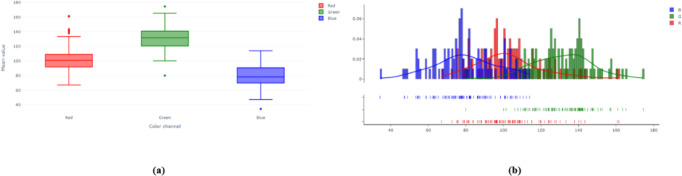
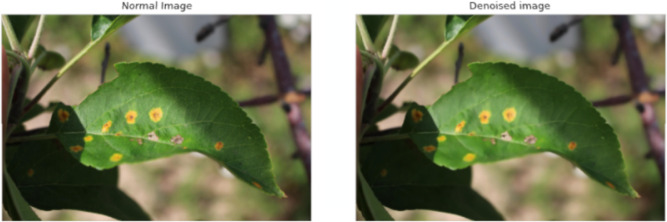
Verification
Claims the paper makes
The claims and statistics of this paper haven’t been checked yet.
Run the check — free, no account needed. It reads the open-access text and checks the sources it cites.
Claims other papers make about this one
Each is checked against this paper’s own text: does it say what the citing paper says it does?
The source backs part of the claim, not all of it — or backs it for a different population, condition or comparison.
In the citing paper
“In autonomous agriculture, YOLO plays a pivotal role in precision farming by identifying pests, diseases, and nutrient deficiencies, thereby enhancing crop yields and optimizing resource efficiency [47].”
From The YOLO Framework: A Comprehensive Review of Evolution, Applications, and Benchmarks in Object Detection (2024) · cites this paper as [47]
Experimental — accuracy not yet measured
Self-check
Percentages, sums and reported differences re-computed from the paper’s own numbers.
The self-check needs the paper’s full text.
Citations
Cites
YOLOv10: Real-Time End-to-End Object Detection
Wang, A., Chen, H., Liu, L., Chen, K., Lin, Z., Han, J., & Ding, G. (2024) · Advances in Neural Information Processing Systems 37 · doi:10.52202/079017-3429 · Cited by 3,001
Research works printed but not linked: 33
- Ait Nasser, 2024, A hybrid deep learning architecture for apple foliar disease detection, Computers, 13, 116, 10.3390/computers13050116 · DOI
- Bonkra, 2021, Apple leaf diseases detection system: a review of the different segmentation and deep learning methods, 263
- Chen, 2023, Apple leaf disease identification via improved cyclegan and convolutional neural network, Soft Computing, 27, 9773, 10.1007/s00500-023-07811-y · DOI
- Eunice, 2022, Deep learning-based leaf disease detection in crops using images for agricultural applications, Agronomy, 12, 2395, 10.3390/agronomy12102395 · DOI
- Fan, 2022, Leaf image based plant disease identification using transfer learning and feature fusion, Comput. Electron. Agric., 196, 106892, 10.1016/j.compag.2022.106892 · DOI
- Gao, 2020, Multi-class fruit-on-plant detection for apple in snap system using faster r-cnn, Comput. Electron. Agric., 176, 105634, 10.1016/j.compag.2020.105634 · DOI
- Gao, 2023, Apple leaf disease identification in complex background based on bam-net, Agronomy, 13, 1240, 10.3390/agronomy13051240 · DOI
- Gong, 2023, A high-precision detection method of apple leaf diseases using improved faster r-cnn, Agriculture, 13, 240, 10.3390/agriculture13020240 · DOI
- Hameed Al-bayati, 2020, Evolutionary feature optimization for plant leaf disease detection by deep neural networks, Int. J. Comput. Intell. Syst., 13, 12, 10.2991/ijcis.d.200108.001 · DOI
- Krishnarji, 2024, Detection of apple plant diseases using leaf images through convolutional neural network, Int. J. Innovative Eng. Manage. Res., 13, 10.2139/ssrn.4789758 · DOI
- Li, 2024, Learning adversarial semantic embeddings for zero-shot recognition in open worlds, Pattern Recognition, 149, 110258, 10.1016/j.patcog.2024.110258 · DOI
- Li, 2022, Symptom recognition of disease and insect damage based on mask r-cnn, wavelet transform, and f-rnet, Front. Plant Sci., 13, 10.3389/fpls.2022.922797 · DOI
- Li, 2021, Plant disease detection and classification by deep learning—a review, IEEE Access, 9, 56683, 10.1109/ACCESS.2021.3069646 · DOI
- Ma, 2023, Detection and counting of small target apples under complicated environments by using improved yolov7-tiny, Agronomy, 13, 1419, 10.3390/agronomy13051419 · DOI
- Omrani, 2014, Potential of radial basis function-based support vector regression for apple disease detection, Measurement, 55, 512, 10.1016/j.measurement.2014.05.033 · DOI
- Pal, 2023, Agridet: Plant leaf disease severity classification using agriculture detection framework, Eng. Appl. Artif. Intell., 119, 105754, 10.1016/j.engappai.2022.105754 · DOI
- Ren, 2024, Strategic priorities, tasks, and pathways for advancing new productivity in the chinese-style modernization, J. Xi’an Univ. Finance Economics, 37, 3, 10.19331/j.cnki.jxufe.20240008.002 · DOI
- Sun, 2021, Mean-ssd: A novel real-time detector for apple leaf diseases using improved light-weight convolutional neural networks, Comput. Electron. Agric., 189, 106379, 10.1016/j.compag.2021.106379 · DOI
- Thapa, 2020, The plant pathology 2020 challenge dataset to classify foliar disease of apples, Appl. Plant Sci, 8, e11390, 10.1002/aps3.11390 · DOI
- Tian, 2021, Diagnosis of typical apple diseases: a deep learning method based on multi-scale dense classification network, Front. Plant Sci., 12, 10.3389/fpls.2021.698474 · DOI
- Tian, 2019, Apple detection during different growth stages in orchards using the improved yolo-v3 model, Comput. Electron. Agric., 157, 417, 10.1016/j.compag.2019.01.012 · DOI · Paper page
- Wang, 2024, Towards robust lidar-camera fusion in bev space via mutual deformable attention and temporal aggregation, IEEE Trans. Circuits Syst. Video Technol., 1, 10.1109/TCSVT.2024.3366664 · DOI
- Wang, 2022, Mga-yolo: A lightweight one-stage network for apple leaf disease detection, Front. Plant Sci., 13, 10.3389/fpls.2022.927424 · DOI
- Wani, 2022, Machine learning and deep learning based computational techniques in automatic agricultural diseases detection: Methodologies, applications, and challenges, Arch. Comput. Methods Eng., 29, 641, 10.1007/s11831-021-09588-5 · DOI
- Xing, 2023, The evaluation of the grade of leaf disease in apple trees based on pca-logistic regression analysis, Forests, 14, 1290, 10.3390/f14071290 · DOI
- Xinming, 2023, Comparative study on leaf disease identification using yolo v4 and yolo v7 algorithm, AgBioForum, 25
- Yao, 2024, The new development concept helps accelerate the formation of new quality productivity: Theoretical logic and implementation paths, J. Xi’an Univ. Finance Economics, 37, 3
- Yu, 2022, Apple leaf disease recognition method with improved residual network, Multimedia Tools Appl., 81, 7759, 10.1007/s11042-022-11915-2 · DOI
- Zhang, 2023, Research of segmentation recognition of small disease spots on apple leaves based on hybrid loss function and cbam, Front. Plant Sci., 14, 10.3389/fpls.2023.1175027 · DOI
- Zhang, 2023, Inner-iou: more effective intersection over union loss with auxiliary bounding box, arXiv preprint arXiv:2311.02877, 10.48550/arXiv.2311.02877 · DOI · Paper page
- Zhang, 2024, Towards effective person search with deep learning: A survey from systematic perspective, Pattern Recognition, 110434, 10.1016/j.patcog.2024.110434 · DOI
- Zhang, 2022, Deep multi-scale dual-channel convolutional neural network for internet of things apple disease detection, Comput. Electron. Agric., 194, 106749, 10.1016/j.compag.2022.106749 · DOI
- Zhong, 2020, Research on deep learning in apple leaf disease recognition, Comput. Electron. Agric., 168, 105146, 10.1016/j.compag.2019.105146 · DOI
Cited by
Sorted by citations
Ali, M. L., & Zhang, Z. (2024) · Computers · doi:10.3390/computers13120336 · Cited by 383
Metadata
- Authors
- Li, T., Zhang, L., & Lin, J.
- Affiliations
- Lanzhou University of Finance and Economics (CN)
- Nanjing University of Science and Technology (CN)
- Corresponding author
- Zhang, Liyuan
- Venue
- Frontiers in Plant Science
- Publisher
- Frontiers Media SA
- Published
- 2024-10-15
- Volume
- 15
- Pages
- 1452502-1452502
- ISSN
- 1664-462X (ISSN-L)
- PMC
- PMC11518753
- OpenAlex
- W4403440761
- Cited by
- 47
- References
- 1
- Citations by year
- 2026: 22 · 2025: 22 · 2024: 3
- FWCI
- 11.47
- Type
- journal article
- Language
- en
- Open access
- gold
- doi.org
- Licence
- Locations
- Frontiers in Plant Science (publishedVersion, cc-by)
- PubMed Central (publishedVersion, cc-by)
- PubMed (publishedVersion)
- DOAJ (DOAJ: Directory of Open Access Journals) (submittedVersion, cc-by-sa)
- Funders
- National Natural Science Foundation of China (62341118)
- Government of Jiangsu Province
- Topics
- Life Sciences › Agricultural and Biological Sciences › Plant Science › Smart Agriculture and AI
- Physical Sciences › Computer Science › Computer Vision and Pattern Recognition › Advanced Neural Network Applications
- Physical Sciences › Engineering › Industrial and Manufacturing Engineering › Industrial Vision Systems and Defect Detection
- Keywords
- apple leaf disease detection, object detection, dynamic snake convolution, BiFormer, attention mechanism, bounding box regression, precision agriculture, plant disease diagnosis
About these checks
Registry, retraction, Cites and statistics results are computed, not judged, with one exception: a printed reference that no index lists is read once by a model before it counts as a citation error. Claims are extracted by a model and kept only when their quote appears verbatim in the text; each cited source is then checked, with a model’s help, for whether it says what the claim relies on. Those verdicts can be wrong — read the claim’s quote and the cited source before relying on one.
Statistics and arithmetic are recomputed, not judged.
Confidence bands are shown only for fields calibrated on our annotated test set. None is calibrated yet, so no band is shown.
What counts as a claim ›How we measure confidence ›How we check this ›
Are you an author, or do you see a problem with this page? Request a review
