

The DOI matches its Crossref record; 121 of the 122 references it cites were found in a registry or an index.
Emotion Regulation in Current and Remitted Depression: A Systematic Review and Meta-Analysis
Open accessAbstract
Background Major Depressive Disorder (MDD) is a highly prevalent, recurrent and potentially chronic disorder. Identifying risk factors and underlying mechanisms to inform preventive and therapeutic interventions is therefore imperative. Emotion regulation is a proposed factor in the development and maintenance of MDD. The aim of the present review was to summarize and synthesize research on self-reported emotion regulation strategy use and emotion regulation abilities in adults diagnosed with current and remitted MDD. Methods Seventy-two eligible studies were retrieved from databases through a systematic literature search. Group differences between individuals with current MDD, remitted MDD and healthy controls were calculated using meta-analytic procedures. Meta-regression analyses investigated potential moderator effects on emotion regulation difficulties. Results Results indicated that individuals with current MDD report higher maladaptive emotion regulation strategy use for avoidance (Hedges’ g = 1.3), rumination (g = 2.1) and suppression (g = 1.1) compared to healthy controls. Also, they reported lower adaptive emotion regulation strategy use for acceptance (g =-1.0), problem solving (g = -1.0) and reappraisal (g = -0.7). Individuals with current MDD reported limited general emotion regulation abilities, indicated by higher alexithymia (g =1.45), lower emotional awareness (g =-0.95), emotional clarity (g = -1.50) and emotional tolerance (g =-1.89). Similar results were found in individuals with remitted MDD for avoidance (g = 1.0), rumination (g = 1.1), suppression (g = 0.6) and general emotion regulation abilities. However, no difference was found between individuals with remitted MDD and healthy controls for adaptive emotion regulation strategies. Meta-regression analyses suggest that age of illness onset, comorbid anxiety and duration of remission influence emotion regulation. Conclusion The present review and meta-analysis indicates that individuals with current and remitted MDD have difficulties with emotion regulation compared to individuals who have never been depressed. Although depressive symptoms improve, emotion regulation difficulties may continue, and could be a contributing factor to relapse. Our findings inform future research on emotion regulation and psychotherapeutic interventions.
Overview
The claims and statistics of this paper haven’t been checked yet.
Run the check — free, no account needed. It reads the open-access text and checks the sources it cites.
Integrity signals
Registry
Cites
Statistics
Figures
Verification
Claims the paper makes
The claims and statistics of this paper haven’t been checked yet.
Run the check — free, no account needed. It reads the open-access text and checks the sources it cites.
Claims other papers make about this one
Each is checked against this paper’s own text: does it say what the citing paper says it does?
The source backs part of the claim, not all of it — or backs it for a different population, condition or comparison.
In the citing paper
“Difficulties in emotion regulation strategy use play a central role in the development, maintenance, and treatment of depression and anxiety disorders [27–29].”
From Emotion Regulation as a Mechanism of Mindfulness in Individual Cognitive-Behavioral Therapy for Depression and Anxiety Disorders (2024) · cites this paper as [29]
Experimental — accuracy not yet measuredThe source backs part of the claim, not all of it — or backs it for a different population, condition or comparison.
In the citing paper
“The first pathway to mitigating anxiety and depression symptoms involves reducing perseverative and avoidant emotion regulation strategies, such as rumination, avoidance, and suppression, which are known to maintain and exacerbate internalizing psychopathology [29, 58–62].”
From Emotion Regulation as a Mechanism of Mindfulness in Individual Cognitive-Behavioral Therapy for Depression and Anxiety Disorders (2024) · cites this paper as [29]
Experimental — accuracy not yet measured
Self-check
Percentages, sums and reported differences re-computed from the paper’s own numbers.
The self-check needs the paper’s full text.
Citations
Cites
Statistical Power Analysis for the Behavioral Sciences
Muller, K. E., & Cohen, J. (1989) · Technometrics · doi:10.2307/1270020 · Cited by 99,603
The CES-D Scale: A Self-Report Depression Scale for Research in the General Population
Radloff, L. S. (1977) · Applied Psychological Measurement · doi:10.1177/014662167700100306 · Cited by 53,267 · cited 3×
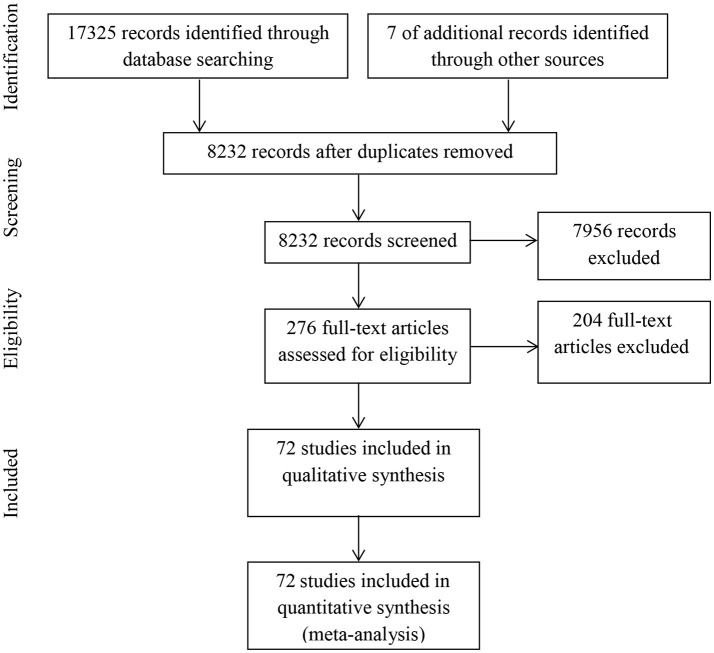
“Depression symptom checklists used Frontiers in Psychology | www.frontiersin.org 7 May 2018 | Volume 9 | Article 756 FIGURE 1 | Flow chart of study selection. were mainly Beck Depression Index (BDI-II; N = 41; Beck et al., 1996), followed by the Center for Epidemiologic Studies Depression Scale (CES-D; N = 2; Radloff,…”
Liberati, A., Altman, D. G., Tetzlaff, J., Mulrow, C., Gøtzsche, P. C., Ioannidis, J. P. A., Clarke, M., Devereaux, P. J., Kleijnen, J., & Moher, D. (2009) · PLoS Medicine · doi:10.1371/journal.pmed.1000100 · Cited by 28,164 · cited 1×
“Methods followed the principles presented by the Preferred Reporting Items for Systematic Reviews and Meta-Analyses (PRISMA) statement (Liberati et al., 2009).”
(1998) · The Journal of Clinical Psychiatry · Cited by 19,139
Borenstein, M., Hedges, L. V., Higgins, J. P. T., & Rothstein, H. R. (2009) · doi:10.1002/9780470743386 · Cited by 14,225
Gross, J. J., & John, O. P. (2003) · Journal of Personality and Social Psychology · doi:10.1037/0022-3514.85.2.348 · Cited by 11,929 · cited 5×
“Reappraisal is a form of cognitive change that involves interpretation of a potentially emotion-eliciting situation in a way that changes its emotional impact (Gross and John, 2003).”
MethodInfluentialAssessing coping strategies: A theoretically based approach.
Carver, C. S., Scheier, M. F., & Weintraub, J. K. (1989) · Journal of Personality and Social Psychology · doi:10.1037/0022-3514.56.2.267 · Cited by 11,507 · cited 1×
“, 1993), followed by one study reporting two trials involving the Avoidance subscale of the Need for Affect Scale (NAS-AVOIDANCE; Maio and Esses, 2001), one study reporting two trials using Avoidance subscale of the COPE (COPE-AVOIDANCE; Carver et al., 1989), one study reporting two trials using Avoidance subscale of…”
(1998) · PubMed · Cited by 10,216
The emerging field of emotion regulation: an integrative review
Gross, J. J. (1998) · Review of General Psychology · doi:10.1037/1089-2680.2.3.271 · Cited by 9,916 · cited 3×
“It is often associated with anxiety disorders, involving behaviors that make it less likely that one will end up in a situation that will give rise to undesirable emotions (Gross, 1998a).”
Gratz, K. L., & Roemer, L. (2004) · Journal of Psychopathology and Behavioral Assessment · doi:10.1023/b:joba.0000007455.08539.94 · Cited by 8,942 · cited 4×
“Total scores of questionnaires measuring general emotion regulation abilities (e.g., Gratz and Roemer, 2004) were pooled into one effect size.”
Influential
Research works printed but not linked: 9
- 2013, Diagnostic and Statistical Manual of Mental Disorders
- Beck, 1996, Beck Depression Inventory-II (BDI-II) Manual
- 2014, Comprehensive Meta-Analysis (Version 3).
- 2014, EndNote X8 (Version 8.0.1)
- Farb, 2014, Mindfulness interventions and emotion regulation, 548
- First, 2002, Structured Clinical Interview for DSM-IV-TR Axis I Disorders, Research Version, Patient Edition.
- Margraf, 2006, Diagnostisches Interview Bei Psychischen Störungen [Diagnostic Interview for Mental Disorders].
- Thompson, 2010, Development of emotion regulation, 38
- 1998, Schedules for Clinical Assessment in Neuropsychiatry.
Cited by
Sorted by citations
The role of emotion regulation in the characterization, development and treatment of psychopathology
Lincoln, T. M., Schulze, L., & Renneberg, B. (2022) · Nature Reviews Psychology · doi:10.1038/s44159-022-00040-4 · Cited by 234
Eisenstadt, M., Liverpool, S., Infanti, E., Ciuvat, R. M., & Carlsson, C. (2021) · JMIR Mental Health · doi:10.2196/31170 · Cited by 212
“Difficulties with emotion regulation are linked with increased stress [28,29], and represent an established risk factor for a range of mental health disorders such as depression [26] and bipolar disorder [30].”
Training emotion regulation through real-time fMRI neurofeedback of amygdala activity
Herwig, U., Lutz, J., Scherpiet, S., Scheerer, H., Kohlberg, J., Opialla, S., Preuss, A., Steiger, V. R., Sulzer, J. S., Weidt, S., et al. (2018) · NeuroImage · doi:10.1016/j.neuroimage.2018.09.068 · Cited by 140
Pettorruso, M., Valle, S., Cavic, E., Martinotti, G., Giannantonio, M. D., & Grant, J. E. (2020) · Psychiatry Research · doi:10.1016/j.psychres.2020.113036 · Cited by 140
Everaert, J., Bronstein, M. V., Castro, A. A., Cannon, T. D., & Joormann, J. (2019) · Behaviour Research and Therapy · doi:10.1016/j.brat.2019.103510 · Cited by 119
Metadata
- Authors
- Visted, E., Vøllestad, J., Nielsen, M. B., & Schanche, E.
- Affiliations
- Haukeland University Hospital (NO)
- University of Bergen (NO)
- National Institute of Occupational Health (NO)
- Corresponding author
- Visted, Endre
- Venue
- Frontiers in Psychology
- Publisher
- Frontiers Media SA
- Published
- 2018-05-18
- Volume
- 9
- Pages
- 756-756
- ISSN
- 1664-1078 (ISSN-L)
- PMC
- PMC5968125
- OpenAlex
- W2800418807
- Cited by
- 337
- References
- 122
- Citations by year
- 2026: 54 · 2025: 48 · 2024: 61 · 2023: 42 · 2022: 38 · 2021: 31 · 2020: 25 · 2019: 32 · 2018: 6
- FWCI
- 3.74
- Type
- journal article
- Language
- en
- Open access
- gold
- doi.org
- Locations
- Frontiers in Psychology (publishedVersion, cc-by)
- Europe PMC (PubMed Central) (publishedVersion, cc-by)
- PubMed Central (publishedVersion, cc-by)
- PubMed (publishedVersion)
- NORA - Norwegian Open Research Archives (submittedVersion, cc-by)
- DOAJ (DOAJ: Directory of Open Access Journals) (submittedVersion, cc-by-sa)
- NORA - Norwegian Open Research Archives (submittedVersion, other-oa)
- Funders
- L. Meltzers Høyskolefond (7183, 16545)
- Universitetet i Bergen
- Topics
- Social Sciences › Psychology › Experimental and Cognitive Psychology › Anxiety, Depression, Psychometrics, Treatment, Cognitive Processes
- Social Sciences › Psychology › Clinical Psychology › Child and Adolescent Psychosocial and Emotional Development
- Life Sciences › Neuroscience › Cognitive Neuroscience › Neural and Behavioral Psychology Studies
- Keywords
- emotion regulation, major depressive disorder, remitted depression, maladaptive emotion regulation, rumination, avoidance, emotional suppression, cognitive reappraisal, acceptance, alexithymia, emotional awareness, emotional clarity, emotional tolerance, relapse risk, anxiety comorbidity, remission duration
About these checks
Registry, retraction, Cites and statistics results are computed, not judged, with one exception: a printed reference that no index lists is read once by a model before it counts as a citation error. Claims are extracted by a model and kept only when their quote appears verbatim in the text; each cited source is then checked, with a model’s help, for whether it says what the claim relies on. Those verdicts can be wrong — read the claim’s quote and the cited source before relying on one.
Statistics and arithmetic are recomputed, not judged.
Confidence bands are shown only for fields calibrated on our annotated test set. None is calibrated yet, so no band is shown.
What counts as a claim ›How we measure confidence ›How we check this ›
Are you an author, or do you see a problem with this page? Request a review
