

Comparison of online and in-person cognitive behavioral therapy in individuals diagnosed with major depressive disorder: a non-randomized controlled trial
Open accessThe DOI matches its Crossref record; 75 of the 75 references it cites were found in a registry or an index.
Abstract
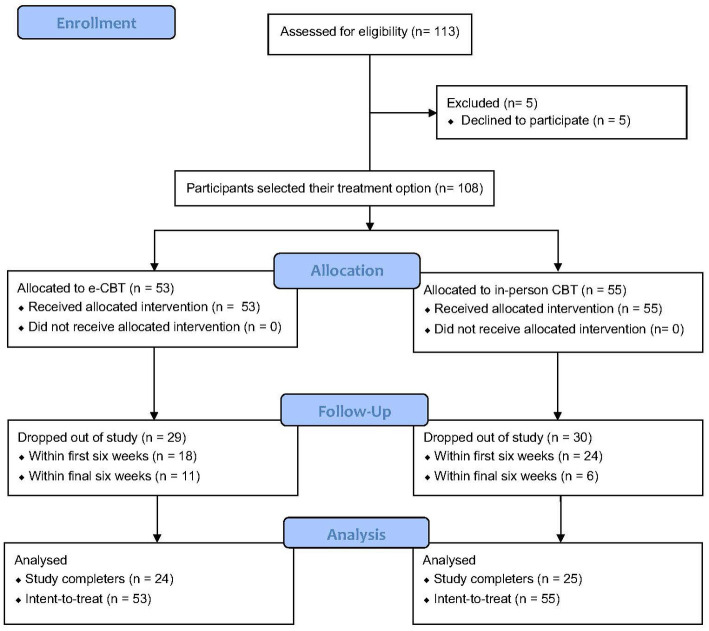
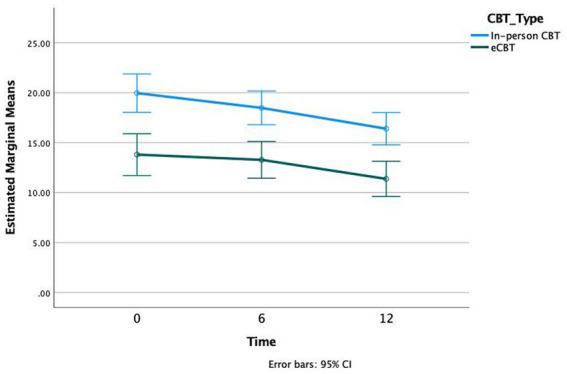
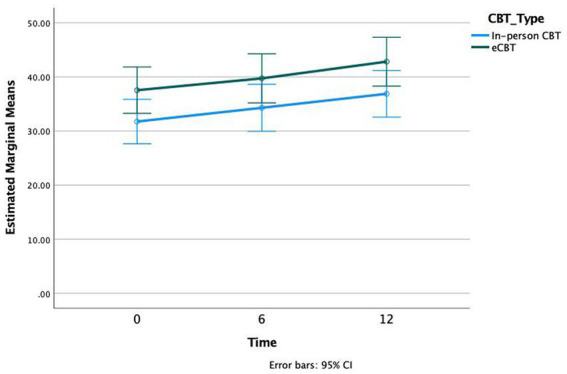
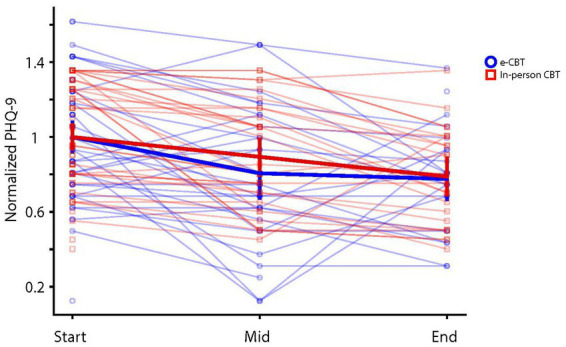
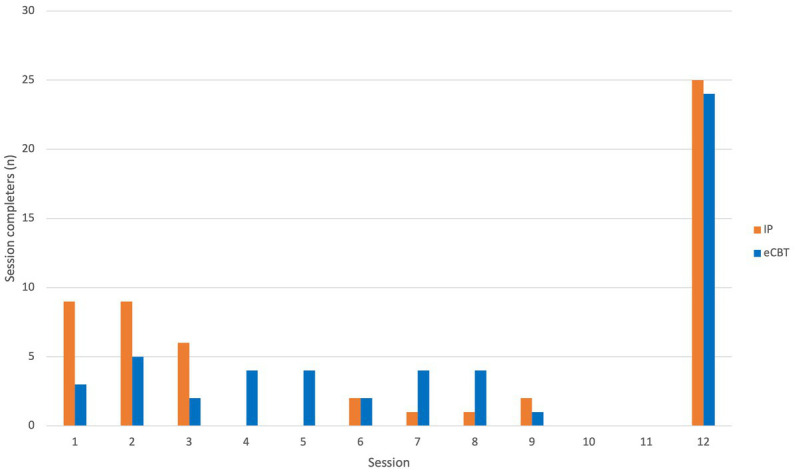
Objective The increased prevalence of major depressive disorder (MDD) amid the COVID-19 pandemic has resulted in substantial growth in online mental health care delivery. Compared to its in-person counterpart, online cognitive behavioral therapy (e-CBT) is a time-flexible and cost-effective method of improving MDD symptoms. However, how its efficacy compares to in-person CBT is yet to be explored. Therefore, the current study compared the efficacy of a therapist-supported, electronically delivered e-CBT program to in-person therapy in individuals diagnosed with MDD. Methods Participants (n = 108) diagnosed with MDD selected either a 12 week in-person CBT or an asynchronous therapist-supported e-CBT program. E-CBT participants (n = 55) completed weekly interactive online modules delivered through a secure cloud-based online platform (Online Psychotherapy Tool; OPTT). These modules were followed by homework in which participants received personalized feedback from a trained therapist. Participants in the in-person CBT group (n = 53) discussed sessions and homework with their therapists during one-hour weekly meetings. Program efficacy was evaluated using clinically validated symptomatology and quality of life questionnaires. Results Both treatments yielded significant improvements in depressive symptoms and quality of life from baseline to post-treatment. Participants who opted for in-person therapy presented significantly higher baseline symptomatology scores than the e-CBT group. However, both treatments demonstrated comparable significant improvements in depressive symptoms and quality of life from baseline to post-treatment. e-CBT seems to afford higher participant compliance as dropouts in the e-CBT group completed more sessions on average than those in the in-person CBT group. Conclusion The findings support e-CBT with therapist guidance as a suitable option to treat MDD. Future studies should investigate how treatment accessibility is related to program completion rates in the e-CBT vs. in-person group. Clinical Trial Registration ClinicalTrials.Gov Protocol Registration and Results System (NCT04478058); clinicaltrials.gov/ct2/show/NCT04478058 .
Overview
The claims and statistics of this paper haven’t been checked yet.
Free: it reads the open-access text and checks the first 5 claims that cite a source we can check. Create a free account to check every claim.
Integrity signals
Registry
Cites
Statistics
Figures
Verification
Claims the paper makes
The claims and statistics of this paper haven’t been checked yet.
Free: it reads the open-access text and checks the first 5 claims that cite a source we can check. Create a free account to check every claim.
Claims other papers make about this one
Each is checked against this paper’s own text: does it say what the citing paper says it does?
The source backs part of the claim, not all of it — or backs it for a different population, condition or comparison.
In the citing paper
“For instance, a study by Alavi et al. (2023) showed that an online cognitive behavioral therapy program (eCBT) for depression had similar effectiveness and attrition rates as its in-person counterpart, with a medium to large effect size in the management of depression symptoms (25).”
From Examining the role of AI technology in online mental healthcare: opportunities, challenges, and implications, a mixed-methods review (2024) · cites this paper as [25]
Experimental — accuracy not yet measured
Self-check
Percentages, sums and reported differences re-computed from the paper’s own numbers.
The self-check needs the paper’s full text.
Citations
Cites
The PHQ-9: A New Depression Diagnostic and Severity Measure
Kroenke, K., & Spitzer, R. L. (2002) · Psychiatric Annals · doi:10.3928/0048-5713-20020901-06 · Cited by 5,898 · cited 1×
“The PHQ-9 and QIDS-SR are valid and reliable 9- and 16-items self-report questionnaires used to diagnose and assess the severity of depression (48, 49).”
MethodImpact of COVID-19 pandemic on mental health in the general population: a systematic review
Xiong, J., Lipsitz, O., Nasri, F., Lui, L. M. W., Gill, H., Phan, L., Chen-Li, D., Iacobucci, M., Ho, R., Majeed, A., et al. (2020) · Journal of Affective Disorders · doi:10.1016/j.jad.2020.08.001 · Cited by 5,204
Rush, A. J., Trivedi, M. H., Ibrahim, H. M., Carmody, T. J., Arnow, B., Klein, D. N., Markowitz, J. C., Ninan, P. T., Kornstein, S., Manber, R., et al. (2003) · Biological Psychiatry · doi:10.1016/s0006-3223(02)01866-8 · Cited by 3,829 · cited 7×
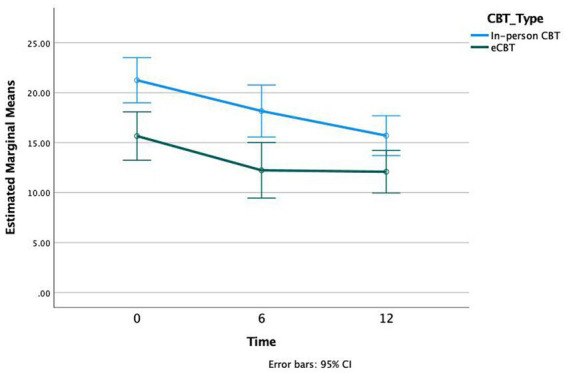
“QIDS-SR scores were also significantly higher in the in-person group than in the e-CBT group (QIDS-SR mean, SE = 19.29, 0.63 and 14.61, 0.67 for in-person and e-CBT respectively, independent sample T-test p < 0.001) (see Supplementary material for descriptive statistics and analysis tables).”
MethodInfluential(1993) · PubMed · Cited by 1,900
Monitoring Depression Treatment Outcomes With the Patient Health Questionnaire-9
L??we, B., Un??tzer, J., Callahan, C. M., Perkins, A. J., & Kroenke, K. (2004) · Medical Care · doi:10.1097/00005650-200412000-00006 · Cited by 1,354 · cited 7×
“QIDS-SR scores were also significantly higher in the in-person group than in the e-CBT group (QIDS-SR mean, SE = 19.29, 0.63 and 14.61, 0.67 for in-person and e-CBT respectively, independent sample T-test p < 0.001) (see Supplementary material for descriptive statistics and analysis tables).”
MethodInfluentialO'Connor, R. C., Wetherall, K., Cleare, S., McClelland, H., Melson, A. J., Niedzwiedz, C. L., O'Carroll, R. E., O'Connor, D. B., Platt, S., Scowcroft, E., et al. (2021) · The British Journal of Psychiatry · doi:10.1192/bjp.2020.212 · Cited by 1,042 · cited 1×
“The COVID-19 pandemic resulted in a global mental health crisis and increased rates of mental health disorders, including MDD (4).”
BackgroundTorous, J., Jän Myrick, K., Rauseo-Ricupero, N., & Firth, J. (2020) · JMIR Mental Health · doi:10.2196/18848 · Cited by 946 · cited 1×
“Although digital mental health interventions have existed long before the pandemic, this unforeseen moment in time became a suitable case study on how to use digital health (20).”
BackgroundKaryotaki, E., Efthimiou, O., Miguel, C., Maas genannt Bermpohl, F., Furukawa, T. A., Cuijpers, P., Individual Patient Data Meta-Analyses for Depression (IPDMA-DE) Collaboration, Riper, H., Patel, V., Mira, A., et al. (2021) · JAMA Psychiatry · doi:10.1001/jamapsychiatry.2020.4364 · Cited by 866
Cuijpers, P., Donker, T., van Straten, A., Li, J., & Andersson, G. (2010) · Psychological Medicine · doi:10.1017/s0033291710000772 · Cited by 832 · cited 1×
“Moreover, the addition of therapist support to the online program may have contributed to attrition levels being on par with in-person therapy (59).”
BackgroundThe COVID-19 pandemic: the ‘black swan’for mental health care and a turning point for e-health
Wind, T. R., Rijkeboer, M., Andersson, G., & Riper, H. (2020) · Internet Interventions · doi:10.1016/j.invent.2020.100317 · Cited by 782
Research works printed but not linked: 1
- American Psychiatric Association. Diagnostic and Statistical Manual of Mental Disorders, Fifth Edition (DSM-5). Arlington, VA: American Psychiatric Association (2013).
Cited by
Gutierrez, G., Stephenson, C., Eadie, J., Asadpour, K., & Alavi, N. (2024) · Frontiers in Psychiatry · doi:10.3389/fpsyt.2024.1356773 · Cited by 71
Zandieh, S., Abdollahzadeh, S. M., Sadeghirad, B., Wang, L., McCabe, R. E., Yao, L., Inness, B. E., Pathak, A., Couban, R., Crandon, H. N., et al. (2024) · Canadian Medical Association Journal · doi:10.1503/cmaj.230274 · Cited by 59
“This is a conservative approach as several studies have found that most patients are willing to receive psychother apy in either format, 99–101 and we found no evidence for differen tial compliance depending on whether CBT was provided in per son or remotely, which we would anticipate if…”
ResultAn Analysis of the Positive and Negative Effects of Cyberpsychotherapy: A Systematic Review
Al-Tarawneh, A. M. A. (2024) · International Conference on Cyber Resilience (ICCR) · doi:10.1109/iccr61006.2024.10533082 · Cited by 22
“Psychologists and mental health practitioners have examined various phenomena in cyberpsychology, including video games, internet use addiction, social media usage and associated anxieties, augmented reality, and personality disorders linked to different communication mediums [34].”
BackgroundJagayat, J., Kumar, A., Shao, Y., Pannu, A., Patel, C. B., Shirazi, A., Omrani, M., & Alavi, N. (2024) · JMIR Mental Health · doi:10.2196/51704 · Cited by 18
“This intervention was considered to have the lowest intensity because the participant was provided with an i-CBT program for depression that is effective in treating MDD [49].”
InfluentialOmylinska‐Thurston, J., Aithal, S., Liverpool, S., Clark, R. D., Moula, Z., Wood, J., Viliardos, L., Rodríguez-Dorans, E., Farish-Edwards, F., Parsons, A. S., et al. (2024) · JMIR Mental Health · doi:10.2196/55500 · Cited by 18
Stephenson, C., Eadie, J., Holmes, C., Asadpour, K., Gutiérrez, G., Kumar, A., Jagayat, J., Patel, C. B., Sajid, S., Knyahnytskyi, O., et al. (2025) · The Canadian Journal of Psychiatry · doi:10.1177/07067437251355641 · Cited by 14
Chermahini, M. B., Eadie, J., Agarwal, A., Stephenson, C., Malakouti, N., Nikjoo, N., Jagayat, J., Jarabana, V., Shirazi, A., Kumar, A., et al. (2024) · The Canadian Journal of Psychiatry · doi:10.1177/07067437241261933 · Cited by 11
Ito, A., Hiyoshi, F., Kanie, A., Maruyama, A., Oba, M. S., & Kito, S. (2023) · JMIR Research Protocols · doi:10.2196/49698 · Cited by 9
“Web-based CBT significantly improved patients’ depressive symptoms and quality of life, similar to face-to-face CBT [10].”
Ebrahimjee, A., Hodsoll, J. P., Valmaggia, L., Hickling, L. M., & Riches, S. (2024) · The Cognitive Behaviour Therapist · doi:10.1017/s1754470x2400028x · Cited by 10
“Such rates are comparable to the literature that indicates an approximate 30% attrition rate (Alavi et al ., 2023; Song and Foster, 2022; Moller et al ., 2019; Varker et al ., 2021).”
Alodhialah, A. M., Almutairi, A. A., & Almutairi, M. (2024) · Healthcare · doi:10.3390/healthcare12222257 · Cited by 13
Evaluating the before operational stress program: comparing in-person and virtual delivery
Ioachim, G., Bolt, N. K., Redekop, M., Wakefield, A., Shulhin, A., Dabhoya, J., Khoury, J. M. B., Bélanger, K., Williams, S. C. P., Chomistek, T., et al. (2024) · Frontiers in Psychology · doi:10.3389/fpsyg.2024.1382614 · Cited by 8
Savir, T., & Baumel, A. (2025) · Journal of Medical Internet Research · doi:10.2196/77802 · Cited by 5
“This further accentuates the inconsistency observed in previous studies of distress and symptom severity in predicting intervention preferences [9,11,15,28,29].”
Ncheka, J. M., Menon, J. A., Davies, E. B., Paul, R., Mwaba, S. O. C., Mudenda, J., Wharrad, H. J., Tak, H., & Glazebrook, C. (2024) · BMC Psychiatry · doi:10.1186/s12888-024-05542-4 · Cited by 6
“For example, iCBT was found to be associated with better compliance in people diagnosed with MDD, with the iCBT group completing significantly more sessions than those in the in-person group [42].”
Optimization of potential targets for antidepressant Chinese medicines: AI and multi-omics methods
Lei, C., Chen, Z., Ma, C., Xie, L., Wu, D., Chen, J., & Chen, J. (2026) · Chinese Medicine · doi:10.1186/s13020-025-01320-w · Cited by 5
Plourde, V., Corriveau, H., & Ahmadi, S. (2025) · Pilot and Feasibility Studies · doi:10.1186/s40814-025-01696-4 · Cited by 6
“Additionally, by incorporating an online component, this study responds to recent findings that suggest teletherapy can enhance accessibility and adherence while maintaining comparable effectiveness to in-person interventions [15, 16].”
Moghimi, E., Gutiérrez, G., Stephenson, C., Gizzarelli, T., Jagayat, J., Holmes, C., Patel, C. B., Omrani, M., Simpson, A. I. F., & Alavi, N. (2024) · Frontiers in Psychiatry · doi:10.3389/fpsyt.2024.1365746 · Cited by 6
“Previous data from the research team demonstrated that individuals with higher depression symptomatology had a preference for in-person therapy, whereas those with lower severity opted for its online counterpart (24).”
Noh, H., Chishti, S. M. K., Jo, H., Newhouse, N., Kim, S., Kleek, M. G. V., & Kang, Y. (2025) · CHI Conference on Human Factors in Computing Systems · doi:10.1145/3706598.3713387 · Cited by 6
“Some research supports that telepsychotherapy is not inferior to in-person therapy in treating mental health issues [1, 18, 89, 95], while other research demonstrates that in-person therapy may build stronger rapport and yield better results [73, 84].”
Artificial intelligence-based psychotherapy: focusing on common psychotherapeutic factors
Giotakos, O. (2025) · Frontiers in Psychiatry · doi:10.3389/fpsyt.2025.1710715 · Cited by 11
Aliyari, Z., Ahmadizadeh, M. J., & Aghdam, G. F. (2024) · Middle East Journal of Rehabilitation and Health Studies · doi:10.5812/mejrh-153269 · Cited by 1
Stephenson, C., Kumar, A., Malakouti, N., Nikjoo, N., Jagayat, J., Gizzarelli, T., Patel, C. B., Gutiérrez, G., Shirazi, A., Yang, M., et al. (2023) · JMIR Research Protocols · doi:10.2196/48899 · Cited by 1
“Using data from previous research incorporating this e-CBT program, a sample of 50 participants in each group was determined to be sufficient for an effect size of 0.5, a power of 0.8, and an α of .05 [31].”
Influential(Re)Claim and Connect: A Pilot Study of a Guided Storytelling Group for the Asian Diaspora
Chou, F., Li, J., Chia, M., & Mai, I. (2025) · The Journal for Specialists in Group Work · doi:10.1080/01933922.2025.2511726 · Cited by 1
“The emerging research on online versus in-person groups seems to demonstrate that online groups can be as beneficial as in-person groups and may also provide some accessibility benefits (Alavi et al., 2023).”
Luca, F. D., Brenna, C., Bassi, M., Bilel, S., Gregori, A., Locatelli, C., Neri, L. M., Adami, R., Bottai, D., Marti, M., et al. (2026) · Molecules · doi:10.3390/molecules31142453 · Cited by 1
“…a variant of the previously employed in vitro model, i.e., neural stem/progenitor cell cultures (NSPCs), obtained from C57BL/6 mice subventricular zone, one of the neurogenic niches that are present in the adult murine brain, but focusing on the differentiation capacity of these cells [35,37,38].”
Daneff, M., Chorney, J. M. L., Clark, S. E., Emberly, D. J., CARREY, N. J., Bagnell, A. L., Blenus, J., & Campbell, L. A. (2025) · doi:10.2196/preprints.71606
Prochnow, T. M., & Patterson, M. S. (2025) · Mental Health and Social Inclusion · doi:10.1108/mhsi-12-2024-0225
Stephenson, C., Eadie, J., Holmes, C., Asadpour, K., Gutiérrez, G., Kumar, A., Jagayat, J., Patel, C. B., Sajid, S., Knyahnytskyi, O., et al. (2025) · medRxiv · doi:10.1101/2025.02.22.25321970
Chappell, K. D., Chinbaatar, O., Goodman, K. J., & Kroeker, K. I. (2025) · Journal of Digestive Diseases · doi:10.1111/1751-2980.13342
DeLorenzo, B. M., Knapp, K., Hareli, M., Silton, R. L., & Conley, C. S. (2025) · SSRN Electronic Journal · doi:10.2139/ssrn.5375755
Examining the effectiveness and equity of fully virtual therapy for college students
Loren, D. M., Reuter, T., Palko, A., Bickham, N., Klein, K. V., & Booth, R. (2025) · Journal of American College Health · doi:10.1080/07448481.2025.2563025 · Cited by 2
“4 Preliminary work has shown that virtual therapy may maintain similar outcomes to those observed in traditional care, as measured in academic trials 5,6 and may even increase access to care for a diverse group of clients.”
Akrami, F., & Ghaderi, A. (2026) · Color Research & Application · doi:10.1002/col.70061
Epistemic Trust and Mentalization-Based Treatment for Parents: A Theory-Testing Case Study
Watson, P., Fiorini, G., McGuire, R., Byrne, G., Zahn, P., & Sleed, M. (2026) · Journal of Infant Child and Adolescent Psychotherapy · doi:10.1080/15289168.2026.2650297
“Nevertheless, emerging evidence suggests virtual interventions can be as effective as in-person (Alavi et al., 2023; Lisi et al., 2024).”
Yogeshappa, V. G., Avacharmal, R., Soni, M., Nandan, D., Nair, R., & Maduranga, M. W. P. (2026) · International Conference on Image Processing and Robotics (ICIPRoB) · doi:10.1109/iciprob69625.2026.11497811 · Cited by 3
“Manual qualitative methods, such as content or thematic analysis, provide strong interpretability, but they lose scalability quickly due to coding workload [13-15].”
Taguchi, K. (2026) · Stress Science Research · doi:10.5058/stresskagakukenkyu.2025007
From waitlists to well-being: An analytical approach to AI-supported mental healthcare
Cai, J., Likvornik, N. F., & Zychlinski, N. (2026) · IISE Transactions · doi:10.1080/24725854.2026.2679528 · Cited by 1
Group and online application of the Unified Protocol in Argentina: controlled pilot study
Kaplan, M., Celleri, M., Klajner, F., Cremades, C. F., & Garay, C. J. (2026) · Cognitive Behaviour Therapy · doi:10.1080/16506073.2026.2720138
de Almeida, V. P., Marcato, R. A. M., Duarte-Guerra, L. S., Neto, F. L., Santo, M. A., & Wang, Y. P. (2026) · Journal of Behavioral and Cognitive Therapy · doi:10.1016/j.jbct.2026.100619
Holmes, C., Gutiérrez, G., Stephenson, C., Moghimi, E., Malakouti, N., Jagayat, J., Patel, C. B., Simpson, A. I. F., Gerritsen, C. J., Martin, M., et al. (2026) · Frontiers in Psychiatry · doi:10.3389/fpsyt.2026.1922912
Metadata
- Authors
- Alavi, N., Moghimi, E., Stephenson, C., Gutierrez, G., Jagayat, J., Kumar, A., Shao, Y., Miller, S., Yee, C. S., Stefatos, A., Gholamzadehmir, M., Abbaspour, Z., Shirazi, A., Gizzarelli, T., Khan, F., Patel, C., Patel, A., Yang, M., & Omrani, M.
- Affiliations
- Queen's University (CA)
- University of Toronto (CA)
- Corresponding author
- Alavi, Nazanin
- ORCID
- Venue
- Frontiers in Psychiatry
- Publisher
- Frontiers Media SA
- Published
- 2023-04-28
- Volume
- 14
- Pages
- 1113956-1113956
- ISSN
- 1664-0640 (ISSN-L)
- PMC
- PMC10175610
- OpenAlex
- W4367300483
- Cited by
- 36
- References
- 75
- Citations by year
- 2026: 10 · 2025: 12 · 2024: 11 · 2023: 3
- FWCI
- 9.28
- Type
- journal article
- Language
- en
- Open access
- gold
- doi.org
- Licence
- Locations
- Frontiers in Psychiatry (publishedVersion, cc-by)
- PubMed Central (publishedVersion, cc-by)
- PubMed (publishedVersion)
- DOAJ (DOAJ: Directory of Open Access Journals) (submittedVersion, cc-by-sa)
- Topics
- Social Sciences › Psychology › Applied Psychology › Digital Mental Health Interventions
- Health Sciences › Medicine › Public Health, Environmental and Occupational Health › Telemedicine and Telehealth Implementation
- Social Sciences › Psychology › Experimental and Cognitive Psychology › Anxiety, Depression, Psychometrics, Treatment, Cognitive Processes
- Keywords
- major depressive disorder, internet-based cognitive behavioral therapy, medication adherence, treatment discontinuation, depressive symptoms, quality of life, COVID-19 pandemic, telemedicine
About these checks
Registry, retraction, Cites and statistics results are computed, not judged, with one exception: a printed reference that no index lists is read once by a model before it counts as a citation error. Claims are extracted by a model and kept only when their quote appears verbatim in the text; each cited source is then checked, with a model’s help, for whether it says what the claim relies on. Those verdicts can be wrong — read the claim’s quote and the cited source before relying on one.
Statistics and arithmetic are recomputed, not judged.
Confidence bands are shown only for fields calibrated on our annotated test set. None is calibrated yet, so no band is shown.
What counts as a claim ›How we measure confidence ›How we check this ›
Are you an author, or do you see a problem with this page? Request a review
Data sources
Bibliographic data: Semantic Scholar, OpenAlex, Crossref.
Contains information from the Semantic Scholar Academic Graph Datasets, made available under the ODC Attribution License (ODC-BY 1.0).
Semantic Scholar’s data is described in: Kinney, R., et al. (2023). The Semantic Scholar Open Data Platform. arXiv:2301.10140.
