

Comparison of online and in-person cognitive behavioral therapy in individuals diagnosed with major depressive disorder: a non-randomized controlled trial
Open accessThe DOI matches its Crossref record; 75 of the 75 references it cites were found in a registry or an index.
Abstract
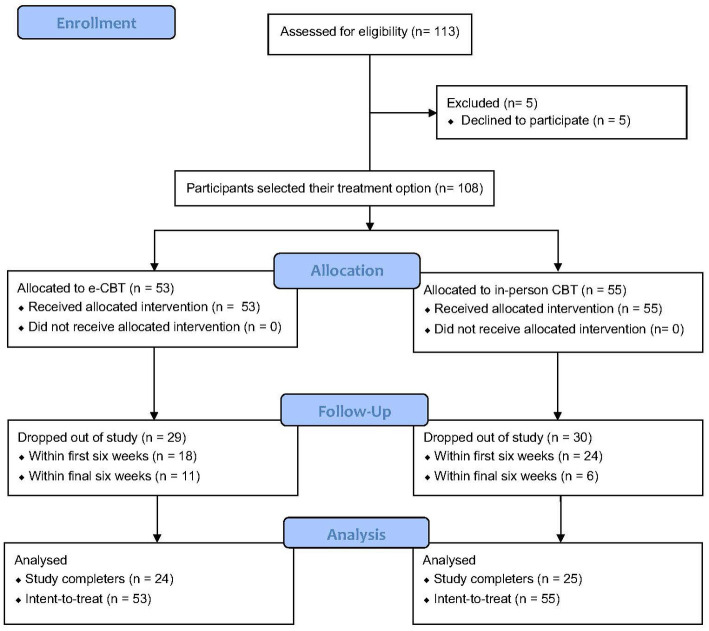
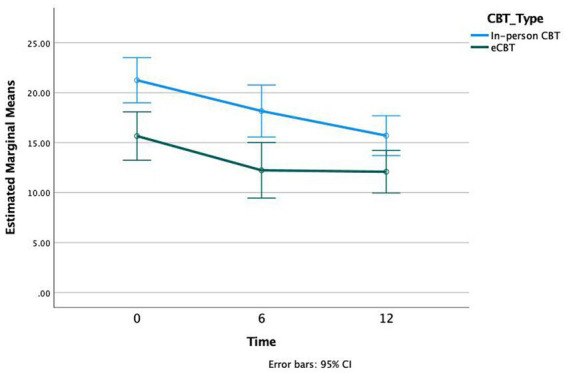
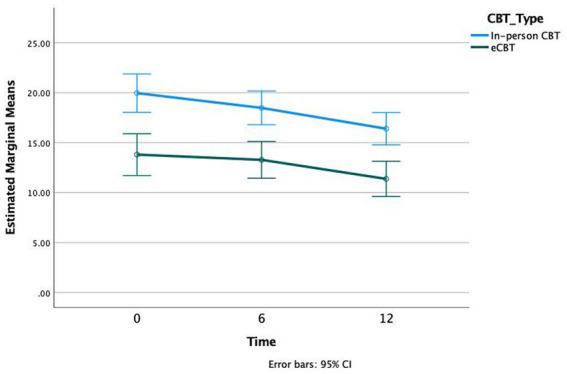
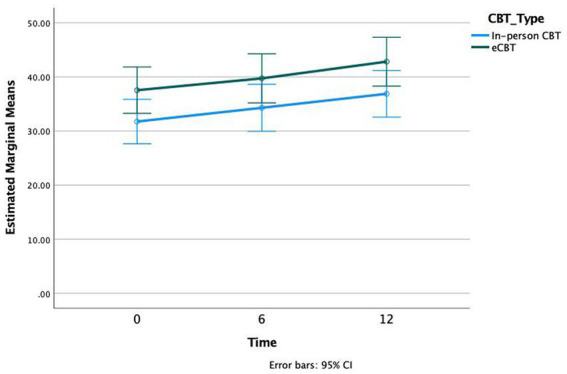
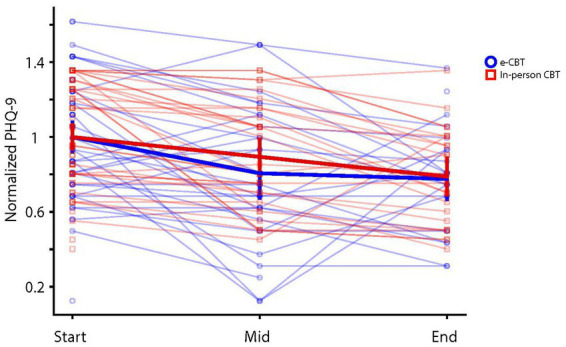
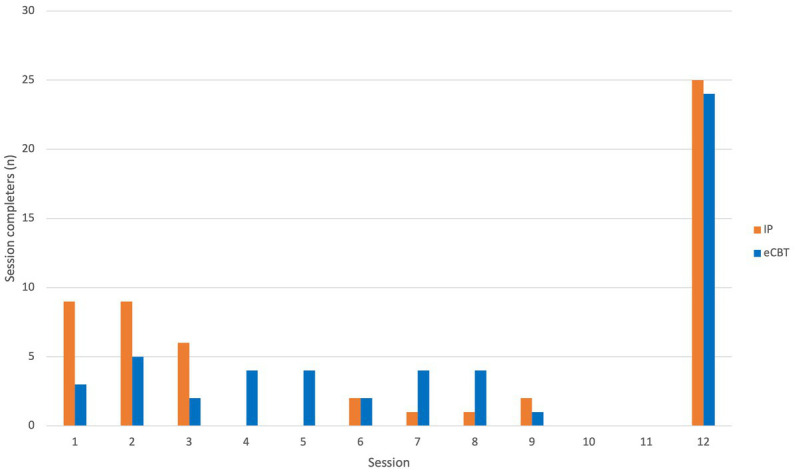
Objective The increased prevalence of major depressive disorder (MDD) amid the COVID-19 pandemic has resulted in substantial growth in online mental health care delivery. Compared to its in-person counterpart, online cognitive behavioral therapy (e-CBT) is a time-flexible and cost-effective method of improving MDD symptoms. However, how its efficacy compares to in-person CBT is yet to be explored. Therefore, the current study compared the efficacy of a therapist-supported, electronically delivered e-CBT program to in-person therapy in individuals diagnosed with MDD. Methods Participants (n = 108) diagnosed with MDD selected either a 12 week in-person CBT or an asynchronous therapist-supported e-CBT program. E-CBT participants (n = 55) completed weekly interactive online modules delivered through a secure cloud-based online platform (Online Psychotherapy Tool; OPTT). These modules were followed by homework in which participants received personalized feedback from a trained therapist. Participants in the in-person CBT group (n = 53) discussed sessions and homework with their therapists during one-hour weekly meetings. Program efficacy was evaluated using clinically validated symptomatology and quality of life questionnaires. Results Both treatments yielded significant improvements in depressive symptoms and quality of life from baseline to post-treatment. Participants who opted for in-person therapy presented significantly higher baseline symptomatology scores than the e-CBT group. However, both treatments demonstrated comparable significant improvements in depressive symptoms and quality of life from baseline to post-treatment. e-CBT seems to afford higher participant compliance as dropouts in the e-CBT group completed more sessions on average than those in the in-person CBT group. Conclusion The findings support e-CBT with therapist guidance as a suitable option to treat MDD. Future studies should investigate how treatment accessibility is related to program completion rates in the e-CBT vs. in-person group. Clinical Trial Registration ClinicalTrials.Gov Protocol Registration and Results System (NCT04478058); clinicaltrials.gov/ct2/show/NCT04478058 .
Overview
The claims and statistics of this paper haven’t been checked yet.
Free: it reads the open-access text and checks the first 5 claims that cite a source we can check. Create a free account to check every claim.
Integrity signals
Registry
Cites
Statistics
Figures
Verification
Claims the paper makes
The claims and statistics of this paper haven’t been checked yet.
Free: it reads the open-access text and checks the first 5 claims that cite a source we can check. Create a free account to check every claim.
Claims other papers make about this one
Each is checked against this paper’s own text: does it say what the citing paper says it does?
The source backs part of the claim, not all of it — or backs it for a different population, condition or comparison.
In the citing paper
“For instance, a study by Alavi et al. (2023) showed that an online cognitive behavioral therapy program (eCBT) for depression had similar effectiveness and attrition rates as its in-person counterpart, with a medium to large effect size in the management of depression symptoms (25).”
From Examining the role of AI technology in online mental healthcare: opportunities, challenges, and implications, a mixed-methods review (2024) · cites this paper as [25]
Experimental — accuracy not yet measured
Self-check
Percentages, sums and reported differences re-computed from the paper’s own numbers.
The self-check needs the paper’s full text.
Citations
Cites
The PHQ-9: A New Depression Diagnostic and Severity Measure
Kroenke, K., & Spitzer, R. L. (2002) · Psychiatric Annals · doi:10.3928/0048-5713-20020901-06 · Cited by 5,898 · cited 1×
“The PHQ-9 and QIDS-SR are valid and reliable 9- and 16-items self-report questionnaires used to diagnose and assess the severity of depression (48, 49).”
MethodImpact of COVID-19 pandemic on mental health in the general population: a systematic review
Xiong, J., Lipsitz, O., Nasri, F., Lui, L. M. W., Gill, H., Phan, L., Chen-Li, D., Iacobucci, M., Ho, R., Majeed, A., et al. (2020) · Journal of Affective Disorders · doi:10.1016/j.jad.2020.08.001 · Cited by 5,204
Rush, A. J., Trivedi, M. H., Ibrahim, H. M., Carmody, T. J., Arnow, B., Klein, D. N., Markowitz, J. C., Ninan, P. T., Kornstein, S., Manber, R., et al. (2003) · Biological Psychiatry · doi:10.1016/s0006-3223(02)01866-8 · Cited by 3,829 · cited 7×
“QIDS-SR scores were also significantly higher in the in-person group than in the e-CBT group (QIDS-SR mean, SE = 19.29, 0.63 and 14.61, 0.67 for in-person and e-CBT respectively, independent sample T-test p < 0.001) (see Supplementary material for descriptive statistics and analysis tables).”
MethodInfluential(1993) · PubMed · Cited by 1,900
Monitoring Depression Treatment Outcomes With the Patient Health Questionnaire-9
L??we, B., Un??tzer, J., Callahan, C. M., Perkins, A. J., & Kroenke, K. (2004) · Medical Care · doi:10.1097/00005650-200412000-00006 · Cited by 1,354 · cited 7×
“QIDS-SR scores were also significantly higher in the in-person group than in the e-CBT group (QIDS-SR mean, SE = 19.29, 0.63 and 14.61, 0.67 for in-person and e-CBT respectively, independent sample T-test p < 0.001) (see Supplementary material for descriptive statistics and analysis tables).”
MethodInfluentialO'Connor, R. C., Wetherall, K., Cleare, S., McClelland, H., Melson, A. J., Niedzwiedz, C. L., O'Carroll, R. E., O'Connor, D. B., Platt, S., Scowcroft, E., et al. (2021) · The British Journal of Psychiatry · doi:10.1192/bjp.2020.212 · Cited by 1,042 · cited 1×
“The COVID-19 pandemic resulted in a global mental health crisis and increased rates of mental health disorders, including MDD (4).”
BackgroundTorous, J., Jän Myrick, K., Rauseo-Ricupero, N., & Firth, J. (2020) · JMIR Mental Health · doi:10.2196/18848 · Cited by 946 · cited 1×
“Although digital mental health interventions have existed long before the pandemic, this unforeseen moment in time became a suitable case study on how to use digital health (20).”
BackgroundKaryotaki, E., Efthimiou, O., Miguel, C., Maas genannt Bermpohl, F., Furukawa, T. A., Cuijpers, P., Individual Patient Data Meta-Analyses for Depression (IPDMA-DE) Collaboration, Riper, H., Patel, V., Mira, A., et al. (2021) · JAMA Psychiatry · doi:10.1001/jamapsychiatry.2020.4364 · Cited by 866
Cuijpers, P., Donker, T., van Straten, A., Li, J., & Andersson, G. (2010) · Psychological Medicine · doi:10.1017/s0033291710000772 · Cited by 832 · cited 1×
“Moreover, the addition of therapist support to the online program may have contributed to attrition levels being on par with in-person therapy (59).”
BackgroundThe COVID-19 pandemic: the ‘black swan’for mental health care and a turning point for e-health
Wind, T. R., Rijkeboer, M., Andersson, G., & Riper, H. (2020) · Internet Interventions · doi:10.1016/j.invent.2020.100317 · Cited by 782
Parikh, S. V., Quilty, L. C., Ravitz, P., Rosenbluth, M., Pavlova, B., Grigoriadis, S., Velyvis, V., Kennedy, S. H., Lam, R. W., MacQueen, G. M., et al. (2016) · The Canadian Journal of Psychiatry · doi:10.1177/0706743716659418 · Cited by 562
McCrone, P., Knapp, M., Proudfoot, J., Ryden, C., Cavanagh, K., Shapiro, D. A., Ilson, S., Gray, J. A., Goldberg, D., Mann, A., et al. (2004) · British Journal of Psychiatry · doi:10.1192/bjp.185.1.55 · Cited by 371
The Science of Cognitive Therapy
Hofmann, S. G., Asmundson, G. J. G., & Beck, A. T. (2013) · Behavior Therapy · doi:10.1016/j.beth.2009.01.007 · Cited by 366 · cited 1×
“Although this therapy is highly effective for managing depression (12), in-person delivery can be resource and time-intensive (13).”
BackgroundEtzelmueller, A., Vis, C., Karyotaki, E., Baumeister, H., Titov, N., Berking, M., Cuijpers, P., Riper, H., & Ebert, D. D. (2020) · Journal of Medical Internet Research · doi:10.2196/18100 · Cited by 356
Furukawa, T. A., Suganuma, A., Ostinelli, E. G., Andersson, G., Beevers, C. G., Shumake, J., Berger, T., Boele, F. W., Buntrock, C., Carlbring, P., et al. (2021) · The Lancet Psychiatry · doi:10.1016/s2215-0366(21)00077-8 · Cited by 255
Recognition and Treatment of Cognitive Dysfunction in Major Depressive Disorder
Zuckerman, H., Pan, Z., Park, C., Brietzke, E., Musial, N., Shariq, A. S., Iacobucci, M., Yim, S. J., Lui, L. M. W., Rong, C., et al. (2018) · Frontiers in Psychiatry · doi:10.3389/fpsyt.2018.00655 · Cited by 252 · cited 2×
“The in-person and e-CBT content were intended to mirror one another and focused on: (1) an introduction to depression and the 5-part model (39), which encourage conceptualization of a specific situation or environment through an interlink of thoughts, feelings, physical reactions, and behaviours, (2) the Thought Recor…”
BackgroundPedersen, E. R., & Paves, A. P. (2014) · Psychiatry Research · doi:10.1016/j.psychres.2014.05.017 · Cited by 226 · cited 1×
“Generally, stigma within males is associated with negative attitudes towards treatments (62) and societal gender roles can also contribute to greater treatment-seeking in women (63).”
BackgroundThe stigma of mental health problems and other barriers to care in the UK Armed Forces
Iversen, A. C., van Staden, L., Hughes, J. H., Greenberg, N., Hotopf, M., Rona, R. J., Thornicroft, G., Wessely, S., & Fear, N. T. (2011) · BMC Health Services Research · doi:10.1186/1472-6963-11-31 · Cited by 222 · cited 2×
“Although this therapy is highly effective for managing depression (12), in-person delivery can be resource and time-intensive (13).”
BackgroundComputer-Assisted Cognitive-Behavior Therapy for Depression: A Systematic Review and Meta-Analysis
Wright, J. H., Owen, J. J., Richards, D., Eells, T. D., Richardson, T., Brown, G. K., Barrett, M., Rasku, M. A., Polser, G., & Thase, M. E. (2019) · The Journal of Clinical Psychiatry · doi:10.4088/jcp.18r12188 · Cited by 200 · cited 2×
“Since pervious randomized controlled trials have demonstrated relatively comparable efficacy of e-CBT to in-person therapy for depression (53, 60), it was important to determine how these trends may be similar or different under real-world circumstances.”
BackgroundResultStratified Care vs Stepped Care for Depression: A Cluster Randomized Clinical Trial
Delgadillo, J., Ali, S., Fleck, K., Agnew, C., Southgate, A., Parkhouse, L., Cohen, Z. D., DeRubeis, R. J., & Barkham, M. (2022) · JAMA Psychiatry · doi:10.1001/jamapsychiatry.2021.3539 · Cited by 194
Quality of Life Enjoyment and Satisfaction Questionnaire
Endicott, J., Nee, J., Harrison, W., & Blumenthal, R. (2016) · PsycTESTS Dataset · doi:10.1037/t49981-000 · Cited by 188
Warmerdam, L., van Straten, A., Jongsma, J., Twisk, J. W. R., & Cuijpers, P. J. (2009) · Journal of Behavior Therapy and Experimental Psychiatry · doi:10.1016/j.jbtep.2009.10.003 · Cited by 183
Abbas, J. (2021) · Research in Globalization · doi:10.1016/j.resglo.2021.100037 · Cited by 161
Renn, B. N., Hoeft, T. J., Lee, H. S., Bauer, A. M., & Areán, P. A. (2019) · npj Digital Medicine · doi:10.1038/s41746-019-0077-1 · Cited by 140
Improving the Efficiency of Psychotherapy for Depression: Computer-Assisted Versus Standard CBT
Thase, M. E., Wright, J. H., Eells, T. D., Barrett, M. S., Wisniewski, S. R., Balasubramani, G. K., McCrone, P., & Brown, G. K. (2018) · American Journal of Psychiatry · doi:10.1176/appi.ajp.2017.17010089 · Cited by 131
Internet-supported versus face-to-face cognitive behavior therapy for depression
Andersson, G., Topooco, N., Havik, O., & Nordgreen, T. (2016) · Expert Review of Neurotherapeutics · doi:10.1586/14737175.2015.1125783 · Cited by 117 · cited 1×
“In line with the current body of studies, the findings support the efficacy of therapist-guided CBT, independent of delivery type, in improving depressive symptoms and quality of life (53, 54).”
ResultTaylor, C. B., Graham, A. K., Flatt, R. E., Waldherr, K., & Fitzsimmons-Craft, E. E. (2021) · European Journal of Public Health · doi:10.1093/eurpub/ckz208 · Cited by 114
Cognitive Dysfunction in Depression – Pathophysiology and Novel Targets
Carvalho, A., Miskowiak, K., Hyphantis, T., Kohler, C., Alves, G., Bortolato, B., G. Sales, P., Machado-Vieira, R., Berk, M., & McIntyre, R. (2015) · CNS & Neurological Disorders - Drug Targets · doi:10.2174/1871527313666141130203627 · Cited by 107 · cited 2×
“The in-person and e-CBT content were intended to mirror one another and focused on: (1) an introduction to depression and the 5-part model (39), which encourage conceptualization of a specific situation or environment through an interlink of thoughts, feelings, physical reactions, and behaviours, (2) the Thought Recor…”
BackgroundHawley, L. L., Padesky, C. A., Hollon, S. D., Mancuso, E., Laposa, J. M., Brozina, K., & Segal, Z. V. (2016) · Behavior Therapy · doi:10.1016/j.beth.2016.09.003 · Cited by 106
Friis-Healy, E. A., Nagy, G. A., & Kollins, S. H. (2021) · JMIR Mental Health · doi:10.2196/25456 · Cited by 106 · cited 2×
“Although online psychotherapy has been successful in mitigating psychosocial problems during the COVID-19 pandemic (27), its contribution to equitable health care has generated enthusiasm within the research and commercial community (28, 29).”
BackgroundZhang, Z., Zhang, L., Zhang, G., Jin, J., & Zheng, Z. (2018) · BMC Psychiatry · doi:10.1186/s12888-018-1610-5 · Cited by 99
Lindqvist, K., Mechler, J., Carlbring, P., Lilliengren, P., Falkenström, F., Andersson, G., Johansson, R., Edbrooke-Childs, J., Dahl, H.-S. J., Lindert Bergsten, K., et al. (2020) · Journal of Medical Internet Research · doi:10.2196/18047 · Cited by 93
Feng, Y., Huang, W., Tian, T.-F., Wang, G., Hu, C., Chiu, H. F. K., Ungvari, G. S., Kilbourne, A. M., & Xiang, Y. (2016) · Psychiatry Research · doi:10.1016/j.psychres.2016.06.021 · Cited by 91 · cited 2×
“Both instruments have good internal consistency and good convergent validity and display similar and acceptable psychometric properties when assessing symptom severity (49, 50).”
BackgroundMethodSalamanca-Sanabria, A., Richards, D., Timulak, L., Connell, S., Mojica Perilla, M., Parra-Villa, Y., & Castro-Camacho, L. (2020) · JMIR Mental Health · doi:10.2196/13392 · Cited by 83
Sung, S. C., Low, C. C. H., Fung, D. S. S., & Chan, Y. H. (2013) · Asia-Pacific Psychiatry · doi:10.1111/appy.12101 · Cited by 81
Leo, A. J., Schuelke, M. J., Hunt, D. M., Metzler, J. P., Miller, J. P., Areán, P. A., Armbrecht, M. A., & Cheng, A. L. (2022) · JMIR Formative Research · doi:10.2196/34889 · Cited by 70
Therapeutic alliance in face-to-face and telephone-administered cognitive behavioral therapy.
Stiles-Shields, C., Kwasny, M. J., Cai, X., & Mohr, D. C. (2014) · Journal of Consulting and Clinical Psychology · doi:10.1037/a0035554 · Cited by 69 · cited 1×
“At the same time, online care delivery may lead patients to evaluate working alliance differently than in-person (72), even in the absence of such differences (73).”
BackgroundWorking alliance as a predictor of change in depression during blended cognitive behaviour therapy
Vernmark, K., Hesser, H., Topooco, N., Berger, T., Riper, H., Luuk, L., Backlund, L., Carlbring, P., & Andersson, G. (2019) · Cognitive Behaviour Therapy · doi:10.1080/16506073.2018.1533577 · Cited by 59
Kelman, A. R., Evare, B. S., Barrera, A. Z., Muñoz, R. F., & Gilbert, P. (2018) · Clinical Psychology & Psychotherapy · doi:10.1002/cpp.2185 · Cited by 58 · cited 1×
“Although the potential for scalability is substantially greater in online than in-person interventions (34), online care with limited therapist contact may adversely impact clinical outcomes.”
BackgroundPalacios, J. E., Richards, D., Palmer, R., Coudray, C., Hofmann, S. G., Palmieri, P. A., & Frazier, P. (2018) · JMIR Mental Health · doi:10.2196/11467 · Cited by 52
Patient and Clinician Perceptions of Therapeutic Alliance as Predictors of Improvement in Depression
Bolle, M. D., Johnson, J. G., & Fruyt, F. D. (2010) · Psychotherapy and Psychosomatics · doi:10.1159/000320895 · Cited by 50 · cited 1×
“Strategic consideration of these factors may also improve the attrition rates observed in these gold-standard treatments and personalize treatments to cost-effectively meet the unique needs of individuals (76, 77).”
BackgroundGershkovich, M., Herbert, J. D., Forman, E. M., Schumacher, L. M., & Fischer, L. E. (2017) · Behavior Modification · doi:10.1177/0145445517694457 · Cited by 46
Online psychotherapy: trailblazing digital healthcare
McDonald, A., Eccles, J. A., Fallahkhair, S., & Critchley, H. D. (2020) · BJPsych Bulletin · doi:10.1192/bjb.2019.66 · Cited by 45
Patient-reported outcomes before and after treatment of major depressive disorder
IsHak, W. W., Mirocha, J., Pi, S., Tobia, G., Becker, B., Peselow, E. D., & Cohen, R. M. (2014) · Dialogues in Clinical Neuroscience · doi:10.31887/dcns.2014.16.2/rcohen · Cited by 45 · cited 1×
“The current findings support the importance of exploring how these changes affect treatment preferences and clinically meaningful treatment outcomes in different profiles within the target population (75).”
BackgroundAspvall, K., Sampaio, F., Lenhard, F., Melin, K., Norlin, L., Serlachius, E., Mataix-Cols, D., & Andersson, E. (2021) · JAMA Network Open · doi:10.1001/jamanetworkopen.2021.18516 · Cited by 39
Buffel, V., de Velde, S. M. V., & Bracke, P. (2014) · Social Psychiatry and Psychiatric Epidemiology · doi:10.1007/s00127-014-0879-z · Cited by 38 · cited 1×
“Generally, stigma within males is associated with negative attitudes towards treatments (62) and societal gender roles can also contribute to greater treatment-seeking in women (63).”
BackgroundFactor structure of the Q-LES-Q short form in an enrolled mental health clinic population
Riendeau, R. P., Sullivan, J. L., Meterko, M., Stolzmann, K., Williamson, A. K., Miller, C. J., Kim, B., & Bauer, M. S. (2018) · Quality of Life Research · doi:10.1007/s11136-018-1963-8 · Cited by 37 · cited 1×
“96) that captures an individual’s satisfaction and enjoyment in different areas of daily functioning including physical health, subjective feelings, leisure time activities, social relationships, work, school/coursework, household duties, and general activities (51, 52).”
BackgroundRodenburg‐Vandenbussche, S., Carlier, I. V. E., van Vliet, I. M., van Hemert, A. M., Stiggelbout, A. M., & Zitman, F. G. (2019) · Journal of Evaluation in Clinical Practice · doi:10.1111/jep.13285 · Cited by 37 · cited 1×
“Since therapeutic alliance can predict treatment outcome (66), future studies should also consider methods to enhance the patient perception of the therapeutic relationship over the digital realm.”
Richardson, C. G., Slemon, A., Gadermann, A., McAuliffe, C., Thomson, K., Daly, Z., Salway, T. J., Currie, L. M., David, A., & Jenkins, E. (2020) · Journal of Medical Internet Research · doi:10.2196/24868 · Cited by 37
Moghimi, E., Davis, C., & Rotondi, M. (2021) · Journal of Medical Internet Research · doi:10.2196/17874 · Cited by 36
Self-citationOnline CBT Is Effective in Overcoming Cultural and Language Barriers in Patients With Depression
ALAVI, N., HIRJI, A., SUTTON, C., & NAEEM, F. (2016) · Journal of Psychiatric Practice · doi:10.1097/pra.0000000000000119 · Cited by 34
Gómez Penedo, J. M., Babl, A. M., grosse Holtforth, M., Hohagen, F., Krieger, T., Lutz, W., Meyer, B., Moritz, S., Klein, J. P., & Berger, T. (2020) · Journal of Medical Internet Research · doi:10.2196/15824 · Cited by 33
ALAVI, N., & HIRJI, A. (2020) · Journal of Psychiatric Practice · doi:10.1097/pra.0000000000000455 · Cited by 33
Self-citationKølbæk, P., Jefsen, O. H., Speed, M. S., & Østergaard, S. D. (2021) · Nordic Journal of Psychiatry · doi:10.1080/08039488.2021.1970222 · Cited by 32 · cited 1×
“Although participants in this study were not surveyed on the impact of COVID-19 on their treatment, the pandemic is associated with worsened mental health and difficulties in care access (61).”
BackgroundAlfonsson, S., Olsson, E. M. G., Linderman, S., Winnerhed, S., & Hursti, T. J. (2016) · Computers in Human Behavior · doi:10.1016/j.chb.2016.01.035 · Cited by 31 · cited 1×
“Indeed, enhanced therapeutic support is associated with greater e-CBT completion rates (70).”
BackgroundKooistra, L., Ruwaard, J., Wiersma, J., van Oppen, P., & Riper, H. (2020) · Journal of Clinical Medicine · doi:10.3390/jcm9020347 · Cited by 30 · cited 1×
“At the same time, online care delivery may lead patients to evaluate working alliance differently than in-person (72), even in the absence of such differences (73).”
BackgroundMoghimi, E., Knyahnytska, Y., Omrani, M., Nikjoo, N., Stephenson, C., Layzell, G., Simpson, A. I. F., & Alavi, N. (2022) · Frontiers in Psychiatry · doi:10.3389/fpsyt.2022.921527 · Cited by 30
Alavi, N., Yang, M., Stephenson, C., Nikjoo, N., Malakouti, N., Layzell, G., Jagayat, J., Shirazi, A., Groll, D., Omrani, M., et al. (2020) · JMIR Research Protocols · doi:10.2196/24913 · Cited by 27 · cited 7×
“Questionnaires were collected through OPTT (e-CBT group) and paper-based (in-person CBT group) at baseline (week 0), mid-treatment (week 6), and posttreatment (week 12).”
BackgroundMethodInfluentialWolf, N., van Oppen, P., Hoogendoorn, A. W., van Balkom, A. J. L. M., & Visser, H. A. D. (2022) · Frontiers in Psychiatry · doi:10.3389/fpsyt.2022.658693 · Cited by 26
Online Cognitive Behavioral Therapy: An e-Mental Health Approach to Depression and Anxiety
Alavi, N., & Omrani, M. (2019) · doi:10.1007/978-3-319-99151-1 · Cited by 25
Alavi, N., Stefanoff, M., Hirji, A., & Khalid‐Khan, S. (2018) · International Journal of Pediatrics · doi:10.1155/2018/1396216 · Cited by 25
Alavi, N., Stephenson, C., & Rivera, M. (2021) · JMIR Mental Health · doi:10.2196/27308 · Cited by 24
Self-citationO’Kearney, R., Kim, S., Dawson, R. L., & Calear, A. L. (2019) · Australian & New Zealand Journal of Psychiatry · doi:10.1177/0004867419864433 · Cited by 23 · cited 1×
“Prior to the pandemic, the majority of mental health treatments were in-person—a delivery method that is often inaccessible, inefficient, and costly (7).”
BackgroundReducing Barriers to Mental Health Care: Bringing Evidence‐Based Psychotherapy Home
Borson, S., Korpak, A., Carbajal‐Madrid, P., Likar, D., Brown, G. A., & Batra, R. (2019) · Journal of the American Geriatrics Society · doi:10.1111/jgs.16088 · Cited by 23
Alavi, N., Stephenson, C., Omrani, M., Gerritsen, C. J., Martin, M. S., Knyahnytskyi, A., Zhu, Y., Kumar, A., Jagayat, J., Shirazi, A., et al. (2021) · JMIR Research Protocols · doi:10.2196/30845 · Cited by 21
Alavi, N., Stephenson, C., Yang, M., Kumar, A., Shao, Y., Miller, S., Yee, C. S., Stefatos, A., Gholamzadehmir, M., Abbaspour, Z., et al. (2021) · JMIR Research Protocols · doi:10.2196/27489 · Cited by 18
Meyers, M., Margraf, J., & Velten, J. (2022) · The Journal of Sex Research · doi:10.1080/00224499.2022.2056565 · Cited by 15
Cost-Effectiveness of a Web-Based Program for Residual Depressive Symptoms: Mindful Mood Balance
Boggs, J. M., Ritzwoller, D. P., Beck, A. L., Dimidjian, S., & Segal, Z. V. (2021) · Psychiatric Services · doi:10.1176/appi.ps.202000419 · Cited by 11
Moghimi, E., Knyahnytska, Y., Zhu, Y., Kumar, A., Knyahnytski, A., Patel, C. B., Omrani, M., Gerritsen, C. J., Martin, M. S., Simpson, A. I. F., et al. (2022) · Frontiers in Psychiatry · doi:10.3389/fpsyt.2022.1004143 · Cited by 10
Young, D. K. W., Carlbring, P., Petrus, Y. N. N. G., & Chen, Q.-R. J. (2022) · Research on Social Work Practice · doi:10.1177/10497315221079236 · Cited by 9
Eadie, J., Gutiérrez, G., Moghimi, E., Stephenson, C., Khalafi, P., Nikjoo, N., Jagayat, J., Gizzarelli, T., Reshetukha, T., Omrani, M., et al. (2023) · JMIR Research Protocols · doi:10.2196/44694 · Cited by 7
Text Messaging as a Means to Engage Patients in the Postpartum Period
Slagle, H. B. G., & Hoffman, M. (2021) · Clinical Obstetrics & Gynecology · doi:10.1097/grf.0000000000000609 · Cited by 6 · cited 1×
“This strategy was meant to retain patient engagement while simultaneously reducing therapist time delivering care (44, 45).”
BackgroundIlmiatun, N. A., Astri, N. A., & Syafitri, M. K. (2021) · STRADA JURNAL ILMIAH KESEHATAN · doi:10.30994/sjik.v10i1.758 · Cited by 3
Stephenson, C., Malakouti, N., Nashed, J. Y., Salomons, T. V., Cook, D. J., Milev, R. V., & Alavi, N. (2023) · Frontiers in Psychiatry · doi:10.3389/fpsyt.2023.1050530 · Cited by 3
What Is the Five-Part Model and How Can It Be Helpful?
Alavi, N., & Omrani, M. (2018) · Springer eBooks · doi:10.1007/978-3-319-99151-1_4 · Cited by 1
Research works printed but not linked: 1
- American Psychiatric Association. Diagnostic and Statistical Manual of Mental Disorders, Fifth Edition (DSM-5). Arlington, VA: American Psychiatric Association (2013).
Cited by
Gutierrez, G., Stephenson, C., Eadie, J., Asadpour, K., & Alavi, N. (2024) · Frontiers in Psychiatry · doi:10.3389/fpsyt.2024.1356773 · Cited by 71
Zandieh, S., Abdollahzadeh, S. M., Sadeghirad, B., Wang, L., McCabe, R. E., Yao, L., Inness, B. E., Pathak, A., Couban, R., Crandon, H. N., et al. (2024) · Canadian Medical Association Journal · doi:10.1503/cmaj.230274 · Cited by 59
“This is a conservative approach as several studies have found that most patients are willing to receive psychother apy in either format, 99–101 and we found no evidence for differen tial compliance depending on whether CBT was provided in per son or remotely, which we would anticipate if…”
ResultAn Analysis of the Positive and Negative Effects of Cyberpsychotherapy: A Systematic Review
Al-Tarawneh, A. M. A. (2024) · International Conference on Cyber Resilience (ICCR) · doi:10.1109/iccr61006.2024.10533082 · Cited by 22
“Psychologists and mental health practitioners have examined various phenomena in cyberpsychology, including video games, internet use addiction, social media usage and associated anxieties, augmented reality, and personality disorders linked to different communication mediums [34].”
BackgroundJagayat, J., Kumar, A., Shao, Y., Pannu, A., Patel, C. B., Shirazi, A., Omrani, M., & Alavi, N. (2024) · JMIR Mental Health · doi:10.2196/51704 · Cited by 18
“This intervention was considered to have the lowest intensity because the participant was provided with an i-CBT program for depression that is effective in treating MDD [49].”
InfluentialOmylinska‐Thurston, J., Aithal, S., Liverpool, S., Clark, R. D., Moula, Z., Wood, J., Viliardos, L., Rodríguez-Dorans, E., Farish-Edwards, F., Parsons, A. S., et al. (2024) · JMIR Mental Health · doi:10.2196/55500 · Cited by 18
Metadata
- Authors
- Alavi, N., Moghimi, E., Stephenson, C., Gutierrez, G., Jagayat, J., Kumar, A., Shao, Y., Miller, S., Yee, C. S., Stefatos, A., Gholamzadehmir, M., Abbaspour, Z., Shirazi, A., Gizzarelli, T., Khan, F., Patel, C., Patel, A., Yang, M., & Omrani, M.
- Affiliations
- Queen's University (CA)
- University of Toronto (CA)
- Corresponding author
- Alavi, Nazanin
- ORCID
- Venue
- Frontiers in Psychiatry
- Publisher
- Frontiers Media SA
- Published
- 2023-04-28
- Volume
- 14
- Pages
- 1113956-1113956
- ISSN
- 1664-0640 (ISSN-L)
- PMC
- PMC10175610
- OpenAlex
- W4367300483
- Cited by
- 36
- References
- 75
- Citations by year
- 2026: 10 · 2025: 12 · 2024: 11 · 2023: 3
- FWCI
- 9.28
- Type
- journal article
- Language
- en
- Open access
- gold
- doi.org
- Licence
- Locations
- Frontiers in Psychiatry (publishedVersion, cc-by)
- PubMed Central (publishedVersion, cc-by)
- PubMed (publishedVersion)
- DOAJ (DOAJ: Directory of Open Access Journals) (submittedVersion, cc-by-sa)
- Topics
- Social Sciences › Psychology › Applied Psychology › Digital Mental Health Interventions
- Health Sciences › Medicine › Public Health, Environmental and Occupational Health › Telemedicine and Telehealth Implementation
- Social Sciences › Psychology › Experimental and Cognitive Psychology › Anxiety, Depression, Psychometrics, Treatment, Cognitive Processes
- Keywords
- major depressive disorder, internet-based cognitive behavioral therapy, medication adherence, treatment discontinuation, depressive symptoms, quality of life, COVID-19 pandemic, telemedicine
About these checks
Registry, retraction, Cites and statistics results are computed, not judged, with one exception: a printed reference that no index lists is read once by a model before it counts as a citation error. Claims are extracted by a model and kept only when their quote appears verbatim in the text; each cited source is then checked, with a model’s help, for whether it says what the claim relies on. Those verdicts can be wrong — read the claim’s quote and the cited source before relying on one.
Statistics and arithmetic are recomputed, not judged.
Confidence bands are shown only for fields calibrated on our annotated test set. None is calibrated yet, so no band is shown.
What counts as a claim ›How we measure confidence ›How we check this ›
Are you an author, or do you see a problem with this page? Request a review
Data sources
Bibliographic data: Semantic Scholar, OpenAlex, Crossref.
Contains information from the Semantic Scholar Academic Graph Datasets, made available under the ODC Attribution License (ODC-BY 1.0).
Semantic Scholar’s data is described in: Kinney, R., et al. (2023). The Semantic Scholar Open Data Platform. arXiv:2301.10140.
