

Therapeutic effect of psilocybin in addiction: A systematic review
Open accessThe DOI matches its Crossref record; 41 of the 41 references it cites were found in a registry or an index.
Abstract
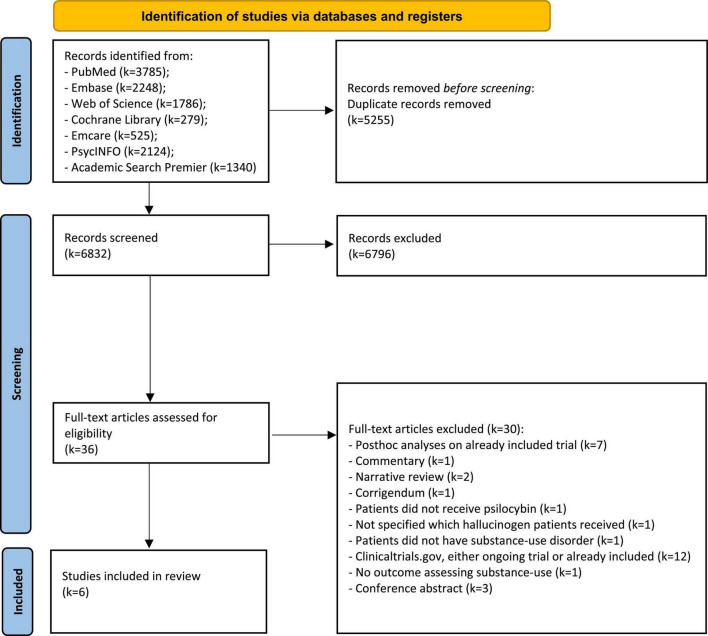
Background: Psychedelic-assisted therapy [e.g., with lysergic acid diethylamide (LSD)] has shown promising results as treatment for substance use disorders (SUDs). Previous systematic reviews assessing the efficacy of psilocybin in SUDs only included clinical trials conducted in the last 25 years, but they may have missed clinical trials assessing the efficacy of psilocybin that were conducted before the 1980s, given much research has been done with psychedelics in the mid-20th century. In this systematic review, we specifically assessed the efficacy of psilocybin in patients with a SUD or non-substance-related disorder with no publication date restrictions in our search strategy. Methods: A systematic literature search was performed according to Preferred Reporting Items for Systematic reviews and Meta-Analysis (PRISMA) guidelines from the earliest published manuscript up to September 2, 2022, in seven electronic databases, including clinical trials in patients with a SUD or non-substance-related disorder evaluating the efficacy of psilocybin. Results: A total of four studies (six articles, of which two articles were long-term follow-up results from the same trial) were included in this systematic review. Psilocybin-assisted therapy was administered to n = 151 patients in a dose ranging from 6 to 40 mg. Three studies focused on alcohol use disorder, and one study on tobacco use disorder. In a pilot study (n = 10), the percentage of heavy drinking days decreased significantly between baseline and weeks 5–12 (mean difference of 26.0, 95% CI = 8.7–43.2, p = 0.008). In another single-arm study (n = 31), 32% (10/31) became completely abstinent from alcohol (mean duration of follow-up 6 years). In a double-blind, placebo-controlled randomized controlled trial (RCT, n = 95), the percentage of heavy drinking days during the 32-week double-blind period was significantly lower for psilocybin compared to placebo (mean difference of 13.9, 95% CI = 3.0–24.7, p = 0.01). In a pilot study (n = 15), the 7-day point prevalence of smoking abstinence at 26 weeks was 80% (12/15), and at 52 weeks 67% (10/15). Conclusion: Only one RCT and three small clinical trials were identified assessing the efficacy of psilocybin combined with some form of psychotherapy in patients with alcohol and tobacco use disorder. All four clinical trials indicated a beneficial effect of psilocybin-assisted therapy on SUD symptoms. Larger RCTs in patients with SUDs need to evaluate whether psilocybin-assisted therapy is effective in patients with SUD.
Overview
The claims and statistics of this paper haven’t been checked yet.
Free: it reads the open-access text and checks the first 5 claims that cite a source we can check. Create a free account to check every claim.
Integrity signals
Registry
Cites
Statistics
Figures
Verification
Claims the paper makes
The claims and statistics of this paper haven’t been checked yet.
Free: it reads the open-access text and checks the first 5 claims that cite a source we can check. Create a free account to check every claim.
Claims other papers make about this one
Each is checked against this paper’s own text: does it say what the citing paper says it does?
The source backs part of the claim, not all of it — or backs it for a different population, condition or comparison.
In the citing paper
“We enrolled 27% of those pre-screened, which is comparable with similar studies of PAT for addiction [15,25,51] and treatment-resistant depression [52,53].”
From Psilocybin‐assisted psychotherapy for methamphetamine use disorder: A pilot open‐label safety and feasibility study. (2025) · cites this paper as [51]
Experimental — accuracy not yet measuredThe cited source says what the claim attributes to it.
In the citing paper
“Prior studies of PAT for substance use disorders have found similarly positive efficacy signals [51].”
From Psilocybin‐assisted psychotherapy for methamphetamine use disorder: A pilot open‐label safety and feasibility study. (2025) · cites this paper as [51]
Self-check
Percentages, sums and reported differences re-computed from the paper’s own numbers.
The self-check needs the paper’s full text.
Citations
Cites
RoB 2: a revised tool for assessing risk of bias in randomised trials
Sterne, J. A. C., Savović, J., Page, M. J., Elbers, R. G., Blencowe, N. S., Boutron, I., Cates, C. J., Cheng, H.-Y., Corbett, M. S., Eldridge, S. M., et al. (2019) · BMJ · doi:10.1136/bmj.l4898 · Cited by 34,787
ROBINS-I: a tool for assessing risk of bias in non-randomised studies of interventions
Sterne, J. A., Hernán, M. A., Reeves, B. C., Savović, J., Berkman, N. D., Viswanathan, M., Henry, D., Altman, D. G., Ansari, M. T., Boutron, I., et al. (2016) · BMJ · doi:10.1136/bmj.i4919 · Cited by 20,329
The PRISMA 2020 statement: an updated guideline for reporting systematic reviews
Page, M. J., McKenzie, J. E., Bossuyt, P. M., Boutron, I., Hoffmann, T. C., Mulrow, C. D., Shamseer, L., Tetzlaff, J. M., Akl, E. A., Brennan, S. E., et al. (2021) · Systematic Reviews · doi:10.1186/s13643-021-01626-4 · Cited by 13,874
Degenhardt, L., Charlson, F., Ferrari, A., Santomauro, D., Erskine, H., Mantilla-Herrara, A., Whiteford, H., Leung, J., Naghavi, M., Griswold, M., et al. (2018) · The Lancet Psychiatry · doi:10.1016/s2215-0366(18)30337-7 · Cited by 1,572
Psilocybin-assisted treatment for alcohol dependence: A proof-of-concept study
Bogenschutz, M. P., Forcehimes, A. A., Pommy, J. A., Wilcox, C. E., Barbosa, P., & Strassman, R. J. (2015) · Journal of Psychopharmacology · doi:10.1177/0269881114565144 · Cited by 1,151
Pilot study of the 5-HT 2A R agonist psilocybin in the treatment of tobacco addiction
Johnson, M. W., Garcia-Romeu, A., Cosimano, M. P., & Griffiths, R. R. (2014) · Journal of Psychopharmacology · doi:10.1177/0269881114548296 · Cited by 914 · cited 8×
“(29, 30) was included assessing the efficacy of psilocybin-assisted therapy in n = 15 patients who met the following criteria: smoking ≥10 cigarettes per day, being healthy as determined by medical interview, multiple unsuccessful past quit attempts, and the desire to quit smoking.”
BackgroundInfluentialBogenschutz, M. P., Ross, S., Bhatt, S., Baron, T., Forcehimes, A. A., Laska, E., Mennenga, S. E., O’Donnell, K., Owens, L. T., Podrebarac, S., et al. (2022) · JAMA Psychiatry · doi:10.1001/jamapsychiatry.2022.2096 · Cited by 711
Long-term follow-up of psilocybin-facilitated smoking cessation
Johnson, M. W., Garcia-Romeu, A., & Griffiths, R. R. (2017) · The American Journal of Drug and Alcohol Abuse · doi:10.3109/00952990.2016.1170135 · Cited by 696
Lysergic acid diethylamide (LSD) for alcoholism: meta-analysis of randomized controlled trials
Krebs, T. S., & Johansen, P.-Ø. (2012) · Journal of Psychopharmacology · doi:10.1177/0269881112439253 · Cited by 583
Cannabis use and cannabis use disorder
Connor, J. P., Stjepanović, D., Le Foll, B., Hoch, E., Budney, A. J., & Hall, W. D. (2021) · Nature Reviews Disease Primers · doi:10.1038/s41572-021-00247-4 · Cited by 552 · cited 1×
“It is less clear why no clinical trials in cannabis use disorder are currently conducted as it is the most common drug use disorder worldwide, especially among youth (42).”
Background
Research works printed but not linked: 1
- Albuquerque Fortes J. Psilocybin and chronic alcoholism. Arquivos Coordenadoria Saude Mental Estado Sao Paulo. (1966) 32: 5– 129.
Cited by
Sabé, M., Sulstarova, A., Glangetas, A., Pieri, M. D., Mallet, L., Curtis, L., Richard-Lepouriel, H., Penzenstadler, L. E., Seragnoli, F., Thorens, G., et al. (2024) · Molecular Psychiatry · doi:10.1038/s41380-024-02800-5 · Cited by 72
Mini-review: The neurobiology of treating substance use disorders with classical psychedelics
Urban, M. M., Stingl, M., & Meinhardt, M. W. (2023) · Frontiers in Neuroscience · doi:10.3389/fnins.2023.1156319 · Cited by 46
Fentanyl and Other Opioid Use Disorders: Treatment and Research Needs
Volkow, N. D., & Blanco, C. (2023) · American Journal of Psychiatry · doi:10.1176/appi.ajp.20230273 · Cited by 44
Psychedelics for treatment resistant depression: are they game changers?
Kalfas, M., Taylor, R. H., Tsapekos, D., & Young, A. H. (2023) · Expert Opinion on Pharmacotherapy · doi:10.1080/14656566.2023.2281582 · Cited by 40
“Although we did not have the scope to discuss further effects in the present paper, psychedelic therapy holds promise for other psychiatric conditions including PTSD [111], anorexia [134], addiction [135], borderline personality disorder [136] and bipolar depression.”
BackgroundHovmand, O. R., Poulsen, E. D., & Arnfred, S. (2024) · Journal of Psychopharmacology · doi:10.1177/02698811231200019 · Cited by 33
“…new instruments have been designed to assess the acute subjective psyche-delic experience, and the treatment outcomes have been discussed in multiple systematic reviews and meta-analyses (Castro Santos and Gama Marques, 2021; Hovmand et al., 2023; Kisely et al., 2023; van der Meer et al., 2023).”
BackgroundProtocols and practices in psilocybin assisted psychotherapy for depression: A systematic review
Chisamore, N., Johnson, D. E., Chen, M. J. Q., Offman, H., Chen-Li, D. C. J., Kaczmarek, E. S., Doyle, Z., McIntyre, R. S., & Rosenblat, J. D. (2024) · Journal of Psychiatric Research · doi:10.1016/j.jpsychires.2024.05.051 · Cited by 34
Gattuso, J., Wilson, C., Hannan, A. J., & Renoir, T. (2023) · Journal of Neurochemistry · doi:10.1111/jnc.16017 · Cited by 20
“In this light, and based on previously reported findings, it is likely that psilocybin is increasing functional impulsivity as opposed to dysfunctional impulsivity, especially as psilocybin treatment may be able to curb addiction (Van Der Meer et al., 2023).”
Domanegg, K., Sommer, W. H., & Meinhardt, M. W. (2023) · Cells · doi:10.3390/cells12060963 · Cited by 24
Andrews, C. M., Hall, W., Humphreys, K. N., & Marsden, J. (2024) · Addiction · doi:10.1111/add.16575 · Cited by 27
Højlund, M., Kafalı, H. Y., Kırmızı, B., Fusar‐Poli, P., Correll, C. U., Cortese, S., Sabé, M., Fiedorowicz, J. G., Saraf, G., Zein, J., et al. (2025) · European Neuropsychopharmacology · doi:10.1016/j.euroneuro.2025.09.011 · Cited by 25
Psychedelics in the Treatment of Substance Use Disorders and Addictive Behaviors: A Scoping Review
Richard, J., & Garcia‐Romeu, A. (2025) · Current Addiction Reports · doi:10.1007/s40429-025-00629-8 · Cited by 26
Efficacy and safety of psilocybin for the treatment of substance use disorders: A systematic review
Meshkat, S., Malik, G., Zeifman, R. J., Swainson, J., Balachandra, K., Reichelt, A. C., Zhang, Y., Burback, L., Winkler, O., Greenshaw, A. J., et al. (2025) · Neuroscience & Biobehavioral Reviews · doi:10.1016/j.neubiorev.2025.106163 · Cited by 31
Hutchison, K. E., Hooper, J. F., & Karoly, H. C. (2025) · JAMA Psychiatry · doi:10.1001/jamapsychiatry.2025.3038 · Cited by 25
Sjöström, D. K., Claesdotter‐Knutsson, E., & Kajonius, P. (2024) · Scientific Reports · doi:10.1038/s41598-024-60890-1 · Cited by 20
Tap, S. C. (2024) · Addiction Biology · doi:10.1111/adb.13386 · Cited by 17
Emerging drugs in phase II and III clinical development for the treatment of alcohol use disorder
Köhne, S., Hillemacher, T., Glahn, A., & Bach, P. (2024) · Expert Opinion on Emerging Drugs · doi:10.1080/14728214.2024.2342951 · Cited by 22
“However, low quality of the study designs has to be taken into consideration [104].”
Walther, R. F. E., & van Schie, H. T. (2024) · Psychoactives · doi:10.3390/psychoactives3030026 · Cited by 22
“For example, psilocybin shows promising therapeutic efficacy for the treatment of mood disorders [8–14], substance addiction [15], and end-of-life anxiety, among other conditions [3].”
Kinderlehrer, D. A. (2025) · Neuropsychiatric Disease and Treatment · doi:10.2147/ndt.s500337 · Cited by 18
Atiq, M. A., Baker, M. R., Voort, J. L. V., Vargas, M. V., & Choi, D. (2024) · Psychopharmacology · doi:10.1007/s00213-024-06599-5 · Cited by 18
“…al. 2022; Carhart-Harris et al. 2016; Davis et al. 2021; Ehrmann et al. 2022; Gasser et al. 2015; Griffiths et al. 2016; Johnson et al. 2017; Lee & Shlain 1992; Mithoefer et al. 2016; Moreno et al. 2006; Palhano-Fontes et al. 2019; Schmid et al. 2021; van der Meer et al. 2023; Zeifman et al. 2019).”
Galdino, T. P., Oliveira, L. C., Luz, M. A., Jesus, R. A., Lima, E. P. N., Torres, M. C. M., Sivieri, K., Afonso, V. I., Delgado, J. M. P. Q., Lima, A. G. B., et al. (2025) · Pharmaceuticals · doi:10.3390/ph18030380 · Cited by 12
“These include alcohol and tobacco addiction [3], major depressive disorder (MDD) and treatment-resistant depression (TRD) [4–6], end-of-life depression and anxiety [7,8], post-traumatic stress disorder (PTSD) [9], obsessive–compulsive disorder (OCD) [10,11], eating disorders like anorexia nervosa…”
Pharmacological Monotherapy for Depressive Disorders: Current and Future—A Narrative Review
Gao, K., Oruc, E. B., & Koparal, B. (2025) · Medicina · doi:10.3390/medicina61040558 · Cited by 14
“…LSD is being developed by MindBio Therapeutics Corp (Vancouver, BC, Canada) for the treatment of MDD [99], and by Mind Medicine (MindMed) Inc. for the treatment of generalized anxiety disorder (GAD) and MDD. Previously, LSD was mainly studied in the treatment of alcohol use disorders [100,101].”
Psychedelics, OCD and related disorders: A systematic review
Graziosi, M., Rohde, J. S., Tiwari, P., Siev, J., & Yaden, D. B. (2024) · Journal of Obsessive-Compulsive and Related Disorders · doi:10.1016/j.jocrd.2024.100873 · Cited by 23
Weleff, J., Nunes, J. C., Costa, G. P. A., Sofuoglu, M., MacLean, R. R., & Aquino, J. P. D. (2024) · British Journal of Clinical Pharmacology · doi:10.1111/bcp.16045 · Cited by 15
Health services for substance use disorders: challenges and future perspectives
Silva, J. P. (2023) · BMC Health Services Research · doi:10.1186/s12913-023-10072-y · Cited by 10
“However, these developments may be also associated with a risk of these substances being perceived as “safe”, which might ultimately further increase substance use [4, 10].”
BackgroundAdams, D. R., ALLEN, H. L., Nicol, G. E., & Cabassa, L. J. (2024) · Translational Behavioral Medicine · doi:10.1093/tbm/ibae053 · Cited by 11
Caraccio, M., Cheung, K., Mann, S. P., Bruce, L., Jacobs, E., Villiger, D., Sandbrink, J. D., Register, C., Hannikainen, I. R., Høeg, M. L., et al. (2025) · Philosophical Psychology · doi:10.1080/09515089.2025.2532761 · Cited by 11
“…supported the potential of some psychedelics, primarily in concert with psychotherapy or psychological support, to serve as effective clinical interventions for appropriately screened and prepared individuals (Goldberg et al., 2020; Johnson, 2022; Raison et al., 2023; van der Meer et al., 2023).”
Microbiome: The Next Frontier in Psychedelic Renaissance
Kargbo, R. B. (2023) · Journal of Xenobiotics · doi:10.3390/jox13030025 · Cited by 11
“hile short-ter therapeutic effects are well-documented, more research is needed to assess the duration of these effects and potential lo g-term risks [92,93].”
BackgroundDavies, L. E. M., Koster, E. S., Damen, K. F. M., Beurmanjer, H., van Dam, V. W., Bouvy, M. L., & Schellekens, A. (2023) · BMJ Open · doi:10.1136/bmjopen-2023-075246 · Cited by 10
Self-citationHilal, F. F., Jeanblanc, J., Deschamps, C., Naassïla, M., Pierrefiche, O., & Hamida, S. B. (2024) · Journal of Neural Transmission · doi:10.1007/s00702-024-02757-3 · Cited by 9
“Indeed, in recent years, there has been a growing body of clinical research suggesting promising pharmacological interventions for AUD (Witkiewitz et al. 2019; De Grego-rio et al. 2021; Calleja-Conde et al. 2022; Mendes et al. 2022; van der Meer et al. 2023) (Table 1).”
Knock, E., Siefried, K. J., Bedi, G., Albert, S., Day, R. O., Ezard, N., Ross, M., Liknaitzky, P., & Brett, J. (2025) · Addiction · doi:10.1111/add.70187 · Cited by 9
Brett, J., Knock, E., Watson, K., Albert, S., Siefried, K. J., & Guss, J. (2024) · Frontiers in Psychiatry · doi:10.3389/fpsyt.2024.1490907 · Cited by 7
“…as a predictor of psychiatrists not believing that psychedelics hold potential for treatment substance use disorders (22, 23), despite evidence that the abuse potential of psychedelics is negligible (11) and growing evidence of the ef fi cacy and safety of PAT to treat substance use disorders (24).”
Exploring the therapeutic potential of psychedelics in treating substance use disorders
Li, Y., Li, H., Wang, H., & Wang, X. (2025) · Molecular Psychiatry · doi:10.1038/s41380-025-03168-w · Cited by 8
Wittenkeller, L. M., Gudelsky, G. A., Winhusen, T. M., & Amato, D. (2025) · British Journal of Pharmacology · doi:10.1111/bph.70181 · Cited by 10
Psychedelics in Addiction Treatment—Navigating a Sociopolitical Rift
Mehtani, N. J., Anderson, B. T., & Mitchell, J. (2024) · JAMA Neurology · doi:10.1001/jamaneurol.2023.5173 · Cited by 7
The Human Right to Science: History, Development, and Normative Content
Romano, C. P. R., & Boggio, A. (2024) · Oxford University Press eBooks · doi:10.1093/law/9780197768990.001.0001 · Cited by 20
Altman, B. M., & Magnus, M. (2024) · Journal of Psychopharmacology · doi:10.1177/02698811241278774 · Cited by 9
“…improve a number of mental health outcomes, including depression and anxiety (Goodwin et al., 2022; Griffiths et al., 2016; Hull et al., 2022), post-traumatic stress disorder (PTSD) (Mitchell et al., 2021), suicidality (Zeifman et al., 2022), and substance use disorders (van der Meer et al., 2023).”
Brudner, R. M., Kaczmarek, E. S., Blainey, M. G., Schulz-Quach, C., Meshkat, S., Doyle, Z., Lipsitz, O., Offman, H., Sethi, R., Weiglein, G., et al. (2025) · Journal of Psychopharmacology · doi:10.1177/02698811251346697 · Cited by 11
“…findings also suggesting the efficacy of PAP in the treatment of Bipolar II Disorder (BDII; Aronson et al., 2024), substance-use disorders (van der Meer et al., 2023), eating disorders (Peck et al., 2023) and anxiety disorders (Goldberg et al., 2020), with some evidence of improving…”
Ellis, S., Bostian, C. M., Donnelly, A. J., Feng, W., Eisen, K., Lean, M., Conlan, E., Ostacher, M. J., Aaronson, S. T., & Suppes, T. M. (2025) · Journal of Affective Disorders · doi:10.1016/j.jad.2025.119655 · Cited by 11
da Costa, S. C., Bormann, N. L., Oesterle, T., McGinnis, M. T., Ho, M., Vettleson-Trutza, S. A., Rummans, T. A., & Gold, M. S. (2025) · Brain Sciences · doi:10.3390/brainsci15101056 · Cited by 10
“For tobacco use disorder , in a pilot study ( n = 15) included, the 7-day point prevalence of smoking abstinence at 26 weeks was 80% (12/15), and at 52 weeks 67% (10/15) [52].”
Köck, P., Badek, A., Meyer, M., Klaassen, A.-L., Walter, M., & Kindler, J. (2024) · Child and Adolescent Psychiatry and Mental Health · doi:10.1186/s13034-024-00846-5 · Cited by 30
Evaluating the value and risks of psychedelics for psychiatric medicine: a clinical perspective
Marazziti, D., Weiss, F., Gurrieri, R., Russomanno, G., Gambini, M., Magnesa, A., Coccoglioniti, A., & Perugi, G. (2024) · Expert Review of Neurotherapeutics · doi:10.1080/14737175.2024.2445016 · Cited by 5
“In particular, the employment of classic psychedelics in SUD, although preliminary, is yielding encouraging results [130,131].”
Keighley, E. E., Bedewy, D., Hamza, E. A., Nalla, S., & Moustafa, A. A. (2025) · Healthcare · doi:10.3390/healthcare13212668 · Cited by 7
LSD: Mechanisms and relevance to the treatment of depression
Bouloufa, A., Delcourte, S., Delannay, T., Rovera, R., Lau, T., Moulédous, L., Dkhissi‐Benyahya, O., Guiard, B. P., & Haddjeri, N. (2025) · Neuroscience & Biobehavioral Reviews · doi:10.1016/j.neubiorev.2025.106407 · Cited by 5
Potential use of psilocybin drugs in the treatment of depression
Śladowska, K., Kawalec, P., Brzostek, T., & Pilc, A. (2023) · Expert Opinion on Emerging Drugs · doi:10.1080/14728214.2023.2264180 · Cited by 4
“The results of systematic review van der Meer et al. [53] based on the results of for four studies (one RCT and three clinical trials) indicated positive effect of psilocybin-assisted therapy in patients with alcohol and tobacco use disorder, including the reduced percentage of heavy drinking days…”
ResultNovel qNMR Method to Quantify Psilocybin and Psilocin in Psychedelic Mushrooms
Rodríguez, L. C., Morera, G., Lupo, S., Davyt, D., Carrera, I., & Dossi, G. H. (2025) · ACS Omega · doi:10.1021/acsomega.5c07092 · Cited by 3
Safety and Mental Health Outcomes of Oregon State-Regulated Psilocybin Services
Korthuis, P. T., Cook, R. R., Gregoire, D., Stauffer, C. S., Luoma, J. B., Pertl, K., Jarlais, D. D., McCarty, D. W., Levander, X. A., Hoffman, K. A., et al. (2026) · JAMA Network Open · doi:10.1001/jamanetworkopen.2026.30608 · Cited by 3
Hughes, S., Terpak, L., Capps, R., Peters, P., Lilly, N., & Rivard, D. (2025) · Journal of Psychedelic Studies · doi:10.1556/2054.2025.00375 · Cited by 3
Abboud, A. E., Schiebrel, C. M., Nahhas, R. W., Durkin, S., Hua, K., Redding, H., & Gainer, D. M. (2025) · Journal of Psychoactive Drugs · doi:10.1080/02791072.2025.2511752 · Cited by 2
Advances in the study of pharmacotherapy for addiction to naturally-derived psychoactive substances
Xie, K., Xiao, D., Xu, P., Shen, H., & Di, B. (2025) · Chinese Journal of Natural Medicines · doi:10.1016/s1875-5364(25)60831-4 · Cited by 7
Hirsch, D., Reed, J., Naqvi, A., Ngor, A., Dugan, L., Costa, K., Ganasi, R. S., Truman, K. A., Danovitch, I., IsHak, W. W., et al. (2025) · CNS Drugs · doi:10.1007/s40263-025-01248-7 · Cited by 2
“Psilocybin has been investigated with positive results in the treatment of major depression, anxiety disorders, and substance use disorders [51, 125].”
An open-label pilot study of psilocybin-assisted therapy for binge eating disorder
Dallery, J., Miller, J. L., Boissoneault, J., Harvey, L., Ives, L., Knerr, A. W., Blaes, S. L., Ransom, M. N., Munson, M., Gilligan, J., et al. (2026) · Journal of Eating Disorders · doi:10.1186/s40337-025-01508-3 · Cited by 2
“The current findings converge with a growing body of evidence supporting the safety and potential efficacy of psilocybin-assisted therapy across a range of psychiatric conditions, including substance use disorders, obsessive-compulsive disorder, and anorexia nervosa [8–12 , 14– 16].”
At the Forefront: Social Workers’ Role in Psilocybin Treatment for Depression and Substance Misuse
Parker, C., & Wood, B. M. (2024) · Social Work · doi:10.1093/sw/swae019 · Cited by 4
Psychedelic Research for Alcohol Use Disorder with Comorbid Major Depressive Disorder: An Unmet Need
de Jonge, D., van der Meer, P. B., Kramers, C., & Schellekens, A. (2024) · Current Psychiatry Reports · doi:10.1007/s11920-024-01567-4 · Cited by 3
“In their systematic review from last year, van der Meer et al. (2023) critically appraised clinical trials assessing the efficacy of psilocybin in SUD.”
Self-citationKrawczyk, N., Miller, M. J., Gu, E. Y., Irvine, N. M., Ramirez, E., Santaella-Tenorio, J., Lippincott, T., Bogenschutz, M. P., Bunting, A. M., & Meacham, M. C. (2025) · Addiction · doi:10.1111/add.16767 · Cited by 3
Fernandes-Nascimento, M. H., Viana-Ferreira, K., & Negrão, A. B. (2025) · Psychedelic Medicine · doi:10.1089/psymed.2024.0031 · Cited by 3
“The research by Van der Meer et al. (2023) 34 focused on the treatment of alcoholism, showing that psilocybin-assisted therapy, combined with psychotherapy, signi fi cantly reduces heavy drinking days (Table 1).”
Psychedelic Use and Behavioral Addictions
Brasher, T. J., Rosen, D., & Spinella, M. (2025) · Journal of Psychoactive Drugs · doi:10.1080/02791072.2025.2474244 · Cited by 2
“As of today, one RCT and three small clinical trials indicate beneficial effects of psilocybin on substance misuse (van der Meer et al. 2023).”
Blum, K., Braverman, E. R., Gold, M. S., Dennen, C. A., Baron, D. A., Thanos, P. K., Hanna, C., Elman, I., Gondre-Lewis, M. C., Ashford, J. W., et al. (2024) · INNOSC Theranostics and Pharmacological Sciences · doi:10.36922/itps.1472 · Cited by 2
Meshkat, S., Fang, H., Sousa-Ho, R., Zeifman, R. J., Dunkley, B. T., Reichelt, A. C., Zhang, Y., Burback, L., Winkler, O., Greenshaw, A. J., et al. (2025) · Psychedelic Medicine · doi:10.1089/psymed.2024.0039 · Cited by 3
“36 – 38 Research evaluating the role of these psy-chedelics beyond anxiety and depression has found bene fi cial outcomes in the context of addiction and pain, however, we did not fi nd any studies examining the role of low-dose psilocybin in these disorders.”
Glenn, D. L., Choi, S. H., & Zimmerman, R. S. (2025) · Journal of Psychopharmacology · doi:10.1177/02698811251353251 · Cited by 1
“Existing reviews have primarily (1) focused on individual classic serotonergic psychedelics, such as psilocybin alone (Van der Meer et al., 2023); (2) examined a broad range of substance use disorders concurrently, potentially diluting smoking-related findings (Sharma et al., 2023; Valdez et al.,…”
Klaus, J., Schneider, F., Schaletzky, R., Sippel, D., & Batra, A. (2025) · SUCHT - Zeitschrift für Wissenschaft und Praxis / Journal of Addiction Research and Practice · doi:10.1024/0939-5911/a000953 · Cited by 4
Pincombe, J., Williams, M. L., Carruthers, S. P., & Rossell, S. L. (2025) · Psychedelic Medicine · doi:10.1177/28314425251394012 · Cited by 1
“So much so that systematic reviews and meta-analyses on the topic are available across a variety of mental health conditions, such as depression, 11 – 14 substance-use disorder, 15,16 end-of-life anxiety, 17 and other mental disorders.”
Hooper, J., Williams, S. L., Mueller, R. L., & Hutchison, K. E. (2026) · Journal of Psychoactive Drugs · doi:10.1080/02791072.2026.2727016 · Cited by 4
Bhat, A., Zolali, E., Sakib, M. A., Rahimian, M., McMahon, L. R., German, N., & Obeng, S. (2026) · ACS Chemical Neuroscience · doi:10.1021/acschemneuro.6c00202 · Cited by 2
Music Playlist Use in Clinical Trials of Psychedelic Assisted Psychotherapy: A Systematic Review
da Cruz, L. V. M., Beserra, F. R., FREIND, J. M. K., Rodrigues, S. E., & Mograbi, D. C. (2026) · Journal of Clinical Psychology · doi:10.1002/jclp.70167 · Cited by 3
“…treatment of several psychiatric conditions, such as depression (Osório et al. 2015; Sanches et al. 2016; Palhano‐Fontes et al. 2019; Dawood Hristova and Pérez‐Jover 2023) and substance dependence (Van der Meer et al. 2023), as well as in palliative care (Gasser et al. 2015; Whinkin et al. 2023).”
The role of psilocybin in depressive disorders
Najib, J. S. (2024) · Current Medical Research and Opinion · doi:10.1080/03007995.2024.2396536 · Cited by 1
“Since classical hallucinogens act primarily on the serotonergic system, they are not likely to cause addiction, which is mainly linked to the dopaminergic system 15,69 .”
Pincombe, J., Williams, M. L., Carruthers, S. P., & Rossell, S. L. (2024) · PsyArXiv (OSF Preprints) · doi:10.31234/osf.io/ga9p2 · Cited by 2
Martin, H. M., Cofré, R., & Destexhe, A. (2025) · bioRxiv (Cold Spring Harbor Laboratory) · doi:10.1101/2025.10.20.683366 · Cited by 2
Drugs and Psychedelics in Tourism
Alyu, F. (2023) · Advances in hospitality, tourism and the services industry (AHTSI) book series · doi:10.4018/978-1-6684-9255-0.ch009
Application of psilocybin in mental health disorders
Chen, J. (2023) · Theoretical and Natural Science · doi:10.54254/2753-8818/21/20230859
Breeksema, J. J. (2024) · University of Groningen research database (University of Groningen / Centre for Information Technology) · doi:10.33612/diss.912040905 · Cited by 1
Zhao, H.-Y., Liang, K., & Fang, Y. (2024) · Theoretical and Natural Science · doi:10.54254/2753-8818/32/20240910
Romano, C. P. R., & Boggio, A. (2024) · Oxford University Press eBooks · doi:10.1093/law/9780197768990.002.0005
From the Universal Declaration to the Covenant on Economic, Social, and Cultural Rights
Romano, C. P. R., & Boggio, A. (2024) · Oxford University Press eBooks · doi:10.1093/law/9780197768990.003.0003
The Right to Science in National Constitutions
Romano, C. P. R., & Boggio, A. (2024) · Oxford University Press eBooks · doi:10.1093/law/9780197768990.003.0007
UNESCO and the Right to Science
Romano, C. P. R., & Boggio, A. (2024) · Oxford University Press eBooks · doi:10.1093/law/9780197768990.003.0005
Romano, C. P. R., & Boggio, A. (2024) · Oxford University Press eBooks · doi:10.1093/law/9780197768990.002.0012
The United Nations and the Right to Science
Romano, C. P. R., & Boggio, A. (2024) · Oxford University Press eBooks · doi:10.1093/law/9780197768990.003.0004
Table of Constitutions and Constitutional Legal Instruments
Romano, C. P. R., & Boggio, A. (2024) · Oxford University Press eBooks · doi:10.1093/law/9780197768990.002.0014
The Future of the Right to Science
Romano, C. P. R., & Boggio, A. (2024) · Oxford University Press eBooks · doi:10.1093/law/9780197768990.003.0013
From the American Declaration to the Universal Declaration of Human Rights
Romano, C. P. R., & Boggio, A. (2024) · Oxford University Press eBooks · doi:10.1093/law/9780197768990.003.0002
Romano, C. P. R., & Boggio, A. (2024) · Oxford University Press eBooks · doi:10.1093/law/9780197768990.003.0001
The Right to Responsible Scientific Progress (Scientific Responsibility)
Romano, C. P. R., & Boggio, A. (2024) · Oxford University Press eBooks · doi:10.1093/law/9780197768990.003.0010
Table of International Legal Instruments and Other International Organizations’ Documents
Romano, C. P. R., & Boggio, A. (2024) · Oxford University Press eBooks · doi:10.1093/law/9780197768990.002.0013
Finding the Normative Content of the Right to ScienceAn Introduction
Romano, C. P. R., & Boggio, A. (2024) · Oxford University Press eBooks · doi:10.1093/law/9780197768990.003.0008
The Right to Benefit from Scientific Progress
Romano, C. P. R., & Boggio, A. (2024) · Oxford University Press eBooks · doi:10.1093/law/9780197768990.003.0012
Romano, C. P. R., & Boggio, A. (2024) · Oxford University Press eBooks · doi:10.1093/law/9780197768990.002.0008
The Right to Participate in Scientific Progress
Romano, C. P. R., & Boggio, A. (2024) · Oxford University Press eBooks · doi:10.1093/law/9780197768990.003.0011
Romano, C. P. R., & Boggio, A. (2024) · Oxford University Press eBooks · doi:10.1093/law/9780197768990.002.0007
Romano, C. P. R., & Boggio, A. (2024) · Oxford University Press eBooks · doi:10.1093/law/9780197768990.002.0010
The Right to Scientific Progress and to Scientific Freedom
Romano, C. P. R., & Boggio, A. (2024) · Oxford University Press eBooks · doi:10.1093/law/9780197768990.003.0009
Regional Human Rights Regimes and the Right to Science
Romano, C. P. R., & Boggio, A. (2024) · Oxford University Press eBooks · doi:10.1093/law/9780197768990.003.0006
Romano, C. P. R., & Boggio, A. (2024) · Oxford University Press eBooks · doi:10.1093/law/9780197768990.002.0011
Romano, C. P. R., & Boggio, A. (2024) · Oxford University Press eBooks · doi:10.1093/law/9780197768990.002.0004
Romano, C. P. R., & Boggio, A. (2024) · Oxford University Press eBooks · doi:10.1093/law/9780197768990.002.0003
Preface to the Review Series Neuropharmacology of addiction
Lawrence, A. J., & Langmead, C. J. (2024) · British Journal of Pharmacology · doi:10.1111/bph.17339
“…2C receptor is one of the molecular targets for psychedelic drugs, including psilocybin which has been effective in clinical studies of addiction (van der Meer et al., 2023), while RNA editing and/or heteromerisation of the 5-HT 2C receptor may also represent other ways to engage this target…”
(2024) · Elsevier eBooks · doi:10.1016/b978-3-437-21074-7.00010-1
Pulido-Saavedra, A., Borelli, A., Kitaneh, R., Alrafayia, M., Khave, L. J., Funaro, M. C., Potenza, M. N., & Angarita, G. A. (2024) · Expert Opinion on Pharmacotherapy · doi:10.1080/14656566.2024.2446623
“Psychedelic-assisted therapy for SUDs has been reviewed in scoping and systematic manners [19–21].”
Rangan, R. S., Petty, R. M., Acharya, S., Emmitte, K. A., do Valle, R., Lam, C., Essajee, S. I., Mayhew, W., Young, O., Brooks, C. D., et al. (2025) · bioRxiv (Cold Spring Harbor Laboratory) · doi:10.1101/2025.02.13.638188 · Cited by 1
BROAD SPECTRUM OF THERAPEUTIC PROPERTIES OF PSILOCYBIN: A LITERATURE REVIEW
Wójcik, J., Pamuła, K. W., Cholewa, M., Kantor, K. K., Plewniok, J., Partyka, M., Kuca, M., Jaglarz, K., Szymańska, W. M., & Janeczek, M. (2025) · Health Problems of Civilization · doi:10.5114/hpc.2025.147763
Exploring psilocybin’s role in mental health and palliative medicine: a path to improved well-being
Umbacia, M. A., León, M., Quintero, J.-M., Castro, L.-M., Páez, V., Dodd, S., & Bustos, R. (2025) · Expert Opinion on Emerging Drugs · doi:10.1080/14728214.2025.2488786
“Many current trials are small, under-powered, and lack adequate blinding, which can lead to unreliable results and preventable bias [40–42].”
Metadata
- Authors
- van der Meer, P. B., Fuentes, J. J., Kaptein, A. A., Schoones, J. W., de Waal, M. M., Goudriaan, A. E., Kramers, K., Schellekens, A., Somers, M., Bossong, M. G., & Batalla, A.
- Affiliations
- Universitat Autònoma de Barcelona (ES)
- Leiden University Medical Center (NL)
- Radboud University Medical Center (NL)
- University Medical Center Utrecht (NL)
- ORCID
- Venue
- Frontiers in Psychiatry
- Publisher
- Frontiers Media SA
- Published
- 2023-02-09
- Volume
- 14
- Pages
- 1134454-1134454
- ISSN
- 1664-0640 (ISSN-L)
- PMC
- PMC9947277
- OpenAlex
- W4319765908
- Cited by
- 127
- References
- 41
- Citations by year
- 2026: 20 · 2025: 44 · 2024: 51 · 2023: 12
- FWCI
- 6.43
- Type
- journal article
- Language
- en
- Open access
- gold
- doi.org
- Licence
- Locations
- Frontiers in Psychiatry (publishedVersion, cc-by)
- PubMed Central (publishedVersion, cc-by)
- PubMed (publishedVersion)
- Pure Amsterdam UMC (publishedVersion, cc-by)
- Repositori digital de la UPF (Universitat Pompeu Fabra) (acceptedVersion, cc-by)
- Dipòsit Digital de Documents de la UAB (Universitat Autònoma de Barcelona) (submittedVersion, cc-by)
- Radboud Repository (Radboud University) (submittedVersion)
- Radboud Repository (Radboud University) (submittedVersion, other-oa)
- DOAJ (DOAJ: Directory of Open Access Journals) (submittedVersion, cc-by-sa)
- Utrecht University Repository (Utrecht University) (submittedVersion, other-oa)
- Topics
- Social Sciences › Psychology › Clinical Psychology › Psychedelics and Drug Studies
- Health Sciences › Medicine › Epidemiology › Substance Abuse Treatment and Outcomes
- Social Sciences › Health › Religion, Spirituality, and Psychology
- Keywords
- psilocybin, psychedelic therapy, substance use disorders, alcoholism, tobacco use disorder, smoking abstinence, alcohol abstinence, heavy drinking days, long-term follow-up, treatment efficacy, dose-response relationship, adverse effects, anxiety
About these checks
Registry, retraction, Cites and statistics results are computed, not judged, with one exception: a printed reference that no index lists is read once by a model before it counts as a citation error. Claims are extracted by a model and kept only when their quote appears verbatim in the text; each cited source is then checked, with a model’s help, for whether it says what the claim relies on. Those verdicts can be wrong — read the claim’s quote and the cited source before relying on one.
Statistics and arithmetic are recomputed, not judged.
Confidence bands are shown only for fields calibrated on our annotated test set. None is calibrated yet, so no band is shown.
What counts as a claim ›How we measure confidence ›How we check this ›
Are you an author, or do you see a problem with this page? Request a review
Data sources
Bibliographic data: Semantic Scholar, OpenAlex, Crossref.
Contains information from the Semantic Scholar Academic Graph Datasets, made available under the ODC Attribution License (ODC-BY 1.0).
Semantic Scholar’s data is described in: Kinney, R., et al. (2023). The Semantic Scholar Open Data Platform. arXiv:2301.10140.
