

A quantitative analysis of fidgeting in ADHD and its relation to performance and sustained attention on a cognitive task
Open accessThe DOI matches its Crossref record; 90 of the 90 references it cites were found in a registry or an index; 4 of the 78 sources its claims cite were checked for support.
Abstract
Introduction: Attention-Deficit/Hyperactivity Disorder (ADHD) is a neurodevelopmental disorder where hyperactivity often manifests as fidgeting, a non-goal-directed motoric action. Many studies demonstrate fidgeting varies under different conditions as a self-regulating mechanism for attention and alertness during cognitively demanding tasks. Fidgeting has also been associated with reaction time variability. However, a lack of standard variables to define and quantify fidgeting can lead to discrepancies in data and interpretability issues across studies. Furthermore, little is known about fidgeting in adults with ADHD compared to youth. This study aims to design a framework to quantify meaningful fidgeting variables and to apply them to test the relation between fidgeting and performance on a cognitive task, the Flanker, in adults with ADHD. Method: Our study included 70 adult participants diagnosed with ADHD, aged 18–50 years (30.5 ± 7.2 years). Screening included a structured clinical interview, childhood, current self and current observer ratings of ADHD symptoms. Actigraphy devices were attached to the left wrist and right ankle during completion of a cognitive control, attention task (the Flanker). Laboratory testing was subsequently completed on a single day. The relation between task performance, reaction time variability and fidgeting was examined. Results and Discussion: Our analysis revealed increased fidgeting during correct trials as defined by our new variables, consistent with previous observations. Furthermore, differences in fidgeting were observed between early and later trials while the percentage of correct trials were not significantly different. This suggests a relation between the role of fidgeting and sustaining attention. Participants with low reaction time variability, that is, those with more consistent reaction times, fidgeted more during later trials. This observation supports the theory that fidgeting aids arousal and improves sustained attention. Finally, a correlation analysis using ADHD-symptom rating scales validated the relevance of the fidget variables in relation to ADHD symptom severity. These findings suggest fidgeting may be a compensatory mechanism that aids in sustained attention for those with ADHD, although alternative explanations exist. Conclusion: Our study suggests that fidgeting may aid in sustained attention during the attention-demanding, cognitive control processes for adults with ADHD, with more fidgeting observed during correct trials and among participants with lower reaction time variability. Furthermore, the newly defined fidget variables were validated through a significant correlation with ADHD rating scales. By sharing our implementation of fidget variables, we hope to standardize and encourage further quantitative research into the role of fidgeting in ADHD.
Overview
CoChat Summary
TL;DR
In 70 adults with ADHD, newly defined actigraphy-based fidget variables showed more fidgeting during correct Flanker trials and during later trials, while accuracy stayed stable. Fidget variables also correlated more strongly with ADHD rating scales than task performance, suggesting fidgeting may support sustained attention.
Key findings
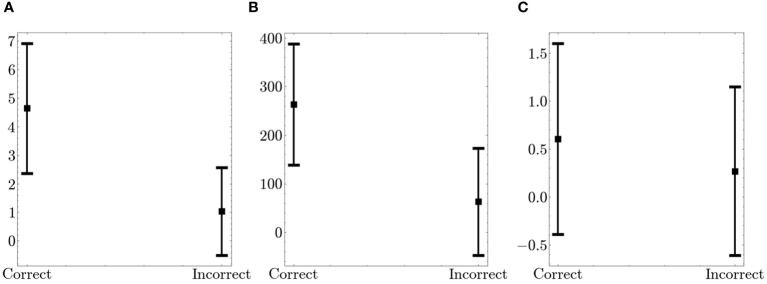
- Among the 56 participants with incorrect trials, all fidget variables were significantly higher during correct trials: Number of fidgets t=10.72 (p<0.001), Fidget variability t=9.84 (p<0.001), and Fidget intensity t=2.08 (p=0.04).
- Fidgeting increased from the first 30 trials (Q1) to the last 30 trials (Q4): Number of fidgets 2.3 (2.0) vs 3.5 (2.5), t=2.89; Fidget time variability 130.5 (120.8) vs 187.1 (144.7), t=2.46*; correct trials did not differ significantly, 28.7 (2.2) vs 28.3 (4.1), t=0.58.
- Participants with high mean reaction time (high Mu) and low reaction time variability (low Sigma and low Tau) fidgeted more during later trials; e.g., high Mu Number of fidgets t=2.62*, high Mu Fidget variability t=2.79, low Sigma Number of fidgets t=2.51, low Sigma Fidget variability t=2.20*, low Tau Number of fidgets t=2.37*.
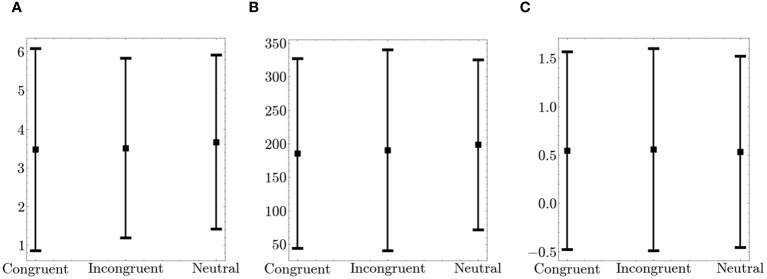
- Fidget variables showed stronger correlations with rating scales than task performance: BAARS R=0.52 vs 0.34, BDEFS R=0.39 vs 0.32*, ARI R=0.37 vs 0.30*. No significant fidget differences were found across congruent, incongruent, and neutral trials.
Methods
- The study included 70 adults diagnosed with ADHD, aged 18–50 years (30.5 ± 7.2 years; 36% male), recruited and screened with the Adult MINI for DSM-5-TR, BAARS, BDEFS, and ARI; it was part of a larger study that randomized participants 2:1 to a fidget ball or no fidget ball condition.
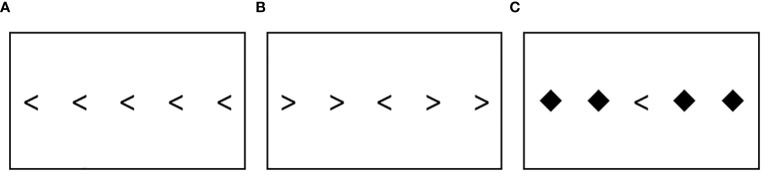
- Participants completed the Flanker task (120 trials: 40 congruent, 40 incongruent, 40 neutral) while actigraphy devices were attached to the left wrist and right ankle, sampled at 500 Hz for X, Y, and Z axes.
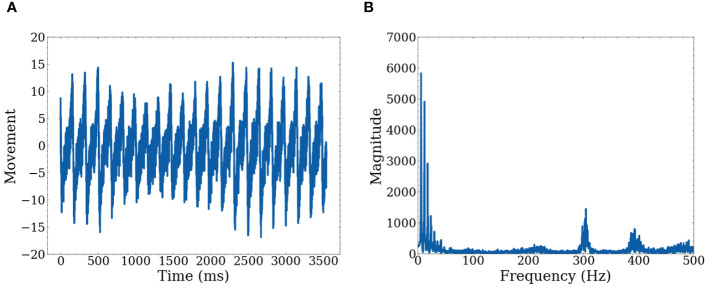
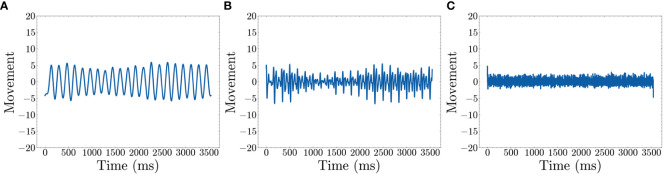
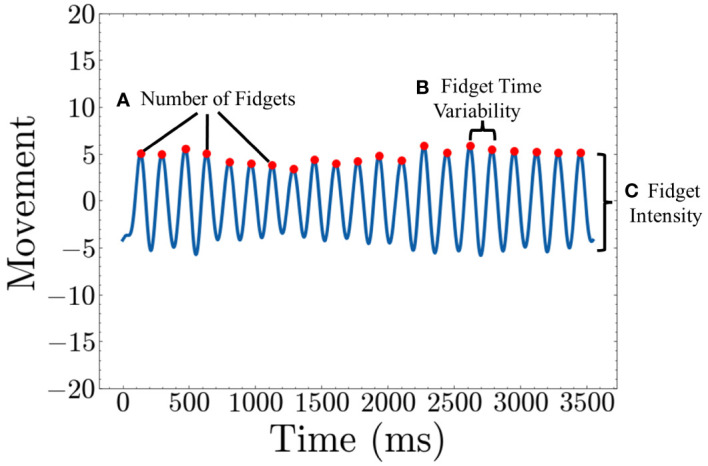
- Fidget variables were derived from 1–20 Hz movement data after FFT: Number of Fidgets (peak count), Fidget Variability (variance in time between peaks), and Fidget Intensity (average peak height); analyses used t-tests for correct vs incorrect trials, Q1 vs Q4, median-split Mu/Sigma/Tau groups, and linear models correlating fidget variables and task performance with rating scales.
Limitations
- Stated: recruitment produced a gender imbalance with more female participants, especially in the fidget ball group; Fidget time variability was lower in the fidget ball group; impulsive movements may not be captured by the fidget variables; many comparisons raise the possibility of arbitrary significance; further testing across tasks is needed because no standard fidget quantification baseline exists.
- Stated: the design limits causal conclusions, and an alternative interpretation is that fidgeting is a by-product rather than a contributor to improved attention.
- Evident: there was no non-ADHD control group, so comparisons are within ADHD participants only; incorrect-trial analyses were limited because only 56 participants had any incorrect trials and average errors were low (4.5 out of 120 trials); the fidget ball condition may confound some fidget variables, though the paper reports it did not significantly influence most population averages.
Model-written summary. Check it against the paper before relying on it.
Integrity signals
Registry
Cites
Statistics
Figures
Verification
Claims the paper makes
1 Valid · 0 Not valid · 28 Not checked · 57 Own results and interpretations
The cited sources support only part of this claim — read each source’s verdict below.
In the paper
“While this interpretation is possible, there is overwhelming evidence from experimental studies that show that cognitive functioning is superior during physical activity compared to conditions without physical activity (76–81).”
§ A quantitative analysis of fidgeting in ADHD and its relation to performance and sustained attention on a cognitive task > Discussion
What the sources say
- Partly supportedcites [76] Best JR. Effects of physical activity on children’s executive function: Contributions of experimental research on aerobic exercise. Dev Rev. (2010) 30: 351. doi: 10.1016/j.dr.2010.08.001 PMC3147174 21818169 sourceExperimental — accuracy not yet measured
Our copy of Best (2010) does report experimental evidence that aerobic exercise benefits cognition relative to non-exercise conditions, but only in children/adolescents and only for executive function, and the effects were 'detected immediately following completion of single bouts of exercise ... and after chronic training' (Abstract) — i.e., after, not during, physical activity; the one concurrent-design study discussed (McMorris et al., 2008) is hedged and did not clearly show a boost. The claim's 'overwhelming evidence ... during physical activity' therefore overstates the source: Best stresses 'there are only a few studies that meet these criteria,' and Table/Abstract passages record null comparisons with rest controls (Tomporowski et al., 2008 — no effect on shifting vs. video watching; Stroth et al., 2009 — no behavioral or ERP effect vs. video), plus the caveat that 'whether exercise was determined to have a positive effect on EF or not was relative to the impact of the control condition.' Part supported: experimental studies show exercise-linked superiority over non-exercise conditions; not supported: the 'during physical activity' timing, the unrestricted generalization to 'cognitive functioning' beyond EF, and the strength implied by 'overwhelming.' (LLM, conf=0.80)
- Not checked yetcites [77] Budde H Voelcker–Rehage C Pietrabyk–Kendziorra S Ribeiro P Tidow G. Acute coordinative exercise improves attentional performance in adolescents. Neurosci Letters. (2008) 441: 219–23. doi: 10.1016/j.neulet.2008.06.024 18602754 source
Checked before — its earlier verdict is held back until a new check runs.
- Partly supportedcites [78] Davis CL Tomporowski PD Boyle CA Waller JL Miller PH Naglieri JA. Effects of aerobic exercise on overweight children’s cognitive functioning: A randomized controlled trial. Res Q Exercise Sport. (2007) 78: 510–19. doi: 10.5641/193250307X13082512817660 PMC2662758 18274222 sourceExperimental — accuracy not yet measured
Davis et al. (2007) is indeed an experimental study (Abstract; Results, Tables 1-2): a 15-week randomized aerobic exercise trial in 94 sedentary overweight children showing that the high-dose group's posttest CAS Planning scores were significantly greater than the non-exercise control group's (p = .03), i.e. cognition improved relative to a no-activity condition. However, the claim's specific qualifier 'during physical activity' is not what this source tested — cognition was measured before and after the training program as a chronic, training-induced effect, and no passage in our copy reports online/acute superiority of cognitive functioning performed during activity versus rest. The paper's only nods to immediacy are speculative mechanistic remarks in the Discussion ('sympathetic nervous system arousal induced by aerobic exercise'; 'most of the benefit accrues in the first few bouts of exercise'), and the effect was confined to one CAS scale in a narrow population (overweight, sedentary children aged ~9), which the sentence generalizes to 'experimental studies'. (LLM, conf=0.78)
- Not checked yetcites [79] Ellemberg D St. Louis–Deschênes M. The effect of acute physical activity on cognitive function during development. Psychol Sport Exercise. (2010) 11: 122–6. doi: 10.1016/j.psychsport.2009.09.006 source
Checked before — its earlier verdict is held back until a new check runs.
- Partly supportedcites [80] Hillman CH Pontifex MB Raine LB Castelli DM Hall EE Kramer AF. The effect of acute treadmill walking on cognitive control and academic achievement in preadolescent children. Neuroscience. (2009) 3: 1044–54. doi: 10.1016/j.neuroscience.2009.01.057 PMC2667807 19356688 sourceExperimental — accuracy not yet measured
The Abstract (our copy) reports a within-subjects experiment in 20 preadolescent children in which response accuracy, P3 amplitude and academic achievement test performance were better following 20 min of treadmill walking than after the resting (sedentary) session, so this paper genuinely is an experimental study showing superior cognitive functioning under a physical-activity condition versus a no-activity condition. What it does not support is the claim's temporal qualifier 'during physical activity': the paper explicitly states that cognitive testing occurred 'once heart rate returned to within 10% of pre-exercise levels,' i.e. a post-exercise effect, and it hedges its own conclusion ('may improve the cognitive control of attention'), whereas the citing sentence presents the finding as unqualified evidence. The Discussion (Event-Related Brain Potentials) likewise frames the result as enhancement 'following acute exercise,' consistent with the post-bout timing. (LLM, conf=0.70)
- Partly supportedcites [81] Donnelly JE Hillman CH Castelli D Etnier JL Lee S Tomporowski P. Physical activity, fitness, cognitive function, and academic achievement in children: a systematic review. Med Sci sports Exercise. (2016) 48: 1197. doi: 10.1249/MSS.0000000000000901 PMC4874515 27182986 sourceExperimental — accuracy not yet measured
Our copy supports the direction of the attribution for children: the Discussion (Cognitive Function) states that 'the evidence obtained from laboratory and school-based studies suggest that individual short-term bouts of PA selectively improve children's cognitive test performance, particularly when assessed in terms of speed and accuracy,' and the Results (Physical Activity, Fitness, Cognition and Learning) conclude that 'there was no evidence of deleterious effects and, in fact, evidence does show that beneficial effects can be observed for particular cognitive tasks under specific conditions.' Two parts of the claim are not supported: (a) the timing — the review reports effects of acute/single bouts and 'transient effects' of PA on cognition and neuroelectric indices, not cognitive superiority measured *during* the activity versus a no-PA condition; (b) the strength and generality — the same Results section records that laboratory findings were 'mixed, with three failing to definitively support ... and six supporting' beneficial effects, notes a 'small overall effect size ... Hedge's g = 0.36' for ages 6-13, and the Discussion qualifies the evidence as 'not uniform in methods or results,' so 'overwhelming evidence' overstates a child-limited, hedged literature. (LLM, conf=0.75)
boostedstates a cause- Asserted: passes — The authors put it forward as true.
- Checkable: passes — It can be checked against evidence.
- Load-bearing: passes — The paper’s conclusions depend on it.
- Based: passes — The paper gives a reason why it holds.
- Partly supported
A result the paper reports from its own data — it cites no other source for it, so there is none to check. The quote shows it is in the paper.
In the paper
“The correlation is moderate.”
§ A quantitative analysis of fidgeting in ADHD and its relation to performance and sustained attention on a cognitive task > Discussion
plainstates an association- Asserted: passes — The authors put it forward as true.
- Checkable: passes — It can be checked against evidence.
- Load-bearing: passes — The paper’s conclusions depend on it.
- Based: passes — The paper gives a reason why it holds.
A result the paper states — it cites no source for it, so there is none to check. The quote shows it is in the paper.
In the paper
“There were significant differences for certain variables within the High Mu (high mean reaction time), and Low Sigma and Tau (low reaction time variability) groups.”
§ A quantitative analysis of fidgeting in ADHD and its relation to performance and sustained attention on a cognitive task > Results > Group differences for time effect
plainstates an association- Asserted: passes — The authors put it forward as true.
- Checkable: passes — It can be checked against evidence.
- Load-bearing: unclear — It is unclear whether the paper’s conclusions depend on it.
- Based: passes — The paper gives a reason why it holds.
A result the paper reports from its own data — it cites no other source for it, so there is none to check. The quote shows it is in the paper.
In the paper
“Tau groups showed significant differences in Stroop color–word.”
§ A quantitative analysis of fidgeting in ADHD and its relation to performance and sustained attention on a cognitive task > Results > Group differences for time effect
plainstates an association- Asserted: passes — The authors put it forward as true.
- Checkable: passes — It can be checked against evidence.
- Load-bearing: unclear — It is unclear whether the paper’s conclusions depend on it.
- Based: passes — The paper gives a reason why it holds.
A result the paper reports from its own data — it cites no other source for it, so there is none to check. The quote shows it is in the paper.
In the paper
“Performance on the Flanker, as shown by the number of correct trials, did not show significant differences.”
§ A quantitative analysis of fidgeting in ADHD and its relation to performance and sustained attention on a cognitive task > Results > Fidget variables – Flanker
plain- Asserted: passes — The authors put it forward as true.
- Checkable: passes — It can be checked against evidence.
- Load-bearing: unclear — It is unclear whether the paper’s conclusions depend on it.
- Based: passes — The paper gives a reason why it holds.
28 more claims
Create a free account to see all 86 claims and to verify the 74 references still open.
- It may state two separate claims as one. 31
- Probably not a substantial claim. 31
- The quote only partly states this claim. 2
Claims other papers make about this one
Each is checked against this paper’s own text: does it say what the citing paper says it does?
In the citing paper
“Previous studies have demonstrated that fidgeting can enhance performance in cognitive [3,26], memory [25], academic [24,27,28], and fine motor tasks [29]”
From Fidgeting Increases Pupil Diameter During Auditory Processing in Young Healthy Adults (2026) · cites this paper as [3]
Self-check
Percentages, sums and reported differences re-computed from the paper’s own numbers.
Each contradiction between two passages listed here was confirmed by an independent check.
Rated major: it would touch a result — a value a result rests on, reported and recomputed p-values on opposite sides of the significance level, two passages that conflict with no sign which is right, or a cited work retracted before this paper was published.
In the paper
§ A quantitative analysis of fidgeting in ADHD and its relation to performance and sustained attention on a cognitive task > Discussion
“Focusing on variability of reaction time, we found an association between higher variability with greater symptom severity within our participants with ADHD.”
§ A quantitative analysis of fidgeting in ADHD and its relation to performance and sustained attention on a cognitive task > Results > Group differences for time effect
“However, these groups were not correlated with rating scale scores.”
Rated minor: it would not touch a result — a value no result rests on, a p-value that stays on the same side of the significance level, or a conflict that is clerical, resolved elsewhere in the paper, or outside its own findings.
In the paper
§ A quantitative analysis of fidgeting in ADHD and its relation to performance and sustained attention on a cognitive task > Introduction
“In 2007, a metastudy reported an estimate of 5.3% (7)”
§ A quantitative analysis of fidgeting in ADHD and its relation to performance and sustained attention on a cognitive task > References
“7. Guilherme. Agarwal R Goldenberg M Perry R IsHak WW. The quality of life of adults with attention deficit hyperactivity disorder: a systematic review. Innov Clin Neurosci. (2012) 9: 10.”
Rated minor: it would not touch a result — a value no result rests on, a p-value that stays on the same side of the significance level, or a conflict that is clerical, resolved elsewhere in the paper, or outside its own findings.
In the paper
§ A quantitative analysis of fidgeting in ADHD and its relation to performance and sustained attention on a cognitive task > Methods > Fidget Variables
“Note that Figure 3B shows peaks around 300 and 400 Hz.”
§ A quantitative analysis of fidgeting in ADHD and its relation to performance and sustained attention on a cognitive task > Methods > Fidget Variables
“Figure: Figure 3 Movement after filters (time domain) (A) Shows the recreated movement graph using only 1~20 Hz (B) Shows the recreated movement graph using 20~100 Hz (C) Shows the recreated movement graph using 100~500 Hz..”
Rated minor: it would not touch a result — a value no result rests on, a p-value that stays on the same side of the significance level, or a conflict that is clerical, resolved elsewhere in the paper, or outside its own findings.
In the paper
§ A quantitative analysis of fidgeting in ADHD and its relation to performance and sustained attention on a cognitive task > Results > Fidget variables – Flanker
“| Arm+Leg | Number of fidgets per trial | 2.3 (2.0) | 3.5 (2.5) | 2.89** |”
§ A quantitative analysis of fidgeting in ADHD and its relation to performance and sustained attention on a cognitive task > Results > Group differences for time effect
“| Arm+Leg | Number of fidgets per trial | 2.1 (3.5) | 3.5 (2.5) | 2.51** | 2.5 (2.2) | 3.5 (2.5) | 1.58 |”
Rated minor: it would not touch a result — a value no result rests on, a p-value that stays on the same side of the significance level, or a conflict that is clerical, resolved elsewhere in the paper, or outside its own findings.
In the paper
§ A quantitative analysis of fidgeting in ADHD and its relation to performance and sustained attention on a cognitive task > Results > Fidget variables – Flanker
“| Arm+Leg | Fidget time variability | 130.5 (120.8) | 187.1 (144.7) | 2.46* |”
§ A quantitative analysis of fidgeting in ADHD and its relation to performance and sustained attention on a cognitive task > Results > Group differences for time effect
“| Arm+Leg | Fidget time variability | 120.4 (188.8) | 188.8 (138.5) | 2.20* | 140.7 (127.2) | 185.4 (150.6) | 1.30 |”
1 more finding
Create a free account to see every finding of this check.
Citations
Cites
(1998) · The Journal of Clinical Psychiatry · Cited by 19,139
(1998) · PubMed · Cited by 10,216
Effects of noise letters upon the identification of a target letter in a nonsearch task
Eriksen, B. A., & Eriksen, C. W. (1974) · Perception & Psychophysics · doi:10.3758/bf03203267 · Cited by 7,230
Attention-Deficit Hyperactivity Disorder: A Handbook for Diagnosis and Treatment
SPRAFKIN, J., & CARLSON, G. A. (1992) · American Journal of Psychiatry · doi:10.1176/ajp.149.9.1266 · Cited by 1,900
Donnelly, J. E., Hillman, C. H., Castelli, D., Etnier, J. L., Lee, S., Tomporowski, P., Lambourne, K., & Szabo-Reed, A. N. (2016) · Medicine & Science in Sports & Exercise · doi:10.1249/mss.0000000000000901 · Cited by 1,864
Best, J. R. (2010) · Developmental Review · doi:10.1016/j.dr.2010.08.001 · Cited by 1,078 · cited 1×
“While this interpretation is possible, there is overwhelming evidence from experimental studies that show that cognitive functioning is superior during physical activity compared to conditions without physical activity (76 – 81).”
BackgroundAge Group Comparability of Raw Accelerometer Output from Wrist- and Hip-Worn Monitors
HILDEBRAND, M., VAN HEES, V. T., HANSEN, B. H., & EKELUND, U. (2014) · Medicine & Science in Sports & Exercise · doi:10.1249/mss.0000000000000289 · Cited by 1,043
Hillman, C. H., Pontifex, M. B., Raine, L. B., Castelli, D. M., Hall, E. E., & Kramer, A. F. (2009) · Neuroscience · doi:10.1016/j.neuroscience.2009.01.057 · Cited by 845
Frazier, T. W., Demaree, H. A., & Youngstrom, E. A. (2004) · Neuropsychology · doi:10.1037/0894-4105.18.3.543 · Cited by 792
Reaction time variability in ADHD: A meta-analytic review of 319 studies
Kofler, M. J., Rapport, M. D., Sarver, D. E., Raiker, J. S., Orban, S. A., Friedman, L. M., & Kolomeyer, E. G. (2013) · Clinical Psychology Review · doi:10.1016/j.cpr.2013.06.001 · Cited by 648
Research works printed but not linked: 2
- American Psychiatric Association: Diagnostic and Statistical Manual of Mental Disorders: Diagnostic and Statistical Manual of Mental Disorders, Fifth Edition, Text Revision. Arlington, VA: American Psychiatric Association. (2022).
- Eriksen BA Eriksen CW. “Effects of noise letters upon identification of a target letter in a non– search task”. Percept Psychophysics. (1974) 16: 143–9. doi: 10.3758/bf03203267.S2CID.12012872 · doi:10.3758/bf03203267.s2cid.12012872
Cited by
“Get Me in the Groove”: a Mixed Methods Study on Supporting Adhd Professional Programmers
Newman, K., Snay, S., Endres, M., Parikh, M., & Begel, A. (2025) · ACM/IEEE International Conference on Software Engineering: Companion Proceedings (ICSE-Companion) · doi:10.1109/icse55347.2025.00242 · Cited by 18
Impact of fidget devices on anxiety and physiological responses in adults with ADHD
Elahi, H., Son, H. M., Calub, C. A., Nasiri, N., Shapiro, D. G., Isbister, K., Borden, J., Hastings, P. D., Liu, X., & Schweitzer, J. B. (2025) · Research in Developmental Disabilities · doi:10.1016/j.ridd.2025.104944 · Cited by 7
Self-citationManaging Classroom Behavior in School-Aged Children With ADHD Using AI-Empowered Vest
Qiu, M., Fu, H. C., Wang, Y., Luo, Z., Tong, X., Zhang, E. W., Li, B., Chow, D. H. K., & Yu, P. L. H. (2025) · IEEE Transactions on Neural Systems and Rehabilitation Engineering · doi:10.1109/tnsre.2025.3637761 · Cited by 6
NeurodiverCITY: Leveraging the potential for neurodiverse deliberation in urban life
Tokarek͐, A., Ufel, W., & Grabkowska, M. (2025) · Urban Studies · doi:10.1177/00420980251390723 · Cited by 3
A Review of the Effectiveness of Three Main Types of Stress-Reduction Products
Weng, J. (2025) · Humanities and Social Science Research · doi:10.30560/hssr.v8n5p141 · Cited by 2
Metadata
- Authors
- Son, H. M., Calub, C. A., Fan, B., Dixon, J. F., Rezaei, S., Borden, J., Schweitzer, J. B., & Liu, X.
- Affiliations
- University of California, Davis (US)
- Corresponding author
- Schweitzer, Julie B.
- ORCID
- Venue
- Frontiers in Psychiatry
- Publisher
- Frontiers Media SA
- Published
- 2024-07-01
- Volume
- 15
- Pages
- 1394096-1394096
- ISSN
- 1664-0640 (ISSN-L)
- PMC
- PMC11246969
- OpenAlex
- W4400218127
- Cited by
- 25
- References
- 90
- Citations by year
- 2026: 16 · 2025: 9
- FWCI
- 5.23
- Type
- journal article
- Language
- en
- Open access
- gold
- doi.org
- Licence
- Locations
- Frontiers in Psychiatry (publishedVersion, cc-by)
- PubMed Central (publishedVersion, cc-by)
- PubMed (publishedVersion)
- eScholarship (California Digital Library) (submittedVersion, cc-by)
- DOAJ (DOAJ: Directory of Open Access Journals) (submittedVersion)
- Funders
- National Institute of Mental Health
- Topics
- Health Sciences › Medicine › Psychiatry and Mental health › Attention Deficit Hyperactivity Disorder
- Life Sciences › Neuroscience › Cognitive Neuroscience › Mind wandering and attention
- Life Sciences › Neuroscience › Cognitive Neuroscience › Neural and Behavioral Psychology Studies
- Keywords
- fidgeting, attention deficit hyperactivity disorder, sustained attention, reaction time variability, flanker task, cognitive control, actigraphy, compensatory mechanisms, ADHD symptom severity, adult ADHD
About these checks
Registry, retraction, Cites and statistics results are computed, not judged, with one exception: a printed reference that no index lists is read once by a model before it counts as a citation error. Claims are extracted by a model and kept only when their quote appears verbatim in the text; each cited source is then checked, with a model’s help, for whether it says what the claim relies on. Those verdicts can be wrong — read the claim’s quote and the cited source before relying on one.
The claim verdicts this report counts are experimental: their accuracy is not yet measured.
A language model drew the claims from the paper on 2026-11-18, under version 3 of the claim definition (model deepseek-v4.1-flash, prompt extract-v3).
A second model labelled each claim on 2026-11-18 (model jev-1.13-20260917, definition revision gold-guideline-v0.2).
Cited sources are checked with a language model’s help (qwen3.8-omni-flash).
Statistics and arithmetic are recomputed, not judged.
Confidence bands are shown only for fields calibrated on our annotated test set. None is calibrated yet, so no band is shown.
What counts as a claim ›How we measure confidence ›How we check this ›
Are you an author, or do you see a problem with this page? Request a review
Data sources
Bibliographic data: Semantic Scholar, OpenAlex, Crossref.
Contains information from the Semantic Scholar Academic Graph Datasets, made available under the ODC Attribution License (ODC-BY 1.0).
Semantic Scholar’s data is described in: Kinney, R., et al. (2023). The Semantic Scholar Open Data Platform. arXiv:2301.10140.
