

The DOI matches its Crossref record; 4 of the 4 references it cites were found in a registry or an index.
Unveiling the gut microbiota blueprint of schizophrenia: a multilevel omics approach
Open accessAbstract
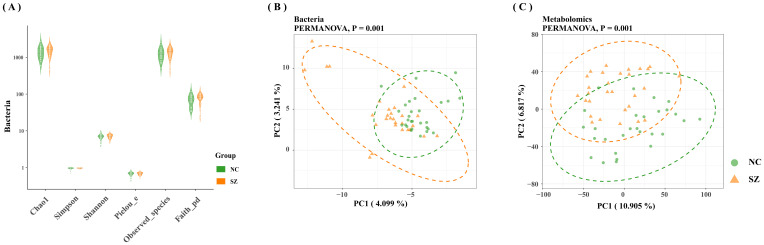
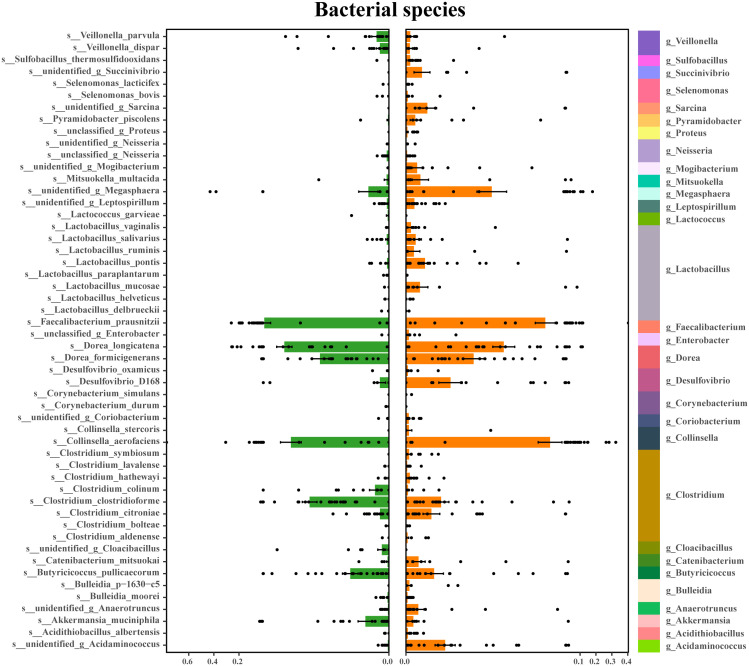
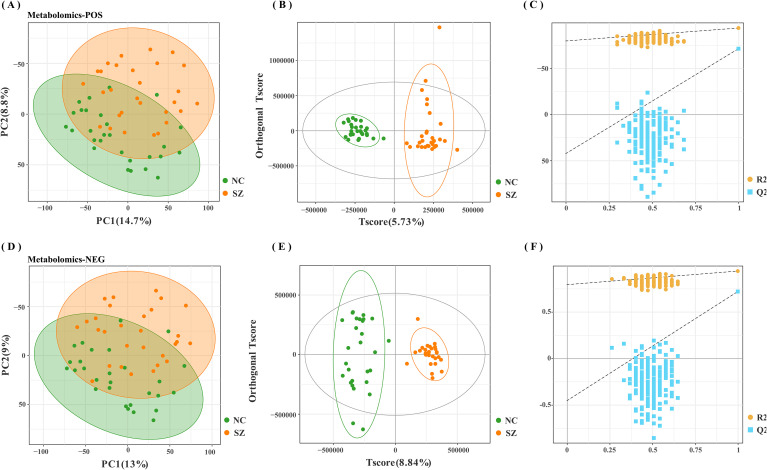
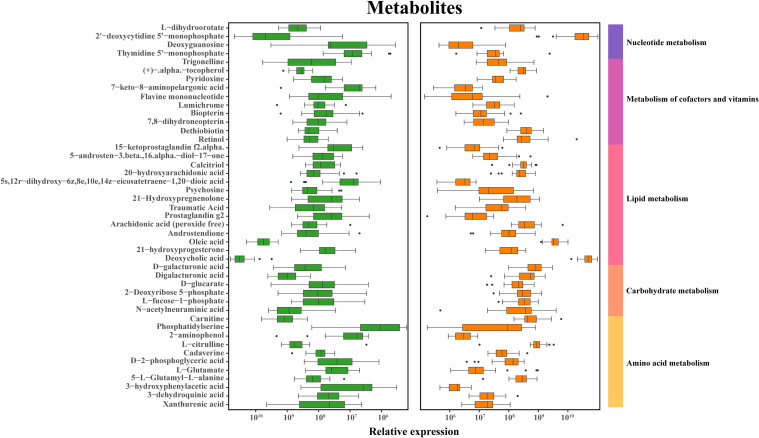
Background: Schizophrenia is a persistent incurable mental disorder and is characterized by the manifestation of negative emotions and behaviors with anxiety and depression, fear and insecurity, self-harm and social withdrawal. The intricate molecular mechanisms underlying this phenomenon remain largely elusive. Accumulating evidence points towards the gut microbiota exerting an influence on brain function via the gut-brain axis, potentially contributing to the development of schizophrenia. Therefore, the objective of this study is to delineate the gut microbial composition and metabolic profile of fecal samples from individuals with schizophrenia. Methods: Liquid chromatography-mass spectrometry (LC-MS) and 16S ribosomal RNA (16S rRNA) gene sequencing were employed to analyze fecal metabolites and gut microbiota profiles in a cohort of 29 patients diagnosed with schizophrenia and 30 normal controls. The microbial composition of fecal samples was determined through the 16S rRNA gene sequencing, and microbial α-diversity and β-diversity indices were calculated. Principal component analysis (PCA) and orthogonal partial least squares discriminant analysis (OPLS-DA) were performed to analyze the distribution of samples. The metabolites and gut microbiota exhibiting differential expression were identified through the application of biological variance criteria. Co-occurrence analysis of bacteria and metabolites was conducted using the spearman’s rank correlation coefficient and visualized in a circular layout with the Cytoscape software. Results: The findings of the study indicated a lack of substantial evidence supporting significant disparities in α-diversity and β-diversity between individuals with schizophrenia and normal controls. In terms of metabolomics, a discernible pattern in sample distribution between the two groups was observed. Our analysis has revealed 30 bacterial species and 45 fecal metabolites that exhibited notable differences in abundance between individuals diagnosed with schizophrenia and normal controls. These alterations in multilevel omics have led to the development of a co-expression network associated with schizophrenia. The perturbed microbial genes and fecal metabolites consistently demonstrated associations with amino acid and lipid metabolism, which play essential roles in regulating the central nervous system. Conclusion: Our results offered profound insights into the impact of imbalanced gut microbiota and metabolism on brain function in individuals with schizophrenia.
Overview
The claims and statistics of this paper haven’t been checked yet.
Run the check — free, no account needed. It reads the open-access text and checks the sources it cites.
Integrity signals
Registry
Cites
Statistics
Figures
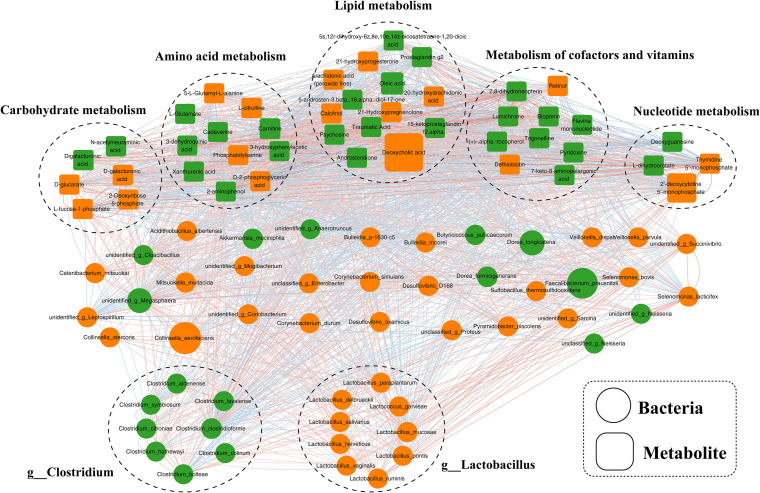
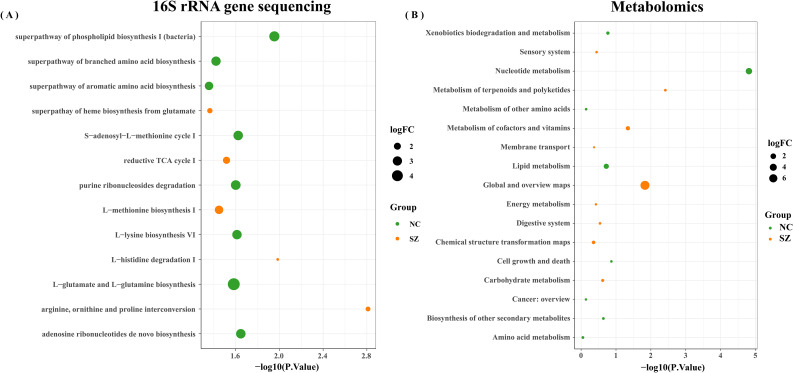
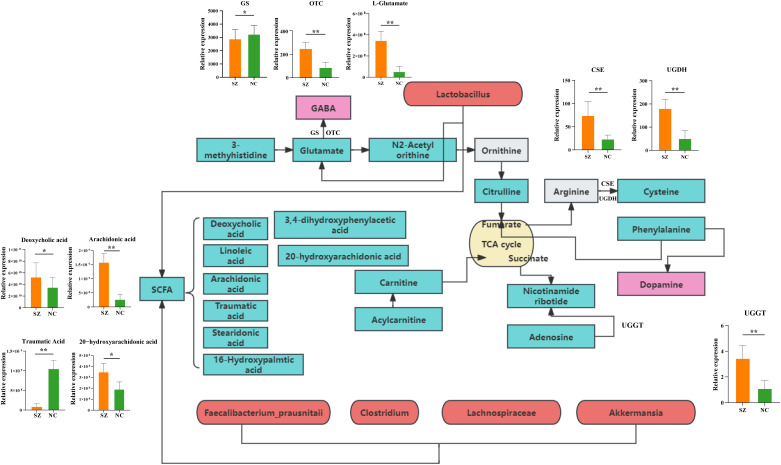
Verification
Claims the paper makes
The claims and statistics of this paper haven’t been checked yet.
Run the check — free, no account needed. It reads the open-access text and checks the sources it cites.
Claims other papers make about this one
Each is checked against this paper’s own text: does it say what the citing paper says it does?
The source backs part of the claim, not all of it — or backs it for a different population, condition or comparison.
In the citing paper
“Recent studies have revealed a close relationship between gut microbiota and mood disorders, drawing increasing attention to the role of gut microbial communities in the onset and progression of these mood disorders [5,6].”
From The Impact of Weizmannia coagulans BC99 on Anxiety and Depression: An 8-Week Clinical Pilot Study Through the Gut Microbiota–Brain Axis (2025) · cites this paper as [5]
Experimental — accuracy not yet measured
Self-check
Percentages, sums and reported differences re-computed from the paper’s own numbers.
The self-check needs the paper’s full text.
Citations
Cites
Prevalence of mental disorders in China: a cross-sectional epidemiological study
Huang, Y., Wang, Y., Wang, H., Liu, Z., Yu, X., Yan, J., Yu, Y., Kou, C., Xu, X., Lu, J., et al. (2019) · The Lancet Psychiatry · doi:10.1016/s2215-0366(18)30511-x · Cited by 2,335
Self-citationGABA-modulating bacteria of the human gut microbiota
Strandwitz, P., Kim, K. H., Terekhova, D., Liu, J. K., Sharma, A., Levering, J., McDonald, D., Dietrich, D., Ramadhar, T. R., Lekbua, A., et al. (2018) · Nature Microbiology · doi:10.1038/s41564-018-0307-3 · Cited by 1,170
Zheng, P., Zeng, B., Liu, M., Chen, J., Pan, J., Han, Y., Liu, Y., Cheng, K., Zhou, C., Wang, H., et al. (2019) · Science Advances · doi:10.1126/sciadv.aau8317 · Cited by 704
Wang, Y., Tong, Q., Ma, S.-R., Zhao, Z.-X., Pan, L.-B., Cong, L., Han, P., Peng, R., Yu, H., Lin, Y., et al. (2021) · Signal Transduction and Targeted Therapy · doi:10.1038/s41392-020-00456-5 · Cited by 319
Self-citation
Research works printed but not linked: 50
- Misir, 2023, Synaptic dysfunction in schizophrenia, Synapse, 77, 10.1002/syn.22276 · DOI
- Marder, 2019, Schizophrenia, N Engl J Med, 18, 10.1056/NEJMra1808803 · DOI
- He, 2020, Trends in the incidence and DALYs of schizophrenia at the global, regional and national levels: results from the Global Burden of Disease Study 2017, Epidemiol Psychiatr Sci, 29, 10.1017/S2045796019000891 · DOI
- Kereszturi, 2023, Diversity and classification of genetic variations in autism spectrum disorder, Int J Mol Sci, 24, 16768, 10.3390/ijms242316768 · DOI
- 2018, Global, regional, and national incidence, prevalence, and years lived with disability for 354 diseases and injuries for 195 countries and territories, 1990-2017: a systematic analysis for the Global Burden of Disease Study 2017, Lancet, 392, 10.1016/S0140-6736(18)32279-7 · DOI · Paper page
- Marx, 2023, Major depressive disorder, Nat Rev Dis Primers, 9, 44, 10.1038/s41572-023-00454-1 · DOI
- Luo, 2018, A schizophrenia-related genetic-brain-cognition pathway revealed in a large chinese population, EBioMedicine, 37, 10.1016/j.ebiom.2018.10.009 · DOI
- Pak, 2021, Cross-platform validation of neurotransmitter release impairments in schizophrenia patient-derived NRXN1-mutant neurons, Proc Natl Acad Sci USA, 118, 10.1073/pnas.2025598118 · DOI
- Cai, 2020, Increased macrophages and changed brain endothelial cell gene expression in the frontal cortex of people with schizophrenia displaying inflammation, Mol Psychiatry, 25, 10.1038/s41380-018-0235-x · DOI
- Ermakov, 2021, Oxidative stress-related mechanisms in schizophrenia pathogenesis and new treatment perspectives, Oxid Med Cell Longev, 2021, 10.1155/2021/8881770 · DOI
- Vasiliu, 2022, Third-generation antipsychotics in patients with schizophrenia and non-responsivity or intolerance to clozapine regimen: What is the evidence, Front Psychiatry, 13, 10.3389/fpsyt.2022.1069432 · DOI
- Zhang, 2023, Exosome and exosomal contents in schizophrenia, J Psychiatr Res, 163, 10.1016/j.jpsychires.2023.05.072 · DOI
- Kupfer, 2013, DSM-5–the future arrived, JAMA, 309, 10.1001/jama.2013.2298 · DOI
- Gomaa, 2020, Human gut microbiota/microbiome in health and diseases: a review, Antonie Van Leeuwenhoek, 113, 10.1007/s10482-020-01474-7 · DOI · Paper page
- Amin, 2023, Interplay of metabolome and gut microbiome in individuals with major depressive disorder vs control individuals, JAMA Psychiatry, 80, 597, 10.1001/jamapsychiatry.2023.0685 · DOI
- Ferreiro, 2023, Gut microbiome composition may be an indicator of preclinical Alzheimer's disease, Sci Transl Med, 15, 10.1126/scitranslmed.abo2984 · DOI
- Zundler, 2023, Gut immune cell trafficking: inter-organ communication and immune-mediated inflammation, Nat Rev Gastroenterol Hepatol, 20, 50, 10.1038/s41575-022-00663-1 · DOI
- De Sales-Millan, 2023, Microbiome-gut-mucosal-immune-brain axis and autism spectrum disorder (ASD): a novel proposal of the role of the gut microbiome in ASD aetiology, Behav Sci (Basel), 13, 10.3390/bs13070548 · DOI · Paper page
- Hu, 2024, Electroacupuncture at ST25 corrected gut microbial dysbiosis and SNpc lipid peroxidation in Parkinson's disease rats, Front Microbiol, 15, 10.3389/fmicb.2024.1358525 · DOI
- Ahmed, 2022, Microbiota-derived metabolites as drivers of gut-brain communication, Gut Microbes, 14, 10.1080/19490976.2022.2102878 · DOI · Paper page
- Morais, 2021, The gut microbiota-brain axis in behaviour and brain disorders, Nat Rev Microbiol, 19, 10.1038/s41579-020-00460-0 · DOI · Paper page
- Zhang, 2022, Morinda officinalis oligosaccharides increase serotonin in the brain and ameliorate depression via promoting 5-hydroxytryptophan production in the gut microbiota, Acta Pharm Sin B, 12, 10.1016/j.apsb.2022.02.032 · DOI · Paper page
- Gatarek, 2024, Integrated metabolomics and proteomics analysis of plasma lipid metabolism in Parkinson's disease, Expert Rev Proteomics, 21, 13, 10.1080/14789450.2024.2315193 · DOI
- Dunn, 2011, Systems level studies of mammalian metabolomes: the roles of mass spectrometry and nuclear magnetic resonance spectroscopy, Chem Soc Rev, 40, 387, 10.1039/b906712b · DOI
- Su, 2023, Identification of plasma biomarkers in drug-naive schizophrenia using targeted metabolomics, Psychiatry Investig, 20, 10.30773/pi.2023.0121 · DOI
- Gokulakrishnan, 2023, Comparison of gut microbiome profile in patients with schizophrenia and healthy controls - a plausible non-invasive biomarker, J Psychiatr Res, 162, 10.1016/j.jpsychires.2023.05.021 · DOI
- Nguyen, 2019, Differences in gut microbiome composition between persons with chronic schizophrenia and healthy comparison subjects, Schizophr Res, 204, 10.1016/j.schres.2018.09.014 · DOI · Paper page
- Kowalski, 2023, Profiling gut microbiota signatures associated with the deficit subtype of schizophrenia: Findings from a case-control study, Prog Neuropsychopharmacol Biol Psychiatry, 127, 10.1016/j.pnpbp.2023.110834 · DOI
- Misiak, 2024, Associations of gut microbiota alterations with clinical, metabolic, and immune-inflammatory characteristics of chronic schizophrenia, J Psychiatr Res, 171, 10.1016/j.jpsychires.2024.01.036 · DOI
- Xing, 2023, Profiles and diagnostic value of intestinal microbiota in schizophrenia patients with metabolic syndrome, Front Endocrinol (Lausanne), 14, 10.3389/fendo.2023.1190954 · DOI
- Tomova, 2015, Gastrointestinal microbiota in children with autism in Slovakia, Physiol Behav, 138, 10.1016/j.physbeh.2014.10.033 · DOI · Paper page
- Lei, 2023, Akkermansia muciniphila in neuropsychiatric disorders: friend or foe, Front Cell Infect Microbiol, 13, 10.3389/fcimb.2023.1224155 · DOI
- Mackowiak, 2023, Psychedelics action and schizophrenia, Pharmacol Rep, 75, 10.1007/s43440-023-00546-5 · DOI
- Arini, 2016, In vivo and in vitro neurochemical-based assessments of wastewater effluents from the Maumee River area of concern, Environ pollut, 211, 9, 10.1016/j.envpol.2015.12.028 · DOI
- Wassef, 2003, GABA and schizophrenia: a review of basic science and clinical studies, J Clin Psychopharmacol, 23, 10.1097/01.jcp.0000095349.32154.a5 · DOI
- Ju, 2023, The gut-brain axis in schizophrenia: the implications of the gut microbiome and SCFA production, Nutrients, 15, 10.3390/nu15204391 · DOI
- Carlessi, 2021, Gut microbiota-brain axis in depression: the role of neuroinflammation, Eur J Neurosci, 53, 10.1111/ejn.14631 · DOI · Paper page
- Wang, 2024, Multiomics analyses reveal microbiome-gut-brain crosstalk centered on aberrant gamma-aminobutyric acid and tryptophan metabolism in drug-naive patients with first-episode schizophrenia, Schizophr Bull, 50, 10.1093/schbul/sbad026 · DOI
- Gao, 2024, Altered metabolic profiles and targets relevant to the protective effect of acteoside on diabetic nephropathy in db/db mice based on metabolomics and network pharmacology studies, J Ethnopharmacol, 318, 10.1016/j.jep.2023.117073 · DOI
- Feng, 2013, Histidine supplementation improves insulin resistance through suppressed inflammation in obese women with the metabolic syndrome: a randomised controlled trial, Diabetologia, 56, 10.1007/s00125-013-2839-7 · DOI
- Kondoh, 2009, Activation of the gut-brain axis by dietary glutamate and physiologic significance in energy homeostasis, Am J Clin Nutr, 90, 10.3945/ajcn.2009.27462V · DOI
- Inta, 2010, Mice with genetically altered glutamate receptors as models of schizophrenia: a comprehensive review, Neurosci Biobehav Rev, 34, 10.1016/j.neubiorev.2009.07.010 · DOI
- Zhang, 1992, L-homocysteic acid selectively activates N-methyl-D-aspartate receptors of rat retinal ganglion cells, Neurosci Lett, 139, 10.1016/0304-3940(92)90545-i · DOI
- Broni, 2023, In silico discovery of potential inhibitors targeting the RNA binding loop of ADAR2 and 5-HT2CR from traditional chinese natural compounds, Int J Mol Sci, 24, 10.3390/ijms241612612 · DOI
- Song, 2023, Gut microbial fatty acid isomerization modulates intraepithelial T cells, Nature, 619, 10.1038/s41586-023-06265-4 · DOI
- Mendoza-Leon, 2023, Gut microbiota short-chain fatty acids and their impact on the host thyroid function and diseases, Front Endocrinol (Lausanne), 14, 10.3389/fendo.2023.1192216 · DOI
- Zheng, 2005, Fatty acid synthesis is a target for antibacterial activity of unsaturated fatty acids, FEBS Lett, 579, 10.1016/j.febslet.2005.08.028 · DOI · Paper page
- Jiang, 2024, Urinary metabolomic profiles uncover metabolic pathways in children with asthma, J Asthma, 1, 10.1080/02770903.2024.2338865 · DOI
- Tortosa-Caparros, 2017, Anti-inflammatory effects of omega 3 and omega 6 polyunsaturated fatty acids in cardiovascular disease and metabolic syndrome, Crit Rev Food Sci Nutr, 57, 10.1080/10408398.2015.1126549 · DOI
- Petrenko, 2023, Lipid metabolism around the body clocks, Prog Lipid Res, 91, 10.1016/j.plipres.2023.101235 · DOI
Cited by
Sorted by citations
Tie, S., Pan, Y., Pang, C., Saman, A., Dong, Y., Fang, S., Zhu, J., Wu, Y., & Gu, S. (2025) · Nutrients · doi:10.3390/nu17193087 · Cited by 11
“Recent studies have revealed a close relationship between gut microbiota and mood disorders, drawing increasing attention to the role of gut microbial communities in the onset and progression of these mood disorders [5,6].”
Metadata
- Authors
- Qi, D., Liu, P., Wang, Y., Tai, X., & Ma, S.
- Affiliations
- Inner Mongolia Medical University (CN)
- Corresponding author
- Ma, ShiFa
- Venue
- Frontiers in Psychiatry
- Publisher
- Frontiers Media SA
- Published
- 2024-09-25
- Volume
- 15
- Pages
- 1452604-1452604
- ISSN
- 1664-0640 (ISSN-L)
- PMC
- PMC11461293
- OpenAlex
- W4402847199
- Cited by
- 8
- References
- 4
- Citations by year
- 2026: 4 · 2025: 4
- FWCI
- 1.09
- Type
- journal article
- Language
- en
- Open access
- gold
- doi.org
- Licence
- Locations
- Frontiers in Psychiatry (publishedVersion, cc-by)
- PubMed Central (publishedVersion, cc-by)
- PubMed (publishedVersion)
- DOAJ (DOAJ: Directory of Open Access Journals) (submittedVersion, cc-by-sa)
- Topics
- Life Sciences › Biochemistry, Genetics and Molecular Biology › Molecular Biology › Gut microbiota and health
- Health Sciences › Medicine › Psychiatry and Mental health › Schizophrenia research and treatment
- Life Sciences › Biochemistry, Genetics and Molecular Biology › Molecular Biology › Metabolomics and Mass Spectrometry Studies
- Keywords
- schizophrenia, gut microbiota, gut-brain axis, fecal metabolites, microbial diversity, amino acid metabolism, lipid metabolism
About these checks
Registry, retraction, Cites and statistics results are computed, not judged, with one exception: a printed reference that no index lists is read once by a model before it counts as a citation error. Claims are extracted by a model and kept only when their quote appears verbatim in the text; each cited source is then checked, with a model’s help, for whether it says what the claim relies on. Those verdicts can be wrong — read the claim’s quote and the cited source before relying on one.
Statistics and arithmetic are recomputed, not judged.
Confidence bands are shown only for fields calibrated on our annotated test set. None is calibrated yet, so no band is shown.
What counts as a claim ›How we measure confidence ›How we check this ›
Are you an author, or do you see a problem with this page? Request a review
