

Tai Chi for fall prevention and balance improvement in older adults: a systematic review and meta-analysis of randomized controlled trials
Open accessThe DOI matches its Crossref record; 59 of the 59 references it cites were found in a registry or an index; 1 of the 50 sources its claims cite were checked for support.
Abstract
Background and objective: As the population ages, the health of older adults is becoming a public health concern. Falls are a significant threat to their health due to weakened balance. This study aims to investigate the beneficial effects of Tai Chi on fall prevention and balance improvement in older adults. Methods: We conducted a systematic review and meta-analysis of randomized controlled trials related to Tai Chi, falls, and balance ability, searching PubMed, Embase, and Cochrane Library databases from their establishment until December 31, 2022. Two independent reviewers performed the search, screening of results, extraction of relevant data, and assessment of study quality. This study followed the PRISMA guidelines for systematic review and meta-analysis. Results: Totally 24 RCTs were included for meta-analysis, and the results showed that Tai Chi can effectively reduce the risk of falls in older adults (RR: 0.76, 95% CI: 0.71 to 0.82) and decrease the number of falls (MD [95% CI]: −0.26 [−0.39, −0.13]). Tai Chi can also improve the balance ability of older adults, such as the timed up and go test (MD [95% CI]: −0.69 [−1.09, −0.29]) and the functional reach test (MD [95% CI]: 2.69 [1.14, 4.24]), as well as other balance tests such as single-leg balance test, Berg balance scale, and gait speed ( p < 0.05). Subgroup analysis showed that Tai Chi is effective for both healthy older adults and those at high risk of falls ( p < 0.001), and its effectiveness increases with the duration and frequency of exercise. In addition, the effect of Yang-style Tai Chi is better than that of Sun-style Tai Chi. Conclusion: Tai Chi is an effective exercise for preventing falls and improving balance ability in older adults, whether they are healthy or at high risk of falling. The effectiveness of Tai Chi increases with exercise time and frequency. Yang-style Tai Chi is more effective than Sun-style Tai Chi. Systematic review registration: https://clinicaltrials.gov/ , identifier CRD42022354594.
Overview
CoChat Summary
TL;DR
This systematic review and meta-analysis of 24 RCTs found that Tai Chi reduces falls and improves balance in older adults, including those at high risk of falling. Benefits increased with longer/more frequent practice, and Yang-style Tai Chi was more effective than Sun-style.
Key findings
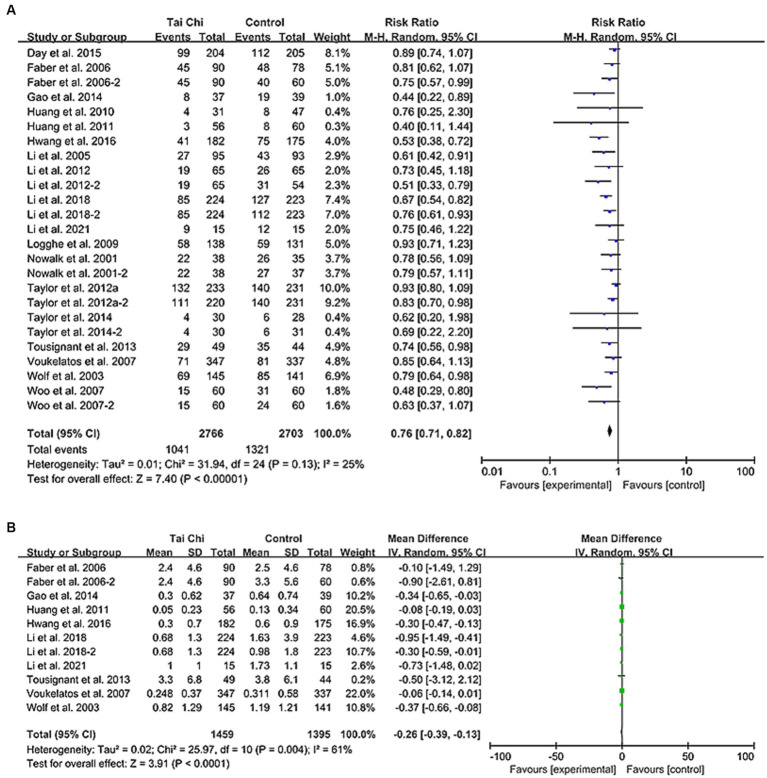
- Tai Chi reduced the number of fallers (1,041/2,766 vs. 1,321/2,703; RR 0.76, 95% CI 0.71–0.82, I²=25%, p<0.001) and the number of falls per person (MD −0.26, 95% CI −0.39 to −0.13, I²=61%, p<0.001).
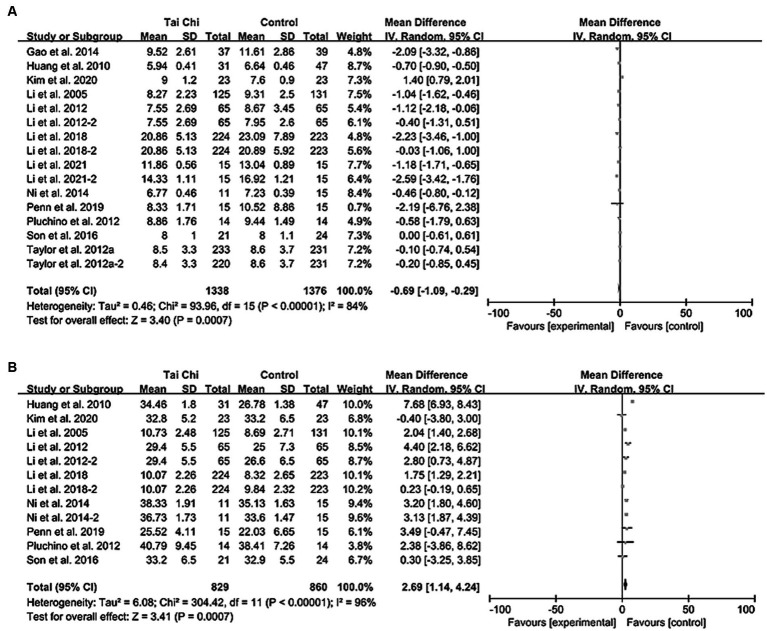
- Balance improved: TUG MD −0.69 (95% CI −1.09 to −0.29), FRT MD 2.69 (1.14–4.24), SLB MD 9.63 (5.87–13.40), BBS MD 1.80 (0.09–3.51), and gait speed MD 9.26 (1.00–17.52); SPPB and FES were not significant (p=0.89 and p=0.61).
- Subgroup analyses showed Tai Chi was effective in both healthy older adults and those at high risk of falls (p<0.001); exercising twice or ≥3 times/week showed more benefit than once/week, and Yang-style Tai Chi was more effective than Sun-style.
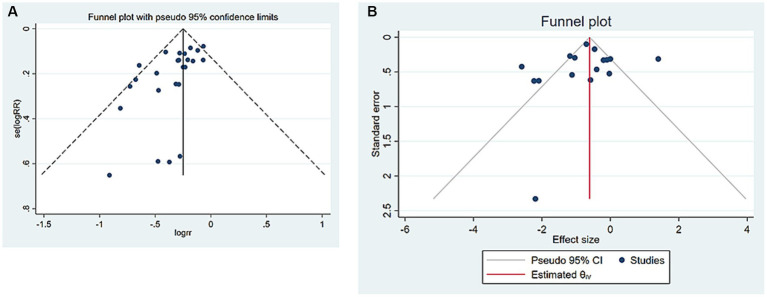
- Publication bias was significant for the fallers outcome (Begg’s p=0.014; Egger’s p=0.003), but trim-and-fill adjustment remained statistically significant (p<0.001); TUG showed no significant publication bias.
Methods
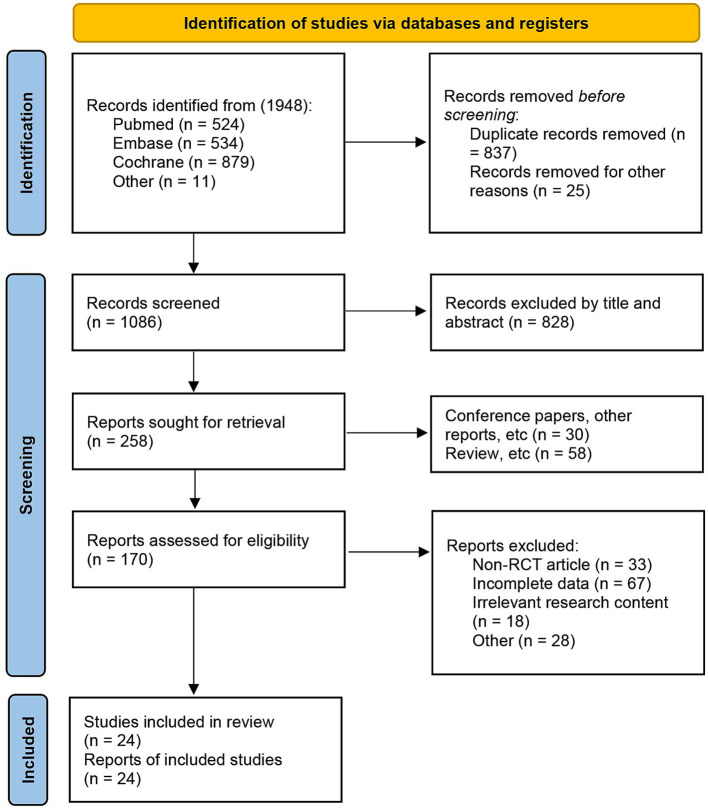
- Systematic review and meta-analysis following PRISMA, registered with PROSPERO (CRD42022354594); searched PubMed, Embase, and Cochrane Library from inception to December 31, 2022.
- Included 24 RCTs in English; participants aged ≥60 years; any Tai Chi vs. stretching/other low-level exercise, usual care, or wellness education; outcomes included fallers, number of falls, TUG, FRT, SLB, BBS, SPPB, FES, and gait speed.
- Random-effects meta-analysis; binary outcomes as RR and continuous outcomes as MD with 95% CI; heterogeneity assessed by I²; subgroup analyses by exposure time, Tai Chi style, weekly frequency, fall risk, and follow-up; sensitivity analyses and publication-bias assessment (funnel plots, Egger’s/Begg’s tests, trim-and-fill).
Limitations
- Paper-stated: English-language restriction and specific inclusion criteria may introduce selection bias; findings apply to standard Tai Chi classes, not personalized courses; potential heterogeneity may affect stability; only comparisons with traditional non-Tai Chi exercises; small number/quality of included studies means conclusions need further high-quality verification.
- Evident from text: several pooled outcomes had substantial heterogeneity (e.g., falls per person I²=61%, SLB 69%, BBS 65%, gait speed 91%, SPPB 90%).
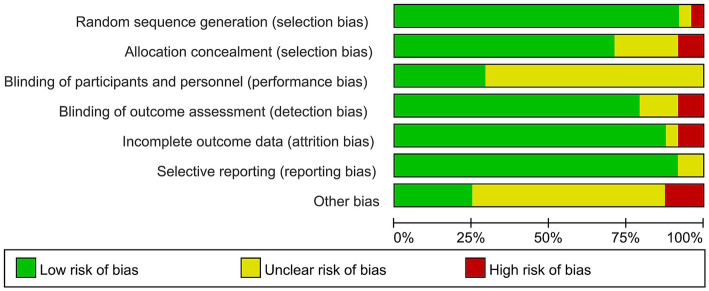
- Evident from text: significant publication bias was detected for the fallers outcome, and some subgroup analyses had wide/overlapping confidence intervals or small numbers of studies.
Model-written summary. Check it against the paper before relying on it.
Integrity signals
Registry
Cites
Statistics
Figures
Verification
Claims the paper makes
1 Valid · 0 Not valid · 26 Not checked · 52 Own results and interpretations
The cited sources support only part of this claim — read each source’s verdict below.
In the paper
“improve gait speed (MD [95% CI]: 9.26 [1.00, 17.52], p = 0.03) (8, 25, 26, 34)”
§ Tai Chi for fall prevention and balance improvement in older adults: a systematic review and meta-analysis of randomized controlled trials > Results > Other outcomes
What the sources say
- Partly supportedcites [8] Li F Harmer P Fitzgerald K Eckstrom E Stock R Galver J. Tai Chi and postural stability in patients with Parkinson's disease. N Engl J Med. (2012) 366: 511– 9. doi: 10.1056/NEJMoa1107911, PMID: 22316445 PMC3285459 sourceExperimental — accuracy not yet measured
Our copy supports the direction of the claim only in a specific population: the Secondary Outcomes (RESULTS) report a mean increase of 10.4 cm/s in walking velocity in the tai chi group from baseline to 24 weeks (P<0.001), with significant between-group superiority over stretching (P<0.001), and the Discussion attributes the 'marked increase in gait velocity' to alleviating bradykinesia in Parkinson's disease. However, the trial enrolled only patients with mild-to-moderate Parkinson's disease (Hoehn and Yahr stage mostly ≥2.5), not older adults generally, and no passage reports the attributed magnitude MD 9.26 (95% CI 1.00 to 17.52), p = 0.03 — searches for '9.26 / 1.00 / 17.52 / p = 0.03' returned only unrelated power-calculation and fall-incidence figures. So the effect on gait speed is supported, but the pooled effect estimate and the general older-adult population are not attributable to this source. (LLM, conf=0.78)
- Not checked yetcites [25] Kim CY Je HD Jeong H Jeong JH Kim HD. Effects of Tai Chi versus Taekkyon on balance, lower-extremity strength, and gait ability in community-dwelling older women: a single-blinded randomized clinical trial. J Back Musculoskelet Rehabil. (2020) 33: 41– 8. doi: 10.3233/BMR-181493, PMID: 31282402 source
- Not checked yetcites [26] Li F Harmer P Fisher KJ McAuley E Chaumeton N Eckstrom E. Tai Chi and fall reductions in older adults: a randomized controlled trial. J Gerontol A Biol Sci Med Sci. (2005) 60: 187– 94. doi: 10.1093/gerona/60.2.187, PMID: 15814861 source
plainstates a cause- Asserted: passes — The authors put it forward as true.
- Checkable: passes — It can be checked against evidence.
- Load-bearing: unclear — It is unclear whether the paper’s conclusions depend on it.
- Based: passes — The paper gives a reason why it holds.
- Partly supported
A result the paper reports from its own data — it cites no other source for it, so there is none to check. The quote shows it is in the paper.
In the paper
“In addition, Tai Chi can shorten TUG time in older adult people with falls related diseases (p = 0.02) (Supplementary Table S4) (21, 38).”
§ Tai Chi for fall prevention and balance improvement in older adults: a systematic review and meta-analysis of randomized controlled trials > Results > Timed up and go test
plainstates a cause- Asserted: passes — The authors put it forward as true.
- Checkable: passes — It can be checked against evidence.
- Load-bearing: unclear — It is unclear whether the paper’s conclusions depend on it.
- Based: passes — The paper gives a reason why it holds.
A result the paper reports from its own data — it cites no other source for it, so there is none to check. The quote shows it is in the paper.
In the paper
“A total of 18 studies provided data on the number of fallers (7, 8, 19–24, 26–29, 31, 36–40), and meta-analysis found that Tai Chi exercise could significantly reduce the number of fallers (1,041/2766 VS. 1,321/2703; RR: 0.76, 95% CI: 0.71–0.82, I2: 25%, p < 0.001) (Figure 3A).”
- Also stated in: § Results · plain
“Tai Chi can effectively reduce the risk of falls in older adults (RR: 0.76, 95% CI: 0.71 to 0.82)”
§ Tai Chi for fall prevention and balance improvement in older adults: a systematic review and meta-analysis of randomized controlled trials > Results > Number of fallers
plainstates a cause- Asserted: passes — The authors put it forward as true.
- Checkable: passes — It can be checked against evidence.
- Load-bearing: passes — The paper’s conclusions depend on it.
- Based: passes — The paper gives a reason why it holds.
- Also stated in: § Results · plain
A result the paper reports from its own data — it cites no other source for it, so there is none to check. The quote shows it is in the paper.
In the paper
“The trim-and-fill method was used to adjust for publication bias, and the outcome still showed statistical differences (p < 0.001).”
§ Tai Chi for fall prevention and balance improvement in older adults: a systematic review and meta-analysis of randomized controlled trials > Results > Publication bias
plainstates an association- Asserted: passes — The authors put it forward as true.
- Checkable: passes — It can be checked against evidence.
- Load-bearing: passes — The paper’s conclusions depend on it.
- Based: passes — The paper gives a reason why it holds.
A result the paper reports from its own data — it cites no other source for it, so there is none to check. The quote shows it is in the paper.
In the paper
“In the end, 24 articles (with one or more outcomes) were included for analysis (7, 8, 19–40) (Figure 1).”
§ Tai Chi for fall prevention and balance improvement in older adults: a systematic review and meta-analysis of randomized controlled trials > Results > Study selection and characteristics
plain- Asserted: passes — The authors put it forward as true.
- Checkable: passes — It can be checked against evidence.
- Load-bearing: passes — The paper’s conclusions depend on it.
- Based: passes — The paper gives a reason why it holds.
32 more claims
Create a free account to see all 79 claims and to verify the 49 references still open.
- Probably not a substantial claim. 21
- It may state two separate claims as one. 34
- The quote only partly states this claim. 1
Self-check
Percentages, sums and reported differences re-computed from the paper’s own numbers.
Each contradiction between two passages listed here was confirmed by an independent check.
Rated minor: it would not touch a result — a value no result rests on, a p-value that stays on the same side of the significance level, or a conflict that is clerical, resolved elsewhere in the paper, or outside its own findings.
In the paper
§ Tai Chi for fall prevention and balance improvement in older adults: a systematic review and meta-analysis of randomized controlled trials > Results > Number of fallers
“Once | 3 (24, 36, 39)”
§ Tai Chi for fall prevention and balance improvement in older adults: a systematic review and meta-analysis of randomized controlled trials > Results > Study selection and characteristics
“Taylor et al. (36) | American | Post-stroke¥ | 72.8 | Yang-style Tai Chi (12) | Three sessions per week for 12 weeks, 50 min per session.”
Rated minor: it would not touch a result — a value no result rests on, a p-value that stays on the same side of the significance level, or a conflict that is clerical, resolved elsewhere in the paper, or outside its own findings.
In the paper
§ Tai Chi for fall prevention and balance improvement in older adults: a systematic review and meta-analysis of randomized controlled trials > Results > Number of fallers
“0.42”
§ Tai Chi for fall prevention and balance improvement in older adults: a systematic review and meta-analysis of randomized controlled trials > Results > Number of fallers
“[0.54, 0.80]”
Rated minor: it would not touch a result — a value no result rests on, a p-value that stays on the same side of the significance level, or a conflict that is clerical, resolved elsewhere in the paper, or outside its own findings.
In the paper
§ Tai Chi for fall prevention and balance improvement in older adults: a systematic review and meta-analysis of randomized controlled trials > Results > Number of fallers
“Tai Chi could prevent falls in any population at risk, regardless of the overall duration of Tai Chi exercise, follow-up time, or Tai Chi style (Sun or Yang) (all p < 0.01).”
§ Tai Chi for fall prevention and balance improvement in older adults: a systematic review and meta-analysis of randomized controlled trials > Results > Number of fallers
“≤24 | 4 (23, 24, 37, 39) | 247/818 | 304/803 | 75% | 0.74 [0.53, 1.02] | 0.06”
Rated minor: it would not touch a result — a value no result rests on, a p-value that stays on the same side of the significance level, or a conflict that is clerical, resolved elsewhere in the paper, or outside its own findings.
In the paper
§ Tai Chi for fall prevention and balance improvement in older adults: a systematic review and meta-analysis of randomized controlled trials > Results > Study selection and characteristics
“Follow-up periods were ≤ 3 months in 6 articles (25, 30, 32–35)”
§ Tai Chi for fall prevention and balance improvement in older adults: a systematic review and meta-analysis of randomized controlled trials > Results > Study selection and characteristics
“Taylor et al. (35) | New Zealand | History of falls | 75.3 | Sun-style Tai Chi (223) | Once/twice a week for 20 weeks, 60 min per session. | 20 | 5 months”
Rated minor: it would not touch a result — a value no result rests on, a p-value that stays on the same side of the significance level, or a conflict that is clerical, resolved elsewhere in the paper, or outside its own findings.
In the paper
§ Tai Chi for fall prevention and balance improvement in older adults: a systematic review and meta-analysis of randomized controlled trials > Results > Number of fallers
“≤24 | 4 (23, 24, 37, 39)”
§ Tai Chi for fall prevention and balance improvement in older adults: a systematic review and meta-analysis of randomized controlled trials > Results > Study selection and characteristics
“Huang et al. (23) | China | Non-high risk | >60 | Yang style Tai Chi (62) | Five sessions per week for 8 weeks, 60 min per session. | 40 | 6 months”
1 more finding
Create a free account to see every finding of this check.
Citations
Cites
Bias in meta-analysis detected by a simple, graphical test
Egger, M., Smith, G. D., Schneider, M., & Minder, C. (1997) · BMJ · doi:10.1136/bmj.315.7109.629 · Cited by 56,722 · cited 1×
“For each result that included 10 or more original trials, we used funnel plots to test for publication bias, and assessed the symmetry of the funnel plot using Egger’s test and Begg’s test (16, 17).”
MethodLiberati, A., Altman, D. G., Tetzlaff, J., Mulrow, C., Gotzsche, P. C., Ioannidis, J. P. A., Clarke, M., Devereaux, P. J., Kleijnen, J., & Moher, D. (2009) · BMJ · doi:10.1136/bmj.b2700 · Cited by 17,648
Operating characteristics of a rank correlation test for publication bias
Begg, C. B., & Mazumdar, M. (1994) · Biometrics · doi:10.2307/2533446 · Cited by 16,955
Duval, S., & Tweedie, R. (2000) · Biometrics · doi:10.1111/j.0006-341x.2000.00455.x · Cited by 14,099
Cumpston, M., Li, T., Page, M. J., Chandler, J., Welch, V. A., Higgins, J. P., & Thomas, J. (2019) · Cochrane Database of Systematic Reviews · doi:10.1002/14651858.ed000142 · Cited by 7,218
Interventions for preventing falls in older people living in the community
Gillespie, L. D., Robertson, M. C., Gillespie, W. J., Sherrington, C., Gates, S., Clemson, L., & Lamb, S. E. (2012) · Cochrane Database of Systematic Reviews · doi:10.1002/14651858.cd007146.pub3 · Cited by 3,966 · cited 2×
“However, there is a lack of exploration regarding the results of improving balance and the relationship between improving balance and preventing falls (4, 44, 45).”
BackgroundThe World report on ageing and health: a policy framework for healthy ageing
Beard, J. R., Officer, A., de Carvalho, I. A., Sadana, R., Pot, A. M., Michel, J.-P., Lloyd-Sherlock, P., Epping-Jordan, J. E., Peeters, G. M. E. E. (., Mahanani, W. R., et al. (2016) · The Lancet · doi:10.1016/s0140-6736(15)00516-4 · Cited by 3,287
Falls in older people: epidemiology, risk factors and strategies for prevention
Rubenstein, L. Z. (2006) · Age and Ageing · doi:10.1093/ageing/afl084 · Cited by 3,287
Chiesa, A., Calati, R., & Serretti, A. (2011) · Clinical Psychology Review · doi:10.1016/j.cpr.2010.11.003 · Cited by 1,295 · cited 1×
“Additionally, Tai Chi’s unique meditation component can improve attention and cognitive function, enhancing body control and balance ability in older adults (54).”
BackgroundTai chi and postural stability in patients with Parkinson's disease
Li, F., Harmer, P., Fitzgerald, K., Eckstrom, E., Stock, R., Galver, J., Maddalozzo, G., & Batya, S. S. (2012) · New England Journal of Medicine · doi:10.1056/nejmoa1107911 · Cited by 890 · cited 3×
“Meta-analysis of 12 studies showed that Tai Chi can significantly reduce TUG time (MD [95%CI]: − 0.69 [ − 1.09, − 0.29], p 0.001) (Figure 4A) (8, 21, 22, 25–28, 30, 32–34, 36).”
BackgroundInfluential
Research works printed but not linked: 1
- World Health Organization. Ageing and health. Available at: https://wwwwhoint/news-room/fact-sheets/detail/ageing-and-health (2021).
Cited by
Advances in the management of osteoporosis
Hoong, C. W. S., Saul, D., Khosla, S., & Sfeir, J. G. (2025) · BMJ · doi:10.1136/bmj-2024-081250 · Cited by 103
Al‐Beltagi, M., Saeed, N. K., Bediwy, A. S., El-Sawaf, Y., Elbatarny, A. M., & Elbeltagi, R. M. (2025) · World Journal of Gastroenterology · doi:10.3748/wjg.v31.i22.106835 · Cited by 78
Xue, P., Du, X., & Kong, J. (2025) · Frontiers in Psychology · doi:10.3389/fpsyg.2025.1562434 · Cited by 51
Tai chi improves balance performance in healthy older adults: a systematic review and meta-analysis
Cui, Z., Xiong, J., Li, Z., & Yang, C. (2024) · Frontiers in Public Health · doi:10.3389/fpubh.2024.1443168 · Cited by 32
Zhu, F., Wang, Y., Yin, S., Liu, J., Zhong, Y., & Li, L. (2024) · Frontiers in Psychology · doi:10.3389/fpsyg.2024.1489384 · Cited by 18
Zheng, W., Su, H., Han, B., Chen, Z., Liu, X., Lv, Y., & Yu, L. (2025) · Life · doi:10.3390/life15060913 · Cited by 16
Effects of proprioceptive exercise for knee osteoarthritis: a systematic review and meta-analysis
Lin, Y., Yu, D., Chen, X., Chen, P., Chen, N., Shao, B., Lin, Q., & Wu, F. (2025) · Frontiers in Rehabilitation Sciences · doi:10.3389/fresc.2025.1596966 · Cited by 14
Self-citationDo, N. M., & Tolos, C. (2025) · American Journal of Lifestyle Medicine · doi:10.1177/15598276251316830 · Cited by 13
Corniani, G., Sapienza, S., Vergara-Diaz, G. P., Valerio, A., Vaziri, A., Bonato, P., & Wayne, P. M. (2025) · Scientific Reports · doi:10.1038/s41598-025-93979-2 · Cited by 12
Tai chi, irisin and cognitive performance: a clinical and biological investigation in older adults
Guazzarini, A. G., Mancinetti, F., Bastiani, P., Scamosci, M., Cecchetti, R., Boccardi, V., & Mecocci, P. (2024) · Aging Clinical and Experimental Research · doi:10.1007/s40520-024-02743-5 · Cited by 12
Nan, L., Grunberg, D., Silva, S. D., & Sivaramakrishnan, D. (2024) · Archives of Gerontology and Geriatrics Plus · doi:10.1016/j.aggp.2024.100080 · Cited by 13
Guo, X. B., & Tang, L. (2024) · Frontiers in Aging Neuroscience · doi:10.3389/fnagi.2024.1411584 · Cited by 10
Chen, Y., Jin, C., Tang, H., Yu, J., Wang, Y., Chen, S., Miao, W., Zhang, S., & Wang, X. (2024) · Frontiers in Bioengineering and Biotechnology · doi:10.3389/fbioe.2024.1353270 · Cited by 10
Chair, S. Y., Law, B. M. H., Chan, A. W. K., & Gao, R. (2025) · BMC Nursing · doi:10.1186/s12912-025-02792-9 · Cited by 10
Effective Therapeutic Strategies to Prevent Frailty and Falls in Community-Dwelling Older Adults
Tsvetkov, D., Meyer, M. J., Tzvetkov, M. V., Weitschies, W., Engeli, S., Lebedeva, A., Hannemann, A., Jordan, M. C., Garscha, U., Valentini, L., et al. (2025) · Aging and Disease · doi:10.14336/ad.2025.0445 · Cited by 9
Bali Chronic Constipation Roundtable Report: Chronic Constipation Management in Asia
Ren, Y. P., Chan, W. L., Chuah, K. H., Kim, Y. S., Nakajima, A., Mahadeva, S., Lee, Y. Y., Chua, A. S. B., Bai, T., Syam, A. F., et al. (2025) · Journal of Neurogastroenterology and Motility · doi:10.5056/jnm25076 · Cited by 10
Digitally Delivered, Group-Based Exercise Interventions for Older Adults: Scoping Review
Wing, D., Nichols, J. F., Parra, M. T., Barkai, H., & Moran, R. J. (2025) · Journal of Medical Internet Research · doi:10.2196/73578 · Cited by 8
Falls risk assessment and prevention in older people in healthcare facilities
Ajibade, B. O. (2025) · British Journal of Nursing · doi:10.12968/bjon.2024.0307 · Cited by 7
McGee, R. W. (2025) · Biomedical Journal of Scientific & Technical Research · doi:10.26717/bjstr.2025.60.009510 · Cited by 7
Zhang, Z., Diao, Y., Fu, M., Han, W., Zhou, H., Fan, R., Xu, B., & Chen, B. (2026) · JMIR Aging · doi:10.2196/73802 · Cited by 6
A Bibliometric Analysis of Development Trends of Digitalization in Tai Chi
Hang, Z., Ruslan, N.-H. B., & Zid, A. B. (2025) · Malaysian Journal of Science and Advanced Technology · doi:10.56532/mjsat.v5i1.436 · Cited by 5
Bai, X., Xiao, W., Soh, K. G., & Zhang, Y. (2024) · Frontiers in Public Health · doi:10.3389/fpubh.2024.1415477 · Cited by 5
Fayet, F., Fan, A., Pereira, B., Lambert, C., Perron, L., Rodère, M., Duclos, M., & Soubrier, M. (2025) · Rheumatology International · doi:10.1007/s00296-025-05912-5 · Cited by 4
Zhang, X., Liu, G., Jia, M., & Ma, Y. (2025) · Frontiers in Physiology · doi:10.3389/fphys.2025.1629653 · Cited by 4
Jin, X., Chen, J., & Zhang, X. (2026) · Frontiers in Neuroscience · doi:10.3389/fnins.2026.1769779 · Cited by 4
Determinants of Qi Gong, Tai Chi, and Yoga Use for Health Conditions: A Systematic Review Protocol
Wexler, R. S., Joyce, C. T., Reichman, R., Pereira, C., Fanuele, E., Hurstak, E., Laird, L. D., Lavretsky, H., Wang, C., Saper, R. B., et al. (2026) · Global Advances in Integrative Medicine and Health · doi:10.1177/27536130261417682 · Cited by 3
Frailty and COPD: a bidirectional relationship in the context of systemic and accelerated ageing
Maniscalco, M., Candia, C., Fuschillo, S., Ambrosino, P., Komici, K., & Rengo, G. (2026) · European Respiratory Review · doi:10.1183/16000617.0340-2025 · Cited by 3
Gatica-Rojas, V., Camoglino-Escobar, M. I., Carrillo-Bestagno, H., & Cartes‐Velásquez, R. (2025) · Multimodal Technologies and Interaction · doi:10.3390/mti9010007 · Cited by 3
APPLICATION OF DIFFERENT EXERCISE PROGRAMS IN THE PREVENTION OF FALLS IN PEOPLE OF THE THIRD AGE
Zlatičanin, R., Jaganjac, A., & Kraljević, B. (2024) · Homosporticus · doi:10.61886/1840-4324.2024.26.1.48 · Cited by 3
Lia, C. G., Greco, F., Muscari, M. A., Spadafora, M., Chiodo, S., Emerenziani, G. P., & Quinzi, F. (2025) · Applied Sciences · doi:10.3390/app15168932 · Cited by 2
Du, J., Wu, J., & Guo, C. (2025) · Science & Sports · doi:10.1016/j.scispo.2025.07.005 · Cited by 2
Gu, F., Zhang, J., & Chen, W. (2026) · Frontiers in Public Health · doi:10.3389/fpubh.2026.1793728 · Cited by 2
Self-citationKumar, K., Ghazi, K. R., Rahim, K. A., Musharraf, M. B., Hassan, S., Sheikh, S. A., Shafiq, Y., Atiq, H., Ahmed, T., Mushtaq, S., et al. (2026) · Journal of Surgical Research · doi:10.1016/j.jss.2026.02.015 · Cited by 2
Dharmansyah, D., Rahayuwati, L., Pramukti, I., & Mutyara, K. (2026) · The journal of nutrition health & aging · doi:10.1016/j.jnha.2026.100862 · Cited by 2
Suwasti, A., Mubarak, H., Waluyo, Y., Sam, N., Mayasari, N., & Zainuddin, A. A. (2025) · doi:10.56984/8zg007d7oav · Cited by 2
Nguyen, E., Lin, R. Z., Gong, Y., Tao, C., & Amith, M. “. (2024) · IEEE International Conference on Healthcare Informatics (ICHI) · doi:10.1109/ichi61247.2024.00012 · Cited by 1
Yin, W., Zeng, Z., Yin, W., Xi, L., Wu, D., & Qiao, F. (2025) · Life · doi:10.3390/life15111678 · Cited by 1
The impact of Tai Chi’s “Xuling Dingjin” posture on lumbar biomechanics during stair descent
Duan, Y., Liu, H., Jiang, J., Liu, L., Gao, F., Li, S., Yang, Y., Yang, S., & Yan, S. (2025) · Frontiers in Sports and Active Living · doi:10.3389/fspor.2025.1637586 · Cited by 1
Sarcopenia: From Global Consensus to Korean Implementation — A Narrative Review and Standpoint
Jang, G. Y., Ji, S., Jung, H., Baek, J. Y., Jang, I., Kim, K. M., Kim, M., Park, C. Y., Lee, K.-P., Ryu, D., et al. (2026) · Annals of Geriatric Medicine and Research · doi:10.4235/agmr.25.0182 · Cited by 1
Hou, M., Jin, S., Luo, J., & Yang, L. (2026) · Osteoporosis International · doi:10.1007/s00198-026-07945-3 · Cited by 1
Metabolic Syndrome in Adolescents: Definitions, Criteria, and Health Implications
Amaravadi, S. K. (2026) · Advances in experimental medicine and biology · doi:10.1007/978-981-95-7000-3_9 · Cited by 1
Azmi, M. A. W. A., Husaini, A., Teo, S. P., Rahman, H., & Idris, F. I. (2026) · Asian Journal of Medicine & Health Sciences · doi:10.70672/vkx0k048 · Cited by 1
Integrative Medicine Approaches for Menopause
Patel, J., Patil, R. G., & Millstine, D. M. (2026) · Obstetrics and Gynecology · doi:10.1097/aog.0000000000006388 · Cited by 1
Student-run falls prevention programmes for older adult community members: a pilot study
Yap, J. R., Broman, P., Longhurst, G., & Brownie, S. M. (2024) · Journal of Primary Health Care · doi:10.1071/hc24057 · Cited by 1
Effects of Tai Chi on Healthy Aging and Quality of Life in Seniors
Szczot, J., Stencel, N. J., Krala-Szkaradowska, M., Skrzypczak, K. O., & Stuczyński, S. K. (2024) · Quality in Sport · doi:10.12775/qs.2024.23.55129 · Cited by 1
Vasiee, A., Tayyar-Iravanlou, F., Rahmani, F., Zeidani, A., & Gilan, M. S. (2025) · Journal of Aging Research · doi:10.1155/jare/8814069 · Cited by 1
Shapiro, R. (2024) · eScholarship@McGill (McGill) · doi:10.82308/49518 · Cited by 1
Marks, R. (2024) · Journal Of Aging Research And Healthcare · doi:10.14302/issn.2474-7785.jarh-24-4890
Özkan, E. B., & Odabaşı, M. (2006) · Anadolu bil meslek yüksekokulu dergisi · doi:10.17932/iau.abmyod.2006.005/abmyod_v19i70003
Collier, J., Beck, B. R., Sabapathy, S., & Weeks, B. K. (2025) · BMJ Open · doi:10.1136/bmjopen-2024-095743
Lee, D.-H., Woo, B.-S., Lim, J.-H., Choi, J.-O., & Park, Y. (2025) · Open Medicine · doi:10.1515/med-2025-1212
Thai E-sarn dance on balance and muscle strength in elderly women with falls risk
Chompoopan, W., Chompoopan, W., Seedaket, S., Chotklang, D., Pongjan, S., & Kombusadee, T. (2025) · International Journal of Public Health Science (IJPHS) · doi:10.11591/ijphs.v14i3.25067
Lifestyle and successful aging in men and women
Davinelli, S., Medoro, A., & Scapagnini, G. (2025) · Elsevier eBooks · doi:10.1016/b978-0-443-27398-8.00005-8
The Immersion Paradox: A Longitudinal Analysis of Vr and Mr Exergame Engagement in Older AdultsPreprint
Song, X., Ali, N. M., Salim, M. H. M., Rezaldi, M. Y., & Sunny, I. (2025) · SSRN Electronic Journal · doi:10.2139/ssrn.5401034
Physical exercise to manage pain in patients with knee osteoarthritis: a systematic review
Ceballos-Sánchez, J. L., Álvarez‐Barbosa, F., Rodríguez, M. R., & Ramos-Munell, J. (2025) · Archivos de medicina del deporte: revista de la Federación Española de Medicina del Deporte y de la Confederación Iberoamericana de Medicina del Deporte · doi:10.18176/archmeddeporte.00202
Evidence-Based Pathways for the Internationalization of Taijiquan
Li, S. A., & Ahl, M. (2025) · Journal of Taiji Science · doi:10.57612/js25.jts.04.06
How Much Is Enough? Dosing Balance Exercise to Achieve Long-term Fall Risk Reduction
Allison, L. K., & Schrodt, L. A. (2025) · Topics in Geriatric Rehabilitation · doi:10.1097/tgr.0000000000000484
Moreno, A. A. S., Silva, J., & Jiménez, M. O. (2025) · JÓVENES EN LA CIENCIA · doi:10.15174/jc.2025.4811
Kwok Anthony, W. L. (2025) · Journal of Advanced Clinical Neurology Research · doi:10.63721/25jacnr0109
Ke, L., & Anek, A. (2025) · International Journal of Sociologies and Anthropologies Science Reviews · doi:10.60027/ijsasr.2025.8063
Ndjonko, L. C. M., Ebada, A., Li, J., Watson, S. L., Kalala, S., Sunkara, A., & Tjong, V. K. (2026) · Journal of Orthopaedic Science and Research · doi:10.46889/josr.2026.7103
Osteoarthritis Falls Origins, Risks and Implications 2020-2025
Marks, R. (2026) · Journal of Orthopaedic Science and Research · doi:10.46889/josr.2026.7102
Supplements Jubilee Joint Forum 35 IMAB & 15 SEEC - Section Varia
(2026) · Journal of IMAB - Annual Proceeding (Scientific Papers) · doi:10.5272/jimab.2025v31supplement-v
Zhang, C., Huang, D., Lin, Z., Wang, J., Ren, H., Li, L., Ke, X., Wu, Z., & Jiang, C. (2026) · Archives of Rehabilitation Research and Clinical Translation · doi:10.1016/j.arrct.2026.100595
Tai Chi and Qigong in integrative oncology
Wen, K., & Handley, N. R. (2026) · Elsevier eBooks · doi:10.1016/b978-0-443-30194-0.00044-8
Immersive Virtual Reality Tai Chi: Health Outcomes in Older Adults
Lobos, M. A., Kim, J., Autry, C. E., Fish, M., & Kim, J. (2026) · Activities Adaptation & Aging · doi:10.1080/01924788.2026.2657220
Accessible Mind-Body Movement Therapies for Low Back Pain Management
Kuhn, A. L. R. (2026) · The Journal for Nurse Practitioners · doi:10.1016/j.nurpra.2026.105788
Recommendations for the diagnosis, prevention and treatment of osteoporosis in men
Grygorieva, N. V., Корж, М. О., Tronko, M. D., Mankovsky, B. M., Yatsyshyn, R. I., Golovach, I. Y., Страфун, С. С., Сміян, С. І., Gurzhenko, Y. M., Рекалов, Д. Г., et al. (2026) · TRAUMA · doi:10.22141/1608-1706.2.27.2026.1081
Kwok Anthony, W. L., Cheung, C. L., Chan, C. Y., Au Audris, S. K., Choy, Y. L., Lee, P. S., Lau, H. Y., Tw, L., Ling, K. L., So, T. H., et al. (2026) · Family Medicine and Primary Care Open Access · doi:10.29011/2688-7460.100299
Mitzner, T. L., Remillard, E. T., Mumma, K. T., & Boyce, M. W. (2026) · Healthcare · doi:10.3390/healthcare14121756
Gao, J., Tu, X., Chen, J., Huang, S., Lu, Z., Jia, X., Chang, J., Jiang, C., & Lin, Z. (2026) · Journal of NeuroEngineering and Rehabilitation · doi:10.1186/s12984-026-02057-9
Evidence map of Tai Chi interventions for older adults
Fogaça, L. Z., Schveitzer, M. C., Ferreira, A., Feitosa, A. D. C., Pratt, M., Portella, C. F. S., Ghelman, R., & Ramos, L. R. (2026) · Frontiers in Public Health · doi:10.3389/fpubh.2026.1820294 · Cited by 1
Effects of Tai Chi on Gait Parameters in Healthy Older Adults: A Systematic Review
Delkani, A., & Molla, R. Y. (2026) · Physical & Occupational Therapy In Geriatrics · doi:10.1080/02703181.2026.2699122
Liu, H., Zhang, X., Han, Y., & Han, Y. (2026) · Frontiers in Physiology · doi:10.3389/fphys.2026.1870532
Ouderen met lichamelijke klachten
van Busschbach, J., & Prick, A.-E. J. C. (2026) · doi:10.1007/978-90-368-3222-9_9
Physical activity and exercise in dementia: clinical relevance and emerging insights
Pramodkumar, T. A., & Mohan, V. (2026) · Frontiers in Dementia · doi:10.3389/frdem.2026.1843904
Meta-Analysis on the effect of Tai Chi Chuan on Human Biomechanics and Health from (2021–2025)
Alqahtani, B. S., & Almalki, H. A. (2026) · Saudi Medical Journal · doi:10.15537/1658-3175.8835
Jin, X., Hu, E., & Shi, C. (2026) · Frontiers in Public Health · doi:10.3389/fpubh.2026.1891703
Gatniejewska, J., Pagacz, K., Kowalczyk, O., Kiełbasa, B., Kolasa, W., Stadnik, A., Lis, M., Jędryka, M., & Kaczorek, M. (2026) · Quality in Sport · doi:10.12775/qs.2026.70.74371
Li, F. (2026) · Journal of sport and health science/Journal of Sport and Health Science · doi:10.1016/j.jshs.2026.101169
Chen, W., Bai, Y., & Song, L. (2026) · Frontiers in Aging · doi:10.3389/fragi.2026.1915136
Self-citationCommunity-Based Interventions for Active and Healthy Ageing
Schneider, A., Barbosa, T. M., & Monteiro, A. M. (2026) · IGI Global eBooks · doi:10.4018/979-8-2600-4185-7.ch001
Dong, Z., Duan, Q., Zhu, Z., Qin, Z., & Liu, X. (2026) · Sports Health A Multidisciplinary Approach · doi:10.1177/19417381261480059
Martial Arts as Therapeutic Exercise
Hamasaki, H. (2026) · Springer eBooks · doi:10.1007/978-981-92-1629-1_124-1
Outcomes of non-pharmacological treatments for postural balance disorders
Potekhina, Y. P., Yakovlev, D. K., & Polismak, O. V. (2026) · Russian Osteopathic Journal · doi:10.32885/2220-0975-2026-3-180-209
Daniels, C. J., Maiers, M., Schielke, A. L., Trager, R. J., Salsbury, S. A., Price, M. R., Farabaugh, R. J., Whalen, W. M., Stevans, J. M., Shastri, V., et al. (2026) · Research Square · doi:10.21203/rs.3.rs-11117609/v1
The Body as a Bridge Between Earth and Mars: Tai Chi Culture and the Human Art of Space Adaptation
Jiang, J., Chen, Z., & Jiang, P. (2026) · Journal of Taiji Science · doi:10.57612/js26.jts.05.07
Protocolo de intervención para la prevención de las caídas y la fragilidad en el adulto mayor
Fernández, I. N., López, C. A. C., Sierra, T. P., Guevara, L. M. B., Bojorque, L. D. P., & Caro, M. C. D. A. (2026) · Medicine - Programa de Formación Médica Continuada Acreditado · doi:10.1016/j.med.2026.09.005
Khruesanit, S., Kaewwilai, L., Amnatsatsue, K., & Kerdmongkol, P. (2026) · Thai Journal of Public Health
Zhang, X., & Shi, Y. (2026) · Frontiers in Psychology · doi:10.3389/fpsyg.2026.1917045
Exercise for older people with heart failure and frailty: should we even try?
Krishnan, S., Goddard, A. C., Annals, M., Squire, I. B., & Sze, S. (2026) · ESC Heart Failure · doi:10.1093/eschf/xvag265
Peningkatan Kesadaran Kesehatan Melalui Senam Tai Chi dan Kesehatan Dasar pada Komunitas Lumban Gaol
Gaol, E. A. K. L., Zega, L. H. C., Chairunisa, R., Dewi, A. K., Dinanti, G. L., & Alwyn, J. A. (2026) · Jurnal Medika. · doi:10.31004/hkvnjy73
Chiu, H. K., & Menzies-Gow, E. (2026) · British Journal of Community Nursing · doi:10.12968/bjcn.2026.0035
Pakdee, N., Seekhiew, C., Chaloemram, C., Pongnaratorn, P., & Poowanna, R. (2026) · Journal of Physical Education and Sport · doi:10.7752/jpes.2026.08148
Wu, T., Yang, L., Yang, Y., Duan, X., Li, J., Wang, X., Guo, Y., Sun, L., Jiang, J., & Wang, S. (2026) · Medicine · doi:10.1097/md.0000000000051031
Atuação da fisioterapia na prevenção de quedas em idosos com síndrome cognitivo-motora
Nobrega, J. N. X., & Mensch, M. (2026) · Revista fisio&terapia. · doi:10.69849/h43s8d89
Metadata
- Authors
- Chen, W., Li, M., Li, H., Lin, Y., & Feng, Z.
- Affiliations
- Guangzhou University of Chinese Medicine (CN)
- Guangxi Medical University (CN)
- Third Affiliated Hospital of Guangzhou Medical University (CN)
- Corresponding author
- Lin, Yanzhao
- Feng, Zhoushan
- Venue
- Frontiers in Public Health
- Publisher
- Frontiers Media SA
- Published
- 2023-09-01
- Volume
- 11
- Pages
- 1236050-1236050
- ISSN
- 2296-2565 (ISSN-L)
- PMC
- PMC10509476
- OpenAlex
- W4386377361
- Semantic Scholar
- 9d9af735cad1286f1e2ba53dc55b36c9e88611ed
- Cited by
- 102
- References
- 59
- Citations by year
- 2026: 52 · 2025: 35 · 2024: 13
- FWCI
- 4.03
- Type
- journal article
- Language
- en
- Open access
- gold
- doi.org
- Licence
- Locations
- Frontiers in Public Health (publishedVersion, cc-by)
- PubMed Central (publishedVersion, cc-by)
- PubMed (publishedVersion)
- DOAJ (DOAJ: Directory of Open Access Journals) (submittedVersion, cc-by-sa)
- Topics
- Health Sciences › Health Professions › Physical Therapy, Sports Therapy and Rehabilitation › Balance, Gait, and Falls Prevention
- Health Sciences › Medicine › Geriatrics and Gerontology › Frailty in Older Adults
- Health Sciences › Medicine › Public Health, Environmental and Occupational Health › Physical Activity and Health
- Keywords
- Tai Chi, fall prevention, balance improvement, older adults, Yang-style Tai Chi, exercise frequency and duration, Timed Up and Go test, Berg Balance Scale, walking speed, fall risk
- MeSH terms
- Accidental Falls, Postural Balance, Time and Motion Studies, Randomized Controlled Trials as Topic, Tai Ji
About these checks
Registry, retraction, Cites and statistics results are computed, not judged, with one exception: a printed reference that no index lists is read once by a model before it counts as a citation error. Claims are extracted by a model and kept only when their quote appears verbatim in the text; each cited source is then checked, with a model’s help, for whether it says what the claim relies on. Those verdicts can be wrong — read the claim’s quote and the cited source before relying on one.
The claim verdicts this report counts are experimental: their accuracy is not yet measured.
A language model drew the claims from the paper on 2026-11-19, under version 3 of the claim definition (model deepseek-v4.1-flash, prompt extract-v3).
A second model labelled each claim on 2026-11-19 (model jev-1.13-20260917, definition revision gold-guideline-v0.2).
Cited sources are checked with a language model’s help (qwen3.8-omni-flash).
Statistics and arithmetic are recomputed, not judged.
Confidence bands are shown only for fields calibrated on our annotated test set. None is calibrated yet, so no band is shown.
What counts as a claim ›How we measure confidence ›How we check this ›
Are you an author, or do you see a problem with this page? Request a review
Data sources
Bibliographic data: Semantic Scholar, OpenAlex, Crossref.
Contains information from the Semantic Scholar Academic Graph Datasets, made available under the ODC Attribution License (ODC-BY 1.0).
Semantic Scholar’s data is described in: Kinney, R., et al. (2023). The Semantic Scholar Open Data Platform. arXiv:2301.10140.
