

Machine learning approach to classifying declines of physical function and muscle strength associated with cognitive function in older women: gait characteristics based on three speeds
Open accessThe DOI matches its Crossref record; 84 of the 84 references it cites were found in a registry or an index.
Abstract
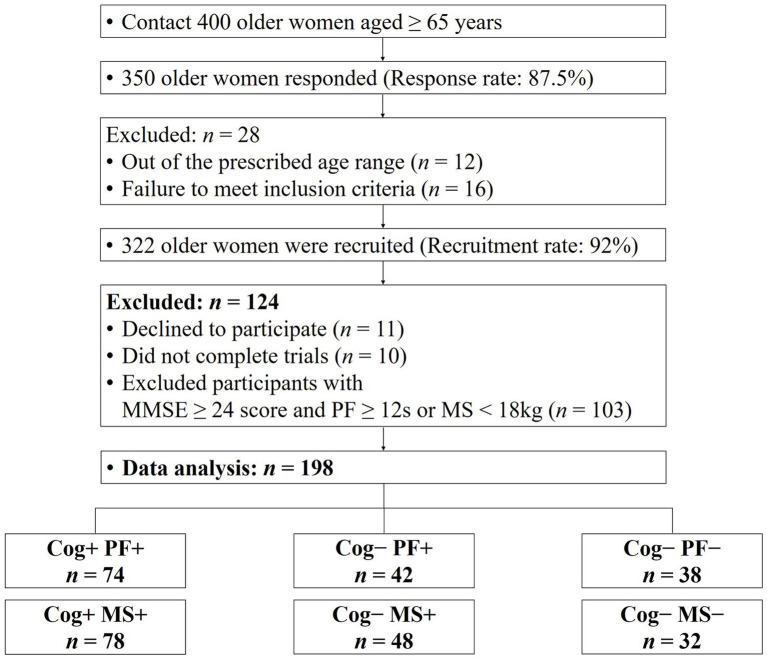
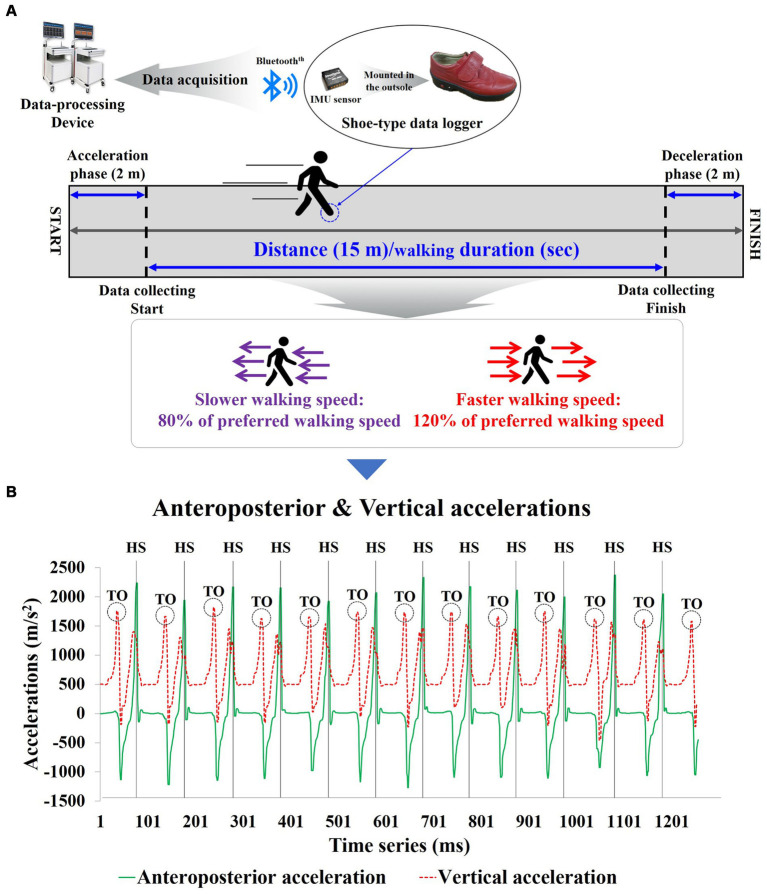
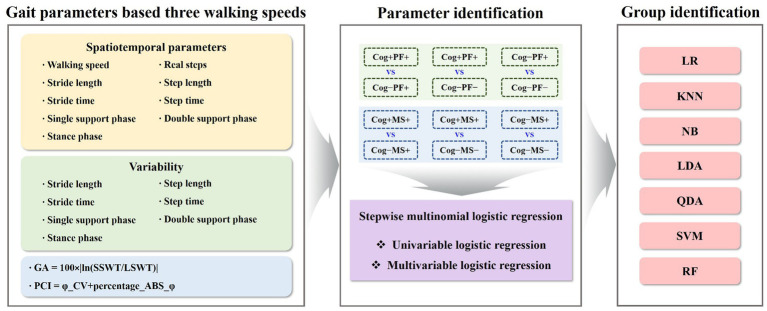
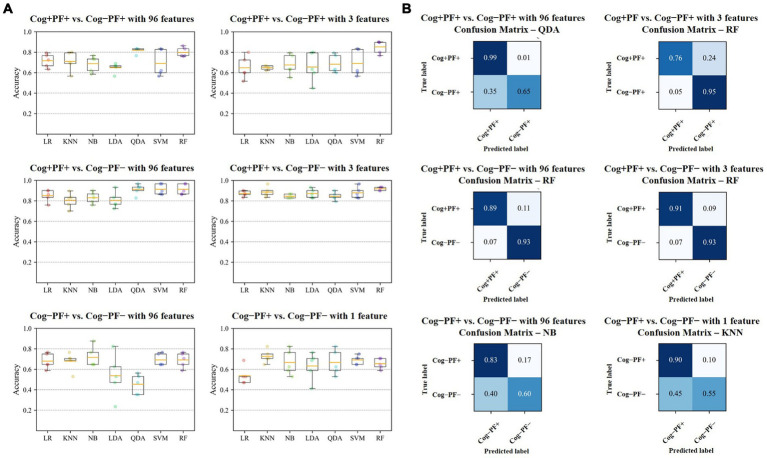
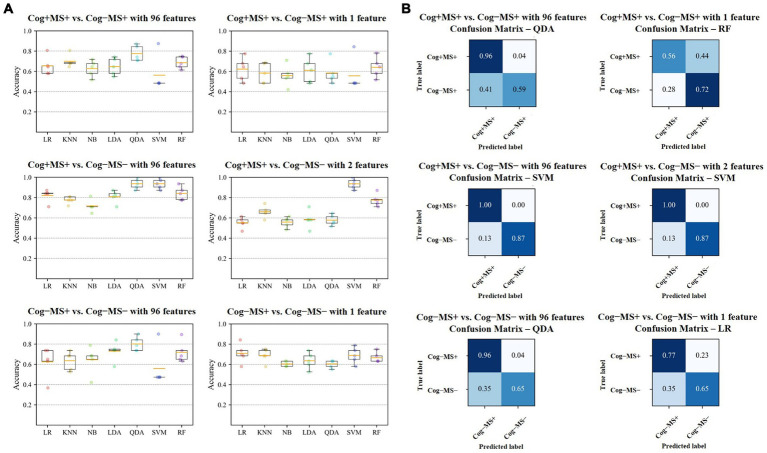
Background: The aging process is associated with a cognitive and physical declines that affects neuromotor control, memory, executive functions, and motor abilities. Previous studies have made efforts to find biomarkers, utilizing complex factors such as gait as indicators of cognitive and physical health in older adults. However, while gait involves various complex factors, such as attention and the integration of sensory input, cognitive-related motor planning and execution, and the musculoskeletal system, research on biomarkers that simultaneously considers multiple factors is scarce. This study aimed to extract gait features through stepwise regression, based on three speeds, and evaluate the accuracy of machine-learning (ML) models based on the selected features to solve classification problems caused by declines in cognitive function (Cog) and physical function (PF), and in Cog and muscle strength (MS). Methods: Cognitive assessments, five times sit-to-stand, and handgrip strength were performed to evaluate the Cog, PF, and MS of 198 women aged 65 years or older. For gait assessment, all participants walked along a 19-meter straight path at three speeds [preferred walking speed (PWS), slower walking speed (SWS), and faster walking speed (FWS)]. The extracted gait features based on the three speeds were selected using stepwise regression. Results: The ML model accuracies were revealed as follows: 91.2% for the random forest model when using all gait features and 91.9% when using the three features (walking speed and coefficient of variation of the left double support phase at FWS and the right double support phase at SWS) selected for the Cog+PF+ and Cog–PF– classification. In addition, support vector machine showed a Cog+MS+ and Cog–MS– classification problem with 93.6% accuracy when using all gait features and two selected features (left step time at PWS and gait asymmetry at SWS). Conclusion: Our study provides insights into the gait characteristics of older women with decreased Cog, PF, and MS, based on the three walking speeds and ML analysis using selected gait features, and may help improve objective classification and evaluation according to declines in Cog, PF, and MS among older women.
Overview
The claims and statistics of this paper haven’t been checked yet.
Free: it reads the open-access text and checks the first 5 claims that cite a source we can check. Create a free account to check every claim.
Integrity signals
Registry
Cites
Statistics
Figures
Verification
Claims the paper makes
The claims and statistics of this paper haven’t been checked yet.
Free: it reads the open-access text and checks the first 5 claims that cite a source we can check. Create a free account to check every claim.
Claims other papers make about this one
Each is checked against this paper’s own text: does it say what the citing paper says it does?
In the citing paper
“Consequently, body acceleration is widely applied in HMIP-related domains including gait prediction 76 , fall detection 77 , and health assessment 66,78 .”
From Recent advances in intelligent wearable systems: from multiscale biomechanical features towards human motion intent prediction (2026) · cites this paper as [78]
Self-check
Percentages, sums and reported differences re-computed from the paper’s own numbers.
The self-check needs the paper’s full text.
Citations
Cites
Breiman, L. (2001) · Machine Learning · doi:10.1023/a:1010933404324 · Cited by 133,538
Folstein, M. F., Folstein, S. E., & McHugh, P. R. (1975) · Journal of Psychiatric Research · doi:10.1016/0022-3956(75)90026-6 · Cited by 88,282
The Elements of Statistical Learning
Hastie, T., Tibshirani, R., & Friedman, J. (2009) · Springer Series in Statistics · doi:10.1007/978-0-387-84858-7 · Cited by 25,970
Hirono, N., Mori, E., Ikejiri, Y., Imamura, T., Shimomura, T., Hashimoto, M., Yamashita, H., & Ikeda, M. (1997) · Brain and nerve · Cited by 21,039
Kok, J. S., Berg, I. J., & Scherder, E. J. A. (2013) · Dementia and Geriatric Cognitive Disorders Extra · doi:10.1159/000353441 · Cited by 20,589
Older Adults' Reasons for Using Technology while Aging in Place
Peek, S. T. M., Luijkx, K. G., Rijnaard, M. D., Nieboer, M. E., van der Voort, C. S., Aarts, S., van Hoof, J., Vrijhoef, H. J. M., & Wouters, E. J. M. (2016) · Gerontology · doi:10.1159/000430949 · Cited by 19,690
Sensitivity and False Alarm Rate of a Fall Sensor in Long-Term Fall Detection in the Elderly
Kangas, M., Korpelainen, R., Vikman, I., Nyberg, L., & Jämsä, T. (2015) · Gerontology · doi:10.1159/000362720 · Cited by 18,909
Sarcopenia: revised European consensus on definition and diagnosis
Cruz-Jentoft, A. J., Bahat, G., Bauer, J., Boirie, Y., Bruyère, O., Cederholm, T., Cooper, C., Landi, F., Rolland, Y., Sayer, A. A., et al. (2019) · Age and Ageing · doi:10.1093/ageing/afy169 · Cited by 13,818
Pattern Recognition and Machine Learning
(2006) · doi:10.1007/978-0-387-45528-0 · Cited by 9,824
Measuring agreement in method comparison studies
Bland, J. M., & Altman, D. G. (1999) · Statistical Methods in Medical Research · doi:10.1177/096228029900800204 · Cited by 9,619
Asian Working Group for Sarcopenia: 2019 Consensus Update on Sarcopenia Diagnosis and Treatment
Chen, L.-K., Woo, J., Assantachai, P., Auyeung, T.-W., Chou, M.-Y., Iijima, K., Jang, H. C., Kang, L., Kim, M., Kim, S., et al. (2020) · Journal of the American Medical Directors Association · doi:10.1016/j.jamda.2019.12.012 · Cited by 7,070
Discriminatory Analysis. Nonparametric Discrimination: Consistency Properties
Fix, E., & Hodges, J. L. (1989) · International Statistical Review / Revue Internationale de Statistique · doi:10.2307/1403797 · Cited by 2,516
An Overview of Overfitting and its Solutions
Ying, X. (2019) · Journal of Physics: Conference Series · doi:10.1088/1742-6596/1168/2/022022 · Cited by 2,352 · cited 1×
“Overfitting is a common challenge in supervised ML, stemming from constraints such as the limitations of training data—either because of restricted data size or the presence of considerable noise—and the complexity of algorithms, which may require an excessive number of features (63).”
BackgroundHarada, C. N., Natelson Love, M. C., & Triebel, K. L. (2013) · Clinics in Geriatric Medicine · doi:10.1016/j.cger.2013.07.002 · Cited by 2,267
Sarcopenia: Aging-Related Loss of Muscle Mass and Function
Larsson, L., Degens, H., Li, M., Salviati, L., Lee, Y. I., Thompson, W., Kirkland, J. L., & Sandri, M. (2019) · Physiological Reviews · doi:10.1152/physrev.00061.2017 · Cited by 1,797 · cited 1×
“Furthermore, age-related changes in muscle structure, as well as and volume loss in brain structures associated with cognition and movement, contribute to a declines in muscle strength and function (2, 4, 5).”
BackgroundMotor control and aging: Links to age-related brain structural, functional, and biochemical effects
Seidler, R. D., Bernard, J. A., Burutolu, T. B., Fling, B. W., Gordon, M. T., Gwin, J. T., Kwak, Y., & Lipps, D. B. (2010) · Neuroscience & Biobehavioral Reviews · doi:10.1016/j.neubiorev.2009.10.005 · Cited by 1,791
Imbalanced-learn: A Python Toolbox to Tackle the Curse of Imbalanced Datasets in Machine Learning
Lemaître, G., Nogueira, F., & Aridas, C. K. (2016) · arXiv (Cornell University) · doi:10.48550/arxiv.1609.06570 · Cited by 1,514
A readers' guide to the interpretation of diagnostic test properties: clinical example of sepsis
Fischer, J. E., Bachmann, L. M., & Jaeschke, R. (2003) · Intensive Care Medicine · doi:10.1007/s00134-003-1761-8 · Cited by 890
Normative spatiotemporal gait parameters in older adults
Hollman, J. H., McDade, E. M., & Petersen, R. C. (2011) · Gait & Posture · doi:10.1016/j.gaitpost.2011.03.024 · Cited by 807 · cited 1×
“In addition, previous studies have reported an increase in the mean step time in older adults, indicating a preference for an extended step time as a compensatory strategy for muscle weakness (70, 71) and balance impairments (66, 72, 73).”
BackgroundQuantitative gait dysfunction and risk of cognitive decline and dementia
Verghese, J., Wang, C., Lipton, R. B., Holtzer, R., & Xue, X. (2007) · Journal of Neurology, Neurosurgery & Psychiatry · doi:10.1136/jnnp.2006.106914 · Cited by 796 · cited 1×
“Previous studies have associated longer step time with Cog decline (47), suggesting that this result may be influenced by the impact of the brainstem and spinal cord mechanisms, which activate and control lower limb muscles and gait movements (69).”
Initiative, F. T. A. D. N., Trzepacz, P. T., Hochstetler, H., Wang, S., Walker, B., & Saykin, A. J. (2015) · BMC Geriatrics · doi:10.1186/s12877-015-0103-3 · Cited by 602
Clark, D. J. (2015) · Frontiers in Human Neuroscience · doi:10.3389/fnhum.2015.00246 · Cited by 441 · cited 1×
“Executive function is associated with the initiation and modulation of gait performance (68).”
BackgroundThe effect of walking speed on muscle function and mechanical energetics
Neptune, R. R., Sasaki, K., & Kautz, S. A. (2008) · Gait & Posture · doi:10.1016/j.gaitpost.2007.11.004 · Cited by 403
Bahureksa, L., Najafi, B., Saleh, A., Sabbagh, M., Coon, D., Mohler, M. J., & Schwenk, M. (2017) · Gerontology · doi:10.1159/000445831 · Cited by 400
Plotnik, M., Giladi, N., & Hausdorff, J. M. (2007) · Experimental Brain Research · doi:10.1007/s00221-007-0955-7 · Cited by 363 · cited 2×
“Gait asymmetry (GA) was calculated by comparing the swing time of one leg with that of the other (34).”
BackgroundMethodCallisaya, M. L., Blizzard, L., Schmidt, M. D., Martin, K. L., McGinley, J. L., Sanders, L. M., & Srikanth, V. K. (2011) · Age and Ageing · doi:10.1093/ageing/afr055 · Cited by 333
The effect of walking speed on center of mass displacement
Orendurff, M. S., Segal, A. D., Klute, G. K., Berge, J. S., Rohr, E. S., & Kadel, N. J. (2004) · The Journal of Rehabilitation Research and Development · doi:10.1682/jrrd.2003.10.0150 · Cited by 328
LIBLINEAR: A Library for Large Linear Classification
FanRong-En, ChangKai-Wei, HsiehCho-Jui, WangXiang-Rui, & LinChih-Jen (2008) · Journal of Machine Learning Research · doi:10.5555/1390681.1442794 · Cited by 328
Functionally Relevant Thresholds of Quadriceps Femoris Strength
Ploutz-Snyder, L. L., Manini, T., Ploutz-Snyder, R. J., & Wolf, D. A. (2002) · The Journals of Gerontology Series A: Biological Sciences and Medical Sciences · doi:10.1093/gerona/57.4.b144 · Cited by 300
A Normative Study of the Korean-Mini Mental State Examination(K-MMSE) in the Elderly
강연욱 (2006) · 한국심리학회지: 일반 · Cited by 300
Gait capacity affects cortical activation patterns related to speed control in the elderly
Harada, T., Miyai, I., Suzuki, M., & Kubota, K. (2009) · Experimental Brain Research · doi:10.1007/s00221-008-1643-y · Cited by 281
Speed related changes in muscle activity from normal to very slow walking speeds
den Otter, A. R., Geurts, A. C. H., Mulder, T., & Duysens, J. (2004) · Gait & Posture · doi:10.1016/s0966-6362(03)00071-7 · Cited by 276
A Normative Study of the Korean-Mini Mental State Examination(K-MMSE) in the Elderly
Kang, Y. (2006) · Cited by 245
Gait in ageing and associated dementias; its relationship with cognition
Scherder, E., Eggermont, L., Swaab, D., van Heuvelen, M., Kamsma, Y., de Greef, M., van Wijck, R., & Mulder, T. (2007) · Neuroscience & Biobehavioral Reviews · doi:10.1016/j.neubiorev.2006.11.007 · Cited by 237
EXPLORING CONDITIONS FOR THE OPTIMALITY OF NAÏVE BAYES
ZHANG, H. (2005) · International Journal of Pattern Recognition and Artificial Intelligence · doi:10.1142/s0218001405003983 · Cited by 233
Cognitive Function, Gait, and Gait Variability in Older People: A Population-Based Study
Martin, K. L., Blizzard, L., Wood, A. G., Srikanth, V., Thomson, R., Sanders, L. M., & Callisaya, M. L. (2013) · The Journals of Gerontology: Series A · doi:10.1093/gerona/gls224 · Cited by 231
Peel, N. M., Alapatt, L. J., Jones, L. V., & Hubbard, R. E. (2019) · The Journals of Gerontology: Series A · doi:10.1093/gerona/gly140 · Cited by 201
Buckley, C., Alcock, L., McArdle, R., Rehman, R., Del Din, S., Mazzà, C., Yarnall, A., & Rochester, L. (2019) · Brain Sciences · doi:10.3390/brainsci9020034 · Cited by 197
The effect of aging on gait parameters in able-bodied older subjects: a literature review
Aboutorabi, A., Arazpour, M., Bahramizadeh, M., Hutchins, S. W., & Fadayevatan, R. (2016) · Aging Clinical and Experimental Research · doi:10.1007/s40520-015-0420-6 · Cited by 190 · cited 1×
“In addition, previous studies have reported an increase in the mean step time in older adults, indicating a preference for an extended step time as a compensatory strategy for muscle weakness (70, 71) and balance impairments (66, 72, 73).”
BackgroundYee, X. S., Ng, Y. S., Allen, J. C., Latib, A., Tay, E. L., Abu Bakar, H. M., Ho, C. Y. J., Koh, W. C. C., Kwek, H. H. T., & Tay, L. (2021) · European Review of Aging and Physical Activity · doi:10.1186/s11556-020-00255-5 · Cited by 189
Zhang, W., Low, L., Schwenk, M., Mills, N., Gwynn, J., & Clemson, L. M. (2019) · Dementia and Geriatric Cognitive Disorders · doi:10.1159/000504340 · Cited by 188
Brain Structural Change and Gait Decline: A Longitudinal Population‐Based Study
Callisaya, M. L., Beare, R., Phan, T. G., Blizzard, L., Thrift, A. G., Chen, J., & Srikanth, V. K. (2013) · Journal of the American Geriatrics Society · doi:10.1111/jgs.12331 · Cited by 185 · cited 1×
“The decline in walking speed among older individuals showed the most robust association with white matter atrophy (6, 60), which has been associated with a decline in executive function among cognitive domains (61).”
BackgroundRehfeld, K., Müller, P., Aye, N., Schmicker, M., Dordevic, M., Kaufmann, J., Hökelmann, A., & Müller, N. G. (2017) · Frontiers in Human Neuroscience · doi:10.3389/fnhum.2017.00305 · Cited by 181
Functional Impact of White Matter Hyperintensities in Cognitively Normal Elderly Subjects
Murray, M. E., Senjem, M. L., Petersen, R. C., Hollman, J. H., Preboske, G. M., Weigand, S. D., Knopman, D. S., Ferman, T. J., Dickson, D. W., & Jack, C. R. (2010) · Archives of Neurology · doi:10.1001/archneurol.2010.280 · Cited by 173
Frailty and Technology: A Systematic Review of Gait Analysis in Those with Frailty
Schwenk, M., Howe, C., Saleh, A., Mohler, J., Grewal, G., Armstrong, D., & Najafi, B. (2014) · Gerontology · doi:10.1159/000354211 · Cited by 173 · cited 2×
“Furthermore, recent studies recommend gait analysis using continuous steps and wearable sensors (1, 16), as well as analysis methods that extract optimized gait characteristics to overcome these limitations (24).”
BackgroundBeauchet, O., Allali, G., Annweiler, C., Bridenbaugh, S., Assal, F., Kressig, R. W., & Herrmann, F. R. (2009) · Gerontology · doi:10.1159/000235905 · Cited by 172
Ko, S.-U., Hausdorff, J. M., & Ferrucci, L. (2010) · Age and Ageing · doi:10.1093/ageing/afq113 · Cited by 168
Walking ability to predict future cognitive decline in old adults: A scoping review
Kikkert, L. H. J., Vuillerme, N., van Campen, J. P., Hortobágyi, T., & Lamoth, C. J. (2016) · Ageing Research Reviews · doi:10.1016/j.arr.2016.02.001 · Cited by 168
Atkinson, H. H., Rapp, S. R., Williamson, J. D., Lovato, J., Absher, J. R., Gass, M., Henderson, V. W., Johnson, K. C., Kostis, J. B., Sink, K. M., et al. (2010) · The Journals of Gerontology Series A: Biological Sciences and Medical Sciences · doi:10.1093/gerona/glp149 · Cited by 167
Concurrent validity of a trunk tri-axial accelerometer system for gait analysis in older adults
Hartmann, A., Luzi, S., Murer, K., de Bie, R. A., & de Bruin, E. D. (2009) · Gait & Posture · doi:10.1016/j.gaitpost.2008.11.003 · Cited by 159
Kobsar, D., Olson, C., Paranjape, R. B., Hadjistavropoulos, T., & Barden, J. M. (2013) · Gait & Posture · doi:10.1016/j.gaitpost.2013.09.008 · Cited by 155
Gait variability at fast-pace walking speed: A biomarker of mild cognitive impairment?
Beauchet, O., Allali, G., Launay, C. P., Herrmann, F. R., & Annweiler, C. (2012) · The journal of nutrition health & aging · doi:10.1007/s12603-012-0394-4 · Cited by 154
A population-based study of sensorimotor factors affecting gait in older people
Callisaya, M. L., Blizzard, L., Schmidt, M. D., McGinley, J. L., Lord, S. R., & Srikanth, V. K. (2008) · Age and Ageing · doi:10.1093/ageing/afp017 · Cited by 122
Beauchet, O., Allali, G., Montero‐Odasso, M., Sejdić, E., Fantino, B., & Annweiler, C. (2014) · PLoS ONE · doi:10.1371/journal.pone.0099318 · Cited by 116
An Automatic Gait Feature Extraction Method for Identifying Gait Asymmetry Using Wearable Sensors
Anwary, A. R., Yu, H., & Vassallo, M. (2018) · Sensors · doi:10.3390/s18020676 · Cited by 116
Ghoraani, B., Boettcher, L. N., Hssayeni, M. D., Rosenfeld, A., Tolea, M. I., & Galvin, J. E. (2021) · Biomedical Signal Processing and Control · doi:10.1016/j.bspc.2020.102249 · Cited by 114
Sensorimotor Factors Affecting Gait Variability in Older People--A Population-Based Study
Callisaya, M. L., Blizzard, L., McGinley, J. L., Schmidt, M. D., & Srikanth, V. K. (2009) · The Journals of Gerontology Series A · doi:10.1093/gerona/glp184 · Cited by 108 · cited 3×
“In previous studies, double support time variability was associated with a greater number of sensorimotor (46) and cognitive domains than other variability measures (47), and these variations indicated an increased risk of falls (48).”
BackgroundZammit, A. R., Robitaille, A., Piccinin, A. M., Muniz-Terrera, G., & Hofer, S. M. (2019) · The Journals of Gerontology: Series A · doi:10.1093/gerona/gly046 · Cited by 104
Lower extremity muscle quality and gait variability in older adults
Shin, S., Valentine, R. J., Evans, E. M., & Sosnoff, J. J. (2012) · Age and Ageing · doi:10.1093/ageing/afs032 · Cited by 85 · cited 1×
“Previous studies have found that lower extremity strength is associated with the CV of step time (46) and CV of step width (78).”
BackgroundSelf-citationWuehr, M., Schniepp, R., Pradhan, C., Ilmberger, J., Strupp, M. L., Brandt, T. H., & Jahn, K. (2012) · Experimental Brain Research · doi:10.1007/s00221-012-3310-6 · Cited by 84 · cited 1×
“The optimization of walking observed in the self-preferred speed condition may stem from the interplay between neural and biomechanical mechanisms, aiming to minimize the necessity for active control based on high-level sensory feedback (59).”
BackgroundOyeyemi, A. L., Umar, M. R., Oguche, F., Aliyu, S. U., & Oyeyemi, A. Y. (2014) · PLoS ONE · doi:10.1371/journal.pone.0087233 · Cited by 77 · cited 1×
“The IPAQ-SF was used to assess physical activity levels, and the frequency of activity (days per week) was assessed and the corresponding metabolic equivalent (MET) was calculated (MET per week) based on the results of the questionnaire (27).”
MethodThe repetitive Five-Times-Sit-To-Stand test: its reliability in older adults
Teo, T., Mong, Y., & Ng, S. S. M. (2013) · International Journal of Therapy and Rehabilitation · doi:10.12968/ijtr.2013.20.3.122 · Cited by 70 · cited 1×
“The FSTS test and HGS have excellent test–retest reliability in healthy older adults (intraclass correlation coefficient (ICC) range: 0.914–0.933 and 0.95–0.96) (29, 30).”
MethodInfluentialAlmarwani, M., VanSwearingen, J. M., Perera, S., Sparto, P. J., & Brach, J. S. (2016) · Archives of Gerontology and Geriatrics · doi:10.1016/j.archger.2016.05.001 · Cited by 67
Gait Characteristics and Cognitive Decline: A Longitudinal Population-Based Study
Jayakody, O. M., Breslin, M. C., Srikanth, V. K., & Callisaya, M. L. (2019) · Journal of Alzheimer s Disease · doi:10.3233/jad-181157 · Cited by 61
McGibbon, C. A., Puniello, M. S., & Krebs, D. E. (2001) · Clinical Biomechanics · doi:10.1016/s0268-0033(01)00004-3 · Cited by 56 · cited 1×
“In addition, previous studies have reported an increase in the mean step time in older adults, indicating a preference for an extended step time as a compensatory strategy for muscle weakness (70, 71) and balance impairments (66, 72, 73).”
BackgroundRazjouyan, J., Najafi, B., Horstman, M. J., Sharafkhaneh, A., Amirmazaheri, M., Zhou, H., Kunik, M. E., & Naik, A. D. (2020) · Sensors · doi:10.3390/s20082218 · Cited by 55
Annweiler, C., Beauchet, O., Celle, S., Roche, F., Annweiler, T., Allali, G., Bartha, R., & Montero‐Odasso, M. (2012) · American Journal of Alzheimer s Disease & Other Dementias® · doi:10.1177/1533317512454710 · Cited by 54
Real-world gait speed estimation, frailty and handgrip strength: a cohort-based study
Soltani, A., Abolhassani, N., Marques-Vidal, P. M., Aminian, K., Vollenweider, P., & Paraschiv-Ionescu, A. (2021) · Scientific Reports · doi:10.1038/s41598-021-98359-0 · Cited by 50
Lee, M., Youm, C., Jeon, J., Cheon, S., & Park, H. (2018) · Journal of NeuroEngineering and Rehabilitation · doi:10.1186/s12984-018-0384-9 · Cited by 48
Self-citationMagnani, P., Júnior, R. C. F., Zanellato, N. F. G., Genovez, M. B., Alvarenga, I. C., & de Abreu, D. C. C. (2019) · Human Movement Science · doi:10.1016/j.humov.2019.102540 · Cited by 48
Gait attentional load at different walking speeds
Nascimbeni, A., Minchillo, M., Salatino, A., Morabito, U., & Ricci, R. (2014) · Gait & Posture · doi:10.1016/j.gaitpost.2014.09.008 · Cited by 42
Jabbar, K. B. A., Seah, W. T., Lau, L. K., Pang, B. W. J., Ng, D. H. M., Tan, Q. L. L., Chen, K. K., Ullal, J. M., Ng, T. P., & Wee, S. L. (2021) · Gait & Posture · doi:10.1016/j.gaitpost.2021.01.001 · Cited by 37
Neural Control of Human Locomotor Adaptation: Lessons about Changes with Aging
Sato, S. D., & Choi, J. T. (2021) · The Neuroscientist · doi:10.1177/10738584211013723 · Cited by 37
Kim, Y., Joo, J.-Y., Jeong, S.-H., Jeon, J., & Jung, D.-Y. (2016) · Journal of Mechanical Science and Technology · doi:10.1007/s12206-016-0549-z · Cited by 34
Park, H., Shin, S., Youm, C., Cheon, S., Lee, M., & Noh, B. (2021) · Journal of NeuroEngineering and Rehabilitation · doi:10.1186/s12984-021-00975-4 · Cited by 31
Self-citationDual-Task Gait Assessment and Machine Learning for Early-detection of Cognitive Decline
Boettcher, L. N., Hssayeni, M. D., Rosenfeld, A., Tolea, M. I., Galvin, J. E., & Ghoraani, B. (2020) · Annual International Conference of the IEEE Engineering in Medicine and Biology Society (EMBC) · doi:10.1109/embc44109.2020.9175955 · Cited by 30
Noh, B., Youm, C., Lee, M., & Park, H. (2020) · PeerJ · doi:10.7717/peerj.8820 · Cited by 29
Self-citationKim, B., Youm, C., Park, H., Lee, M., & Choi, H. (2022) · International Journal of Environmental Research and Public Health · doi:10.3390/ijerph19169901 · Cited by 29
Self-citationUmegaki, H., Makino, T., Yanagawa, M., Nakashima, H., Kuzuya, M., Sakurai, T., & Toba, K. (2018) · Geriatrics and gerontology international/Geriatrics & gerontology international · doi:10.1111/ggi.13464 · Cited by 25
A "Neuromuscular Look" to sarcopenia: Is it a movement disorder?
Kara, M., Özçakar, L., Kaymak, B., Ata, A. M., & Frontera, W. R. (2020) · Journal of Rehabilitation Medicine · doi:10.2340/16501977-2672 · Cited by 25 · cited 3×
“Cognitive and physical function declines with natural aging (1), such as the degeneration of the neuromotor control system of the central nervous system (2).”
BackgroundSuzuki, Y., Kamide, N., Kitai, Y., Ando, M., Sato, H., Shiba, Y., & Sakamoto, M. (2019) · European Geriatric Medicine · doi:10.1007/s41999-019-00218-9 · Cited by 21
Associating Gait Phase and Physical Fitness with Global Cognitive Function in the Aged
Noh, B., Youm, C., Lee, M., & Park, H. (2020) · International Journal of Environmental Research and Public Health · doi:10.3390/ijerph17134786 · Cited by 20 · cited 4×
“…with cognitive function decline in older adults have reported decreased gait speed (6) and handgrip strength (HGS) (7), and increased time taken in five times sit-to-stand (FSTS) tests (8), as parameters of the physical function in older adults as well as in those with sarcopenia (9, 10).”
BackgroundInfluentialSelf-citationMuscle Strength as a Predictor of Gait Variability after Two Years in Community-Living Older Adults
Bogen, B. E., Moe‐Nilssen, R., Aaslund, M. K., & Ranhoff, A. H. (2020) · The Journal of Frailty & Aging · doi:10.14283/jfa.2019.24 · Cited by 17
Artificial neural network to classify cognitive impairment using gait and clinical variables
Zhou, Y., van Campen, J., Hortobágyi, T., & Lamoth, C. J. C. (2022) · Intelligence-Based Medicine · doi:10.1016/j.ibmed.2022.100076 · Cited by 10
Cited by
Chen, S., Peng, C., Yang, B., Lin, J., Zhou, L., Jiang, Z., Liu, Z., Liu, Y., & Tang, L. (2026) · npj Artificial Intelligence · doi:10.1038/s44387-026-00083-5 · Cited by 9
Kim, S., Son, M., Shin, S., Kim, T., & Choi, S.-J. (2025) · Frontiers in Sports and Active Living · doi:10.3389/fspor.2025.1652610 · Cited by 3
Self-citationGonçalves, A. K., Martins, V. F., Kanitz, A. C., Martinez, F. G., Peyré‐Tartaruga, L. A., Castilhos, R. M., & Haas, A. N. (2025) · Frontiers in Aging Neuroscience · doi:10.3389/fnagi.2025.1549764
Artificial Intelligence in Social Work: Bridging Technology and Humanity
An, R., & Lindsey, M. A. (2026) · Springer eBooks · doi:10.1007/978-3-032-18443-6 · Cited by 1
Shen, J., & Jennings, S. (2026) · Springer eBooks · doi:10.1007/978-3-032-18443-6_12
Metadata
- Authors
- Kim, B., Youm, C., Park, H., Choi, H., & Shin, S.
- Affiliations
- Dong-A University (KR)
- Corresponding author
- Youm, Changhong
- Venue
- Frontiers in Public Health
- Publisher
- Frontiers Media SA
- Published
- 2024-06-12
- Volume
- 12
- Pages
- 1376736-1376736
- ISSN
- 2296-2565 (ISSN-L)
- PMC
- PMC11232496
- OpenAlex
- W4399594107
- Cited by
- 4
- References
- 84
- Citations by year
- 2026: 2 · 2025: 2
- FWCI
- 3.49
- Type
- journal article
- Language
- en
- Open access
- gold
- doi.org
- Licence
- Locations
- Frontiers in Public Health (publishedVersion, cc-by)
- PubMed Central (publishedVersion, cc-by)
- PubMed (publishedVersion)
- DOAJ (DOAJ: Directory of Open Access Journals) (submittedVersion)
- Funders
- Dong-A University
- Topics
- Health Sciences › Health Professions › Physical Therapy, Sports Therapy and Rehabilitation › Balance, Gait, and Falls Prevention
- Health Sciences › Medicine › Geriatrics and Gerontology › Frailty in Older Adults
- Health Sciences › Medicine › Psychiatry and Mental health › Dementia and Cognitive Impairment Research
- Keywords
- gait analysis, cognitive decline, physical function decline, muscle strength, older women, walking speed, gait biomarkers, random forest, support vector machine, grip strength, sit-to-stand, gait asymmetry, double support phase
- MeSH terms
- Machine Learning, Walking Speed, Aged, Aged, 80 and over, Cognition, Female, Gait, Humans, Muscle Strength
About these checks
Registry, retraction, Cites and statistics results are computed, not judged, with one exception: a printed reference that no index lists is read once by a model before it counts as a citation error. Claims are extracted by a model and kept only when their quote appears verbatim in the text; each cited source is then checked, with a model’s help, for whether it says what the claim relies on. Those verdicts can be wrong — read the claim’s quote and the cited source before relying on one.
Statistics and arithmetic are recomputed, not judged.
Confidence bands are shown only for fields calibrated on our annotated test set. None is calibrated yet, so no band is shown.
What counts as a claim ›How we measure confidence ›How we check this ›
Are you an author, or do you see a problem with this page? Request a review
Data sources
Bibliographic data: Semantic Scholar, OpenAlex, Crossref.
Contains information from the Semantic Scholar Academic Graph Datasets, made available under the ODC Attribution License (ODC-BY 1.0).
Semantic Scholar’s data is described in: Kinney, R., et al. (2023). The Semantic Scholar Open Data Platform. arXiv:2301.10140.
