

Impact of nurse-led self-management education on type 2 diabetes: a meta-analysis
Open accessThe DOI matches its Crossref record; 31 of the 31 references it cites were found in a registry or an index; 3 of the 30 sources its claims cite were checked for support.
Abstract
Background: Diabetes Self-Management Education (DSME) is a cornerstone strategy for improving glycemic control, yet its clinical effectiveness is often limited by suboptimal adherence. The aim of this study is to evaluate through meta-analysis the impact of nurse-led DSME on glycemic control, lipid profiles, and self-efficacy in adults with type 2 diabetes mellitus (T2DM). Methods: Following PRISMA 2020 guidelines, we systematically searched PubMed, EMBASE, and Web of Science databases (up to February 28, 2025). Inclusion criteria comprised: randomized controlled trials (RCTs) comparing nurse-led DSME (≥3 structured sessions) vs. usual care or other non-nurse-led interventions. Risk of bias was assessed using Cochrane RoB 2.0. Effect sizes [mean difference (MD) or standardized mean difference (SMD)] were pooled using R meta package with random-effects models ( I 2 > 50%). Subgroup analyses and meta-regression were performed. Results: Eight RCTs (reporting HbA1c outcomes) were included. Meta-analysis demonstrated: (1) Glycemic control: nurse-led DSME significantly reduced HbA1c at 4–6 months (MD = −0.92, 95% CI: −1.44 to −0.41) and >6 months (MD = −0.54, 95% CI: −0.86 to −0.23; p < 0.05), but not at 0–3 months (MD = −0.22, 95% CI: −1.15 to 0.51). Fasting blood glucose (FBG) showed significant improvement (MD = −0.20, 95% CI: −0.36 to −0.03). (2) Self-efficacy: the intervention group demonstrated significantly enhanced self-efficacy (SMD = 1.48, 95% CI: 1.04–1.92). (3) Lipid profiles: high-density lipoprotein (HDL) increased significantly (MD = 0.27, 95% CI: 0.14–0.41), while total cholesterol (TC), triglycerides (TG), and low-density lipoprotein (LDL) showed no significant changes. (4) Considerable heterogeneity was observed (HbA1c: I 2 = 87.8%; self-efficacy: I 2 = 84.5%). Meta-regression suggested borderline significant influence of follow-up duration on effect size ( p = 0.059). No significant publication bias was detected (Egger's test p = 0.116). Conclusion: Nurse-led DSME effectively improves long-term glycemic control and self-efficacy while elevating HDL levels in T2DM patients, though standardization of intervention protocols is needed to reduce heterogeneity. This study supports integrating nurse-led models into diabetes management guidelines and recommends future research focus on long-term follow-up and cost-effectiveness analyses. Systematic review registration: https://doi.org/10.37766/inplasy2025.7.0114 , identifier: NPLASY202570114.
Overview
CoChat Summary
TL;DR
This meta-analysis of eight RCTs found that nurse-led diabetes self-management education improved HbA1c at 3–6 and >6 months and increased self-efficacy, with a significant HDL increase but no significant changes in TC, TG, or LDL. Heterogeneity was high, and the evidence base was limited by small study numbers, regional concentration, and lack of adherence/fidelity metrics.
Key findings
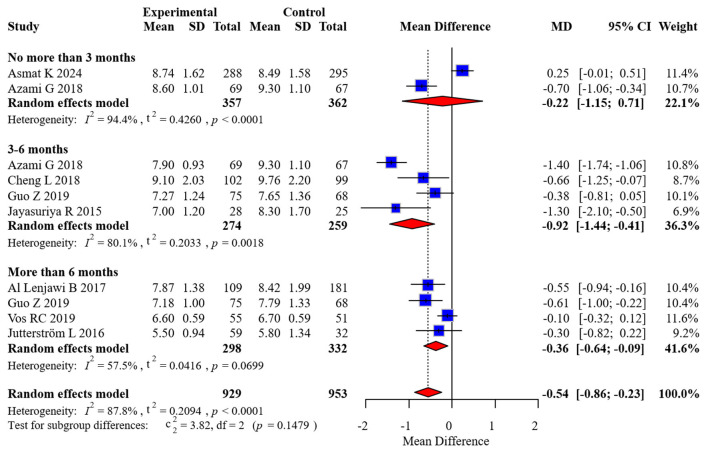
- Nurse-led DSME significantly reduced HbA1c at 3–6 months (MD = −0.92, 95% CI: −1.44 to −0.41) and >6 months (MD = −0.54, 95% CI: −0.86 to −0.23), but not at 0–3 months (MD = −0.22, 95% CI: −1.15 to 0.51); HbA1c heterogeneity was I² = 87.8%.
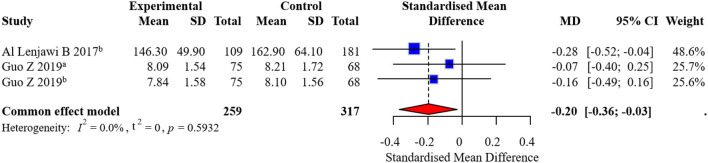
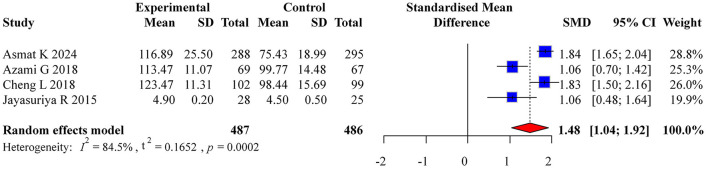
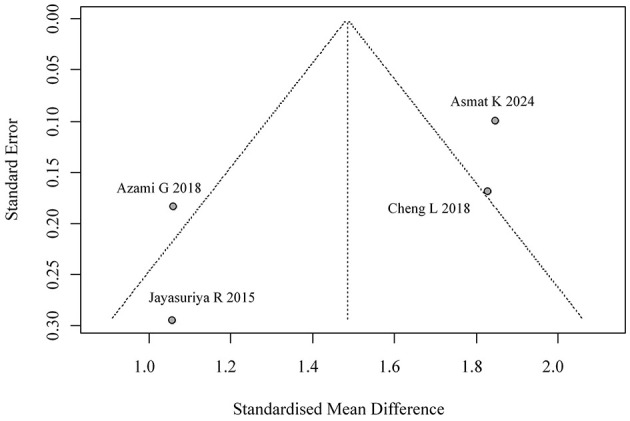
- Fasting blood glucose improved significantly (MD = −0.20, 95% CI: −0.36 to −0.03), and self-efficacy increased significantly (SMD = 1.48, 95% CI: 1.04–1.92; I² = 84.5%).
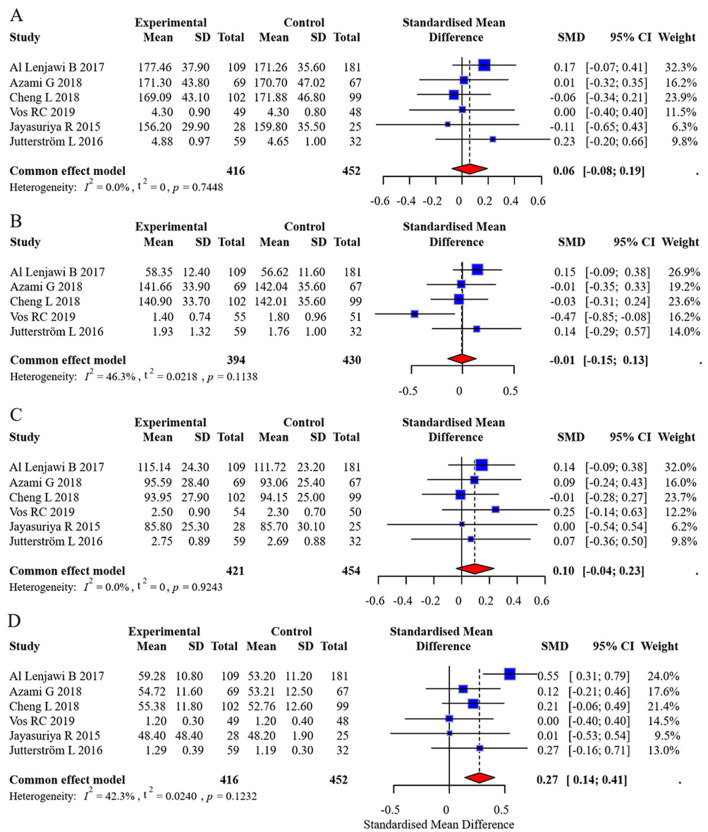
- HDL increased significantly (MD = 0.27, 95% CI: 0.14–0.41), while total cholesterol (MD = 0.06, 95% CI: −0.08 to 0.19), triglycerides (MD = −0.01, 95% CI: −0.15 to 0.13), and LDL (MD = 0.10, 95% CI: −0.04 to 0.23) showed no significant changes.
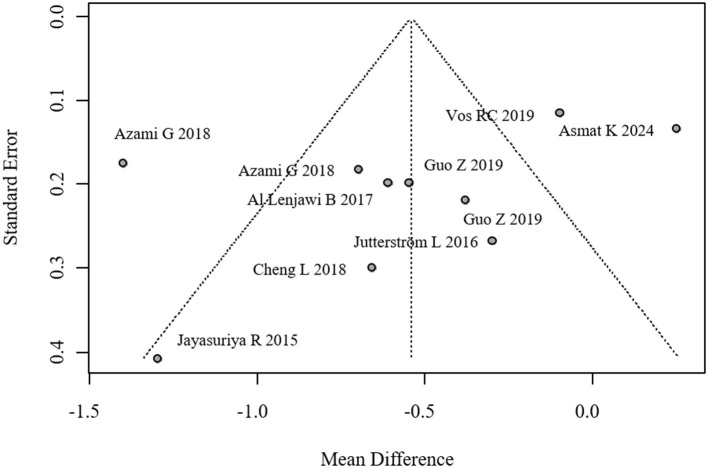
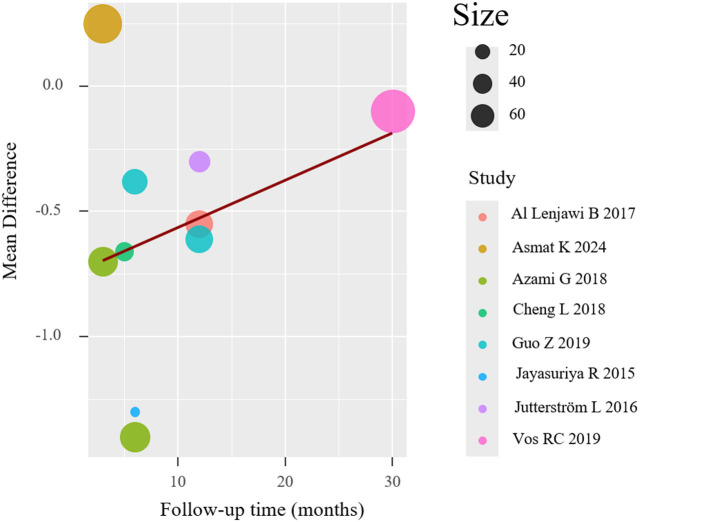
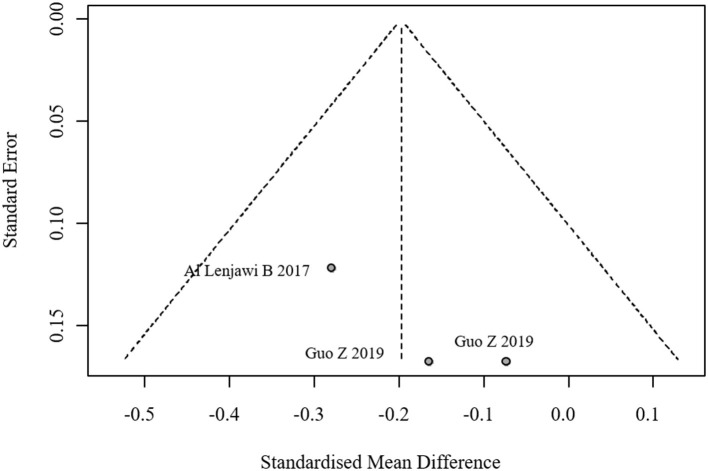
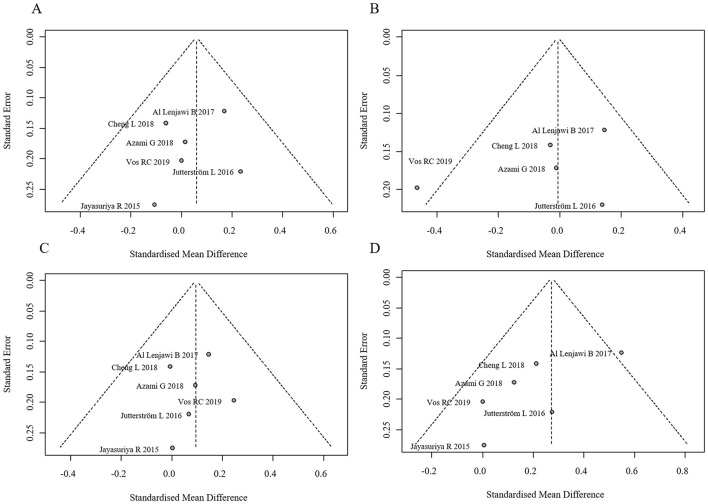
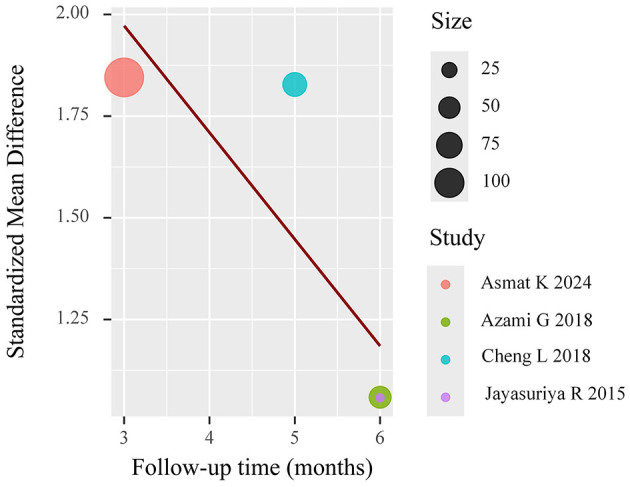
- No significant publication bias was detected for HbA1c (Egger’s test p = 0.116); meta-regression suggested a borderline non-significant influence of follow-up duration on effect size (β = −0.084 per month, p = 0.059).
Methods
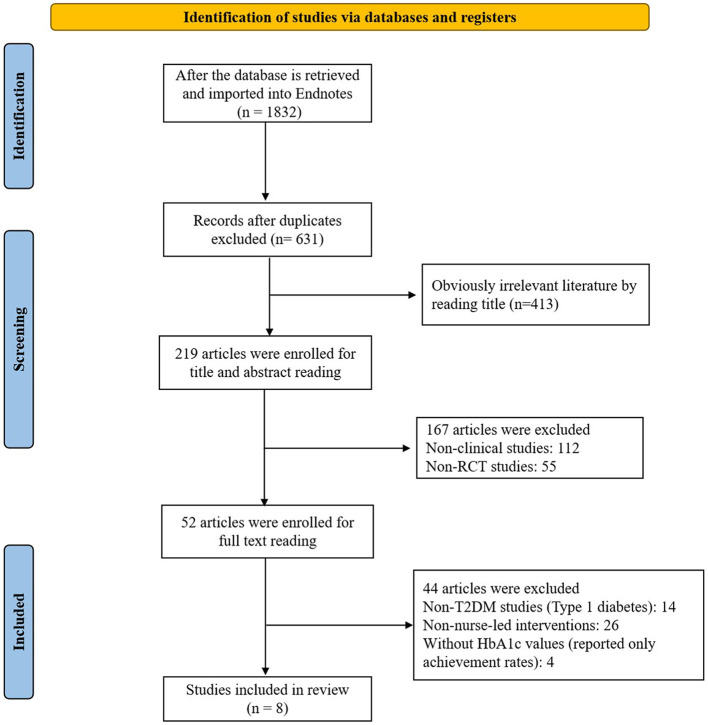
- Systematic review and meta-analysis following PRISMA 2020; searched PubMed, EMBASE, and Web of Science through February 28, 2025, for RCTs of adults with T2DM comparing nurse-led DSME (≥3 structured sessions) with usual care or non-nurse-led interventions.
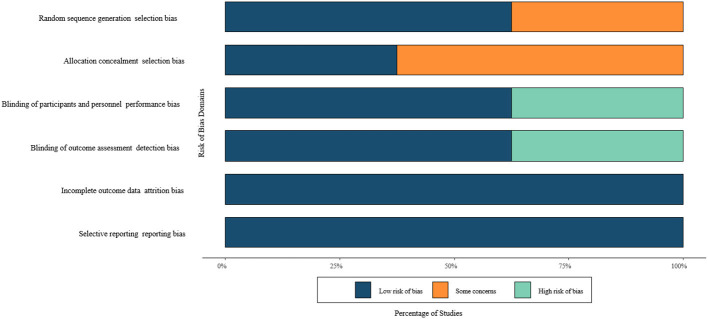
- Eight RCTs were included; HbA1c data comprised 1,654 participants. Outcomes were HbA1c (primary), FBG, lipid profiles, and self-efficacy; risk of bias was assessed with Cochrane RoB 2.0.
- Random-effects models were used for outcomes with I² > 50%, fixed-effects models for low heterogeneity; analyses included subgroup analysis by follow-up duration and meta-regression using R meta/metafor packages.
Limitations
- The paper states that no formal GRADE assessment was performed, gray literature databases were not searched, a medical librarian was not formally consulted, adherence and fidelity metrics were absent, few studies reported FBG and self-efficacy, most studies were from Asia, only one was published within the last 5 years, follow-up was generally short, residual confounding was possible, and subgroup analyses were exploratory and not pre-specified.
- The paper also states that publication bias could not be reliably assessed for several outcomes due to limited study numbers, and that adverse events were not explicitly reported in any included trial.
- Evident from the text: high residual heterogeneity persisted across models, small study numbers limited statistical power and meta-regression reliability, and the absence of standardized intervention protocols and outcome measures restricts comparability and generalizability.
Model-written summary. Check it against the paper before relying on it.
Integrity signals
Registry
Cites
Statistics
Figures
Verification
Claims the paper makes
0 Valid · 2 Not valid · 23 Not checked · 106 Own results and interpretations
At least one cited source doesn’t support this claim or points to a different paper, and none confirmed it — see the verdicts below.
In the paper
“Asmat et al. (15) did not report baseline HbA1c, which limits interpretation of effect size in that study and was considered in the risk of bias appraisal.”
§ Impact of nurse-led self-management education on type 2 diabetes: a meta-analysis > 3 Results > 3.2 Study characteristics
What the sources say
- Disputedcites [15] Asmat K Sivarajan Froelicher E Dhamani KA Gul R Khan N. Effect of patient-centered self-management intervention on glycemic control, self-efficacy, and self-care behaviors in South Asian adults with type 2 diabetes mellitus: a multicenter randomized controlled trial. J Diabetes. (2024) 16: e13611. 10.1111/1753-0407.13611 39264007 PMC11391380 sourceExperimental — accuracy not yet measured
Our copy contradicts the claim: Table 2 (RESULTS) reports HbA1c at T0, explicitly defined in its footnote as 'T0 baseline', with CG 8.70 (SD 1.48, n = 310) and IG 8.81 (SD 1.65, n = 302), an estimated mean difference of 0.11 (95% CI, −0.14 to 0.36; p = 0.38). The RESULTS text likewise states that 'at T0, both the CG and IG were similar with regards to the HbA1c', and the same table gives the T2 Cohen's d (0.16), so baseline glycemic values and an effect-size estimate are both present. The Statistical analysis section (METHODS) confirms baseline HbA1c was compared between groups at T0. (LLM, conf=0.90)
Checked by a reasoning model — may be wrong.
plainstates a cause- Asserted: passes — The authors put it forward as true.
- Checkable: passes — It can be checked against evidence.
- Load-bearing: unclear — It is unclear whether the paper’s conclusions depend on it.
- Based: passes — The paper gives a reason why it holds.
- Disputed
At least one cited source doesn’t support this claim or points to a different paper, and none confirmed it — see the verdicts below.
In the paper
“however, Asmat et al. (15) did not report baseline HbA1c, which limits interpretation of effect size in that study and was considered in the risk of bias appraisal.”
§ Impact of nurse-led self-management education on type 2 diabetes: a meta-analysis > 3 Results > 3.2 Study characteristics
What the sources say
- Disputedcites [15] Asmat K Sivarajan Froelicher E Dhamani KA Gul R Khan N. Effect of patient-centered self-management intervention on glycemic control, self-efficacy, and self-care behaviors in South Asian adults with type 2 diabetes mellitus: a multicenter randomized controlled trial. J Diabetes. (2024) 16: e13611. 10.1111/1753-0407.13611 39264007 PMC11391380 sourceExperimental — accuracy not yet measured
Table 2 in the RESULTS section explicitly reports baseline (T0) HbA1c for both arms — control 8.70 (SD 1.48) and intervention 8.81 (SD 1.65), estimated mean difference 0.11 (95% CI −0.14 to 0.36, p = 0.38) — and the accompanying text states that at T0 both groups were similar with regard to HbA1c. The METHODS (Outcomes, Statistical analysis) also confirm HbA1c was assessed at baseline T0 and compared between groups. Thus our copy directly contradicts the assertion that baseline HbA1c was not reported. (LLM, conf=0.92)
Checked by a reasoning model — may be wrong.
plain- Asserted: passes — The authors put it forward as true.
- Checkable: passes — It can be checked against evidence.
- Load-bearing: unclear — It is unclear whether the paper’s conclusions depend on it.
- Based: passes — The paper gives a reason why it holds.
- Disputed
None of the sources cited for this claim have been checked yet.
In the paper
“While pharmacotherapy remains foundational, nearly 50% of patients fail to achieve glycemic targets (HbA1c < 7%), underscoring the need for effective adjunctive strategies (5, 6).”
§ Impact of nurse-led self-management education on type 2 diabetes: a meta-analysis > 1 Introduction
What the sources say
- Could not verifycites [5] Association AD. Standards of medical care in diabetes-2022 abridged for primary care providers. Clin Diabetes. (2022) 40: 10– 38. 10.2337/cd22-as01 35221470 PMC8865785 sourceExperimental — accuracy not yet measured
Our copy of the abridged 2022 Standards defines the target the claim references — Recommendation 6.5a sets 'An A1C goal for many nonpregnant adults of <7% (53 mmol/mol)' (Glycemic Goals) — and repeatedly instructs providers to modify therapy in patients 'not at goal' to avoid therapeutic inertia (Assessment, recs 9.13/9.14). However, no passage reports the epidemiological magnitude attributed here: searches for 'nearly 50%/half of patients failing to achieve glycemic targets', 'proportion achieving A1C target / control rates / NHANES', and 'epidemiology of type 2 diabetes poor glycemic control' returned only goal-setting and older-adult prediabetes statistics (e.g., 'one-half of older adults have prediabetes', sec. 13), none of which is the claimed treatment-failure rate. The ~50% figure therefore cannot be checked against this source; our copy is not truncated. (LLM, conf=0.70)
- Not checked yetcites [6] Bodenheimer T Wagner EH Grumbach K. Improving primary care for patients with chronic illness: the chronic care model, part 2. JAMA. (2002) 288: 1909– 14. 10.1001/jama.288.15.1909 12377092 source
Checked before — its earlier verdict is held back until a new check runs.
plain- Asserted: passes — The authors put it forward as true.
- Checkable: passes — It can be checked against evidence.
- Load-bearing: unclear — It is unclear whether the paper’s conclusions depend on it.
- Based: passes — The paper gives a reason why it holds.
- Could not verify
A result the paper reports from its own data — it cites no other source for it, so there is none to check. The quote shows it is in the paper.
In the paper
“The model explained 18.7% of between-study variance (adjusted R2), though substantial residual heterogeneity remained (I2 = 84.1%, Q_E p < 0.01).”
§ Impact of nurse-led self-management education on type 2 diabetes: a meta-analysis > 3 Results > 3.3 Meta-analysis results
plainstates an association- Asserted: passes — The authors put it forward as true.
- Checkable: passes — It can be checked against evidence.
- Load-bearing: unclear — It is unclear whether the paper’s conclusions depend on it.
- Based: passes — The paper gives a reason why it holds.
A result the paper reports from its own data — it cites no other source for it, so there is none to check. The quote shows it is in the paper.
In the paper
“Extended phase (>6 months): MD: −0.54 (95% CI: −0.86 to −0.23)”
§ Impact of nurse-led self-management education on type 2 diabetes: a meta-analysis > 3 Results > 3.3 Meta-analysis results
plainstates a causen = 1,654- Asserted: passes — The authors put it forward as true.
- Checkable: passes — It can be checked against evidence.
- Load-bearing: passes — The paper’s conclusions depend on it.
- Based: passes — The paper gives a reason why it holds.
83 more claims
Create a free account to see all 131 claims and to verify the 25 references still open.
- It may state two separate claims as one. 21
- The quote only partly states this claim. 1
- Probably not a substantial claim. 29
Self-check
Percentages, sums and reported differences re-computed from the paper’s own numbers.
Each contradiction between two passages listed here was confirmed by an independent check.
Rated major: it would touch a result — a value a result rests on, reported and recomputed p-values on opposite sides of the significance level, two passages that conflict with no sign which is right, or a cited work retracted before this paper was published.
In the paper
§ Impact of nurse-led self-management education on type 2 diabetes: a meta-analysis > 2 Methods > 2.6 Certainty of evidence and GRADE framework
“the overall certainty of evidence across outcomes (e.g., HbA1c, fasting blood glucose, lipid profiles, and self-efficacy) was not formally appraised using the Grading of Recommendations Assessment, Development and Evaluation (GRADE) framework.”
§ Impact of nurse-led self-management education on type 2 diabetes: a meta-analysis > 3 Results > 3.5 GRADE summary of findings
“Table 4 is GRADE Summary of Findings based on my meta-analysis data. It includes effect sizes, study counts, certainty ratings, and explanatory comments for each outcome.”
Rated minor: it would not touch a result — a value no result rests on, a p-value that stays on the same side of the significance level, or a conflict that is clerical, resolved elsewhere in the paper, or outside its own findings.
In the paper
§ Impact of nurse-led self-management education on type 2 diabetes: a meta-analysis > 4 Discussion > 4.4 Potential mechanisms of intervention effect
“none of the included studies incorporated formal mediation analyses to examine potential causal pathways.”
§ Impact of nurse-led self-management education on type 2 diabetes: a meta-analysis > 4 Discussion > 4.4 Potential mechanisms of intervention effect
“For instance, only one study (15) attempted to formally analyze mediation pathways, but its findings could not be incorporated into our primary analysis due to methodological heterogeneity.”
Rated minor: it would not touch a result — a value no result rests on, a p-value that stays on the same side of the significance level, or a conflict that is clerical, resolved elsewhere in the paper, or outside its own findings.
In the paper
§ Impact of nurse-led self-management education on type 2 diabetes: a meta-analysis > 3 Results > 3.3 Meta-analysis results
“No significant heterogeneity was found, and fixed-effects models were applied. The pooled effect sizes were: - TC: 0.06 (95% CI: −0.08, 0.19) - TG: −0.01 (95% CI: −0.15, 0.13) - LDL: 0.10 (95% CI: −0.04, 0.23) - HDL: 0.27 (95% CI: 0.14, 0.41)”
§ Impact of nurse-led self-management education on type 2 diabetes: a meta-analysis > 3 Results > 3.3 Meta-analysis results
“MD = 0.27, 95% CI: 0.13–0.41 under fixed-effects”
Rated minor: it would not touch a result — a value no result rests on, a p-value that stays on the same side of the significance level, or a conflict that is clerical, resolved elsewhere in the paper, or outside its own findings.
In the paper
“Acute phase (0–3 months): MD: −0.22 (95% CI: −1.15 to 0.51)”
§ Impact of nurse-led self-management education on type 2 diabetes: a meta-analysis > 3 Results > 3.3 Meta-analysis results
Reported -0.22 · recomputed -0.32
Rated minor: it would not touch a result — a value no result rests on, a p-value that stays on the same side of the significance level, or a conflict that is clerical, resolved elsewhere in the paper, or outside its own findings.
In the paper
§ Impact of nurse-led self-management education on type 2 diabetes: a meta-analysis > 3 Results > 3.2 Study characteristics
“Sample sizes ranged from 30 to 302 participants.”
§ Impact of nurse-led self-management education on type 2 diabetes: a meta-analysis > 3 Results > 3.2 Study characteristics
“Intervention: 302 Control: 310”
Citations
Cites
The PRISMA 2020 statement: An updated guideline for reporting systematic reviews
Page, M. J., McKenzie, J. E., Bossuyt, P. M., Boutron, I., Hoffmann, T. C., Mulrow, C. D., Shamseer, L., Tetzlaff, J. M., Akl, E. A., Brennan, S. E., et al. (2021) · BMJ · doi:10.1136/bmj.n71 · Cited by 108,283
Bias in meta-analysis detected by a simple, graphical test
Egger, M., Smith, G. D., Schneider, M., & Minder, C. (1997) · BMJ · doi:10.1136/bmj.315.7109.629 · Cited by 56,722
RoB 2: a revised tool for assessing risk of bias in randomised trials
Sterne, J. A. C., Savović, J., Page, M. J., Elbers, R. G., Blencowe, N. S., Boutron, I., Cates, C. J., Cheng, H.-Y., Corbett, M. S., Eldridge, S. M., et al. (2019) · BMJ · doi:10.1136/bmj.l4898 · Cited by 34,787
Self-efficacy: the exercise of control
(1997) · Choice Reviews Online · doi:10.5860/choice.35-1826 · Cited by 24,281
Page, M. J., Moher, D., Bossuyt, P. M., Boutron, I., Hoffmann, T. C., Mulrow, C. D., Shamseer, L., Tetzlaff, J. M., Akl, E. A., Brennan, S. E., et al. (2021) · BMJ · doi:10.1136/bmj.n160 · Cited by 13,262 · cited 1×
“The selection parameters were systematically developed following the evidence-based PICOS methodology (11) (Population, Intervention, Comparator, Outcomes, Study Design), with comprehensive specifications presented in Table 1.”
Wan, X., Wang, W., Liu, J., & Tong, T. (2014) · BMC Medical Research Methodology · doi:10.1186/1471-2288-14-135 · Cited by 11,735
Sterne, J. A. C., Sutton, A. J., Ioannidis, J. P. A., Terrin, N., Jones, D. R., Lau, J., Carpenter, J., Rucker, G., Harbord, R. M., Schmid, C. H., et al. (2011) · BMJ · doi:10.1136/bmj.d4002 · Cited by 7,709
Cumpston, M., Li, T., Page, M. J., Chandler, J., Welch, V. A., Higgins, J. P., & Thomas, J. (2019) · Cochrane Database of Systematic Reviews · doi:10.1002/14651858.ed000142 · Cited by 7,218
Social cognitive theory of self-regulation
Bandura, A. (1991) · Organizational Behavior and Human Decision Processes · doi:10.1016/0749-5978(91)90022-l · Cited by 6,875
Improving Primary Care for Patients With Chronic Illness: The Chronic Care Model, Part 2
Bodenheimer, T., Wagner, E. H., & Grumbach, K. (2002) · JAMA · doi:10.1001/jama.288.15.1909 · Cited by 2,413
Research works printed but not linked: 1
- Magliano DJ Boyko EJ Committee IDFDAtes. IDF Diabetes Atlas. Brussels: International Diabetes Federation (2021). 35914061
Cited by
Polat, E. Ç., Dönmez, A. A., & Çakal, E. (2026) · BMC Nursing · doi:10.1186/s12912-026-04396-3 · Cited by 11
Fadli, F., Nursalam, N., Sjattar, E. L., & Uly, N. (2026) · Frontiers in Clinical Diabetes and Healthcare · doi:10.3389/fcdhc.2025.1712334 · Cited by 10
Karlsson, A. V., Petersson, T., & Wickman, U. L. (2026) · Healthcare · doi:10.3390/healthcare14070941 · Cited by 6
Zheng, C., Dou, X., Xiong, X., Lei, E., Jiang, M., Wu, Y., Yu, J., Wang, X., Zhang, L., Rong, H., et al. (2026) · JMIR mhealth and uhealth · doi:10.2196/80738 · Cited by 5
Self-citationDughmosh, R., Hamdan, A., Moghassabi, W., Alkahlout, L., Syed, A., Alwisi, N., Al-Sharief, N., Othman, M., & Doi, S. A. R. (2026) · Diabetes Research and Clinical Practice · doi:10.1016/j.diabres.2026.113375 · Cited by 4
Resistant Potato Starch Supplementation Increases Serum Antioxidant Levels in a Randomized Trial
Bush, J., Han, J., & Goodlett, D. R. (2025) · Metabolites · doi:10.3390/metabo15100661 · Cited by 3
Xiao, Y., Grundy, J., Madugalla, A. K., & Manias, E. (2026) · arXiv (Cornell University) · doi:10.48550/arxiv.2601.22627 · Cited by 2
Health education with dietary adherence for people with diabetes mellitus in the community
Astuti, I. T., & Chen, C. M. (2025) · Jurnal Edukasi Ilmiah Kesehatan · doi:10.61099/junedik.v3i3.147 · Cited by 2
Mulyaningsih, Wahyuni, Hermawati, & Ardika, N. A. (2026) · The Malaysian Journal of Nursing · doi:10.31674/mjn.2026.v17i03.005 · Cited by 2
Fadlilah, S., Damayanti, S., Kurniasari, M. D., Hsiao, S., Lee, K.-L., Feng, P., Villagracia, H. N., & Tsai, H. (2026) · Worldviews on Evidence-Based Nursing · doi:10.1111/wvn.70168 · Cited by 1
Sainz-Prado, R., Rodríguez‐Roca, B., Pardavila‐Belio, M. I., García, P. R., Sanz, F. R., & Andrade-Gómez, E. (2026) · Frontiers in Medicine · doi:10.3389/fmed.2026.1833588 · Cited by 1
Chen, Y., Dong, M., Liu, J., He, J., Liu, H., & Zhang, Y. (2026) · Frontiers in Medicine · doi:10.3389/fmed.2026.1649666 · Cited by 1
Li, C., Bao, C., & Xu, S. Z. (2025) · Blood Pressure · doi:10.1080/08037051.2025.2574924 · Cited by 1
Thu, T. H. T., Wisesrith, W., & Ho, M. M. (2025) · National Journal of Community Medicine · doi:10.55489/njcm.161020255869 · Cited by 1
NURSE LED PATIENT EDUCATION ON HEALTH OUTCOMES AND PATIENT SATISFACTION AT MEDICARE HOSPITAL MULTAN
Bibi, M., Yousaf, M., Saleem, U., Sher, N., & Fatima, A. (2025) · Journal of medical & health sciences review. · doi:10.65035/7b2yyg22 · Cited by 1
Role Of Nurses In Chronic Disease Management In Saudi Arabia
Alotaibi, N. (2024) · The Review of Diabetic Studies · doi:10.70082/qt5bcw27 · Cited by 1
The Impact Of Healthcare Providers On Effective Diabetes Management
Abdulrahman Ahmed Alnaim, A. M. S., & Fatimah Ali Alshehri, H. A. A. (2025) · The Review of Diabetic Studies · doi:10.70082/ganky331 · Cited by 1
Si, Y., Liu, J., 张德芳, Wang, X., Xu, X., & Subo, L. (2026) · Nursing Open · doi:10.1002/nop2.70918 · Cited by 1
Self-citationÇalık, A., & Yıldırım, O. (2026) · Süleyman Demirel Üniversitesi Sağlık Bilimleri Dergisi · doi:10.22312/sdusbed.1961642
The role of self-management in the rehabilitation of type 2 diabetes patients
Kryukova, I. V. (2026) · Реабилитология. · doi:10.17749/2949-5873/rehabil.2025.54
Alzahrani, J. M., Alodhialah, A. M., Albloushi, M., Aljabri, M. M., & Almutairi, M. (2026) · Healthcare · doi:10.3390/healthcare14172756
Kang, H. S. (2025) · Journal of Korean Biological Nursing Science · doi:10.7586/jkbns.25.056
Maina, E. W., Kimani, S. T., & Mwaura, J. (2025) · INQUIRY The Journal of Health Care Organization Provision and Financing · doi:10.1177/00469580251390775
Diabetes management in patients in primary care
Fanedl, G., & Kegl, B. (2026) · Kontakt · doi:10.32725/kont.2026.015
zhao, D., Tang, P., Chen, Y., & Jingxin, Y. (2026) · BMJ Open · doi:10.1136/bmjopen-2026-119389
Cheng, X., & Shi, Y. (2026) · Frontiers in Medicine · doi:10.3389/fmed.2026.1860805
Wang, X., He, F., Zhang, Q., Meng, Y., Chen, T., & Zhu, Y. (2026) · Frontiers in Public Health · doi:10.3389/fpubh.2026.1911349
Self-citationKAHRAMAN, F., Durar, E., & Durmuş, M. (2026) · Nursing Open · doi:10.1002/nop2.70756
Chu, D., Liu, B., Soh, K. L., Saidi, H. I., & Japar, S. (2026) · Journal of Nursing and Midwifery Sciences · doi:10.5812/jnms-171456
Huang, L., & Yi, M. (2026) · BMC Nephrology · doi:10.1186/s12882-026-04842-z
Widyastuti, Y., & Awaludin, S. (2026) · Al-Rafidain Journal of Medical Sciences · doi:10.54133/ajms.v11i1.2986
Trujillo, M. D. L. C. M., Villimar-Rodríguez, A. I., Sanz, A. G. C., & Cortés, J. B. (2026) · Frontiers in Endocrinology · doi:10.3389/fendo.2026.1947294
Approaches to Diabetes Self-Management Education in Europe: An Extensive Literature Review
Borsoi, L., Falivena, C., & Callea, G. (2026) · Clinical Therapeutics · doi:10.1016/j.clinthera.2026.07.014
Research Status of Self-Management in Patients with Type 2 Diabetes Mellitus
Long, Z. (2026) · Advances in Clinical Medicine · doi:10.12677/acm.2026.16103289
Azwaldi, Agustin, I., & Erman, I. (2026) · Jurnal Penelitian Pendidikan IPA · doi:10.29303/jppipa.v12i7.15307
Rohit, Mangal, A. K., Arathi, T. V., Nandini, R., Elango, G., Dixit, S., Umar, M., Meena, A. K., Lobo, C., & Vandali, V. (2025) · International Journal of Community Medicine and Public Health · doi:10.18203/2394-6040.ijcmph20254455
Hentu, A. S., Lestari, K. F., Yulianti, S., Abidin, A., Pendit, S. A., Risal, M., Bistara, D. N., & Mustamu, A. C. (2026) · Journal of Integrative Nursing · doi:10.4103/jin.jin_27_26
Arifah, K., Widiastuti, A., Ernawati, U., & Kurniawan, Y. D. (2026) · Avicenna Journal of Health Research · doi:10.36419/avicenna.v9i1.1741
Merino, Y. A. C., Ayala, C. O., Cañón-Montañéz, W., & Acelas, A. L. R. (2026) · Aquichan · doi:10.5294/aqui.2026.26.1.4
Muz, G., & Yüce, G. E. (2026) · Sleep and Biological Rhythms · doi:10.1007/s41105-026-00681-5
NURSE-LED DIABETES SELF-MANAGEMENT EDUCATION AND SELF-CARE SUPPORT IN DIABETES CARE
Alharbi, R. F., Mutairi, S. M. A., Albugami, R. M., Awaji, F. Y., Shammari, D. M. A., AlDossary, M. S., Alanazi, M. S., Farhan, A. F. A., Aljohani, A. H., & AlGumosani, R. W. (2026) · International Journal of Advanced Research · doi:10.21474/ijar01/23656
Almohammadi, A. A., AlMojalled, R., Almabadi, R., Alzahrani, R. S., Alqarni, M., Hawsawi, I., Mahmoud, S., Alqurashi, M., Ismail, S., Alqaidy, M., et al. (2026) · Cureus · doi:10.7759/cureus.118501
Chudi-Agbaku, D. (2026) · ScholarWorks (Walden University)
Conocimiento y prácticas de autocuidado en adultos con diagnóstico de diabetes tipo 2
Nievez-Noles, D. D. J., Bravo-Castillo, D., & Jaramillo, M. J. R. (2026) · Revista Científica Arbitrada en Investigaciones de la Salud GESTAR
Zuhroidah, I., Sujarwadi, M., Toha, M., Asmaningrum, N., Prayoga, D. H., Laili, N. R., & Zahra, F. (2026) · Nursing and Health Sciences Journal (NHSJ) · doi:10.53713/nhsj.v6i2.668
Cardona, D. W., Jr. (2026) · Digital USD (University of San Diego) · doi:10.22371/07.2026.037
Ordoñez-Cango, D. W., Ramirez-Cumbe, A. R., Relica, L. G. R., & Calderón-Rìos, T. G. (2026) · Revista Científica Arbitrada en Investigaciones de la Salud GESTAR
Prilutskaya, K., Akhilbekov, N., Abdikazimova, S., Ramazanova, G., Baimagambetova, A., & Duisekova, S. (2026) · Journal of Health Development · doi:10.32921/2663-1776-2026-61-3-jhd074
Asamoah-Atakorah, S., -, R. A.-A., -, O. A. A., & Addy, A. (2026) · doi:10.13140/rg.2.2.23757.81120
Dewi, R. I. S., Hayu, R., Susilo, H., & Dafriani, P. (2026) · Science Midwifery
Agbo, E. E. (2026) · ScholarWorks (Walden University)
PRÁTICAS EM SAÚDE UMA ABORDAGEM MULTIDISCIPLINAR 3
da Silva, A. A., Miranda, W. R. D. H., & Cardoso, A. C. (2026) · doi:10.56161/sci.ed.20260204
Pangandaheng, T. (2026) · Health & Medical Sciences · doi:10.47134/phms.v3i2.563
Cedeño-Meza, K. R., Baque-Montenegro, S. M., Anchundia-Manzaba, J. G., & Demera-Zambrano, A. N. (2026) · Cuaderno de enfermería. Revista científica. · doi:10.62574/bz3b4g76
ผลของรูปแบบการดูแลตนเองเพื่อป้องกันภาวะแทรกซ้อนทางไต ในผู้ป่วยเบาหวานชนิดที่ 2: การวิจัยกึ่งทดลอง
Choodum, N., Futrakul, S., & Lohitthai, S. (2026) · The Journal of Chulabhorn Royal Academy
Al Shipry, A., & Chayeb, N. (2025) · DiVA (University of Gävle)
Wati, S., Dika, D., Ginting, S., & Hayati, K. (2025) · JURNAL PENGMAS KESTRA (JPK) · doi:10.35451/v2y36k46
INTEGRAÇÃO ENTRE ENFERMAGEM E ODONTOLOGIA NA PROMOÇÃO DA SAÚDE BUCAL NA ATENÇÃO PRIMÁRIA
Baracho, M. N. L., Santos, K. O. V., Maciel, L. C., Soares, K. H., & Martins, O. B. L. (2026) · doi:10.56161/sci.ed.20260204c6
Zuriati, Z., Wijaya, I., Suriya, M., Khasanah, N. I., Karlina, K., Septiani, S. P., Aini, F. R., Setiawaty, I., Hafidzah, A. F., Maharani, K. A., et al. (2026) · JURNAL KREATIVITAS PENGABDIAN KEPADA MASYARAKAT (PKM) · doi:10.33024/jkpm.v9i5.24429
Penyuluhan Kesehatan tentang Diabetes Melitus bagi Masyarakat di Puskesmas Kalidawir, Tulungagung
Prabowo, P., Adhitama, L. V., Pasaribu, M. L., Witaning, L., Tandela, T., Mawarni, O. I., & Hidayati, E. N. (2026) · ADIMASKA JURNAL PENGABDIAN MASYARAKAT KESEHATAN · doi:10.30737/xcn8ez09
Wen, S., Li, S., & Zhang, S. (2026) · Pakistan Journal of Pharmaceutical Sciences · doi:10.36721/pjps.2026.39.11.321.1
Agustin, M. S., Muzaenah, T., Isnaini, N., & Yulistiani, M. (2026) · Jurnal Ners · doi:10.31004/jn.v10i4.62033
Zahra, F., Ruslinawati, & Mathuridy, R. M. (2026) · Archives of The Medicine and Case Reports · doi:10.37275/amcr.v7i4.934
Chaterine Diana Pusung, E. T. H., Hutagaol, E. T., Kowaas, I. N., & Runtu, A. R. (2026) · INTERNATIONAL JOURNAL OF SOCIETY REVIEWS · doi:10.5281/zenodo.22715419
Phetpan, N., Siriphan, S., & Rakpanusit, T. (2026) · Princess of Naradhiwas University Journal
Phomsaen, W. (2025) · Journal of Environmental Education Medical and Health
Chen, R. T., Baduge, M. S. D. S. P., Clark, R. A., Nelson, A. J., Zoungas, S., & Nicholls, S. J. (2026) · Journal of Clinical Nursing · doi:10.1111/jocn.70589
Perfiles de respuesta a la educación personalizada en personas con Diabetes tipo 2
Rosales, X. D. M., & Ramírez, J. L. C. (2026) · Revista Latinoamericana de Calidad Educativa. · doi:10.70625/rlce/1053
López, J. D. J. R., Torres, G. B. O., & Gómez, F. G. R. (2026) · Ibero Ciencias - Revista Científica y Académica · doi:10.63371/ic.v5.n4.a1761
Widjaja, H. H. S. G. (2026) · NETIZEN: JOURNAL OF SOCIETY AND BUSSINESS · doi:10.5281/zenodo.23905061
Impacto de intervención educativa en pacientes diabéticos tipo 2
Salina, C. R. G., Velázquez, C. A., & Ullon, E. A. (2026) · Revista Paraguaya de Salud · doi:10.33996/rps.v3i7.38
Pertiwi, M. I., Cahya, A., & Lestari, W. (2026) · Media Keperawatan Indonesia · doi:10.26714/mki.9.4.2026.410-427
Metadata
- Authors
- Sun, J., Fan, Z., Kou, M., Wang, X., Yue, Z., & Zhang, M.
- Affiliations
- Beihua University (CN)
- Corresponding author
- Zhang, Min
- Venue
- Frontiers in Public Health
- Publisher
- Frontiers Media SA
- Published
- 2025-08-11
- Volume
- 13
- Pages
- 1622988-1622988
- ISSN
- 2296-2565 (ISSN-L)
- PMC
- PMC12375586
- OpenAlex
- W4413228110
- Semantic Scholar
- ecaf20eb1073e7ffbcbb9f6ba22e5268ee72638f
- Cited by
- 74
- References
- 31
- Citations by year
- 2026: 61 · 2025: 12
- FWCI
- 6.19
- Type
- journal article
- Language
- en
- Open access
- gold
- doi.org
- Licence
- Locations
- Frontiers in Public Health (publishedVersion, cc-by)
- Europe PMC (PubMed Central) (publishedVersion, cc-by)
- PubMed Central (publishedVersion, cc-by)
- PubMed (publishedVersion)
- DOAJ (DOAJ: Directory of Open Access Journals) (submittedVersion, cc-by-sa)
- Topics
- Health Sciences › Medicine › Endocrinology, Diabetes and Metabolism › Diabetes Management and Education
- Health Sciences › Medicine › Endocrinology, Diabetes and Metabolism › Diabetes Management and Research
- Health Sciences › Medicine › Endocrinology, Diabetes and Metabolism › Diabetes Treatment and Management
- Keywords
- diabetes self-management education, nurse-led intervention, type 2 diabetes, glycemic control, HbA1c, fasting blood glucose, self-efficacy, lipid profile, HDL cholesterol, patient adherence, diabetes education program, adults with diabetes, usual care comparison, publication bias, small study size bias
- MeSH terms
- Self-Management, Diabetes Mellitus, Type 2, Glycated Hemoglobin, Humans, Patient Education as Topic, Randomized Controlled Trials as Topic, Self Efficacy
About these checks
Registry, retraction, Cites and statistics results are computed, not judged, with one exception: a printed reference that no index lists is read once by a model before it counts as a citation error. Claims are extracted by a model and kept only when their quote appears verbatim in the text; each cited source is then checked, with a model’s help, for whether it says what the claim relies on. Those verdicts can be wrong — read the claim’s quote and the cited source before relying on one.
The claim verdicts this report counts are experimental: their accuracy is not yet measured.
A language model drew the claims from the paper on 2026-11-20, under version 3 of the claim definition (model deepseek-v4.1-flash, prompt extract-v3).
A second model labelled each claim on 2026-11-20 (model jev-1.13-20260917, definition revision gold-guideline-v0.2).
Cited sources are checked with a language model’s help (qwen3.8-omni-flash).
Statistics and arithmetic are recomputed, not judged.
Confidence bands are shown only for fields calibrated on our annotated test set. None is calibrated yet, so no band is shown.
What counts as a claim ›How we measure confidence ›How we check this ›
Are you an author, or do you see a problem with this page? Request a review
Data sources
Bibliographic data: Semantic Scholar, OpenAlex, Crossref.
Contains information from the Semantic Scholar Academic Graph Datasets, made available under the ODC Attribution License (ODC-BY 1.0).
Semantic Scholar’s data is described in: Kinney, R., et al. (2023). The Semantic Scholar Open Data Platform. arXiv:2301.10140.
