

Diabetes care for people experiencing homelessness in the UK: insights from a national survey of frontline professionals and the development of an integrated care model
Open accessThe DOI matches its Crossref record; 58 of the 60 references it cites were found in a registry or an index, and 2 are not checked yet; none of the 60 sources its claims cite is checked for support yet.
Abstract
Introduction: People experiencing homelessness (PEH) face food insecurity, unstable housing and fragmented services that render conventional diabetes pathways unworkable and amplify complications. Methods: Between January and April 2024, we conducted a nationwide, cross-sectional mixed-methods survey of front-line professionals via NHS, inclusion-health and voluntary-sector networks, analysing quantitative data (n = 104) with ANOVA, Kruskal–Wallis tests and ordinal logistic regression, and subjecting free-text responses to reflexive thematic analysis, before converging findings to develop the Integrated Holistic Diabetes Care Model for Homelessness (IHD-CMPH). Results: Respondents comprised specialist diabetes clinicians (31%), homelessness/inclusion-health staff (38%) and VCSE providers (32%); median perceived Type 1 prevalence among PEH was 20% versus 8% nationally (p < 0.001). Fifty-seven per cent rated diabetes outcomes for PEH as poor or very poor, and 66% reported more frequent amputations and vision loss. Clear organisational policies (OR 1.62, 95% CI 1.06–2.48), cross-sector collaboration (OR 2.76, 1.20–6.36) and outreach-specific training (OR 2.50, 1.50–4.17) were independently associated with better outcomes. Thematic analysis highlighted service fragmentation, inflexible appointments and insufficient homelessness-specific education. Discussion: Diabetes inequities among PEH stem chiefly from modifiable structural failures rather than patient non-adherence. The novel IHD-CMPH, anchored in outreach and mobile screening, provides a scalable framework to operationalise inclusion-health policy, improve glycaemic surveillance and avert avoidable admissions; this first national study translating multi-sector front-line evidence into a coherent policy model offers concrete levers for health-system reform and equity advancement.
Overview
CoChat Summary
TL;DR
A national mixed-methods survey of UK frontline professionals found that diabetes care for people experiencing homelessness (PEH) is widely perceived as poor, with structural and service-design failures rather than patient non-adherence as the main driver. The authors used the findings to develop the Integrated Holistic Diabetes Care Model for Homelessness (IHD-CMPH), anchored in outreach, peer support, and cross-sector training.
Key findings
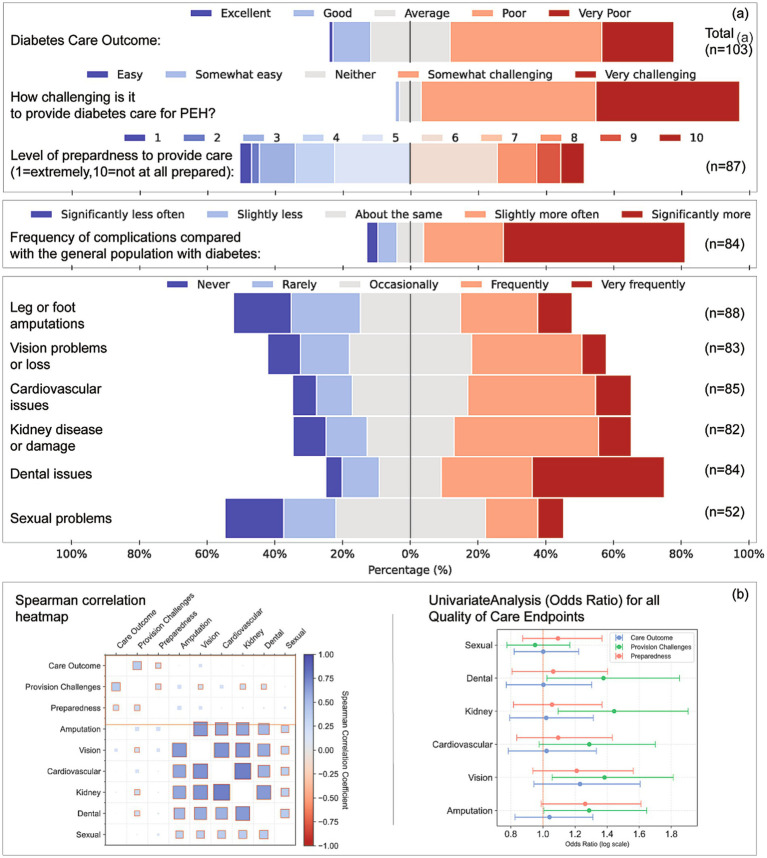
- Among 104 valid responses, 57% rated overall diabetes outcomes for PEH as poor or very poor, and 66% believed complications occurred more often in PEH than in the general diabetes population. Median perceived Type 1 prevalence among PEH was 20% versus 8% nationally (p < 0.001).
- Clear organisational policies (OR 1.62, 95% CI 1.06–2.48), cross-sector collaboration (OR 2.76, 1.20–6.36), and outreach-specific training (OR 2.50, 1.50–4.17) were independently associated with better outcomes. In multivariable models, frequent service contact reduced perceived management difficulty (OR 2.15, 1.06–4.35), while peer support (OR 1.42, 1.10–1.84) and outreach training (OR 2.50, 1.50–4.17) predicted greater preparedness.
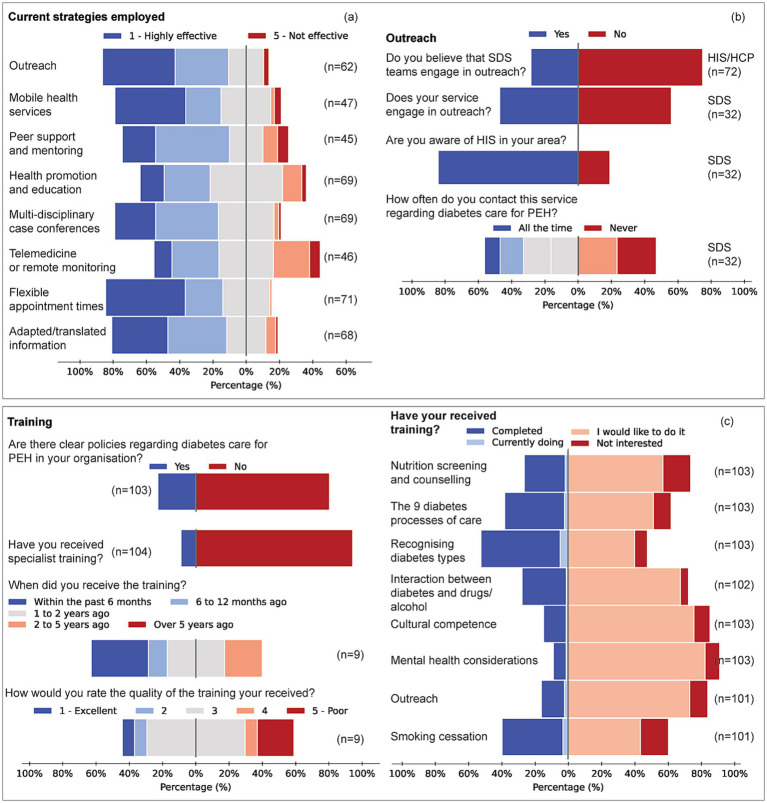
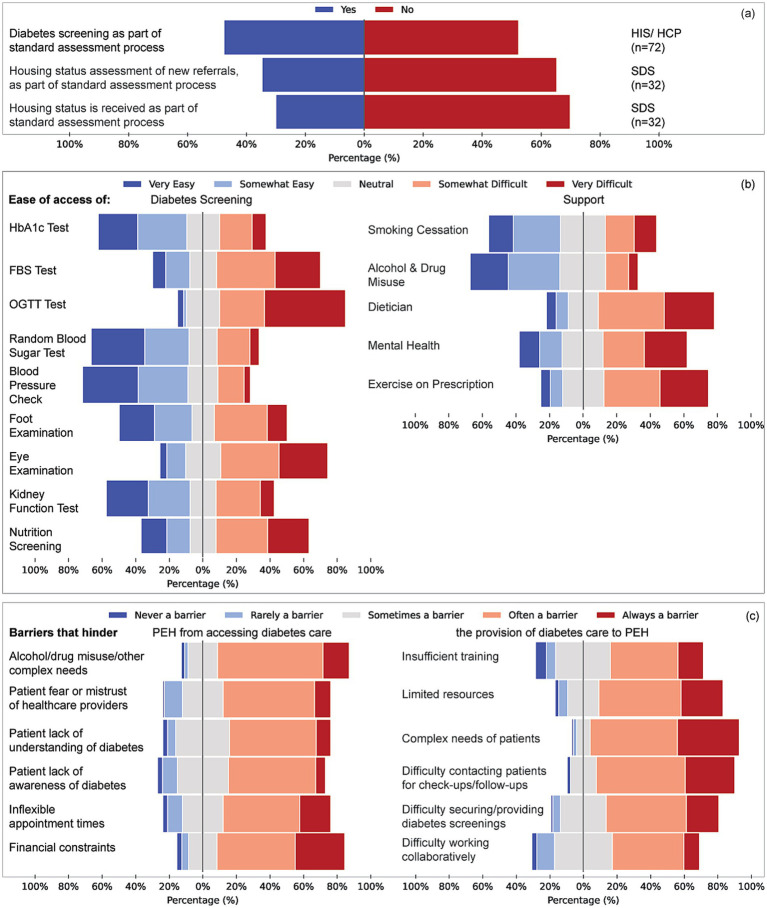
- Thematic analysis highlighted service fragmentation, inflexible appointments, and insufficient homelessness-specific education; 87–96% of respondents lacked tailored training, and half reported no clear organisational policy on homelessness-related diabetes care.
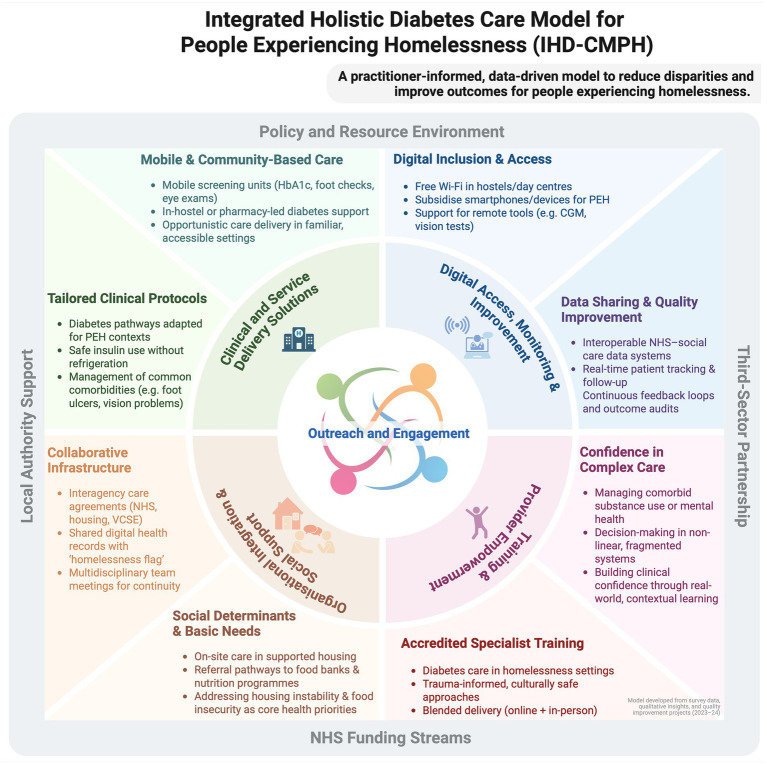
- The resulting IHD-CMPH comprises four components: clinical and service-delivery solutions, organisational integration and social support, training and provider empowerment, and digital access, monitoring and improvement.
Methods
- Cross-sectional mixed-methods national survey conducted January–April 2024 via NHS, inclusion-health, and voluntary-sector networks; 104 valid responses were analysed, all from England, comprising specialist diabetes clinicians (31%), homelessness/inclusion-health staff (38%), and VCSE providers (32%).
- Quantitative analysis used ANOVA, Kruskal–Wallis tests, Mann–Whitney tests, chi-squared tests, Wilcoxon tests, Spearman correlations, and ordinal logistic regression; qualitative free-text responses were analysed with reflexive thematic analysis.
- A 69-item survey across seven domains was co-designed and piloted with a steering group and Experts by Lived and Living Experience of homelessness; quantitative and qualitative findings were triangulated to develop the IHD-CMPH.
Limitations
- Stated in the paper: the cross-sectional design precludes causal inference; findings rely on professionals’ self-reports and may be affected by recall, reporting, and social-desirability bias; absence of objective metrics limits external validity; the sample was modest (n = 104), with underrepresentation of rural areas and the West Midlands; service categories may mask within-group heterogeneity; regression models explained only 5–7% of variance; qualitative insights came from survey free-text rather than in-depth interviews.
- Evident from the text: all participants practised in England, 91% were urban-based, and 40% were in London, so the “national” findings are geographically skewed; the study reports perceived prevalence and perceived outcomes rather than measured clinical endpoints.
Model-written summary. Check it against the paper before relying on it.
Integrity signals
Registry
Cites
Statistics
Figures
Verification
Claims the paper makes
0 Valid · 1 Not valid · 29 Not checked · 102 Own results and interpretations
A result the paper reports from its own data — it cites no other source for it, so there is none to check. The quote shows it is in the paper.
In the paper
“Frequent leg or lower limb amputations were reported by 32% of SDS, 28% of HIS and 27% of HCP respondents (η2 = 0.047, p = 0.035).”
§ Diabetes care for people experiencing homelessness in the UK: insights from a national survey of frontline professionals and the development of an integrated care model > Results > Diabetes-related complications
plainstates an association- Asserted: passes — The authors put it forward as true.
- Checkable: passes — It can be checked against evidence.
- Load-bearing: unclear — It is unclear whether the paper’s conclusions depend on it.
- Based: passes — The paper gives a reason why it holds.
A result the paper reports from its own data — it cites no other source for it, so there is none to check. The quote shows it is in the paper.
In the paper
“The perceived excess of amputations, retinopathy and cardiovascular disease”
§ Diabetes care for people experiencing homelessness in the UK: insights from a national survey of frontline professionals and the development of an integrated care model > Discussion > Interpretation in relation to existing research
plain- Asserted: passes — The authors put it forward as true.
- Checkable: passes — It can be checked against evidence.
- Load-bearing: unclear — It is unclear whether the paper’s conclusions depend on it.
- Based: passes — The paper gives a reason why it holds.
A result the paper reports from its own data — it cites no other source for it, so there is none to check. The quote shows it is in the paper.
In the paper
“frequent acute and chronic complications”
§ Diabetes care for people experiencing homelessness in the UK: insights from a national survey of frontline professionals and the development of an integrated care model > Discussion > Summary of principal findings
plain- Asserted: passes — The authors put it forward as true.
- Checkable: passes — It can be checked against evidence.
- Load-bearing: passes — The paper’s conclusions depend on it.
- Based: passes — The paper gives a reason why it holds.
A result the paper reports from its own data — it cites no other source for it, so there is none to check. The quote shows it is in the paper.
In the paper
“Fifty-seven per cent rated diabetes outcomes for PEH as poor or very poor, and 66% reported more frequent amputations and vision loss.”
§ Diabetes care for people experiencing homelessness in the UK: insights from a national survey of frontline professionals and the development of an integrated care model > Abstract > Results
plain- Asserted: passes — The authors put it forward as true.
- Checkable: passes — It can be checked against evidence.
- Load-bearing: unclear — It is unclear whether the paper’s conclusions depend on it.
- Based: passes — The paper gives a reason why it holds.
A result the paper reports from its own data — it cites no other source for it, so there is none to check. The quote shows it is in the paper.
In the paper
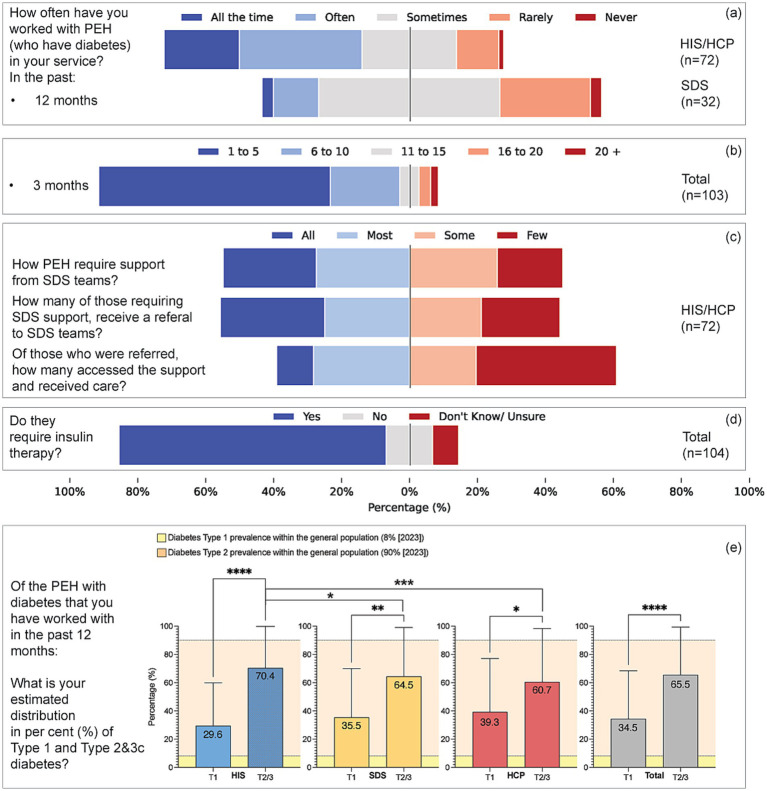
“Respondents comprised specialist diabetes clinicians (31%), homelessness/inclusion-health staff (38%) and VCSE providers (32%); median perceived Type 1 prevalence among PEH was 20% versus 8% nationally (p < 0.001).”
§ Diabetes care for people experiencing homelessness in the UK: insights from a national survey of frontline professionals and the development of an integrated care model > Abstract > Results
plain- Asserted: passes — The authors put it forward as true.
- Checkable: passes — It can be checked against evidence.
- Load-bearing: unclear — It is unclear whether the paper’s conclusions depend on it.
- Based: passes — The paper gives a reason why it holds.
64 more claims
Create a free account to see all 132 claims and to verify the 60 references still open.
- It may state two separate claims as one. 43
- The quote only partly states this claim. 3
- Probably not a substantial claim. 29
Self-check
Percentages, sums and reported differences re-computed from the paper’s own numbers.
Each contradiction between two passages listed here was confirmed by an independent check.
Rated major: it would touch a result — a value a result rests on, reported and recomputed p-values on opposite sides of the significance level, two passages that conflict with no sign which is right, or a cited work retracted before this paper was published.
In the paper
§ Diabetes care for people experiencing homelessness in the UK: insights from a national survey of frontline professionals and the development of an integrated care model > Abstract > Results
“Clear organisational policies (OR 1.62, 95% CI 1.06–2.48), cross-sector collaboration (OR 2.76, 1.20–6.36) and outreach-specific training (OR 2.50, 1.50–4.17) were independently associated with better outcomes.”
§ Diabetes care for people experiencing homelessness in the UK: insights from a national survey of frontline professionals and the development of an integrated care model > Results > Ordinal logistic regression
“When entered together, none retained significance (β range 0.04–0.56; all p > 0.18) and the model explained 5.8% of variance (McFadden’s R2 = 0.058), indicating considerable overlap between predictors.”
Rated minor: it would not touch a result — a value no result rests on, a p-value that stays on the same side of the significance level, or a conflict that is clerical, resolved elsewhere in the paper, or outside its own findings.
In the paper
§ Diabetes care for people experiencing homelessness in the UK: insights from a national survey of frontline professionals and the development of an integrated care model > Results > Perceived diabetes prevalence
“The mean perceived prevalence of Type 1 diabetes among PEH was 34.5% (median 20%, SD = 31.5; n = 86) (Figure 2). For combined Type 2/Type 3c diabetes, the mean was 65.5% (median 70%, SD = 35.6).”
§ Diabetes care for people experiencing homelessness in the UK: insights from a national survey of frontline professionals and the development of an integrated care model > Materials and methods > Recruitment and sample size
“Because perceived proportions of Type 1 and Type 2/3 diabetes are complementary, within-group dominance was tested using a one-sample Wilcoxon signed-rank test of deviation from 50%.”
Citations
Cites
von Elm, E., Altman, D. G., Egger, M., Pocock, S. J., Gøtzsche, P. C., & Vandenbroucke, J. P. (2008) · Journal of Clinical Epidemiology · doi:10.1016/j.jclinepi.2007.11.008 · Cited by 17,893
One size fits all? What counts as quality practice in (reflexive) thematic analysis?
Braun, V., & Clarke, V. (2021) · Qualitative Research in Psychology · doi:10.1080/14780887.2020.1769238 · Cited by 9,727
A Consensus-Based Checklist for Reporting of Survey Studies (CROSS)
Sharma, A., Minh Duc, N. T., Luu Lam Thang, T., Nam, N. H., Ng, S. J., Abbas, K. S., Huy, N. T., Marušić, A., Paul, C. L., Kwok, J., et al. (2021) · Journal of General Internal Medicine · doi:10.1007/s11606-021-06737-1 · Cited by 2,292 · cited 1×
“This cross-sectional survey adheres to the STROBE guideline (40) for cross-sectional studies and incorporates key items from the CROSS checklist (41).”
Housing First, Consumer Choice, and Harm Reduction for Homeless Individuals With a Dual Diagnosis
Tsemberis, S., Gulcur, L., & Nakae, M. (2004) · American Journal of Public Health · doi:10.2105/ajph.94.4.651 · Cited by 1,359
Free, C., Phillips, G., Watson, L., Galli, L., Felix, L., Edwards, P., Patel, V., & Haines, A. (2013) · PLoS Medicine · doi:10.1371/journal.pmed.1001363 · Cited by 1,187
Alzheimer’s disease is type 3 diabetes—Evidence reviewed
de la Monte, S. M., & Wands, J. R. (2008) · Journal of Diabetes Science and Technology · doi:10.1177/193229680800200619 · Cited by 1,158 · cited 1×
“Type 3c diabetes, often alcohol-related, involves pancreatic damage and impaired insulin production and is relevant to PEH (8, 9).”
Ahmad, E., Lim, S., Lamptey, R., Webb, D. R., & Davies, M. J. (2022) · The Lancet · doi:10.1016/s0140-6736(22)01655-5 · Cited by 1,120 · cited 1×
“The two principal forms are Type 1 (6) and Type 2 (7).”
Prevalence and incidence of type 1 diabetes in the world: a systematic review and meta-analysis
Mobasseri, M., Shirmohammadi, M., Amiri, T., Vahed, N., Hosseini Fard, H., & Ghojazadeh, M. (2020) · Health Promotion Perspectives · doi:10.34172/hpp.2020.18 · Cited by 713
Eddie, D., Hoffman, L., Vilsaint, C., Abry, A., Bergman, B., Hoeppner, B., Weinstein, C., & Kelly, J. F. (2019) · Frontiers in Psychology · doi:10.3389/fpsyg.2019.01052 · Cited by 447
The scope and impact of mobile health clinics in the United States: a literature review
Yu, S. W. Y., Hill, C., Ricks, M. L., Bennet, J., & Oriol, N. E. (2017) · International Journal for Equity in Health · doi:10.1186/s12939-017-0671-2 · Cited by 320
A systematic review of the effect of stigma on the health of people experiencing homelessness
Reilly, J., Ho, I., & Williamson, A. (2022) · Health & Social Care in the Community · doi:10.1111/hsc.13884 · Cited by 225
Campanozzi, L. L., Gibelli, F., Bailo, P., Nittari, G., Sirignano, A., & Ricci, G. (2023) · Frontiers in Public Health · doi:10.3389/fpubh.2023.1109323 · Cited by 201
Telemedicine Cost–Effectiveness for Diabetes Management: A Systematic Review
Lee, J. Y., & Lee, S. W. H. (2018) · Diabetes Technology & Therapeutics · doi:10.1089/dia.2018.0098 · Cited by 168
Feil, D. G., Zhu, C. W., & Sultzer, D. L. (2012) · Journal of Behavioral Medicine · doi:10.1007/s10865-011-9344-6 · Cited by 160
No digital divide? Technology use among homeless adults
Rhoades, H., Wenzel, S. L., Rice, E., Winetrobe, H., & Henwood, B. (2017) · Journal of Social Distress and the Homeless · doi:10.1080/10530789.2017.1305140 · Cited by 148
Mobile Health Technology and Healthcare Providers: Systemic Barriers to Adoption
Zakerabasali, S., Ayyoubzadeh, S. M., Baniasadi, T., Yazdani, A., & Abhari, S. (2021) · Healthcare Informatics Research · doi:10.4258/hir.2021.27.4.267 · Cited by 146
Rowe, A. K., Rowe, S., Peters, D. H., Holloway, K., & Ross‐Degnan, D. (2021) · BMJ Global Health · doi:10.1136/bmjgh-2020-003229 · Cited by 123
Calculating the return on investment of mobile healthcare
Oriol, N. E., Cote, P. J., Vavasis, A., et al. (2009) · BMC Medicine · doi:10.1186/1741-7015-7-27 · Cited by 105
Bernstein, R. S., Meurer, L. N., Plumb, E. J., & Jackson, J. L. (2015) · American Journal of Public Health · doi:10.2105/ajph.2014.302330 · Cited by 102
White, R. O., Chakkalakal, R. J., Presley, C. A., Bian, A., Schildcrout, J. S., Wallston, K. A., Barto, S., Kripalani, S., & Rothman, R. (2016) · Journal of Health Communication · doi:10.1080/10810730.2016.1207116 · Cited by 79
Berkowitz, S. A., Kalkhoran, S., Edwards, S. T., Essien, U. R., & Baggett, T. P. (2018) · Diabetes Care · doi:10.2337/dc17-1812 · Cited by 75
Definition, classification and diagnosis of diabetes mellitus
Schleicher, E., Gerdes, C., Petersmann, A., Müller-Wieland, D., Müller, U. A., Freckmann, G., Heinemann, L., Nauck, M., & Landgraf, R. (2022) · Experimental and Clinical Endocrinology & Diabetes · doi:10.1055/a-1624-2897 · Cited by 74
Singh, N., Scott, K., George, A. S., LeFevre, A. E., & Ved, R. R. (2021) · BMJ Global Health · doi:10.1136/bmjgh-2021-005041 · Cited by 47
The challenges of managing diabetes while homeless: a qualitative study using photovoice methodology
Campbell, R. B., Larsen, M., DiGiandomenico, A., Davidson, M. A., Booth, G. L., Hwang, S. W., McBrien, K. A., & Campbell, D. J. T. (2021) · Canadian Medical Association Journal · doi:10.1503/cmaj.202537 · Cited by 47
Arnaud, A., Fagot-Campagna, A., Reach, G., Basin, C., & Laporte, A. (2010) · The European Journal of Public Health · doi:10.1093/eurpub/ckp197 · Cited by 43
Scott, J., Gavin, J., Egan, A. M., Avalos, G., Dennedy, M. C., Bell, M., & Dunne, F. (2013) · QJM: An International Journal of Medicine · doi:10.1093/qjmed/hct063 · Cited by 40 · cited 1×
“Although prevalence studies are scant, existing evidence suggests that overall diabetes prevalence among PEH approximates that of the housed population (16–20), with an Irish estimate of about 8% (18).”
Cook, S., Schmedt, N., Broughton, J., Kalra, P. A., Tomlinson, L. A., & Quint, J. K. (2023) · BMJ Open · doi:10.1136/bmjopen-2022-065927 · Cited by 32
Population approaches to prevention of type 2 diabetes
White, M. (2016) · PLOS Medicine · doi:10.1371/journal.pmed.1002080 · Cited by 31
Sharan, R., Wiens, K., Ronksley, P. E., Hwang, S. W., Booth, G. L., Austin, P. C., Spackman, E., Bai, L., & Campbell, D. J. T. (2023) · Diabetes Care · doi:10.2337/dc23-0211 · Cited by 30 · cited 2×
“While this may reflect genuine excess risk, as suggested by population-based cohort studies linking homelessness with higher complication rates (21), it may also be amplified by case-mix concentration in frontline services.”
Martinez-Cardoso, A., Jang, W., & Baig, A. A. (2020) · Current Diabetes Reports · doi:10.1007/s11892-020-01332-w · Cited by 30
Hospital care and costs for homeless people
McCormick, B., & White, J. (2016) · Clinical Medicine · doi:10.7861/clinmedicine.16-6-506 · Cited by 29
Snoswell, C. L., Caffery, L. J., Haydon, H. M., Wickramasinghe, S. I., Crumblin, K., & Smith, A. C. (2019) · Journal of Telemedicine and Telecare · doi:10.1177/1357633x19873239 · Cited by 25
Grewal, E. K., Campbell, R. B., Booth, G. L., McBrien, K. A., Hwang, S. W., O’Campo, P., & Campbell, D. J. T. (2021) · International Journal for Equity in Health · doi:10.1186/s12939-021-01494-3 · Cited by 24
Diabetes management interventions for homeless adults: a systematic review
Constance, J., & Lusher, J. M. (2020) · International Journal of Public Health · doi:10.1007/s00038-020-01513-0 · Cited by 24
Diabetes management among underserved older adults through telemedicine and community health workers
Marsh, Z., Nguyen, Y., Teegala, Y., & Cotter, V. T. (2022) · Journal of the American Association of Nurse Practitioners · doi:10.1097/jxx.0000000000000595 · Cited by 22
Campbell, D. J. T., Campbell, R. B., Booth, G. L., Hwang, S. W., & McBrien, K. A. (2020) · Canadian Journal of Diabetes · doi:10.1016/j.jcjd.2020.01.011 · Cited by 22
Althubyani, A. N., Gupta, S., Tang, C. Y., Batra, M., Puvvada, R. K., Higgs, P., Joisa, M., & Thomas, J. (2024) · Journal of Immigrant and Minority Health · doi:10.1007/s10903-023-01576-0 · Cited by 18
Prevalence of diabetes among homeless and slum dwellers in Accra, Ghana: a survey study
Bawah, A. T., Abaka-Yawson, A., Seini, M. M., Yeboah, F. A., & Ngala, R. A. (2019) · BMC Research Notes · doi:10.1186/s13104-019-4613-5 · Cited by 18
Improving the health of the homeless and how to achieve it within the new NHS architecture
Batchelor, P., & Kingsland, J. (2020) · International Journal of Environmental Research and Public Health · doi:10.3390/ijerph17114100 · Cited by 17
Campbell, D. J. T., Campbell, R. B., Ziegler, C. P., McBrien, K., Hwang, S. W., & Booth, G. L. (2019) · Systematic Reviews · doi:10.1186/s13643-019-1020-x · Cited by 15
Long-term association between homelessness and mortality among people with diabetes
Wiens, K., Bai, L., Austin, P. C., Ronksley, P. E., Hwang, S. W., Spackman, E., Booth, G. L., & Campbell, D. J. T. (2023) · The Lancet Diabetes & Endocrinology · doi:10.1016/s2213-8587(22)00358-8 · Cited by 15
Lyles, C. R., Sarkar, U., Patel, U. B., Lisker, S., Stark, A., Guzman, V., & Patel, A. (2020) · Journal of the American Medical Informatics Association · doi:10.1093/jamia/ocaa251 · Cited by 15
Building Learning Health Care Systems in Primary Care
McGuire, M. (2019) · Quality Management in Health Care · doi:10.1097/qmh.0000000000000230 · Cited by 14
Asgary, R., Beideck, E., & Naderi, R. (2022) · eClinicalMedicine · doi:10.1016/j.eclinm.2022.101418 · Cited by 13
Hadenfeldt, C., Knezevich, E., & Black, S. (2019) · The Diabetes Educator · doi:10.1177/0145721719843680 · Cited by 13
Diabetes Care for Patients Experiencing Homelessness: beyond metformin and sulfonylureas
Brooks, L. K., Kalyanaraman, N., & Malek, R. (2019) · The American Journal of Medicine · doi:10.1016/j.amjmed.2018.10.033 · Cited by 11
Identifying challenges and solutions to providing diabetes care for those experiencing homelessness
Mancini, N., Campbell, R., Yaphe, H., Tibebu, T., Grewal, E., Saunders-Smith, T., McBrien, K., & Campbell, D. (2021) · International Journal on Homelessness · doi:10.5206/ijoh.2022.1.13643 · Cited by 10
Meffen, A., Rutherford, M. J., Sayers, R. D., Houghton, J. S. M., Bradbury, N., & Gray, L. J. (2025) · BJS Open · doi:10.1093/bjsopen/zraf004 · Cited by 10
Improving diabetes care of community-dwelling underserved older adults
Marsh, Z., Teegala, Y., & Cotter, V. (2022) · Journal of the American Association of Nurse Practitioners · doi:10.1097/jxx.0000000000000773 · Cited by 10
Ahluwalia, A., Morcos, D., & Koulen, P. (2023) · Frontiers in Public Health · doi:10.3389/fpubh.2023.1284748 · Cited by 10
Vickery, K. D., Ford, B. R., Gelberg, L., Bonilla, Z., Strother, E., Gust, S., Adair, E., Montori, V. M., Linzer, M., Evans, M. D., et al. (2023) · Frontiers in Psychology · doi:10.3389/fpsyg.2023.1225777 · Cited by 9
Chan, C. Y., Hoi, B. P.-K., & Wong, E. L.-Y. (2022) · Frontiers in Public Health · doi:10.3389/fpubh.2022.957754 · Cited by 8
Do we care enough about the presence of sexual problems in diabetic patients?
Bilen, H., Dayanan, R., Ciftel, E., Bilen, A., Ciftel, S., Mercantepe, F., & Capoglu, I. (2023) · International Journal of General Medicine · doi:10.2147/ijgm.s441833 · Cited by 8
Mason, T., William, W., Dumville, J. C., & Bower, P. (2022) · BMJ Open · doi:10.1136/bmjopen-2021-057244 · Cited by 7
Diabetes self-management experience of patients with diabetes: focused on the visually impaired
Chang, S. J., Lee, K.-E., Yang, E., & Kim, H. J. (2021) · Journal of Korean Academy of Nursing · doi:10.4040/jkan.20231 · Cited by 7
Benz, F. (2023) · British Journal of Diabetes · doi:10.15277/bjd.2023.421 · Cited by 6
Harte, R., Norton, L., Whitehouse, C., Lorincz, I., Jones, D., Gerald, N., Estrada, I., Sabini, C., Mitra, N., Long, J. A., et al. (2022) · Contemporary Clinical Trials Communications · doi:10.1016/j.conctc.2021.100878 · Cited by 5
Enhancing primary healthcare in under-resourced communities with mobile health clinics
David, M., & Charles, M. L. (2025) · Nursing · doi:10.1097/nsg.0000000000000116 · Cited by 2
Schipper, L. A., Bigelow, A., & Pardee, M. (2019) · 45th Biennial Convention (16-20 November 2019) · Cited by 1
(2000) · Europe PMC (PubMed Central)
Research works printed but not linked: 9
- Barton C Greaves F. Statutory homelessness (England): The legal framework and performance (Briefing Paper No. SN01164). London: House of Commons Library. (2025).
- Department for Levelling Up, Housing and Communities. Statutory homelessness in England: Financial year 2023-24. GOV.UK. (2024).
- Department for Levelling Up, Housing and Communities. Statutory homelessness in England: January to March 2024. GOV.UK. (2024).
- Rowe LW Scheive M Tso HL Wurster P Kalafatis NE Camp DA. A seven-year analysis of the role and impact of a free community eye clinic. BMC Med Educ. (2021) 21: 596. doi: 10.1186/s12909-021-03026-7, PMID: 34856952 PMC8636581 · doi:10.1186/s12909-021-03026-7
- Johnson P Linzer M Shippee ND Heegaard W Webb F Vickery KD. Development and implementation of an interdisciplinary intensive primary care clinic for high-need high-cost patients in a safety net hospital. Popul Health Manag. (2020) 23: 124– 31. doi: 10.1089/pop.2019.0068, PMID: 31381484 PMC7074919 · doi:10.1089/pop.2019.0068
- Dorney-Smith S Jackson T Oehring D. Dont-tell-us-off-examining-ways-to-improve-the-health-care-of-people-experiencing-homelessness-with-diabetes. London: Pathway (2024).
- Bon A Akkermans H. Digital (in)equality, digital inclusion, digital humanism. In. WebSci ‘20: Companion Publication of the 12th ACM Conference on Web Science (pp. 59– 62). New York, NY: Association for Computing Machinery. (2020). doi: 10.1145/3394332.3402830 · DOI
- Campbell D Grewal E Tibebu T Gonzalez P Campbell R McBrien K. IDF21-0536 improving diabetes care for the homeless: a comprehensive international scoping review of interventions. Diabetes Res Clin Pract. (2022) 186: 109565. doi: 10.1016/j.diabres.2022.109565 · doi:10.1016/j.diabres.2022.109565
- England NHS. National Diabetes Experience Survey. London, UK: NHS England (2023).
Cited by
Still being checked.
Metadata
- Authors
- Oehring, D., Paisi, M., Nasser, M., Jackson, T., Young, R., Wooff, L., Partridge, H., Conaty, J., & Dorney-Smith, S.
- Affiliations
- University of Plymouth (GB)
- Bolton NHS Foundation Trust (GB)
- Corresponding author
- Oehring, Daniela
- Venue
- Frontiers in Public Health
- Publisher
- Frontiers Media SA
- Published
- 2025-10-13
- Volume
- 13
- Pages
- 1672014-1672014
- ISSN
- 2296-2565 (ISSN-L)
- PMC
- PMC12554705
- OpenAlex
- W4415097980
- Cited by
- 1
- References
- 60
- Citations by year
- 2026: 1
- FWCI
- 0.70
- Type
- journal article
- Language
- en
- Open access
- gold
- doi.org
- Licence
- Locations
- Frontiers in Public Health (publishedVersion, cc-by)
- Europe PMC (PubMed Central) (publishedVersion, cc-by)
- PubMed Central (publishedVersion, cc-by)
- PubMed (publishedVersion)
- PEARL (University of Plymouth) (submittedVersion, cc-by-nc)
- DOAJ (DOAJ: Directory of Open Access Journals) (submittedVersion)
- Topics
- Social Sciences › Sociology and Political Science › Homelessness and Social Issues
- Health Sciences › Medicine › Endocrinology, Diabetes and Metabolism › Diabetes Management and Education
- Health Sciences › Medicine › Endocrinology, Diabetes and Metabolism › Diabetes Management and Research
- Keywords
- diabetes management, homelessness, type 1 diabetes, integrated care model, inclusion health, health disparities, food insecurity, diabetes complications, amputation, intersectoral collaboration, mobile screening, outreach services, frontline workers, health equity, service fragmentation
- MeSH terms
- Adult, Cross-Sectional Studies, Diabetes Mellitus, Female, United Kingdom, Health Personnel, Ill-Housed Persons, Humans, Male, Middle Aged, Surveys and Questionnaires, Delivery of Health Care, Integrated
About these checks
Registry, retraction, Cites and statistics results are computed, not judged, with one exception: a printed reference that no index lists is read once by a model before it counts as a citation error. Claims are extracted by a model and kept only when their quote appears verbatim in the text; each cited source is then checked, with a model’s help, for whether it says what the claim relies on. Those verdicts can be wrong — read the claim’s quote and the cited source before relying on one.
A language model drew the claims from the paper on 2026-11-25, under version 3 of the claim definition (model deepseek-v4.1-flash, prompt extract-v3).
A second model labelled each claim on 2026-11-25 (model jev-1.13-20260917, definition revision gold-guideline-v0.2).
Statistics and arithmetic are recomputed, not judged.
Confidence bands are shown only for fields calibrated on our annotated test set. None is calibrated yet, so no band is shown.
What counts as a claim ›How we measure confidence ›How we check this ›
Are you an author, or do you see a problem with this page? Request a review
Data sources
Bibliographic data: Semantic Scholar, OpenAlex, Crossref.
Contains information from the Semantic Scholar Academic Graph Datasets, made available under the ODC Attribution License (ODC-BY 1.0).
Semantic Scholar’s data is described in: Kinney, R., et al. (2023). The Semantic Scholar Open Data Platform. arXiv:2301.10140.
