

The DOI matches its Crossref record; 52 of the 53 references it cites were found in a registry or an index.
GANterfactual—Counterfactual Explanations for Medical Non-experts Using Generative Adversarial Learning
Open accessAbstract
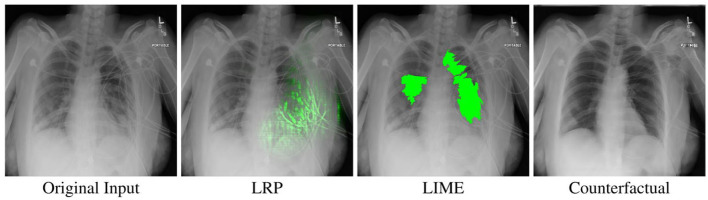
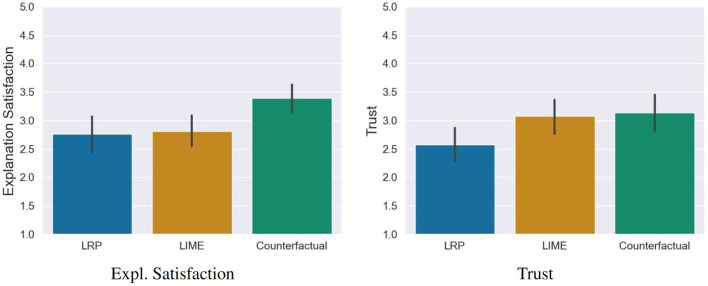
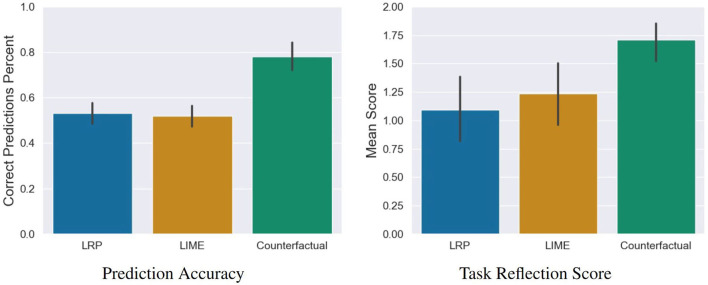
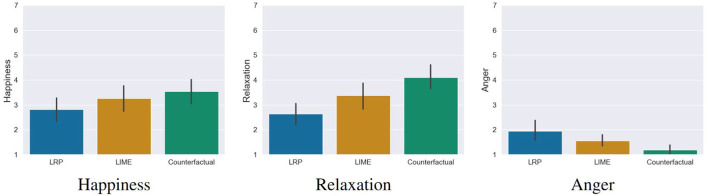
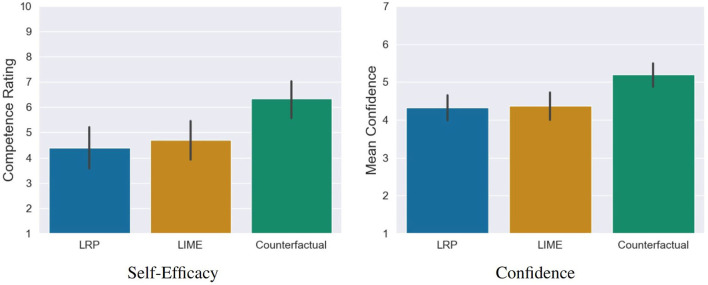
With the ongoing rise of machine learning, the need for methods for explaining decisions made by artificial intelligence systems is becoming a more and more important topic. Especially for image classification tasks, many state-of-the-art tools to explain such classifiers rely on visual highlighting of important areas of the input data. Contrary, counterfactual explanation systems try to enable a counterfactual reasoning by modifying the input image in a way such that the classifier would have made a different prediction. By doing so, the users of counterfactual explanation systems are equipped with a completely different kind of explanatory information. However, methods for generating realistic counterfactual explanations for image classifiers are still rare. Especially in medical contexts, where relevant information often consists of textural and structural information, high-quality counterfactual images have the potential to give meaningful insights into decision processes. In this work, we present GANterfactual , an approach to generate such counterfactual image explanations based on adversarial image-to-image translation techniques. Additionally, we conduct a user study to evaluate our approach in an exemplary medical use case. Our results show that, in the chosen medical use-case, counterfactual explanations lead to significantly better results regarding mental models, explanation satisfaction, trust, emotions, and self-efficacy than two state-of-the art systems that work with saliency maps, namely LIME and LRP.
Overview
The claims and statistics of this paper haven’t been checked yet.
Run the check — free, no account needed. It reads the open-access text and checks the sources it cites.
Integrity signals
Registry
Cites
Statistics
Figures
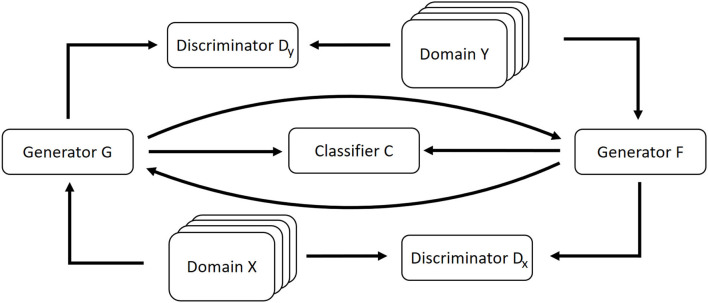
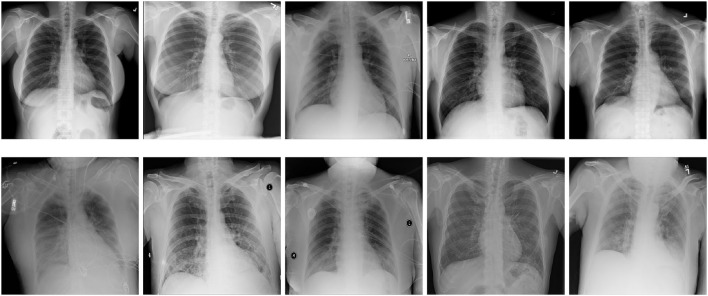
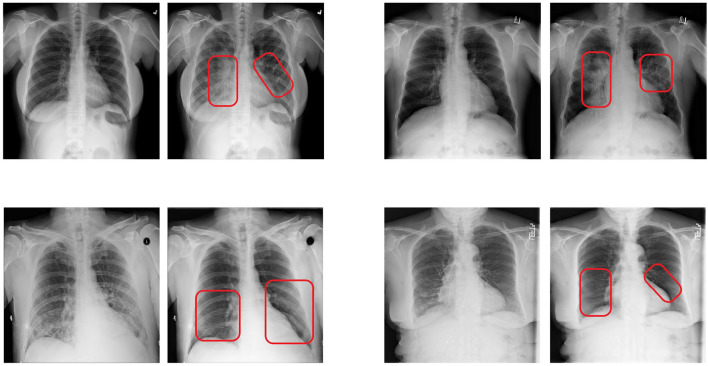
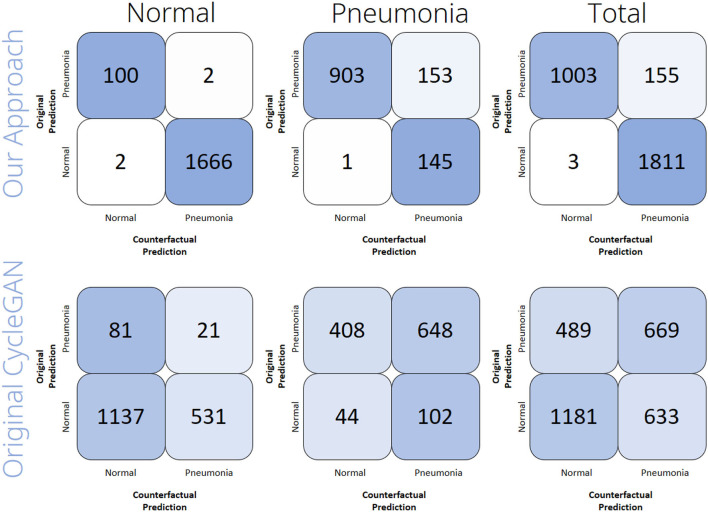
Verification
Claims the paper makes
The claims and statistics of this paper haven’t been checked yet.
Run the check — free, no account needed. It reads the open-access text and checks the sources it cites.
Claims other papers make about this one
Each is checked against this paper’s own text: does it say what the citing paper says it does?
In the citing paper
“However, a limitation of this method is its lack of flexibility and strong model-specificity since a slight change in the task would require the acquisition of a new dataset alongside another training of the CycleGAN and the binary classifier.”
From Explainable AI in medical imaging: An overview for clinical practitioners – Beyond saliency-based XAI approaches (2023) · cites this paper as [32]
In the citing paper
“The authors stated that counterfactual explanations led to significantly better results regarding mental models, explanation satisfaction, and trust.”
From Explainable AI in medical imaging: An overview for clinical practitioners – Beyond saliency-based XAI approaches (2023) · cites this paper as [32]
In the citing paper
“Dependence on binary classifier”
From Explainable AI in medical imaging: An overview for clinical practitioners – Beyond saliency-based XAI approaches (2023) · cites this paper as [32]
In the citing paper
“Intuitive explainability by contrastive setting, even for non-experts”
From Explainable AI in medical imaging: An overview for clinical practitioners – Beyond saliency-based XAI approaches (2023) · cites this paper as [32]
In the citing paper
“Lack of flexibility”
From Explainable AI in medical imaging: An overview for clinical practitioners – Beyond saliency-based XAI approaches (2023) · cites this paper as [32]
Self-check
Percentages, sums and reported differences re-computed from the paper’s own numbers.
The self-check needs the paper’s full text.
Citations
Cites
ImageNet classification with deep convolutional neural networks
Krizhevsky, A., Sutskever, I., & Hinton, G. E. (2017) · Communications of the ACM · doi:10.1145/3065386 · Cited by 112,155
Three Approaches to Qualitative Content Analysis
Hsieh, H.-F., & Shannon, S. E. (2005) · Qualitative Health Research · doi:10.1177/1049732305276687 · Cited by 44,601
Statistical Power Analysis for the Behavioral Sciences
Cohen, J. (2013) · doi:10.4324/9780203771587 · Cited by 25,373
Unpaired image-to-image translation using cycle-consistent adversarial networks
Zhu, J.-Y., Park, T., Isola, P., & Efros, A. A. (2017) · 2017 IEEE International Conference on Computer Vision (ICCV) · doi:10.1109/iccv.2017.244 · Cited by 23,602
Image-to-Image Translation with Conditional Adversarial Networks
Isola, P., Zhu, J.-Y., Zhou, T., & Efros, A. A. (2017) · 2017 IEEE Conference on Computer Vision and Pattern Recognition (CVPR) · doi:10.1109/cvpr.2017.632 · Cited by 22,930
Labaca-Castro, R. (2023) · Springer eBooks · doi:10.1007/978-3-658-40442-0_9 · Cited by 21,119
GAN(Generative Adversarial Nets)
淳司, 柴. (2017) · Journal of Japan Society for Fuzzy Theory and Intelligent Informatics · doi:10.3156/jsoft.29.5_177_2 · Cited by 20,507
"Why Should I Trust You?": Explaining the Predictions of Any Classifier
Ribeiro, M. T., Singh, S., & Guestrin, C. (2016) · Proceedings of the 22nd ACM SIGKDD International Conference on Knowledge Discovery and Data Mining · doi:10.1145/2939672.2939778 · Cited by 17,555
Proceedings of IEEE International Conference on Computer Vision
(1995) · IEEE/CVF International Conference on Computer Vision (ICCV) · doi:10.1109/iccv.1995.466933 · Cited by 13,117
Barredo Arrieta, A., Díaz-Rodríguez, N., Del Ser, J., Bennetot, A., Tabik, S., Barbado, A., Garcia, S., Gil-Lopez, S., Molina, D., Benjamins, R., et al. (2020) · Information Fusion · doi:10.1016/j.inffus.2019.12.012 · Cited by 10,423
Research works printed but not linked: 2
- Hall, 2018, Introduction to Machine Learning Interpretability
- Stone, 2016, Artificial Intelligence and Life in 2030. One Hundred Year Study on Artificial Intelligence: Report of the 2015-2016 Study Panel
Cited by
Sorted by citations
Lekadir, K., Frangi, A. F., Porras, A. R., Glocker, B., Cintas, C., Langlotz, C. P., Weicken, E., Asselbergs, F. W., Prior, F., Collins, G. S., et al. (2025) · BMJ · doi:10.1136/bmj-2024-081554 · Cited by 957
Muhammad, D., & Bendechache, M. (2024) · Computational and Structural Biotechnology Journal · doi:10.1016/j.csbj.2024.08.005 · Cited by 325
Counterfactual Explanations and Algorithmic Recourses for Machine Learning: A Review
Verma, S., Boonsanong, V., Hoang, M., Hines, K., Dickerson, J. P., & Shah, C. S. (2024) · ACM Computing Surveys · doi:10.1145/3677119 · Cited by 723
Counterfactual Explanations and Algorithmic Recourses for Machine Learning: A Review
Verma, S., Boonsanong, V., Hoang, M., Hines, K. E., Dickerson, J. P., & Shah, C. (2020) · arXiv · doi:10.48550/arxiv.2010.10596 · Cited by 267
What is Human-Centered about Human-Centered AI? A Map of the Research Landscape
Capel, T., & Brereton, M. (2023) · Proceedings of the 2023 CHI Conference on Human Factors in Computing Systems · doi:10.1145/3544548.3580959 · Cited by 228
Metadata
- Authors
- Mertes, S., Huber, T., Weitz, K., Heimerl, A., & André, E.
- Affiliations
- University of Augsburg (DE)
- Corresponding author
- Mertes, Silvan
- Venue
- Frontiers in Artificial Intelligence
- Publisher
- Frontiers Media SA
- Published
- 2022-04-08
- Volume
- 5
- Pages
- 825565-825565
- ISSN
- 2624-8212 (ISSN-L)
- PMC
- PMC9024220
- OpenAlex
- W3187709298
- Cited by
- 119
- References
- 53
- Citations by year
- 2026: 32 · 2025: 34 · 2024: 31 · 2023: 16 · 2022: 6
- FWCI
- 7.13
- Type
- journal article
- Language
- en
- Open access
- gold
- doi.org
- Licence
- Locations
- Frontiers in Artificial Intelligence (publishedVersion, cc-by)
- PubMed Central (publishedVersion, cc-by)
- PubMed (publishedVersion)
- arXiv (Cornell University) (submittedVersion)
- DOAJ (DOAJ: Directory of Open Access Journals) (submittedVersion)
- OPUS (Augsburg University) (submittedVersion, cc-by)
- arXiv (Cornell University)
- Funders
- Deutsche Forschungsgemeinschaft
- Bayerisches Staatsministerium für Wissenschaft, Forschung und Kunst
- Topics
- Physical Sciences › Computer Science › Artificial Intelligence › Explainable Artificial Intelligence (XAI)
- Health Sciences › Medicine › Health Informatics › Artificial Intelligence in Healthcare and Education
- Physical Sciences › Computer Science › Software › Software Testing and Debugging Techniques
- Keywords
- counterfactual explanations, generative adversarial networks, image-to-image translation, medical image classification, explainable AI, adversarial perturbation generation, non-expert users, user study, mental models, trust in AI, self-efficacy, saliency maps, lime, LRP
About these checks
Registry, retraction, Cites and statistics results are computed, not judged, with one exception: a printed reference that no index lists is read once by a model before it counts as a citation error. Claims are extracted by a model and kept only when their quote appears verbatim in the text; each cited source is then checked, with a model’s help, for whether it says what the claim relies on. Those verdicts can be wrong — read the claim’s quote and the cited source before relying on one.
Statistics and arithmetic are recomputed, not judged.
Confidence bands are shown only for fields calibrated on our annotated test set. None is calibrated yet, so no band is shown.
What counts as a claim ›How we measure confidence ›How we check this ›
Are you an author, or do you see a problem with this page? Request a review
