

The DOI matches its Crossref record; 52 of the 53 references it cites were found in a registry or an index.
GANterfactual—Counterfactual Explanations for Medical Non-experts Using Generative Adversarial Learning
Open accessAbstract
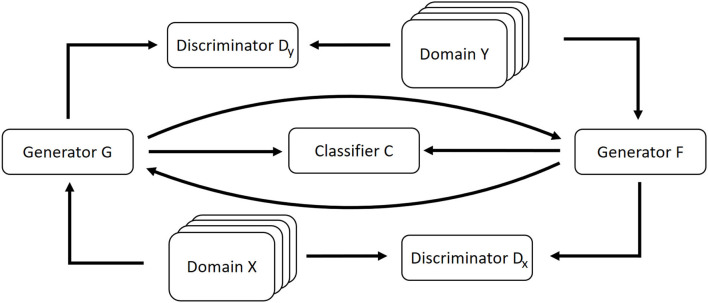
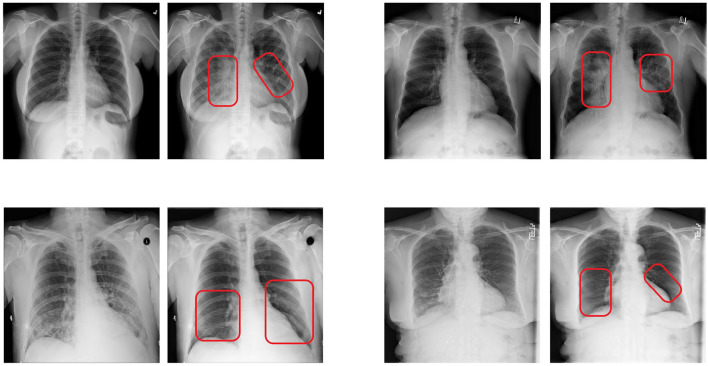
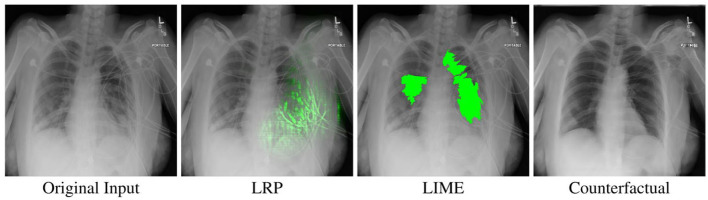
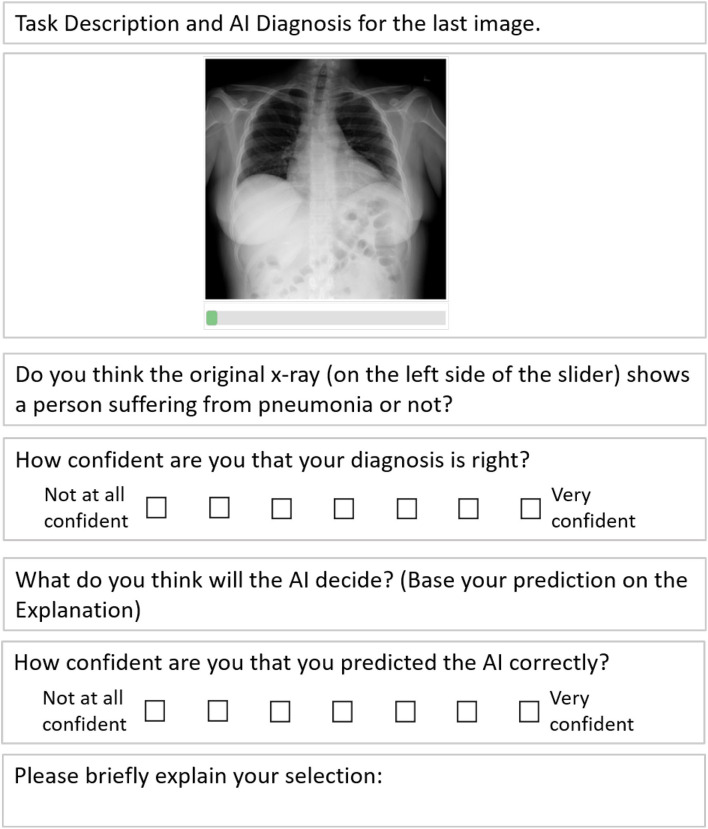
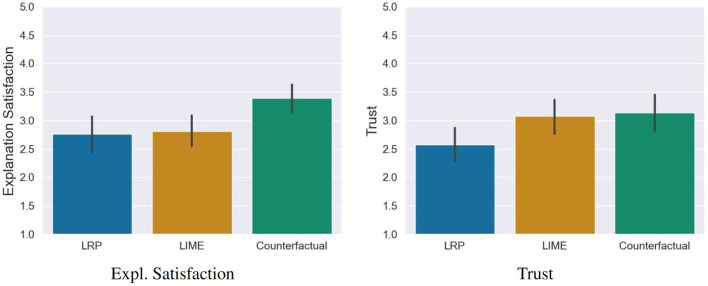
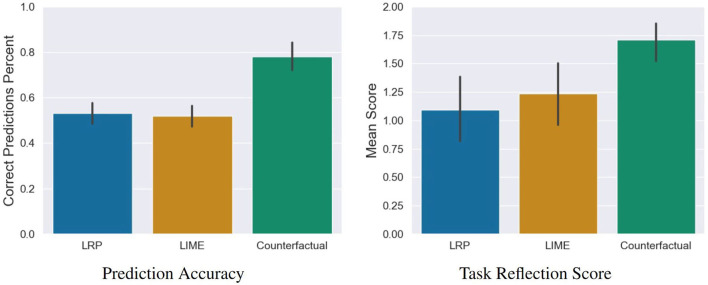
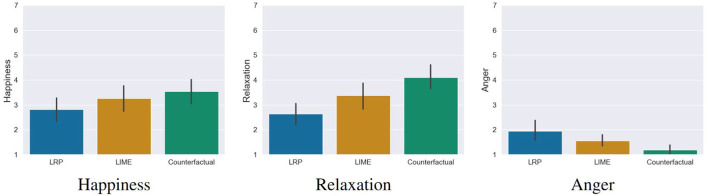
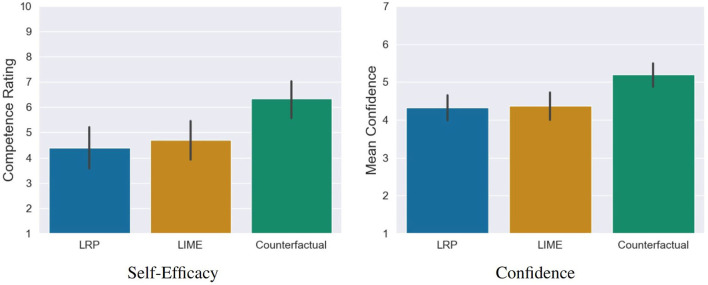
With the ongoing rise of machine learning, the need for methods for explaining decisions made by artificial intelligence systems is becoming a more and more important topic. Especially for image classification tasks, many state-of-the-art tools to explain such classifiers rely on visual highlighting of important areas of the input data. Contrary, counterfactual explanation systems try to enable a counterfactual reasoning by modifying the input image in a way such that the classifier would have made a different prediction. By doing so, the users of counterfactual explanation systems are equipped with a completely different kind of explanatory information. However, methods for generating realistic counterfactual explanations for image classifiers are still rare. Especially in medical contexts, where relevant information often consists of textural and structural information, high-quality counterfactual images have the potential to give meaningful insights into decision processes. In this work, we present GANterfactual , an approach to generate such counterfactual image explanations based on adversarial image-to-image translation techniques. Additionally, we conduct a user study to evaluate our approach in an exemplary medical use case. Our results show that, in the chosen medical use-case, counterfactual explanations lead to significantly better results regarding mental models, explanation satisfaction, trust, emotions, and self-efficacy than two state-of-the art systems that work with saliency maps, namely LIME and LRP.
Overview
The claims and statistics of this paper haven’t been checked yet.
Run the check — free, no account needed. It reads the open-access text and checks the sources it cites.
Integrity signals
Registry
Cites
Statistics
Figures
Verification
Claims the paper makes
The claims and statistics of this paper haven’t been checked yet.
Run the check — free, no account needed. It reads the open-access text and checks the sources it cites.
Claims other papers make about this one
Each is checked against this paper’s own text: does it say what the citing paper says it does?
In the citing paper
“However, a limitation of this method is its lack of flexibility and strong model-specificity since a slight change in the task would require the acquisition of a new dataset alongside another training of the CycleGAN and the binary classifier.”
From Explainable AI in medical imaging: An overview for clinical practitioners – Beyond saliency-based XAI approaches (2023) · cites this paper as [32]
In the citing paper
“The authors stated that counterfactual explanations led to significantly better results regarding mental models, explanation satisfaction, and trust.”
From Explainable AI in medical imaging: An overview for clinical practitioners – Beyond saliency-based XAI approaches (2023) · cites this paper as [32]
In the citing paper
“Dependence on binary classifier”
From Explainable AI in medical imaging: An overview for clinical practitioners – Beyond saliency-based XAI approaches (2023) · cites this paper as [32]
In the citing paper
“Intuitive explainability by contrastive setting, even for non-experts”
From Explainable AI in medical imaging: An overview for clinical practitioners – Beyond saliency-based XAI approaches (2023) · cites this paper as [32]
In the citing paper
“Lack of flexibility”
From Explainable AI in medical imaging: An overview for clinical practitioners – Beyond saliency-based XAI approaches (2023) · cites this paper as [32]
Self-check
Percentages, sums and reported differences re-computed from the paper’s own numbers.
The self-check needs the paper’s full text.
Citations
Cites
ImageNet classification with deep convolutional neural networks
Krizhevsky, A., Sutskever, I., & Hinton, G. E. (2017) · Communications of the ACM · doi:10.1145/3065386 · Cited by 112,155
Three Approaches to Qualitative Content Analysis
Hsieh, H.-F., & Shannon, S. E. (2005) · Qualitative Health Research · doi:10.1177/1049732305276687 · Cited by 44,601
Statistical Power Analysis for the Behavioral Sciences
Cohen, J. (2013) · doi:10.4324/9780203771587 · Cited by 25,373
Unpaired image-to-image translation using cycle-consistent adversarial networks
Zhu, J.-Y., Park, T., Isola, P., & Efros, A. A. (2017) · 2017 IEEE International Conference on Computer Vision (ICCV) · doi:10.1109/iccv.2017.244 · Cited by 23,602
Image-to-Image Translation with Conditional Adversarial Networks
Isola, P., Zhu, J.-Y., Zhou, T., & Efros, A. A. (2017) · 2017 IEEE Conference on Computer Vision and Pattern Recognition (CVPR) · doi:10.1109/cvpr.2017.632 · Cited by 22,930
Labaca-Castro, R. (2023) · Springer eBooks · doi:10.1007/978-3-658-40442-0_9 · Cited by 21,119
GAN(Generative Adversarial Nets)
淳司, 柴. (2017) · Journal of Japan Society for Fuzzy Theory and Intelligent Informatics · doi:10.3156/jsoft.29.5_177_2 · Cited by 20,507
"Why Should I Trust You?": Explaining the Predictions of Any Classifier
Ribeiro, M. T., Singh, S., & Guestrin, C. (2016) · Proceedings of the 22nd ACM SIGKDD International Conference on Knowledge Discovery and Data Mining · doi:10.1145/2939672.2939778 · Cited by 17,555
Proceedings of IEEE International Conference on Computer Vision
(1995) · IEEE/CVF International Conference on Computer Vision (ICCV) · doi:10.1109/iccv.1995.466933 · Cited by 13,117
Barredo Arrieta, A., Díaz-Rodríguez, N., Del Ser, J., Bennetot, A., Tabik, S., Barbado, A., Garcia, S., Gil-Lopez, S., Molina, D., Benjamins, R., et al. (2020) · Information Fusion · doi:10.1016/j.inffus.2019.12.012 · Cited by 10,423
Research works printed but not linked: 2
- Hall, 2018, Introduction to Machine Learning Interpretability
- Stone, 2016, Artificial Intelligence and Life in 2030. One Hundred Year Study on Artificial Intelligence: Report of the 2015-2016 Study Panel
Cited by
Sorted by citations
Lekadir, K., Frangi, A. F., Porras, A. R., Glocker, B., Cintas, C., Langlotz, C. P., Weicken, E., Asselbergs, F. W., Prior, F., Collins, G. S., et al. (2025) · BMJ · doi:10.1136/bmj-2024-081554 · Cited by 957
Muhammad, D., & Bendechache, M. (2024) · Computational and Structural Biotechnology Journal · doi:10.1016/j.csbj.2024.08.005 · Cited by 325
Counterfactual Explanations and Algorithmic Recourses for Machine Learning: A Review
Verma, S., Boonsanong, V., Hoang, M., Hines, K., Dickerson, J. P., & Shah, C. S. (2024) · ACM Computing Surveys · doi:10.1145/3677119 · Cited by 723
Counterfactual Explanations and Algorithmic Recourses for Machine Learning: A Review
Verma, S., Boonsanong, V., Hoang, M., Hines, K. E., Dickerson, J. P., & Shah, C. (2020) · arXiv · doi:10.48550/arxiv.2010.10596 · Cited by 267
What is Human-Centered about Human-Centered AI? A Map of the Research Landscape
Capel, T., & Brereton, M. (2023) · Proceedings of the 2023 CHI Conference on Human Factors in Computing Systems · doi:10.1145/3544548.3580959 · Cited by 228
Borys, K., Schmitt, Y. A., Nauta, M., Seifert, C., Krämer, N., Friedrich, C. M., & Nensa, F. (2023) · European Journal of Radiology · doi:10.1016/j.ejrad.2023.110786 · Cited by 233
Ning, Y., Teixayavong, S., Shang, Y., Savulescu, J., Nagaraj, V., Miao, D., Mertens, M., Ting, D. S. W., Ong, J. C. L., Liu, M., et al. (2024) · The Lancet Digital Health · doi:10.1016/s2589-7500(24)00143-2 · Cited by 212
A Survey of Algorithmic Recourse: Contrastive Explanations and Consequential Recommendations
Karimi, A.-H., Barthe, G., Schölkopf, B., & Valera, I. (2023) · ACM Computing Surveys · doi:10.1145/3527848 · Cited by 301
Deep learning in cancer genomics and histopathology
Unger, M., & Kather, J. N. (2024) · Genome Medicine · doi:10.1186/s13073-024-01315-6 · Cited by 135
Explainable AI for Medical Data: Current Methods, Limitations, and Future Directions
Hossain, M. I., Zamzmi, G., Mouton, P. R., Salekin, M. S., Sun, Y., & Goldgof, D. B. (2023) · ACM Computing Surveys · doi:10.1145/3637487 · Cited by 135
Using generative AI to investigate medical imagery models and datasets
Lang, O., Stupp, D., Traynis, I., Cole-Lewis, H. J., Bennett, C. R., Lyles, C. R., Lau, C., Irani, M., Semturs, C., Webster, D. R., et al. (2024) · EBioMedicine · doi:10.1016/j.ebiom.2024.105075 · Cited by 71
Ali, M., Ali, S., Abbas, Q., Abbas, Z., & Lee, S. (2025) · Digital Health · doi:10.1177/20552076251395548 · Cited by 80
DeGrave, A. J., Cai, Z. R., Janizek, J. D., Daneshjou, R., & Lee, S. (2023) · Nature Biomedical Engineering · doi:10.1038/s41551-023-01160-9 · Cited by 71
Explainable Artificial Intelligence for Medical Applications: A Review
Sun, Q., Akman, A., & Schuller, B. W. (2024) · ACM Transactions on Computing for Healthcare · doi:10.1145/3709367 · Cited by 77
Oualikene-Gonin, W., Jaulent, M., Thierry, J.-P., Oliveira‐Martins, S., Belgodère, L., Maison, P., Ankri, J., & The Scientific Advisory Board of ANSM (2024) · Frontiers in Pharmacology · doi:10.3389/fphar.2024.1437167 · Cited by 52
Sarkar, S., Gaur, M., Chen, L. K., Garg, M., & Srivastava, B. (2023) · Frontiers in Artificial Intelligence · doi:10.3389/frai.2023.1229805 · Cited by 38
Adversarial Counterfactual Visual Explanations
Jeanneret, G., Simon, L., & Jurie, F. (2023) · IEEE Computer Society Conference on Computer Vision and Pattern Recognition/Proceedings - IEEE Computer Society Conference on Computer Vision and Pattern Recognition/Proceedings · doi:10.1109/cvpr52729.2023.01576 · Cited by 44
Kabir, S., Hossain, M. S., & Andersson, K. (2025) · Algorithms · doi:10.3390/a18090556 · Cited by 44
Nicolson, A., Bradburn, E., Gal, Y., Papageorghiou, A. T., & Noble, J. A. (2025) · npj Digital Medicine · doi:10.1038/s41746-025-02023-0 · Cited by 45
Kumar, R. R., Sporn, K., Waisberg, E., Ong, J., Paladugu, P., Vadhera, A. S., Amiri, D., Ngo, A., Jagadeesan, R., Tavakkoli, A., et al. (2025) · Health Care Analysis · doi:10.1007/s10728-025-00537-y · Cited by 33
Toward Human-centered XAI in Practice: A survey
Kong, X., Liu, S., & Zhu, L. (2024) · Machine Intelligence Research · doi:10.1007/s11633-022-1407-3 · Cited by 35
Weitz, K., Schlagowski, R., André, E., Männiste, M., & Dr.George, C. M. (2024) · CHI Conference on Human Factors in Computing Systems · doi:10.1145/3613904.3642563 · Cited by 27
Self-citationDüsing, C., Cimiano, P., Rehberg, S., Scherer, C., Kaup, O., Köster, C., Hellmich, S., Herrmann, D., Meier, K. L., Claßen, S., et al. (2024) · Artificial Intelligence in Medicine · doi:10.1016/j.artmed.2024.102982 · Cited by 26
Rotem, O., Schwartz, T., Maor, R., Tauber, Y., Shapiro, M. T., Meseguer, M., Gilboa, D., Seidman, D. S., & Zaritsky, A. (2024) · Nature Communications · doi:10.1038/s41467-024-51136-9 · Cited by 31
Lenatti, M., Carlevaro, A., Guergachi, A., Keshavjee, K., Mongelli, M., & Paglialonga, A. (2022) · PLoS ONE · doi:10.1371/journal.pone.0272825 · Cited by 22
medXGAN: Visual Explanations for Medical Classifiers through a Generative Latent Space
Dravid, A. V., Schiffers, F., Gong, B., & Katsaggelos, A. K. (2022) · IEEE/CVF Conference on Computer Vision and Pattern Recognition Workshops (CVPRW) · doi:10.1109/cvprw56347.2022.00331 · Cited by 22
Ogbomo-Harmitt, S., Muffoletto, M., Zeidan, A. M., Qureshi, A., King, A. P., & Aslanidi, O. V. (2023) · Frontiers in Physiology · doi:10.3389/fphys.2023.1054401 · Cited by 21
An, S., Teo, K. Y. C., McConnell, M. V., Marshall, J., Galloway, C., & Squirrell, D. (2025) · Progress in Retinal and Eye Research · doi:10.1016/j.preteyeres.2025.101352 · Cited by 27
A Review of the Applications, Benefits, and Challenges of Generative AI for Sustainable Toxicology
Alam, F., Alnazzawi, T. S. M., Mehmood, R., & Almaghthawi, A. (2025) · Current Research in Toxicology · doi:10.1016/j.crtox.2025.100232 · Cited by 25
Matsui, T., Taki, M., Pham, T. Q., Chikazoe, J., & Jimura, K. (2022) · Frontiers in Neuroinformatics · doi:10.3389/fninf.2021.802938 · Cited by 21
Prajod, P., Huber, T., & André, E. (2022) · Lecture notes in computer science · doi:10.1007/978-3-030-98358-1_25 · Cited by 20
Self-citationRaghavan, K., Sivaselvan, B., & Veezhinathan, K. (2024) · Computational Intelligence · doi:10.1111/coin.12660 · Cited by 26
A novel XAI framework for explainable AI-ECG using generative counterfactual XAI (GCX)
Jang, J.-H., Jo, Y., Kang, S., Son, J. M., Lee, H. S., Kwon, J., & Lee, M. S. (2025) · Scientific Reports · doi:10.1038/s41598-025-08080-5 · Cited by 23
Dissection of medical AI reasoning processes via physician and generative-AI collaborationPreprint
DeGrave, A. J., Cai, Z. R., Janizek, J. D., Daneshjou, R., & Lee, S. (2023) · medRxiv · doi:10.1101/2023.05.12.23289878 · Cited by 14
Debiasing Counterfactuals in the Presence of Spurious Correlations
Kumar, A., Fathi, N., Mehta, R., Nichyporuk, B., Falet, J.-P. R., Tsaftaris, S. A., & Arbel, T. (2023) · Lecture notes in computer science · doi:10.1007/978-3-031-45249-9_27 · Cited by 13
Explainable AI for Audio and Visual Affective Computing: A Scoping Review
Johnson, D. S., Hakobyan, O., Paletschek, J., & Drimalla, H. (2024) · IEEE Transactions on Affective Computing · doi:10.1109/taffc.2024.3505269 · Cited by 14
Overcoming the Black Box Challenge: Building Trust in Artificial Intelligence Algorithms in Oncology
Alum, E. U., Egwu, C. K., Manjula, V. S., Ekpang, P. O., Ekpang, J. E., Echegu, D. A., Alum, B. N., & Uti, D. E. (2026) · Technology in Cancer Research & Treatment · doi:10.1177/15330338261434649 · Cited by 12
Liu, J., Wu, X., Liu, S., & Gong, S. (2024) · Expert Systems with Applications · doi:10.1016/j.eswa.2024.126063 · Cited by 14
Mariyono, D., & Hidayatullah, A. N. A. (2025) · Applied Computational Intelligence and Soft Computing · doi:10.1155/acis/8584141 · Cited by 18
Chataut, S., Bhatta, S., Dahal, B., Ojha, G., Raut, S., Subedi, B., & Bastakoti, B. (2025) · European Journal of Applied Science Engineering and Technology · doi:10.59324/ejaset.2025.3(4).16 · Cited by 12
Zhou, X., Liang, W., Yada, K., Yang, L. T., Yan, Z., Li, K., & Jin, Q. (2026) · IEEE Transactions on Consumer Electronics · doi:10.1109/tce.2026.3673867 · Cited by 9
Fast Diffusion-Based Counterfactuals for Shortcut Removal and Generation
Weng, N., Pegios, P., Petersen, E., Feragen, A., & Bigdeli, S. (2024) · Lecture notes in computer science · doi:10.1007/978-3-031-73016-0_20 · Cited by 14
Generative AI unlocks PET insights: brain amyloid dynamics and quantification
Bossa, M. N., Nakshathri, A. G., Berenguer, A. D., & Hichem Sahli, B. (2024) · Frontiers in Aging Neuroscience · doi:10.3389/fnagi.2024.1410844 · Cited by 8
DiffExplainer: Unveiling Black Box Models Via Counterfactual Generation
Fang, Y., Wu, S., Jin, Z., Wang, S., Xu, C., Walsh, S., & Yang, G. (2024) · Lecture notes in computer science · doi:10.1007/978-3-031-72117-5_20 · Cited by 8
Mohanty, P. K., Francis, S. A. J., Barik, R. K., Reddy, K. H. K., Roy, D. S., & Saikia, M. J. (2025) · PeerJ Computer Science · doi:10.7717/peerj-cs.2839 · Cited by 7
Diverse Counterfactual Explanations (DiCE) Role in Improving Sales and e-Commerce Strategies
Oprea, S., & Bârã, A. (2025) · Journal of theoretical and applied electronic commerce research · doi:10.3390/jtaer20020096 · Cited by 7
Szmyd, B. M., Podstawka, M., Wiśniewski, K., Zaczkowski, K., Puzio, T., Tomczyk, A., Wojciechowski, A., Jaskólski, D. J., & Bobeff, E. J. (2025) · Cancers · doi:10.3390/cancers17162625 · Cited by 7
Heimerl, A., Mertes, S., Schneeberger, T., Baur, T., Liu, A., Becker, L., Rohleder, N., Gebhard, P., & André, E. (2022) · Lecture notes in computer science · doi:10.1007/978-3-031-11644-5_67 · Cited by 7
Self-citationVisual attribution using Adversarial Latent Transformations
Zia, T., Wahab, A., Windridge, D., Tirunagari, S., & Bashir, N. (2023) · Computers in Biology and Medicine · doi:10.1016/j.compbiomed.2023.107521 · Cited by 6
Wang, H., Chelvan, B. M. P., Golec, M., Gill, S. S., & Uhlig, S. (2025) · Concurrency and Computation Practice and Experience · doi:10.1002/cpe.70057 · Cited by 7
A Disentangled Approach to Predict the Aesthetic Outcomes of Breast Cancer Treatment
Montenegro, H., Cardoso, M. J., & Cardoso, J. S. (2025) · Lecture notes in computer science · doi:10.1007/978-3-031-91838-4_19 · Cited by 6
Explainable artificial intelligence and the social sciences: a plea for interdisciplinary research
Mulder, W. D. (2024) · AI & Society · doi:10.1007/s00146-024-02058-z · Cited by 6
Din, S. U., Kemna, R., Ket, J. C. F., Iqbal, M., Bohoudi, O., Hoogendoorn, M., Beretta, E., & Lisowska, A. (2026) · Frontiers in Artificial Intelligence · doi:10.3389/frai.2026.1819422 · Cited by 7
What-If XAI Framework (WiXAI): From Counterfactuals towards Causal Understanding
Kshetry, N., & Kantardzic, M. M. (2024) · Journal of Computer and Communications · doi:10.4236/jcc.2024.126011 · Cited by 5
Explainable AI for medical image analysis
Brás, C., Montenegro, H., Cai, L. Y., Corbetta, V., Huo, Y., Silva, W., Cardoso, J. S., Landman, B. A., & Išgum, I. (2025) · Elsevier eBooks · doi:10.1016/b978-0-44-323761-4.00028-6 · Cited by 6
Federated Learning to Improve Counterfactual Explanations for Sepsis Treatment Prediction
Düsing, C., & Cimiano, P. (2023) · Lecture notes in computer science · doi:10.1007/978-3-031-34344-5_11 · Cited by 6
Rotem, O., Schwartz, T., Maor, R., Tauber, Y., Shapiro, M. T., Meseguer, M., Gilboa, D., Seidman, D. S., & Zaritsky, A. (2023) · bioRxiv (Cold Spring Harbor Laboratory) · doi:10.1101/2023.11.15.566968 · Cited by 5
Explainable AI for Mental Disorder Detection on Social Media: A Survey and Outlook
Ibrahimov, Y., Anwar, T., & Yuan, T. (2026) · IEEE Transactions on Artificial Intelligence · doi:10.1109/tai.2026.3688443 · Cited by 36
Ahmed, A., Imran, A. S., Kastrati, Z., Daudpota, S. M., Ullah, M., & Noor, W. (2024) · Computers in Biology and Medicine · doi:10.1016/j.compbiomed.2024.109044 · Cited by 6
Advancements and Applications of Generative AI in Healthcare
Chataut, S., Bhatta, S., Dahal, B., Ojha, G., Subedi, B., & Bastakoti, B. (2024) · European Journal of Theoretical and Applied Sciences · doi:10.59324/ejtas.2024.2(6).77 · Cited by 4
Rethinking federated learning as a digital platform for dynamic and value-driven participation
Düsing, C., & Cimiano, P. (2025) · Future Generation Computer Systems · doi:10.1016/j.future.2025.107847 · Cited by 4
What does it mean to be an agent?
Naidoo, M. (2023) · Frontiers in Psychology · doi:10.3389/fpsyg.2023.1273470 · Cited by 4
ABC-GAN: Spatially Constrained Counterfactual Generation for Image Classification Explanations
Mindlin, D., Schilling, M., & Cimiano, P. (2023) · Communications in computer and information science · doi:10.1007/978-3-031-44064-9_15 · Cited by 3
Schlagowski, R., Volanti, M., Weitz, K., Mertes, S., Kuch, J. M., & André, E. (2024) · Frontiers in Virtual Reality · doi:10.3389/frvir.2024.1340250 · Cited by 3
Self-citationPan, C., Tian, Y., Ma, L., Zhou, T., Ouyang, S., & Li, J. (2024) · Expert Systems with Applications · doi:10.1016/j.eswa.2024.125506 · Cited by 4
Lenatti, M., Carlevaro, A., Guergachi, A., Keshavjee, K., Mongelli, M., & Paglialonga, A. (2024) · IEEE journal of biomedical and health informatics · doi:10.1109/jbhi.2024.3492730 · Cited by 8
Healthcare Security Challenges Leveraging Generative AI to Transform Cybersecurity
Nadeem, G., Khaliq, A., Ahmed, J., & Aziz, A. (2025) · IGI Global eBooks · doi:10.4018/979-8-3693-6250-1.ch010 · Cited by 3
Counter-CAM : An Improved Grad-CAM based Visual Explainer for Infrared Breast cancer Classification
Raghavan, K., Sivaselvan, B., & Kamakoti, V. (2023) · IEEE India Conference · doi:10.1109/indicon59947.2023.10440898 · Cited by 2
Visual-action AI agents for medical diagnosis and treatment: advances and future outlook
Yao, Y., Luxue, Y., Chen, X., Shen, C., Yang, H., Lee, S., Chen, T., Ge, H., & Shen, J. (2025) · The Visual Computer · doi:10.1007/s00371-025-04153-8 · Cited by 2
A review on empirical studies in explainable artificial intelligence
Jahn, T., Hühn, P., & Reichert, M. (2026) · Artificial Intelligence Review · doi:10.1007/s10462-026-11595-6 · Cited by 2
Kaufman, Z., Endres, M., Xiong, C., & Brun, Y. (2025) · IEEE Transactions on Visualization and Computer Graphics · doi:10.1109/tvcg.2025.3634245 · Cited by 3
Kuhlen, M., Hellmann, F., Pfaehler, E. A. G., André, E., & Redlich, A. (2026) · Biomedicines · doi:10.3390/biomedicines14010146 · Cited by 2
Self-citationSümer, Ö., Huber, T., Cheng, J., Duong, D., Hanchard, S. E. L., Conati, C., André, E., Solomon, B. D., & Waikel, R. L. (2026) · Clinical Dysmorphology · doi:10.1101/2025.06.08.25328588 · Cited by 1
Self-citationZhang, Y., Wen, S., Zhu, Y.-P., Li, Z., & Wang, X.-H. (2025) · Journal of King Saud University: Computer and Information Sciences · doi:10.1007/s44443-025-00194-0 · Cited by 3
Kaleta, J., Skierś, P., Dubinski, J. M., Korzeniowski, P., Trzcinski, T. P., Tomczak, J. M., & Deja, K. R. (2025) · Computerized Medical Imaging and Graphics · doi:10.1016/j.compmedimag.2025.102619 · Cited by 1
Perceptual Evaluation of GANs and Diffusion Models for Generating X-Rays
Schuit, G., Parra, D., & Besa, C. (2025) · Lecture notes in computer science · doi:10.1007/978-3-032-08970-0_9 · Cited by 1
Hellmann, F., Ristow, I., Well, L., Lohse, S., Anokhin, M., Kuhlen, M., André, E., & Harder, A. (2025) · Orphanet Journal of Rare Diseases · doi:10.1186/s13023-025-04093-5 · Cited by 1
Self-citationA Literature Review on Example-Based Explanations in Medical Image Analysis
Montenegro, H., & Cardoso, J. S. (2025) · Journal of Healthcare Informatics Research · doi:10.1007/s41666-025-00227-3 · Cited by 1
Explainable AI in Healthcare: Recent Advances, Applications, and Future Directions
Pativada, P. K., Dudhipala, A., & Karne, R. (2026) · Lecture notes in networks and systems · doi:10.1007/978-3-032-10756-5_34 · Cited by 1
Artificial intelligence-powered biomedical imaging: Recent achievements and challenges
Ebadi, A., & Wong, A. (2026) · Current Opinion in Biomedical Engineering · doi:10.1016/j.cobme.2026.100650 · Cited by 2
Demystifying Explainable Artificial Intelligence (XAI) in Healthcare
Harshavardhan, K., Murugadoss, H., Priyankaa, V., & Rajanadh, M. G. (2026) · Advances in computational intelligence and robotics book series · doi:10.4018/979-8-3373-6400-1.ch001 · Cited by 1
Nicolăescu, C.-G., Enescu, F. M., Mazare, A. G., Bizon, N., & Toma, C. V. (2026) · Algorithms · doi:10.3390/a19040244 · Cited by 1
Malluhi, R., Barhamgi, M., Salem, S., Alban, A. Q., & Badawy, A. (2026) · Lecture notes in computer science · doi:10.1007/978-981-95-7394-3_35 · Cited by 1
Jain, K., Vora, D., Benslimane, A., & Khairnar, V. D. (2026) · Archives of Computational Methods in Engineering · doi:10.1007/s11831-026-10610-x · Cited by 1
Causal Post-hoc XAI: Categorisation and Systematic Literature Review
Bjøru, A. R., Helge Langseth, A., Strümke, I., & Bach, K. (2026) · Machine Learning · doi:10.1007/s10994-026-07103-0 · Cited by 1
Yew, S. M. E., Lei, X., Goh, J. H. L., Zou, K., Chen, Y., Srinivasan, S., Chee, M.-L., Pushpanathan, K., Hou, Q., Soh, Z. D., et al. (2026) · The Lancet Digital Health · doi:10.1016/j.landig.2026.101031 · Cited by 2
Navigating the Frontier of Generative AI Integration in Healthcare
Kaduskar, V. P., Mhetre, H. V., Khatavkar, S. M., Chougule, P. A., Patil, M. V., Moje, R., & Naik, N. (2024) · Advances in healthcare information systems and administration book series · doi:10.4018/979-8-3693-7452-8.ch016 · Cited by 1
Unveiling AI-ECG using Generative Counterfactual XAI FrameworkPreprint
Jang, J.-H., Jo, Y., Kang, S., Son, J. M., Lee, H. S., Kwon, J., & Lee, M. S. (2024) · medRxiv · doi:10.1101/2024.09.29.24314144 · Cited by 1
What does it mean to be an Agent?Preprint
Naidoo, M. (2023) · doi:10.31219/osf.io/evna6
Decoding Decision Reasoning: A Counterfactual-Powered Model for Knowledge Discovery
Fang, Y., Jin, Z., Xing, X., Walsh, S. L. F., & Yang, G. (2024) · IEEE International Symposium on Biomedical Imaging (ISBI) · doi:10.1109/isbi56570.2024.10635275
Cramer, S., de Llanes, E. G., Bäcker, J., Manz, R., Meyer, P., Müller, D., Hinske, L. C., Raffler, J., & Soto‐Rey, I. (2025) · doi:10.2196/preprints.73124
Streaming Counterfactual Subset Selection with Bias Awareness
Nguyen, M. H., Doan, V. H., Nguyễn, A. T., Jo, J. H., & Nguyen, Q. V. H. (2025) · Communications in computer and information science · doi:10.1007/978-981-96-5887-9_3
Explaining SAR ATR Models Predictions with Counterfactual Explanations
Remusati, H., Caillec, J. L., Schneider, J.-Y., Petit-Frère, J., & Merlet, T. (2024) · International Radar Conference (RADAR) · doi:10.1109/radar58436.2024.10994132
Letter Regarding “Interpretable ML Model for PAD MACE”
Shen, F., Almeida, V. F. A., Özmen, B. B., & Duraes, E. F. R. (2025) · Journal of Vascular Surgery · doi:10.1016/j.jvs.2025.06.026
Sardari, S., Fernandes, F., Araya-Martinez, J. M., Zak, J. A., & Roitberg, A. (2025) · IEEE International Conference on Automation Science and Engineering (CASE) · doi:10.1109/case58245.2025.11163755
TehraniNasab, Z., Ni, H., Kumar, A., & Arbel, T. (2025) · Lecture notes in computer science · doi:10.1007/978-3-032-05472-2_27
Explaining Low Perception Model Competency with High-Competency Counterfactuals
Pohland, S., & Tomlin, C. J. (2025) · Communications in computer and information science · doi:10.1007/978-3-032-08333-3_17
Towards Point Cloud Counterfactual Explanations
Vercheval, N., & Pižurica, A. (2025) · European Signal Processing Conference (EUSIPCO) · doi:10.23919/eusipco63237.2025.11226754
Brilli, R., Speziali, P., Dionigi, A., Crocetti, F., & Costante, G. (2025) · IEEE International Conference on Automation Science and Engineering (CASE) · doi:10.1109/case58245.2025.11164120
Zhan, M. (2025) · International Conference on Smart Healthcare and Wearable Intelligent Devices (SHWID) · doi:10.1145/3788112.3788141
Metadata
- Authors
- Mertes, S., Huber, T., Weitz, K., Heimerl, A., & André, E.
- Affiliations
- University of Augsburg (DE)
- Corresponding author
- Mertes, Silvan
- Venue
- Frontiers in Artificial Intelligence
- Publisher
- Frontiers Media SA
- Published
- 2022-04-08
- Volume
- 5
- Pages
- 825565-825565
- ISSN
- 2624-8212 (ISSN-L)
- PMC
- PMC9024220
- OpenAlex
- W3187709298
- Cited by
- 119
- References
- 53
- Citations by year
- 2026: 32 · 2025: 34 · 2024: 31 · 2023: 16 · 2022: 6
- FWCI
- 7.13
- Type
- journal article
- Language
- en
- Open access
- gold
- doi.org
- Licence
- Locations
- Frontiers in Artificial Intelligence (publishedVersion, cc-by)
- PubMed Central (publishedVersion, cc-by)
- PubMed (publishedVersion)
- arXiv (Cornell University) (submittedVersion)
- DOAJ (DOAJ: Directory of Open Access Journals) (submittedVersion)
- OPUS (Augsburg University) (submittedVersion, cc-by)
- arXiv (Cornell University)
- Funders
- Deutsche Forschungsgemeinschaft
- Bayerisches Staatsministerium für Wissenschaft, Forschung und Kunst
- Topics
- Physical Sciences › Computer Science › Artificial Intelligence › Explainable Artificial Intelligence (XAI)
- Health Sciences › Medicine › Health Informatics › Artificial Intelligence in Healthcare and Education
- Physical Sciences › Computer Science › Software › Software Testing and Debugging Techniques
- Keywords
- counterfactual explanations, generative adversarial networks, image-to-image translation, medical image classification, explainable AI, adversarial perturbation generation, non-expert users, user study, mental models, trust in AI, self-efficacy, saliency maps, lime, LRP
About these checks
Registry, retraction, Cites and statistics results are computed, not judged, with one exception: a printed reference that no index lists is read once by a model before it counts as a citation error. Claims are extracted by a model and kept only when their quote appears verbatim in the text; each cited source is then checked, with a model’s help, for whether it says what the claim relies on. Those verdicts can be wrong — read the claim’s quote and the cited source before relying on one.
Statistics and arithmetic are recomputed, not judged.
Confidence bands are shown only for fields calibrated on our annotated test set. None is calibrated yet, so no band is shown.
What counts as a claim ›How we measure confidence ›How we check this ›
Are you an author, or do you see a problem with this page? Request a review
