

Human-centered evaluation of explainable AI applications: a systematic review
Open accessThe DOI matches its Crossref record; 122 of the 122 references it cites were found in a registry or an index.
Abstract
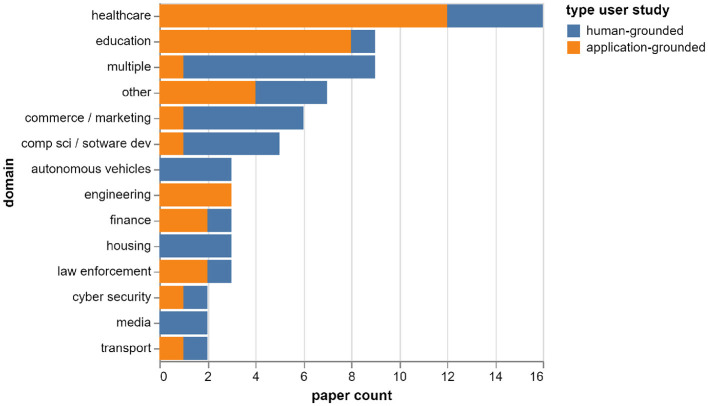
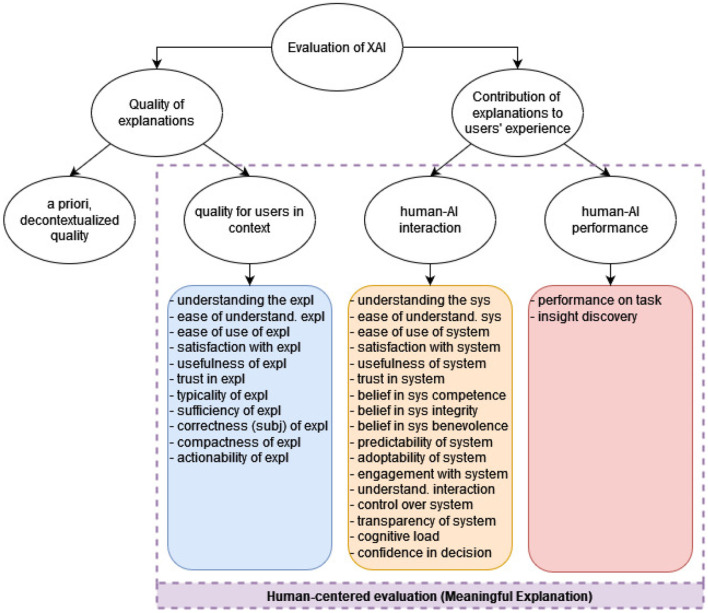
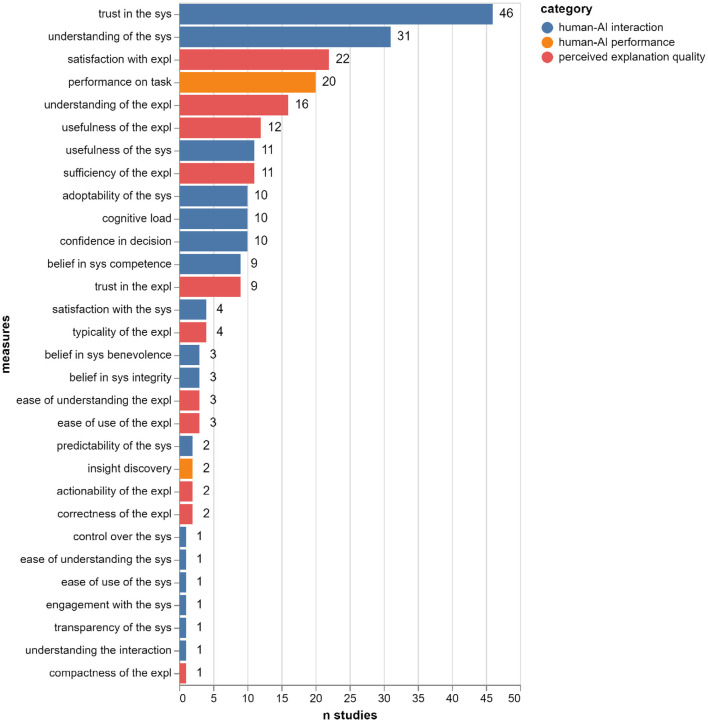
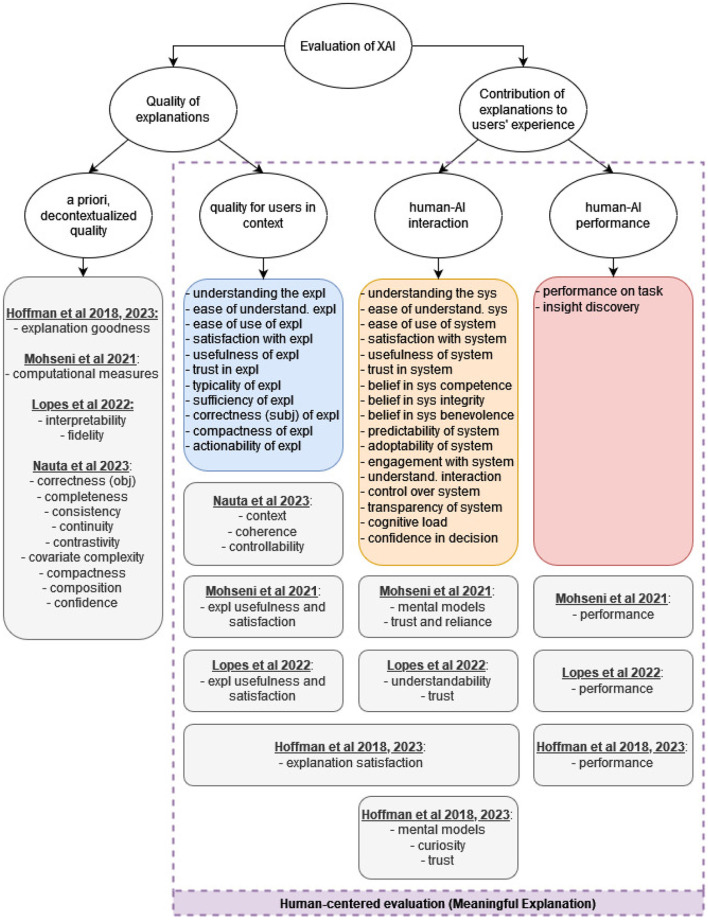
Explainable Artificial Intelligence (XAI) aims to provide insights into the inner workings and the outputs of AI systems. Recently, there's been growing recognition that explainability is inherently human-centric, tied to how people perceive explanations. Despite this, there is no consensus in the research community on whether user evaluation is crucial in XAI, and if so, what exactly needs to be evaluated and how. This systematic literature review addresses this gap by providing a detailed overview of the current state of affairs in human-centered XAI evaluation. We reviewed 73 papers across various domains where XAI was evaluated with users. These studies assessed what makes an explanation “good” from a user's perspective, i.e., what makes an explanation meaningful to a user of an AI system. We identified 30 components of meaningful explanations that were evaluated in the reviewed papers and categorized them into a taxonomy of human-centered XAI evaluation, based on: (a) the contextualized quality of the explanation, (b) the contribution of the explanation to human-AI interaction, and (c) the contribution of the explanation to human-AI performance. Our analysis also revealed a lack of standardization in the methodologies applied in XAI user studies, with only 19 of the 73 papers applying an evaluation framework used by at least one other study in the sample. These inconsistencies hinder cross-study comparisons and broader insights. Our findings contribute to understanding what makes explanations meaningful to users and how to measure this, guiding the XAI community toward a more unified approach in human-centered explainability.
Overview
The claims and statistics of this paper haven’t been checked yet.
Free: it reads the open-access text and checks the first 5 claims that cite a source we can check. Create a free account to check every claim.
Integrity signals
Registry
Cites
Statistics
Figures
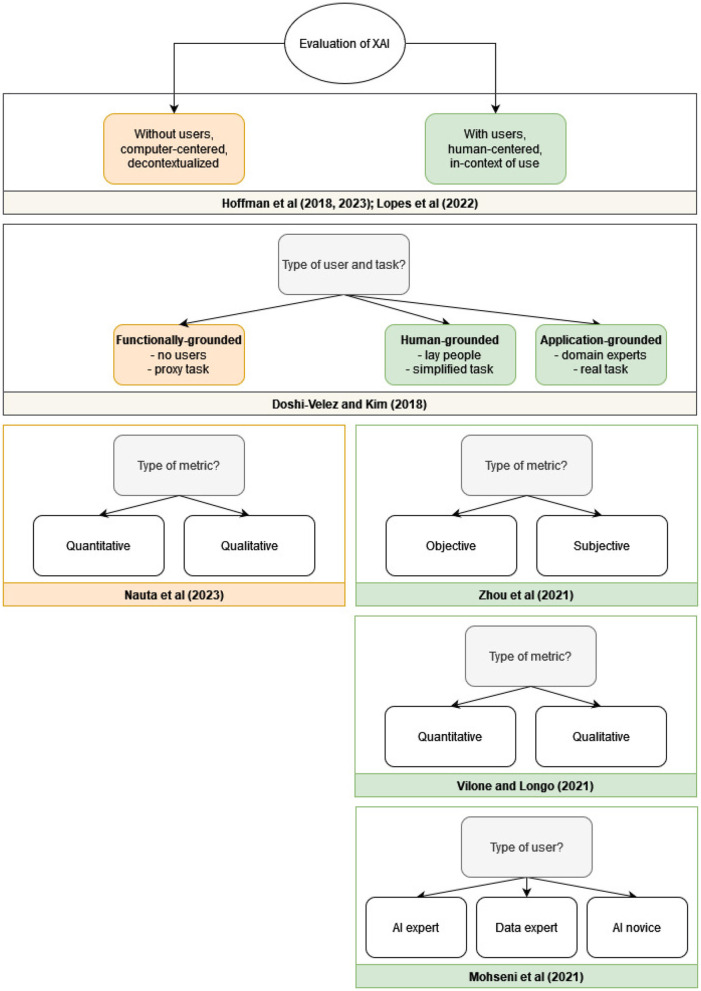
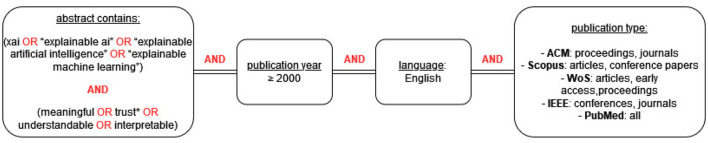
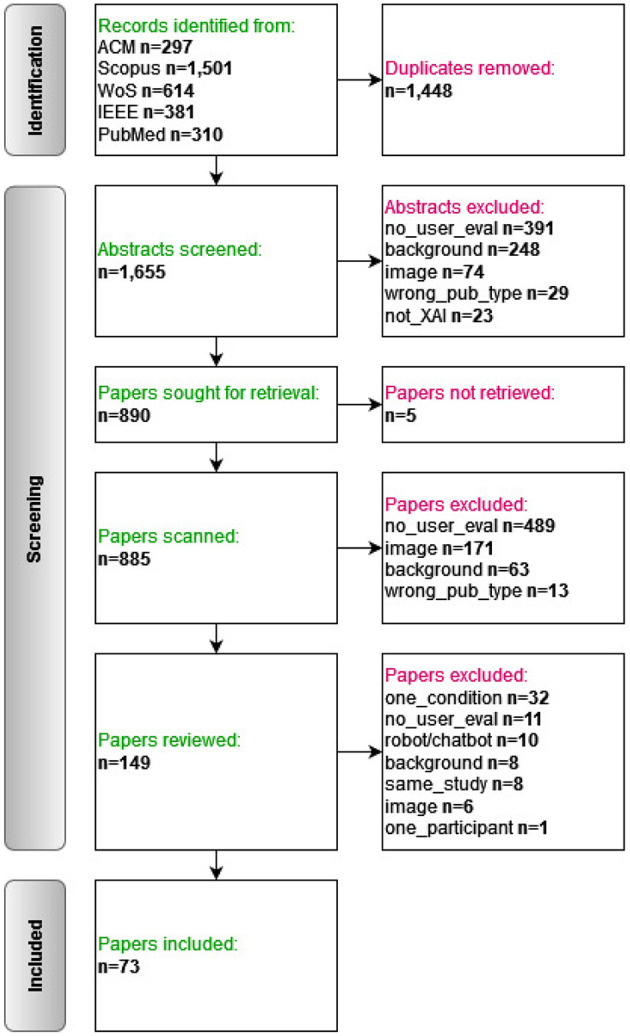
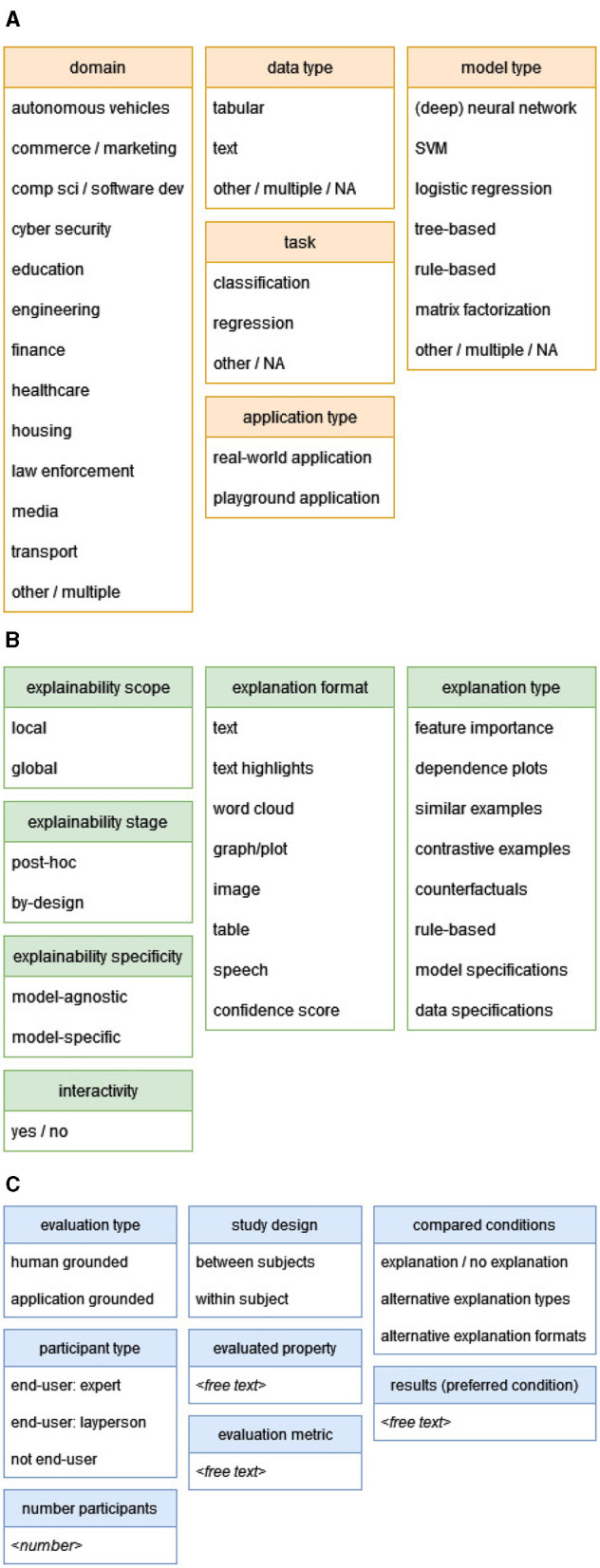
Verification
Claims the paper makes
The claims and statistics of this paper haven’t been checked yet.
Free: it reads the open-access text and checks the first 5 claims that cite a source we can check. Create a free account to check every claim.
Claims other papers make about this one
Each is checked against this paper’s own text: does it say what the citing paper says it does?
The cited source says what the claim attributes to it.
In the citing paper
“Previous reviews of XAI have also reported that explainability is sensitive to contextual factors and future research should investigate different groups of end users [15,16].”
From Explainable AI in hospital clinical decision support systems: A scoping review of healthcare professionals’ perspectives (2026) · cites this paper as [16]
Self-check
Percentages, sums and reported differences re-computed from the paper’s own numbers.
The self-check needs the paper’s full text.
Citations
Cites
User Acceptance of Information Technology: Toward A Unified View1
Venkatesh, V., Morris, M. G., Davis, G. B., & Davis, F. D. (2003) · MIS Quarterly · doi:10.2307/30036540 · Cited by 45,035
Development of NASA-TLX (Task Load Index): Results of Empirical and Theoretical Research
(1988) · Advances in Psychology · doi:10.1016/s0166-4115(08)62386-9 · Cited by 15,003
SUS: A 'Quick and Dirty' Usability Scale
(1996) · Usability Evaluation In Industry · doi:10.1201/9781498710411-35 · Cited by 8,989
Technology Acceptance Model 3 and a Research Agenda on Interventions
Venkatesh, V., & Bala, H. (2008) · Decision Sciences · doi:10.1111/j.1540-5915.2008.00192.x · Cited by 8,159
Developing and validating trust measures for e-commerce: an integrative typology
McKnight, D. H., Choudhury, V., & Kacmar, C. (2002) · Information Systems Research · doi:10.1287/isre.13.3.334.81 · Cited by 5,550
Cacioppo, J. T., & Petty, R. E. (1982) · Journal of Personality and Social Psychology · doi:10.1037/0022-3514.42.1.116 · Cited by 5,359
Explanation in Artificial Intelligence: Insights from the Social Sciences
Miller, T. (2017) · arXiv · doi:10.48550/arxiv.1706.07269 · Cited by 5,338
Explanation in artificial intelligence: Insights from the social sciences
Miller, T. (2019) · Artificial Intelligence · doi:10.1016/j.artint.2018.07.007 · Cited by 5,302
Explainable AI: a review of machine learning interpretability methods
Linardatos, P., Papastefanopoulos, V., & Kotsiantis, S. (2020) · Entropy · doi:10.3390/e23010018 · Cited by 2,922 · cited 1×
“For more details about the dichotomies described above, the reader is referred to Linardatos et al. (2020).”
BackgroundInternational Conference on Artificial Neural Networks
(1990) · Neural Networks · doi:10.1016/0893-6080(90)90065-s · Cited by 2,088
Research works printed but not linked: 4
- Förster M. Hühn P. Klier M. Kluge K. (2021). “Capturing users' reality: a novel approach to generate coherent counterfactual explanations,” in Hawaii International Conference on System Sciences. Available at: https://api.semanticscholar.org/CorpusID:232412682
- Ibrahim L. Ghassemi M. M. Alhanai T. (2023). “Do explanations improve the quality of AI-assisted human decisions? An algorithm-in-the-loop analysis of factual and counterfactual explanations,” in Proceedings of the 2023 International Conference on Autonomous Agents and Multiagent Systems (London), 326– 334.
- Kim J. Maathuis H. van Montfort K. Sent D. (in press). “Identifying XAI user needs: gaps between literature use cases in the financial sector,” in Proceedings of the 2nd Workshop on Responsible Applied Artificial Intelligence (RAAIT), at HHAI 2024 (Malmö: CEUR Workshop Proceedings (CEUR-WS.org)). Accepted for publication.
- Schellingerhout R. Medentsiy V. Marx M. (2022). Explainable career path predictions using neural models.
Cited by
Advancing smart public administration: Challenges and benefits of artificial intelligence
Barsekh-Onji, A., Hernandez, Z. T., & Espinosa, E. O. C. (2025) · Urban Governance · doi:10.1016/j.ugj.2025.06.003 · Cited by 45
Wang, K., Hou, W., Hong, L., & Guo, J. (2025) · Electronics · doi:10.3390/electronics14030420 · Cited by 40
Bergomi, L., Nicora, G., Orlowska, M. A., Podrecca, C., Bellazzi, R., Fregosi, C., Salinaro, F., Bonzano, M., Crescenzi, G., Speciale, F., et al. (2025) · BMC Medical Informatics and Decision Making · doi:10.1186/s12911-025-03045-0 · Cited by 34
“Like other previous similar studies [16, 18, 20, 38], we acknowledge the limited sample size (10 clinicians) as one of the main limitations of this work, and we recognize that the findings cannot be broadly generalized across all specialties or clinical settings.”
Chettri, K., Sen, B., & Ghosal, P. (2026) · Knowledge and Information Systems · doi:10.1007/s10115-025-02625-w · Cited by 22
Kibria, M. R., Lafond, S., & Arslan, J. (2026) · Information Fusion · doi:10.1016/j.inffus.2026.104405 · Cited by 16
Van Dort, B. A., Engelsma, T., Sneekes, P., Peute, L., & Medlock, S. (2026) · PLOS Digital Health · doi:10.1371/journal.pdig.0001417 · Cited by 9
“Previous reviews of XAI have also reported that explain-ability is sensitive to contextual factors and future research should investigate different groups of end users [15,16].”
Responsible scaling of artificial intelligence in healthcare: standardization meets customization
Lukkien, D., Nap, H. H., Peine, A., Minkman, M. M. N., Moors, E. H. M., & Boon, W. (2025) · Ethics and Information Technology · doi:10.1007/s10676-025-09842-5 · Cited by 14
“…can play a critical role in the development, diffusion, and (re-)use of differ - ent types of accessible and robust algorithmic explanations (Kim et al., 2024 ; Laux et al., 2024 ) that need to be pro - vided along with the outputs of AI tools to ensure that AI-mediated decisions are…”
Sun, S. (2025) · International Conference on Computer Science and Management Technology (ICCSMT) · doi:10.1145/3795154.3795298 · Cited by 10
“To bridge this gap, we propose CIRR (Causal-Invariant Retrieval-Augmented Recommendation), a unified framework that synergistically combines causal invariance learning with evidence-grounded explanationgeneration.”
Cernăzanu-Glăvan, C., & Bulzan, A.-Ş. (2025) · Mathematics · doi:10.3390/math13132215 · Cited by 7
EVolutionary independent DEtermiNistiC explanation
Dentamaro, V., Giglio, P., Impedovo, D., & Pirlo, G. (2025) · Engineering Applications of Artificial Intelligence · doi:10.1016/j.engappai.2025.111008 · Cited by 6
Muda, N. B., & Sulaiman, M. A. (2026) · Scientific Reports · doi:10.1038/s41598-026-36550-x · Cited by 7
“The QFD-factor analysis integration responds to calls for methodologies incorporating human-centered evaluation dimensions 43 beyond technical performance alone 43,44 .”
When Recommendations are Explainable: an Eye-Tracking Study Comparing How and What to Explain
Wang, C., Kroon, A. C., Möller, J. E., de Vreese, C. H., & Boerman, S. C. (2025) · Information Systems Frontiers · doi:10.1007/s10796-025-10670-7 · Cited by 5
“This study addresses this gap by bridging these two outcome domains, which are often studied in isolation (Kim et al., 2024 ), offering a more holistic view of explanation effectiveness.”
Understanding the Effects of Explaining Predictive but Unintuitive Features in Human-XAI Interaction
Qu, J., Arguello, J., & Wang, Y. (2025) · ACM Conference on Fairness, Accountability, and Transparency (FAccT) · doi:10.1145/3715275.3732021 · Cited by 8
Physics-inspired explainable AI for mechanistic and decision support in drug discovery
Lavecchia, A. (2026) · Drug Discovery Today · doi:10.1016/j.drudis.2026.104679 · Cited by 6
Maathuis, H., Stalenhoef, M., van Otterloo, S., Zwaal, R., van Montfort, K., & Sent, D. (2026) · Frontiers in Artificial Intelligence · doi:10.3389/frai.2026.1668029 · Cited by 6
Self-citationRisk-Based AI Assurance Framework
Muhammad, A. E., & Yow, K. (2026) · Information · doi:10.3390/info17030263 · Cited by 6
Explainable AI: Bridging Transparency and Trust in AI
Oyenuga, M. O., & OLADELE, T. O. (2026) · Advances in computational intelligence and robotics book series · doi:10.4018/406019 · Cited by 3
Survey on Explainable AI for Traditional Machine Learning and Domains
Hanif, A., Shawi, R. E., Beheshti, A., & Benatallah, B. (2026) · ACM Computing Surveys · doi:10.1145/3806829 · Cited by 4
Magalhães, P. C., Arnesen, S., Kern, C. A., König, P. D., Schiff, D. S., & Tyler, T. R. (2026) · Technology in Society · doi:10.1016/j.techsoc.2026.103398 · Cited by 4
XAI-Units: Benchmarking Explainability Methods with Unit Tests
Lee, J. R., Emami, S., Hollins, M. D., Wong, T. C. H., Sánchez, C. I. V., Toni, F., Zhang, D., & Dejl, A. (2025) · ACM Conference on Fairness, Accountability, and Transparency (FAccT) · doi:10.1145/3715275.3732186 · Cited by 5
“…is designed to be compatible with custom FA methods evaluation Human interpretability is an increasingly important property of XAI methods [21] and many additional factors need to be considered for human-centric evaluations, such as explanation complexity (affecting how understandable…”
Love, P. A., Matthews, J., Fang, W., & Mahamivanan, H. (2026) · Technology in Society · doi:10.1016/j.techsoc.2026.103593 · Cited by 5
Mathur, N., Zubatiy, T., Rozga, A., Forlizzi, J., & D Mynatt, E. (2026) · Proceedings of the 2026 CHI Conference on Human Factors in Computing Systems · doi:10.1145/3772318.3790812 · Cited by 3
Improving Human Verification of LLM Reasoning through Interactive Explanation Interfaces
Zhou, R., Nguyen, G., Kharya, N., Nguyen, A., & Agarwal, C. (2026) · Proceedings of the 31st International Conference on Intelligent User Interfaces · doi:10.1145/3742413.3789134 · Cited by 2
“These findings align with recent work emphasizing the importance of human-centered explainability, which explains understanding as a process of active answer-seeking rather than passive reception [20].”
Hannibal, G., & Bauer, C. (2025) · Lecture notes in computer science · doi:10.1007/978-3-032-05002-1_33 · Cited by 2
Human-centered perspectives on trust, usability, and ethical concerns in machine vision applications
Marfo, R., & Veselý, A. (2025) · AI and Ethics · doi:10.1007/s43681-025-00950-y · Cited by 2
Jiang, Z., Dan, W., & Yu-fei, C. (2026) · Scientific Reports · doi:10.1038/s41598-026-41629-6 · Cited by 2
“Kim et al. 42 , Sovrano et al. 43 , and Ridley et al. 23 , emphasized the importance of human-centered evaluation and explainable AI (XAI) in the practical deployment of AI models, noting that existing frameworks often ignore the interpretability and usability of models for industrial practitioners.”
He, H., Ying, Z., Li, B., Fan, Y., Wang, P., Lu, J., Wu, L., Zhao, H., Guo, Y., Wang, G., et al. (2026) · Communications Medicine · doi:10.1038/s43856-026-01449-1 · Cited by 3
“…can be quantitativelycharacterizedbytheirlackoftransparency,limitedalignment withexpertreasoning,andreducedinterpretability — factors that can be benchmarked through computational fi delity metrics and human-centered evaluations of clinicians ’ understanding, trust, and decision con fi dence 10 .”
Language Models and Food–Health Evidence: Challenges, Opportunities, and Implications
Jackson, D., Gousiopoulos, A., & Soldatos, T. G. (2026) · BioMedInformatics · doi:10.3390/biomedinformatics6020013 · Cited by 3
Health literacy and attitudes toward clinical AI: a cross-sectional study in Istanbul
SÖNMEZ, K. (2026) · Frontiers in Digital Health · doi:10.3389/fdgth.2026.1771286 · Cited by 3
Advances in explainable artificial intelligence evaluation and ethics from 2023 to 2025
Pujari, J. J., Nayak, R., Putheti, S., Bikku, T., Shanmugasundaram, P., & Thota, S. (2026) · Discover Artificial Intelligence · doi:10.1007/s44163-026-01473-z · Cited by 3
“These metrics reflect consensus standards emerging in the 2023–2025 literature for assessing both model-aligned and human-centered explanation quality [2, 31, 43].”
InfluentialHaupt, M., Jolkver, E., & Schwerk, A. M. K. (2026) · Scientific Reports · doi:10.1038/s41598-026-62761-3 · Cited by 4
A Human-Centric Evaluation of XAI Methods for Sentiment Analysis on Amazon Reviews
Abhiram, Amritha, C. N., Gokul, R., & Keerthimon, P. (2025) · International Conference on Advances in Computing, Communication, Embedded and Secure Systems (ACCESS) · doi:10.1109/access65134.2025.11135705 · Cited by 3
“Similarly, Kim et al. [3] and Naveed et al. [4] synthesized evaluation strategies across domains, calling for user trust, understanding, and cognitive alignment as core metrics.”
Parola, M., Alfeo, A. L., & Cimino, M. G. C. A. (2026) · Image and Vision Computing · doi:10.1016/j.imavis.2026.105920 · Cited by 4
Explainability in AI: Comparing Human-Like and System-Like Trust Repair Strategies
Konopka, B., & Wiesche, M. (2026) · Information Systems Frontiers · doi:10.1007/s10796-026-10751-1 · Cited by 1
Explainable AI for Large-Scale Predictive Systems: Techniques, Applications, and Future Directions
Krishnamurthy, P. (2025) · International Journal of Scientific Research in Computer Science Engineering and Information Technology · doi:10.32628/cseit251112299 · Cited by 1
Artificial Intelligence-Driven Image and Data Analytics in Anesthesia
Madadi, F., Kohzadi, Z., Rahmatizadeh, S., Sabouri, A. S., & Dabbagh, A. (2025) · Anesthesiology Clinics · doi:10.1016/j.anclin.2025.07.001 · Cited by 3
Humanization in the AI Era: Why it Should be the Focus of EdTech 4.0?
Faizal, C. K., & Tamilselvi, R. (2025) · International Research Journal on Advanced Science Hub · doi:10.47392/irjash.2025.108 · Cited by 1
Chakraborty, T., Koelle, M., Schlötterer, J., Schlicker, N., Wirth, C., & Seifert, C. (2025) · Information Systems Frontiers · doi:10.1007/s10796-025-10671-6 · Cited by 1
“Our results suggest that well-designed explanations can be integrated into such BO workflows without over-whelming the user, addressing a common concern in the application of explainable AI to real-world systems [36, 32].”
Dindorf, C., Dully, J., Simon, S., Perchthaler, D., Becker, S. T., Ehmann, H., Heitmann, K. R., Stetter, B. J., Diers, C., & Fröhlich, M. (2026) · Scientific Reports · doi:10.1038/s41598-025-33707-y · Cited by 1
“Drawing on prior work in human-centered XAI and established criteria for evaluating explanation quality, we selected eight key attribute pairs that capture core dimensions relevant to users’ understanding and trust in AI explanations 26,27,51 .”
Improving AHP consistency through cognitive collaboration with large language models
Maceika, A., Bugajev, A., & Šostak, O. R. (2025) · New Trends in Computer Sciences · doi:10.3846/ntcs.2025.25442 · Cited by 1
Devi, G. U., & Maram, B. (2025) · International Conference on Internet of Everything, Microwave Engineering, Communication and Networks (IEMECON) · doi:10.1109/iemecon69302.2025.11365821 · Cited by 1
“…studies, grouping them across fields and summarizing 30discrete elements of a user-meaningful explanation, but that studies thus examinedrep-resent only 19 out of 73, using a methodological structure that had been repeatedelsewhere, thereby confirming its substantive heterogeneity [7].”
Yadav, S., Kaushik, A., & McDaid, K. (2026) · Applied AI Letters · doi:10.1002/ail2.70028 · Cited by 1
Interpretable learning models: an XAI-focused evaluation of classifier performance
Guleria, P. (2026) · Neural Computing and Applications · doi:10.1007/s00521-026-11933-3 · Cited by 3
Explainable Artificial Intelligence
Andrae, S. (2026) · Advances in computational intelligence and robotics book series · doi:10.4018/403120 · Cited by 1
Explainable AI for Industry 5.0: Shedding light on the black box
Михайлович, А. С., & Pesotskaya, E. (2026) · Бизнес-информатика · doi:10.17323/2587-814x.2026.1.7.28 · Cited by 4
Tharini, M., & Angelina, J. J. R. (2026) · Information systems engineering and management · doi:10.1007/978-3-032-19196-0_34 · Cited by 2
Davidson, A. J., Jędrzejczak, W. W., McCullagh, J., Ferre, J. M., Bradbury, A., Palmer, S. B., Iliadou, V., & Musiek, F. E. (2026) · American Journal of Audiology · doi:10.1044/2026_aja-25-00224 · Cited by 1
Wright, L., Legarda, I., Lasa, G., & Escallada, O. (2026) · Open Research Europe · doi:10.12688/openreseurope.22034.1 · Cited by 2
Yan, W., Sun, R., & Shen, L. (2026) · Frontiers in Signal Processing · doi:10.3389/frsip.2026.1797749 · Cited by 2
Attanasio, C., Vilone, G., Holzinger, A., & Longo, L. (2026) · International Journal of Human-Computer Interaction · doi:10.1080/10447318.2026.2675436 · Cited by 1
Lu, Z., Guo, J., Yuan, T., Zhang, Y., Yang, J., 杜郁萱, Chen, M., Xie, M., Xian, L., Cao, H., et al. (2026) · Behavioral Sciences · doi:10.3390/bs16060932 · Cited by 1
“In human–AI interaction, explain-ability may promote reliance on AI by reducing uncertainty and strengthening cognitive understanding (J. Kim et al., 2024).”
A Review of Taxonomies of Explainable AI (XAI) Evaluation
Speith, T. (2026) · ACM Conference on Fairness, Accountability, and Transparency (FAccT) · doi:10.1145/3805689.3806537 · Cited by 3
Liu, C., & Cang, P. (2026) · Frontiers in Psychology · doi:10.3389/fpsyg.2026.1904639 · Cited by 2
“Prior studies show that explainable AI can strengthen user trust and improve the perceived quality of explanations, thereby restoring a sense of control that is central to psychological ownership (Kim et al., 2024; Xu and Wang, 2024).”
Toward Human-Centered Explanations for Agentic AI: Taxonomy, Mapping, and Evaluation
Hou, X., Mualla, Y., & Dridi, M. (2026) · International Conference on Human Centric Artificial Intelligence (ICHCAI) · doi:10.1109/ichcai70183.2026.11607607 · Cited by 2
“Benchmark environments that are realistic enough for ecologically valid evaluation yet controlled enough for reproducible comparison should cover diverse agentic settings [22], [48] and incorporate human-centered metrics alongside technical fidelity measures [35], [54].”
Rezaei, Z., Amini, M. A., & Banad, Y. M. (2026) · Computers in Biology and Medicine · doi:10.1016/j.compbiomed.2026.111859 · Cited by 1
Geng, Z., Wu, D., Zhao, X., Hu, C., Qiu, P., Fu, C., & Liu, J. (2026) · Academia Catalysis · doi:10.20935/acadcatal8457 · Cited by 1
Testing AI Models: The Human Factor in Ensuring Accuracy, Fairness, and Transparency
Choubey, A. (2025) · International Journal of Scientific Research in Computer Science Engineering and Information Technology · doi:10.32628/cseit251112238
Integrating Artificial Intelligence and Design Thinking: Enhancing Students' Practical Skills
Grau, S. L., & Rockett, T. (2025) · Advances in computational intelligence and robotics book series · doi:10.4018/979-8-3373-5786-7.ch005
Personalized Disease Prediction and Medical Recommendation System
Sujatha, E., Daniel, K., Reddy, A., Kumar, B., & Wasim, D. (2025) · International Conference on Information Technology, Civil Innovation, Science, and Management (ICITSM) · doi:10.4108/eai.28-4-2025.2358031
“Kim et al. [18] systematically reviewed explainable AI in healthcare and found that user trust, usability, and transparency are just as critical as technical accuracy.”
XAIUI: User Belief-Driven Explainable AI for Context-Aware Adaptive Interfaces
Langerak, T., Todi, K., Lafreniere, B., Desai, R., & Jonker, T. R. (2026) · ACM Transactions on Interactive Intelligent Systems · doi:10.1145/3774657 · Cited by 3
“Although XAIUI is a general computational approach, this manuscript conceptually applies it to an extended reality scenario equipped with context-sensing capabilities.”
Human-Centered Artificial Intelligence: Designing Systems with Empathy and Ethics
Aeturu, S. (2025) · International Journal of Computational and Experimental Science and Engineering · doi:10.22399/ijcesen.4265
“However, persistent challenges including the automation paradox and evaluation complexity continue to affect implementation success [3, 4]”
InfluentialTransparency and Explainability Focus: Making AI Decisions Interpretable to HumansPreprint
Zhenishova, A. (2025) · Preprints.org · doi:10.20944/preprints202511.1366.v1
Kumar, N., & Kataria, V. (2025) · Proceeding of the Electrical Engineering Computer Science and Informatics · doi:10.1109/eecsi67060.2025.11290439
“Kim et al. stress the need for unified, cross-domain evaluation standards [37].”
Expert Nutritionists’ Perceptions of XAI Visualisations for Overweight Prediction
Alaqsam, A., & Sas, C. (2025) · Electronic workshops in computing · doi:10.14236/ewic/bcshci2025.17
Tan, X., Chakpitak, N., & Loahavilai, P.-O. (2025) · International Conference on E-business, Management and Economics (ICEME) · doi:10.1145/3760557.3760596
Educators’ Evaluation of Explanation Types in XAI for Higher Education Dropout
Maathuis, H., Glazenborg, J., Grol, M. J., & Quille, K. (2026) · Conference on Human Centred Artificial Intelligence - Education and Practice (HCAIep) · doi:10.1145/3777490.3777499
“Far less attention has been devoted to the human-centered dimension: how the intended users — educators — actually perceive, interpret, and act upon explanations in practice [1, 14].”
InfluentialSelf-citationMachine Learning and Soft Computing: Current Trends and Applications
Rodríguez-González, A. Y., & Álvarez‐Carmona, M. Á. (2026) · Applied Sciences · doi:10.3390/app16042051
Beyond Hand Offs: Policy Driven Collaboration Between Human Agents and LLM Co-Pilots
GUDIPATI, S. K., ANKAM, G., MISHRA, N. A., Mohammed, A. R., & AKKISETTI, S. R. (2026) · IEEE Annual Computing and Communication Workshop and Conference (CCWC) · doi:10.1109/ccwc67433.2026.11393821
“Complementing this, human–AI research highlights trust, explainability, and user-centered evaluation as prerequisites for safe adoption in high-stakes workflows [8], [9], [13], [14], [15].”
Diverse minds, stronger AI: the human factor in cross-cultural red teaming
Singh, B., & Chandra, S. (2026) · Elsevier eBooks · doi:10.1016/b978-0-443-34135-9.00009-x
Lu, T., Herman, S. S., & Ismail, N. A. B. (2026) · Buildings · doi:10.3390/buildings16061168
Better AI for Public Good: Participatory Modelling and Simulation in Social Services
Sasikumar, M., Jo, A. A., & Raj, E. D. (2026) · Artificial intelligence, simulation and society · doi:10.1007/978-3-032-15283-1_12
Shahid, R., Ibrar, M., Junaid, W., Saeed, M., & Hussain, M. (2026) · Advances in computational intelligence and robotics book series · doi:10.4018/979-8-3373-6038-6.ch008
Open-ended Structured Question Assessment with Human-LLM Collaboration
Lin, F., Lin, Y., Cao, K., Deng, Z., & Cai, Y. (2026) · CHI Conference on Human Factors in Computing Systems · doi:10.1145/3772318.3791034
“In parallel with rapid AI advances, HCI research has explored how to combine human expertise with AI workflows to enhance reliability, accountability, efficiency, and trust calibration [1, 11, 18, 22, 46].”
Ahmed, A., & Sharma, P. (2026) · Lecture notes in networks and systems · doi:10.1007/978-3-032-19179-3_9
Positive-Unlabeled Learning for User-Centred XAI: A Case Study in Healthcare
Heerlien, I. R., Çolakhasanoglu, S., & Linssen, J. (2026) · Communications in computer and information science · doi:10.1007/978-3-032-19105-2_21
User Centric Explainable Machine Learning for Financial Fraud Detection
Jain, D., & Kanagaraj, R. (2026) · International Conference on Inventive Computation Technologies (ICICT) · doi:10.1109/icict68280.2026.11510990
“With the increase in reliance on machine learning models to detect financial frauds, many high performing models act as black boxes, providing limited explanation to why a transaction is flagged [9][10].”
Libres, F. J. G., Silva, H. I. B., Sobrepena, K. M. P., & Comia, L. V. (2026) · IEEE International Colloquium on Signal Processing & Its Applications (CSPA) · doi:10.1109/cspa68262.2026.11517686
“Human-centered XAI research further indicates that layered explanations, contextual evidence, and uncertainty indicators can significantly enhance clinician trust, perceived explanation quality, and diagnostic confidence in AI-assisted medical systems [8].”
Nourbakhsh, A., Lamsiyah, S., Danilov, A., & Schommer, C. (2026) · Natural language processing. · doi:10.1017/nlp.2026.10028
Portaz, M., Corbí, A., & Santos, O. C. (2026) · ACM Conference on User Modeling, Adaptation and Personalization (UMAP) · doi:10.1145/3774935.3806162
Comprehensive Evaluation of Explanation Types in a Spaceflight-Relevant Human–Autonomy Teaming Task
Boyer, M., Robinson, A., Clark, T. K., & Sunberg, Z. N. (2026) · Human Factors The Journal of the Human Factors and Ergonomics Society · doi:10.1177/00187208261457703
“Extensive surveys describe objective evaluation techniques (Kadir et al., 2023; Nauta et al., 2023; Pawlicki et al., 2024) and human-centered evaluation (Chromik & Schuessler, 2020; Gambetti et al., 2025; Kim et al., 2024).”
Zhang, M., Chu, J., Wang, Z., Wang, Y., Huang, L., & QIAN, M. (2026) · Oncology Reviews · doi:10.3389/or.2026.1849152
“Therefore, current XAI approaches should be interpreted cautiously and evaluated through standardized, clinically grounded frameworks, rather than being treated as direct evidence of model trustworthiness (18).”
Mushtaq, A. (2026) · International Conference on Integrated Intelligence and Cognitive Engineering (ICIICE) · doi:10.1109/iciice69672.2026.11565510
“User-centred evaluation work demonstrates that explanation quality should be judged by comprehension, decision usefulness, and cognitive accessibility, not only fidelity [10], [11].”
The Impact of Explanation Characteristics on the Effects of Recommender Systems Explanations
Wardatzky, K., Inel, O., Rossetto, L., Kyriakou, A., & Bernstein, A. (2026) · ACM Computing Surveys · doi:10.1145/3856207
Explainable Artificial Intelligence and sustainable computing in Machine Learning
Galal, M. K., & Said, Z. (2026) · Elsevier eBooks · doi:10.1016/b978-0-443-33943-1.00010-1
AI-Driven Chatbots for Emergency and Disaster Response: A Global Bibliometric Analysis
Peña-Cáceres, O., Ramos, A. P. T., Correa-Calle, T., & More-More, M. (2026) · HighTech and Innovation Journal · doi:10.28991/hij-2026-07-02-025
Impact of AI Explanation Styles on IT Students’ Debugging Accuracy, Confidence, and Reliance
Dzvapatsva, G. P., Ncube, P. D. N., Chinhamo, E., & Matobobo, C. (2026) · IEEE Global Engineering Education Conference (EDUCON) · doi:10.1109/educon67543.2026.11574352
“Explainable Artificial Intelligence (XAI) has been conceptualised not only as a means of algorithmic transparency but also as a pedagogical scaffold that can facilitate learning through interpretability and feedback [24], [25].”
Vesić, A., & Zivkovic, M. Z. (2026) · International Scientific Conference Sinteza · doi:10.15308/sinteza-2026-171-177
“Kim, Maathuis and Sent [26] confirmed the pattern across domains, finding that only 26% of 73 XAI user studies applied any standardised evaluation framework, and that even those that applied it inconsistently — making cross-study comparison and cumulative evidence impossible.”
Boban, M., Gombar, M., & Bachal, M. P. (2026) · International Convention on Information and Communication Technology, Electronics and Microelectronics · doi:10.1109/mipro70003.2026.11591781
“This is particularly relevant in environments where explanation interfaces are inaccessible, limited, or cognitively demanding [25].”
Leyser, M., & Kerschke, P. (2026) · Lecture notes in computer science · doi:10.1007/978-3-032-30849-8_4
Gayathri, K., & Chitra, A. (2026) · Communications in computer and information science · doi:10.1007/978-3-032-26269-1_14
Kumar, D., Dhir, R., & Sounkhla, I. (2026) · Lecture notes in networks and systems · doi:10.1007/978-3-032-26376-6_11
Wang, Y., Zhao, Q., Zhang, Q., Zhou, X., Ren, S., Gu, Y., Quan, N., Li, S., & Feng, L. (2026) · Brain Circulation · doi:10.4103/bc.bc_4_26
Explainable AI for Emotion-Aware Humancomputer Interaction Systems
Padma, M. S. G., Senthil Kumar, D., Ramyadevi, R., Ganapathy, R. S., Praveen, R., & Priyanka., R. (2026) · International Conference on Innovations in Cybersecurity and Data Science (ICICDS) · doi:10.1109/icicds70526.2026.11604693
“Furthermore, Kim et al. [13], Al-Ansari et al. [14], and Reinhard et al. [15] focused on human-centered evaluation frameworks for explainable AI, concluding that effective explanations significantly enhance user trust, transparency, and acceptance of intelligent systems.”
Key Factors in the Effective Integration of AI into Executive Decision-Making
Moro, Á., Szabó, K., & Szalay, Z. G. (2026) · Acta Carolus Robertus · doi:10.56617/acr.7176
Gardashova, L. A., & Mirzazada, A. (2026) · Himičeskaâ tehnologiâ. Kontrolʹ i upravlenie/Chemical Technology. Control and Management · doi:10.59048/2181-1105.1804
Bardou, D., Lv, L., Rahab, H., Baños, O., & Zhang, T. (2025) · IEEE International Conference on Advanced Healthcare Systems (ICAHS) · doi:10.1109/icahs66950.2025.11553100
“First, ongoing research should prioritize developing explainable AI systems that are straightforward to comprehend, which will help build the trust necessary for adopting Green AI solutions [81], [82].”
Wu, D. D., & Yao, J.-F. J. (2026) · International Conference on Artificial Intelligence and Big Data (ICAIBD) · doi:10.1109/icaibd69640.2026.11637360
“1) Designing for Perceived Fairness: Recent design schol-arship increasingly emphasizes perceptual fairness, integrating fairness signals within the interfaces used to deliver explanations [25].”
Bandhey, H., Lipschutz-Villa, G., Dinh, K., Kamoun, M., & Urbanowicz, R. J. (2026) · Genetic and Evolutionary Computation Conference Companion (GECCO Companion) · doi:10.1145/3795101.3814722
AI-Driven Strategic Planning in the Western Balkans: Navigating Challenges, Unlocking Opportunities
Kacani, J., Trunk, A., Nechkoska, R. P., Xhafa, B., Qorraj, G., Jahić, H., & Kopani, S. (2026) · Engineering cyber-physical systems and critical infrastructures · doi:10.1007/978-3-032-18275-3_2
Zhu, J. (2026) · Decision Making and Analysis · doi:10.55976/dma.42026159087-99 · Cited by 1
Metadata
- Authors
- Kim, J., Maathuis, H., & Sent, D.
- Affiliations
- University of Applied Sciences Utrecht (NL)
- Corresponding author
- Kim, Jenia
- Maathuis, Henry
- Venue
- Frontiers in Artificial Intelligence
- Publisher
- Frontiers Media SA
- Published
- 2024-10-17
- Volume
- 7
- Pages
- 1456486-1456486
- ISSN
- 2624-8212 (ISSN-L)
- PMC
- PMC11525002
- OpenAlex
- W4403501023
- Cited by
- 130
- References
- 118
- Citations by year
- 2026: 105 · 2025: 25
- FWCI
- 4.45
- Type
- journal article
- Language
- en
- Open access
- gold
- doi.org
- Licence
- Locations
- Frontiers in Artificial Intelligence (publishedVersion, cc-by)
- PubMed Central (publishedVersion, cc-by)
- PubMed (publishedVersion)
- DOAJ (DOAJ: Directory of Open Access Journals) (submittedVersion, cc-by-sa)
- Topics
- Physical Sciences › Computer Science › Artificial Intelligence › Explainable Artificial Intelligence (XAI)
- Physical Sciences › Computer Science › Human-Computer Interaction › Usability and User Interface Design
- Social Sciences › Human Factors and Ergonomics › Human-Automation Interaction and Safety
- Keywords
- explainable AI, human-centered evaluation, human-AI interaction
About these checks
Registry, retraction, Cites and statistics results are computed, not judged, with one exception: a printed reference that no index lists is read once by a model before it counts as a citation error. Claims are extracted by a model and kept only when their quote appears verbatim in the text; each cited source is then checked, with a model’s help, for whether it says what the claim relies on. Those verdicts can be wrong — read the claim’s quote and the cited source before relying on one.
Statistics and arithmetic are recomputed, not judged.
Confidence bands are shown only for fields calibrated on our annotated test set. None is calibrated yet, so no band is shown.
What counts as a claim ›How we measure confidence ›How we check this ›
Are you an author, or do you see a problem with this page? Request a review
Data sources
Bibliographic data: Semantic Scholar, OpenAlex, Crossref.
Contains information from the Semantic Scholar Academic Graph Datasets, made available under the ODC Attribution License (ODC-BY 1.0).
Semantic Scholar’s data is described in: Kinney, R., et al. (2023). The Semantic Scholar Open Data Platform. arXiv:2301.10140.
