

A Reliability Engineering Approach for Managing Risks in CubeSats
Open accessThe DOI matches its Crossref record; 35 of the 36 references it cites were found in a registry or an index; 2 of the 14 sources its claims cite were checked for support.
Abstract
Besides large-scale space missions, the spread of CubeSats for a variety of applications is increasingly requiring the development of systematic approaches for risk management. Being these applications are based on components with low TRL (Technology Readiness Level) or with limited performance data, it is required to define approaches which ensure a systematic perspective. This paper aims to present a reliability engineering approach based on FMECA (Failure Mode, Effects, and Criticality Analysis) to manage CubeSat reliability data and prioritize criticalities early in the design phase. The approach firstly proposes an alpha-numeric coding system to support the identification and labeling of failure modes for typical CubeSats’ items. Subsequently, each FMECA coefficient (i.e., Severity, Occurrence, Detectability) has been linked to the CubeSat’s structural properties, reducing subjectivity by means of techno-centric proxy indicators. The approach has been validated in the design phases of a 6-Units university CubeSat for the observation of M-Dwarf stars and binary systems. The performed analysis supported the design process and allowed to identify the major criticalities of the CubeSat design, as demonstrated in the extended case study included in the paper. The formalized method could be applied to design procedures for nano-satellites, as well as being expanded for research and development in a variety of space missions.
Overview
CoChat Summary
TL;DR
The paper presents a five-step FMECA-based reliability engineering approach for CubeSats, adding an alpha-numeric failure coding system and a three-dimensional risk index (Occurrence, Severity, Detectability) rated 1–5. It applies the method to the preliminary design of the 6U SPEC CubeSat, identifying structural and payload-related criticalities and supporting design revisions.
Key findings
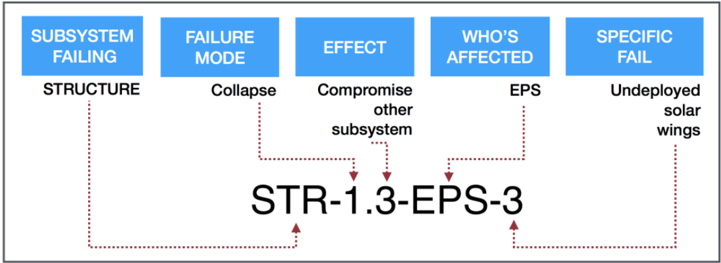
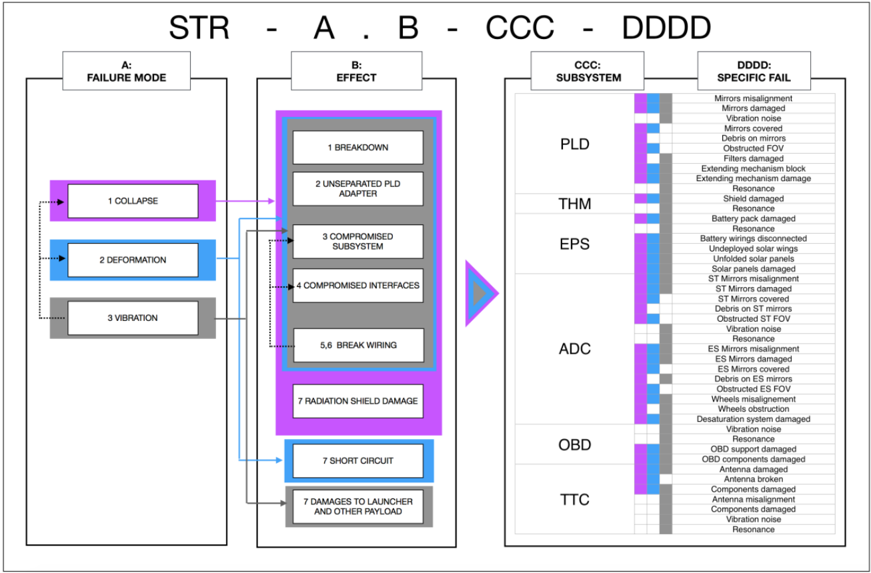
- The proposed coding system uses a 5-part alphanumeric code, `XXX-A.B-CCC#DDDD`, to link failure modes to subsystems, effects, propagation, and specific fails.
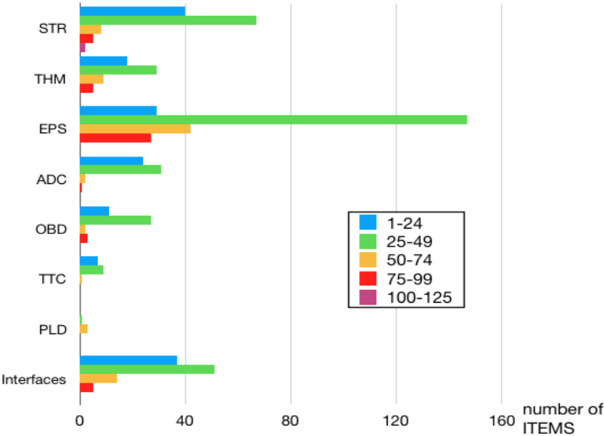
- Criticality analysis uses O, S, and D each rated 1–5; RPN = O × S × D, with thresholds: 1–24 no impact, 25–49 minor effects, 50–74 mission limitations, 75–99 major effects, 100–125 catastrophic. Occurrence inference used 150 IF-THEN combinations.
- In the SPEC case study, maximum RPN per subsystem was: TT&C = 50, PLD = 60, THM = 75, EPS = 75, OBH = 75, ADC = 80, Interfaces = 80, STR = 100. Specific examples include STR-3.2 unseparated PLD adapter RPN = 100, STR-3.3-PLD-5 filters damaged RPN = 100, STR-3.4-PLD|THM RPN = 80, and EPS-3.2-ADC-1 RPN = 15.
- The analysis led to design revisions to introduce redundancies where possible or adopt fault-tolerant strategies; highest RPN values related to non-redundant items whose failure jeopardized mission success.
Methods
- Design: a five-step functional FMECA procedure—construct functional block diagrams; identify failure modes with coding; perform criticality analysis (O, S, D); rank failure modes via RPN; identify mitigation strategies. It integrates traditional FMECA and standards including GPR 7120.4A, MIL-STD-1629, ESA ECSS-Q-ST-30-02C, and SAE ARP5580.
- Data/sample: applied to SPEC (Stellar Population Evolution on CubeSats), a 6U university CubeSat designed during the 2017 Spacecraft Design course at Sapienza University of Rome, aimed at observing M-Dwarf stars and binary systems; approximately 20 × 10 × 30 cm, with a Ritchey-Chrétien reflecting telescope, 40 solar cells giving maximum power generation of 31.3 W, and 40 Whr battery storage.
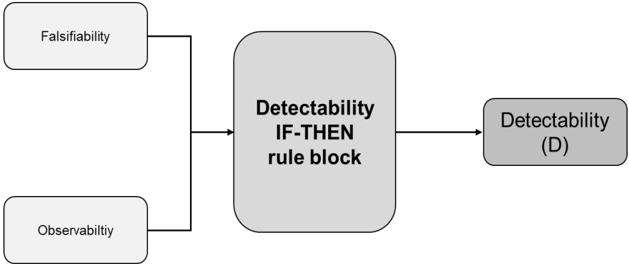
- Analysis: semi-quantitative 1–5 indexes; Occurrence from failure probability and conditioned probabilities via fuzzy associative map IF-THEN rules; Detectability from falsifiability and observability via IF-THEN rules; RPN calculated as the product of O, S, and D against defined thresholds.
Limitations
- Stated: subjectivity remains an open issue, especially in severity estimation; the coefficients are deterministic model abstractions with static values based on deterministic variables or estimated parameters, imprecisely known and inherently uncertain, raising epistemic uncertainty; future work suggested Bayesian theory or Petri nets.
- Stated/evident: failure rate data for university CubeSat components are generally unavailable, so estimation relies on similar items or expert judgment; results are based on modeling assumptions and numerical coefficients that compensate for the lack of precise statistical data, mainly for layout rather than component selection.
- Evident: the case study is the preliminary design (Phase 0–Phase A) of a university CubeSat, not flight validation; OBDH software failures were not considered because the design detail did not include actual software routines coded and tested.
Model-written summary. Check it against the paper before relying on it.
Integrity signals
Registry
Cites
Statistics
Figures



Verification
Claims the paper makes
2 Valid · 5 Not valid · 8 Not checked · 64 Own results and interpretations
A result the paper states — it cites no source for it, so there is none to check. The quote shows it is in the paper.
In the paper
“Both the mechanical and electrical interfaces between subsystems have been taken into account in the analysis, leading to consider the following failure modes, collapse , vibration , deformation , (with similar effects, as the ones already discussed for STR and ADCS) and short circuit (in agreement with the failure modes discussed for OBDH and EPS).”
plain- Asserted: passes — The authors put it forward as true.
- Checkable: passes — It can be checked against evidence.
- Load-bearing: unclear — It is unclear whether the paper’s conclusions depend on it.
- Based: passes — The paper gives a reason why it holds.
A result the paper states — it cites no source for it, so there is none to check. The quote shows it is in the paper.
In the paper
“In terms of risk management, all the components have been selected in order to relay on space-qualified items.”
plain- Asserted: passes — The authors put it forward as true.
- Checkable: passes — It can be checked against evidence.
- Load-bearing: passes — The paper’s conclusions depend on it.
- Based: passes — The paper gives a reason why it holds.
- Rests on 3 assumptions not shown here.
A result the paper states — it cites no source for it, so there is none to check. The quote shows it is in the paper.
In the paper
“Six failure modes have been identified for the EPS.”
plain- Asserted: passes — The authors put it forward as true.
- Checkable: passes — It can be checked against evidence.
- Load-bearing: passes — The paper’s conclusions depend on it.
- Based: passes — The paper gives a reason why it holds.
A result the paper reports from its own data — it cites no other source for it, so there is none to check. The quote shows it is in the paper.
In the paper
“The analysis results supported the selection of the final layout of the system in terms of choices, strategies, writing or changing of the requirements, developments of figures of merits and mitigation strategies.”
plainstates a cause- Asserted: passes — The authors put it forward as true.
- Checkable: passes — It can be checked against evidence.
- Load-bearing: passes — The paper’s conclusions depend on it.
- Based: passes — The paper gives a reason why it holds.
A result the paper reports from its own data — it cites no other source for it, so there is none to check. The quote shows it is in the paper.
In the paper
“STR-3.3-PLD-5 (when the vibration of the structure implies damage to the payload, in particular, damaging the filters), whose RPN reaches 100”
plain- Asserted: passes — The authors put it forward as true.
- Checkable: passes — It can be checked against evidence.
- Load-bearing: passes — The paper’s conclusions depend on it.
- Based: passes — The paper gives a reason why it holds.
13 more claims
Create a free account to see all 79 claims and to verify the 1 reference still open.
- Probably not a substantial claim. 51
- It may state two separate claims as one. 25
Self-check
Percentages, sums and reported differences re-computed from the paper’s own numbers.
Each contradiction between two passages listed here was confirmed by an independent check.
Rated minor: it would not touch a result — a value no result rests on, a p-value that stays on the same side of the significance level, or a conflict that is clerical, resolved elsewhere in the paper, or outside its own findings.
In the paper
§ 4.3. Step 3: Criticality Analysis on SPEC (Example for STR)
“| CODE | STR-3.2 | STR-3.3-THM | STR-1.3-PLD |”
§ 4.3. Step 3: Criticality Analysis on SPEC (Example for STR)
“two of them concern a compromised subsystem effect (i.e., 'Shield damaged'STR-3.3-THM-1, and extending mechanism block STR-3.3-PLD-6).”
Rated minor: it would not touch a result — a value no result rests on, a p-value that stays on the same side of the significance level, or a conflict that is clerical, resolved elsewhere in the paper, or outside its own findings.
In the paper
§ 4.4. Step 4: Overall Risk Analyses
“The study showed RPN below 80 for each item, except for structure, whose top value reaches 100.”
§ 4.4. Step 4: Overall Risk Analyses
“| 75-99 | THM=75 EPS = 75 OBH = 75 ADC = 80 Interfaces = 80 |”
Citations
Cites
Fuzzy logic prioritization of failures in a system failure mode, effects and criticality analysis
Bowles, J. B., & Peláez, C. E. (1995) · Reliability Engineering & System Safety · doi:10.1016/0951-8320(95)00068-d · Cited by 687 · cited 1×
“…approach has to be conceived as an iterative process, in order to allow a back and forth analysis (from part to system levels, and vice versa) which also ensures that the detailed design still maintains the intended system architecture, in line with both design and reliability requirements.”
BackgroundThe Challenger Launch Decision: Risky Technology, Culture, and Deviance at NASA
Vaughan, D. (1997) · University of Chicago Press eBooks · doi:10.7208/chicago/9780226346960.001.0001 · Cited by 591
Resilience engineering: Current status of the research and future challenges
Patriarca, R., Bergström, J., Di Gravio, G., & Costantino, F. (2018) · Safety Science · doi:10.1016/j.ssci.2017.10.005 · Cited by 352
Self-citationA state-of-the-art review of FMEA/FMECA including patents
Spreafico, C., Russo, D., & Rizzi, C. (2017) · Computer Science Review · doi:10.1016/j.cosrev.2017.05.002 · Cited by 181
Certa, A., Hopps, F., Inghilleri, R., & Fata, C. M. L. (2016) · Reliability Engineering & System Safety · doi:10.1016/j.ress.2016.10.018 · Cited by 169
An integrated structural framework to cost-based FMECA: The priority-cost FMECA
Carmignani, G. (2009) · Reliability Engineering & System Safety · doi:10.1016/j.ress.2008.09.009 · Cited by 150 · cited 1×
“…approach has to be conceived as an iterative process, in order to allow a back and forth analysis (from part to system levels, and vice versa) which also ensures that the detailed design still maintains the intended system architecture, in line with both design and reliability requirements.”
BackgroundCayrac, D., Dubois, D., & Prade, H. M. (1996) · IEEE Transactions on Fuzzy Systems · doi:10.1109/91.531769 · Cited by 120
Buckley, J. J., Siler, W., & Tucker, D. (1986) · Fuzzy Sets and Systems · doi:10.1016/s0165-0114(86)80027-6 · Cited by 118 · cited 1×
“3 The Effect is one of the probable consequences of the Failure Mode under exam, even as secondary effect (the same correlation is implied for Effect and Specific Fail).”
BackgroundMurata, A., Nakamura, T., & Karwowski, W. (2015) · Safety · doi:10.3390/safety1010044 · Cited by 107
Risk assessment modeling in aviation safety management
Lee, W.-K. (2006) · Journal of Air Transport Management · doi:10.1016/j.jairtraman.2006.07.007 · Cited by 92
Research works printed but not linked: 3
- 8. NASA. NASA/SP-2000-6110: Failure Modes and Effects Analysis (FMEA)-A Bibliography ; NASA: Washington, DC, USA, 2000. [CrossRef]
- 18. Bungo, S. Reliability Analysis of SWAMPSAT. Master's Thesis, University of Florida, Gainesville, FL, USA, 2011; pp. 1-157.
- 38. Pellegrino, A.; Seitzer, P.; Piergentili, F.; Santoni, F.; Cutler, J.; Washabaugh, P.; Cardona, T.; Mazioli, P.; Cialone, G.; Lee, C.H.; et al. LEDSAT: In-orbit demonstration mission for LED-based cluster launch early identification and improved LEO surveillance. In Proceedings of the 68th International Astronautical Congress (IAC), Guadalajara, Mexico, 25-29 September 2017; Volume 6, pp. 4077-4091.
Cited by
Improving CubeSat reliability: Subsystem redundancy or improved testing?
Bouwmeester, J., Menicucci, A., & Gill, E. K. A. (2022) · Reliability Engineering & System Safety · doi:10.1016/j.ress.2021.108288 · Cited by 76
González-Llorente, J., Lidtke, A., Hatanaka, K., Kawauchi, R., & Okuyama, K. (2019) · Aerospace · doi:10.3390/aerospace6050061 · Cited by 21
Zhou, Q., Li, H., Zeng, X., Li, L., Cui, S., & Du, Z. (2023) · Ocean Engineering · doi:10.1016/j.oceaneng.2023.116611 · Cited by 23
Thermal Vacuum Test Campaign of the EIRSAT-1 Engineering Qualification Model
Dunwoody, R., Reilly, J. D., Murphy, D., Doyle, M., Thompson, J., Finneran, G., Salmon, L., O’Toole, C., Akarapu, S. K. R., Erkal, J., et al. (2022) · Aerospace · doi:10.3390/aerospace9020099 · Cited by 27
Latachi, I., Rachidi, T., Karim, M., & Hanafi, A. (2020) · Aerospace · doi:10.3390/aerospace7100146 · Cited by 26
Metadata
- Authors
- Menchinelli, A., Ingiosi, F., Pamphili, L., Marzioli, P., Patriarca, R., Costantino, F., & Piergentili, F.
- Affiliations
- Sapienza University of Rome (IT)
- Corresponding author
- Patriarca, Riccardo
- Venue
- Aerospace
- Publisher
- MDPI AG
- Published
- 2018-11-15
- Volume
- 5
- Issue
- 4
- Pages
- 121
- ISSN
- 2226-4310 (ISSN-L)
- OpenAlex
- W2900745185
- Semantic Scholar
- 1ad99b1500e04c1d922baab3ccb71c238a7ad831
- Cited by
- 35
- References
- 35
- Citations by year
- 2026: 3 · 2025: 1 · 2024: 4 · 2023: 3 · 2022: 6 · 2021: 9 · 2020: 7 · 2019: 2
- FWCI
- 3.66
- Type
- journal article
- Language
- en
- Open access
- gold
- dx.doi.org
- Licence
- Locations
- Aerospace (publishedVersion, cc-by)
- IRIS Research product catalog (Sapienza University of Rome) (submittedVersion, other-oa)
- DOAJ (DOAJ: Directory of Open Access Journals) (submittedVersion, cc-by-sa)
- Funders
- Goddard Space Flight Center
- Eurostars
- Topics
- Physical Sciences › Engineering › Aerospace Engineering › Spacecraft Design and Technology
- Physical Sciences › Engineering › Safety, Risk, Reliability and Quality › Reliability and Maintenance Optimization
- Physical Sciences › Engineering › Safety, Risk, Reliability and Quality › Risk and Safety Analysis
- Keywords
- CubeSat, reliability engineering, risk management, FMECA, failure mode identification, nanosatellites, binary star observations, design phase
About these checks
Registry, retraction, Cites and statistics results are computed, not judged, with one exception: a printed reference that no index lists is read once by a model before it counts as a citation error. Claims are extracted by a model and kept only when their quote appears verbatim in the text; each cited source is then checked, with a model’s help, for whether it says what the claim relies on. Those verdicts can be wrong — read the claim’s quote and the cited source before relying on one.
A language model drew the claims from the paper on 2026-10-10, under version 3 of the claim definition (model deepseek-v4.1-flash, prompt extract-v3).
A second model labelled each claim on 2026-10-10 (model jev-1.13-20260917, definition revision gold-guideline-v0.2).
Statistics and arithmetic are recomputed, not judged.
Confidence bands are shown only for fields calibrated on our annotated test set. None is calibrated yet, so no band is shown.
What counts as a claim ›How we measure confidence ›How we check this ›
Are you an author, or do you see a problem with this page? Request a review
How to cite
Cite CoChat for the checks on this page, and the paper for its own findings.
- This page
- CoChat. (2026). Citation check: A Reliability Engineering Approach for Managing Risks in CubeSats. https://app.cochat.ai/papers/10.3390/aerospace5040121
- The paper
- Menchinelli, A., Ingiosi, F., Pamphili, L., Marzioli, P., Patriarca, R., Costantino, F., & Piergentili, F. (2018). A Reliability Engineering Approach for Managing Risks in CubeSats. Aerospace. https://doi.org/10.3390/aerospace5040121
Data sources
Bibliographic data: Semantic Scholar, OpenAlex, Crossref.
Contains information from the Semantic Scholar Academic Graph Datasets, made available under the ODC Attribution License (ODC-BY 1.0).
Semantic Scholar’s data is described in: Kinney, R., et al. (2023). The Semantic Scholar Open Data Platform. arXiv:2301.10140.
