

Suitability of Black Soldier Fly Frass as Soil Amendment and Implication for Organic Waste Hygienization
Open accessThe DOI matches its Crossref record; 57 of the 57 references it cites were found in a registry or an index.
Abstract
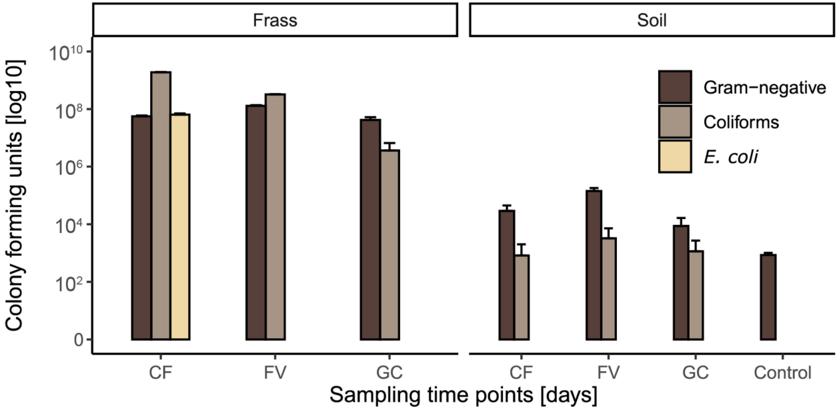
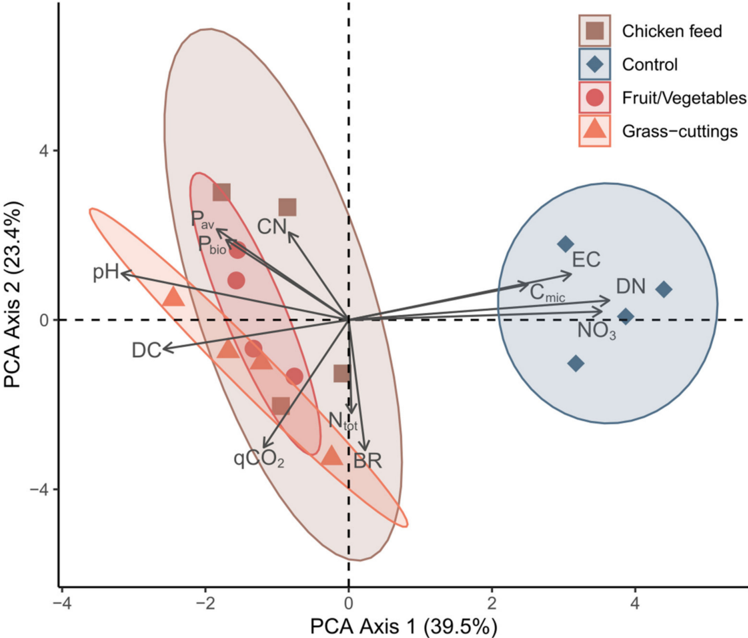
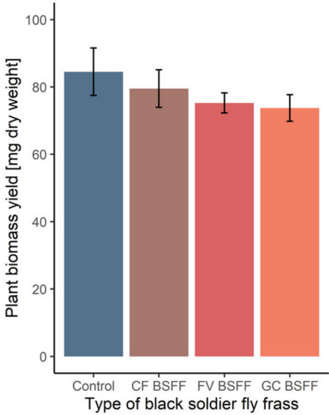
Because of its nutritious properties, the black soldier fly has emerged as one of the most popular species in advancing circular economy through the re-valorization of anthropogenic organic wastes to insect biomass. Black soldier fly frass accumulates as a major by-product in artificial rearing set-ups and harbors great potential to complement or replace commercial fertilizers. We applied frass from larvae raised on different diets in nitrogen-equivalent amounts as soil amendment, comparing it to NH4NO3 fertilizer as a control. While the soil properties did not reveal any difference between mineral fertilizer and frass, principal component analysis showed significant differences that are mainly attributed to nitrate and dissolved nitrogen contents. We did not find significant differences in the growth of perennial ryegrass between the treatments, indicating that frass serves as a rapidly acting fertilizer comparable to NH4NO3. While the abundance of coliform bacteria increased during frass maturation, after application to the soil, they were outcompeted by gram-negatives. We thus conclude that frass may serve as a valuable fertilizer and does not impair the hygienic properties of soils.
Overview
The claims and statistics of this paper haven’t been checked yet.
Free: it reads the open-access text and checks the first 5 claims that cite a source we can check. Create a free account to check every claim.
Integrity signals
Registry
Cites
Statistics
Figures
Verification
Claims the paper makes
The claims and statistics of this paper haven’t been checked yet.
Free: it reads the open-access text and checks the first 5 claims that cite a source we can check. Create a free account to check every claim.
Claims other papers make about this one
Each is checked against this paper’s own text: does it say what the citing paper says it does?
The source backs part of the claim, not all of it — or backs it for a different population, condition or comparison.
In the citing paper
“BSFL frass is harvested after 9–23 days of the experiment, depending on the substrate used in the composting process.”
From Potential Applications of Frass Derived from Black Soldier Fly Larvae Treatment of Food Waste: A Review (2022) · cites this paper as [23]
Experimental — accuracy not yet measuredThe source backs part of the claim, not all of it — or backs it for a different population, condition or comparison.
In the citing paper
“In addition, by enhancing nitrogen uptake, the high phosphorus concentration in the BSFL frass has aided in promoting nitrogen accumulation in plants since phosphorus is essential for energy transfer [23].”
From Potential Applications of Frass Derived from Black Soldier Fly Larvae Treatment of Food Waste: A Review (2022) · cites this paper as [23]
Experimental — accuracy not yet measuredThe source backs part of the claim, not all of it — or backs it for a different population, condition or comparison.
In the citing paper
“Post-processing by anaerobic digestion or composting could prevent soil nitrogen shortages or decreases in soil gas permeability as it increases the porosity and stability of wet BSFL frass [23].”
From Potential Applications of Frass Derived from Black Soldier Fly Larvae Treatment of Food Waste: A Review (2022) · cites this paper as [23]
Experimental — accuracy not yet measuredThe source backs part of the claim, not all of it — or backs it for a different population, condition or comparison.
In the citing paper
“The type of substrate determines the BSFL gut microbiome, and the BSFL excrement determines the microbiome in the BSFL frass [23].”
From Potential Applications of Frass Derived from Black Soldier Fly Larvae Treatment of Food Waste: A Review (2022) · cites this paper as [23]
Experimental — accuracy not yet measuredThe source backs part of the claim, not all of it — or backs it for a different population, condition or comparison.
In the citing paper
“The beneficial effect of BSFL frass with low moisture content is good for soil aeration and solubility; on the other hand, the BSFL frass with a high moisture content could have inadequate oxygen supply for the plant [23].”
From Potential Applications of Frass Derived from Black Soldier Fly Larvae Treatment of Food Waste: A Review (2022) · cites this paper as [23]
Experimental — accuracy not yet measured
3 more claims about this paper
Create a free account to see every claim other papers make about this one.
Self-check
Percentages, sums and reported differences re-computed from the paper’s own numbers.
The self-check needs the paper’s full text.
Citations
Cites
Wickham, H. (2016) · Use R! · doi:10.1007/978-3-319-24277-4_9 · Cited by 12,516
ANDERSON, T., & DOMSCH, K. (1993) · Soil Biology and Biochemistry · doi:10.1016/0038-0717(93)90140-7 · Cited by 1,389 · cited 1×
“The metabolic quotient (qCO2) was calculated from BR and Cmic according to Anderson and Domsch [40].”
MethodChitin — The Undisputed Biomolecule of Great Potential
Tharanathan, R. N., & Kittur, F. S. (2003) · Critical Reviews in Food Science and Nutrition · doi:10.1080/10408690390826455 · Cited by 996 · cited 1×
“Chitin, an N-acetylglucosamine-based polymer (C8H13O5N)n, may influence not only the C:N ratio, but its degradation product chitosan may also provide underrated benefits for plant health and pathogen resistance [53,54].”
Background(1996) · Springer eBooks · doi:10.1007/978-3-642-60966-4 · Cited by 949
Conversion of organic material by black soldier fly larvae: establishing optimal feeding rates
Diener, S., Zurbrügg, C., & Tockner, K. (2009) · Waste Management & Research: The Journal for a Sustainable Circular Economy · doi:10.1177/0734242x09103838 · Cited by 820 · cited 1×
“It is an inevitable side‐stream during the mass‐rearing of insects that can add up to 75% of the fed substrate [12] and is often merchandised as a fertilizing product.”
BackgroundNUTRIENT INTERACTIONS IN CROP PLANTS
Fageria, V. D. (2001) · Journal of Plant Nutrition · doi:10.1081/pln-100106981 · Cited by 721 · cited 1×
“Additionally, the higher P concentrations in the frass could facilitate N accumulation in plants by improving N uptake, as P plays an important role in energy transfer [62,63].”
BackgroundRhizosphere priming effects on soil carbon and nitrogen mineralization
Zhu, B., Gutknecht, J. L. M., Herman, D. J., Keck, D. C., Firestone, M. K., & Cheng, W. (2014) · Soil Biology and Biochemistry · doi:10.1016/j.soilbio.2014.04.033 · Cited by 440 · cited 1×
“A C:N-ratio > 20 bears the risk of soil N immobilization, which may favor plants with a more efficient N exploitation attributed to their rhizobiome [46,52].”
BackgroundRaaijmakers, J. M., & Mazzola, M. (2016) · Science · doi:10.1126/science.aaf3252 · Cited by 430
Sharp, R. (2013) · Agronomy · doi:10.3390/agronomy3040757 · Cited by 403 · cited 1×
“Chitin, an N-acetylglucosamine-based polymer (C8H13O5N)n, may influence not only the C:N ratio, but its degradation product chitosan may also provide underrated benefits for plant health and pathogen resistance [53,54].”
BackgroundThe Potential Role of Insects as Feed: A Multi-Perspective Review.
Sogari, G., Amato, M., Biasato, I., Chiesa, S., & Gasco, L. (2019) · Animals · doi:10.3390/ani9040119 · Cited by 395 · cited 1×
“The economic potential and meaningful reintroduction of otherwise wasted nutrients into the biosphere via a circular economy enticed researchers, investors, and the public to contribute to a more efficient recycling of organic wastes by exploiting the potential of insect larvae on a large scale [5,6].”
Background
Research works printed but not linked: 22
- 7. Choudhury, A.R.; Ashok, K.N.; Srinivas, K.; Arutchelvan, V.; Thota, K.R.; Ravi, S.N.; Sandeep, K.D.; Goutham, R.M. Black soldier fly larvae, a viable opportunity for entrepreneurship. Acta Sci. Agric. 2018, 2, 11-20.
- 19. Wang, H.; Rehman, K.; Liu, X.; Yang, Q.; Zheng, L.; Li, W.; Cai, M.; Li, Q.; Zhang, J.; Yu, Z. Insect biorefinery: A green approach for conversion of crop residues into biodiesel and protein. Biotechnol. Biofuels 2017, 10, 304. [CrossRef]
- 20. Erickson, M.C.; Islam, M.; Sheppard, C.; Liao, J.; Doyle, M.P. Reduction of Escherichia coli o157:h7 and Salmonella enterica serovar enteritidis in chicken manure by larvae of the black soldier fly. J. Food Prot. 2004, 67, 685-690. [CrossRef] [PubMed]
- 21. Lalander, C.; Diener, S.; Magri, M.E.; Zurbrugg, C.; Lindstrom, A.; Vinneras, B. Faecal sludge management with the larvae of the black soldier fly (Hermetia illucens)-From a hygiene aspect. Sci. Total Environ. 2013, 458-460, 312-318. [CrossRef] [PubMed]
- 22. Liu, Q.; Tomberlin, J.K.; Brady, J.A.; Sanford, M.R.; Yu, Z. Black soldier fly (Diptera: Stratiomyidae) larvae reduce Escherichia coli in dairy manure. Environ. Entomol. 2008, 37, 1525-1530. [CrossRef] [PubMed]
- 23. Vogel, H.; Müller, A.; Heckel, D.G.; Gutzeit, H.; Vilcinskas, A. Nutritional immunology: Diversification and diet-dependent expression of antimicrobial peptides in the black soldier fly Hermetia illucens. Dev. Comp. Immunol. 2018, 78, 141-148. [CrossRef]
- 24. Zhang, J.; Bisch-Knaden, S.; Fandino, R.A.; Yan, S.; Obiero, G.F.; Grosse-Wilde, E.; Hansson, B.S.; Knaden, M. The olfactory co-receptor IR8a governs larval-frass mediated competition avoidance in a hawkmoth. Proc. Natl. Acad. Sci. USA 2019, 116, 21828-21833. [CrossRef]
- 25. Zhang, X.G.; Li, X.; Gao, Y.L.; Liu, Y.; Dong, W.X.; Xiao, C. Oviposition deterrents in larval frass of potato tuberworm moth, Phthorimaea operculella (Lepidoptera: Gelechiidae). Neotrop. Entomol. 2019, 48, 496-502. [CrossRef] [PubMed]
- 26. Blomquist, G.J.; Figueroa-Teran, R.; Aw, M.; Song, M.; Gorzalski, A.; Abbott, N.L.; Chang, E.; Tittiger, C. Pheromone production in bark beetles. Insect Biochem. Mol. Biol. 2010, 40, 699-712. [CrossRef] [PubMed]
- 27. Lorenzana, L.R.J. Frass volatiles as attractant to the mango pulp weevil (Sternochetus frigidus (Fabr.) (Coleoptera: Curculionidae)). Philipp. Agric. Sci. 2014, 97, 385-390.
- 28. Mitchell, R.F.; Hanks, L.M. Insect frass as a pathway for transmission of bacterial wilt of cucurbits. Environ. Entomol. 2009, 38, 395-403. [CrossRef]
- 56. Kandeler, E. Ammonium. In Methods in Soil Biology; Schinner, F., Öhlinger, R., Kandeler, E., Margesin, R., Eds.; Springer: Berlin/Heidelberg, Germany, 1996; pp. 406-408, ISBN 978-3-642-60966-4. · DOI · Paper page
- 47. Kandeler, E. Ammonium. In Methods in Soil Biology; · DOI · Paper page
- 48. Schinner, F., Öhlinger, R., Kandeler, E., Margesin, R., Eds.; Springer: Berlin/Heidelberg, Germany, 1996; pp. 406-408; ISBN 978-3-642-60966-4. Death-affected Metrosideros polymorpha trees on Hawai'i Island. For. Pathol. 2019, 49, e12476. [CrossRef]
- 49. Khisti, U.V.; Kathade, S.A.; Aswani, M.A.; Anand, P.K.; Bipinraj, N.K. Isolation and identification of saccharomyces cerevisiae from caterpillar frass and their probiotic characterization. Biosci. Biotechnol. Res. Asia 2019, 16, 179-186. [CrossRef]
- 50. Frost, C.J.; Hunter, M.D. Recycling of nitrogen in herbivore feces: Plant recovery, herbivore assimilation, soil retention, and leaching losses. Oecologia 2007, 151, 42-53. [CrossRef]
- 51. Frost, C.J.; Hunter, M.D. Insect canopy herbivory and frass deposition affect soil nutrient dynamics and export in oak mesocosms. Ecology 2004, 85, 3335-3347. [CrossRef]
- 52. Yang, S.-S.; Chen, Y.; Kang, J.-H.; Xie, T.-R.; He, L.; Xing, D.-F.; Ren, N.-Q.; Ho, S.-H.; Wu, W.-M. Generation of high-efficient biochar for dye adsorption using frass of yellow mealworms (larvae of Tenebrio molitor Linnaeus) fed with wheat straw for insect biomass production. J. Clean. Prod. 2019, 227, 33-47. [CrossRef]
- 53. Schmitt, E.; de Vries, W. Potential benefits of using Hermetia illucens frass as a soil amendment on food production and for environmental impact reduction. Curr. Opin. Green Sustain. Chem. 2020. [CrossRef]
- 54. Goberna, M.; Podmirseg, S.M.; Waldhuber, S.; Knapp, B.A.; García, C.; Insam, H. Pathogenic bacteria and mineral N in soils following the land spreading of biogas digestates and fresh manure. Appl. Soil Ecol. 2011, 49, 18-25. [CrossRef]
- 55. Kandeler, E. Nitrate. In Methods in Soil Biology; Schinner, F., Öhlinger, R., Kandeler, E., Margesin, R., Eds.; Springer: Berlin/Heidelberg, Germany, 1996; pp. 408-410, ISBN 978-3-642-60966-4.
- 74. Dioha, I.; Ikeme, C.H.; Nafiu, T. Effect of carbon to nitrogen ratio on biogas production. Int. Res. J. Nat. Sci. 2013, 1, 1-10.
Cited by
Weng, C., Peng, X., & Han, Y. (2021) · Biotechnology for Biofuels · doi:10.1186/s13068-021-01934-w · Cited by 345
Lopes, I. G., Yong, J. W., & Lalander, C. (2022) · Waste Management · doi:10.1016/j.wasman.2022.02.007 · Cited by 279
“…the microbial characterization of BSF larvae frass revealed multiple groups of microorganisms with possible biostimulant action (Wynants et al., 2019; Gold et al., 2020b; Klammsteiner et al., 2020; Tan et al., 2021), even though the authors did not further explore this subject in their studies.”
BackgroundMethodNutrient quality and maturity status of frass fertilizer from nine edible insects
Beesigamukama, D., Subramanian, S., & Tanga, C. M. (2022) · Scientific Reports · doi:10.1038/s41598-022-11336-z · Cited by 166
A Review of Organic Waste Treatment Using Black Soldier Fly (Hermetia illucens)
Amrul, N. F., Kabir Ahmad, I., Ahmad Basri, N. E., Suja, F., Abdul Jalil, N. A., & Azman, N. A. (2022) · Sustainability · doi:10.3390/su14084565 · Cited by 185
“The frass produced by BSFL’s bioconversion of organic waste is approximately 30 to 50% of the initial weight of the feeding substrates [88].”
BackgroundLiu, T., Klammsteiner, T., Dregulo, A. M., Kumar, V., Zhou, Y., Zhang, Z., & Awasthi, M. K. (2022) · Science of The Total Environment · doi:10.1016/j.scitotenv.2022.155122 · Cited by 163
Self-citationRecent trends and advances in composting and vermicomposting technologies: A review
Zhou, Y., Xiao, R., Klammsteiner, T., Kong, X., Yan, B., Mihai, F., Liu, T., Zhang, Z., & Awasthi, M. K. (2022) · Bioresource Technology · doi:10.1016/j.biortech.2022.127591 · Cited by 164
Self-citationMannaa, M., Mansour, A., Park, I., Lee, D., & Seo, Y. (2023) · Environmental Science and Ecotechnology · doi:10.1016/j.ese.2023.100287 · Cited by 149
Compilation of Black Soldier Fly Frass Analyses
Gärttling, D., & Schulz, H. (2021) · Journal of soil science and plant nutrition · doi:10.1007/s42729-021-00703-w · Cited by 148
Hu, Y., Sun, B., Wu, S., Feng, H., Gao, M., Zhang, B., & Liu, Y. (2021) · The Science of The Total Environment · doi:10.1016/j.scitotenv.2021.146560 · Cited by 136
Deen, S. N. E., van Rozen, K., Elissen, H. J. H., Wikselaar, P. G. V., Fodor, I., van der Weide, R., den Hil, E. F. H.-V., Far, A. R., & Veldkamp, T. (2023) · Insects · doi:10.3390/insects14020204 · Cited by 197
“Unlike the results of another study where the DM of frass was not significantly different between different larval substrates (chicken feed, fruit/vegetable mix and grass-cuttings) [57].”
Basri, N. E. A., Azman, N. A., Ahmad, I. K., Suja, F., Jalil, N. A. A., & Amrul, N. F. (2022) · Foods · doi:10.3390/foods11172664 · Cited by 119
“In a commercial context, BSFL frass often refers to a mixture of primarily BSFL faeces, substrate residues, and shed BSFL exoskeletons [23].”
BackgroundMethodGuan, Q., Zeng, G., Song, J., Liu, C., Wang, Z., & Wu, S. (2021) · Journal of Environmental Management · doi:10.1016/j.jenvman.2021.112961 · Cited by 119
Lomonaco, G., Franco, A., Smet, J. D., Scieuzo, C., Salvia, R., & Falabella, P. (2024) · Insects · doi:10.3390/insects15040293 · Cited by 137
“When the majority of the larvae has stopped the feeding period, frass and larval biomass are collected by sieving them [52,57].”
BackgroundPeguero, D. A., Gold, M., Vandeweyer, D., Zurbrügg, C., & Mathys, A. (2022) · Frontiers in Sustainable Food Systems · doi:10.3389/fsufs.2021.745894 · Cited by 108
“, insect frass) for fertilizer applications (Klammsteiner et al., 2020).”
Meijer, N., Safitri, R. A., Tao, W., & den Hil, E. F. H.-V. (2025) · animal · doi:10.1016/j.animal.2025.101468 · Cited by 116
Cui, T., Yuan, B., Guo, H., Tian, H., Wang, W., Ma, Y., Li, C., & Fei, Q. (2021) · Biotechnology for Biofuels · doi:10.1186/s13068-021-02011-y · Cited by 110
Tanga, C. M., Beesigamukama, D., Kassie, M. B., Egonyu, J. P., Ghemoh, C. J., Kiatoko, N., Subramanian, S., Onyoni, A. A., & Ekesi, S. (2021) · Journal of Insects as Food and Feed · doi:10.3920/jiff2021.0012 · Cited by 119
Siddiqui, S. A., Süfer, Ö., Koç, G. Ç., Lutuf, H., Rahayu, T., Castro‐Muñoz, R., & Fernando, I. (2024) · Environment Development and Sustainability · doi:10.1007/s10668-023-04306-6 · Cited by 112
Arabzadeh, G., Delisle‐Houde, M., Tweddell, R. J., Deschamps, M., Dorais, M., Lebeuf, Y., Derôme, N., & Vandenberg, G. W. (2022) · Agronomy · doi:10.3390/agronomy12081765 · Cited by 104
Klammsteiner, T., Walter, A., Bogataj, T., Heussler, C. D., Stres, B., Steiner, F. M., Schlick-Steiner, B. C., & Insam, H. (2021) · Frontiers in Microbiology · doi:10.3389/fmicb.2021.619112 · Cited by 95
Self-citationManan, F. A., Yeoh, Y.-K., Chai, T., & Wong, F. (2024) · Journal of Environmental Management · doi:10.1016/j.jenvman.2024.121997 · Cited by 104
Beesigamukama, D., Mochoge, B., Korir, N. K., Ghemoh, C. J., Subramanian, S., & Tanga, C. M. (2021) · Scientific Reports · doi:10.1038/s41598-021-94269-3 · Cited by 80
Siddiqui, S. A., Gadge, A. S., Hasan, M., Rahayu, T., Povetkin, S. N., Fernando, I., & Castro‐Muñoz, R. (2024) · Environment Development and Sustainability · doi:10.1007/s10668-024-04673-8 · Cited by 83
Hou, P., Jiang, Y., Yan, L., Petropoulos, E. A., Wang, J., Xue, L., Yang, L., & Chen, D. (2021) · The Science of The Total Environment · doi:10.1016/j.scitotenv.2021.148554 · Cited by 73
Mohamed, I., Bassouny, M. A., Abbas, M., Zhan, M., Cao, C., Fahad, S., Saud, S., Khattak, J. Z. K., Ali, S., Salem, H. M. S., et al. (2021) · Chemosphere · doi:10.1016/j.chemosphere.2021.129971 · Cited by 73
Microbial influence on reproduction, conversion, and growth of mass produced insects
Jordan, H. R., & Tomberlin, J. K. (2021) · Current Opinion in Insect Science · doi:10.1016/j.cois.2021.10.001 · Cited by 69
Fuhrmann, A., Wilde, B. C., Conz, R. F., Kantengwa, S., Konlambigue, M., Masengesho, B., Kintche, K., Kassa, K., Musazura, W., Späth, L., et al. (2022) · Frontiers in Microbiology · doi:10.3389/fmicb.2022.994091 · Cited by 69
The Variety of Applications of Hermetia illucens in Industrial and Agricultural Areas—Review
Kaczor, M., Bulak, P., Proc, K., Kirichenko-Babko, M., & Bieganowski, A. (2022) · Biology · doi:10.3390/biology12010025 · Cited by 74
Beesigamukama, D., Tanga, C. M., Sevgan, S., Ekesi, S., & Kelemu, S. (2023) · The Science of The Total Environment · doi:10.1016/j.scitotenv.2023.166067 · Cited by 71
“However, the frass can be directly used for crop production (G ¨ arttling et al., 2020; Klammsteiner et al., 2020), although this poses a risk of nutrient immobilization, especially if the levels of C/N ratio, ammonium/nitrate ratio are beyond the recommended thresholds (Bernal et al., 1998, 2017).”
BackgroundMahmood, M., Tian, Y., Ma, Q., Hui, X., Elrys, A. S., Ahmed, W., Mehmood, S., & Wang, Z. (2021) · Field Crops Research · doi:10.1016/j.fcr.2021.108207 · Cited by 64
Zuo, Y., Meng, F., Li, T., Fu, Q., Liu, D., Hou, R., Li, Q., & Li, M. (2021) · Geoderma · doi:10.1016/j.geoderma.2021.115510 · Cited by 64
Black Soldier Fly Diet Impacts Soil Greenhouse Gas Emissions From Frass Applied as Fertilizer
Rummel, P. S., Beule, L., Hemkemeyer, M., Schwalb, S. A., & Wichern, F. (2021) · Frontiers in Sustainable Food Systems · doi:10.3389/fsufs.2021.709993 · Cited by 65
“Accordingly, both rapid N mineralization (Temple et al., 2013; Houben et al., 2020; Klammsteiner et al., 2020) and N immobilization (Lovett and Ruesink, 1995; Kagata and Ohgushi, 2013) have been reported after frass application depending on frass C:N ratio.”
BackgroundPraeg, N., & Klammsteiner, T. (2024) · Journal of Environmental Management · doi:10.1016/j.jenvman.2024.120622 · Cited by 57
Self-citationSepúlveda-Cadavid, C., Romero, J. H., Torres, M., Becerra-Agudelo, E., & López, J. E. (2021) · Journal of Soil Science and Plant Nutrition · doi:10.1007/s42729-021-00583-0 · Cited by 56
Wu, N., Yu, X., Liang, J., Mao, Z., Ma, Y., Wang, Z., Wang, X., Liu, X., & Xu, X. (2023) · The Science of The Total Environment · doi:10.1016/j.scitotenv.2023.163386 · Cited by 55
Schott, C., Cunha, J. R., van der Weijden, R. D., & Buisman, C. J. N. (2022) · Chemical Engineering Journal · doi:10.1016/j.cej.2022.135406 · Cited by 57
Auger, L., Deschamps, M., Vandenberg, G. W., & Derôme, N. (2023) · Frontiers in Microbiology · doi:10.3389/fmicb.2023.1221728 · Cited by 55
“An added value of this biofertilizer over other commercially available products is the microbial soil amendment ability of frass (Klammsteiner et al., 2020a).”
BackgroundChirere, T. E. S., Khalil, S., & Lalander, C. (2021) · Journal of Insects as Food and Feed · doi:10.3920/jiff2020.0120 · Cited by 53
Zhu, L., Jia, X., Li, M., Wang, Y., Zhang, J., Hou, J., & Wang, X. (2021) · Applied Soil Ecology · doi:10.1016/j.apsoil.2021.104006 · Cited by 56
A novel glucose-based highly selective phosphate adsorbent
Liang, H., Zhang, H., Wang, Q., Xu, C., Geng, Z., She, D., & Du, X. (2021) · The Science of The Total Environment · doi:10.1016/j.scitotenv.2021.148452 · Cited by 47
Post-harvest biology and recent advances of storage technologies in sugarcane
Misra, V., Mall, A., Solomon, S., & Ansari, M. I. (2022) · Biotechnology Reports · doi:10.1016/j.btre.2022.e00705 · Cited by 45
Zhou, J., Zhang, Y., Wu, K., Hu, M., Wu, H. B., & Chen, D. (2021) · The Science of The Total Environment · doi:10.1016/j.scitotenv.2021.146677 · Cited by 44
Arshad, Z., Maqbool, T., Shin, K., Kim, S.-H., & Hur, J. (2021) · The Science of The Total Environment · doi:10.1016/j.scitotenv.2021.147875 · Cited by 43
Watson, C., Preißing, T., & Wichern, F. (2021) · Frontiers in Sustainable Food Systems · doi:10.3389/fsufs.2021.721840 · Cited by 47
“, 2020), and in pot trials monitoring growth of perennial ryegrass (Klammsteiner et al., 2020; Menino et al., 2021).”
BackgroundCheng, C., Sun, T., Li, H., He, Q., Pavlostathis, S. G., & Zhang, J. (2021) · Journal of Environmental Management · doi:10.1016/j.jenvman.2021.113280 · Cited by 43
Du, T., Hu, Q., He, H.-Y., Mao, W., Zhou, Y., Chen, H., Sun, L., & Zhai, M. (2023) · European Journal of Soil Biology · doi:10.1016/j.ejsobi.2023.103492 · Cited by 43
Improving the sustainability of the wheat supply chain through multi-stakeholder engagement
Deng, L., Zhang, H., Wang, C., Ma, W., Zhu, A. L., Zhang, F. S., & Jiao, X. (2021) · Journal of Cleaner Production · doi:10.1016/j.jclepro.2021.128837 · Cited by 41
Sun, L., Liang, X., Jin, M., Ma, B., Zhang, X., & Song, C. (2021) · The Science of The Total Environment · doi:10.1016/j.scitotenv.2021.145131 · Cited by 42
Insect feed in sustainable crustacean aquaculture
Röthig, T., Barth, A., Tschirner, M., Schubert, P., Wenning, M., Billion, A., Wilke, T., & Vilcinskas, A. (2023) · Journal of Insects as Food and Feed · doi:10.3920/jiff2022.0117 · Cited by 42
Siddiqui, S. A., Fernando, I., Nisa, K., Shah, M. A., Rahayu, T., Rasool, A., & Aidoo, O. F. (2023) · Environmental Monitoring and Assessment · doi:10.1007/s10661-023-11186-w · Cited by 40
“The resulting larval biomass offers input for high-quality end products, such as feed, food, biodiesel, and soil amendments (Klammsteiner et al., 2020; Li et al., 2011a; Wang & Shelomi, 2017).”
BackgroundRomano, N., Powell, A., Islam, S., Fischer, H., Renukdas, N. N., Sinha, A. K., & Francis, S. (2022) · Aquaculture · doi:10.1016/j.aquaculture.2022.738160 · Cited by 38
Pesticides and vegetables: ecological and metabolic fate with their field and food significance
Sharma, S., Kumar, S., Kumar, V., & Sharma, R. (2021) · International Journal of Environmental Science and Technology · doi:10.1007/s13762-021-03716-1 · Cited by 38
Laursen, S. F., Flint, C. A., Bahrndorff, S., Tomberlin, J. K., & Kristensen, T. N. (2024) · Waste Management · doi:10.1016/j.wasman.2024.04.010 · Cited by 29
Romano, N., Fischer, H., Powell, A., Sinha, A. K., Islam, S., Deb, U., & Francis, S. (2022) · Agronomy · doi:10.3390/agronomy12040928 · Cited by 38
Boudabbous, K., Hammami, S. B. M., Toukabri, W., Bouhaouel, I., Ayed, S., Fraihi, W., Gastli, M., Chaalala, S., & Labidi, S. (2023) · Communications in Soil Science and Plant Analysis · doi:10.1080/00103624.2023.2227208 · Cited by 43
“Nitrogen is considered an essential component of building plant tissue (Klammsteiner et al. 2020).”
Peguero, D. A., Gold, M., Endara, A., Niu, M., Zurbrügg, C., & Mathys, A. (2023) · Waste Management · doi:10.1016/j.wasman.2023.01.033 · Cited by 37
Bohm, K., Taylor, W., Gyawali, P., Pattis, I., & Ginés, M. J. G. (2024) · The Science of The Total Environment · doi:10.1016/j.scitotenv.2024.172823 · Cited by 35
Black Soldier Fly (Hermetia illucens) Microbiome and Microbe Interactions: A Scoping Review
Lin, S.-W., & Shelomi, M. (2024) · Animals · doi:10.3390/ani14223183 · Cited by 38
“These BSFL gut microbes themselves are also seen as a valuable product of BSFL production that could be isolated and used for other industries like animal feed supplementation [9,10], soil remediation or amendment [11,12], and bioenergy production [13–17].”
Heussler, C. D., Dittmann, I. L., Egger, B., Robra, S., & Klammsteiner, T. (2023) · Waste and Biomass Valorization · doi:10.1007/s12649-023-02296-0 · Cited by 33
“Furthermore, BSFL and their rearing residues (frass) can be further processed into livestock feed and fertiliser, respectively, thus contributing to a circular economy [14, 15].”
BackgroundSelf-citationChia, S. Y., van Loon, J. J. A., & Dicke, M. (2024) · Entomologia Experimentalis et Applicata · doi:10.1111/eea.13425 · Cited by 36
“High concentrations of P in BSFF promote N accumulation in plants (Klammsteiner et al., 2020).”
BackgroundGreen, T. (2023) · PLoS ONE · doi:10.1371/journal.pone.0288913 · Cited by 33
Bohm, K., Hatley, G. A., Robinson, B. H., & Ginés, M. J. G. (2023) · Sustainability · doi:10.3390/su151511526 · Cited by 36
Safitri, R. A., Vandeweyer, D., Deruytter, D., Meijer, N., Coudron, C. L., Banach, J. L., & van der Fels‐Klerx, H. J. (2024) · Journal of Insects as Food and Feed · doi:10.1163/23524588-00001224 · Cited by 32
Black Soldier Fly School Workshops as Means to Promote Circular Economy and Environmental Awareness
Walter, A., Klammsteiner, T., Gassner, M., Heussler, C. D., Kapelari, S., Schermer, M., & Insam, H. (2020) · Sustainability · doi:10.3390/su12229574 · Cited by 29
“During degradation, BSFL digest, aerate, and dry organic waste, producing granules of increased pH and ammonia content [27] that can be used as plant fertilizer [28,29].”
BackgroundSelf-citationKang, Y., Ma, Y., Wu, W., Zeng, S., Jiang, S., Han, Y., Li, Y., Wang, Z., Dong, C., Xu, Y., et al. (2022) · Applied Soil Ecology · doi:10.1016/j.apsoil.2021.104383 · Cited by 28
Kragt, M. E., Dempster, F., & Subroy, V. (2023) · Journal of Cleaner Production · doi:10.1016/j.jclepro.2023.137271 · Cited by 32
Effects of black soldier fly frass on plant and soil characteristics : a literature overview
Team Acrres, Elissen, H. J. H., omgeving, L. V. E., van der Weide, R., & Gollenbeek, L. (2023) · doi:10.18174/587213 · Cited by 42
“Klammsteiner et al. (2020) suggested that a high moisture content of frass can lead to anaerobic conditions and should be post-processed to be further degraded, for example by composting or anaerobic digestion.”
BackgroundJenkins, S. N., Middleton, J. A., Huang, Z., Mickan, B. S., Andersen, M. Ø., Wheat, L., Waite, I. S., & Abbott, L. K. (2022) · The Science of The Total Environment · doi:10.1016/j.scitotenv.2023.165371 · Cited by 28
Black soldier fly larvae (Hermetia illucens) frass and sheddings as a compost ingredient
Jasso, B., Quinchia, L., Waliczek, T. M., & Drewery, M. L. (2024) · Frontiers in Sustainable Food Systems · doi:10.3389/fsufs.2023.1297858 · Cited by 28
Abdelhafez, A. A., Eid, K. E., El-Abeid, S. E., Abbas, M., Ahmed, N., Mansour, R. R. M., Zou, G., Iqbal, J., Fahad, S., Elkelish, A., et al. (2020) · Chemosphere · doi:10.1016/j.chemosphere.2020.129321 · Cited by 28
Gurung, S. K., Mickan, B. S., Middleton, J. A., Singh, P. K., Jenkins, S. N., Rengel, Z., Siddique, K. H. M., & Solaiman, Z. M. (2024) · Applied Soil Ecology · doi:10.1016/j.apsoil.2024.105605 · Cited by 30
Effect of carbon-enriched digestate on the microbial soil activity
Holátko, J., Hammerschmiedt, T., Kintl, A., Danish, S., Škarpa, P., Látal, O., Baltazár, T., Fahad, S., Akça, H., Taban, S., et al. (2021) · PLoS ONE · doi:10.1371/journal.pone.0252262 · Cited by 25
“Such effect on N-NH4retention might be enhanced by the HA amendment and we presumed retardation of N-NH4oxidation in digestate, similar to that reported for urea (amendment) [44, 45].”
RetractedSawinska, Z., Radzikowska, D., Kowalczewski, P. Ł., Grzanka, M., Sobiech, Ł., Skrzypczak, G. A., Drożdżyńska, A., Ślachciński, M., & Świtek, S. (2024) · Applied Sciences · doi:10.3390/app14062386 · Cited by 28
Chepkorir, A., Beesigamukama, D., Gitari, H. I., Chia, S. Y., Subramanian, S., Ekesi, S., Birachi, E., Rubyogo, J. C., Zahariadis, T. B., Athanasiou, G., et al. (2024) · Frontiers in Plant Science · doi:10.3389/fpls.2024.1460599 · Cited by 32
Wang, M., Liu, J., Peng, L., Tian, S., Yang, C., Xu, G., Wang, D., & Jiang, T. (2021) · The Science of The Total Environment · doi:10.1016/j.scitotenv.2021.147974 · Cited by 24
Wang, S., Han, Y., Lü, X., Zhi, Z., Zhang, R., Cai, T., Zhang, Z., Qin, X., Song, Y., & Zhen, G. (2021) · Journal of Cleaner Production · doi:10.1016/j.jclepro.2021.127195 · Cited by 23
Mussarat, M., Ali, H., Muhammad, D., Mian, I. A., Khan, S., Adnan, M., Fahad, S., Wahid, F., Dawar, K. M., Ali, S., et al. (2021) · PeerJ · doi:10.7717/peerj.11452 · Cited by 24
“Soil organic matter was determined by the procedure according to Nelson & Sommers (1983). Extractable P in soil was quantified on spectrophotometer according to the procedure of Soltanpour & Schwab (1977). The pH and EC of the soil was determined in 1:5 soil water suspensions by the methods of MeClean (1982), and Rich…”
BackgroundMethodInfluentialEl-Dakar, M. A., Ramzy, R. R., Wang, D., & Ji, H. (2021) · Waste Management · doi:10.1016/j.wasman.2021.01.040 · Cited by 23
Arabzadeh, G., Delisle‐Houde, M., Vandenberg, G. W., Derôme, N., Deschamps, M., Dorais, M., Vincent, A. T., & Tweddell, R. J. (2023) · Sustainability · doi:10.3390/su151410957 · Cited by 24
Terfa, G. N. (2021) · Reviews in Agricultural Science · doi:10.7831/ras.9.0_92 · Cited by 27
“The frass, which is a byproduct from black soldier fly rearing, contains substantial amounts of nutrients [51, 52] that could be useful in crop production especially for vegetable production if converted into organic fertilizer and the black soldier fly frass accumulation has a great potential to complement or to repl…”
BackgroundKlammsteiner, T., Heussler, C. D., Insam, H., Schlick-Steiner, B. C., & Steiner, F. M. (2025) · iScience · doi:10.1016/j.isci.2025.112794 · Cited by 24
“4,5 The suitability of BSFL for high-density cultivation further enables the production of significant larval biomass, which can be enhanced by employing vertical farming techniques.”
Self-citationHou, J., Guo, Z., Meng, F., Li, M., & Hou, L.-A. (2021) · Environmental Research · doi:10.1016/j.envres.2021.112088 · Cited by 21
Romano, N., Datta, S. N., Sinha, A. K., & Pande, G. S. J. (2023) · Technology in Horticulture · doi:10.48130/tih-2023-0008 · Cited by 21
Heronemus, E., Gamage, K. H. H., Hettiarachchi, G. M., & Parameswaran, P. (2021) · The Science of The Total Environment · doi:10.1016/j.scitotenv.2021.146850 · Cited by 20
Heussler, C. D., Insam, H., Walter, A., Schlick-Steiner, B. C., Steiner, F. M., & Klammsteiner, T. (2022) · Journal of Insects as Food and Feed · doi:10.3920/jiff2022.0044 · Cited by 21
Self-citationRomano, N., & Islam, S. (2023) · Aquaculture Research · doi:10.1155/2023/3308537 · Cited by 20
Traoré, S., Guébré, D., Hien, E., Traoré, M., Lee, N., Lorenz, N., & Dick, R. P. (2022) · European Journal of Soil Biology · doi:10.1016/j.ejsobi.2021.103381 · Cited by 20
Muin, H., Alias, Z., Nor, A. M., & Taufek, N. M. (2022) · Waste and Biomass Valorization · doi:10.1007/s12649-022-01867-x · Cited by 19
Black Soldier Fly Frass Supports Plant Growth and Reduces Nitrogen Leaching during Coleus Production
Beasley, J. S., Kuehny, J. S., Gentimis, T., & Fields, J. S. (2023) · HortTechnology · doi:10.21273/horttech05093-22 · Cited by 19
“…(Pastor et al. 2015)], and crickets [ Acheta domesticus (Kipkoech et al. 2017)] are being evaluated as food products across a range of industries and as potential components of an ef fi cient biodegradation process for solid wastes (Klammsteiner et al. 2020; Lopes et al. 2022; Pastor et al. 2015).”
BackgroundSingh, S. K., Pawar, L., Thomas, A. J., Debbarma, R., Biswas, P., Ningombam, A., Devi, A. G., Waikhom, G., Patel, A. B., Meena, D. K., et al. (2023) · Environmental Science and Pollution Research · doi:10.1007/s11356-023-29068-6 · Cited by 26
“In BSF-based composting, the frass yield is usually 30–50% of the initial weight of the substrate (Klammsteiner et al. 2020).”
Andrade, E. P., Blasi, A. B., Jiménez, L., Brunn, S., Jensen, L. S., Meers, E., & Antón, A. (2021) · Ecological Indicators · doi:10.1016/j.ecolind.2021.108471 · Cited by 20
“Due to its nutritious properties, the black soldier fly has become an important species in achieving a circular economy, adding value to anthropogenic organic waste by converting it into insect biomass (Klammsteiner et al., 2020).”
BackgroundAlciatore, G., Peguero, D. A., Gold, M., Zurbrügg, C., Niu, M., Bargetze, F., & Mathys, A. (2024) · Waste Management · doi:10.1016/j.wasman.2024.05.043 · Cited by 17
Kenchanna, D., Waliczek, T. M., & Drewery, M. L. (2024) · Fermentation · doi:10.3390/fermentation10120613 · Cited by 18
Sustainable biowaste recycling using insects
Adhikari, P., Aryal, N., Ghimire, A., & Khanal, P. (2021) · Elsevier eBooks · doi:10.1016/b978-0-323-85223-4.00007-5 · Cited by 23
Recycled nutrients as a phosphorus source for Canadian organic agriculture: a perspective
Nicksy, J., & Entz, M. H. (2021) · Canadian Journal of Soil Science · doi:10.1139/cjss-2021-0014 · Cited by 16
“Klammsteiner et al. (2020) found significantly different pH, electrical conductivity, and N content of BSF frass from larvae fed three different diets (P content not reported), although the three frass types resulted in similar growth of ryegrass to each other and a mineral fertilizer when applied…”
BackgroundWilson, D. D., Ray, R. L., & Lohakare, J. (2025) · Discover Sustainability · doi:10.1007/s43621-025-02250-1 · Cited by 21
“Nutrient-wise, frass contains around 1.2–2.3% total nitrogen, but applying it fresh caused phytotoxic effects in cress seed tests, likely due to its instability or immaturity [70].”
InfluentialLuan, X., Han, Z., Shen, Y., Yang, M., & Zhang, Y. (2021) · The Science of The Total Environment · doi:10.1016/j.scitotenv.2021.146329 · Cited by 15
Gómez‐Brandón, M., Beesigamukama, D., Probst, M., Klammsteiner, T., Su, J., Zhu, Y., & Tanga, C. M. (2025) · Journal of Environmental Management · doi:10.1016/j.jenvman.2025.125774 · Cited by 16
Self-citationFungal deterioration of the bagasse storage from the harvested sugarcane
Peng, N., Yao, Z., Wang, Z., Huang, J., Khan, M. T., Chen, B., & Zhang, M. (2021) · Biotechnology for Biofuels · doi:10.1186/s13068-021-02004-x · Cited by 14
“Microorganism plays a significant role in biodegradation and changes of host chemical characteristics [9, 10].”
BackgroundThe depolymerization of lignin over polyoxometalate catalysis: A review
Yin, Q., Wang, S., Deng, H., Shi, J., Zhang, D., & Xu, W. (2024) · Journal of environmental chemical engineering · doi:10.1016/j.jece.2024.114540 · Cited by 14
Metadata
- Authors
- Klammsteiner, T., Turan, V., Fernández-Delgado Juárez, M., Oberegger, S., & Insam, H.
- Affiliations
- Universität Innsbruck (AT)
- Bingöl University (TR)
- Department of Microbiology, University of Innsbruck, Technikerstraße 25d, 6020 Innsbruck, Austria
- Corresponding author
- Klammsteiner, Thomas
- ORCID
- Venue
- Agronomy
- Publisher
- MDPI AG
- Published
- 2020-10-15
- Volume
- 10
- Issue
- 10
- Pages
- 1578
- ISSN
- 2073-4395 (ISSN-L)
- OpenAlex
- W3093147761
- Cited by
- 223
- References
- 57
- Citations by year
- 2026: 35 · 2025: 35 · 2024: 41 · 2023: 31 · 2022: 28 · 2021: 51 · 2020: 2
- FWCI
- 19.64
- Type
- journal article
- Language
- en
- Open access
- gold
- doi.org
- Licence
- Locations
- Agronomy (publishedVersion, cc-by)
- DOAJ (DOAJ: Directory of Open Access Journals) (submittedVersion, cc-by-sa)
- Funders
- Austrian Science Fund (P26444)
- Universität Innsbruck (Doktoratsstipendium aus der Nachwuchsforschung, 3. Tranche)
- Türkiye Bilimsel ve Teknolojik Araştirma Kurumu (1059B191601133)
- Topics
- Life Sciences › Agricultural and Biological Sciences › Insect Science › Insect Utilization and Effects
- Life Sciences › Agricultural and Biological Sciences › Soil Science › Composting and Vermicomposting Techniques
- Life Sciences › Agricultural and Biological Sciences › Plant Science › Agriculture, Plant Science, Crop Management
- Keywords
- Hermetia illucens, frass, soil amendment, insect biomass, ammonium nitrate, nitrate, dissolved nitrogen, perennial ryegrass, coliform bacteria, Gram-negative bacteria, circular economy, organic waste valorization
About these checks
Registry, retraction, Cites and statistics results are computed, not judged, with one exception: a printed reference that no index lists is read once by a model before it counts as a citation error. Claims are extracted by a model and kept only when their quote appears verbatim in the text; each cited source is then checked, with a model’s help, for whether it says what the claim relies on. Those verdicts can be wrong — read the claim’s quote and the cited source before relying on one.
Statistics and arithmetic are recomputed, not judged.
Confidence bands are shown only for fields calibrated on our annotated test set. None is calibrated yet, so no band is shown.
What counts as a claim ›How we measure confidence ›How we check this ›
Are you an author, or do you see a problem with this page? Request a review
Data sources
Bibliographic data: Semantic Scholar, OpenAlex, Crossref.
Contains information from the Semantic Scholar Academic Graph Datasets, made available under the ODC Attribution License (ODC-BY 1.0).
Semantic Scholar’s data is described in: Kinney, R., et al. (2023). The Semantic Scholar Open Data Platform. arXiv:2301.10140.
