

The DOI matches its Crossref record.
Structural Basis for the IgE-Binding Cross-Reacting Epitopic Peptides of Cup s 3, a PR-5 Thaumatin-like Protein Allergen from Common Cypress (Cupressus sempervirens) Pollen
Abstract
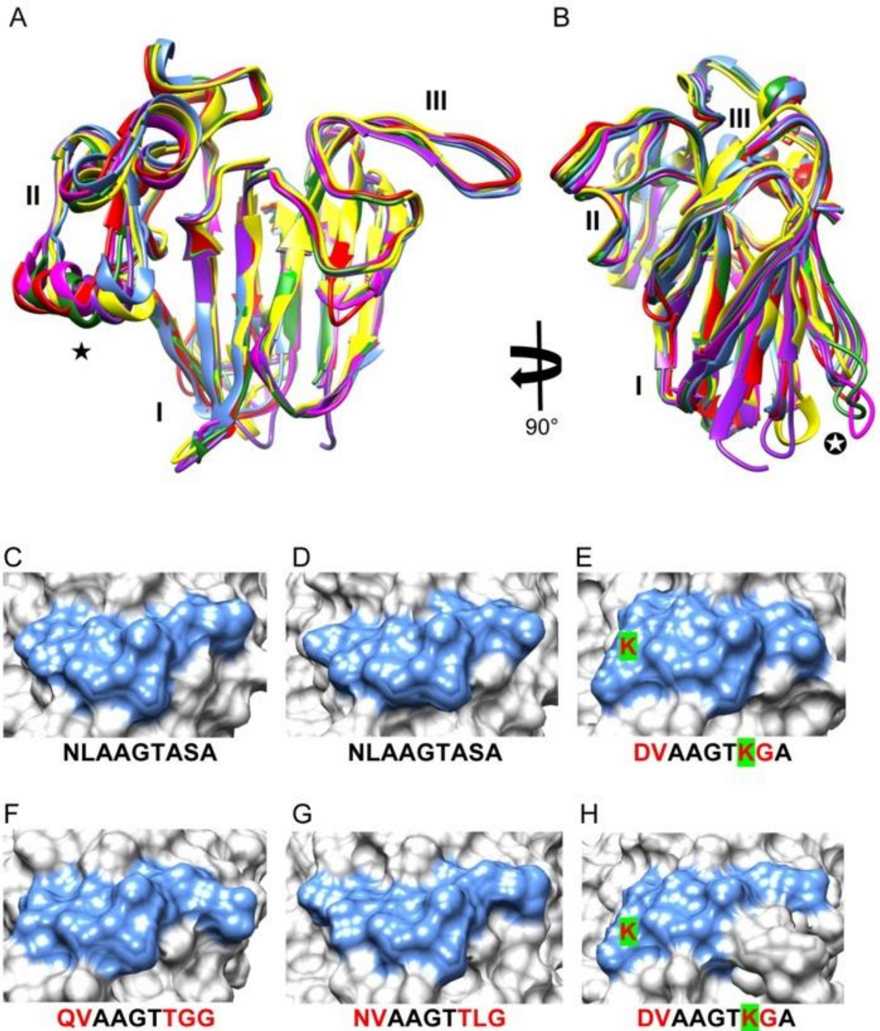
The present work was aimed at identifying the IgE-binding epitopic regions on the surface of the Cup s 3 allergen from the common cypress Cupressus sempervirens, that are possibly involved in the IgE-binding cross-reactivity reported between Cupressaceae species. Three main IgE-binding epitopic regions were mapped on the molecular surface of Cup s 3, the PR-5 thaumatin-like allergen of common cypress Cupressus sempervirens. They correspond to exposed areas containing either electropositive (R, K) or electronegative (D, E) residues. A coalescence occurs between epitopes #1 and #2, that creates an extended IgE-binding regions on the surface of the allergen. Epitope #3 contains a putative N-glycosylation site which is actually glycosylated and could therefore comprise a glycotope. However, most of the allergenic potency of Cup s 3 depends on non-glycosylated epitopic peptides. The corresponding regions of thaumatin-like allergens from other closely related Cupressaceae (Cryptomeria, Juniperus, Thuja) exhibit a very similar conformation that should account for the IgE-binding cross-reactivity observed among the Cupressaceae allergens.
Overview
The claims and statistics of this paper haven’t been checked yet.
Run the check — free, no account needed. It reads the open-access text and checks the sources it cites.
Integrity signals
Registry
Cites
Statistics
Figures
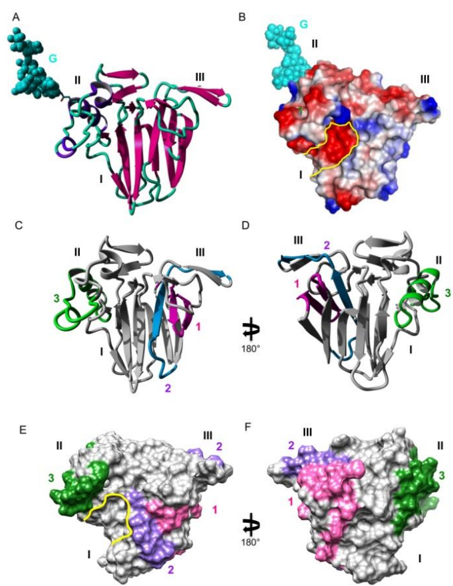
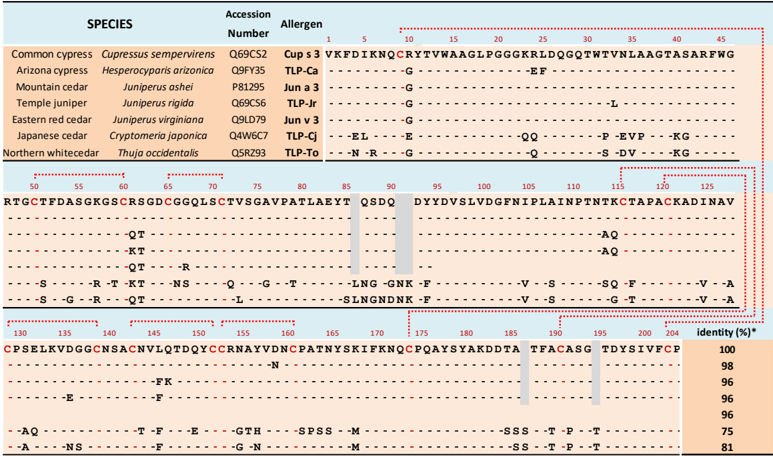
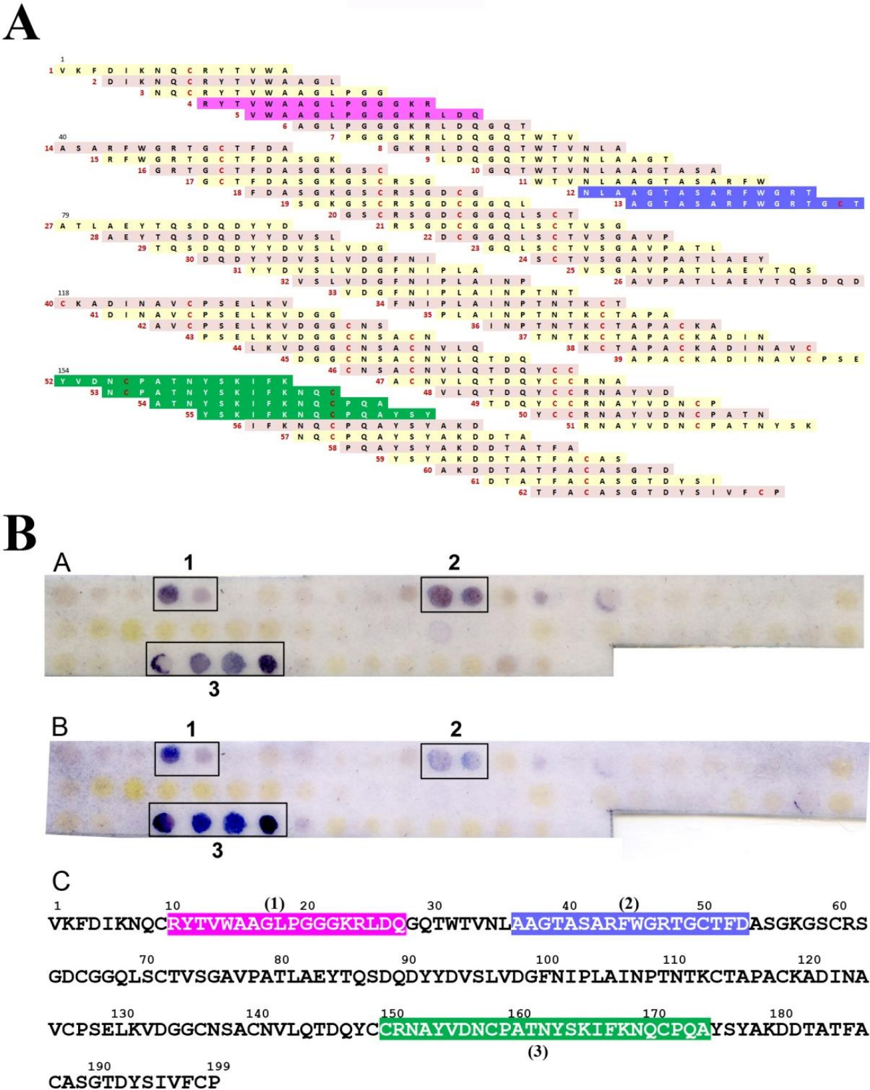
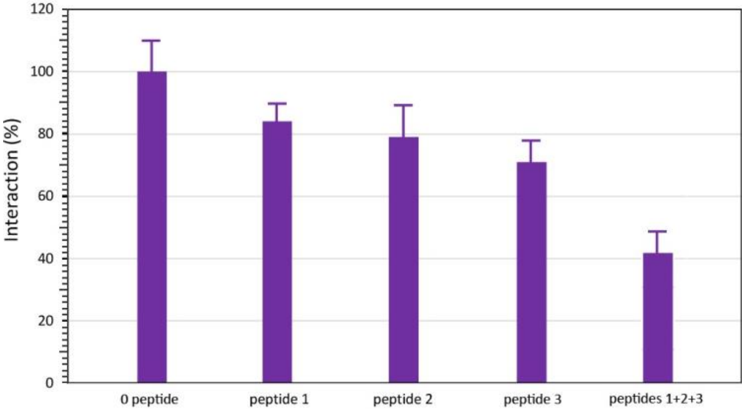
Verification
Claims the paper makes
The claims and statistics of this paper haven’t been checked yet.
Run the check — free, no account needed. It reads the open-access text and checks the sources it cites.
Claims other papers make about this one
Each is checked against this paper’s own text: does it say what the citing paper says it does?
In the citing paper
“Symptoms are often seasonal, coinciding with the pollination periods of tree or grass species that express TLP, and are exacerbated by co-factors like exercise or alcohol consumption [171].”
From Pollen–Food Allergy Syndrome: Allergens, Clinical Insights, Diagnostic and Therapeutic Challenges (2024) · cites this paper as [171]
In the citing paper
“In regions like Japan and the Mediterranean basin, where Cupressaceae trees are abundant, sensitization to pollen-derived TLPs is more common [171].”
From Pollen–Food Allergy Syndrome: Allergens, Clinical Insights, Diagnostic and Therapeutic Challenges (2024) · cites this paper as [171]
Self-check
Percentages, sums and reported differences re-computed from the paper’s own numbers.
The self-check needs the paper’s full text.
Citations
Cites
No references could be resolved yet.
Research works printed but not linked: 51
- Cecchi, 2007, Allergenic pollen and pollen allergy in Europe, Allergy, 62, 976, 10.1111/j.1398-9995.2007.01393.x · DOI · Paper page
- Bibi, 2002, Comparison of positive allergy skin tests among asthmatic children from rural and urban areas living within small geographic area, Ann. Allergy Asthma Immunol., 88, 416, 10.1016/S1081-1206(10)62374-5 · DOI
- Gonianakis, 2006, A 10-year aerobiological study (1994–2003) in the Mediterranean island of Crete, Greece: Trees, aerobiologic data, and botanical and clinical correlations, Allergy Asthma Proc., 27, 371, 10.2500/aap.2006.27.2935 · DOI
- Rapp, 2011, Aerobiological study in east-central Iberian Peninsula: Pollen diversity and dynamics for major taxa, Ann. Agric. Environ. Med., 18, 99
- Lamy, 2001, Ten years of cypress pollen counts in Marseille, Allergol. Immunopathol., 33, 103
- Kishikawa, 2017, Longitudinal monitoring of tree airborne pollen in japan, Arerugi, 66, 97
- Pham, 1994, Cypress pollen allergy. Identification of allergens and crossreactivity between divergent species, Clin. Exp. Allergy, 24, 558, 10.1111/j.1365-2222.1994.tb00953.x · DOI
- Mohanty, 2017, Molecular approaches for the analysis of airborne pollen: A case study of Juniperus pollen, Ann. Allergy Asthma Immunol., 118, 204, 10.1016/j.anai.2016.11.015 · DOI
- Guerin, 1996, Allergic Rhinitis to Thuja Pollen, Int. Arch. Allergy Immunol., 110, 91, 10.1159/000237317 · DOI
- Iacovacci, 1998, Juniperus oxycedrus: A new allergenic pollen from the Cupressaceae family, J. Allergy Clin. Immunol., 101, 755, 10.1016/S0091-6749(98)70304-5 · DOI
- Sneller, 1993, Pollen changes during five decades of urbanization in Tucson, Arizona, Ann. Allergy, 71, 519
- Charpin, 2013, Cypress pollen allergy, Rev. Mal. Respir., 30, 868, 10.1016/j.rmr.2013.09.014 · DOI
- Charpin, 2019, Cypress Pollinosis: From Tree to Clinic, Clin. Rev. Allergy Immunol., 56, 174, 10.1007/s12016-017-8602-y · DOI · Paper page
- Cortegano, 2004, Cloning and expression of a major allergen from Cupressus arizonica pollen, Cup a 3, a PR-5 protein expressed under polluted environment, Allergy, 59, 485, 10.1046/j.1398-9995.2003.00363.x · DOI
- Svoboda, 2018, A new allergen family involved in pollen food-associated syndrome: Snakin/gibberellin-regulated proteins, J. Allergy Clin. Immunol., 141, 411, 10.1016/j.jaci.2017.06.041 · DOI · Paper page
- Iizuka, 2021, Gibberellin-regulated protein sensitization in Japanese cedar (Cryptomeria japonica) pollen allergic Japanese cohorts, Allergy, 76, 2297, 10.1111/all.14816 · DOI
- Ehrenberg, 2020, Characterization of a 7 kDa pollen allergen belonging to the gibberellin-regulated protein family from three Cupressaceae species, Clin. Exp. Allergy, 50, 964, 10.1111/cea.13675 · DOI
- Keykhosravi, 2019, Pollen/Fruit Syndrome: Clinical Relevance of the Cypress Pollen Allergenic Gibberellin-Regulated Protein, Allergy Asthma Immunol. Res., 11, 143, 10.4168/aair.2019.11.1.143 · DOI
- Takei, 2022, Capsicum Allergy: Involvement of Cap a 7, a New Clinically Relevant Gibberellin-Regulated Protein Cross-Reactive With Cry j 7, the Gibberellin-Regulated Protein From Japanese Cedar Pollen, Allergy Asthma Immunol. Res., 14, 328, 10.4168/aair.2022.14.3.328 · DOI
- Panzani, 1986, Cross-reactivity between the pollens of Cupressus sempervirens (common cypress) and of Cryptomeria japonica (Japanese cedar), Ann. Allergy, 57, 26
- Breiteneder, 2004, Thaumatin-like proteins—A new family of pollen and fruit allergens, Allergy, 59, 479, 10.1046/j.1398-9995.2003.00421.x · DOI
- Ivanciuc, 2003, Detecting Potential IgE-Reactive Sites on Food Proteins Using a Sequence and Structure Database, SDAP-Food, J. Agric. Food Chem., 51, 4830, 10.1021/jf034218r · DOI
- Fujimura, 2007, Isolation and characterization of native Cry j 3 from Japanese cedar (Cryptomeria japonica) pollen, Allergy, 62, 547, 10.1111/j.1398-9995.2007.01331.x · DOI
- Palacin, A., Rivas, L.A., Gómez-Casado, C., Aguirre, J., Tordesillas, L., Bartra, J., Blanco, C., Carrillo, T., Cuesta-Herranz, J., and Bonny, J.A.C. (2012). The Involvement of Thaumatin-Like Proteins in Plant Food Cross-Reactivity: A Multicenter Study Using a Specific Protein Microarray. PLoS ONE, 7. · DOI · Paper page
- Goldblum, 2000, Variable Expression of Pathogenesis-Related Protein Allergen in Mountain Cedar (Juniperus ashei) Pollen, J. Immunol., 164, 2188, 10.4049/jimmunol.164.4.2188 · DOI
- Togawa, 2006, Identification of Italian cypress (Cupressus sempervirens) pollen allergen Cup s 3 using homology and cross-reactivity, Ann. Allergy Asthma Immunol., 97, 336, 10.1016/S1081-1206(10)60798-3 · DOI
- Smith, 1987, Measurement of protein using bicinchoninic acid, Anal. Biochem., 150, 76, 10.1016/0003-2697(85)90442-7 · DOI · Paper page
- Barre, 2000, Purification and structural analysis of an abundant thaumatin-like protein from ripe banana fruit, Planta, 211, 791, 10.1007/s004250000354 · DOI
- Tastet, 2003, A versatile electrophoresis system for the analysis of high- and low-molecular-weight proteins, Electrophoresis, 24, 1787, 10.1002/elps.200305400 · DOI
- Barre, 2022, Identification of Potential IgE-Binding Epitopes Contributing to the Cross-Reactivity of the Major Cupressaceae Pectate-Lyase Pollen Allergens (Group 1), Allergies, 2, 106, 10.3390/allergies2030010 · DOI
- Frank, 1992, Spot-synthesis: An easy technique for the positionally addressable paralel chemical synthesis on a membrane support, Tetrehedron, 48, 9217, 10.1016/S0040-4020(01)85612-X · DOI
- Laune, 2002, Application of the Spot method to the identification of peptides and amino acids from the antibody paratope that contribute to antigen binding, J. Immunol. Methods, 267, 53, 10.1016/S0022-1759(02)00140-0 · DOI
- Thompson, 1997, The CLUSTAL_X windows interface: Flexible strategies for multiple sequence alignment aided by quality analysis tools, Nucleic Acids Res., 25, 4876, 10.1093/nar/25.24.4876 · DOI
- Krieger, 2002, Increasing the precision of comparative models with YASARA NOVA—A self-parameterizing force field, Proteins, 47, 393, 10.1002/prot.10104 · DOI
- Leone, 2006, Resolution of the structure of the allergenic and antifungal banana fruit thaumatin-like protein at 1.7-Å, Biochimie, 88, 45, 10.1016/j.biochi.2005.07.001 · DOI
- Marangon, M., Van Sluyter, S.C., Waters, E.J., and Menz, R.I. (2014). Structure of Haze Forming Proteins in White Wines: Vitis vinifera Thaumatin-Like Proteins. PLoS ONE, 9. · DOI
- Batalia, 1996, The crystal structure of the antifungal protein zeamatin, a member of the thaumatin-like, PR-5 protein family, Nat. Struct. Biol., 3, 19, 10.1038/nsb0196-19 · DOI
- Laskowski, 1993, PROCHECK: A program to check the stereochemical quality of protein structures, J. Appl. Cryst., 26, 283, 10.1107/S0021889892009944 · DOI · Paper page
- Melo, 1998, Assessing protein structures with a non-local atomic interaction energy, J. Mol. Biol., 277, 1141, 10.1006/jmbi.1998.1665 · DOI
- Arnold, 2006, The SWISS-MODEL workspace: A web-based environment for protein structure homology modelling, Bioinformatics, 22, 195, 10.1093/bioinformatics/bti770 · DOI
- Benkert, 2011, Toward the estimation of the absolute quality of individual protein structure models, Bioinformatics, 27, 343, 10.1093/bioinformatics/btq662 · DOI
- Pettersen, 2004, UCSF Chimera—A visualization system for exploratory research and analysis, J. Comput. Chem., 25, 1605, 10.1002/jcc.20084 · DOI
- Vriet, 2003, A molecular basis for the endo-beta 1,3-glucanase activity of the thaumatin-like proteins from edible fruits, Biochimie, 85, 123, 10.1016/S0300-9084(03)00058-0 · DOI
- Bistoni, 2005, Biochemical and immunological characterization of pollen-derived beta-galactosidase reveals a new cross-reactive class of allergens among Mediterranean trees, Int. Arch. Allergy Immunol., 136, 123, 10.1159/000083319 · DOI
- Shahali, 2012, Differential IgE sensitization to cypress pollen associated to a basic allergen of 14 kDa, FEBS J., 279, 1445, 10.1111/j.1742-4658.2012.08536.x · DOI
- Soman, 2000, Homology Modeling and Characterization of IgE Binding Epitopes of Mountain Cedar Allergen Jun a 3, Biophys. J., 79, 161, 10.1016/S0006-3495(00)76410-1 · DOI
- Afferni, 1999, Role of carbohydrate moieties in IgE binding to allergenic components of Cupressus arizonica pollen extract, Clin. Exp. Allergy, 29, 1087, 10.1046/j.1365-2222.1999.00590.x · DOI
- Barletta, 1998, Arizona cypress (Cupressus arizonica) pollen allergens. Identification of crossreactive periodate-resistant and sensitive epitopes with monoclonal antibodies, Allergy, 53, 586, 10.1111/j.1398-9995.1998.tb03934.x · DOI
- Canini, 2004, Localisation of a carbohydrate epitope recognised by human IgE in pollen of Cupressaceae, J. Plant Res., 117, 147, 10.1007/s10265-003-0139-x · DOI
- Iacovacci, 2002, Comparison between the native glycosylated and the recombinant Cup a1 allergen: Role of carbohydrates in the histamine release from basophils, Clin. Exp. Allergy, 32, 1620, 10.1046/j.1365-2222.2002.01516.x · DOI
- Shahali, 2017, Identification of a polygalacturonase (Cup s 2) as the major CCD-bearing allergen in Cupressus sempervirens pollen, Allergy, 72, 1806, 10.1111/all.13191 · DOI
Cited by
Sorted by citations
Pollen–Food Allergy Syndrome: Allergens, Clinical Insights, Diagnostic and Therapeutic Challenges
Haidar, L., Bănărescu, C. F., Uța, C., Moldovan, S. I., Zimbru, E.-L., Zimbru, R.-I., Ciurariu, E., Georgescu, M., & Panaitescu, C. (2024) · Applied Sciences · doi:10.3390/app15010066 · Cited by 21
Metadata
- Authors
- Barre, A., Sénéchal, H., Nguyen, C., Granier, C., Poncet, P., & Rougé, P.
- Affiliations
- UMR 152 PharmaDev, Research and Development Institute, Paul Sabatier University, 35 Chemin des Maraîchers, CEDEX 09, 31062 Toulouse, France
- Allergy & Environment Research Team, Biochemistry Department, Armand Trousseau Children Hospital, AP-HP, 26 Avenue Dr Arnold Netter, 75571 Paris, France
- Institut des Biomolécules Max Mousseron CNRS, Faculté de Pharmacie, 15 Avenue Charles Flahault, BP 14491, CEDEX 5, 34093 Montpellier, France
- Sys2Diag UMR 9005 CNRS/ALCEDIAG Complex System Modeling and Engineering for Diagnosis, Cap Delta/Parc Euromédecine, 1682 rue de la Valsière CS 61003, CEDEX 4, 34184 Montpellier, France
- Venue
- Allergies
- Publisher
- MDPI AG
- Published
- 2023-01-10
- Volume
- 3
- Issue
- 1
- Pages
- 11-24
- ISSN
- 2313-5786
- Cited by
- 7
- References
- 0
- Language
- en
About these checks
Registry, retraction, Cites and statistics results are computed, not judged, with one exception: a printed reference that no index lists is read once by a model before it counts as a citation error. Claims are extracted by a model and kept only when their quote appears verbatim in the text; each cited source is then checked, with a model’s help, for whether it says what the claim relies on. Those verdicts can be wrong — read the claim’s quote and the cited source before relying on one.
Statistics and arithmetic are recomputed, not judged.
Confidence bands are shown only for fields calibrated on our annotated test set. None is calibrated yet, so no band is shown.
What counts as a claim ›How we measure confidence ›How we check this ›
Are you an author, or do you see a problem with this page? Request a review
How to cite
Cite CoChat for the checks on this page, and the paper for its own findings.
- This page
- CoChat. (2026). Citation check: Structural Basis for the IgE-Binding Cross-Reacting Epitopic Peptides of Cup s 3, a PR-5 Thaumatin-like Protein Allergen from Common Cypress (Cupressus sempervirens) Pollen. https://app.cochat.ai/papers/10.3390/allergies3010002
- The paper
- Barre, A., Sénéchal, H., Nguyen, C., Granier, C., Poncet, P., & Rougé, P. (2023). Structural Basis for the IgE-Binding Cross-Reacting Epitopic Peptides of Cup s 3, a PR-5 Thaumatin-like Protein Allergen from Common Cypress (Cupressus sempervirens) Pollen. Allergies. https://doi.org/10.3390/allergies3010002
