

Developments and Challenges for mAb-Based Therapeutics
Open accessThe DOI matches its Crossref record; 311 of the 323 references it cites were found in a registry or an index.
Abstract
The continuous increase in the number of approved monoclonal antibody (mAb)-based therapy suggests that mAbs, and their derivatives, will continue to be the focus of the biotherapeutics industry for years to come. Although vast improvements in our capability to manufacture, characterize, and stabilize mAbs have been achieved, there are still challenges to be overcome. These include analytical and stabilization approaches associated with the development of high concentration mAb formulations. In addition, several mAb-based modalities are under development, including antibody drug conjugates (ADCs), fusion proteins, and bispecific antibodies (bsAbs), all designed to overcome the limitations encountered with mAb therapy. The current status of their development, with emphasis on manufacturing challenges as well as preliminary clinical results, will be reviewed.
Overview
The claims and statistics of this paper haven’t been checked yet.
Free: it reads the open-access text and checks the first 5 claims that cite a source we can check. Create a free account to check every claim.
Integrity signals
Registry
Cites
Statistics
Figures
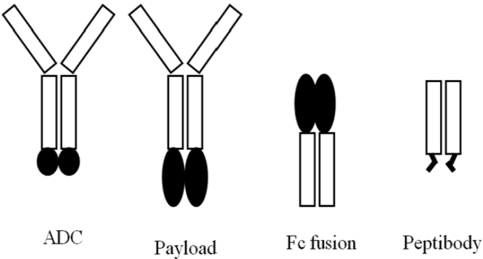
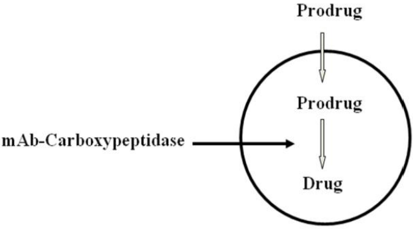
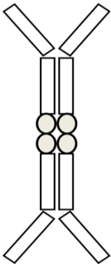
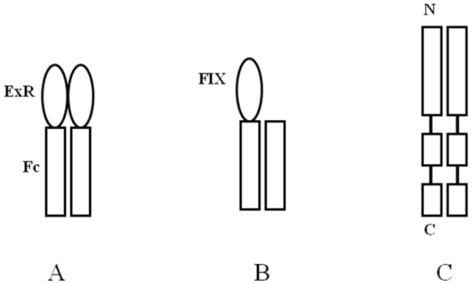
Verification
Claims the paper makes
The claims and statistics of this paper haven’t been checked yet.
Free: it reads the open-access text and checks the first 5 claims that cite a source we can check. Create a free account to check every claim.
Claims other papers make about this one
Each is checked against this paper’s own text: does it say what the citing paper says it does?
The source backs part of the claim, not all of it — or backs it for a different population, condition or comparison.
In the citing paper
“PAT enables measurement of physical instabilities such as aggregation or chemical alterations including post-translational modifications or cross-linking which can complement stabilization formulation strategies [92].”
From The role of Raman spectroscopy in biopharmaceuticals from development to manufacturing (2022) · cites this paper as [92]
Experimental — accuracy not yet measured
Self-check
Percentages, sums and reported differences re-computed from the paper’s own numbers.
The self-check needs the paper’s full text.
Citations
Cites
Continuous cultures of fused cells secreting antibody of predefined specificity
KÖHLER, G., & MILSTEIN, C. (1975) · Nature · doi:10.1038/256495a0 · Cited by 17,229 · cited 1×
“The development of hybridoma technology has enabled a consistent production of mAbs at large scale, paving the way for development of various therapeutic antibodies [4].”
BackgroundCoiffier, B., Lepage, E., Brière, J., Herbrecht, R., Tilly, H., Bouabdallah, R., Morel, P., Van Den Neste, E., Salles, G., Gaulard, P., et al. (2002) · New England Journal of Medicine · doi:10.1056/nejmoa011795 · Cited by 5,574 · cited 2×
“This drug is currently being utilized as a single agent (for induction and maintenance), or in combination with chemotherapeutic agents, for the treatment of various human lymphoma and chronic lymphocytic lymphoma [10,28].”
BackgroundInhibitory Fc receptors modulate in vivo cytoxicity against tumor targets
Clynes, R. A., Towers, T. L., Presta, L. G., & Ravetch, J. V. (2000) · Nature Medicine · doi:10.1038/74704 · Cited by 2,768 · cited 1×
“According to this mechanism, the Fc portion interacts with FCγ-receptors on the surface of the effector immune cells (such as monocyte and macrophages), while the antibody is bound to the surface antigen of the cancer cell through its Fab region, and results in ADCC response [21,22].”
BackgroundMcLaughlin, P., Grillo-López, A. J., Link, B. K., Levy, R., Czuczman, M. S., Williams, M. E., Heyman, M. R., Bence-Bruckler, I., White, C. A., Cabanillas, F., et al. (1998) · Journal of Clinical Oncology · doi:10.1200/jco.1998.16.8.2825 · Cited by 2,755 · cited 1×
“1997 Rituximab Rituxan® CD20 Non-Hodgkin’s lymphoma Chimeric IgG1 First approved full length chimeric mAb [10,11]”
BackgroundPhage antibodies: filamentous phage displaying antibody variable domains
McCafferty, J., Griffiths, A. D., Winter, G., & Chiswell, D. J. (1990) · Nature · doi:10.1038/348552a0 · Cited by 2,423 · cited 1×
“Another effective way of producing human antibody is phage display [20].”
BackgroundNormalizing tumor vasculature with anti-angiogenic therapy: A new paradigm for combination therapy
Jain, R. K. (2001) · Nature Medicine · doi:10.1038/nm0901-987 · Cited by 2,184 · cited 1×
“For example, bevacizumab binds to the soluble vascular endothelial growth factor (VEGF), and thus inhibits angiogenesis, which is important for the maintenance of tumor vasculature and tumor health [24].”
BackgroundScott, A. M., Wolchok, J. D., & Old, L. J. (2012) · Nature Reviews Cancer · doi:10.1038/nrc3236 · Cited by 2,160
Zhou, H.-X., Rivas, G., & Minton, A. P. (2008) · Annual Review of Biophysics · doi:10.1146/annurev.biophys.37.032807.125817 · Cited by 2,149 · cited 1×
“[110,127].”
Engineered antibody fragments and the rise of single domains
Holliger, P., & Hudson, P. J. (2005) · Nature Biotechnology · doi:10.1038/nbt1142 · Cited by 1,931 · cited 1×
“and Hudson [273].”
VEGF-Trap: A VEGF blocker with potent antitumor effects
Holash, J., Davis, S., Papadopoulos, N., Croll, S. D., Ho, L., Russell, M., Boland, P., Leidich, R., Hylton, D., Burova, E., et al. (2002) · Proceedings of the National Academy of Sciences · doi:10.1073/pnas.172398299 · Cited by 1,691 · cited 1×
“Similarly, anti-angeogenic vascular endothelial growth factor (VEGF) inhibitor has been developed as an Fc-fusion protein, termed VEGF-Trap [220].”
Background
Research works printed but not linked: 5
- Pearlman, R., Wang, Y.J., Eds.; Plenum Press: New York, NY, USA, 1996; pp. 1-140.
- Harding,S.E., Rowe, A.J., Horton, J.C., Eds.; Royal Society of Chemistry: Cambridge, UK, 1992; pp. 90-125.
- Hershenson, F.J.S., Ed.; John Wiley & Sons, Inc: Hoboken, NJ, USA, 2010. 130.
- MacGregor, I.K.; Anderson, A.L.; Laue, T.M. Fluorescence detection for the XLI analytical ultracentrifuge. Biophys. Chem. 2004, 108, 165-185. 137. Scherer, T.; Kanai, S.; Liu, J.; Shire, S. Characterization of monoclonal antibodies at high concentrations by light scattering. In Proceedings of AAPS National Biotechnology Conference, San Diego, CA, USA, 2007. 138.
- Brock, T.D. (1998). Milestones in Microbiology; 1556–1940, ASM Press.
Cited by
Items 101–155 of 155
Optimized Protein–Excipient Interactions in the Martini 3 Force Field
Prass, T. M., Lindorff‐Larsen, K., Garidel, P., Blech, M., & Schäfer, L. V. (2025) · Journal of Chemical Information and Modeling · doi:10.1021/acs.jcim.4c02338 · Cited by 5
Optimising Monoclonal Antibody Drug Development for Inflammatory Bowel Disease
Colwill, M., Honap, S., Danese, S., & Peyrin‐Biroulet, L. (2025) · Clinical and Experimental Gastroenterology · doi:10.2147/ceg.s521893 · Cited by 5
“94 This has reinvigorated interest in bsAbs as therapeutic agents.”
Contribution of Intrinsic Fluorescence to the Design of a New 3D-Printed Implant for Releasing SDABS
Nicolas, A., Dejoux, A., Poirier, C., Aubrey, N., Péan, J., & Velge-Roussel, F. (2020) · Pharmaceutics · doi:10.3390/pharmaceutics12100921 · Cited by 5
“Therefore, Ab development is not straightforward, with technological challenges such as protein solubility, stability, distribution, and route of administration [11,12].”
BackgroundAyalew, L., D’Souza, A. D., Chen, Y., & Kim, M. T.-J. (2020) · mAbs · doi:10.1080/19420862.2020.1854923 · Cited by 5
Solving Complex Biologics Truncation Problems by Top-Down Mass Spectrometry
Zhang, Z., Hug, C., Tao, Y., Bitsch, F., & Yang, Y. (2021) · Journal of the American Society for Mass Spectrometry · doi:10.1021/jasms.0c00343 · Cited by 5
Pinètre, J., Delcourt, V., Bécher, F., Garcia, P., Barnabé, A., Loup, B., Popot, M., Fenaille, F., & Bailly‐Chouriberry, L. (2023) · Drug Testing and Analysis · doi:10.1002/dta.3525 · Cited by 5
Manchekar, T., Spoorthi, B. D., Kamble, R. S., Bhagwat, S. S., Dandekar, P. P., & Jain, R. D. (2025) · International Journal of Biological Macromolecules · doi:10.1016/j.ijbiomac.2025.144413 · Cited by 4
Milef, G., Ghazvini, S., Prajapati, I., Chen, Y.-C. D., Wang, Y., & Boroumand, M. (2024) · Journal of Pharmaceutical Sciences · doi:10.1016/j.xphs.2024.09.017 · Cited by 4
Process Development for Biologics Therapeutics
Bhatnagar, A., Hazra, P. P., Pai, H. V., Vajpai, N., Ramani, K., & Govindappa, N. (2025) · Springer eBooks · doi:10.1007/978-3-031-81787-8_6 · Cited by 5
Hopkins, M. M., Parupudi, A., Bee, J. S., & Bain, D. L. (2021) · Pharmaceutical Research · doi:10.1007/s11095-021-02987-0 · Cited by 4
Identification of amyloid antibodies for Alzheimer disease – immunotherapy
Huwait, E. A., Baghallab, I., Glabe, C. G., Abulnaja, K. O., Kumosani, T., & Moselhy, S. S. (2020) · Archives of Physiology and Biochemistry · doi:10.1080/13813455.2020.1767147 · Cited by 4
Wu, K.-W., Chen, T.-H., Yang, T., Wang, S., Shameem, M., & Graham, K. S. (2023) · Journal of Pharmaceutical and Biomedical Analysis · doi:10.1016/j.jpba.2023.115622 · Cited by 3
Sajed, M., Khan, Z., Ashraf, M. U., Iftikhar, H., Rahat, T. B., Falak, S., Fozail, S., Gue, Q., Pardo, R., Ramsey, L., et al. (2025) · SLAS TECHNOLOGY · doi:10.1016/j.slast.2025.100351 · Cited by 3
Mokhtari, J., Nourisefat, M., Zamiri, B., Fotouhi, L., Zarnani, A., Moosavi‐Movahedi, A. A., & Karimian, K. (2021) · ACS Omega · doi:10.1021/acsomega.0c06149 · Cited by 3
Langford, A., Ohtake, S., Lechuga‐Ballesteros, D., & Izutsu, K. (2020) · Wiley eBooks · doi:10.1002/9783527802104.ch1 · Cited by 3
Self-citationShiffer, E. M., Oyer, J. L., Copik, A. J., & Parks, G. D. (2024) · Viruses · doi:10.3390/v16081270 · Cited by 3
“Challenges associated with antibody blockade therapy include off-target effects due to a lack of tumor specificity for the antibodies and overcoming the antibody half-life [16–18].”
BackgroundShrivastava, A., & Rathore, A. S. (2025) · Pharmaceutical Research · doi:10.1007/s11095-025-03874-8 · Cited by 2
“This is needed as it is commonplace to have a manufacturer produce a product across multiple sites, with factors such as workforce shortages, equipment malfunc-tions, or transportation delays requiring that process intermediates be stored or transported during production [45–47].”
Vieira, A. C. F., Costa, G., Silva, I., Maurício, S., Martins-Pimenta, D., Almeida, H., Bell, V., Veiga, F., & Paiva‐Santos, A. C. (2026) · European Journal of Pharmaceutics and Biopharmaceutics · doi:10.1016/j.ejpb.2026.115030 · Cited by 2
Pharmacokinetic modeling to optimize development and therapeutic potential of mAb-based therapies
Fan, X., Chen, C., Zhang, L., Cao, K., & Yan, X. (2026) · Advanced Drug Delivery Reviews · doi:10.1016/j.addr.2026.115850 · Cited by 3
A low-cost, open-source cylindrical Couette rheometer
Erni, M., Hart, A. J., Trumper, D. L., & Owens, C. E. (2024) · Scientific Reports · doi:10.1038/s41598-024-76494-8 · Cited by 2
Angell, N., Ketchem, R. R., Daris, K., O’Neill, J., & Kannan, G. (2015) · CRC Press eBooks · doi:10.1201/b19023-11 · Cited by 2
Insight on the Rise and Raise of Drug Delivery with Special Emphasis on Five Classes of Therapeutics
Desavathu, M., Singh, P., Pal, A., Joshi, N., & Upadhyay, R. K. (2025) · Critical Reviews in Therapeutic Drug Carrier Systems · doi:10.1615/critrevtherdrugcarriersyst.2025053703 · Cited by 1
Formulation Development for Antibody–Drug Conjugates
Ji, J. A., Liu, J., & Wang, Y. J. (2025) · AAPS advances in the pharmaceutical sciences series · doi:10.1007/978-3-031-83005-1_5 · Cited by 1
Physics-based surface patch analysis for prediction of hydrophobic contribution to viscosity of mAbs
Knez, B., Ravnik, M., & Zidar, M. (2026) · mAbs · doi:10.1080/19420862.2026.2614767 · Cited by 1
Process Development of Site-Specific Antibody–Drug Conjugates
O’Mara, B. W., & Guha, S. (2026) · AAPS PharmSciTech · doi:10.1208/s12249-026-03456-w · Cited by 1
“The site specificity minimizes conjugate heterogeneity, post-conjugation purification primarily focuses on clearance of low molecular weight species such as excess linker-payload, catalysts, and reaction additives [9, 143].”
Recent NMR developments for pharmaceutical research
Lee, K. (2016) · Journal of the Korean Magnetic Resonance Society · doi:10.6564/jkmrs.2016.20.1.027 · Cited by 1
Blass, B. E. (2021) · Elsevier eBooks · doi:10.1016/b978-0-12-817214-8.00009-9 · Cited by 1
Clinical Application of Therapeutic Bispecific Antibodies
Belachew, G. T. (2023) · Biomedical Journal of Scientific & Technical Research · doi:10.26717/bjstr.2023.49.007880 · Cited by 1
Problems Facing Monoclonal Antibody Technology
Zhang, M. (2024) · Highlights in Science Engineering and Technology · doi:10.54097/6rjc1w05 · Cited by 1
“Stimulated by the relevant antigen, this antigen searches for a site and binds to the antigen-binding fragment of this monoclonal antibody, forming an antigen-antibody complex [5].”
Sadraeian, M. (2017) · Digital Library of Theses and Dissertations (Universidade de São Paulo) · doi:10.11606/t.76.2017.tde-29092017-150324 · Cited by 1
Protein-protein interactions and aggregation in biotherapeutics
Nuhu, M. (2015) · Research Explorer (The University of Manchester) · Cited by 1
Network biology in development of monoclonal antibody therapeutics
Ovacik, A. M. (2014) · Mathematical Biosciences · doi:10.1016/j.mbs.2014.09.004
pH- and temperature-dependent mechanisms of non-native aggregation of anti-CD40 IgG1
Wu, H. (2015) · Library, Museums and Press - UDSpace (University of Delaware) · doi:10.58088/83s2-4831
Recombinant Immunotoxins for Chronic Inflammatory Disease
Thepen, T., & Barth, S. (2017) · Milestones in drug therapy · doi:10.1007/978-3-319-46877-8_7
Advances in Production of Therapeutic Monoclonal Antibodies
Mahajan, R. V., Chand, S., Singh, M. P., Kestwal, A., & Singh, S. (2019) · Wiley eBooks · doi:10.1002/9781119460053.ch7
Sabra, R. (2019) · Nottingham ePrints (University of Nottingham)
Blas, P. (2020) · Bioprocess Engineering · doi:10.11648/j.be.20200401.15
Continuous flow chemistry: applications in chemistry education and bioconjugation
Fallano, M. M. (2017) · Digital Repository Service (Northeastern University) · doi:10.17760/d20248781
Prync, A. E. S., Carlucci, A. M., Bentivegna, S., Martínez, O. F., Pedernera, S., Scibilia, M. A., & Glas, F. T. (2023) · Revista Bioquímica y Patología Clínica · doi:10.62073/bypc.v87i2.182
Unraveling the Loss of Lysozyme Concentration after TabletingPreprint
Kopp, K. T., Beer, M. D., Voorspoels, J., & den Mooter, G. V. (2025) · SSRN Electronic Journal · doi:10.2139/ssrn.5245705
Unraveling the Loss of Lysozyme Concentration after TabletingPreprint
Kopp, K. T., Beer, M. D., Voorspoels, J., & den Mooter, G. V. (2025) · SSRN Electronic Journal · doi:10.2139/ssrn.5245699
Unraveling the loss of lysozyme concentration after tableting
Kopp, K. T., Beer, M. D., Voorspoels, J., & den Mooter, G. V. (2025) · Journal of Pharmaceutical and Biomedical Analysis · doi:10.1016/j.jpba.2025.117116
Hess, R. (2024) · Repository KITopen (Karlsruhe Institute of Technology) · doi:10.5445/ir/1000175625
Shah, K. (2022) · Nottingham ePrints (University of Nottingham) · Cited by 1
Methodological approaches to study antibody aggregation and thermal stability
Poikonen, S. (2022) · UTUPub (University of Turku)
Ichihara, T. (2019) · Institutional Repositories DataBase (IRDB)
Dietrich, J. (2024) · Worcester Research and Publications (University of Worcester)
Jaccoulet, E. (2017) · theses.fr (ABES) · doi:10.70675/91597bcfz5a67z4c22za359z52b6085a03db · Cited by 1
Etude structurale et fonctionnelle des substances apparentées d’anticorps thérapeutiques
Rouby, G. (2020) · theses.fr (ABES) · doi:10.70675/ad10513ez4b3dz4911z951fza4d423629a6f
Développement d’une approche thérapeutique ciblée pour traiter la thrombose artérielle et veineuse
Jouffroy, K. A. (2025) · theses.fr (ABES) · doi:10.70675/5b7b1006z93e6z472azb19az0592b13c083c
Formulation and Development of Protein Biopharmaceuticals
Parladé, E., & Voltà‐Durán, E. (2025) · Springer handbooks · doi:10.1007/978-3-032-01636-2_3
Erdoğan, D., Cagatay, E., & Kayalı, H. (2026) · DergiPark (Istanbul University)
Sayettat, S., Tolksdorf, F., Johannson, R., Nelke, J., Malz, A., Fischer, L., Gerhard, I., Ullrich, N., Ellinghaus, U., Stadler, C., et al. (2026) · bioRxiv (Cold Spring Harbor Laboratory) · doi:10.64898/2026.09.17.752120
Acharya, K., Yonjan, P., Lamichhane, P., Sharma, S., & Joshi, R. (2026) · Journal of Sustainable Chemical Sciences & Technologies · doi:10.63697/jscst.2026.10061
Metadata
- Authors
- Goswami, S., Wang, W., Arakawa, T., & Ohtake, S.
- Affiliations
- Pfizer (United States) (US)
- Alliance Protein Laboratories (United States) (US)
- Corresponding author
- Arakawa, Tsutomu
- Venue
- Antibodies
- Publisher
- MDPI AG
- Published
- 2013-08-16
- Volume
- 2
- Issue
- 3
- Pages
- 452-500
- ISSN
- 2073-4468 (ISSN-L)
- OpenAlex
- W2033785641
- Cited by
- 144
- References
- 323
- Citations by year
- 2026: 5 · 2025: 17 · 2024: 10 · 2023: 9 · 2022: 8 · 2021: 14 · 2020: 18 · 2019: 10 · 2018: 14 · 2017: 12 · 2016: 12 · 2015: 10 · 2014: 4 · 2013: 1
- FWCI
- 6.98
- Type
- journal article
- Language
- en
- Open access
- gold
- doi.org
- Licence
- Locations
- Antibodies (publishedVersion, cc-by)
- DOAJ (DOAJ: Directory of Open Access Journals) (submittedVersion, cc-by-sa)
- Topics
- Life Sciences › Immunology and Microbiology › Immunology › Monoclonal and Polyclonal Antibodies Research
- Life Sciences › Biochemistry, Genetics and Molecular Biology › Molecular Biology › Protein purification and stability
- Life Sciences › Immunology and Microbiology › Immunology › Biosimilars and Bioanalytical Methods
- Keywords
- monoclonal antibodies, biologic therapy, antibody-drug conjugates, bispecific antibodies, fusion protein, high-concentration formulations, antibody stabilization, antibody production
About these checks
Registry, retraction, Cites and statistics results are computed, not judged, with one exception: a printed reference that no index lists is read once by a model before it counts as a citation error. Claims are extracted by a model and kept only when their quote appears verbatim in the text; each cited source is then checked, with a model’s help, for whether it says what the claim relies on. Those verdicts can be wrong — read the claim’s quote and the cited source before relying on one.
Statistics and arithmetic are recomputed, not judged.
Confidence bands are shown only for fields calibrated on our annotated test set. None is calibrated yet, so no band is shown.
What counts as a claim ›How we measure confidence ›How we check this ›
Are you an author, or do you see a problem with this page? Request a review
Data sources
Bibliographic data: Semantic Scholar, OpenAlex, Crossref.
Contains information from the Semantic Scholar Academic Graph Datasets, made available under the ODC Attribution License (ODC-BY 1.0).
Semantic Scholar’s data is described in: Kinney, R., et al. (2023). The Semantic Scholar Open Data Platform. arXiv:2301.10140.
