

vIS: An Immersive Virtual Storytelling System for Vocational Training
Open accessThe DOI matches its Crossref record; 39 of the 43 references it cites were found in a registry or an index.
Abstract
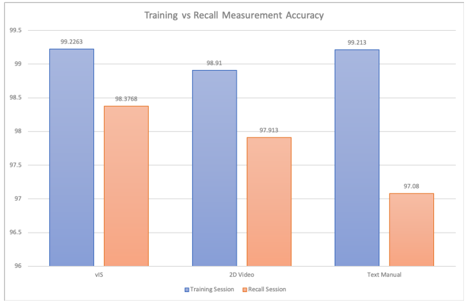
Storytelling has been established as a proven method to effectively communicate and assist in knowledge transfer. In recent years, there has been growing interest in improving the training and learning domain by using advanced technology such as Virtual Reality (VR). However, a gap exists between storytelling and VR, and it is as yet unclear how they can be combined to form an effective system that not only maintains the level of engagement and immersion provided by VR technology but also provides the core strengths of storytelling. In this paper, we present vIS, a Vocational Immersive Storytelling system, which bridges the gap between storytelling and VR. vIS focuses on vocational training, in which users are trained on how to use a mechanical micrometer by employing a creative fictional story embedded inside a virtual manufacturing plant’s workplace. For the evaluation, a two-phase user study with 30 participants was conducted to measure the system’s effectiveness and improvements in long-term training, as well as to examine user experience against traditional methods of training—2D videos and textual manuals. The results indicate that the user’s ability to retain their training after seven days was nearly equal for vIS and the 2D video-based technique and was considerably higher than the text-based technique.
Overview
The claims and statistics of this paper haven’t been checked yet.
Free: it reads the open-access text and checks the first 5 claims that cite a source we can check. Create a free account to check every claim.
Integrity signals
Registry
Cites
Statistics
Figures
Verification
Claims the paper makes
The claims and statistics of this paper haven’t been checked yet.
Free: it reads the open-access text and checks the first 5 claims that cite a source we can check. Create a free account to check every claim.
Claims other papers make about this one
Each is checked against this paper’s own text: does it say what the citing paper says it does?
The source backs part of the claim, not all of it — or backs it for a different population, condition or comparison.
In the citing paper
“Sectors such as healthcare and technical education require simplicity and easy navigation to lower cognitive load [13,16,18,26,29].”
From The Impact of User Interface and Experience (UI/UX) Design on Visual Ergonomics: A Technical Approach for Reducing Human Error in Industrial Settings (2026) · cites this paper as [13]
Experimental — accuracy not yet measuredThe source backs part of the claim, not all of it — or backs it for a different population, condition or comparison.
In the citing paper
“The use of clean interfaces and guided visual paths in VR facilitates smooth and accurate execution [13,16,26,29].”
From The Impact of User Interface and Experience (UI/UX) Design on Visual Ergonomics: A Technical Approach for Reducing Human Error in Industrial Settings (2026) · cites this paper as [13]
Experimental — accuracy not yet measuredThe cited source says what the claim attributes to it.
In the citing paper
“Likewise, in immersive or emotional scenarios such as those addressed in [13,16,29], visual ergonomics is reflected through interfaces that balance stimulation and simplicity: coherent visual narratives, controlled visual focus, non-intrusive colors, and navigation paths guided by the user's attention.”
From The Impact of User Interface and Experience (UI/UX) Design on Visual Ergonomics: A Technical Approach for Reducing Human Error in Industrial Settings (2026) · cites this paper as [13]
The check wasn’t confident either way, so it gives no verdict — never disputed.
In the citing paper
“Even in systems with partially ergonomic designs [13,17,18,28], incomplete implementation translates into errors caused by visual ambiguity, redundant task execution, or misinterpretation.”
From The Impact of User Interface and Experience (UI/UX) Design on Visual Ergonomics: A Technical Approach for Reducing Human Error in Industrial Settings (2026) · cites this paper as [13]
Experimental — accuracy not yet measured
Self-check
Percentages, sums and reported differences re-computed from the paper’s own numbers.
The self-check needs the paper’s full text.
Citations
Cites
SUS: A 'Quick and Dirty' Usability Scale
(1996) · Usability Evaluation In Industry · doi:10.1201/9781498710411-35 · Cited by 8,989
Digital Storytelling: A Powerful Technology Tool for the 21st Century Classroom
Robin, B. R. (2008) · Theory Into Practice · doi:10.1080/00405840802153916 · Cited by 1,485
The Control of Short-Term Memory
Atkinson, R. C., & Shiffrin, R. M. (1971) · Scientific American · doi:10.1038/scientificamerican0871-82 · Cited by 1,252
Brain mechanisms of emotion and emotional learning
LeDoux, J. E. (1992) · Current Opinion in Neurobiology · doi:10.1016/0959-4388(92)90011-9 · Cited by 595
Virtual memory palaces: immersion aids recall
Krokos, E., Plaisant, C., & Varshney, A. (2019) · Virtual Reality · doi:10.1007/s10055-018-0346-3 · Cited by 585
The effectiveness of digital storytelling in the classrooms: a comprehensive study
Smeda, N., Dakich, E., & Sharda, N. (2014) · Smart Learning Environments · doi:10.1186/s40561-014-0006-3 · Cited by 443 · cited 1×
“From a sociological viewpoint, there has been a widespread and growing need for and acceptance of interactive digital storytelling technologies [17,18].”
BackgroundThe effect of digital storytelling on visual memory and writing skills
Sarıca, H. Ç., & Usluel, Y. K. (2015) · Computers & Education · doi:10.1016/j.compedu.2015.11.016 · Cited by 223 · cited 2×
“Storytelling has been linked to increased memory retention [27,28].”
BackgroundRoldán, J. J., Crespo, E., Martín-Barrio, A., Peña-Tapia, E., & Barrientos, A. (2019) · Robotics and Computer-Integrated Manufacturing · doi:10.1016/j.rcim.2019.05.004 · Cited by 211 · cited 1×
“We have seen a great increase in Human–Robot-Interaction (HRI)-based applications [4–7] and Augmented and Virtual Reality (AR/VR) applications [8,9] targeted towards teaching new skills, whether vocational or otherwise.”
BackgroundJob Training in U.S. Organizations
Knoke, D., & Kalleberg, A. L. (1994) · American Sociological Review · doi:10.2307/2095930 · Cited by 204
Workplace Learning and Flexible Delivery
Smith, P. J. (2003) · Review of Educational Research · doi:10.3102/00346543073001053 · Cited by 181 · cited 1×
“explained that, while many students prefer “on-the-job” training, many workplaces are not equipped to provide the training necessary to facilitate readiness [22].”
Background
Research works printed but not linked: 5
- Biavaschi, C.; Eichhorst, W.; Giulietti, C.; Kendzia, M.J.; Muravyev, A.; Pieters, J.; Rodríguez-Planas, N.; Schmidl, R.; Zimmermann, K.F. Youth Unemployment and Vocational Training; IZA Discussion Paper No. 6890; Institute of Labor Economics (IZA): Bonn, Germany, 2012; Available online: https://ssrn.com/abstract=2158300 (accessed on 20 October 2020).
- Ebert, D.; Gupta, S.; Makedon, F. Ogma: A virtual reality language acquisition system. In Proceedings of the 9th ACM International Conference on Pervasive Technologies Related to Assistive Environments, Corfu, Greece, 29 June-1 July 2016; pp. 1-5.
- Jack, H. State of Manufacturing Education. In Proceedings of the 2013 ASEE Conference, Atlanta, GA, USA, 23-26 June 2013 .
- Magerko, B.; Wray, R.; Holt, L.; Stensrud, B. Improving interactive training through individualized content and increased engagement. In Proceedings of the Interservice/Industry Training, Simulation & Education Conference (I/ITSEC), Orlando, FL, USA, 6-9 December 2005; pp. 1-11.
- Gandelman, R.T.; Santoro, F.M. Group Storytelling in Organizational Training. In Proceedings of the IADIS International Conference on Information System, Porto, Portugal, 18-20 March 2010; pp. 315-322.
Cited by
Shen, B., Tan, W., Guo, J., Zhao, L., & Qin, P. (2021) · Applied Sciences · doi:10.3390/app112311087 · Cited by 368
Extended reality applications in industry 4.0. – A systematic literature review
Adriana Cárdenas-Robledo, L., Hernández-Uribe, Ó., Reta, C., & Antonio Cantoral-Ceballos, J. (2022) · Telematics and Informatics · doi:10.1016/j.tele.2022.101863 · Cited by 166
Daling, L. M., & Schlittmeier, S. J. (2022) · Human Factors The Journal of the Human Factors and Ergonomics Society · doi:10.1177/00187208221105135 · Cited by 155
Gong, P., Lu, Y., Lovreglio, R., Lv, X., & Chi, Z. (2024) · Safety Science · doi:10.1016/j.ssci.2024.106624 · Cited by 65
Daling, L. M., Tenbrock, M., Isenhardt, I., & Schlittmeier, S. J. (2023) · Applied Ergonomics · doi:10.1016/j.apergo.2023.104021 · Cited by 55
Digitisation of Traditional Craft Processes
Zabulis, X., Meghini, C., Dubois, A., Doulgeraki, P., Partarakis, N., Adami, I., Karuzaki, E., Carré, A.-L., Patsiouras, N., Kaplanidi, D., et al. (2022) · Journal on Computing and Cultural Heritage · doi:10.1145/3494675 · Cited by 61
Enhancing student engagement in vocational education by using virtual reality
Rafiq, A., Triyono, M. B., & Djatmiko, I. W. (2022) · Waikato journal of education · doi:10.15663/wje.v27i3.964 · Cited by 87
“In recent years, the demand for cost-effective vocational training options has grown to improve the skill level of a country's population (Doolani et al., 2020).”
BackgroundUser Experience in VR Fashion Product Shopping: Focusing on Tangible Interactions
Kim, J., & Ha, J. (2021) · Applied Sciences · doi:10.3390/app11136170 · Cited by 47
A Roadmap for Craft Understanding, Education, Training, and Preservation
Zabulis, X., Partarakis, N., Δεμερίδου, Ι., Doulgeraki, P., Zidianakis, E., Argyros, A., Θεοδωρίδου, Μ., Marketakis, Y., Meghini, C., Bartalesi, V., et al. (2023) · Heritage · doi:10.3390/heritage6070280 · Cited by 35
“Immersive storytelling has also been proposed for training [73].”
BackgroundGualtieri, L., Oehler, M., Revolti, A., & Dallasega, P. (2024) · Computers & Industrial Engineering · doi:10.1016/j.cie.2024.110478 · Cited by 37
Gong, P., Lu, Y., Lovreglio, R., Xing-guang, Y., & Deng, Y. (2024) · Safety Science · doi:10.1016/j.ssci.2024.106561 · Cited by 27
George-Reyes, C. E., Vilhunen, E., Martínez, R. A., & López-Caudana, E. O. (2024) · Frontiers in Education · doi:10.3389/feduc.2024.1378564 · Cited by 33
Exploring how to use virtual tours to create an interactive customer remote experience
Peruzzini, M., Cavallaro, S., Grandi, F., Martinelli, E. M., & Canio, F. D. (2023) · Journal of Industrial Information Integration · doi:10.1016/j.jii.2023.100509 · Cited by 25
Hurtado‐Mazeyra, A., Oviedo, O. M. A., Núñez-Pacheco, R., & Almenara, J. C. (2023) · Revista de Educación a Distancia (RED) · doi:10.6018/red.536641 · Cited by 27
Predictors of Engagement in Virtual Reality Storytelling Environments about Migration
Avila, C., Bacca-Acosta, J., & Chaves-Rodríguez, J. (2023) · Applied Sciences · doi:10.3390/app131910915 · Cited by 16
Escallada, O., Lasa, G., Mazmela, M., Apraiz, A., Osa, N., & Ngoc, H. N. (2025) · Information · doi:10.3390/info16010035 · Cited by 19
“…workplace. reducing the risk of injuries, and minimizing physical and cognitive strain in the workplace Both Bernal et al. [35] and Doolani et al. [34] introduce the intriguing dimension of user satisfaction Both Bernal et al. [35] and Doolani et al. [34] introduce the intriguing dimension of…”
InfluentialCordeiro, A., Ferreira, Y. T. S., Leite, R., Almeida, L., Catapan, M., Siqueira, A., Silva, T., & Winkler, I. (2025) · Frontiers in Virtual Reality · doi:10.3389/frvir.2025.1726058 · Cited by 19
“…research, we aim to identify essential components for immersive assessment of safety training in high-risk environments, leveraging storytelling (Doolani et al. (2020b), gami fi cation (Jacobsen et al., 2022; Ulmer et al., 2022), and technologies such as eye-tracking (Çomu et al., 2023),…”
3DStoryline: immersive visual storytelling
Yao, H., Zhao, L., Chen, B., Li, K., Liang, H., & Yu, L. (2025) · Journal of Visualization · doi:10.1007/s12650-025-01058-5 · Cited by 7
“This technique is extensively utilized across diverse fields, including education [9], journalism and communications [10], medical training [18], and museum exhibitions [7].”
Work-in-Progress-Using Immersive Virtual Reality in Field Service Telecom Engineers Training
Bahceci, O. C., Peña-Ríos, A., Gupta, V., Conway, A., & Owusu, G. (2021) · International Conference of the Immersive Learning Research Network (iLRN) · doi:10.23919/ilrn52045.2021.9459243 · Cited by 7
Gupta, P. (2023) · Advances in marketing, customer relationship management, and e-services book series · doi:10.4018/978-1-6684-7029-9.ch007 · Cited by 10
Choi, J. W., Park, J. J., & Jun, H. J. (2024) · Applied Sciences · doi:10.3390/app142311348 · Cited by 11
Escallada, O., Lasa, G., Mazmela, M., Carrubba, D. L., Bosani, E., Dacal-Nieto, Á., & García, M. V. (2025) · Frontiers in Computer Science · doi:10.3389/fcomp.2025.1507439 · Cited by 6
Once Upon a Data Story: A Preliminary Design Space for Immersive Data Storytelling
Jain, R. P., Satriadi, K. A., Drogemuller, A., Smith, R., & Cunningham, A. (2024) · ACM International Conference on Interactive Surfaces and Spaces (ISS) · doi:10.1145/3696762.3698054 · Cited by 8
“Immersive storytelling is used in various fields, including healthcare [13, 14], education [7, 20, 36], military [5], and journalism [12].”
Hurtado‐Mazeyra, A., Núñez-Pacheco, R., & Oviedo, O. M. A. (2023) · Pixel-Bit Revista de Medios y Educación · doi:10.12795/pixelbit.97769 · Cited by 5
Zhang, Y., Zhang, J., Lin, Z., Yuan, L.-P., Han, J., Yang, Y., & Chen, S. (2025) · IEEE Pacific Visualization Conference (PacificVis) · doi:10.1109/pacificvis64226.2025.00028 · Cited by 5
“As highlighted by Yang [77], immersive environments offer a uniquely expansive and novel platform for narrative exploration, underscoring the vast potential of immersive storytelling for future applications, such as education [17], nursing training [25], and museum guidance [65].”
A New Approach to XR Education: Student-Centred Learning and Gamification in Electric Power Training
Dong, X., Walcott, T. H., Li, Y.-J., Pan, M., Gao, Y., & Dong, A. (2024) · 2024 ASU International Conference in Emerging Technologies for Sustainability and Intelligent Systems (ICETSIS) · doi:10.1109/icetsis61505.2024.10459690 · Cited by 3
“They conducted a two-stage user study with 30 participants to evaluate the effectiveness and long-term memory retention of VIS, comparing it to traditional training methods [6].”
BackgroundVizcarra, A., Quiroz, G., & Cornejo, J. (2026) · Designs · doi:10.3390/designs10010008 · Cited by 3
Aslanov, R. E., Shunina, L. A., Grinshkun, A. V., & Bolshakov, A. A. (2023) · RUDN Journal of Informatization in Education · doi:10.22363/2312-8631-2023-20-1-78-92 · Cited by 3
Choosing Virtual Reality for Military Training: Course Topics and Learning Environment Qualities
Gawlik-Kobylińska, M. (2024) · Lecture notes in networks and systems · doi:10.1007/978-3-031-73128-0_28 · Cited by 2
Li, J., Wang, S., Zhang, L. L., Zhang, J., Xiao, Y., Chen, Y., & Qiao, H. (2024) · International Journal of Human-Computer Interaction · doi:10.1080/10447318.2024.2437238 · Cited by 2
“The enduring ramifications of AR training guided information on assembly training effectiveness, encompassing the retention of assembly task skills or memory over extended periods (Doolani, Owens, et al., 2020), will be factored into upcoming experiments.”
Doolani, S., Wessels, C., & Makedon, F. S. (2021) · International Conference on PErvasive Technologies Related to Assistive Environments (PETRA) · doi:10.1145/3453892.3462216 · Cited by 5
Self-citationDoolani, S., Wessels, C., & Makedon, F. S. (2021) · International Conference on PErvasive Technologies Related to Assistive Environments (PETRA) · doi:10.1145/3453892.3461631 · Cited by 2
Self-citationTechniques for Immersive Data Storytelling
Jain, R. P. (2023) · IEEE Conference on Virtual Reality and 3D User Interfaces Abstracts and Workshops (VRW) · doi:10.1109/vrw58643.2023.00331 · Cited by 1
Drakos, A. (2025) · Distances et médiations des savoirs · doi:10.4000/145dk
Daling, L. M., Schlittmeier, S. J., & Isenhardt, I. (2026) · Zeitschrift für Arbeitswissenschaft · doi:10.1007/s41449-026-00506-8
He, X., Xue, J., & Xiong, H. (2026) · Virtual Reality · doi:10.1007/s10055-025-01268-0 · Cited by 2
Training Methods in Higher Education and the Workplace: A Systematic Literature Review
Feijoo‐Garcia, M. A., Escobar-Castillejos, D., Noguez, J., & Magana, A. J. (2026) · Vocations and Learning · doi:10.1007/s12186-026-09399-4
Metadata
- Authors
- Doolani, S., Owens, L., Wessels, C., & Makedon, F.
- Affiliations
- The University of Texas at Arlington (US)
- Corresponding author
- Doolani, Sanika
- Makedon, Fillia
- Venue
- Applied Sciences
- Publisher
- MDPI AG
- Published
- 2020-11-17
- Volume
- 10
- Issue
- 22
- Pages
- 8143
- ISSN
- 2076-3417 (ISSN-L)
- OpenAlex
- W3103555877
- Cited by
- 37
- References
- 43
- Citations by year
- 2026: 4 · 2025: 6 · 2024: 9 · 2023: 9 · 2022: 4 · 2021: 5
- FWCI
- 3.28
- Type
- journal article
- Language
- en
- Open access
- gold
- doi.org
- Licence
- Locations
- Applied Sciences (publishedVersion, cc-by)
- DOAJ (DOAJ: Directory of Open Access Journals) (submittedVersion, cc-by-sa)
- Funders
- National Science Foundation (1719031)
- Topics
- Physical Sciences › Computer Science › Human-Computer Interaction › Virtual Reality Applications and Impacts
- Physical Sciences › Computer Science › Computer Vision and Pattern Recognition › Augmented Reality Applications
- Social Sciences › Education › Digital Storytelling and Education
- Keywords
- virtual storytelling, virtual reality, vocational education, immersive learning, knowledge transfer, training retention, user experience
About these checks
Registry, retraction, Cites and statistics results are computed, not judged, with one exception: a printed reference that no index lists is read once by a model before it counts as a citation error. Claims are extracted by a model and kept only when their quote appears verbatim in the text; each cited source is then checked, with a model’s help, for whether it says what the claim relies on. Those verdicts can be wrong — read the claim’s quote and the cited source before relying on one.
Statistics and arithmetic are recomputed, not judged.
Confidence bands are shown only for fields calibrated on our annotated test set. None is calibrated yet, so no band is shown.
What counts as a claim ›How we measure confidence ›How we check this ›
Are you an author, or do you see a problem with this page? Request a review
Data sources
Bibliographic data: Semantic Scholar, OpenAlex, Crossref.
Contains information from the Semantic Scholar Academic Graph Datasets, made available under the ODC Attribution License (ODC-BY 1.0).
Semantic Scholar’s data is described in: Kinney, R., et al. (2023). The Semantic Scholar Open Data Platform. arXiv:2301.10140.
