

vIS: An Immersive Virtual Storytelling System for Vocational Training
Open accessThe DOI matches its Crossref record; 39 of the 43 references it cites were found in a registry or an index.
Abstract
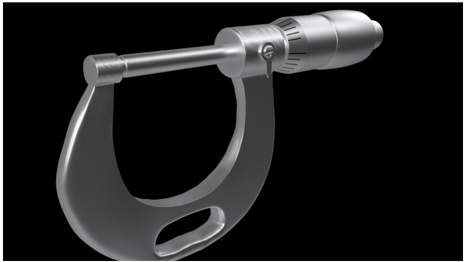
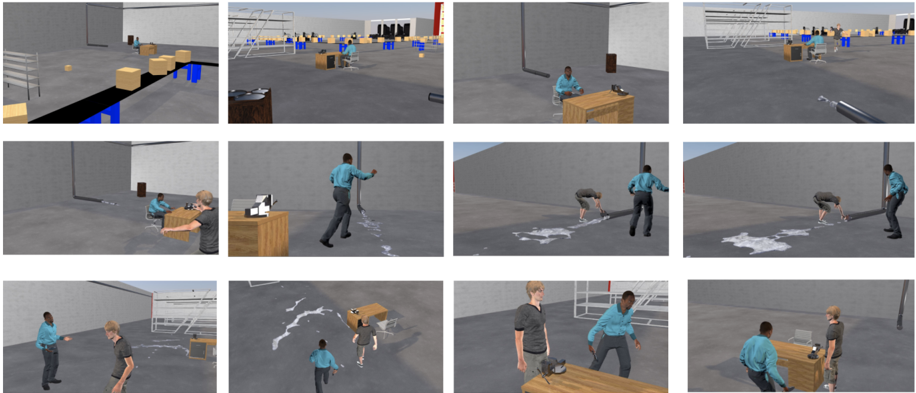
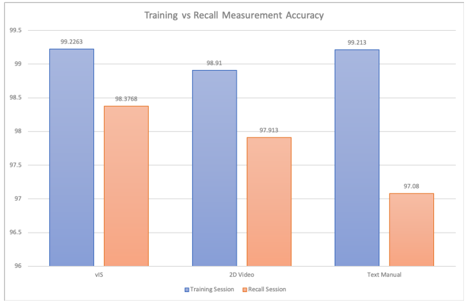
Storytelling has been established as a proven method to effectively communicate and assist in knowledge transfer. In recent years, there has been growing interest in improving the training and learning domain by using advanced technology such as Virtual Reality (VR). However, a gap exists between storytelling and VR, and it is as yet unclear how they can be combined to form an effective system that not only maintains the level of engagement and immersion provided by VR technology but also provides the core strengths of storytelling. In this paper, we present vIS, a Vocational Immersive Storytelling system, which bridges the gap between storytelling and VR. vIS focuses on vocational training, in which users are trained on how to use a mechanical micrometer by employing a creative fictional story embedded inside a virtual manufacturing plant’s workplace. For the evaluation, a two-phase user study with 30 participants was conducted to measure the system’s effectiveness and improvements in long-term training, as well as to examine user experience against traditional methods of training—2D videos and textual manuals. The results indicate that the user’s ability to retain their training after seven days was nearly equal for vIS and the 2D video-based technique and was considerably higher than the text-based technique.
Overview
The claims and statistics of this paper haven’t been checked yet.
Free: it reads the open-access text and checks the first 5 claims that cite a source we can check. Create a free account to check every claim.
Integrity signals
Registry
Cites
Statistics
Figures
Verification
Claims the paper makes
The claims and statistics of this paper haven’t been checked yet.
Free: it reads the open-access text and checks the first 5 claims that cite a source we can check. Create a free account to check every claim.
Claims other papers make about this one
Each is checked against this paper’s own text: does it say what the citing paper says it does?
The source backs part of the claim, not all of it — or backs it for a different population, condition or comparison.
In the citing paper
“Sectors such as healthcare and technical education require simplicity and easy navigation to lower cognitive load [13,16,18,26,29].”
From The Impact of User Interface and Experience (UI/UX) Design on Visual Ergonomics: A Technical Approach for Reducing Human Error in Industrial Settings (2026) · cites this paper as [13]
Experimental — accuracy not yet measuredThe source backs part of the claim, not all of it — or backs it for a different population, condition or comparison.
In the citing paper
“The use of clean interfaces and guided visual paths in VR facilitates smooth and accurate execution [13,16,26,29].”
From The Impact of User Interface and Experience (UI/UX) Design on Visual Ergonomics: A Technical Approach for Reducing Human Error in Industrial Settings (2026) · cites this paper as [13]
Experimental — accuracy not yet measuredThe cited source says what the claim attributes to it.
In the citing paper
“Likewise, in immersive or emotional scenarios such as those addressed in [13,16,29], visual ergonomics is reflected through interfaces that balance stimulation and simplicity: coherent visual narratives, controlled visual focus, non-intrusive colors, and navigation paths guided by the user's attention.”
From The Impact of User Interface and Experience (UI/UX) Design on Visual Ergonomics: A Technical Approach for Reducing Human Error in Industrial Settings (2026) · cites this paper as [13]
The check wasn’t confident either way, so it gives no verdict — never disputed.
In the citing paper
“Even in systems with partially ergonomic designs [13,17,18,28], incomplete implementation translates into errors caused by visual ambiguity, redundant task execution, or misinterpretation.”
From The Impact of User Interface and Experience (UI/UX) Design on Visual Ergonomics: A Technical Approach for Reducing Human Error in Industrial Settings (2026) · cites this paper as [13]
Experimental — accuracy not yet measured
Self-check
Percentages, sums and reported differences re-computed from the paper’s own numbers.
The self-check needs the paper’s full text.
Citations
Cites
SUS: A 'Quick and Dirty' Usability Scale
(1996) · Usability Evaluation In Industry · doi:10.1201/9781498710411-35 · Cited by 8,989
Digital Storytelling: A Powerful Technology Tool for the 21st Century Classroom
Robin, B. R. (2008) · Theory Into Practice · doi:10.1080/00405840802153916 · Cited by 1,485
The Control of Short-Term Memory
Atkinson, R. C., & Shiffrin, R. M. (1971) · Scientific American · doi:10.1038/scientificamerican0871-82 · Cited by 1,252
Brain mechanisms of emotion and emotional learning
LeDoux, J. E. (1992) · Current Opinion in Neurobiology · doi:10.1016/0959-4388(92)90011-9 · Cited by 595
Virtual memory palaces: immersion aids recall
Krokos, E., Plaisant, C., & Varshney, A. (2019) · Virtual Reality · doi:10.1007/s10055-018-0346-3 · Cited by 585
The effectiveness of digital storytelling in the classrooms: a comprehensive study
Smeda, N., Dakich, E., & Sharda, N. (2014) · Smart Learning Environments · doi:10.1186/s40561-014-0006-3 · Cited by 443 · cited 1×
“From a sociological viewpoint, there has been a widespread and growing need for and acceptance of interactive digital storytelling technologies [17,18].”
BackgroundThe effect of digital storytelling on visual memory and writing skills
Sarıca, H. Ç., & Usluel, Y. K. (2015) · Computers & Education · doi:10.1016/j.compedu.2015.11.016 · Cited by 223 · cited 2×
“Storytelling has been linked to increased memory retention [27,28].”
BackgroundRoldán, J. J., Crespo, E., Martín-Barrio, A., Peña-Tapia, E., & Barrientos, A. (2019) · Robotics and Computer-Integrated Manufacturing · doi:10.1016/j.rcim.2019.05.004 · Cited by 211 · cited 1×
“We have seen a great increase in Human–Robot-Interaction (HRI)-based applications [4–7] and Augmented and Virtual Reality (AR/VR) applications [8,9] targeted towards teaching new skills, whether vocational or otherwise.”
BackgroundJob Training in U.S. Organizations
Knoke, D., & Kalleberg, A. L. (1994) · American Sociological Review · doi:10.2307/2095930 · Cited by 204
Workplace Learning and Flexible Delivery
Smith, P. J. (2003) · Review of Educational Research · doi:10.3102/00346543073001053 · Cited by 181 · cited 1×
“explained that, while many students prefer “on-the-job” training, many workplaces are not equipped to provide the training necessary to facilitate readiness [22].”
BackgroundAuthentic and self-directed learning in vocational education: Challenges to vocational educators
de Bruijn, E., & Leeman, Y. (2011) · Teaching and Teacher Education · doi:10.1016/j.tate.2010.11.007 · Cited by 164 · cited 1×
“Bruijn et al. assessed various vocational courses in the Netherlands and found that, in a survey of course coordinators, stronger methods of education were “[strongly] desired” and that students did not feel they were gaining necessary experience [23].”
ResultInvestigation of effects of virtual reality environments on learning performance of technical skills
Jou, M., & Wang, J. (2012) · Computers in Human Behavior · doi:10.1016/j.chb.2012.04.020 · Cited by 155 · cited 1×
“Jou and Wang also found success in training students within the Virtual Reality Learning Environment (VRLE) [34].”
BackgroundWorkplace learning: its potential and limitations
Billett, S. (1995) · Education + Training · doi:10.1108/00400919510089103 · Cited by 145 · cited 2×
“However, there are also many limitations of workplace training, including undesirable knowledge, the reluctance of experts and knowledge which is difficult to acquire [21].”
BackgroundVocational training programs and youth labor market outcomes: Evidence from Nepal
Chakravarty, S., Lundberg, M., Nikolov, P., & Zenker, J. (2018) · Journal of Development Economics · doi:10.1016/j.jdeveco.2018.09.002 · Cited by 137 · cited 1×
“The first response of policymakers to this has been to launch new vocational training initiatives to upgrade the skill level of the population, especially the youth [1,2].”
BackgroundImpact of Virtual Learning Environment on Students’ Satisfaction, Engagement, Recall, and Retention
Ryan, E., & Poole, C. (2019) · Journal of medical imaging and radiation sciences · doi:10.1016/j.jmir.2019.04.005 · Cited by 118
Virtual Training: Learning Transfer of Assembly Tasks
Carlson, P., Peters, A., Gilbert, S. B., Vance, J. M., & Luse, A. (2015) · IEEE Transactions on Visualization and Computer Graphics · doi:10.1109/tvcg.2015.2393871 · Cited by 117
The Use of Virtual Reality for Episodic Memory Assessment: Effects of Active Navigation
Sauzéon, H., Arvind Pala, P., Larrue, F., Wallet, G., Déjos, M., Zheng, X., Guitton, P., & N’Kaoua, B. (2012) · Experimental Psychology · doi:10.1027/1618-3169/a000131 · Cited by 98 · cited 1×
“This immersive capability of Virtual Reality systems have been found to enhance engagement [10–12] and cognitive capabilities, such as recall [13–15].”
BackgroundTask Engagement as Personalization Feedback for Socially-Assistive Robots and Cognitive Training
Tsiakas, K., Abujelala, M., & Makedon, F. S. (2018) · Technologies · doi:10.3390/technologies6020049 · Cited by 91
Self-citationSalamin, P., Tadi, T., Blanke, O., Vexo, F., & Thalmann, D. (2010) · IEEE Transactions on Learning Technologies · doi:10.1109/tlt.2010.13 · Cited by 80 · cited 1×
“We found that 3PP worked well for our immersive story, and prior research comparing 1PP and 3PP for VR-based training [40] also confirmed that users prefer 3PP as it makes it easy to perform spatial navigation in the virtual environment.”
MethodChao, C., Wu, S., Yau, Y., Feng, W., & Tseng, F. (2017) · Human Factors and Ergonomics in Manufacturing & Service Industries · doi:10.1002/hfm.20702 · Cited by 69 · cited 1×
“[42] in which the VR training was considered the best in comparison to technical manuals.”
BackgroundVirtual Worlds in Health Care Higher Education
Johnson, C., Vorderstrasse, A. A., & Shaw, R. J. (2009) · Journal of Virtual Worlds Research · doi:10.4101/jvwr.v2i2.699 · Cited by 67 · cited 1×
“This immersive capability of Virtual Reality systems have been found to enhance engagement [10–12] and cognitive capabilities, such as recall [13–15].”
BackgroundReggente, N., Essoe, J. K.-Y., Baek, Y. H., & Rissman, J. (2019) · Journal of Cognitive Enhancement · doi:10.1007/s41465-019-00141-8 · Cited by 65
Storytelling in Virtual Reality for Training
Mollet, N., & Arnaldi, B. (2006) · Lecture notes in computer science · doi:10.1007/11736639_45 · Cited by 58 · cited 1×
“employees to develop certain skills [35].”
Learner immersion engagement in the 3D virtual world: principles emerging from the DELVE project
Mount, N. J., Chambers, C., Weaver, D., & Priestnall, G. (2009) · Innovation in Teaching and Learning in Information and Computer Sciences · doi:10.11120/ital.2009.08030040 · Cited by 54 · cited 1×
“This immersive capability of Virtual Reality systems have been found to enhance engagement [10–12] and cognitive capabilities, such as recall [13–15].”
BackgroundMARVEL: A Mixed Reality Learning Environment for Vocational Training in Mechatronics
Mueller, D. H., & Ferreira, J. M. M. (2003) · Portuguese National Funding Agency for Science, Research and Technology (RCAAP Project by FCT) · Cited by 42
Exploring the usability of immersive interactive storytelling
Lugrin, J.-L., Cavazza, M., Pizzi, D., Vogt, T., & André, E. (2010) · ACM Symposium on Virtual Reality Software and Technology (VRST) · doi:10.1145/1889863.1889887 · Cited by 41 · cited 1×
“discuss storytelling in VR from an entertainment point of view [36].”
BackgroundGelsomini, M., Garzotto, F., Montesano, D., & Occhiuto, D. (2016) · Annual International Conference of the IEEE Engineering in Medicine and Biology Society (EMBC) · doi:10.1109/embc.2016.7591896 · Cited by 35 · cited 1×
“[38] evaluated the use of storytelling and VR to provide therapies for children with Intellectual and developmental disorders and found that the system was beneficial in triggering a learning process and helped them stay focused in performing a task.”
BackgroundSchmidt, M. W., Kowalewski, K., Schmidt, M., Wennberg, E., Garrow, C. R., Paik, S. P., Benner, L., Schijven, M. P., Müller-Stich, B. P., & Nickel, F. (2018) · Surgical Endoscopy · doi:10.1007/s00464-018-6480-x · Cited by 34 · cited 1×
“We have seen a great increase in Human–Robot-Interaction (HRI)-based applications [4–7] and Augmented and Virtual Reality (AR/VR) applications [8,9] targeted towards teaching new skills, whether vocational or otherwise.”
BackgroundThe role of sound in inducing storytelling in immersive environments
Salselas, I., & Penha, R. (2019) · Audio Mostly Conference (AM) · doi:10.1145/3356590.3356619 · Cited by 32 · cited 1×
“[41] reviewed the literature on the role of sound in immersive storytelling and found that a good sound design modulates the attention of a viewer in a way that allows for an immersive user experience and allows the viewer to deduce that a narrative is being followed.”
BackgroundEbert, D., Gupta, S., & Makedon, F. S. (2016) · ACM International Conference on PErvasive Technologies Related to Assistive Environments (PETRA) · doi:10.1145/2910674.2910681 · Cited by 30 · cited 2×
“Other works include research into language acquisition [16], which focused more on learning a second-language using Virtual Reality.”
BackgroundSelf-citationStorytelling to Immersive Learners in an Authentic Virtual Training Environment
Wood, L. C., & Reiners, T. (2014) · Springer eBooks · doi:10.1007/978-3-319-10208-5_16 · Cited by 28 · cited 1×
“Wood and Reiners highlight the difficulties of traditional learning methods and the benefits of using virtual environments with storytelling elements [37].”
BackgroundTeaching with storytelling: an investigation of narrative videos for skills training
Ladeira, I., & Cutrell, E. B. (2010) · International Conference on Information and Communication Technologies and Development (ICTD) · doi:10.1145/2369220.2369240 · Cited by 26 · cited 2×
“[32] created a series of videos to teach bed-making and vacuuming skills to domestic workers in India.”
BackgroundMethodTsiakas, K., Papakostas, M., Theofanidis, M., Bell, M. D., Mihalcea, R. F., Wang, S., Burzo, M. G., & Makedon, F. S. (2017) · International Conference on PErvasive Technologies Related to Assistive Environments (PETRA) · doi:10.1145/3056540.3076191 · Cited by 21
Self-citationGallets, M. P. (2005) · Digital Commons - East Tennessee State University (East Tennessee State University) · Cited by 20
MoVE: Mobile vocational education for rural India
Akshay, N., Kongeseri, S., Anand, A., Venkataraman, R., & Bhavani, R. R. (2012) · IEEE International Conference on Technology Enhanced Education (ICTEE) · doi:10.1109/ictee.2012.6208644 · Cited by 17 · cited 2×
“Virtual Reality has been utilized around the world to increase accessibility to vocational training [24, 25].”
BackgroundMethodAn intelligent Interactive Learning and Adaptation framework for robot-based vocational training
Tsiakas, K., Abujelala, M., Lioulemes, A., & Makedon, F. S. (2016) · IEEE Symposium Series on Computational Intelligence (SSCI) · doi:10.1109/ssci.2016.7850066 · Cited by 13
Self-citationA Collaborative Assembly Task to Assess Worker Skills in Robot Manufacturing Environments
Abujelala, M., Gupta, S., & Makedon, F. S. (2018) · PErvasive Technologies Related to Assistive Environments Conference (PETRA) · doi:10.1145/3197768.3203171 · Cited by 7
Self-citationComputer usage as instructional resources for vocational training in Nigeria
Oguzor, N. S. (2011) · DergiPark (Istanbul University) · doi:10.5897/err.9000077 · Cited by 5
Computer Usage as Instructional Resources for Vocational Training in Nigeria
Oguzor, N. S. (2011) · Contemporary Educational Technology · doi:10.30935/cedtech/6053 · Cited by 3
Research works printed but not linked: 5
- Biavaschi, C.; Eichhorst, W.; Giulietti, C.; Kendzia, M.J.; Muravyev, A.; Pieters, J.; Rodríguez-Planas, N.; Schmidl, R.; Zimmermann, K.F. Youth Unemployment and Vocational Training; IZA Discussion Paper No. 6890; Institute of Labor Economics (IZA): Bonn, Germany, 2012; Available online: https://ssrn.com/abstract=2158300 (accessed on 20 October 2020).
- Ebert, D.; Gupta, S.; Makedon, F. Ogma: A virtual reality language acquisition system. In Proceedings of the 9th ACM International Conference on Pervasive Technologies Related to Assistive Environments, Corfu, Greece, 29 June-1 July 2016; pp. 1-5.
- Jack, H. State of Manufacturing Education. In Proceedings of the 2013 ASEE Conference, Atlanta, GA, USA, 23-26 June 2013 .
- Magerko, B.; Wray, R.; Holt, L.; Stensrud, B. Improving interactive training through individualized content and increased engagement. In Proceedings of the Interservice/Industry Training, Simulation & Education Conference (I/ITSEC), Orlando, FL, USA, 6-9 December 2005; pp. 1-11.
- Gandelman, R.T.; Santoro, F.M. Group Storytelling in Organizational Training. In Proceedings of the IADIS International Conference on Information System, Porto, Portugal, 18-20 March 2010; pp. 315-322.
Cited by
Shen, B., Tan, W., Guo, J., Zhao, L., & Qin, P. (2021) · Applied Sciences · doi:10.3390/app112311087 · Cited by 368
Extended reality applications in industry 4.0. – A systematic literature review
Adriana Cárdenas-Robledo, L., Hernández-Uribe, Ó., Reta, C., & Antonio Cantoral-Ceballos, J. (2022) · Telematics and Informatics · doi:10.1016/j.tele.2022.101863 · Cited by 166
Daling, L. M., & Schlittmeier, S. J. (2022) · Human Factors The Journal of the Human Factors and Ergonomics Society · doi:10.1177/00187208221105135 · Cited by 155
Gong, P., Lu, Y., Lovreglio, R., Lv, X., & Chi, Z. (2024) · Safety Science · doi:10.1016/j.ssci.2024.106624 · Cited by 65
Daling, L. M., Tenbrock, M., Isenhardt, I., & Schlittmeier, S. J. (2023) · Applied Ergonomics · doi:10.1016/j.apergo.2023.104021 · Cited by 55
Metadata
- Authors
- Doolani, S., Owens, L., Wessels, C., & Makedon, F.
- Affiliations
- The University of Texas at Arlington (US)
- Corresponding author
- Doolani, Sanika
- Makedon, Fillia
- Venue
- Applied Sciences
- Publisher
- MDPI AG
- Published
- 2020-11-17
- Volume
- 10
- Issue
- 22
- Pages
- 8143
- ISSN
- 2076-3417 (ISSN-L)
- OpenAlex
- W3103555877
- Cited by
- 37
- References
- 43
- Citations by year
- 2026: 4 · 2025: 6 · 2024: 9 · 2023: 9 · 2022: 4 · 2021: 5
- FWCI
- 3.28
- Type
- journal article
- Language
- en
- Open access
- gold
- doi.org
- Licence
- Locations
- Applied Sciences (publishedVersion, cc-by)
- DOAJ (DOAJ: Directory of Open Access Journals) (submittedVersion, cc-by-sa)
- Funders
- National Science Foundation (1719031)
- Topics
- Physical Sciences › Computer Science › Human-Computer Interaction › Virtual Reality Applications and Impacts
- Physical Sciences › Computer Science › Computer Vision and Pattern Recognition › Augmented Reality Applications
- Social Sciences › Education › Digital Storytelling and Education
- Keywords
- virtual storytelling, virtual reality, vocational education, immersive learning, knowledge transfer, training retention, user experience
About these checks
Registry, retraction, Cites and statistics results are computed, not judged, with one exception: a printed reference that no index lists is read once by a model before it counts as a citation error. Claims are extracted by a model and kept only when their quote appears verbatim in the text; each cited source is then checked, with a model’s help, for whether it says what the claim relies on. Those verdicts can be wrong — read the claim’s quote and the cited source before relying on one.
Statistics and arithmetic are recomputed, not judged.
Confidence bands are shown only for fields calibrated on our annotated test set. None is calibrated yet, so no band is shown.
What counts as a claim ›How we measure confidence ›How we check this ›
Are you an author, or do you see a problem with this page? Request a review
Data sources
Bibliographic data: Semantic Scholar, OpenAlex, Crossref.
Contains information from the Semantic Scholar Academic Graph Datasets, made available under the ODC Attribution License (ODC-BY 1.0).
Semantic Scholar’s data is described in: Kinney, R., et al. (2023). The Semantic Scholar Open Data Platform. arXiv:2301.10140.
