

The DOI matches its Crossref record; 53 of the 54 references it cites were found in a registry or an index.
Cybersecurity Model Based on Hardening for Secure Internet of Things Implementation
Open accessAbstract
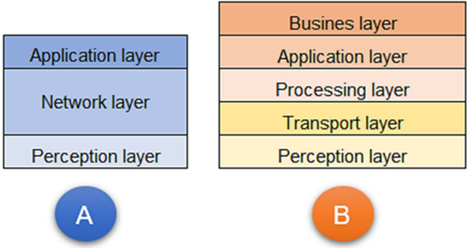
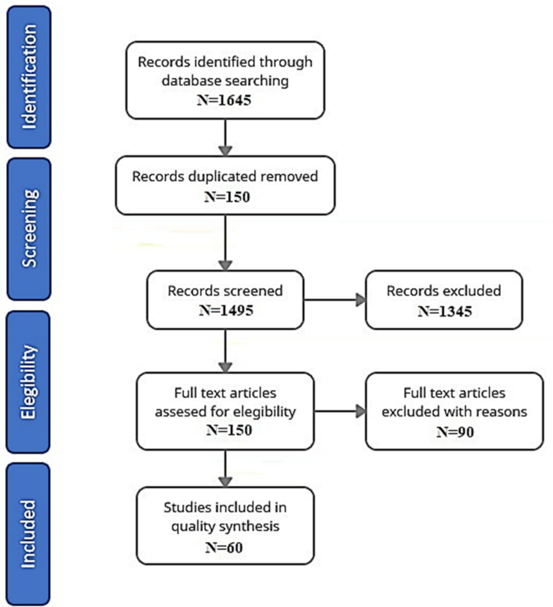
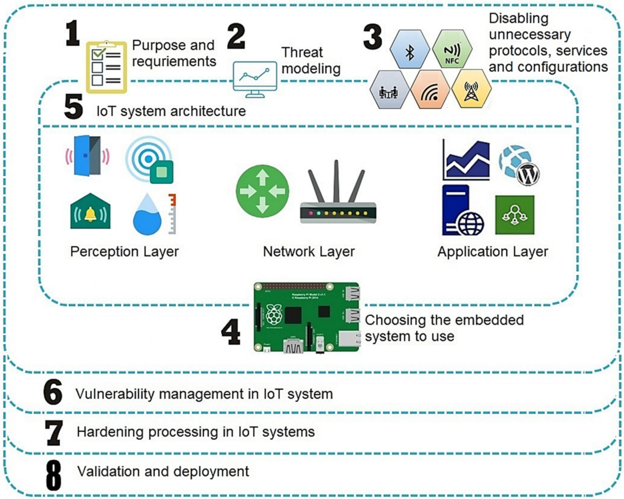
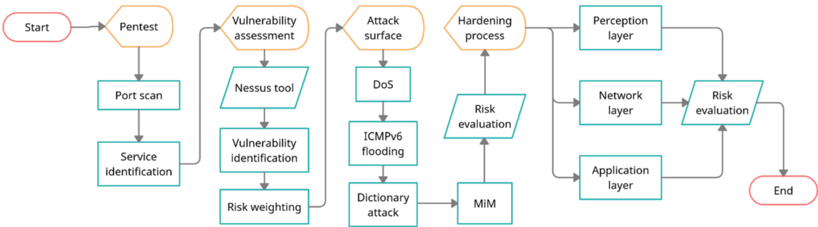
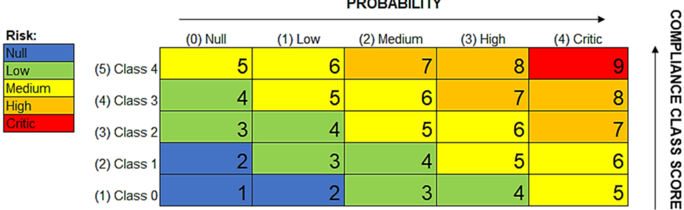
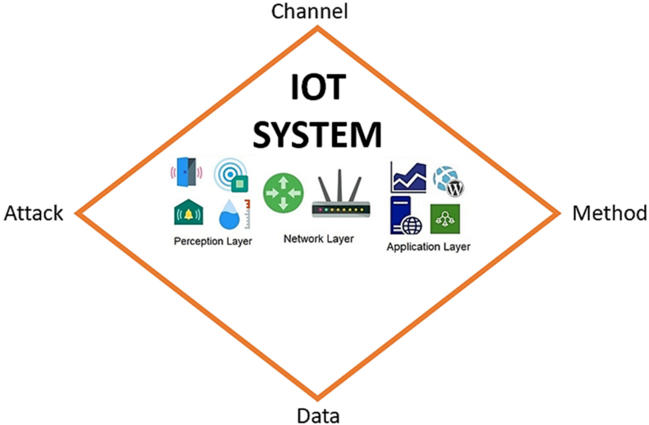
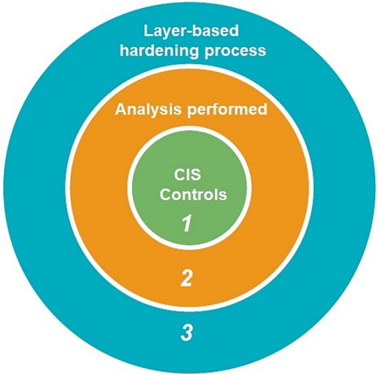
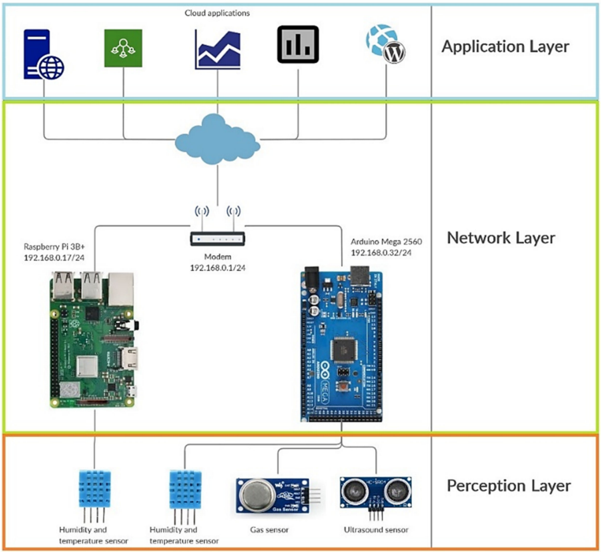
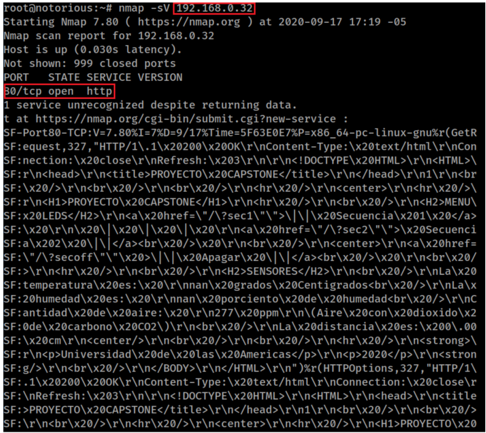
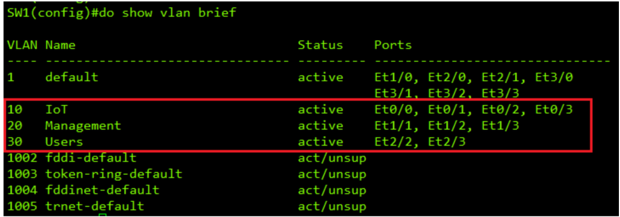
The inclusion of Internet of Things (IoT) for building smart cities, smart health, smart grids, and other smart concepts has driven data-driven decision making by managers and automation in each domain. However, the hyper-connectivity generated by IoT networks coupled with limited default security in IoT devices increases security risks that can jeopardize the operations of cities, hospitals, and organizations. Strengthening the security aspects of IoT devices prior to their use in different systems can contribute to minimize the attack surface. This study aimed to model a sequence of seven steps to minimize the attack surface by executing hardening processes. Conducted a systematic literature review using Preferred Reporting Items for Systematic Reviews and Meta-Analyses (PRISMA) techniques. In this way, we were able to define a proposed methodology to evaluate the security level of an IoT solution by means of a checklist that considers the security aspects in the three layers of the IoT architecture. A risk matrix adapted to IoT is established to evaluate the attack surface. Finally, a process of hardening and vulnerability analysis is proposed to reduce the attack surface and improve the security level of the IoT solution.
Overview
The claims and statistics of this paper haven’t been checked yet.
Run the check — free, no account needed. It reads the open-access text and checks the sources it cites.
Integrity signals
Registry
Cites
Statistics
Figures
Verification
Claims the paper makes
The claims and statistics of this paper haven’t been checked yet.
Run the check — free, no account needed. It reads the open-access text and checks the sources it cites.
Claims other papers make about this one
Each is checked against this paper’s own text: does it say what the citing paper says it does?
In the citing paper
“Echeverría et al. [122] provided guidelines for IoT hardening, but the paper did not address specific requirements for IIoT hardening, nor did it intend to do so.”
From Mapping of Industrial IoT to IEC 62443 Standards (2025) · cites this paper as Echeverría et al. [122]
Self-check
Percentages, sums and reported differences re-computed from the paper’s own numbers.
The self-check needs the paper’s full text.
Citations
Cites
A survey of emerging threats in cybersecurity
Jang-Jaccard, J., & Nepal, S. (2014) · Journal of Computer and System Sciences · doi:10.1016/j.jcss.2014.02.005 · Cited by 892
Cyber Security and the Internet of Things: Vulnerabilities, Threats, Intruders and Attacks
Abomhara, M., & Køien, G. M. (2015) · Journal of Cyber Security and Mobility · doi:10.13052/jcsm2245-1439.414 · Cited by 718
Internet of Things (IoT) Cybersecurity: Literature Review and IoT Cyber Risk Management
Lee, I. (2020) · Future Internet · doi:10.3390/fi12090157 · Cited by 257
The ISO 31000 standard in supply chain risk management
de Oliveira, U. R., Marins, F. A. S., Rocha, H. M., & Salomon, V. A. P. (2017) · Journal of Cleaner Production · doi:10.1016/j.jclepro.2017.03.054 · Cited by 224
Measuring Relative Attack Surfaces
Howard, M., Pincus, J., & Wing, J. M. (2005) · Springer eBooks · doi:10.1007/0-387-24006-3_8 · Cited by 212
IoT technologies for embedded computing: a survey
Samie, F., Bauer, L., & Henkel, J. (2016) · Proceedings of the Eleventh IEEE/ACM/IFIP International Conference on Hardware/Software Codesign and System Synthesis · doi:10.1145/2968456.2974004 · Cited by 190
Kandasamy, K., Srinivas, S., Achuthan, K., & Rangan, V. P. (2020) · EURASIP Journal on Information Security · doi:10.1186/s13635-020-00111-0 · Cited by 160
Sengan, S., Subramaniyaswamy, V., Nair, S. K., Indragandhi, V., Manikandan, J., & Ravi, L. (2020) · Future Generation Computer Systems · doi:10.1016/j.future.2020.06.028 · Cited by 111
Matheu-García, S. N., Hernández-Ramos, J. L., Skarmeta, A. F., & Baldini, G. (2019) · Computer Standards & Interfaces · doi:10.1016/j.csi.2018.08.003 · Cited by 111
The Application of a New Secure Software Development Life Cycle (S-SDLC) with Agile Methodologies
Mohino, J. D. V., Higuera, J. B., Higuera, J. R. B., & Montalvo, J. A. S. (2019) · Electronics · doi:10.3390/electronics8111218 · Cited by 107
Research works printed but not linked: 3
- Gregg, M., and Santos, O. (2019). Certified Ethical Hacker (CEH) Version 10 Cert Guide, Pearson IT Certification. [3rd ed.].
- Prastika, 2019, Audit dam implementasi CIS Benchmark pada sistem operasi Linux Debian Server, J. Jarkom, 6, 1
- Radanliev, P., De Roure, D., Nurse, J.R.C., Nicolescu, R., Huth, M., Cannady, S., and Montalvo, R.M. (2020). Cyber risk impact assessment assessing the risk from the IoT to the digital Economy. SN Appl. Sci., 1–12. · DOI
Cited by
Abdullahi, M., Baashar, Y. M., Alhussian, H., Alwadain, A. S., Aziz, N., Capretz, L. F., & Abdulkadir, S. J. (2022) · Electronics · doi:10.3390/electronics11020198 · Cited by 428
Cybersecurity Risk Analysis in the IoT: A Systematic Review
AlSalem, T. S., Almaiah, M. A., & Lutfi, A. (2023) · Electronics · doi:10.3390/electronics12183958 · Cited by 77
Mapping of Industrial IoT to IEC 62443 Standards
Cindrić, I., Jurčević, M., & Hadjina, T. (2025) · Sensors · doi:10.3390/s25030728 · Cited by 29
Jiang, Y., Jeusfeld, M. A., Mosaad, M., & Oo, N. (2024) · International Journal of Critical Infrastructure Protection · doi:10.1016/j.ijcip.2024.100700 · Cited by 27
Mouti, S., Shukla, S. K., Althubiti, S. A., Ahmed, M. A., Alenezi, F. S., & Arumugam, M. (2022) · Computers & Electrical Engineering · doi:10.1016/j.compeleceng.2022.108308 · Cited by 21
A Survey on Cyber Risk Management for the Internet of Things
Parsons, E. K., Panaousis, E., Loukas, G., & Sakellari, G. (2023) · Applied Sciences · doi:10.3390/app13159032 · Cited by 20
Electronic User Authentication Key for Access to HMI/SCADA via Unsecured Internet Networks
Abu-Jassar, A. T., Attar, H. H., Yevsieiev, V., Amer, A., Демська, Н. П., Luhach, A. K., & Lyashenko, V. V. (2022) · Computational Intelligence and Neuroscience · doi:10.1155/2022/5866922 · Cited by 13
Factors of Risk Analysis for IoT Systems
Andrade, R., Ortiz-Garcés, I., Tintin, X., & Llumiquinga, G. (2022) · Risks · doi:10.3390/risks10080162 · Cited by 13
Self-citationAlegria, B., Wong, L., & Bedriniana, D. (2022) · Conference of Open Innovations Association (FRUCT) · doi:10.23919/fruct56874.2022.9953893 · Cited by 7
Zero-Tolerance Security Paradigm for Enterprise-Specific Industrial Internet of Things
Tariq, U. (2022) · Electronics · doi:10.3390/electronics11233953 · Cited by 7
Comparison of Cybersecurity Methodologies for the Implementing of a Secure IoT Architecture
Moreta, N., Aragon, D., Oña, S., Jaramillo, A., Ibarra, J., & Jahankhani, H. (2023) · Advanced sciences and technologies for security applications · doi:10.1007/978-3-031-20160-8_2 · Cited by 6
Practical Approaches and Guidance to Small Business Organization Cyber Risk and Threat Assessments
Mierzwa, S., & Klepacka, A. (2023) · Journal of Strategic Innovation and Sustainability · doi:10.33423/jsis.v18i2.6255 · Cited by 6
A Literature Review on the Impact of Effective Management in Cyber Security System Performance
Salim, L., Harjono, S., Gunawan, F., Moniaga, J. V., & Rianto, I. D. (2022) · International Conference on Informatics, Multimedia, Cyber and Information System (ICIMCIS) · doi:10.1109/icimcis56303.2022.10017933 · Cited by 4
SCKPISec: A KPI-Guided Model-Based Approach to Realize Security by Design for Smart City Systems
Ye, T., Zhuang, Y., & Qiao, G. (2023) · Sustainability · doi:10.3390/su15031884 · Cited by 3
Securing Digital Transformation
Karakaya, T. (2025) · IGI Global eBooks · doi:10.4018/979-8-3693-6417-8.ch006 · Cited by 3
CyberShield Framework: Attacks and Defense Modelling for Cybersecurity in Internet of Things (IoT)
Ahmed, M. A. M., Idris, S. A., Yunus, N. A. M., Ali, F. M., & Sofian, H. (2024) · International Journal of Advanced Research in Computational Thinking and Data Science · doi:10.37934/ctds.4.1.3039a · Cited by 3
Deep Neural Networks Implementation on IoT Devices: A Practical Guide
Sridevi, V., Bhuva, D., Bhuva, A., Sharma, M. K., Gupta, S., & Soni, M. (2024) · International Conference on Advances in Computing, Communication and Applied Informatics (ACCAI) · doi:10.1109/accai61061.2024.10602133 · Cited by 3
Bhandari, S., & Paudyal, D. R. (2025) · ISPRS International Journal of Geo-Information · doi:10.3390/ijgi14080294 · Cited by 2
A Comprehensive Analysis of Cybersecurity Threats based IoTs
Shukur, F., & Shukur, S. T. (2023) · Journal of Applied Artificial Intelligence · doi:10.48185/jaai.v4i2.920 · Cited by 2
Automated Detection of Cyber security Intrusions in Healthcare Systems Using Several Approaches
R, S. S. R. M., Sudhan, M., Deeptha, R., & Karpagam, T. (2024) · International Journal of Electronics and Communication Engineering · doi:10.14445/23488549/ijece-v11i7p122 · Cited by 2
Fortifying IoT: A Cybersecurity Model for Secure Implementation
Geetha, B. T., Bhuva, D., Bhuva, A., Trivedi, M. D., Sathe, M. A., & Singhal, R. K. (2024) · International Conference on Contemporary Computing and Informatics (IC3I) · doi:10.1109/ic3i61595.2024.10829198 · Cited by 2
David Echeverría López, A., Amor Pinilla, M., & Carvajal Mora, H. R. (2025) · IEEE Access · doi:10.1109/access.2025.3609252 · Cited by 1
“This ranking was guided by the maturity level framework proposed by Echeverría for IoT environments [127], [128], adapted to reflect the specific risk values and attack surface metrics relevant to ICS.”
Świtała, K. (2025) · Review of European and Comparative Law · doi:10.31743/recl.18192 · Cited by 1
Dehkordi, A. B. (2023) · The Journal of Supercomputing · doi:10.1007/s11227-023-05258-4 · Cited by 1
Uncertainty and Its Role in IoT Risk Management
Andrade, R., Tello-Oquendo, L., & Ortiz, I. (2021) · Springer eBooks · doi:10.1007/978-3-030-88524-3_2
Self-citationIOT SECURITY AND SOFTWARE TESTING
Çetlenbik, O. C., Süzen, A. A., & Duman, B. (2024) · Yalvaç Akademi Dergisi · doi:10.57120/yalvac.1437571
Kolaventi, S. S., Jena, D., Sairam, K., Kalra, H., Gupta, M., Ratna, S., & Varma, P. (2024) · Seminars in Medical Writing and Education · doi:10.56294/mw2024504
Analytical Study of Attacks and Defenses for IoT in Critical Infrastructure
Al-Sinayyid, A., Sanford, T., Sanchez, A., Battula, R. R., Kadiyala, S., & Mannuru, V. (2025) · Communications in computer and information science · doi:10.1007/978-3-031-85923-6_26
Investigating Vulnerabilities Against DoS in Small Business with Simulation
Blancaflor, E., Buccat, R. A., Delfin, I. Z. L., Ocampo, N. R., Villaruel, M. A., & Villaluz, A. C. (2025) · International Conference on Computer and Communication Systems (ICCCS) · doi:10.1109/icccs65393.2025.11069629
Hussein, A. I., Hlail, O. S., Hussein, M. I., Ahmed, A. A., Hassan, M. R., & Satar, N. S. M. (2025) · International Conference on Business Analytics for Technology and Security (ICBATS) · doi:10.1109/icbats66542.2025.11258291
Securing the IoT frontier: exploring the limitation and future directions in cybersecurity
Mahmoud Ahmed, M. A., & Md Yunus, N. A. (2024) · Universiti Putra Malaysia Institutional Repository (Universiti Putra Malaysia)
Аналіз існуючих методів тестування на проникнення та усунення недоліків тестування.
Дмитрович, Ш. М. (2022) · eKNUTSHIR
Network Hardening Based on Companion Planting in Iot Environments with Unknown-Vulnerability Devices
Yamaguchi, S. (2026) · International Symposium on Digital Forensics and Security (ISDFS) · doi:10.1109/isdfs69419.2026.11458938
Sugiyatno, S., & Subagyo, U. (2026) · Jurnal Informatika Komputer Bisnis dan Manajemen · doi:10.61805/fahma.v24i2.204
Security threat modelling for IoT-enabled smart healthcare
Husić, J. B., & Baraković, S. (2026) · Journal of Ambient Intelligence and Smart Environments · doi:10.1177/18761364261474040
Analisis Risiko Roundcube Debian dengan CVSS dan Random Forest
Manurung, E., Sigiro, C., & Sinaga, L. M. (2026) · RIGGS Journal of Artificial Intelligence and Digital Business · doi:10.31004/riggs.v5i2.11597
Metadata
- Authors
- Echeverría, A., Cevallos, C., Ortiz-Garces, I., & Andrade, R. O.
- Affiliations
- Universidad de Las Américas (EC)
- Escuela de Ingeniería en Tecnologías de la Información, FICA, Universidad de Las Américas, Quito 170125, Ecuador
- National Polytechnic School (EC)
- Venue
- Applied Sciences
- Publisher
- MDPI AG
- Published
- 2021-04-06
- Volume
- 11
- Issue
- 7
- Pages
- 3260
- ISSN
- 2076-3417 (ISSN-L)
- OpenAlex
- W3152184839
- Cited by
- 31
- References
- 54
- Citations by year
- 2026: 2 · 2025: 8 · 2024: 6 · 2023: 7 · 2022: 7 · 2021: 1
- FWCI
- 2.36
- Type
- journal article
- Language
- en
- Open access
- gold
- doi.org
- Licence
- Locations
- Applied Sciences (publishedVersion, cc-by)
- DOAJ (DOAJ: Directory of Open Access Journals) (submittedVersion, cc-by-sa)
- Topics
- Physical Sciences › Computer Science › Computer Networks and Communications › IoT and Edge/Fog Computing
- Physical Sciences › Computer Science › Information Systems › Internet of Things and AI
- Physical Sciences › Computer Science › Computer Networks and Communications › Network Security and Intrusion Detection
- Keywords
- Internet of Things security, attack surface reduction, security checklist, IoT architecture layers, risk matrix, vulnerability assessment, smart cities, smart grid, smart healthcare
About these checks
Registry, retraction, Cites and statistics results are computed, not judged, with one exception: a printed reference that no index lists is read once by a model before it counts as a citation error. Claims are extracted by a model and kept only when their quote appears verbatim in the text; each cited source is then checked, with a model’s help, for whether it says what the claim relies on. Those verdicts can be wrong — read the claim’s quote and the cited source before relying on one.
Statistics and arithmetic are recomputed, not judged.
Confidence bands are shown only for fields calibrated on our annotated test set. None is calibrated yet, so no band is shown.
What counts as a claim ›How we measure confidence ›How we check this ›
Are you an author, or do you see a problem with this page? Request a review
