

The DOI matches its Crossref record; 43 of the 43 references it cites were found in a registry or an index.
Automatic Metallic Surface Defect Detection and Recognition with Convolutional Neural Networks
Open accessAbstract
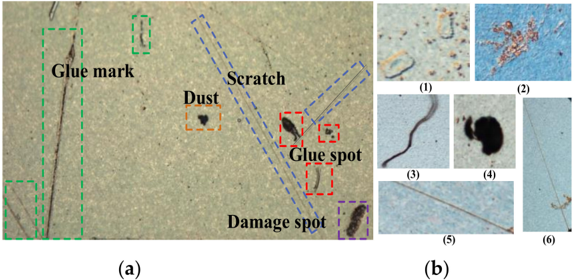
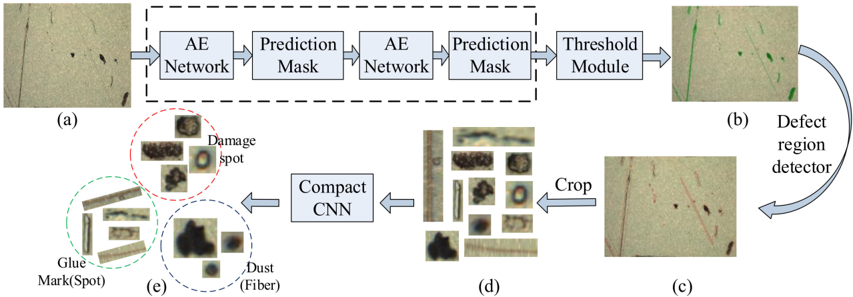
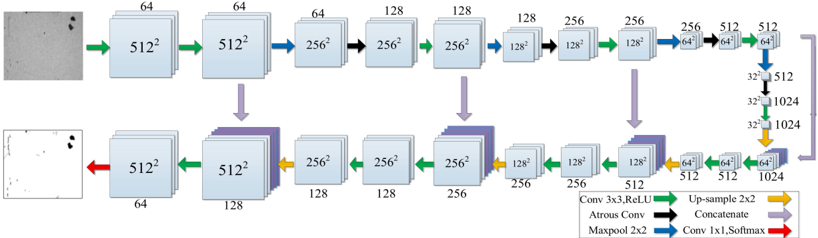
Automatic metallic surface defect inspection has received increased attention in relation to the quality control of industrial products. Metallic defect detection is usually performed against complex industrial scenarios, presenting an interesting but challenging problem. Traditional methods are based on image processing or shallow machine learning techniques, but these can only detect defects under specific detection conditions, such as obvious defect contours with strong contrast and low noise, at certain scales, or under specific illumination conditions. This paper discusses the automatic detection of metallic defects with a twofold procedure that accurately localizes and classifies defects appearing in input images captured from real industrial environments. A novel cascaded autoencoder (CASAE) architecture is designed for segmenting and localizing defects. The cascading network transforms the input defect image into a pixel-wise prediction mask based on semantic segmentation. The defect regions of segmented results are classified into their specific classes via a compact convolutional neural network (CNN). Metallic defects under various conditions can be successfully detected using an industrial dataset. The experimental results demonstrate that this method meets the robustness and accuracy requirements for metallic defect detection. Meanwhile, it can also be extended to other detection applications.
Overview
The claims and statistics of this paper haven’t been checked yet.
Free: it reads the open-access text and checks the first 5 claims that cite a source we can check. Create a free account to check every claim.
Integrity signals
Registry
Cites
Statistics
Figures

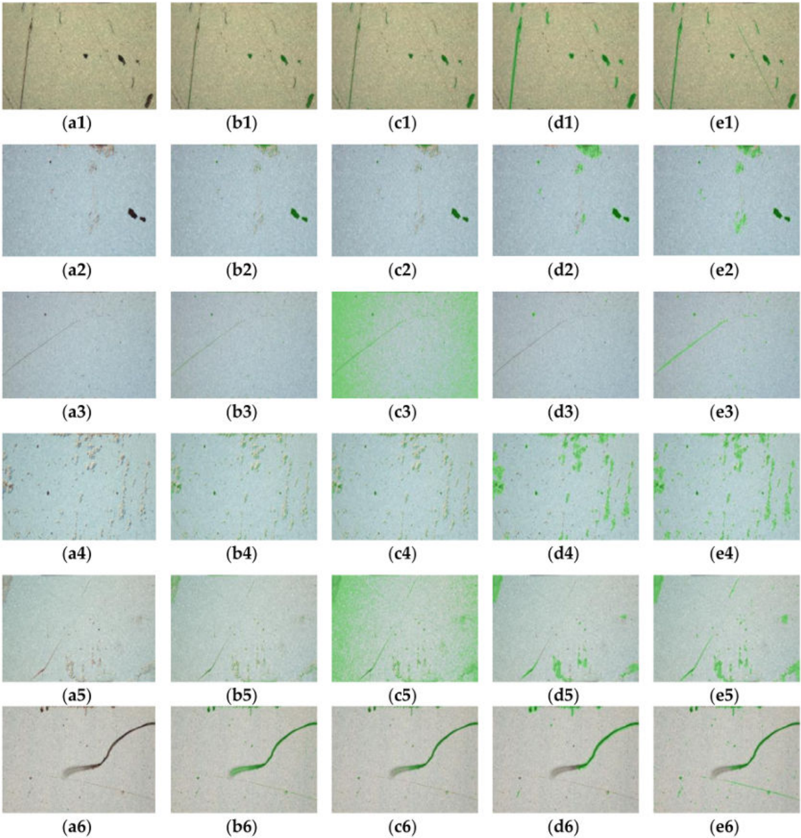
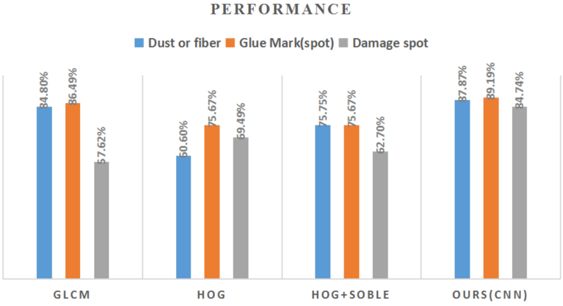
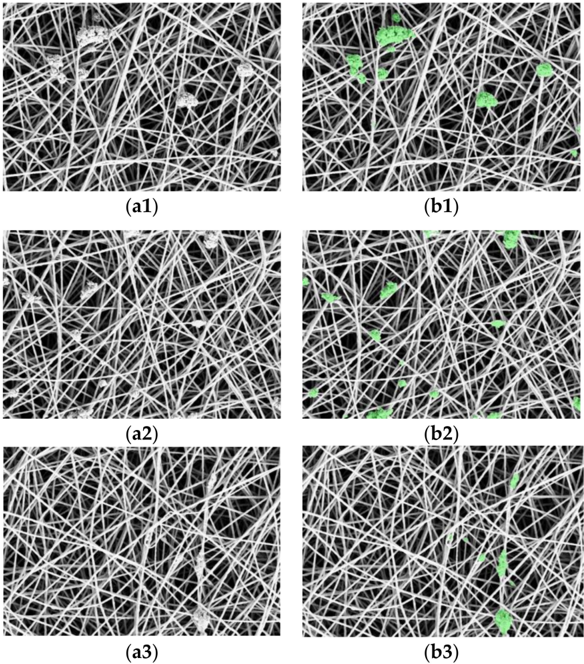
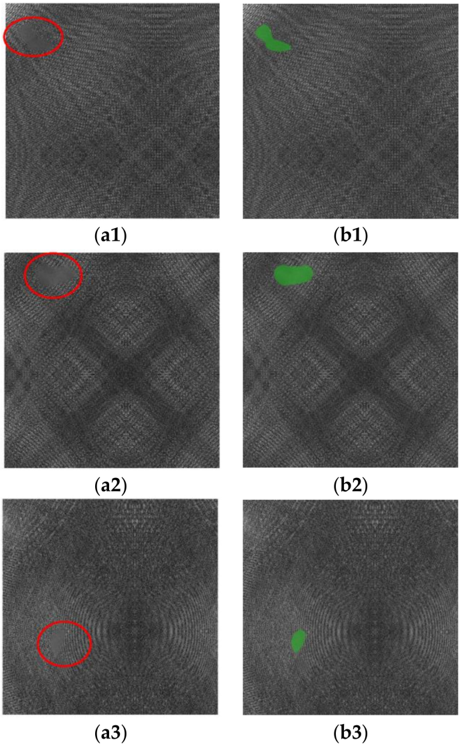
Verification
Claims the paper makes
The claims and statistics of this paper haven’t been checked yet.
Free: it reads the open-access text and checks the first 5 claims that cite a source we can check. Create a free account to check every claim.
Claims other papers make about this one
Each is checked against this paper’s own text: does it say what the citing paper says it does?
The check wasn’t confident either way, so it gives no verdict — never disputed.
In the citing paper
“Be of rotation and gray invariance, fast calculation speed.”
From Automated Visual Defect Classification for Flat Steel Surface: A Survey (2020) · cites this paper as [85]
Experimental — accuracy not yet measuredThe check wasn’t confident either way, so it gives no verdict — never disputed.
In the citing paper
“Sensitive to scale variation and noise interference.”
From Automated Visual Defect Classification for Flat Steel Surface: A Survey (2020) · cites this paper as [85]
Experimental — accuracy not yet measured
Self-check
Percentages, sums and reported differences re-computed from the paper’s own numbers.
The self-check needs the paper’s full text.
Citations
Cites
Deep Residual Learning for Image Recognition
He, K., Zhang, X., Ren, S., & Sun, J. (2016) · 2016 IEEE Conference on Computer Vision and Pattern Recognition (CVPR) · doi:10.1109/cvpr.2016.90 · Cited by 235,474 · cited 1×
“Our proposed CNN is a compact network that is smaller than the classic classification networks such as GoogleNet [41] and ResNet [42].”
MethodVery Deep Convolutional Networks for Large-Scale Image Recognition
Simonyan, K., & Zisserman, A. (2014) · arXiv · doi:10.48550/arxiv.1409.1556 · Cited by 114,148 · cited 1×
“We double the number of features after each max pooling layer in order to reduce the loss of semantic information [38,39].”
Going deeper with convolutions
Szegedy, C., Liu, W., Jia, Y., Sermanet, P., Reed, S., Anguelov, D., Erhan, D., Vanhoucke, V., & Rabinovich, A. (2015) · 2015 IEEE Conference on Computer Vision and Pattern Recognition (CVPR) · doi:10.1109/cvpr.2015.7298594 · Cited by 48,562
TensorFlow: A system for large-scale machine learning
Abadi, M., Barham, P., Chen, J., Chen, Z., Davis, A., Dean, J., Devin, M., Ghemawat, S., Irving, G., Isard, M., et al. (2016) · arXiv (Cornell University) · doi:10.48550/arxiv.1605.08695 · Cited by 11,822
Rethinking Atrous Convolution for Semantic Image Segmentation
Chen, L.-C., Papandreou, G., Schroff, F., & Adam, H. (2017) · arXiv · doi:10.48550/arxiv.1706.05587 · Cited by 7,517 · cited 1×
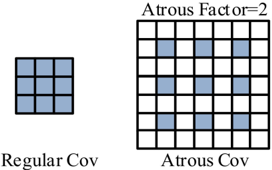
“In this paper, atrous convolution [40] is unitized to increase the receptive fields of the network for detecting large defects.”
MethodA survey of deep neural network architectures and their applications
Liu, W., Wang, Z., Liu, X., Zeng, N., Liu, Y., & Alsaadi, F. E. (2017) · Neurocomputing · doi:10.1016/j.neucom.2016.12.038 · Cited by 3,239 · cited 1×
“AE networks are widely used for information coding and reconstruction [37].”
BackgroundSelf-citationCha, Y., Choi, W., Suh, G., Mahmoudkhani, S., & Büyüköztürk, O. (2018) · Computer-Aided Civil and Infrastructure Engineering · doi:10.1111/mice.12334 · Cited by 1,558 · cited 1×
“[33] developed a structural damage detection method based on Faster R-CNN to detect five types of surface damages: concrete cracks, steel corrosion (medium and high levels), bolt corrosion, and steel delamination.”
MethodSong, K., & Yan, Y. (2013) · Applied Surface Science · doi:10.1016/j.apsusc.2013.09.002 · Cited by 1,026 · cited 2×
“These machine vision-based inspection systems occur in many industrial applications, such as steel strip inspection [2,3], liquid crystal display (LCD) inspection [4], fabric inspection [5,6], aluminum profiles [7], railway track inspection [8], food inspection [9], and optical components inspection [10].”
BackgroundImage deformation using moving least squares
Schaefer, S., McPhail, T., & Warren, J. (2006) · ACM Transactions on Graphics · doi:10.1145/1141911.1141920 · Cited by 674
Jia, F., Lei, Y., Lu, N., & Xing, S. (2018) · Mechanical Systems and Signal Processing · doi:10.1016/j.ymssp.2018.03.025 · Cited by 587
Research works printed but not linked: 2
- Tastimur, 2016, Rail defect detection and classification with real time image processing technique, Int. J. Comput. Sci. Softw. Eng., 5, 283
- Kalaiselvi, 2015, A rapid automatic brain tumor detection method for MRI images using modified minimum error thresholding technique, Int. J. Imaging Syst. Technol., 1, 77
Cited by
A Brief Survey on Semantic Segmentation with Deep Learning
Hao, S., Zhou, Y., & Guo, Y. (2020) · Neurocomputing · doi:10.1016/j.neucom.2019.11.118 · Cited by 596
Survey on semantic segmentation using deep learning techniques
Lateef, F., & Ruichek, Y. (2019) · Neurocomputing · doi:10.1016/j.neucom.2019.02.003 · Cited by 559
“It has several applications in computer vision & artificial intelligence − autonomous driving [2, 3], robot navigation [4], industrial inspection [5]; remote sensing [6]; In cognitive and computational sciences − saliency object detection [7, 8]; In Agriculture sciences [9]; Fashion − categorizing…”
BackgroundAutomated Visual Defect Detection for Flat Steel Surface: A Survey
Luo, Q., Fang, X., Liu, L., Yang, C., & Sun, Y. (2020) · IEEE Transactions on Instrumentation and Measurement · doi:10.1109/tim.2019.2963555 · Cited by 559
“[116] proposed a novel cascaded AE (CASAE) framework to detect some complex defects under industrial environment, which converts test images into pixel-wise prediction mask based on semantic segmentation.”
BackgroundDeep Industrial Image Anomaly Detection: A Survey
Liu, J., Xie, G., Wang, J., Li, S., Wang, C., Zheng, F., & Jin, Y. (2024) · Machine Intelligence Research · doi:10.1007/s11633-023-1459-z · Cited by 463
Visual-Based Defect Detection and Classification Approaches for Industrial Applications—A SURVEY
Czimmermann, T., Ciuti, G., Milazzo, M., Chiurazzi, M., Roccella, S., Oddo, C. M., & Dario, P. (2020) · Sensors · doi:10.3390/s20051459 · Cited by 441
Metadata
- Authors
- Tao, X., Zhang, D., Ma, W., Liu, X., & Xu, D.
- Affiliations
- Chinese Academy of Sciences (CN)
- China University of Mining and Technology - Beijing (CN)
- Corresponding author
- Tao, Xian
- Venue
- Applied Sciences
- Publisher
- MDPI AG
- Published
- 2018-09-06
- Volume
- 8
- Issue
- 9
- Pages
- 1575
- ISSN
- 2076-3417 (ISSN-L)
- OpenAlex
- W2890747436
- Semantic Scholar
- 10447a2738ff7ac47f8d93c85222ee737412cf53
- Cited by
- 471
- References
- 43
- Citations by year
- 2026: 29 · 2025: 42 · 2024: 60 · 2023: 94 · 2022: 72 · 2021: 82 · 2020: 58 · 2019: 32 · 2018: 2
- FWCI
- 36.08
- Type
- journal article
- Language
- en
- Open access
- gold
- dx.doi.org
- Licence
- Locations
- Applied Sciences (publishedVersion, cc-by)
- ELARTU (Ternopil National Technical University) (submittedVersion)
- DOAJ (DOAJ: Directory of Open Access Journals) (submittedVersion, cc-by-sa)
- Funders
- National Natural Science Foundation of China (61703399, 61503376, 61673383)
- Topics
- Physical Sciences › Engineering › Industrial and Manufacturing Engineering › Industrial Vision Systems and Defect Detection
- Physical Sciences › Engineering › Mechanical Engineering › Non-Destructive Testing Techniques
- Physical Sciences › Engineering › Civil and Structural Engineering › Infrastructure Maintenance and Monitoring
- Keywords
- defect localization, defect classification, semantic segmentation, convolutional neural networks, manufacturing quality control, industrial inspection
About these checks
Registry, retraction, Cites and statistics results are computed, not judged, with one exception: a printed reference that no index lists is read once by a model before it counts as a citation error. Claims are extracted by a model and kept only when their quote appears verbatim in the text; each cited source is then checked, with a model’s help, for whether it says what the claim relies on. Those verdicts can be wrong — read the claim’s quote and the cited source before relying on one.
Statistics and arithmetic are recomputed, not judged.
Confidence bands are shown only for fields calibrated on our annotated test set. None is calibrated yet, so no band is shown.
What counts as a claim ›How we measure confidence ›How we check this ›
Are you an author, or do you see a problem with this page? Request a review
How to cite
Cite CoChat for the checks on this page, and the paper for its own findings.
- This page
- CoChat. (2026). Citation check: Automatic Metallic Surface Defect Detection and Recognition with Convolutional Neural Networks. https://app.cochat.ai/papers/10.3390/app8091575
- The paper
- Tao, X., Zhang, D., Ma, W., Liu, X., & Xu, D. (2018). Automatic Metallic Surface Defect Detection and Recognition with Convolutional Neural Networks. Applied Sciences. https://doi.org/10.3390/app8091575
Data sources
Bibliographic data: Semantic Scholar, OpenAlex, Crossref.
Contains information from the Semantic Scholar Academic Graph Datasets, made available under the ODC Attribution License (ODC-BY 1.0).
Semantic Scholar’s data is described in: Kinney, R., et al. (2023). The Semantic Scholar Open Data Platform. arXiv:2301.10140.
