

Automatic Metallic Surface Defect Detection and Recognition with Convolutional Neural Networks
Open accessThe DOI matches its Crossref record; 43 of the 43 references it cites were found in a registry or an index.
Abstract
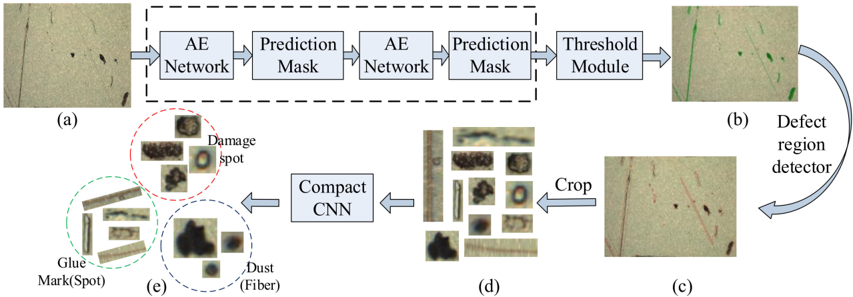
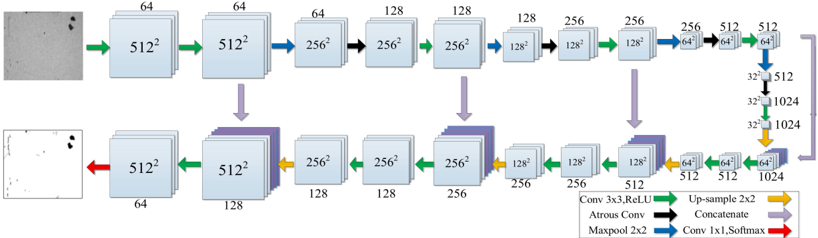
Automatic metallic surface defect inspection has received increased attention in relation to the quality control of industrial products. Metallic defect detection is usually performed against complex industrial scenarios, presenting an interesting but challenging problem. Traditional methods are based on image processing or shallow machine learning techniques, but these can only detect defects under specific detection conditions, such as obvious defect contours with strong contrast and low noise, at certain scales, or under specific illumination conditions. This paper discusses the automatic detection of metallic defects with a twofold procedure that accurately localizes and classifies defects appearing in input images captured from real industrial environments. A novel cascaded autoencoder (CASAE) architecture is designed for segmenting and localizing defects. The cascading network transforms the input defect image into a pixel-wise prediction mask based on semantic segmentation. The defect regions of segmented results are classified into their specific classes via a compact convolutional neural network (CNN). Metallic defects under various conditions can be successfully detected using an industrial dataset. The experimental results demonstrate that this method meets the robustness and accuracy requirements for metallic defect detection. Meanwhile, it can also be extended to other detection applications.
Overview
The claims and statistics of this paper haven’t been checked yet.
Free: it reads the open-access text and checks the first 5 claims that cite a source we can check. Create a free account to check every claim.
Integrity signals
Registry
Cites
Statistics
Figures

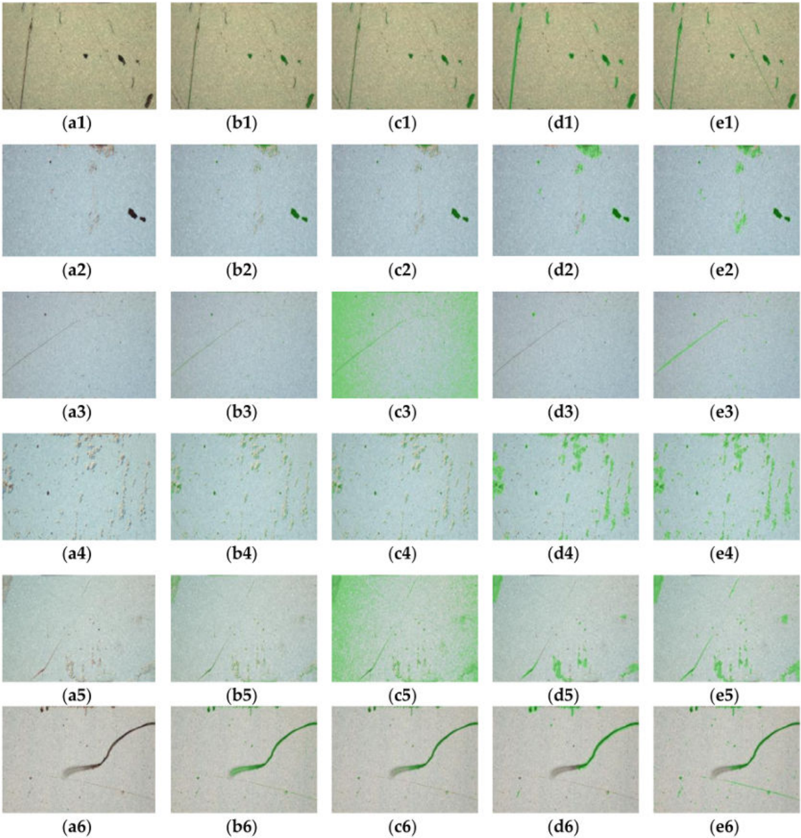
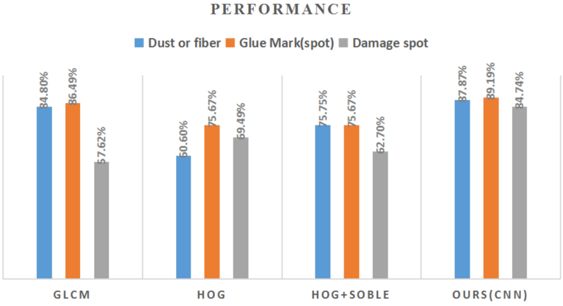
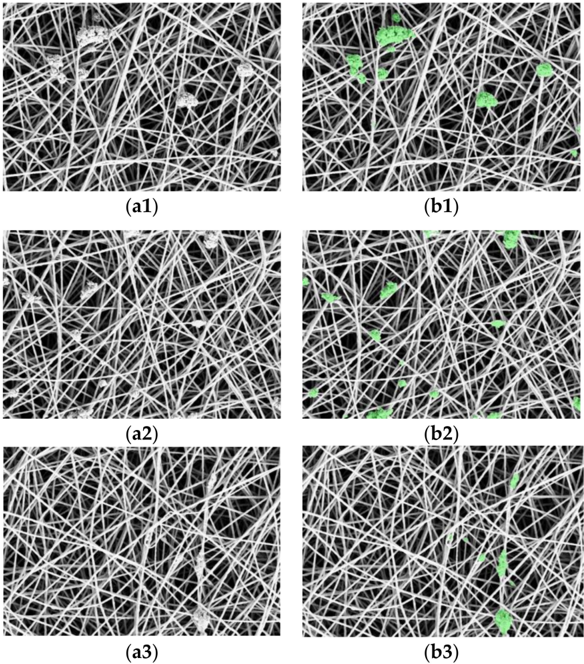
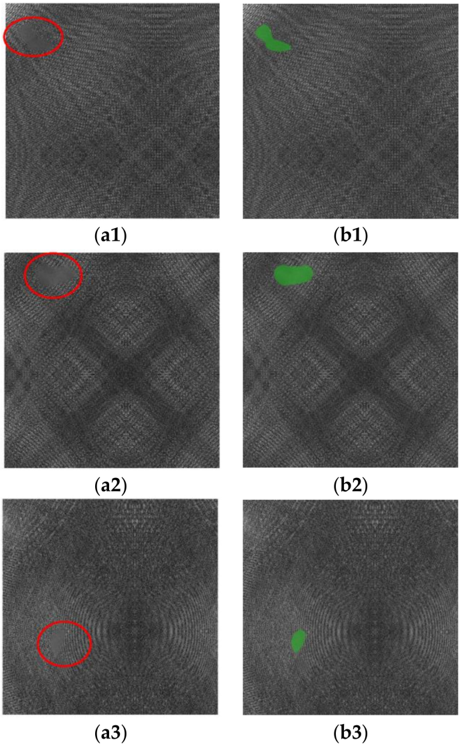
Verification
Claims the paper makes
The claims and statistics of this paper haven’t been checked yet.
Free: it reads the open-access text and checks the first 5 claims that cite a source we can check. Create a free account to check every claim.
Claims other papers make about this one
Each is checked against this paper’s own text: does it say what the citing paper says it does?
The check wasn’t confident either way, so it gives no verdict — never disputed.
In the citing paper
“Be of rotation and gray invariance, fast calculation speed.”
From Automated Visual Defect Classification for Flat Steel Surface: A Survey (2020) · cites this paper as [85]
Experimental — accuracy not yet measuredThe check wasn’t confident either way, so it gives no verdict — never disputed.
In the citing paper
“Sensitive to scale variation and noise interference.”
From Automated Visual Defect Classification for Flat Steel Surface: A Survey (2020) · cites this paper as [85]
Experimental — accuracy not yet measured
Self-check
Percentages, sums and reported differences re-computed from the paper’s own numbers.
The self-check needs the paper’s full text.
Citations
Cites
Deep Residual Learning for Image Recognition
He, K., Zhang, X., Ren, S., & Sun, J. (2016) · 2016 IEEE Conference on Computer Vision and Pattern Recognition (CVPR) · doi:10.1109/cvpr.2016.90 · Cited by 235,474 · cited 1×
“Our proposed CNN is a compact network that is smaller than the classic classification networks such as GoogleNet [41] and ResNet [42].”
MethodVery Deep Convolutional Networks for Large-Scale Image Recognition
Simonyan, K., & Zisserman, A. (2014) · arXiv · doi:10.48550/arxiv.1409.1556 · Cited by 114,148 · cited 1×
“We double the number of features after each max pooling layer in order to reduce the loss of semantic information [38,39].”
Going deeper with convolutions
Szegedy, C., Liu, W., Jia, Y., Sermanet, P., Reed, S., Anguelov, D., Erhan, D., Vanhoucke, V., & Rabinovich, A. (2015) · 2015 IEEE Conference on Computer Vision and Pattern Recognition (CVPR) · doi:10.1109/cvpr.2015.7298594 · Cited by 48,562
TensorFlow: A system for large-scale machine learning
Abadi, M., Barham, P., Chen, J., Chen, Z., Davis, A., Dean, J., Devin, M., Ghemawat, S., Irving, G., Isard, M., et al. (2016) · arXiv (Cornell University) · doi:10.48550/arxiv.1605.08695 · Cited by 11,822
Rethinking Atrous Convolution for Semantic Image Segmentation
Chen, L.-C., Papandreou, G., Schroff, F., & Adam, H. (2017) · arXiv · doi:10.48550/arxiv.1706.05587 · Cited by 7,517 · cited 1×
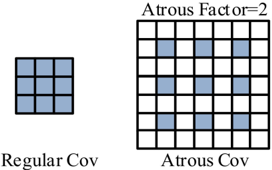
“In this paper, atrous convolution [40] is unitized to increase the receptive fields of the network for detecting large defects.”
MethodA survey of deep neural network architectures and their applications
Liu, W., Wang, Z., Liu, X., Zeng, N., Liu, Y., & Alsaadi, F. E. (2017) · Neurocomputing · doi:10.1016/j.neucom.2016.12.038 · Cited by 3,239 · cited 1×
“AE networks are widely used for information coding and reconstruction [37].”
BackgroundSelf-citationCha, Y., Choi, W., Suh, G., Mahmoudkhani, S., & Büyüköztürk, O. (2018) · Computer-Aided Civil and Infrastructure Engineering · doi:10.1111/mice.12334 · Cited by 1,558 · cited 1×
“[33] developed a structural damage detection method based on Faster R-CNN to detect five types of surface damages: concrete cracks, steel corrosion (medium and high levels), bolt corrosion, and steel delamination.”
MethodSong, K., & Yan, Y. (2013) · Applied Surface Science · doi:10.1016/j.apsusc.2013.09.002 · Cited by 1,026 · cited 2×
“These machine vision-based inspection systems occur in many industrial applications, such as steel strip inspection [2,3], liquid crystal display (LCD) inspection [4], fabric inspection [5,6], aluminum profiles [7], railway track inspection [8], food inspection [9], and optical components inspection [10].”
BackgroundImage deformation using moving least squares
Schaefer, S., McPhail, T., & Warren, J. (2006) · ACM Transactions on Graphics · doi:10.1145/1141911.1141920 · Cited by 674
Jia, F., Lei, Y., Lu, N., & Xing, S. (2018) · Mechanical Systems and Signal Processing · doi:10.1016/j.ymssp.2018.03.025 · Cited by 587
Research works printed but not linked: 2
- Tastimur, 2016, Rail defect detection and classification with real time image processing technique, Int. J. Comput. Sci. Softw. Eng., 5, 283
- Kalaiselvi, 2015, A rapid automatic brain tumor detection method for MRI images using modified minimum error thresholding technique, Int. J. Imaging Syst. Technol., 1, 77
Cited by
A Brief Survey on Semantic Segmentation with Deep Learning
Hao, S., Zhou, Y., & Guo, Y. (2020) · Neurocomputing · doi:10.1016/j.neucom.2019.11.118 · Cited by 596
Survey on semantic segmentation using deep learning techniques
Lateef, F., & Ruichek, Y. (2019) · Neurocomputing · doi:10.1016/j.neucom.2019.02.003 · Cited by 559
“It has several applications in computer vision & artificial intelligence − autonomous driving [2, 3], robot navigation [4], industrial inspection [5]; remote sensing [6]; In cognitive and computational sciences − saliency object detection [7, 8]; In Agriculture sciences [9]; Fashion − categorizing…”
BackgroundAutomated Visual Defect Detection for Flat Steel Surface: A Survey
Luo, Q., Fang, X., Liu, L., Yang, C., & Sun, Y. (2020) · IEEE Transactions on Instrumentation and Measurement · doi:10.1109/tim.2019.2963555 · Cited by 559
“[116] proposed a novel cascaded AE (CASAE) framework to detect some complex defects under industrial environment, which converts test images into pixel-wise prediction mask based on semantic segmentation.”
BackgroundDeep Industrial Image Anomaly Detection: A Survey
Liu, J., Xie, G., Wang, J., Li, S., Wang, C., Zheng, F., & Jin, Y. (2024) · Machine Intelligence Research · doi:10.1007/s11633-023-1459-z · Cited by 463
Visual-Based Defect Detection and Classification Approaches for Industrial Applications—A SURVEY
Czimmermann, T., Ciuti, G., Milazzo, M., Chiurazzi, M., Roccella, S., Oddo, C. M., & Dario, P. (2020) · Sensors · doi:10.3390/s20051459 · Cited by 441
Image-Based Surface Defect Detection Using Deep Learning: A Review
Bhatt, P. M., Malhan, R. K., Rajendran, P., Shah, B. C., Thakar, S., Yoon, Y. J., & Gupta, S. K. (2021) · Journal of Computing and Information Science in Engineering · doi:10.1115/1.4049535 · Cited by 362
Mobile-Unet: An efficient convolutional neural network for fabric defect detection
Jing, J., Wang, Z., Rätsch, M., & Zhang, H. (2022) · Textile Research Journal · doi:10.1177/0040517520928604 · Cited by 324
Computer vision framework for crack detection of civil infrastructure—A review
Ai, D., Jiang, G., Lam, S.-K., He, P., & Li, C. (2023) · Engineering Applications of Artificial Intelligence · doi:10.1016/j.engappai.2022.105478 · Cited by 297
Review of surface defect detection of steel products based on machine vision
Tang, B., Chen, L., Sun, W., & Lin, Z. (2023) · IET Image Processing · doi:10.1049/ipr2.12647 · Cited by 271
Khanam, R., Hussain, M., Hill, R., & Allen, P. (2024) · IEEE Access · doi:10.1109/access.2024.3425166 · Cited by 237
Automated defect inspection system for metal surfaces based on deep learning and data augmentation
Yun, J. P., Shin, W. C., Koo, G., Kim, M. S., Lee, C., & Lee, S. J. (2020) · Journal of Manufacturing Systems · doi:10.1016/j.jmsy.2020.03.009 · Cited by 268
Li, W., Zhang, H., Wang, G., Xiong, G., Zhao, M., Li, G., & Li, R. (2023) · Robotics and Computer-Integrated Manufacturing · doi:10.1016/j.rcim.2022.102470 · Cited by 266
A Review on Deep Learning Applications in Prognostics and Health Management
Zhang, L., Lin, J., Liu, B., Zhang, Z., Yan, X., & Wei, M. (2019) · IEEE Access · doi:10.1109/access.2019.2950985 · Cited by 232
“trained a compact CNN from scratch with only 50 raw images to diagnose metallic surface defects [139].”
MethodMasked Swin Transformer Unet for Industrial Anomaly Detection
Jiang, J., Zhu, J., Bilal, M., Cui, Y., Kumar, N., Dou, R., Su, F., & Xu, X. (2023) · IEEE Transactions on Industrial Informatics · doi:10.1109/tii.2022.3199228 · Cited by 191
“Using this elegant U-shaped structure, many anomaly detection-based methods have been proposed, such as the multiscale convolutional denoising au-toencoder [7], cascaded autoencoder architecture[8], etc.”
MethodConvolutional Neural Network in Medical Image Analysis: A Review
Kshatri, S. S., & Singh, D. (2023) · Archives of Computational Methods in Engineering · doi:10.1007/s11831-023-09898-w · Cited by 172
Chen, J., Zhou, M., Huang, H., Zhang, D., & Peng, Z. (2021) · International Journal of Rock Mechanics and Mining Sciences · doi:10.1016/j.ijrmms.2021.104745 · Cited by 176
Self-citationUrbonas, A., Raudonis, V., Maskeliūnas, R., & Damaševičius, R. (2019) · Applied Sciences · doi:10.3390/app9224898 · Cited by 158
Deep Learning for Automatic Vision-Based Recognition of Industrial Surface Defects: A Survey
Prunella, M., Scardigno, R. M., Buongiorno, D., Brunetti, A., Longo, N., Carli, R., Dotoli, M., & Bevilacqua, V. (2023) · IEEE Access · doi:10.1109/access.2023.3271748 · Cited by 196
Research Progress of Automated Visual Surface Defect Detection for Industrial Metal Planar Materials
Fang, X., Luo, Q., Zhou, B., Li, C., & Tian, L. (2020) · Sensors · doi:10.3390/s20185136 · Cited by 160
“To break through this limitation, Tao et al. [123] established a cascaded autoencoder (CASAE) framework for connecting the two subtasks of defect detection and classification in complex industrial environments.”
BackgroundImage-based defect detection in lithium-ion battery electrode using convolutional neural networks
Badmos, O., Kopp, A., Bernthaler, T., & Schneider, G. (2019) · Journal of Intelligent Manufacturing · doi:10.1007/s10845-019-01484-x · Cited by 173
Automated Visual Defect Classification for Flat Steel Surface: A Survey
Luo, Q., Fang, X., Su, J., Zhou, J., Zhou, B., Yang, C., Liu, L., Gui, W., & Tian, L. (2020) · IEEE Transactions on Instrumentation and Measurement · doi:10.1109/tim.2020.3030167 · Cited by 148
Islam, M. M. M., & Kim, J.-M. (2019) · Sensors · doi:10.3390/s19194251 · Cited by 142
Zipfel, J., Verworner, F., Fischer, M., Wieland, U., Kraus, M., & Zschech, P. (2023) · Computers & Industrial Engineering · doi:10.1016/j.cie.2023.109045 · Cited by 136
Metal Additive Manufacturing Parts Inspection Using Convolutional Neural Network
Cui, W., Zhang, Y., Zhang, X., Li, L., & Liou, F. (2020) · Applied Sciences · doi:10.3390/app10020545 · Cited by 124
Steel Surface Defect Classification Using Deep Residual Neural Network
Konovalenko, I., Maruschak, P., Brezinová, J., Viňáš, J., & Brezina, J. (2020) · Metals · doi:10.3390/met10060846 · Cited by 118
“This eliminates the problem of technological differences inherent in defects [21,22].”
BackgroundDemystifying MLOps and Presenting a Recipe for the Selection of Open-Source Tools
Ruf, P., Madan, M., Reich, C., & Ould-Abdeslam, D. (2021) · Applied Sciences · doi:10.3390/app11198861 · Cited by 112
Gao, Y., Gao, L., & Li, X. (2020) · IEEE Transactions on Industrial Informatics · doi:10.1109/tii.2020.3008703 · Cited by 117
“In this section, the proposed method is compared with conventional defect recognition methods and low-quality defect recognition methods, including CNN [21], Alexnet, artificial neural network (ANN), SVM, Gaussian pyramid convolutional neural network (GP-CNN) [12], PDDNET [28], and CASAE [22].”
MethodSMD LED chips defect detection using a YOLOv3-dense model
Chen, S., & Tsai, C.-C. (2021) · Advanced Engineering Informatics · doi:10.1016/j.aei.2021.101255 · Cited by 110
Cohn, R., & Holm, E. A. (2021) · Integrating materials and manufacturing innovation · doi:10.1007/s40192-021-00205-8 · Cited by 123
A learning-based approach for surface defect detection using small image datasets
Le, X., Mei, J., Zhang, H., Zhou, B., & Xi, J. (2020) · Neurocomputing · doi:10.1016/j.neucom.2019.09.107 · Cited by 105
Surface defect detection of steel strips based on classification priority YOLOv3-dense network
Zhang, J., Kang, X., Ni, H., & Ren, F. (2020) · Ironmaking & Steelmaking Processes Products and Applications · doi:10.1080/03019233.2020.1816806 · Cited by 106
“In addition, some other deep learning network models have also been used in the fi eld of steel strip surface defect detection, such as CNN [10 – 13], Pyramid Feature Fusion and Global Context Attention Network (PGA-Net) [14], and semi-supervised convolutional neural network [15,16], generating a…”
MethodLu, C., Lyu, J., Zhang, L., Gong, A., Fan, Y., Yan, J., & Li, X. (2020) · IEEE Access · doi:10.1109/access.2020.3032529 · Cited by 112
“industrial defect detection [31], [32], and so on, to reduce human labor cost and improve life quality.”
BackgroundZhang, H., Li, S., Miao, Q., Fang, R., Song, X., Hu, Q., Hu, J., & Chan, S. (2024) · Scientific Reports · doi:10.1038/s41598-024-57990-3 · Cited by 104
Surface Defect Detection Algorithm Based on Feature-Enhanced YOLO
Xie, Y., Hu, W., Xie, S., & He, L. (2022) · Cognitive Computation · doi:10.1007/s12559-022-10061-z · Cited by 98
“To transform the input defect image into a pixel-level predictive mask based on semantic segmentation, a new cascading autoencoder (CASAE) structure was studied, which realized the segmentation, location, and classification of defects [13].”
MethodWeld Defect Detection Based on Deep Learning Method
Zhang, H., Chen, Z., Zhang, C., Xi, J., & Le, X. (2019) · IEEE International Conference on Automation Science and Engineering (CASE) · doi:10.1109/coase.2019.8842998 · Cited by 91
“It exists in a wide range of manufacturing industries and has caught a major attention from researchers, such as textile industry [1], steel industry [2], and civil infrastructure [3].”
BackgroundYoukachen, S., Ruchanurucks, M., Phatrapomnant, T., & Kaneko, H. (2019) · 2019 10th International Conference of Information and Communication Technology for Embedded Systems (IC-ICTES) · doi:10.1109/ictemsys.2019.8695928 · Cited by 87
Research of U-Net-Based CNN Architectures for Metal Surface Defect Detection
Konovalenko, І. V., Maruschak, P. O., Brezinová, J., Prentkovskis, O., & Brezina, J. (2022) · Machines · doi:10.3390/machines10050327 · Cited by 86
Tan, D. S., Chen, Y.-C., Chen, T. P.-C., & Chen, W.-C. (2021) · IEEE Winter Conference on Applications of Computer Vision · doi:10.1109/wacv48630.2021.00032 · Cited by 95
“Techniques for defect detection can be broadly grouped into: classification-based [11,24,32,35,36], detection-based [10, 37], segmentation-based [7, 10, 17, 20, 28, 38–40], and reconstruction-based [3, 5, 6, 23, 25, 34, 41, 46].”
Guan, S., Lei, M., & Lü, H. (2020) · IEEE Access · doi:10.1109/access.2020.2979755 · Cited by 88
“It could be widely used in various domains [21]–[23].”
BackgroundHoffmann, R., & Reich, C. (2023) · Electronics · doi:10.3390/electronics12224572 · Cited by 80
One-Shot Recognition of Manufacturing Defects in Steel Surfaces
Deshpande, A. M., Minai, A. A., & Kumar, M. (2020) · Procedia Manufacturing · doi:10.1016/j.promfg.2020.05.146 · Cited by 89
Abinaya, S., Kumar, K., & Alphonse, A. S. (2023) · IEEE Access · doi:10.1109/access.2023.3312718 · Cited by 79
“two separate models, the Symmetric Autoencoder (SAE) [9], [17] and Attention Residual U-Net (ARU-Net) [4], [24] as presented in Fig.”
MethodFaNet: Feature-aware network for few shot classification of strip steel surface defects
Zhao, W., Song, K., Wang, Y., Liang, S., & Yan, Y. (2023) · Measurement · doi:10.1016/j.measurement.2023.112446 · Cited by 75
Machine vision based fault diagnosis of photovoltaic modules using lazy learning approach
Sridharan, N. V., & Sugumaran, V. (2022) · Measurement · doi:10.1016/j.measurement.2022.110786 · Cited by 70
Attention-Guided Multitask Learning for Surface Defect Identification
Sampath, V., Maurtua, I., Martín, J. J. A., Rivera, A., Molina, J., & Gutierrez, A. (2023) · IEEE Transactions on Industrial Informatics · doi:10.1109/tii.2023.3234030 · Cited by 69
“Tao et al. [18] designed cascaded autoencoder (CASAE) architecture to segment and localize defect region.”
BackgroundAutomatic Fabric Defect Detection Based on an Improved YOLOv5
Jin, R., & Niu, Q. (2021) · Mathematical Problems in Engineering · doi:10.1155/2021/7321394 · Cited by 75
“[22] studied the problem of metallic surface defect detection that is similar to fabric defect detection.”
BackgroundRamalingam, B., Vega-Heredia, M., Elara, M. R., Vengadesh, A., Lakshmanan, A. K., Ilyas, M., & James, T. J. Y. (2019) · International Journal of Aerospace Engineering · doi:10.1155/2019/5137139 · Cited by 74
“In [28], Tao et al. prove that their compact CNNs have achieve better detection in the texture-based trained network than the content image.”
BackgroundMethodInfluentialA Method of Defect Detection for Focal Hard Samples PCB Based on Extended FPN Model
Li, C., Qu, Z., Wang, S., Bao, K.-H., & Wang, S. (2021) · IEEE Transactions on Components Packaging and Manufacturing Technology · doi:10.1109/tcpmt.2021.3136823 · Cited by 69
Image surface texture analysis and classification using deep learning
Aggarwal, A., & Kumar, M. (2020) · Multimedia Tools and Applications · doi:10.1007/s11042-020-09520-2 · Cited by 66
Wang, C., & Xiao, Z. (2021) · Agronomy · doi:10.3390/agronomy11081500 · Cited by 66
Qing-sheng, J., Tan, D., Li, Y., Ji, S., Cai, C., & Zheng, Q. (2019) · Applied Sciences · doi:10.3390/app10010087 · Cited by 69
“…by the Region of Interest(ROI) pooling layer, and the Softmax multi-classification and bounding box regression are directly output through the fully connected layer in the convolutional neural network; finally, the final output is obtained by the non-maximum suppression fine screening bounding box.”
MethodBlister Defect Detection Based on Convolutional Neural Network for Polymer Lithium-Ion Battery
Ma, L., Xie, W., & Zhang, Y. A. (2019) · Applied Sciences · doi:10.3390/app9061085 · Cited by 65
Liang, F., Zhao, L., Ren, Y., Wang, S., To, S., Abbas, Z., & Islam, M. S. (2024) · Computers in Industry · doi:10.1016/j.compind.2024.104109 · Cited by 64
Automatic Detection of Visual Faults on Photovoltaic Module Using Deep Ensemble Learning Network
Venkatesh, S. N., Jeyavadhanam, B. R., Sizkouhi, A. M. M., Esmailifar, S. M., Aghaei, M., & Sugumaran, V. (2022) · Energy Reports · doi:10.1016/j.egyr.2022.10.427 · Cited by 61
Deep Regression Neural Network for Industrial Surface Defect Detection
He, Z., & Liu, Q. (2020) · IEEE Access · doi:10.1109/access.2020.2975030 · Cited by 68
“In [19], Tao et al . propose a two-stage algorithm in which the first stage is using two cascaded auto-encoders to segment the defects, and the second stage is a CNN classifier to classify the defect regions cropped from the image using the region information provided by the first stage.”
BackgroundMethodA cascaded combination method for defect detection of metal gear end-face
Su, Y., Ping, Y., Yi, R., Chen, J., Hu, J., & Wen, C. (2022) · Journal of Manufacturing Systems · doi:10.1016/j.jmsy.2022.05.001 · Cited by 59
Chang, F., Liu, M., Dong, M., & Duan, Y. (2019) · Measurement Science and Technology · doi:10.1088/1361-6501/ab1467 · Cited by 56
CNN-Based Defect Inspection for Injection Molding Using Edge Computing and Industrial IoT Systems
Ha, H., & Jeong, J. (2021) · Applied Sciences · doi:10.3390/app11146378 · Cited by 60
Reference-Based Defect Detection Network
Zeng, Z., Liu, B., Fu, J., & Chao, H. (2021) · IEEE Transactions on Image Processing · doi:10.1109/tip.2021.3096067 · Cited by 63
“[35] focus on metallic defect detection, and propose a coarse-to-fine detection pipeline by first coarsely segments the defect area, then applying fine defect recognition.”
MethodA Systematic Review of Machine-Vision-Based Leather Surface Defect Inspection
Chen, Z., Deng, J., Zhu, Q., Wang, H., & Chen, Y. (2022) · Electronics · doi:10.3390/electronics11152383 · Cited by 61
“When a new problem arises, those thresholds need to be adjusted, or it may even be necessary to redesign the algorithms [6].”
BackgroundInfluentialIFIFusion: A independent feature information fusion model for surface defect detection
Zhou, X., Zhang, Y., Liu, Z., Jiang, Z., Ren, Z., Mi, T., & Zhou, S. (2025) · Information Fusion · doi:10.1016/j.inffus.2025.103039 · Cited by 59
Li, C., Zhang, X., Huang, Y., Tang, C., & Fatikow, S. (2020) · Computers & Industrial Engineering · doi:10.1016/j.cie.2020.106530 · Cited by 54
Deep Learning-Based Generic Automatic Surface Defect Inspection (ASDI) With Pixelwise Segmentation
Wu, X., Qiu, L., Gu, X., & Long, Z. (2020) · IEEE Transactions on Instrumentation and Measurement · doi:10.1109/tim.2020.3026801 · Cited by 51
“Tao et al. [12] proposed the automatic detection of metallic defects with a twofold procedure that accurately localizes and classifies defects appearing in input images captured from real industrial environments.”
BackgroundAn improved MobileNet-SSD algorithm for automatic defect detection on vehicle body paint
Zhang, J., Xu, J., Zhu, L., Zhang, K., Liu, T., Wang, D., & Wang, X. (2020) · Multimedia Tools and Applications · doi:10.1007/s11042-020-09152-6 · Cited by 50
“In terms of IOU, our method is in line with Paper [2].”
MethodAn Affordable Fast Early Warning System for Edge Computing in Assembly Line
Syafrudin, M., Fitriyani, N. L., Alfian, G., & Rhee, J. (2018) · Applied Sciences · doi:10.3390/app9010084 · Cited by 50
“Machine learning has been applied to manufacturing to differentiate carbon fiber fabric type [71], diagnose locomotion gait faults for reconfigurable robots [72], machine tool health status [73], early stage electrical fault detection in induction motors [74], sealing surface defect for chili oil production line [75],…”
MethodTout, K., Meguenani, A., Urban, J.-P., & Cudel, C. (2021) · The International Journal of Advanced Manufacturing Technology · doi:10.1007/s00170-020-06467-4 · Cited by 48
Convolutional Neural Network based Automatic Detection of Visible Faults in a Photovoltaic Module
Sridharan, N. V., & Sugumaran, V. (2021) · Energy Sources Part A Recovery Utilization and Environmental Effects · doi:10.1080/15567036.2021.1905753 · Cited by 48
“The architecture segments and localizes the defective regions while a compact CNN categorizes the defect classes (Tao et al. 2018).”
A Generic Automated Surface Defect Detection Based on a Bilinear Model
Zhou, F., Liu, G., Xu, F., & Deng, H. (2019) · Applied Sciences · doi:10.3390/app9153159 · Cited by 47
“The whole network is a typical bilinear model structure.”
BackgroundThe Performance Analysis of Transfer Learning for Steel Defect Detection by Using Deep Learning
Abu, M., Amir, A., Lean, Y. H., Zahri, N. A. H., & Azemi, S. N. (2021) · Journal of Physics Conference Series · doi:10.1088/1742-6596/1755/1/012041 · Cited by 50
“In Tao et al. (2018) [2], they discussed the procedure of accurately localizing and classifying defects that appeared on the surface of metallic.”
BackgroundMethodA survey on deep learning fundamentals
Tian, C., Cheng, T., Peng, Z., Zuo, W., Tian, Y., Zhang, Q., Wang, F., & Zhang, D. D. (2025) · Artificial Intelligence Review · doi:10.1007/s10462-025-11368-7 · Cited by 53
Self-citationKuric, I., Klarák, J., Sága, M., Císar, M., Hajdučík, A., & Więcek, D. (2021) · Sensors · doi:10.3390/s21217073 · Cited by 45
Automatic quality inspection in additive manufacturing using semi-supervised deep learning
Manivannan, S. (2022) · Journal of Intelligent Manufacturing · doi:10.1007/s10845-022-02000-4 · Cited by 48
“…& Seitz, 2021; Baumgartl et al., 2020; Gobert et al., 2018; Scime & Beuth, 2018; Xiao et al., 2020), steel surface inspection (He et al., 2019; Tao et al., 2018; Liu et al., 2020; Di et al., 2019; Lv et al., 2020; Soukup & Huber-Mörk, 2014; Zheng et al., 2020; Gao et al., 2020),…”
BackgroundImage data assessment approach for deep learning-based metal surface defect-detection systems
Lin, H.-I., & Wibowo, F. S. (2021) · IEEE Access · doi:10.1109/access.2021.3068256 · Cited by 43
“Using bright field illumination for imaging, Tao et al. [21] developed a recognition method using an autoencoder (AE) to position defects and determine whether they appear in the images.”
MethodDBF‐YOLO : UAV Small Targets Detection Based on Shallow Feature Fusion
Liu, H., Duan, X., Chen, H., Lou, H., & Deng, L. (2023) · IEEJ Transactions on Electrical and Electronic Engineering · doi:10.1002/tee.23758 · Cited by 43
“Small targets detection was widely used in intelligent driving [5], medical imaging [6], industrial defect detection [7] measurement, remote sensing images [8] and many other fields.”
BackgroundMIAD: A Maintenance Inspection Dataset for Unsupervised Anomaly Detection
Bao, T., Chen, J., Li, W., Wang, X., Fei, J., Wu, L., Zhao, R. J., & Ye, Z. (2023) · IEEE International Conference on Computer Vision Workshops · doi:10.1109/iccvw60793.2023.00106 · Cited by 56
“Manufacturing inspection is intended to find defect of products during manufacturing process in many industrial fields, such as electronics [13], metals [31], fabrics [28] and food [5].”
BackgroundChang, F., Dong, M., Liu, M., Wang, L., & Duan, Y. (2020) · IEEE Transactions on Instrumentation and Measurement · doi:10.1109/tim.2019.2962565 · Cited by 46
“Traditional image processing and shallow machine learning methods for object detection are non-robust to varied imaging conditions and sophisticated background [21], [22], [28].”
BackgroundDeep Generative Model Using Unregularized Score for Anomaly Detection With Heterogeneous Complexity
Matsubara, T., Sato, K., Hama, K., Tachibana, R., & Uehara, K. (2020) · IEEE Transactions on Cybernetics · doi:10.1109/tcyb.2020.3027724 · Cited by 47
Automatic defect detection of texture surface with an efficient texture removal network
Liang, Y., Xu, K., Zhou, P., & Zhou, D. (2022) · Advanced Engineering Informatics · doi:10.1016/j.aei.2022.101672 · Cited by 45
An End-to-End Defect Detection Method for Mobile Phone Light Guide Plate via Multitask Learning
Li, Y., & Li, J. (2021) · IEEE Transactions on Instrumentation and Measurement · doi:10.1109/tim.2021.3053987 · Cited by 42
“Similarly, Tao et al. [18] designed a new cascaded auto-encoder (CASAE) structure to segment and locate defects.”
BackgroundAttention-Based Multiscale Feature Fusion for Efficient Surface Defect Detection
Zhao, Y., Liu, Q., Su, H., Zhang, J., Ma, H., Zou, W., & Liu, S. (2024) · IEEE Transactions on Instrumentation and Measurement · doi:10.1109/tim.2024.3372229 · Cited by 69
Semantic Segmentation of Metal Surface Defects and Corresponding Strategies
Zhang, Z., Wang, W., & Tian, X. (2023) · IEEE Transactions on Instrumentation and Measurement · doi:10.1109/tim.2023.3282301 · Cited by 52
“To suppress noise interference, a cascade encoder [29] was proposed and used to segment metal surface defects.”
MethodResultVision-Based Surface Inspection System for Bearing Rollers Using Convolutional Neural Networks
Wen, S., Chen, Z., & Li, C. (2018) · Applied Sciences · doi:10.3390/app8122565 · Cited by 40
Wheel hub defect detection based on the DS-Cascade RCNN
Cheng, S., Lu, J., Yang, M., Zhang, S., Xu, Y., Zhang, D., & Wang, H. (2022) · Measurement · doi:10.1016/j.measurement.2022.112208 · Cited by 40
Self-citationInfrared Thermal Imaging-Based Turbine Blade Crack Classification Using Deep Learning
Jaeger, B. E., Schmid, S., Große, C. U., Gögelein, A., & Elischberger, F. (2022) · Journal of Nondestructive Evaluation · doi:10.1007/s10921-022-00907-9 · Cited by 44
“[15] a two-stage automatic detection of defects on metallic surfaces of industrial products is presented.”
BackgroundAboulhosn, Z., Musamih, A., Salah, K., Jayaraman, R., Omar, M., & Aung, Z. (2024) · IEEE Access · doi:10.1109/access.2024.3430113 · Cited by 43
“[17] proposed a deep CNN framework for image segmentation and classification of metallic surfaces, with an IoU score of 0.896.”
BackgroundInfluentialChen, W., Li, X., Gao, L., & Shen, W. (2020) · Applied Sciences · doi:10.3390/app10207292 · Cited by 39
TAS 2 -Net: Triple-Attention Semantic Segmentation Network for Small Surface Defect Detection
Liu, T., & He, Z. (2022) · IEEE Transactions on Instrumentation and Measurement · doi:10.1109/tim.2022.3142023 · Cited by 57
“Tao et al. [21] develop a cascaded autoencoder architecture based on semantic segmentation for segmenting and localizing metallic surface defects.”
BackgroundJang, J., Shin, M., Lim, S., Park, J., Kim, J., & Paik, J. (2019) · Sensors · doi:10.3390/s19214738 · Cited by 40
Deep Learning Strategies for Industrial Surface Defect Detection Systems
Martin, D., Heinzel, S., von Bischhoffshausen, J. K., & Kühl, N. (2022) · Hawaii International Conference on System Sciences (HICSS) · doi:10.24251/hicss.2022.146 · Cited by 37
Automated detection of textured-surface defects using UNet-based semantic segmentation network
Enshaei, N., Ahmad, S., & Naderkhani, F. (2020) · IEEE Conference on Prognostics and Health Management · doi:10.1109/icphm49022.2020.9187023 · Cited by 41
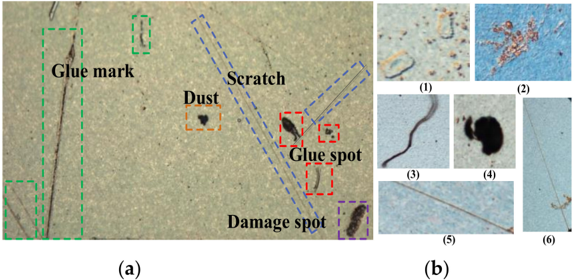
“For example, in [14], a deep CNN model was trained to detect three classes of surface defects including damage spot, glue mark and dust/ fiber spot on a data set of defective flat metallic surfaces.”
MethodDetection of Surface Defects in Ceramic Tiles With Complex Texture
Zhang, H., Peng, L., Yu, S. W., & Qu, W. (2021) · IEEE Access · doi:10.1109/access.2021.3093090 · Cited by 37
Liu, B.-H., Zhang, T., Yao, Y., & Miao, L. (2023) · Computers in Industry · doi:10.1016/j.compind.2023.103963 · Cited by 39
Hu, W., Wang, T., Wang, Y., Chen, Z., & Huang, G. (2021) · The Visual Computer · doi:10.1007/s00371-021-02210-6 · Cited by 35
Defects Recognition Algorithm Development from Visual UAV Inspections
Avdelidis, N. P., Tsourdos, A., Lafiosca, P., Plaster, R., Plaster, A., & Droznika, M. (2022) · Sensors · doi:10.3390/s22134682 · Cited by 36
Wang, C., Shu, L., Geng, S., Zhou, Q., & Cao, L. (2023) · Optics & Laser Technology · doi:10.1016/j.optlastec.2023.110266 · Cited by 34
Defect Detection on Rolling Element Surface Scans Using Neural Image Segmentation
Prappacher, N., Bullmann, M., Bohn, G., Deinzer, F., & Linke, A. (2020) · Applied Sciences · doi:10.3390/app10093290 · Cited by 34
From Anomaly Detection to Defect Classification
Klarák, J., Andok, R., Malík, P., Kuric, I., Ritomský, M., Klačková, I., & Tsai, H. (2024) · Sensors · doi:10.3390/s24020429 · Cited by 34
“The paper with a description of detection and classification applied for metallic surface defect detection is in [20].”
BackgroundInfluentialMobile-Deeplab: a lightweight pixel segmentation-based method for fabric defect detection
Bai, Z., & Jing, J. (2023) · Journal of Intelligent Manufacturing · doi:10.1007/s10845-023-02205-1 · Cited by 33
“However, the detection requires two stages, and the detection time cannot meet the real-time requirement (Tao et al., 2018).”
Pixel-Wise Fabric Defect Detection by CNNs Without Labeled Training Data
Wang, Z., & Jing, J. (2020) · IEEE Access · doi:10.1109/access.2020.3021189 · Cited by 35
“In recent years, many image segmentation network models have been proposed, and these models have achieved amazing results in general image segmentation [7]–[9].”
BackgroundA two-stage CNN for automated tire defect inspection in radiographic image
Zheng, Z., Zhang, S., Shen, J., Shao, Y., & Zhang, Y. (2021) · Measurement Science and Technology · doi:10.1088/1361-6501/ac13f8 · Cited by 33
Metadata
- Authors
- Tao, X., Zhang, D., Ma, W., Liu, X., & Xu, D.
- Affiliations
- Chinese Academy of Sciences (CN)
- China University of Mining and Technology - Beijing (CN)
- Corresponding author
- Tao, Xian
- Venue
- Applied Sciences
- Publisher
- MDPI AG
- Published
- 2018-09-06
- Volume
- 8
- Issue
- 9
- Pages
- 1575
- ISSN
- 2076-3417 (ISSN-L)
- OpenAlex
- W2890747436
- Semantic Scholar
- 10447a2738ff7ac47f8d93c85222ee737412cf53
- Cited by
- 471
- References
- 43
- Citations by year
- 2026: 29 · 2025: 42 · 2024: 60 · 2023: 94 · 2022: 72 · 2021: 82 · 2020: 58 · 2019: 32 · 2018: 2
- FWCI
- 36.08
- Type
- journal article
- Language
- en
- Open access
- gold
- dx.doi.org
- Licence
- Locations
- Applied Sciences (publishedVersion, cc-by)
- ELARTU (Ternopil National Technical University) (submittedVersion)
- DOAJ (DOAJ: Directory of Open Access Journals) (submittedVersion, cc-by-sa)
- Funders
- National Natural Science Foundation of China (61703399, 61503376, 61673383)
- Topics
- Physical Sciences › Engineering › Industrial and Manufacturing Engineering › Industrial Vision Systems and Defect Detection
- Physical Sciences › Engineering › Mechanical Engineering › Non-Destructive Testing Techniques
- Physical Sciences › Engineering › Civil and Structural Engineering › Infrastructure Maintenance and Monitoring
- Keywords
- defect localization, defect classification, semantic segmentation, convolutional neural networks, manufacturing quality control, industrial inspection
About these checks
Registry, retraction, Cites and statistics results are computed, not judged, with one exception: a printed reference that no index lists is read once by a model before it counts as a citation error. Claims are extracted by a model and kept only when their quote appears verbatim in the text; each cited source is then checked, with a model’s help, for whether it says what the claim relies on. Those verdicts can be wrong — read the claim’s quote and the cited source before relying on one.
Statistics and arithmetic are recomputed, not judged.
Confidence bands are shown only for fields calibrated on our annotated test set. None is calibrated yet, so no band is shown.
What counts as a claim ›How we measure confidence ›How we check this ›
Are you an author, or do you see a problem with this page? Request a review
Data sources
Bibliographic data: Semantic Scholar, OpenAlex, Crossref.
Contains information from the Semantic Scholar Academic Graph Datasets, made available under the ODC Attribution License (ODC-BY 1.0).
Semantic Scholar’s data is described in: Kinney, R., et al. (2023). The Semantic Scholar Open Data Platform. arXiv:2301.10140.
