

The DOI matches its Crossref record; 32 of the 32 references it cites were found in a registry or an index.
Experience Design, Virtual Reality and Media Hybridization for the Digital Communication Inside Museums
Abstract
Experience design, both in real and in virtual museums, is very complex to be planned, even more when digital contents are juxtaposed to real collections. Researchers in this field, curators, creatives and software developers must work together in order to evolve towards a more efficient interconnection among visitors, collections and digital applications. This paper deals with such an interconnection, providing a theoretical background and practical guidelines, on the basis of museum studies and of the author’s research experience in this domain, supported by the results of surveys carried out on European museums visitors dealing with digital technologies. Media hybridization has a long and evolving tradition and it can contribute to transmit culture in engaging way to the public, respecting the scientific plausibility of contents. The choice of narrative structures and styles, as well as of interaction paradigms and technologies, is deeply conditioned by a series of factors that will be examined in detail. A general “direction” is needed to arouse in the visitor a feeling of confidence and trust, expectation and discovery that makes him/her feel at the center of an emotional and creative experience, of a progressive appropriation of meaning. Various typologies of experiences will be discussed and compared.
Overview
The claims and statistics of this paper haven’t been checked yet.
Run the check — free, no account needed. It reads the open-access text and checks the sources it cites.
Integrity signals
Registry
Cites
Statistics
Figures
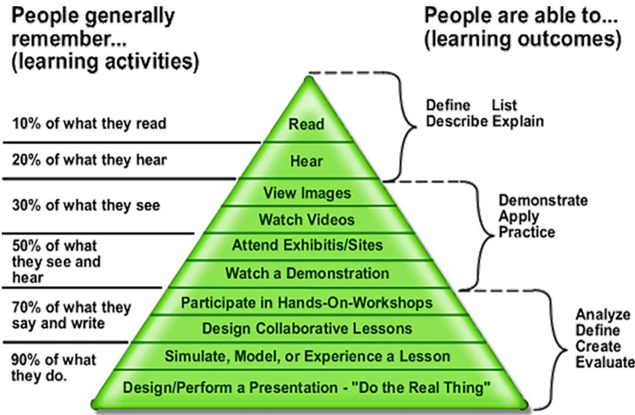
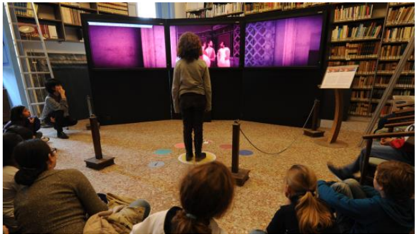
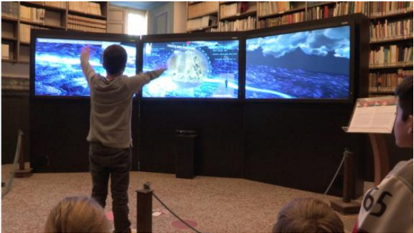
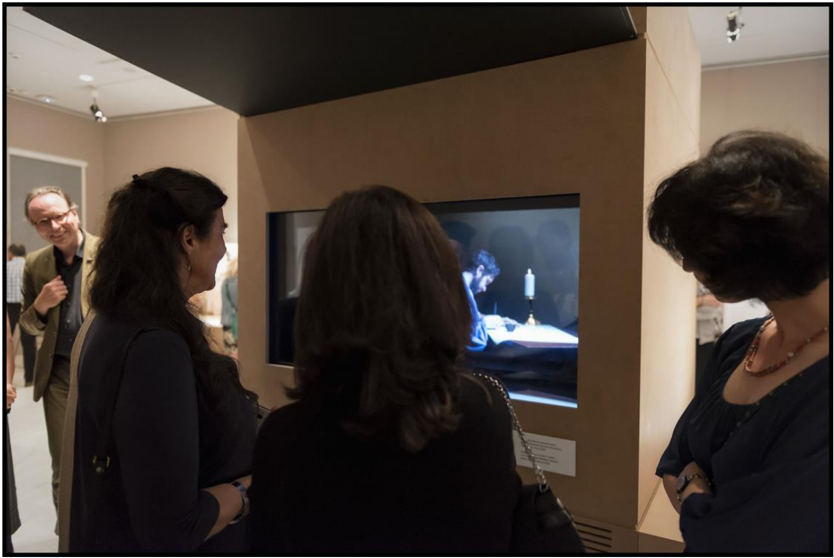
Verification
Claims the paper makes
The claims and statistics of this paper haven’t been checked yet.
Run the check — free, no account needed. It reads the open-access text and checks the sources it cites.
Claims other papers make about this one
Each is checked against this paper’s own text: does it say what the citing paper says it does?
In the citing paper
“Case studies of digital initiatives further underscore the importance of collaboration and communication across functional groups (Cachia, 2014;Petrelli et al., 2016;Pietroni, 2019), suggesting that institutional change depends as much on cultural negotiation as on technical innovation.”
From From platform governance to institutional practice: Experimentation, misalignment, and contingent adoption of Google Arts & Culture (2025) · cites this paper as Pietroni, 2019
In the citing paper
“Ultimately, it was internal dynamics, more than the affordances of GA&C itself, that most profoundly shaped how institutions engaged with the platform, echoing previous findings that successful digital initiatives in museums hinge as much on organizational conditions as on technical capacity (Cachia, 2014;Petrelli et al., 2016;Pietroni, 2019).”
From From platform governance to institutional practice: Experimentation, misalignment, and contingent adoption of Google Arts & Culture (2025) · cites this paper as Pietroni, 2019
Self-check
Percentages, sums and reported differences re-computed from the paper’s own numbers.
The self-check needs the paper’s full text.
Citations
Cites
The Embodied Mind: Cognitive Science and Human Experience
Varela, F. J., Rosch, E., & Thompson, E. (1991) · doi:10.7551/mitpress/6730.001.0001 · Cited by 5,765
A Taxonomy of Mixed Reality Visual Displays
Milgram, P., & Kishino, F. (1994) · IEICE Transactions on Information and Systems · Cited by 4,905
(2006) · doi:10.1080/01449290500330331 · Cited by 3,026
Burdea, G., & Coiffet, P. (2003) · Presence: Teleoperators and Virtual Environments · doi:10.1162/105474603322955950 · Cited by 2,315
Popper, K. R., & Eccles, J. C. (1977) · Springer eBooks · doi:10.1007/978-3-642-61891-8 · Cited by 2,196
Understanding, scoping and defining user experience: a survey approach
Law, E. L.-C., Roto, V., Hassenzahl, M., Vermeeren, A. P. O. S., & Kort, J. (2009) · Proceedings of the SIGCHI Conference on Human Factors in Computing Systems · doi:10.1145/1518701.1518813 · Cited by 1,127
The Thing and I: Understanding the Relationship Between User and Product
Hassenzahl, M. (2003) · Human-Computer Interaction Series · doi:10.1007/1-4020-2967-5_4 · Cited by 1,097
Understanding experience in interactive systems
Forlizzi, J., & Battarbee, K. (2004) · Proceedings of the 5th conference on Designing interactive systems: processes, practices, methods, and techniques · doi:10.1145/1013115.1013152 · Cited by 925
Needs, affect, and interactive products – Facets of user experience
Hassenzahl, M., Diefenbach, S., & Göritz, A. (2010) · Interacting with Computers · doi:10.1016/j.intcom.2010.04.002 · Cited by 867
Hooper-Greenhill, E. (2007) · Routledge eBooks · doi:10.4324/9780203937525 · Cited by 398
Research works printed but not linked: 10
- Goleman, D. (1996). Emotional Intelligence: Why It Can Matter More Than IQ, Bloomsbury.
- Veneziani, M. (2001, January 4–6). Experientia. Lessico Intellettuale Europeo. Proceedings of the X Colloquio Internazionale, Roma, Italy.
- Norman, D. (2013). The Design of Everyday Things, Basic Book. Revised & Expanded Edition.
- Vayanou, M., Karvounis, M., Kyriakidi, M., Katifori, A., Manola, N., Roussou, M., and Ioannidis, Y. (2012, January 31). Towards Personalized Storytelling for Museum Visits. Proceedings of the 6th International Workshop on Personalized Access, Profile Management, and Context Awareness in Databases (PersDB 2012), Istanbul, Turkey.
- Forte, M., Pietroni, E., and Rufa, C. (2002, January 25–27). Musealising the Virtual: The Virtual Reality Project of the Scrovegni Chapel of Padua. Proceedings of the Eighth International Conference on Virtual Systems and Multimedia (VSMM) “Creative and Digital Culture”, Gyeongjiu, Korea.
- Pietroni, 2013, Natural Interaction in VR environments for Cultural Heritage: The virtual reconstruction of the Regolini Galassi Tomb in Cerveteri, Archeologia e Calcolatori, 24, 231
- Campana, 2015, Lucus Feroniae and Tiber Valley Virtual Museum: From documentation and 3D reconstruction, up to a novel approach in storytelling, combining virtual reality, theatrical and cinematographic rules, gesture-based interaction and “augmented” perception of the archaeological context, Proceedings of the 43rd Conference CAA 2015 Siena, Keep the Revolution Going, Siena, Italy, 30 March–3 April 2015, Volume 1, 67
- Ryan, M.L. (2001). Narrative as Virtual Reality: Immersion and Interactivity, Johns Hopkins University Press. Literature and Electronic Media.
- Al-Qawasmi, J., Chiuni, M.A., and El-Hakim, S. (2008). Cultural mirrors: An epistemological approach to artificial life for cultural heritage communication. Digital Media and its Applications in Cultural Heritage, CSAAR Press.
- Cochetti, 2018, Caracalla IVD: Un tuffo nel passato—Come nasce un progetto di visita immersive, Archeomatica, 2, 10
Cited by
Cao, T. L. (2025) · Platforms & Society · doi:10.1177/29768624251349092 · Cited by 5
Metadata
- Authors
- Pietroni, E.
- Affiliations
- CNR, Department of Human and Social Science and Cultural Heritage (DSU), Institute of Sciences for Cultural Heritage (CNR ISPC), 00015 Rome, Italy
- Venue
- Applied System Innovation
- Publisher
- MDPI AG
- Published
- 2019-10-30
- Volume
- 2
- Issue
- 4
- Pages
- 35
- ISSN
- 2571-5577
- Cited by
- 49
- References
- 32
- Language
- en
About these checks
Registry, retraction, Cites and statistics results are computed, not judged, with one exception: a printed reference that no index lists is read once by a model before it counts as a citation error. Claims are extracted by a model and kept only when their quote appears verbatim in the text; each cited source is then checked, with a model’s help, for whether it says what the claim relies on. Those verdicts can be wrong — read the claim’s quote and the cited source before relying on one.
Statistics and arithmetic are recomputed, not judged.
Confidence bands are shown only for fields calibrated on our annotated test set. None is calibrated yet, so no band is shown.
What counts as a claim ›How we measure confidence ›How we check this ›
Are you an author, or do you see a problem with this page? Request a review
Data sources
Bibliographic data: Semantic Scholar, OpenAlex, Crossref.
Contains information from the Semantic Scholar Academic Graph Datasets, made available under the ODC Attribution License (ODC-BY 1.0).
Semantic Scholar’s data is described in: Kinney, R., et al. (2023). The Semantic Scholar Open Data Platform. arXiv:2301.10140.
