

Toward a Better Testing Paradigm for Developmental Neurotoxicity: OECD Efforts and Regulatory Considerations
Open accessThe DOI matches its Crossref record; 43 of the 43 references it cites were found in a registry or an index.
Abstract
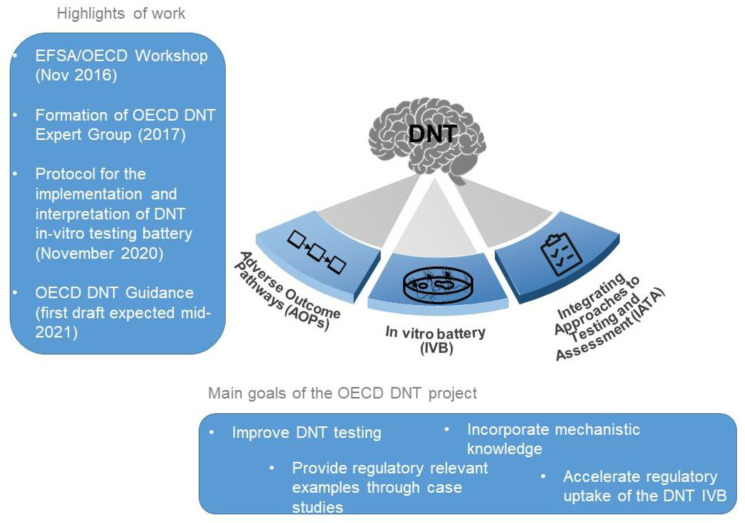
Characterization of potential chemical-induced developmental neurotoxicity (DNT) hazard is considered for risk assessment purposes by many regulatory sectors. However, due to test complexity, difficulty in interpreting results and need of substantial resources, the use of the in vivo DNT test guidelines has been limited and animal data on DNT are scarce. To address challenging endpoints such as DNT, the Organisation for Economic Co-Operation and Development (OECD) chemical safety program has been working lately toward the development of integrated approaches for testing and assessment (IATA) that rely on a combination of multiple layers of data (e.g., in vitro, in silico and non-mammalian in vivo models) that are supported by mechanistic knowledge organized according to the adverse outcome pathway (AOP) framework. In 2017, the OECD convened a dedicated OECD expert group to develop a guidance document on the application and interpretation of data derived from a DNT testing battery that relies on key neurodevelopmental processes and is complemented by zebrafish assays. This review will provide a brief overview of the OECD DNT project and summarize various achievements of relevance to the project. The review also presents an opportunity to describe considerations for uptake of the DNT in an in vitro battery in a regulatory context.
Overview
The claims and statistics of this paper haven’t been checked yet.
Free: it reads the open-access text and checks the first 5 claims that cite a source we can check. Create a free account to check every claim.
Integrity signals
Registry
Cites
Statistics
Figures
Verification
Claims the paper makes
The claims and statistics of this paper haven’t been checked yet.
Free: it reads the open-access text and checks the first 5 claims that cite a source we can check. Create a free account to check every claim.
Claims other papers make about this one
Each is checked against this paper’s own text: does it say what the citing paper says it does?
The cited source says what the claim attributes to it.
In the citing paper
“Recently, a DNT in vitro battery (DNT IVB) has been assembled (Sachana, Shafer, and Terron 2021; Harrill et al. 2018; Blum et al. 2023), comprising of multiple test methods assessing individual key neurodevelopmental processes (KNDPs).”
From Bridging imaging-based in vitro methods from biomedical research to regulatory toxicology (2025) · cites this paper as Sachana, Shafer, and Terron 2021
Self-check
Percentages, sums and reported differences re-computed from the paper’s own numbers.
The self-check needs the paper’s full text.
Citations
Cites
Ankley, G. T., Bennett, R. S., Erickson, R. J., Hoff, D. J., Hornung, M. W., Johnson, R. D., Mount, D. R., Nichols, J. W., Russom, C. L., Schmieder, P. K., et al. (2009) · Environmental Toxicology and Chemistry · doi:10.1002/etc.34 · Cited by 2,734 · cited 1×
“This cascade of KEs finally results in an adverse outcome (AO) [46,47] of regulatory relevance.”
BackgroundDevelopmental neurotoxicity of industrial chemicals
Grandjean, P., & Landrigan, P. (2006) · The Lancet · doi:10.1016/s0140-6736(06)69665-7 · Cited by 1,984
Wang, Z., Walker, G. W., Muir, D. C. G., & Nagatani-Yoshida, K. (2020) · Environmental Science & Technology · doi:10.1021/acs.est.9b06379 · Cited by 1,084 · cited 1×
“With over 350,000 chemicals and mixtures of chemicals registered on the global market [14], more efficient and cost-effective methods are needed for assessing hazard, exposure and, ultimately, risk.”
BackgroundCheroni, C., Caporale, N., & Testa, G. (2020) · Molecular Autism · doi:10.1186/s13229-020-00370-1 · Cited by 256 · cited 2×
“html) and new research advancements [6] will help to begin to clarify the possible causal associations between early life environmental chemical exposure and neurological disorders in children.”
BackgroundBal-Price, A. (2018) · ALTEX · doi:10.14573/altex.1712081 · Cited by 207 · cited 5×
“Participants in this workshop agreed that the proposed DNT in vitro testing battery [22] could be further harmonized in an international acceptance process.”
BackgroundInfluentialSchmidt, B. Z., Lehmann, M., Gutbier, S., Nembo, E., Noel, S., Smirnova, L., Forsby, A., Hescheler, J., Avci, H. X., Hartung, T., et al. (2017) · Archives of Toxicology · doi:10.1007/s00204-016-1805-9 · Cited by 182
Makris, S. L., Raffaele, K., Allen, S., Bowers, W. J., Hass, U., Alleva, E., Calamandrei, G., Sheets, L., Amcoff, P., Delrue, N., et al. (2009) · Environmental Health Perspectives · doi:10.1289/ehp.11447 · Cited by 179 · cited 1×
“This has resulted in scarce DNT toxicological hazard information, which is estimated to be available only for 110–140 [9,13] compounds.”
BackgroundCoecke, S., Goldberg, A. M., Allen, S., Buzanska, L., Calamandrei, G., Crofton, K., Hareng, L., Hartung, T., Knaut, H., Honegger, P., et al. (2007) · Environmental Health Perspectives · doi:10.1289/ehp.9427 · Cited by 175 · cited 1×
“Over the last 15 years, a number of scientific workshops and meetings have raised awareness about the fact that the majority of the chemicals released into the environment, and to which children are potentially exposed, have not been evaluated for DNT hazard [15,16,21].”
BackgroundProject TENDR: Targeting Environmental Neuro-Developmental Risks The TENDR Consensus Statement
Bennett, D., Bellinger, D. C., Birnbaum, L. S., DABT, A.T.S, Bradman, A., Chen, A., Cory-Slechta, D. A., Engel, S. M., Fallin, M. D., et al. (2016) · Environmental Health Perspectives · doi:10.1289/ehp358 · Cited by 169
Evaluation of a human neurite growth assay as specific screen for developmental neurotoxicants
Krug, A. K., Balmer, N. V., Matt, F., Schönenberger, F., Merhof, D., & Leist, M. (2013) · Archives of Toxicology · doi:10.1007/s00204-013-1072-y · Cited by 168 · cited 5×
“LUHMES Neurite area visualized with calcein AM Konstanz [38]”
MethodInfluential
Research works printed but not linked: 3
- OECD OECD Guidelines for the Testing of Chemicals. Section 4: Health Effects. Test No. 426: Developmental Neurotoxicity Study 2007 Available online: https://www.oecd-ilibrary.org/docserver/9789264067394-en.pdf?expires=1523434361&id=id&accname=ocid84004878&checksum=C46D0BEFDF0D3B6B5BE313A857358BA9 (accessed on 20 November 2020)
- Fritsche E. Report on Integrated Testing Strategies for the Identification and Evaluation of Chemical Hazards Associated with the Developmental Neurotoxicity (DNT), to Facilitate Discussions at the Joint EFSA/OECD Workshop on DNT OECD ENV/JM/MONO(2017)4/AN1 2017 Available online: http://www.oecd.org/officialdocuments/publicdisplaydocumentpdf/?cote=env/jm/mono(2017)4/ann1&doclanguage=en (accessed on 20 November 2020)
- OECD Report of the OECD/EFSA Workshop on Developmental Neurotoxicity (DNT): The Use of Non-Animal Test Methods for Regulatory Purposes. Environment, Health and Safety Publications Series on Testing and Assessment 242 ENV/JM/MONO(2017)4 2017 Available online: http://www.oecd.org/officialdocuments/publicdisplaydocumentpdf/?cote=env/jm/mono(2017)4&doclanguage=en (accessed on 20 November 2020) 28407175
Cited by
Carstens, K. E., Freudenrich, T. M., Wallace, K., Choo, S., Carpenter, A., Smeltz, M. G., Clifton, M. S., Henderson, W. M., Richard, A. M., Patlewicz, G. Y., et al. (2023) · Chemical Research in Toxicology · doi:10.1021/acs.chemrestox.2c00344 · Cited by 129
Self-citationIntegrating Data From In Vitro New Approach Methodologies for Developmental Neurotoxicity
Carstens, K. E., Carpenter, A. F., Martin, M. M., Harrill, J. A., Shafer, T. J., & Paul Friedman, K. (2022) · Toxicological Sciences · doi:10.1093/toxsci/kfac018 · Cited by 64
Self-citationScientific Validation of Human Neurosphere Assays for Developmental Neurotoxicity Evaluation
Koch, K., Bartmann, K., Hartmann, J., Kapr, J., Klose, J., Kuchovská, E., Pahl, M., Schlüppmann, K., Zühr, E., & Fritsche, E. (2022) · Frontiers in Toxicology · doi:10.3389/ftox.2022.816370 · Cited by 48
Serafini, M. M., Sepehri, S., Midali, M., Stinckens, M., Biesiekierska, M., Wolniakowska, A., Gatzios, A., Rundén‐Pran, E., Reszka, E., Marinovich, M., et al. (2024) · Archives of Toxicology · doi:10.1007/s00204-024-03703-8 · Cited by 45
“Details of AOP components have been extensively reviewed elsewhere (Hemmerich and Ecker 2020; Schultz and Watanabe 2018; Bal-Price et al 2015; Sachana et al 2021b) and will not be discussed in detail here.”
BackgroundDobreniecki, S., Méndez, E., Lowit, A., Freudenrich, T. M., Wallace, K., Carpenter, A., Wetmore, B. A., Kreutz, A., Korol-Bexell, E., Friedman, K. P., et al. (2022) · Regulatory Toxicology and Pharmacology · doi:10.1016/j.yrtph.2022.105167 · Cited by 41
Self-citationAstuto, M. C., Benford, D., Bodin, L., Cattaneo, I., Halldorsson, T. I., Schlatter, J., Sharpe, R. M., Tarazona, J. V., & Younes, M. (2022) · Archives of Toxicology · doi:10.1007/s00204-022-03409-9 · Cited by 33
Martin, M. M., Baker, N. C., Boyes, W. K., Carstens, K. E., Culbreth, M. E., Gilbert, M. E., Harrill, J. A., Nyffeler, J., Padilla, S., Friedman, K. P., et al. (2022) · Neurotoxicology and Teratology · doi:10.1016/j.ntt.2022.107117 · Cited by 29
Self-citation(2024) · ALTEX · doi:10.14573/altex.2403281 · Cited by 28
“The OECD project was summarized by Sachana et al. (2019, 2021a).”
BackgroundMethodZebrafish and nematodes as whole organism models to measure developmental neurotoxicity
Hughes, S., & Hessel, E. V. S. (2024) · Critical Reviews in Toxicology · doi:10.1080/10408444.2024.2342448 · Cited by 30
“…assays, (Aschner et al. 2017; Bal-Price et al. 2017; Bal-Price and Meek 2017; Bal-price et al. 2018; Fritsche, Barenys, et al. 2018; Masjosthusmann et al. 2020; Sachana, Shafer, et al. 2021; Sachana, Willett, et al. 2021) and thus the authors rely on the knowledge described in these papers.”
BackgroundMethodInfluentialMotor Dysfunction in Drosophila Melanogaster as a Biomarker for Developmental Neurotoxicity
Cabrita, A. M. F., Medeiros, A. M., Pereira, T., Rodrigues, A. S., Kranendonk, M., & Mendes, C. S. (2021) · iScience · doi:10.1016/j.isci.2022.104541 · Cited by 28
“, 2020), DNT data are only available for approximately 110–140 compounds (Sachana et al., 2021).”
BackgroundPereira, M. A. C., Macmillan, D. S., Willett, C., & Seidle, T. (2022) · Regulatory Toxicology and Pharmacology · doi:10.1016/j.yrtph.2022.105278 · Cited by 28
de Leeuw, V. C., van Oostrom, C. T. M., Wackers, P. F. K., Pennings, J. L. A., Hodemaekers, H. M., Piersma, A. H., & Hessel, E. V. S. (2022) · Chemosphere · doi:10.1016/j.chemosphere.2022.135298 · Cited by 27
Ireland, D., Rabeler, C., Gong, T., & Collins, E. S. (2022) · Archives of Toxicology · doi:10.1007/s00204-022-03387-y · Cited by 26
“3 robust, rapid test battery that is on par with or exceeds the relevancy of current mammalian models to human toxicity (Rovida et al. 2015; Sachana et al. 2021).”
BackgroundNew Worm on the Block: Planarians in (Neuro)Toxicology
Ireland, D., & Collins, E. S. (2022) · Current Protocols · doi:10.1002/cpz1.637 · Cited by 25
“One of the most challenging areas has been neurotoxicity (NT) and developmental neurotoxicity (DNT) testing (Sachana, Shafer, and Terron, 2021).”
BackgroundCollins, E. S., Hessel, E. V. S., & Hughes, S. (2024) · NeuroToxicology · doi:10.1016/j.neuro.2024.03.005 · Cited by 23
Koch, K., Schlüppmann, K., Hüsken, S., Stark, L. M., Förster, N., Masjosthusmann, S., Klose, J., Dönmez, A., & Fritsche, E. (2025) · Environment International · doi:10.1016/j.envint.2025.109400 · Cited by 24
Reliable identification and quantification of neural cells in microscopic images of neurospheres
Förster, N., Butke, J., Keßel, H. E., Bendt, F., Pahl, M., Li, L., Fan, X., Leung, P., Klose, J., Masjosthusmann, S., et al. (2021) · Cytometry Part A · doi:10.1002/cyto.a.24514 · Cited by 21
Pitzer, E. M., Shafer, T. J., & Herr, D. W. (2023) · NeuroToxicology · doi:10.1016/j.neuro.2023.10.007 · Cited by 20
Self-citationLauvås, A. J., Lislien, M., Holme, J. A., Dirven, H. A. A. M., Paulsen, R. E., Alm, I. M., Andersen, J. M., Skarpen, E., Sørensen, V., Macko, P., et al. (2022) · NeuroToxicology · doi:10.1016/j.neuro.2022.07.001 · Cited by 19
Planarians as a model to study neurotoxic agents
Ireland, D., & Collins, E. S. (2023) · Advances in neurotoxicology · doi:10.1016/bs.ant.2023.01.002 · Cited by 19
Carstens, K. E., Gronskaya, E., Jäckel, D., Bertoli, J., Cuevas, K. R., Dorier, J., Wang, S., López-Rodríguez, D., Shafer, T. J., Zurich, M., et al. (2025) · Archives of Toxicology · doi:10.1007/s00204-025-04043-x · Cited by 19
“To date, 17 in vitro NAMs have been developed to measure complex functional changes in bioactivity, which is critical for evaluating neurotoxicity potential (Sachana et al. 2021; van Vliet et al. 2007).”
Self-citationEffects of all-trans and 9-cis retinoic acid on differentiating human neural stem cells in vitro
Kubíčková, B., Martinkova, S., Bohačiaková, D., Nezvedová, M., Liu, R., Brózman, O., Spáčil, Z., & Hilscherová, K. (2023) · Toxicology · doi:10.1016/j.tox.2023.153461 · Cited by 19
Adult and regenerating planarians respond differentially to chronic drug exposure
Bayingana, K., Ireland, D., Rosenthal, E., Rabeler, C., & Collins, E. S. (2022) · Neurotoxicology and Teratology · doi:10.1016/j.ntt.2022.107148 · Cited by 17
Harry, G. J., McBride, S. J., Witchey, S. K., Mhaouty‐Kodja, S., Trembleau, A., Bridge, M., & Bencsik, A. A. (2022) · Frontiers in Toxicology · doi:10.3389/ftox.2022.812863 · Cited by 17
“Many of these model systems are likely covered in accompanying manuscripts in this special issue and have been extensively presented in multiple recent publications (Schmidt et al., 2017; Pistollato et al., 2020; Pistollato et al., 2021; Sachana et al., 2021).”
BackgroundMartin, M. M., Carpenter, A., Shafer, T. J., Friedman, K. P., & Carstens, K. E. (2024) · Toxicology · doi:10.1016/j.tox.2024.153842 · Cited by 14
Self-citationKühne, B. A., Klose, J., Seeger, B., Illa, M., Muñoz‐Torrero, D., Koch, K., Fritsche, E., & Barenys, M. (2025) · Environment International · doi:10.1016/j.envint.2025.110005 · Cited by 14
Pluripotent stem cells for target organ developmental toxicity testing
Wu, X., Chen, Y., Kreutz, A., Silver, B., & Tokar, E. J. (2024) · Toxicological Sciences · doi:10.1093/toxsci/kfae037 · Cited by 14
Cervetto, C., Pistollato, F., Amato, S., Gyves, E. M., Bal‐Price, A., Maura, G., & Marcoli, M. (2023) · Reproductive Toxicology · doi:10.1016/j.reprotox.2023.108358 · Cited by 13
Nunes, C., Gorczyca, G., Gyves, E. M., Ponti, J., Bogni, A., Carpi, D., Bal‐Price, A., & Pistollato, F. (2022) · Reproductive Toxicology · doi:10.1016/j.reprotox.2022.03.017 · Cited by 13
Klose, J., Li, L., Pahl, M., Bendt, F., Hübenthal, U., Jüngst, C., Petzsch, P., Schauss, A. C., Köhrer, K., Leung, P., et al. (2022) · Cell Biology and Toxicology · doi:10.1007/s10565-022-09730-4 · Cited by 13
Holme, J. A., Myhre, O., & Øvrevik, J. (2024) · Reproductive Toxicology · doi:10.1016/j.reprotox.2024.108718 · Cited by 12
Hinojosa, M. G., Johansson, Y., Cediel-Ulloa, A., Ivanova, E., Gabring, N., Gliga, A. R., & Forsby, A. (2023) · NeuroToxicology · doi:10.1016/j.neuro.2023.05.011 · Cited by 12
Lislien, M., Kuchovská, E., Kapr, J., Duale, N., Andersen, J. M., Dirven, H. A. A. M., Myhre, O., Fritsche, E., Koch, K., & Wojewodzic, M. W. (2024) · Toxicology · doi:10.1016/j.tox.2024.154000 · Cited by 11
Magel, V., Blum, J. H., Dolde, X., Leisner, H., Grillberger, K., Khalidi, H., Gardner, I. B., Ecker, G. F., Pallocca, G., Dreser, N., et al. (2024) · Cells · doi:10.3390/cells13242057 · Cited by 11
Carstens, K. E., Dönmez, A., Hsieh, J., Bartmann, K., Friedman, K. P., Koch, K., Scholze, M., & Fritsche, E. (2025) · Computational Toxicology · doi:10.1016/j.comtox.2025.100360 · Cited by 10
Bridging imaging-based in vitro methods from biomedical research to regulatory toxicology
Piergiovanni, M., Mennecozzi, M., Barale-Thomas, E., Danovi, D., Dunst, S., Egan, D., Fassi, A., Hartley, M., Kainz, P., Koch, K., et al. (2025) · Archives of Toxicology · doi:10.1007/s00204-024-03922-z · Cited by 9
“Recently, a DNT in vitro battery (DNT IVB) has been assembled (Sachana, Shafer, and Terron 2021; Harrill et al. 2018; Blum et al. 2023), comprising of multiple test methods assessing individual key neurodevelopmental processes (KNDPs).”
Mack, C. M., Bowen, A. T., Smith, A. R., Jensen, K. F., Kodavanti, P. R. S., MOSER, V. C., Mundy, W. R., Shafer, T. J., & Herr, D. W. (2024) · NeuroToxicology · doi:10.1016/j.neuro.2024.07.001 · Cited by 7
Self-citationMangas, I., Spilioti, E., Terron, A., Panzarea, M., Nepal, M., Viviani, B., Binaglia, M., & Crofton, K. M. (2025) · Critical Reviews in Toxicology · doi:10.1080/10408444.2025.2521280 · Cited by 7
“Over the past two decades, a number of in vitro DNT assays have been developed to support regulatory decisions (Bal-Price et al. 2018; Fritsche et al. 2018; Sachana et al. 2021; Blum et al. 2023).”
Self-citationGreen, M. L., Kluever, A., Chen, C. L., Dobreniecki, S., Halpern, W., Hannas, B. R., Hoberman, A. M., McNerney, M. E., Mitchell-Ryan, S. K., Shafer, T. J., et al. (2024) · Birth Defects Research · doi:10.1002/bdr2.2311 · Cited by 6
“DNT NAMs were designed to cover specific critical neurodevelopmental processes, such as neuro-progenitor proliferation, synaptogenesis, myelination, and neural network formation and function (Sachana et al., 2021).”
BackgroundSelf-citationKreutz, A., Chang, X., Lawless, M. S., Proença, S., Schaller, S., Kleinstreuer, N., & Högberg, H. T. (2025) · Toxicological Sciences · doi:10.1093/toxsci/kfaf147 · Cited by 6
“Only about 200 of the 80,000 chemicals in commerce have been tested in these studies (Luz and Tokar 2018; Wang et al. 2020; Sachana et al. 2021; Crofton and Mundy 2024).”
Neurotoxicity of Engineered Nanomaterials: Testing Considerations
Scarcello, E., Sofranko, A., Wahle, T., & Schins, R. P. F. (2022) · Frontiers in Public Health · doi:10.3389/fpubh.2022.904544 · Cited by 6
“It is crucial that such modifications also be deployed in current available in vitro neurotoxicity assays as well as in early stage development of novel test strategies in this research field (33, 34).”
BackgroundSherif, M. A., Carter, W. G., & Mellor, I. R. (2025) · Journal of Xenobiotics · doi:10.3390/jox15010012 · Cited by 6
Polychlorinated environmental toxicants affect sphingolipid metabolism during neurogenesis in vitro
Slováčková, J., Slavík, J., Kulich, P., Večeřa, J., Kováč, O., Paculová, H., Straková, N., Fedr, R., Silva, J. P., Carvalho, F. D., et al. (2021) · Toxicology · doi:10.1016/j.tox.2021.152986 · Cited by 5
Looking at Developmental Neurotoxicity Testing from the Perspective of an Invertebrate Embryo
Bicker, G. (2022) · International Journal of Molecular Sciences · doi:10.3390/ijms23031871 · Cited by 4
“Moreover, the assays of the stakeholders have been evaluated for readiness of use [16].”
Toxicity testing, developmental
Koralege, R. S. H., & Perera, U. D. N. (2023) · Elsevier eBooks · doi:10.1016/b978-0-12-824315-2.01051-4 · Cited by 4
Morozov, V., Shulzhyk, Y., Svichkar, V., Фастовець, Н. В., & Shamborovskyi, G. (2024) · Salud Ciencia y Tecnología - Serie de Conferencias · doi:10.56294/sctconf2024.1126 · Cited by 3
Fischer, M., Wolf, R. L., Hannemann, R., & Braunbeck, T. A. (2025) · Aquatic Toxicology · doi:10.1016/j.aquatox.2025.107373 · Cited by 2
Boyd, S., Carstens, K. E., Lowit, A., Méndez, E., Perron, M. M., Mangas, I., & Shafer, T. J. (2025) · Elsevier eBooks · doi:10.1016/b978-0-323-95488-4.00282-5 · Cited by 2
Self-citationWijesekara, A., Wijamunige, B. C., Kocoń, A., Mellor, I. R., & Carter, W. G. (2025) · Applied Sciences · doi:10.3390/app151910800 · Cited by 2
Scharkin, I., Dobner, J., Pierchala, N., Bartmann, K., Hübenthal, U., Bendt, F., Brockerhoff, G., Rossi, A., Fritsche, E., Tigges, J., et al. (2026) · NeuroToxicology · doi:10.1016/j.neuro.2026.103434 · Cited by 2
Truong, L., Hsieh, J., Ellis, L., Jaka, O., Muriana, A., Molina-Martínez, B., del Pozo, A., Schiavone, V., Donato, V. D., Sanz, C. M., et al. (2026) · NeuroToxicology · doi:10.1016/j.neuro.2026.103504 · Cited by 2
“The OECD (Organisation for Economic Co-operation and Development) initiative, beginning in the early 2000s, promoted alternative testing strategies leading to the development of a mechanistically anchored in vitro battery capable of efficiently identifying DNT hazard (Sachana et al., 2021).”
Environmental exposures impact the nervous system in a life stage-specific manner
Tigges, J., Schikowski, T., & Fritsche, E. (2021) · e-Neuroforum · doi:10.1515/nf-2021-0021 · Cited by 2
Adverse Outcome Pathways in reproductive and developmental toxicology
Tanabe, S., Sachana, M., & FitzGerald, R. (2022) · Elsevier eBooks · doi:10.1016/b978-0-323-89773-0.00004-7 · Cited by 2
Self-citationSpänle, J. V., Haiber, L. M., & Seeger, B. (2026) · Frontiers in Toxicology · doi:10.3389/ftox.2026.1800157 · Cited by 1
“…key processes, is nearing regulatory implementation for chemical risk assessment (Bal-Price et al., 2018b; Fritsche et al., 2018; Masjosthusmann et al., 2020; EFSA, 2021; Sachana et al., 2021a; Sachana et al., 2021b; Carstens et al., 2022; Blum et al., 2023; OECD, 2023; Smirnova et al., 2024).”
Boyd, S., Vahanan, M. M., Monroe, J., Conley, J. A., Carstens, K. E., & Shafer, T. J. (2025) · NeuroToxicology · doi:10.1016/j.neuro.2025.103328 · Cited by 1
Self-citationCarstens, K. E., & Shafer, T. J. (2025) · Regulatory Toxicology and Pharmacology · doi:10.1016/j.yrtph.2025.106008 · Cited by 1
Self-citationFrom concept to regulation: OECD’s role in the development of the DNT in vitro battery
Sachana, M., Högberg, H. T., & Mangas, I. (2026) · Frontiers in Toxicology · doi:10.3389/ftox.2026.1774469 · Cited by 1
“The early scientific Workshops and the regulatory necessity led to a movement to implement NAMs into chemical DNT assessment, by EFSA, and US EPA, overseen by OECD (OECD, 2017b) with the establishment of an OECD DNT-IVB expert group in 2018 (Sachana et al., 2021).”
Self-citationJudzińska, B., Nisterenko, W., Buławska, N., Kowalska, D., Jagiełło, K., Sosnowska, A., & Puzyn, T. (2026) · Chemical Research in Toxicology · doi:10.1021/acs.chemrestox.5c00326 · Cited by 1
Kuchovská, E., Bartmann, K., Raad, G., Schade, M., Ladeira, L., Dönmez, A., Klose, J., Görts, N., Polozij, D., Saborowski, L.-C., et al. (2026) · Advanced Science · doi:10.1002/advs.202519889 · Cited by 1
Using zebrafish to assess developmental neurotoxicity
Padilla, S., Hill, B. N., Legradi, J., & Klüver, N. (2022) · Elsevier eBooks · doi:10.1016/b978-0-323-89773-0.00013-8 · Cited by 1
Slikker, W., Wu, L., Xu, J., & Shafer, T. J. (2023) · Elsevier eBooks · doi:10.1016/b978-0-12-824010-6.00048-4 · Cited by 1
Self-citationBoyes, W. K. (2023) · Wiley eBooks · doi:10.1002/0471125474.tox025.pub3 · Cited by 1
Brain Damage and Repair: From Molecular Effects to Central Nervous System Disorders
Armant, O., & Adam‐Guillermin, C. (2021) · Biology · doi:10.3390/biology10060489
“describe how the AOP approach can be used in the field of development of neurotoxicity of chemicals [8].”
BackgroundIn vitro biomarkers of developmental neurotoxicity
Sachana, M., Flaskos, J., & Hargreaves, A. J. (2022) · Elsevier eBooks · doi:10.1016/b978-0-323-89773-0.00011-4
Self-citationHow toxicology impacts other sciences
Chojnacka, K., Mikulewicz, M., & Szynkowska, M. I. (2022) · Elsevier eBooks · doi:10.1016/b978-0-12-824315-2.00045-2
Carlson, L. M., Kramek, N., Lehmann, D. M., Thomas, K., Owen, S., Maddaloni, M. A., Ginsberg, G., Poulsen, M., Rajan, P., Kapraun, D. F., et al. (2023) · Advances in neurotoxicology · doi:10.1016/bs.ant.2023.07.001
Fischer, M., Wolf, R. L., Hannemann, R., & Braunbeck, T. A. (2024) · SSRN Electronic Journal · doi:10.2139/ssrn.5052599
Capturing Unanticipated Drug Toxicities Using an Ensemble Machine Learning ApproachPreprint
Zatorski, N., & Schlessinger, A. (2025) · Research Square · doi:10.21203/rs.3.rs-6999821/v1
“This re�ects the wide range of observed neuropsychiatric toxicities and the di�culty in the development of in vivo screening tests which can be applied prior to lengthy animal studies 20 .”
Long, W., Wang, R., Li, M., Gong, X., Wang, C., Dai, Y. L., Li, Z., Fan, S., Ye, Y., Yang, R., et al. (2025) · Ecotoxicology and Environmental Safety · doi:10.1016/j.ecoenv.2025.119375
Zarei, M. H., Shirvani, Z., Saghaei, E., Lorigooini, Z., Amini-Khoei, H., & Gharibshahi, N. (2025) · Drug and Chemical Toxicology · doi:10.1080/01480545.2025.2573094
“…the manifestation of adverse or deleterious effects on the nervous system during its developmental stages is termed developmental neurotoxicity (sachana et al., 2021). extensive evidences underscores the heightened susceptibility of the fetus to the impact of chemical agents during it’s…”
Nisterenko, W., Singh, Y. R., Greber, K. E., Jagiełło, K., & Ciura, K. (2026) · Biomimetics · doi:10.3390/biomimetics11090620
Ndam, V. N., Njitoyap, H. P. N., Ella, F. A., Owona, B. A., & Abia, W. A. (2026) · Environmental and Human Health · doi:10.54963/ehh.v2i1.100371
“There are many other chemicals, like pyrethroids and volatile organic compounds, that are regulated by adult toxicity studies without considering developmental effects, and the effect of mixtures is neglected [40–43].”
Pamanji, R. (2026) · Regulatory Toxicology and Pharmacology · doi:10.1016/j.yrtph.2026.106227
Yue, J., Pan, C., Lu, C., & Song, Z. (2026) · Frontiers in Bioengineering and Biotechnology · doi:10.3389/fbioe.2026.1909235
“More complex organoids raise governance questions regarding neural activity, while regulatory use will require reproducibility, predictivity, benchmark chemicals, and weight-of-evidence integration with animal and clinical data (Sachana et al., 2021; Castiglione et al., 2025).”
Pandiri, A. R. (2026) · Journal of Toxicologic Pathology · doi:10.1293/tox.2026-0088
Machine-readable immune ontogeny maps for AOP-anchoring: A critical review
Pamanji, R. (2026) · Computational Toxicology · doi:10.1016/j.comtox.2026.100449
Editorial: Whole organism models for testing (developmental) neurotoxicity testing strategies
Hessel, E. V. S., & Hughes, S. (2026) · Frontiers in Toxicology · doi:10.3389/ftox.2026.2010109
Metadata
- Authors
- Sachana, M., Shafer, T. J., & Terron, A.
- Affiliations
- Organisation de Coopération et de Développement Economiques (FR)
- Environmental Protection Agency (US)
- European Food Safety Authority (IT)
- Corresponding author
- Sachana, Magdalini
- ORCID
- Shafer, Timothy J.
- Venue
- Biology
- Publisher
- MDPI AG
- Published
- 2021-01-23
- Volume
- 10
- Issue
- 2
- Pages
- 86
- ISSN
- 2079-7737 (ISSN-L)
- PMC
- PMC7912397
- OpenAlex
- W3123353733
- Cited by
- 71
- References
- 42
- Citations by year
- 2026: 8 · 2025: 15 · 2024: 13 · 2023: 10 · 2022: 20 · 2021: 5
- FWCI
- 2.38
- Type
- journal article
- Language
- en
- Open access
- gold
- doi.org
- Licence
- Locations
- Biology (publishedVersion, cc-by)
- PubMed Central (publishedVersion, cc-by)
- PubMed (publishedVersion)
- DOAJ (DOAJ: Directory of Open Access Journals) (submittedVersion, cc-by-sa)
- Funders
- U.S. Environmental Protection Agency
- Topics
- Health Sciences › Veterinary › Small Animals › Animal testing and alternatives
- Life Sciences › Biochemistry, Genetics and Molecular Biology › Cell Biology › Zebrafish Biomedical Research Applications
- Life Sciences › Immunology and Microbiology › Immunology › Immunotoxicology and immune responses
- Keywords
- developmental neurotoxicity, adverse outcome pathways, regulatory toxicology, chemical safety assessment, in silico models
About these checks
Registry, retraction, Cites and statistics results are computed, not judged, with one exception: a printed reference that no index lists is read once by a model before it counts as a citation error. Claims are extracted by a model and kept only when their quote appears verbatim in the text; each cited source is then checked, with a model’s help, for whether it says what the claim relies on. Those verdicts can be wrong — read the claim’s quote and the cited source before relying on one.
Statistics and arithmetic are recomputed, not judged.
Confidence bands are shown only for fields calibrated on our annotated test set. None is calibrated yet, so no band is shown.
What counts as a claim ›How we measure confidence ›How we check this ›
Are you an author, or do you see a problem with this page? Request a review
Data sources
Bibliographic data: Semantic Scholar, OpenAlex, Crossref.
Contains information from the Semantic Scholar Academic Graph Datasets, made available under the ODC Attribution License (ODC-BY 1.0).
Semantic Scholar’s data is described in: Kinney, R., et al. (2023). The Semantic Scholar Open Data Platform. arXiv:2301.10140.
