

Applications of Compounds from Coffee Processing By-Products
Open accessThe DOI matches its Crossref record; 94 of the 94 references it cites were found in a registry or an index.
Abstract
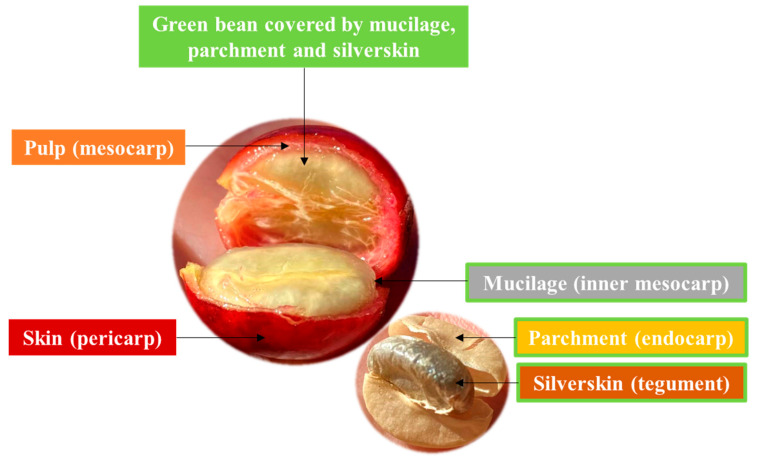
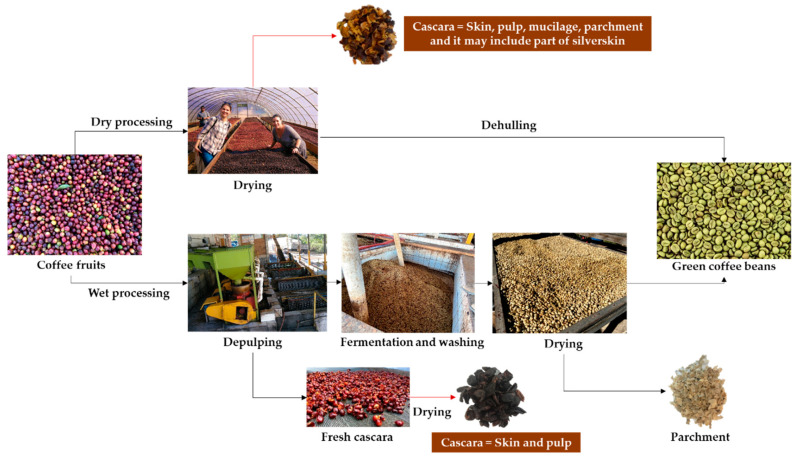
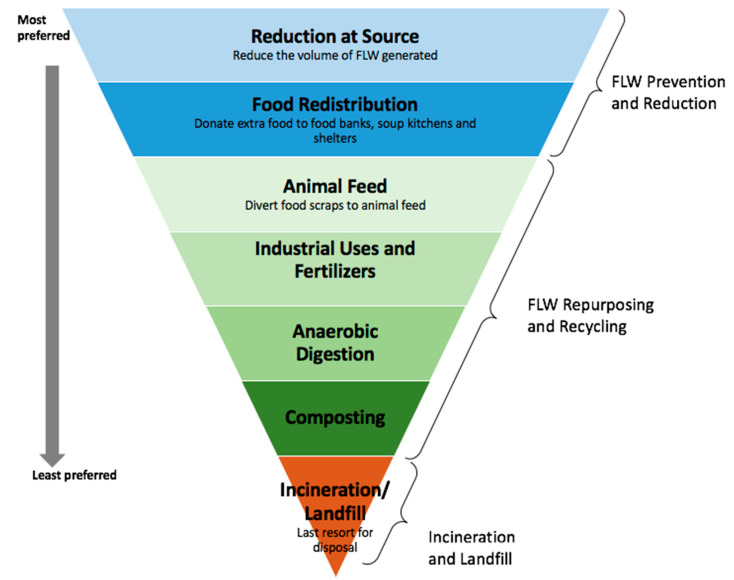
To obtain the coffee beverage, approximately 90% of the edible parts of the coffee cherry are discarded as agricultural waste or by-products (cascara or husk, parchment, mucilage, silverskin and spent coffee grounds). These by-products are a potential source of nutrients and non-nutrient health-promoting compounds, which can be used as a whole ingredient or as an enriched extract of a specific compound. The chemical composition of by-products also determines food safety of the novel ingredients. To ensure the food safety of coffee by-products to be used as novel ingredients for the general consumer population, pesticides, mycotoxins, acrylamide and gluten must be analyzed. According with the priorities proposed by the Food Agriculture Organization of the United Nations (FAO) to maximize the benefit for the environment, society and economy, food waste generation should be avoided in the first place. In this context, the valorization of food waste can be carried out through an integrated bio-refinery approach to produce nutrients and bioactive molecules for pharmaceutical, cosmetic, food and non-food applications. The present research is an updated literature review of the definition of coffee by-products, their composition, safety and those food applications which have been proposed or made commercially available to date based on their chemical composition.
Overview
The claims and statistics of this paper haven’t been checked yet.
Free: it reads the open-access text and checks the first 5 claims that cite a source we can check. Create a free account to check every claim.
Integrity signals
Registry
Cites
Statistics
Figures

Verification
Claims the paper makes
The claims and statistics of this paper haven’t been checked yet.
Free: it reads the open-access text and checks the first 5 claims that cite a source we can check. Create a free account to check every claim.
Claims other papers make about this one
Each is checked against this paper’s own text: does it say what the citing paper says it does?
The source backs part of the claim, not all of it — or backs it for a different population, condition or comparison.
In the citing paper
“Coffee is consumed daily globally; however, only 10% of the fruit is used to prepare the drink, with 90% being discarded and generating up to approximately 823,740 kg/year of waste. From this material, a relevant amount of pigment could be extracted and revalued [83].”
From Innovative Approaches to an Eco-Friendly Cosmetic Industry: A Review of Sustainable Ingredients (2024) · cites this paper as [83]
Experimental — accuracy not yet measuredThe cited source says what the claim attributes to it.
In the citing paper
“Based on the United Nations Food and Agriculture Organization (FAO), the priority for the environment is to avoid waste production; therefore, the recovery of food excess is a potential solution [83].”
From Innovative Approaches to an Eco-Friendly Cosmetic Industry: A Review of Sustainable Ingredients (2024) · cites this paper as [83]
Self-check
Percentages, sums and reported differences re-computed from the paper’s own numbers.
The self-check needs the paper’s full text.
Citations
Cites
Carbohydrates, dietary fiber, and incident type 2 diabetes in older women
Meyer, K. A., Kushi, L. H., Jacobs, D. R., Slavin, J., Sellers, T. A., & Folsom, A. R. (2000) · The American Journal of Clinical Nutrition · doi:10.1093/ajcn/71.4.921 · Cited by 1,271
Sustainable management of coffee industry by-products and value addition—a review
Murthy, P. S., & Madhava Naidu, M. (2012) · Resources, Conservation and Recycling · doi:10.1016/j.resconrec.2012.06.005 · Cited by 1,055
Production, Composition, and Application of Coffee and Its Industrial Residues
Mussatto, S. I., Machado, E. M. S., Martins, S., & Teixeira, J. A. (2011) · Food and Bioprocess Technology · doi:10.1007/s11947-011-0565-z · Cited by 1,010
Chemical, Functional, and Structural Properties of Spent Coffee Grounds and Coffee Silverskin
Ballesteros, L. F., Teixeira, J. A., & Mussatto, S. I. (2014) · Food and Bioprocess Technology · doi:10.1007/s11947-014-1349-z · Cited by 870
Functional Properties of Coffee and Coffee By-Products
Esquivel, P., & Jiménez, V. M. (2012) · Food Research International · doi:10.1016/j.foodres.2011.05.028 · Cited by 847
Scientific Opinion on acrylamide in food
(CONTAM), E. P. O. C. I. T. F. C. (2015) · EFSA Journal · doi:10.2903/j.efsa.2015.4104 · Cited by 828
Cho, A.-S., Jeon, S.-M., Kim, M.-J., Yeo, J., Seo, K.-I., Choi, M.-S., & Lee, M.-K. (2010) · Food and Chemical Toxicology · doi:10.1016/j.fct.2010.01.003 · Cited by 787
Spent coffee grounds: A review on current research and future prospects
Campos-Vega, R., Loarca-Piña, G., Vergara-Castañeda, H. A., & Oomah, B. D. (2015) · Trends in Food Science & Technology · doi:10.1016/j.tifs.2015.04.012 · Cited by 679
Scientific Opinion on the safety of caffeine
EFSA Panel on Dietetic Products, N. A. A. (. (2015) · EFSA Journal · doi:10.2903/j.efsa.2015.4102 · Cited by 613
Recovery of Biomolecules from Food Wastes—A Review
Baiano, A. (2014) · Molecules · doi:10.3390/molecules190914821 · Cited by 504
Research works printed but not linked: 4
- Sadeghian-Khalajabadi S. Mejía-Muñoz B. Arcila-Pulgarín J. Composición elemetal de fruto de café y extracción de nutrientes por las cosechas en la zona cafetera de Colombia Cenicafé 2006 57 251 261
- Rathinavelu R. Graziosi G. Potential alternative use of coffee wastes and by-products Coffee Organ. 2005 1967 1 4
- Gonzalez B. Uso sostenible del pergamino de café como ingrediente alimentario en la elaboración de pan libre de gluten con alto contenido en fibra Bachelor’s Thesis Universidad Autónoma de Madrid Madrid, Spain 2016
- Cubero-Castillo E. Bonilla-Leiva A.R. García-Velasques E. Coffee Berry Processing By-Product Valorization: Coffee Parchment as a Potential Fiber Source to Enrich Bakery Goods Abstract J. Food Nutr. Popul. Health 2017 1 1 7
Cited by
Items 101–191 of 191
Braojos, C., Rebollo‐Hernanz, M., Benítez, V., Cañas, S., Aguilera, Y., Arribas, S. M., & Martin-Cabrejas, M. A. (2020) · International Electronic Conference on Nutrients (IECN) · doi:10.3390/iecn2020-06997 · Cited by 4
“The coffee beverage is one of the most consumed products worldwide, but approximately 90% of the coffee cherry is discarded as waste during coffee bean processing, which sometimes is not handled correctly and has a meaningful environmental impact [1,2].”
BackgroundLestari, W., Ismida, F. D., Hajar, S., & Namiko, R. C. (2024) · Berkala Ilmu Kesehatan Kulit dan Kelamin · doi:10.20473/bikk.v36.2.2024.113-122 · Cited by 2
Estudio de residuos biomásicos agrícolas para la instalación de una biorefinería de pequeña escala
Bermúdez, J. M. S., Zambrano, G. A. Z., Cedeño, R. E. C., & Riera, M. A. (2025) · La Granja · doi:10.17163/lgr.n42.2025.09 · Cited by 3
da Silva, C. N., Lemes, A. C., & Ribeiro, B. D. (2025) · Waste and Biomass Valorization · doi:10.1007/s12649-025-03259-3 · Cited by 4
Gallego-Barceló, P., López‐Tofiño, Y., López‐Gómez, L., Vera, G., Bagüés, A., Esteban‐Hernández, J., del Castillo, M. D., Uranga, J. A., & Abalo, R. (2025) · International Journal of Molecular Sciences · doi:10.3390/ijms262110691 · Cited by 2
Santos, B. G., Ancillotti, G. T., de Figueiredo, C. H., Rodrigues, M. A., Castelo‐Branco, V. N., & Uekane, T. M. (2025) · Journal of Food Science · doi:10.1111/1750-3841.70673 · Cited by 2
“Caffeine, trigonelline, and chlorogenic acid (5-CQA) are the bioactive compounds most associated with coffee and, consequently, with its by-products (Iriondo-DeHond et al. 2020).”
Ribeiro, R. C., Alves, R. C., Santo, L. E., Costa, A. S. G., Machado, S., Oliveira, M. B. P. P., Teixeira, R. S. S., & Rezende, C. M. (2025) · ACS Omega · doi:10.1021/acsomega.5c07362 · Cited by 2
Circular Solutions Centered on Biochar Could Improve the Carbon Footprint of Coffee With Co‐Benefits
Ladd, B., Cornelissen, G., Sørmo, E., Ortiz, R., de la Rosa, R. A., & Borchard, N. (2025) · Food and Energy Security · doi:10.1002/fes3.70134 · Cited by 2
Fitriansyah, S. N., Saonah, N., Baroroh, U., Herawati, I. E., & Ikhlas, M. (2025) · Research Journal of Pharmacy and Technology · doi:10.52711/0974-360x.2025.00512 · Cited by 3
de Oliveira, L. D. L., de Sousa, J. F., da Costa, A. B., Alves, L. P., Resende, G. N., de Oliveira, N. L., Lima, H. B. V., & Alves, E. A. (2026) · Food Research International · doi:10.1016/j.foodres.2026.118673 · Cited by 2
Munasir, M., Maulana, S. A., Nurlaili, R. A., Faaizatunnisa, N., Ariesta, M. N., Fasha, G. N. A., & Widiyanto, S. (2026) · Bioresource Technology Reports · doi:10.1016/j.biteb.2026.102679 · Cited by 2
Srinual, O., Srinual, P., Khetanun, K., Loungmoon, P., Pintalerd, N., Chaiyaso, T., Yakul, K., Kanmanee, C., & Tapingkae, W. (2026) · Animals · doi:10.3390/ani16060965 · Cited by 2
“Key constituents, including caffeic acid, melanoidins, and chlorogenic acid, are considered to play an important role in these potential benefits [13,14], positioning CCP as a promising value-added by-product in animal nutrition.”
Arega, A. S., Τσίγκου, Κ., Kassahun, S. K., Mussatto, S. I., Demessie, B. A., & Angelidaki, İ. (2026) · Waste and Biomass Valorization · doi:10.1007/s12649-026-03609-9 · Cited by 2
“For example, in wet method, selected coffee cherries undergo mechanical pulping and screening to remove the coffee skin and pulp (CP), followed by fermentation and washing to remove a thick sticky material called mucilage, and subsequent mechanical dehulling of the endocarp [3, 4].”
Yakul, K., Insomphun, C., Seesuriyachan, P., Chaiyaso, T., Htike, S. L., Phimolsiripol, Y., Castagnini, J. M., & Moukamnerd, C. (2026) · Fermentation · doi:10.3390/fermentation12070303 · Cited by 2
“…the direct application of CCP remains constrained by anti-nutritional factors, low digestibility, and compositional variability arising from differences in coffee species, cultivation conditions, and processing methods, which may limit nutrient utilization and feeding efficiency [3,75,83,85–87].”
A look into Honduran biomass: facts, uses and potential applications
Bulnes, D., Melgar, S., de la Vega, E., Rubio, A. R., Espinal, A., Velásquez-Tinoco, D. G., Reyes, G. D., Estrada-López, E. D., & Ortiz-Hernández, O. V. (2023) · Bionatura · doi:10.21931/rb/2023.08.03.37 · Cited by 2
Arifki, M. P., Tafsin, M., & Fatimah, F. (2024) · Journal of Environmental and Development Studies · doi:10.32734/jeds.v5i01.12484 · Cited by 2
OCORRÊNCIA DE CROSTA-NEGRA NA CULTURA DA SERINGUEIRA NO ESTADO DE SÃO PAULO
Gonçalves, E. C. P., de Goes, A., Martins, A. L. M., Rodrigues, M. A., & Martins, M. H. (2021) · Editora In Vivo eBooks · doi:10.47242/978-65-993899-2-4-2 · Cited by 2
Calciolari, A. R., Pires, N. J., Trugilho, P. F., & Guimarães, M. (2022) · Matéria (Rio de Janeiro) · doi:10.1590/1517-7076-rmat-2022-0141 · Cited by 2
Peixoto, J. A. B., Andrade, N., Oliveira, M. B. P. P., Martel, F., & Alves, R. C. (2024) · Elsevier eBooks · doi:10.1016/b978-0-443-13868-3.00059-4 · Cited by 2
Lourenço, K. S., Barthel, M., Velthof, G. L., Westerik, D., Rahn, E., Pulleman, M., Six, J., & Giller, K. E. (2023) · doi:10.18174/661314 · Cited by 4
Rondón, D. G. E., Meza, N. T., Ocampo, J. C. C., López, D. Y. O., & Calderón, C. L. L. (2023) · MRS Advances · doi:10.1557/s43580-023-00722-y · Cited by 1
Santos-Cruz, R., Castro-Díaz, E. I., Rodríguez-Lozano, A., Domínguez, Z., Yáñez-Pizaña, A., & Sánchez-Salcedo, J. A. (2025) · Agro Productividad · doi:10.32854/veb9b610 · Cited by 2
Amotoe‐Bondzie, A., Osei, E. D., Ivanišová, E., Dávidová, K., Harangozo, Ľ., Čech, M., Árvay, J., Kunecová, D., Kucharski, J. J., & Kowalczewski, P. Ł. (2025) · Acta Scientiarum Polonorum Technologia Alimentaria · doi:10.17306/j.afs.2.1319 · Cited by 1
The Global Grind: Past Trends and Future Brews of the Coffee Culture
Ashawat, M., & Ashawat, M. S. (2025) · Food science and nutrition · doi:10.5772/intechopen.1012093 · Cited by 1
Daâssi, D., Ghorraf, N., Ismail, I. B., Maalej, A., Amor, F. B., Choura, S., & Chamkha, M. (2025) · Catalysts · doi:10.3390/catal15121102 · Cited by 1
Valorization of Coffee By-Products through Biorefinery Approaches for a Sustainable Bioeconomy
Abakar, M. A. A., Ahmed, O., Panakkal, E. J., Arshad, N., Kitiborwornkul, N., Raina, N., Sriariyanun, M., Klinjapo, R., Ponnumsami, V., & Khan, M. A. (2026) · Applied Science and Engineering Progress · doi:10.14416/j.asep.2026.01.006 · Cited by 1
Prameswari, A. Z., Hatiningsih, S., Kenardi, J. P., Pradnyawangi, N. M. M., Hermayuli, I. A. A. P., & Artawan, I. P. A. (2026) · Jurnal Teknologi dan Mutu Pangan · doi:10.30812/jtmp.v4i2.6024 · Cited by 1
Oblitas-Delgado, R., Inga, B. M. F., Huamán, E. H., Vargas, R., Carrion, J. V., Valle-Lopez, A., Lopez-Merino, J. E., Acuña-Ramírez, E., & Oliva-Cruz, M. (2026) · Beverages · doi:10.3390/beverages12040047 · Cited by 1
Guadalupe, G. A., Grández-Yoplac, D. E., García, L., & Doménech, E. (2026) · Applied Food Research · doi:10.1016/j.afres.2026.102200 · Cited by 1
Piotrowicz, A., Fabiszewska, A. U., Jasińska, K., & Wierzchowska, K. (2026) · Molecules · doi:10.3390/molecules31132382 · Cited by 1
“Silverskin, although more heterogeneous, contains 10–24% cellulose and is notable for its exceptionally high dietary fiber content, reaching up to 72% [3,12,26,27].”
Wang, Z., Chen, X., Chiu, T., Li, Q., Yang, Y., Aziz, T. A., Cui, H., & Lin, L. (2026) · Journal of Food Process Engineering · doi:10.1111/jfpe.70702 · Cited by 1
Schwarz, S., Rieke-Zapp, J., & Lachenmeier, D. W. (2026) · doi:10.14293/icc000031.v1.paper · Cited by 1
Boopathi, V., Kwon, J., Jung, J., Park, S. B., Gwon, S., Chun, H. S., & Yuk, H. (2026) · Comprehensive Reviews in Food Science and Food Safety · doi:10.1111/1541-4337.70632 · Cited by 1
“…valorization into functional food ingredients that are good sources of dietary fiber, polyphenols, proteins, pectin, and fermentable substrates has been demonstrated (Schieber et al. 2001 ; Mussatto et al. 2006 ; Ajila et al. 2007 ; Galanakis 2012 ; Iriondo-DeHond et al. 2020 ; Ra țu et al. 2023 ).”
InfluentialJmoui, I., Mechmeche, M., Khalfallah, R., Setti, K., Hamdi, M., & Kachouri, F. (2023) · Journal of Food Measurement & Characterization · doi:10.1007/s11694-023-01926-4 · Cited by 1
ПОТЕНЦІАЛ ВИКОРИСТАННЯ КАВОВОЇ ГУЩІ У ТЕХНОЛОГІЯХ ФУНКЦІОНАЛЬНИХ ПРОДУКТІВ ХАРЧУВАННЯ. ОГЛЯД
Sukmanov, V., Сукманов, О. В., Комар, О. М., & Yudina, T. (2024) · Journal of Chemistry and Technologies · doi:10.15421/jchemtech.v32i3.309754 · Cited by 6
Petals of Potency: Navigating the Bioactive Landscape of Coffee Flowers
Das, M., Lalsangi, S. B., Santra, S., Khamaru, D., Singh, M. P., & Banerjee, R. (2025) · Springer eBooks · doi:10.1007/978-981-96-3663-1_12 · Cited by 1
Subproductos del café (Coffea): desafíos ambientales y oportunidades para la bioeconomía
López-Escobar, L. A., Olivo-Alanís, D. S., & Nava-Valente, N. (2025) · Tendencias en energías renovables y sustentabilidad . · doi:10.56845/terys.v4i1.422 · Cited by 1
Asefa, S. K., Ancha, V. R., Habtu, N. G., & Binchebo, T. L. (2025) · Desalination and Water Treatment · doi:10.1016/j.dwt.2025.101334 · Cited by 1
Filho, A. C. M., Moura, M. D. S., Balestrin, D. R., & Neto, J. T. (2021) · Editora In Vivo eBooks · doi:10.47242/978-65-993899-2-4-7
DIFERENTES MÉTODOS PARA AVALIAR O TEOR DE ÁGUA EM SEMENTES DE Ormosia grossa Rudd
Pinheiro, R. D. M., Gadotti, G. I., da Silva, E. J. S., Moreira, I. B., & Tim, R. R. (2021) · Editora In Vivo eBooks · doi:10.47242/978-65-993899-2-4-6
Batista, A. I. V., de Lucena, G. V. C., Lopes, M. F., Costeira, J. A., de Farias, R. C., Rolim, C. M. D. M., Medeiros, F. L. M., Silva, J. N. D., Duarte, V. M. D. S., Gomes, L. V. L., et al. (2021) · Editora In Vivo eBooks · doi:10.47242/978-65-993899-2-4-5
Ribeiro, I. S., Lima, A. R., Santini, A. T., Bruzadelli, R. F. D., & de Resende, M. L. V. (2021) · Editora In Vivo eBooks · doi:10.47242/978-65-993899-2-4-1
Multiplicidade das ciências agrárias
Neto, L. D. F. C., & Silva, E. N. (2021) · Editora In Vivo eBooks · doi:10.47242/978-65-993899-2-4
Mesquita, L. F., Silva, D. A. S., da Luz, M. P., Borges, F. J. S., & da Silva, E. D. S. (2021) · Editora In Vivo eBooks · doi:10.47242/978-65-993899-2-4-9
Silva, E. N., Neto, L. D. F. C., Bastos, L. M. G., da Silva, R. G., Neto, A. M. V., dos Santos, F. C. P., da Silva, I. N. G., Araújo, L. R. S., & Rodrigues, V. H. V. (2021) · Editora In Vivo eBooks · doi:10.47242/978-65-993899-2-4-8
Romão, A. L. E., Abreu, K. D. V., de Sousa, E. A. O., Filho, A. P., & Alves, C. R. (2021) · Editora In Vivo eBooks · doi:10.47242/978-65-993899-2-4-3
Waste Treatment Design at Sugar Factory
Ali, M., & Safirin, M. T. (2022) · International Journal of Science and Society · doi:10.54783/ijsoc.v4i4.674
Sileshi, G. W. (2024) · Earth system science data · doi:10.5194/essd-2023-288-ac1
Coffee and amyotrophic lateral sclerosis (ALS)
Memudu, A. E., Olukade, B. A., Adebayo, O. S., & Raza, M. L. (2024) · Progress in brain research · doi:10.1016/bs.pbr.2024.06.003
Palacios-Ruíz, V., Suárez-Quiroz, M. L., Figueroa-Hernández, C. Y., Hernández‐Estrada, Z. J., & González-Ríos, Ó. (2025) · BIOtecnia · doi:10.18633/biotecnia.v27.2244
Optimizing Coffee Waste Collection: A Discrete Event Simulation Model Based on Consumption Patterns
Tayouga, M., Ouzineb, M., & Yacout, S. (2025) · Lecture notes in networks and systems · doi:10.1007/978-3-031-94802-2_22
Obtención de un ingrediente alimentario a partir de pulpa de café
Ramírez, B. D. G., Gómez-Gutiérrez, A. M., Ramírez, S. C., Calle, D. P. C., Hincapié, D. L. H., & Ortiz, D. R. (2025) · Acta Agronómica · doi:10.15446/acag.v72n4.113635
“…a food ingredient from coffee pulp Introducción Cada paso del procesamiento del café, incluidos la cosecha, el despulpado, la remoción del mucilago, la separación de las semillas de café, el tostado, el empaquetado y la preparación de la bebida, generan subproductos (Iriondo-DeHond et al ., 2020).”
Martín-Trueba, M., Hu, S., Cañas, S., Rebollo‐Hernanz, M., Arribas, S. M., Gil‐Ramírez, A., Martin-Cabrejas, M. A., Aguilera, Y., & Benítez, V. (2025) · Industrial Crops and Products · doi:10.1016/j.indcrop.2025.121835
Adula, D. M. (2025) · Trends in Biological Sciences · doi:10.21124/tbs.2025.171.182
Israelsen, I. P. (2025) · The Research Repository @ WVU (West Virginia University) · doi:10.33915/etd.12941
Kunarto, B., & Larasati, D. (2025) · Jurnal Agroindustri · doi:10.31186/jagroindustri.15.2.201-212
“Cascara merupakan minuman yang dikenal sebagai cascara tea karena mempunyai karakteristik seperti teh namun memiliki aroma kopi, memiliki potensi sebagai sumber antioksidan (Iriondo-Dehond et al., 2020) dan dapat mengurangi peradangan dan stres oksidatif secara in vitro (Pua et al., 2020).”
By-products valorisation: Pasta enrichement with olive pomace and coffee silverskin
Oliveira, B. C. C. (2021) · Portuguese National Funding Agency for Science, Research and Technology (RCAAP Project by FCT) · doi:10.34626/7djm-4261
Olt Pardo, M. V. (2024) · LA Referencia (Red Federada de Repositorios Institucionales de Publicaciones Científicas)
Kávové třešně jako materiál pro přípravu nápoje za studena
Pulchartová, M. (2023) · Digital library - University of Pardubice (University of Pardubice)
Valorización de residuos de la industria cafetalera como fuente de productos bioactivos
de Santiago, J. C. (2024) · University of Valladolid Documentary Repository (University of Valladolid)
Silva, J. B. M. D. (2021) · LA Referencia (Red Federada de Repositorios Institucionales de Publicaciones Científicas)
Sururi, Z. F. (2024) · Repository at Universitas Pendidikan Indonesia (Universitas Pendidikan Indonesia)
Development of Electrical Resistive Materials from Used Coffee Grounds via KOH Chemical Activation
Alonzo, J. V., Maradiaga, D. C., Hernández, O. O., & Canales, A. F. (2025) · IEEE Central America and Panama Student Conference (CONESCAPAN) · doi:10.1109/conescapan67936.2025.11229646
“This compound is made primarily by carbohydrates (82% [4]), which has carbon atoms from which activated carbon can be converted through proper handling.”
Les Fibres alimentaires : Méthodes d’extraction et domaines d’utilisation
Lakhal, S., & Missoum, Z. (2021) · Dépôt Institutionnel de lUniversité de Tlemcen
Liu, W., Tsai, P., Chung, H., & Kung, T.-A. (2026) · Journal of Agriculture and Food Research · doi:10.1016/j.jafr.2026.102851
Identification d’endophytes bactériens d’intérêt pour la caféiculture au Vietnam
Duong, B. (2021) · theses.fr (ABES) · doi:10.70675/99c4fcb1zd16bz4aa9zaacaz7ecf6f7fc224
Zula, A. T., Alemayehu, F. R., Kora, A. K., Rosecrans, J. A., Willis, M., Weller, C. L., & Zbasnik, R. (2026) · Research Square · doi:10.21203/rs.3.rs-9087688/v1
Hernández-Abreu, S. A., Álvarez‐Martínez, F. J., Barrajón‐Catalán, E., & Micol, V. (2026) · Industrial Crops and Products · doi:10.1016/j.indcrop.2026.123696
Ramonet, F., Cabeza, C. A., Vance, C., & Cabeza, I. (2026) · SSRN Electronic Journal · doi:10.2139/ssrn.6963863
Potencial energético de los subproductos del café en Centroamérica
Pérez, S. E. F. (2026) · Revista de Fomento Social · doi:10.32418/rfs.6248
Azkiyah, L., Masahid, A. D., Witono, Y., Pamujiati, A. D., Prastiwi, Y. E., Yuwanti, S., ., H., Saputri, D. S., Belgis, M., & Meilina, L. (2026) · International Journal of Agriculture and Food Science · doi:10.33545/2664844x.2026.v8.i6e.1618
Bağırsakcı, Ş. G. (2026) · Toros University Journal of Food Nutrition and Gastronomy · doi:10.58625/jfng-3299
Fernandes, M. B., Silva, J. P. S. S. D., Húngaro, H. M., & Rodarte, M. P. (2026) · REVISTA CIENTÍFICA DA FAMINAS · doi:10.54397/rcfaminas.v21i2.1065
Jacinto, J. S., Beluci, N. D. C. L., da Silva, J. B. M. D., & Mali, S. (2026) · Ciência Rural · doi:10.1590/0103-8478cr20250332
Suhardi, S. H., Mardiyono, F. W., Permatasari, D., & Intan, T. (2026) · IOP Conference Series Earth and Environmental Science · doi:10.1088/1755-1315/1649/1/012049
“Coffee husk contains approximately 1% lignin, 13% hemicellulose, and 17% cellulose [13], while garlic peel is richer in lignin and cellulose at 34% and 41%, respectively [14].”
Molina, B. L., Aguilar, D., & Perdomo, M. E. (2026) · LACCEI International Multi-Conference for Engineering, Education and Technology (LACCEI) · doi:10.18687/laccei2026.1.1.2544
Caracterización fisicoquímica y potencial alimentario de la harina de pulpa de café
Muñoz, L. G., Guerrero, E. E., Ríos, D. L. C., Latorre, J. A. L., Agudelo, E. G., Valencia, Y. T. O., Zapata, M. F. M., Lorenzo, M. H., Largo-Ávila, E., Suarez-Rodríguez, C. H., et al. (2026) · BIOtecnia · doi:10.18633/biotecnia.v28.2706
Ukrainian food journal. Vol. 10. Issue 3
National University of Food Technologies (2021) · Institutional Repository of National University of Food Technologies
VOON, B. L. Q., Nillian, E., Mahatmanto, T., Sunarharum, W. B., & Prananto, Y. P. (2026) · Canrea Journal Food Technology Nutritions and Culinary Journal · doi:10.20956/canrea.v9i1.1960
León-Inga, A. M., Cala, M. P., Arroyo, M. C., Sánchez‐Camargo, A. D. P., & Fernández-Niño, M. (2026) · Critical Reviews in Food Science and Nutrition · doi:10.1080/10408398.2026.2728440
Benyelles, M., Merzouk, A. Z., Merzouk, H., Medjdoub, A., & Berroukeche, F. (2026) · International Journal of Environmental Health Research · doi:10.1080/09603123.2026.2733119
Nurkolis, F., Hadinata, E., Leonardo, J., Tjandrawinata, R. R., & Santini, A. (2026) · Agriculture · doi:10.3390/agriculture16181972
Doan, H. V., Uttarotai, T., Wannavijit, S., Ninyamasiri, P., Tayyamath, K., Quynh, T. T. D., Srinual, O., Chaiyaso, T., Piosinsak, P., Khamtavee, P., et al. (2026) · Aquaculture International · doi:10.1007/s10499-026-02686-w
Gaitan-Oyola, J. A., Alzate-Arbeláez, A. F., Murillo-Arango, W., Arteaga, J. J. M., & Rojano, B. A. (2026) · Food Chemistry · doi:10.1016/j.foodchem.2026.151367
การพัฒนาต้นแบบระบบคัดแยกผลเชอร์รี่กาแฟด้วยคอมพิวเตอร์วิทัศน์
Pornprasit, R., Kantakaew, P., Takam, K., & Wattanutchariya, W. (2026) · Journal of Agricultural Research and Communications
Fahmi, P. M., Maryanti, M., Delvitasari, F., & Hartari, W. R. (2026) · Agroteknika · doi:10.55043/agroteknika.v9i3.701
Coffee Processing Technology: From Waste to Value
Widyasari, R., Yuhendra, A. P., Saloko, S., Murad, M., Sukmawaty, S., Sabani, R., Sumarsono, J., Yasa, I. W. S., Ansar, A., Werdiningsih, W., et al. (2026) · Jurnal Pengabdian Magister Pendidikan IPA
Silvestre, N., Matos, B. M. V., Kishima, J. O. F., Giraldo, G. A. G., Paiva, M. T. P., da Silva, J. B. M. D., Márquez, N. A. R., & Mali, S. (2026) · Biomass · doi:10.3390/biomass6050091
Vera, D. Z., Rubio, J. P. G., Segovia, C. S. J., Castelo-Naveda, M. D. C., Paredes, M. P. M., & Vinocunga-Pillajo, R. D. (2026) · Revista centro azúcar/Centro azúcar
Leonforte, F., Santanatoglia, A., Nicosia, V., Caprioli, G., Sagratini, G., & Mistretta, A. (2026) · Beverages · doi:10.3390/beverages12100124
Metadata
- Authors
- Iriondo-DeHond, A., Iriondo-DeHond, M., & del Castillo, M. D.
- Affiliations
- Food Bioscience Group, Department of Bioactivity and Food Analysis, Instituto de Investigación en Ciencias de la Alimentación (CIAL) (CSIC-UAM), Calle Nicolás Cabrera, 9, 28049 Madrid, Spain
- Madrid Institute for Rural, Agrarian and Food Research and Development (ES)
- Venue
- Biomolecules
- Publisher
- MDPI AG
- Published
- 2020-08-21
- Volume
- 10
- Issue
- 9
- Pages
- 1219
- ISSN
- 2218-273X (ISSN-L)
- PMC
- PMC7564712
- OpenAlex
- W3080351627
- Cited by
- 167
- References
- 94
- Citations by year
- 2026: 32 · 2025: 35 · 2024: 29 · 2023: 24 · 2022: 22 · 2021: 21 · 2020: 4
- FWCI
- 2.33
- Type
- journal article
- Language
- en
- Open access
- gold
- doi.org
- Licence
- Locations
- Biomolecules (publishedVersion, cc-by)
- PubMed Central (publishedVersion, cc-by)
- PubMed (publishedVersion)
- DIGITAL.CSIC (Spanish National Research Council (CSIC)) (submittedVersion, cc-by)
- DOAJ (DOAJ: Directory of Open Access Journals) (submittedVersion, cc-by-sa)
- Funders
- Fundación General CSIC (201970E117)
- Ministerio de Ciencia e Innovación (PID2019-111510RB-I00)
- Topics
- Health Sciences › Medicine › Pharmacology (medical) › Coffee research and impacts
- Life Sciences › Agricultural and Biological Sciences › Food Science › Agricultural and Biological Research
- Health Sciences › Medicine › Biochemistry (medical) › Phytochemicals and Antioxidant Activities
- Keywords
- coffee processing by-products, coffee waste valorization, cascara, spent coffee grounds, food waste, bioactive compounds, food safety, mycotoxins, acrylamide, gluten, biorefinery, novel food ingredients
- MeSH terms
- Coffee, Refuse Disposal
About these checks
Registry, retraction, Cites and statistics results are computed, not judged, with one exception: a printed reference that no index lists is read once by a model before it counts as a citation error. Claims are extracted by a model and kept only when their quote appears verbatim in the text; each cited source is then checked, with a model’s help, for whether it says what the claim relies on. Those verdicts can be wrong — read the claim’s quote and the cited source before relying on one.
Statistics and arithmetic are recomputed, not judged.
Confidence bands are shown only for fields calibrated on our annotated test set. None is calibrated yet, so no band is shown.
What counts as a claim ›How we measure confidence ›How we check this ›
Are you an author, or do you see a problem with this page? Request a review
Data sources
Bibliographic data: Semantic Scholar, OpenAlex, Crossref.
Contains information from the Semantic Scholar Academic Graph Datasets, made available under the ODC Attribution License (ODC-BY 1.0).
Semantic Scholar’s data is described in: Kinney, R., et al. (2023). The Semantic Scholar Open Data Platform. arXiv:2301.10140.
